Plan your trip
Auvergne trip budget: costs by item and 3 priced traveler profiles
We may earn a commission when you book through links on this page, at no extra cost to you. We don't visit or try the places we cover: we summarize published sources. How we work
In short
- Rough daily cost per person, excluding the trip there: about €40-80 (~$46-93) budget, €100-190 (~$115-220) comfort, €230 and up (~$265) high-end.
- A week per person costs roughly €350-500 (~$405-580) on a budget, €700-1,000 (~$810-1,160) at comfort level, and over €1,250 (~$1,450) for charming hotels and gourmet tables.
- Lodging is the biggest item; many pleasures (hikes, lakes, viewpoints, markets, villages) are free.
- Spring outside school holidays and fall are generally the cheapest seasons; July-August and winter holidays in ski resorts the most expensive.
How much does a stay in Auvergne cost? The question comes up often, because the region has a reputation for being affordable, but it covers very different realities: a weekend camping at the foot of the Puy de Dôme is nothing like a week in charming hotels and gourmet restaurants. Everything depends on the season, the type of lodging, the car and your appetite for restaurants.
This guide breaks the budget down item by item (lodging, transport, meals, activities), offers three priced traveler profiles and ends with concrete tips for spending less without giving up the volcanoes, lakes or cheeses.
An important note on the figures. Rates change from one season to the next and vary by establishment. The amounts below are rounded ballpark figures, useful for building a realistic envelope, not guaranteed prices. Dollar amounts use 1 € = $1.16. For each booking, check the rate shown on the official site or on the booking platform for your dates.
The budget at a glance
Here are the starting ranges, per person per day, excluding the trip there. They serve as the basis for the detailed profiles below.
| Item | Budget | Comfort | High-end |
|---|---|---|---|
| Lodging (per person, double occupancy) | €15-35 (~$17-41) | €45-80 (~$52-93) | €100+ (~$115+) |
| Meals | €15-25 (~$17-29) | €35-55 (~$41-64) | €70+ (~$81+) |
| Local transport | €5-15 (~$6-17) | €15-30 (~$17-35) | €30-50 (~$35-58) |
| Activities and visits | €0-8 (~$0-9) | €10-25 (~$12-29) | €30+ (~$35+) |
| Total per day | about €40-80 (~$46-93) | about €100-190 (~$115-220) | about €230+ (~$265+) |
These totals assume two people share the room and the car: traveling alone mechanically raises the share of lodging and transport.
Lodging: the first spending item
In most trips, lodging is the biggest expense. Auvergne offers the whole range, and the gap between options is considerable. To choose the right area before comparing prices, rely on our guide to where to stay in Auvergne.
Camping and nature lodging
Camping is the cheapest option and one of the best suited to the region: the Sancy Massif, the lakes and the Monts du Cantal have many sites, from the simple municipal campground to equipped campgrounds with a pool and entertainment. Depending on the category and the season, a night’s pitch for two is priced in tens of euros rather than hundreds. Rental units (mobile homes, chalets, equipped tents) cost much more, but are shared among several people. Nights can be cool at altitude, even in summer: bring good bedding.
Gîtes, bed and breakfasts and rentals
The gîte is the safe bet for staying several nights in one place: a weekly rental is often cheaper per person as soon as there are four or more of you, and the equipped kitchen saves on meals. Bed and breakfasts (chambres d’hôtes) generally post rates a little above a budget hotel, but breakfast is often included and the table d’hôte (host’s dinner), when offered, showcases regional products.
Hotels and inns
Chain hotels around Clermont-Ferrand and in the main towns (Vichy, Aurillac, Le Puy-en-Velay) get you a double room at a reasonable price, especially off season. Prices rise in the resorts and the most popular villages in summer and during winter holidays. Charming hotels, the spa hotels of Vichy or Le Mont-Dore and houses with character are in a clearly higher bracket.
Compare lodging in Auvergne
Hotels, gîtes and bed and breakfasts: filter by price and free cancellation to keep control of your budget.
How lodging varies by season
This is the most powerful lever on the budget. July and August, long weekends and winter holidays in ski resorts concentrate demand and the highest rates. In April-May, June and from September to October, availability is good and prices clearly lower. Our guide to the best time to visit Auvergne details what each season offers in weather and atmosphere.
Transport: car, fuel and the trip there
Transport covers two distinct budgets: getting to the region, then getting around it.
Getting to Auvergne
Clermont-Ferrand has a train station and an airport, and Auvergne is crossed by major roads. Train fares vary enormously with how far ahead you book: booking early and choosing off-peak times often means paying much less than booking at the last minute. A plane is an option if you come from far away, but the offer at Clermont-Ferrand airport remains limited: compare with arriving through a large city followed by train or road. By car, the A75 motorway, toll-free over much of its route, is an asset for anyone coming from the south or crossing the region.
Compare flights to Auvergne
Find the best dates to reach Clermont-Ferrand or a large nearby city.
Getting around locally
Once there, the car remains the most practical option to reach lakes, volcanoes and villages (see our guide to getting around Auvergne). It represents a budget in three parts: rental (or the wear on your own vehicle), fuel and parking. The relief increases consumption: allow a margin compared with your habits on flat roads. Parking is often free in villages and at trailheads, but can become paid in town centers and at some very busy sites in season.
Several levers lower the bill: booking the car well in advance, avoiding high season, choosing a compact category (enough for all roads in the region) and sharing the cost among several people.
Without a car, the transport budget collapses but so does the range of exploration: the train, regional buses and the Clermont-Ferrand city network are enough for a city stay, not for a nature stay.
Meals: eating well without breaking the bank
Auvergne cooking, generous and based on simple products (potatoes, cheese, charcuterie, lentils), lends itself well to a controlled budget. It is also very high in calories, which makes it excellent fuel before a hike.
Three ways to eat
- Picnics and groceries: cheese, charcuterie, bread and fruit bought at the market or from a producer make hearty meals for a few euros per person. It is the cheapest option and one of the tastiest.
- Set lunch menus (menus du jour): in towns and villages, many restaurants offer a lunchtime set menu at a gentle price. It is the most cost-effective way to taste local cooking in a restaurant. Expect to pay roughly fifteen to twenty euros (about $17 to $23) for a full lunch menu in a simple restaurant.
- À la carte restaurants: in the evening, the bill gets heavier, especially with a starter, main course, dessert and a drink. The €30 to €50 (about $35 to $58) range per person covers a good meal in a quality restaurant; beyond that, you enter the realm of gourmet tables.
Dishes to taste
Truffade, aligot, Auvergne potée, blue-cheese salad and dry sausage are the must-tries: everything is detailed in our guide to typical dishes of Auvergne. The AOP cheeses, presented in our guide to the cheeses of Auvergne, can be tasted at the farm or the cheese dairy at prices often better than in restaurants. Local wines and drinks add to the bill: choose the pitcher or carafe over bottles from the list.
A simple rule
One real restaurant a day, at lunch or dinner, complemented by breakfast at your lodging and a picnic of local products, is enough to eat well while containing spending.
Activities and visits: plenty of free options, a few paid highlights
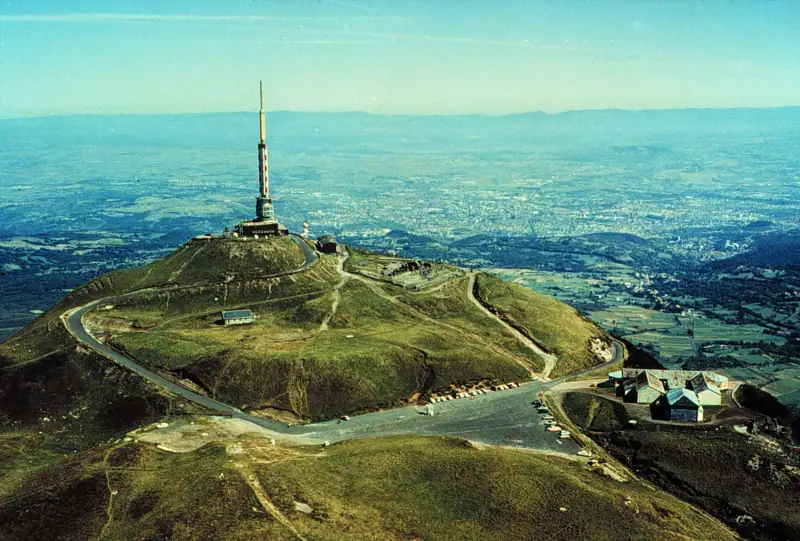
This is the item where Auvergne is most generous: most of what makes it famous is free. Hiking around the lakes, walking the trails of the Chaîne des Puys, viewpoints from the passes, markets and stone villages cost nothing (see our guide to hiking in Auvergne).
Spending comes from developed sites:
- The Puy de Dôme: the climb on foot is free, but access by the cog railway is paid, with different rates for adults, children and families. Check rates and arrangements on the official site before leaving.
- Theme parks and museums: Vulcania, the museums of Clermont-Ferrand or heritage sites have their own rates, often reduced for children and with family offers.
- Producer visits: often free or at a modest price, with a tasting or purchase in view.
- Supervised sports activities: mountain biking, paragliding, canyoning, horse riding or guided walks are charged per activity.
- Spa treatments and baths: in Vichy and Le Mont-Dore notably, they are an expense in themselves.
Activities and excursions in Auvergne
Guided tours and experiences to book in advance, with prices shown before you pay.
For other ideas that do not involve hiking, see our article on activities in Auvergne other than hiking.
Three priced budget profiles
Here are three concrete examples, for two people traveling by car for 4 days (3 nights), excluding the trip there. Amounts are rounded estimates built from the previous ranges.
Profile 1: the thrifty traveler
Campground or simple gîte, groceries from the market, one set lunch menu mid-trip, free hikes and a single paid activity.
| Item | Estimate for 2 people |
|---|---|
| Lodging (3 nights) | €100-200 (~$115-230) |
| Meals and groceries | €100-160 (~$115-185) |
| Shared car (rental, fuel) | €120-200 (~$140-230) |
| Activities | €10-30 (~$12-35) |
| Total | about €330-590 (~$385-685), or €165-295 (~$190-340) per person |
If you use your own vehicle, the car line is limited to fuel and the total drops noticeably.
Profile 2: the comfort traveler
Bed and breakfast or mid-range hotel, one restaurant a day, a few paid activities.
| Item | Estimate for 2 people |
|---|---|
| Lodging (3 nights) | €300-500 (~$350-580) |
| Meals | €250-400 (~$290-465) |
| Car (rental, fuel, parking) | €150-250 (~$175-290) |
| Activities | €50-120 (~$58-140) |
| Total | about €750-1,270 (~$870-1,475), or €375-635 (~$435-735) per person |
Profile 3: the high-end traveler
Charming hotel or guesthouse, gourmet table, spa treatment or supervised activity.
| Item | Estimate for 2 people |
|---|---|
| Lodging (3 nights) | €600-900 or more (~$695-1,045+) |
| Meals | €450-700 (~$520-810) |
| Car and transfers | €200-350 (~$230-405) |
| Activities and wellness | €150-300 (~$175-350) |
| Total | about €1,400-2,250 (~$1,625-2,610), or €700-1,125 (~$810-1,305) per person |
To build a longer stay, our 7-day road trip in Auvergne provides a thread that you can price according to one of these profiles.
Ten tips to spend less
- Travel outside high season: spring outside holidays and fall offer cheaper lodging, fewer people and beautiful light.
- Book early, with free cancellation: you lock in a rate while keeping the option to change plans if the weather requires.
- Stay several nights in the same place: fewer kilometers, less fuel, and sometimes discounted rates in gîtes.
- Rely on the set lunch menu: at midday, it offers the best value for tasting local cooking.
- Stock up on regional products at producers: cheese, charcuterie and bread for picnics.
- Choose hiking: it is free, and the landscapes are among the most beautiful in the region.
- Share the car and the lodging: with four people, a weekly rental of a gîte and a vehicle completely changes the cost per person.
- Use family or group offers at paid sites, and check reduced rates (children, students, job seekers, depending on the site).
- Fill up before going up to altitude: gas stations are rarer and prices there are often higher.
- Keep a small contingency budget: about 10% of the total envelope for a weather change, an unplanned meal or a souvenir.
When is Auvergne cheapest?
The calendar influences the budget almost as much as the type of lodging. The most favorable months for small budgets are between April and June and from September to October, outside school holidays and long weekends. Summer remains the peak season for hiking and lakes, but it comes with higher rates, full car parks and advance bookings. Winter targets mainly the resorts (Le Mont-Dore, Super-Besse): lift passes, equipment and lodging can push the bill up, hence the value of comparing all-inclusive packages.
Final thoughts
Auvergne suits a low-cost stay as well as a gourmet and comfortable getaway. The key to the budget comes down to three decisions: the season, the type of lodging and the car. The landscapes cost nothing, and they are what gives the trip its value. Choose your profile, book with free cancellation, keep a margin for the unexpected, and check each rate on the official sites before leaving.
Sources
- DIR Massif Central (French State): figures checked November 2026
Frequently asked questions
What budget should you plan for a week in Auvergne?
Per person and excluding the trip there, expect roughly €350 to €500 (about $405 to $580) for a budget week (campground or gîte, groceries and picnics), €700 to €1,000 (about $810 to $1,160) at comfort level, and more than €1,250 (about $1,450) if you aim for charming hotels and gourmet tables. These are rough figures drawn from the ranges in this article: check rates for your period before booking.
Is Auvergne an expensive destination?
No, it is among the more affordable regions of France: lodging and restaurants are generally cheaper than on the coast or in big cities. The main spending items are the car and lodging in high season, notably in the tourist areas of the Sancy and the Chaîne des Puys.
What is the cheapest period to visit Auvergne?
Spring (outside school holidays) and fall are generally the best value: lodging is in less demand, car rental rates are lower and trails are less busy. July and August, as well as winter holidays in the resorts, are the most expensive periods.
Can you travel in Auvergne without a car to save money?
It is possible for an urban stay centered on Clermont-Ferrand, Vichy or Le Puy-en-Velay, by train and local transport. But for the lakes, volcanoes and villages, not having a car greatly limits visits. Sharing a car among several people often remains the cheapest option per person.
Are activities in Auvergne paid?
Many pleasures are free: hikes, lakes, viewpoints, villages, markets. Developed sites (theme park, cog railway, museums, cellar or farm visits) are paid and their rates vary by age, season and family offers. Check the official sites for current prices.
Should you bring cash in Auvergne?
Bank cards are accepted almost everywhere in towns and tourist sites. Still, keep a little cash for markets, some farm producers, small mountain snack bars or isolated car parks, where card payment is not always possible.
More Auvergne guides
Keep reading
When to visit Auvergne: best time, weather and seasons
When to go to Auvergne: weather, the best season for hiking, volcanoes, skiing and cheese, crowds and budget. A guide to choosing your dates.
Auvergne with kids: 15 activities sorted by age and weather
What to do in Auvergne with children? Volcanoes, lakes, animals, summer luge and rainy-day ideas, sorted by age, with tips for parents.
What to see in the Sancy Massif: summits, lakes and villages not to miss
What to see in the Sancy Massif: Puy de Sancy, Le Mont-Dore, Lake Pavin, Chambon, Murol, Saint-Nectaire, Besse and Orcival. Plan 2 to 4 days.
Ready-made
Auvergne itineraries
7 days
A week in Auvergne with kids: day-by-day itinerary
Clermont-FerrandLe Mont-DoreSalers
3 days
3 days in Auvergne: an itinerary of volcanoes, lakes and stone villages
Clermont-FerrandLe Mont-Dore or Besse-et-Saint-Anastaise
7 days
Auvergne road trip in 7 days: volcanoes, Cantal and Haute-Loire
A 7-day driving itinerary in Auvergne: Puy de Dôme, Sancy, Lake Pavin, Salers, Puy Mary, Le Puy-en-Velay. Stops, realistic drives and practical tips.