What to see
What to see in the Haute-Loire: Le Puy, gorges, villages and abbeys
We may earn a commission when you book through links on this page, at no extra cost to you. We don't visit or try the places we cover: we summarize published sources. How we work
In short
- Le Puy-en-Velay is stop number one: cathedral, old town and the Saint-Michel d'Aiguilhe chapel on a volcanic needle. Plan at least one full day.
- Three days cover Le Puy and its close surroundings; four or five days add La Chaise-Dieu, Brioude, the Loire gorges and the Mézenc area.
- A car is strongly recommended: villages, abbeys and gorges are scattered and poorly served by public transport.
- The Mézenc peaks at about 1,753 m (5,751 ft); the PDO green lentil of Le Puy is the local food emblem.
The Haute-Loire is the southernmost department of Auvergne, a land of volcanic pinnacles, wild gorges, Romanesque abbeys and stone villages clinging to cliffs. Less known than the Puy de Dôme or the Cantal, it nonetheless offers a remarkable concentration of sights, and its main town, Le Puy-en-Velay, is among the most astonishing small towns in France.
This guide answers a simple question: what to see in the Haute-Loire, and how to organize your visit? We go through the department by area: Le Puy and its surroundings, the Loire gorges, the north around La Chaise-Dieu and Brioude, then the heights of the Mézenc. This guide does not name specific restaurants or hotels: hours, rates and addresses change, and it is better to check them with the tourist offices at the time of your trip.
The Haute-Loire at a glance
The Haute-Loire occupies the southeast of the Massif Central. Its capital is Le Puy-en-Velay, and the department is crossed from south to north by two rivers: the Loire, which cuts gorges here, and the Allier, which flows farther west. The relief combines old volcanoes, high plateaus and deep valleys. The region is also on major hiking routes, including the Camino de Santiago route starting from Le Puy.
| Need | Short answer |
|---|---|
| Ideal length | 3 to 5 days |
| Base | Le Puy-en-Velay (or a village with character) |
| Getting around | Car strongly recommended |
| Highlights | Le Puy, Polignac, La Chaise-Dieu, Brioude, Loire gorges |
| Specialties | PDO green lentil of Le Puy, fin gras du Mézenc, verbena |
| Watch out for | Winding roads, changeable weather on the plateaus |
To place the department within the region, see our complete guide to Auvergne.
Le Puy-en-Velay, the town of pinnacles
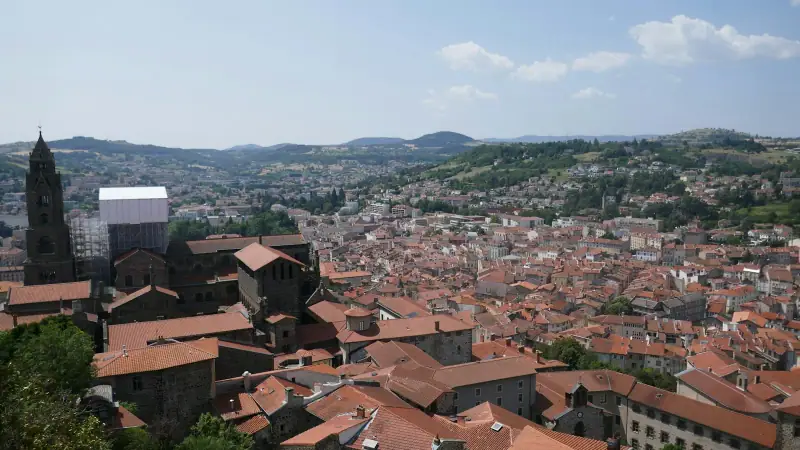
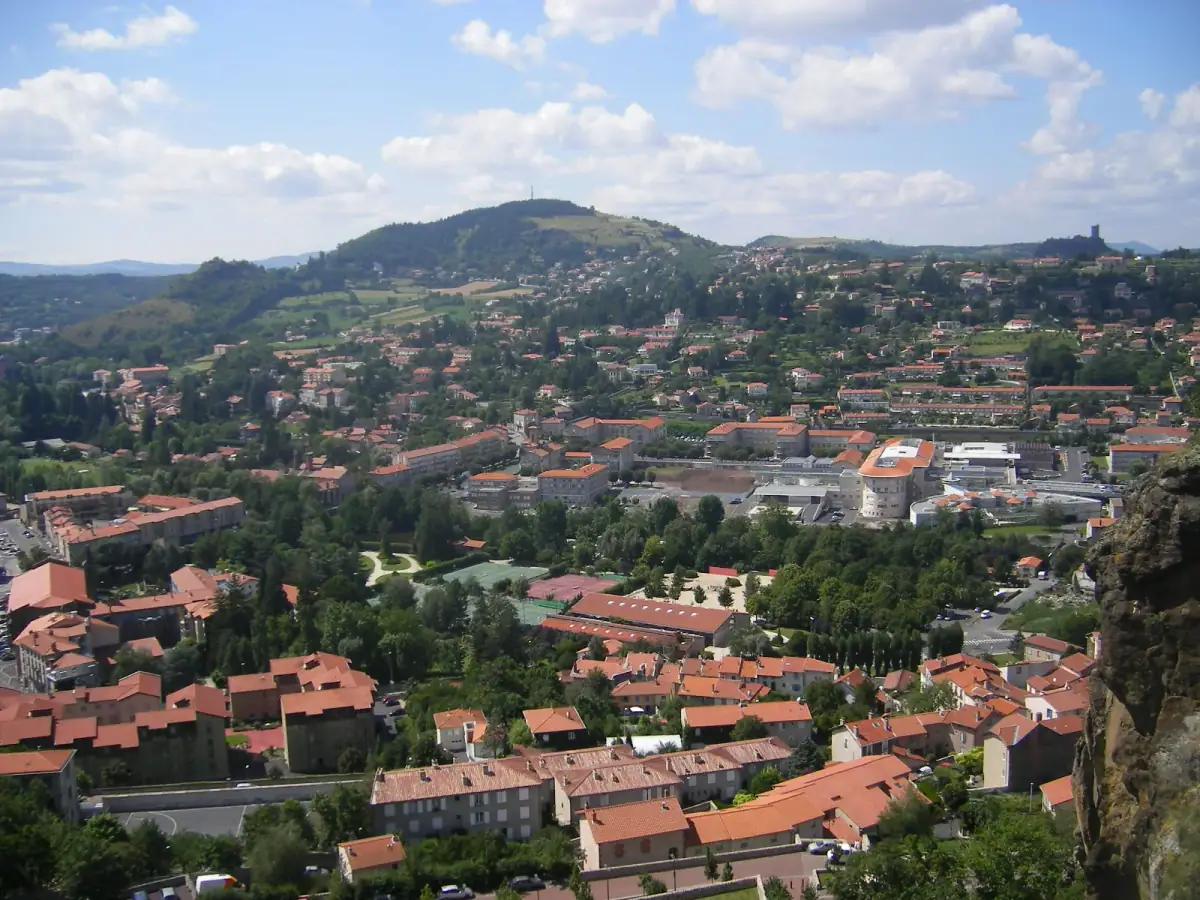
Le Puy-en-Velay is the heart of the department. The town grew around steep volcanic hills, which give its landscape the air of a stage set. On one of these reliefs stands Notre-Dame-de-l’Annonciation cathedral, the historic starting point of a great pilgrimage route to Santiago de Compostela. Another pinnacle, Corneille Rock, bears a large statue of the Virgin overlooking the roofs.
The old town is explored on foot: sloping lanes, old houses, craft shops and local product shops. Lace is an old tradition here, and the green lentil and verbena are among the most common souvenirs. Plan at least one full day, two if you like to take your time.
Our guide to visiting Le Puy-en-Velay details the town’s highlights, and our article on where to stay in Le Puy-en-Velay compares neighborhoods to choose your base.
Stay in the Haute-Loire
Compare hotels, bed and breakfasts and gîtes in Le Puy-en-Velay and the surroundings.
Saint-Michel d’Aiguilhe, a chapel on a needle of lava
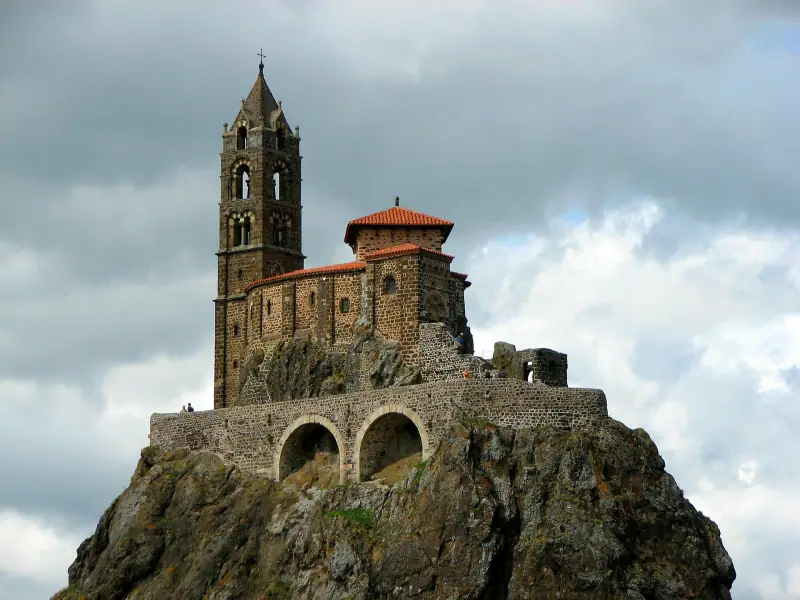
At the edge of the old town, a very narrow volcanic pinnacle shoots toward the sky, crowned by the Saint-Michel d’Aiguilhe chapel. It is reached by a staircase cut along the rock. The climb is short but demanding for people who have trouble with steps, and the view over the town and its reliefs rewards the effort.
It is one of the most famous images of the Haute-Loire, and one of the easiest to photograph: late in the day, the low light brings out the dark stone. Check opening hours and the entrance fee before coming, as they vary by season.
Polignac and its immediate surroundings
Only a few kilometers from Le Puy, the Polignac fortress occupies a vast volcanic plateau. Its ruins and great keep overlook the countryside and offer a fine panorama. The village around it is one of the most visited tourist sites around the main town, and the visit combines easily with a morning or an early afternoon.
To continue in the spirit of pinnacles and valleys, you can also head toward the Loire valley, at the edge of the town. The riverbanks offer landscapes of cliffs, forests and villages, perfect for a drive with photo stops.
The Loire gorges and Arlempdes
The Loire is born in the Ardèche, at the foot of Mont Gerbier de Jonc, then crosses the Haute-Loire cutting deep gorges. It is one of the wildest areas of the department, with trails on the slopes, viewpoints and small perched villages.
Arlempdes is its jewel. This village, listed among the most beautiful villages of France, is overlooked by the ruins of a castle set on a volcanic spur, right above the gorges. The castle is one of the closest to the river’s source. The village can be visited in about an hour, longer if you take the trails around it.
For a day in this area, leave early and bring good shoes and a windbreaker. Valley roads are narrow and winding: it is better not to set overly ambitious goals. Our article on hiking in Auvergne gives benchmarks of duration and difficulty to prepare your walks.
Pradelles, Le Monastier and the Stevenson Trail
Farther south, Pradelles is another village with character in the region. A former stop on the Velay routes toward Languedoc, it keeps old houses and a heritage of lanes and squares where you stroll without haste. The village is also among the most beautiful villages of France.
Le Monastier-sur-Gazeille, very close, is known for having been the starting point of Robert Louis Stevenson’s journey with his donkey Modestine in 1878. That account gave rise to the Stevenson Trail, a major hiking route that reaches the south of the Cévennes. Even if you do not walk for several days, you can do a short stage to taste the atmosphere: accessible sections cross open plateaus and villages.
Activities around Le Puy-en-Velay
Guided tours, walks and local experiences in Le Puy-en-Velay and the Haute-Loire.
The Mézenc and its plateaus
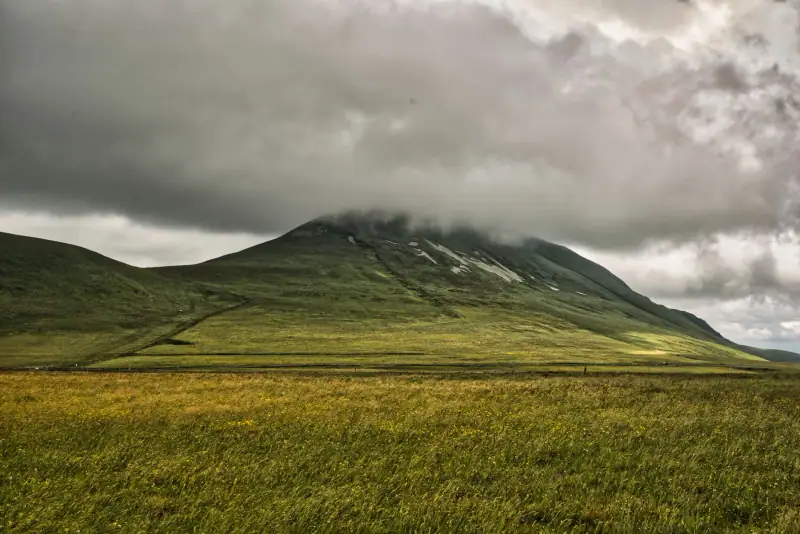
The Mézenc is the highest point of the department, at about 1,753 m (5,751 ft) on its north summit. Around it, vast open plateaus with rounded slopes host herds on summer pastures. Les Estables, a small mountain resort, serves as a base for hiking in summer and for cross-country skiing or snowshoeing in winter, depending on snow conditions.
This is where the fin gras du Mézenc is produced, a beef raised on grass then hay, which has a protected label. You find it mostly in spring. The wind can be strong and the weather changes quickly: bring a warm layer even in summer, and check the forecast the same morning.
The area is also fascinating for volcano lovers: the entire relief bears witness to the activity that shaped the region. To compare with younger and sharper landscapes, read our article on the Chaîne des Puys.
La Chaise-Dieu, an abbey on the heights
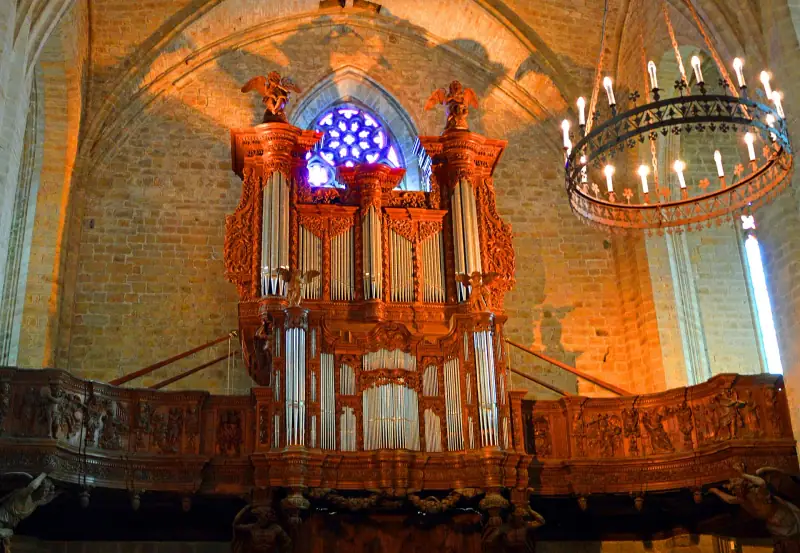
In the northeast of the department, on a high plateau, La Chaise-Dieu holds a large Gothic abbey, founded in the Middle Ages, whose church is famous for its tapestries and for a Danse Macabre fresco. The whole impresses with its size and austere atmosphere.
The village also hosts a well-known classical music festival every year in late summer, using the abbey church as a concert hall. Find out the dates and program before booking your stay. Outside the festival, visiting the abbey and strolling through the village takes about half a day.
Brioude and the Allier valley
Brioude, in the northwest of the department, is a quiet town organized around its Saint-Julien basilica, the largest Romanesque church in Auvergne. The building appeals through its polychrome stonework and carved capitals. The town also has an old center pleasant to explore on foot, with shops and several cafés.
The Allier valley, very close, offers another face of the Haute-Loire: a wild river with fast water, wooded gorges and, here and there, small villages on the banks. Nature lovers find trails, viewpoints and outdoor activities in season.
Two villages with character belong to this area. Lavaudieu is known for its former monastic site, with a Romanesque cloister and a church decorated with wall paintings, and is among the most beautiful villages of France. Blesle, farther north, is another picturesque village, known for its medieval lanes and abbey church.
Crater lakes, sucs and volcanic landscapes
The Haute-Loire also hides several spectacular geological sites. Lac du Bouchet, near Cayres, occupies an old crater of almost perfectly circular shape. A trail goes around it without particular difficulty, which makes it an ideal family walk or a short break.
Other volcanic curiosities dot the department: basalt columns, isolated rocks, plateaus covered in moorland. Geology lovers will find enough to fill a day. The local tourist office offers maps and routes to find them.
What to taste in the Haute-Loire
Local food relies on regional products. The green lentil of Le Puy, which has a protected designation, is the star ingredient: served as a warm salad, with a meat dish or in a slow-cooked dish, it appeals through its delicacy. Velay verbena, a plant-based liqueur, is another classic souvenir.
Mountain products complete the table: fin gras du Mézenc in spring, charcuterie, Auvergne cheeses, regional pastries. To go deeper, see our typical dishes of Auvergne. Restaurant hours vary with the seasons: book ahead in high season.
How to organize your stay in the Haute-Loire
Here is a suggested pace, to adapt to your wishes and the season:
- Day 1: Le Puy-en-Velay. Cathedral, old town, Corneille Rock and the Saint-Michel d’Aiguilhe chapel.
- Day 2: Polignac and the Loire gorges. Fortress in the morning, Arlempdes and a trail in the gorges in the afternoon.
- Day 3: Pradelles, Le Monastier, Lac du Bouchet and the Mézenc. Villages, crater lake and plateaus, with a short hike.
- Day 4: La Chaise-Dieu and Brioude. Abbey, Romanesque basilica and the Allier valley.
- Day 5 (optional): Lavaudieu and Blesle. Two villages with character near Brioude, to add to day 4 if you start early.
Distances are reasonable, but mountain roads slow your progress: allow more time than the map suggests. To fit the Haute-Loire into a wider trip, our 7-day road trip in Auvergne shows how to link the region’s main stops.
Rent a car in Auvergne
Compare car rental companies to explore villages and gorges freely.
Getting around and choosing your season
A car remains the most practical way to link the sights of the Haute-Loire. Our guide to getting around Auvergne details the options, and the one on choosing when to go to Auvergne helps you find the ideal period. As a rule, from spring to early fall, conditions are favorable; in winter, high plateaus can be snow-covered and some access roads difficult.
Whatever the season, plan layered clothing, good shoes and a plan B for unpredictable weather. Villages with character are pleasant even in gray weather, while gorges and plateaus are best enjoyed in fine weather.
Key takeaways
The Haute-Loire is best discovered by taking your time: a spectacular main town, wild gorges, Romanesque and Gothic abbeys, stone villages and volcanic plateaus. In three to five days, you will get a very good picture of it, and you will probably want to come back. Before leaving, check hours and rates of the sights with the tourist offices.
Frequently asked questions
What should you see first in the Haute-Loire?
Le Puy-en-Velay is stop number one, with its cathedral, its old town and the Saint-Michel d'Aiguilhe chapel set on a volcanic pinnacle. Around it, add the Polignac fortress, La Chaise-Dieu abbey, Brioude basilica and a village with character such as Arlempdes or Lavaudieu. These stops give a good overview of the department.
How much time should you plan to visit the Haute-Loire?
Three days let you see Le Puy-en-Velay and its close surroundings. With four or five days, you add La Chaise-Dieu, Brioude, the Loire gorges and the Mézenc area. Distances are modest, but valley roads are winding: allow plenty of time between stops.
Do you need a car to visit the Haute-Loire?
A car is strongly recommended. Le Puy-en-Velay is visited on foot, but the villages, abbeys and gorges are scattered and poorly served by public transport. Our guide to getting around Auvergne details transport and rental options.
What is the best time to visit the Haute-Loire?
From May to early October for hiking, villages and high-altitude roads. Spring and early fall are pleasant and less crowded. In winter, the Mézenc plateaus are snow-covered and offer very different landscapes, but some tourist sites close or cut their hours: check before leaving.
What is the highest point of the Haute-Loire?
The Mézenc, on the border with the Ardèche, peaks at about 1,753 m (5,751 ft) on its north summit, the highest point of the department. Its vast open plateaus, called sucs, can be walked, with big views in good weather.
Which specialties should you try in the Haute-Loire?
The green lentil of Le Puy, protected by a PDO (AOP), is the food emblem of the department. You also find the fin gras du Mézenc, a protected-label beef raised on summer pastures, Velay verbena liqueur and many Auvergne cheeses. Check seasons: some products are only available a few months a year.
Is the Haute-Loire suitable for children?
Yes, with short stops: a walk at Corneille Rock, the Polignac fortress, a medieval village or a crater lake such as Lac du Bouchet. Save long hikes and long visits for children used to walking, and bring warm clothing, even in summer.
More Auvergne guides
Keep reading
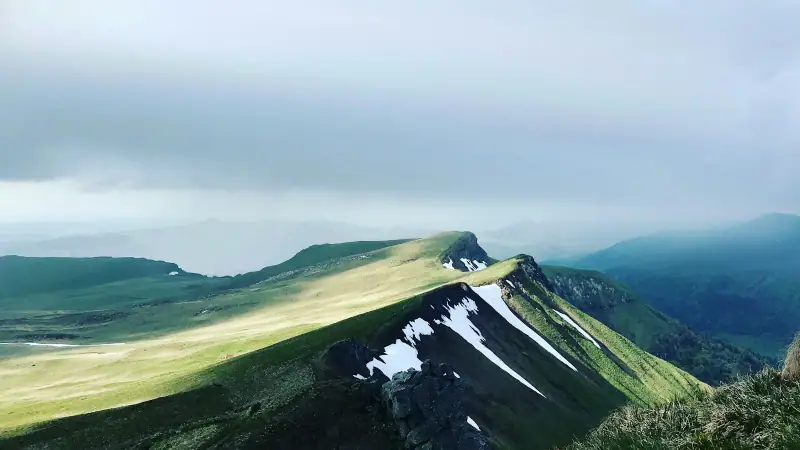
What to see in the Sancy Massif: summits, lakes and villages not to miss
What to see in the Sancy Massif: Puy de Sancy, Le Mont-Dore, Lake Pavin, Chambon, Murol, Saint-Nectaire, Besse and Orcival. Plan 2 to 4 days.
What to see in the Monts du Cantal: Puy Mary, Salers, Le Lioran and the valleys
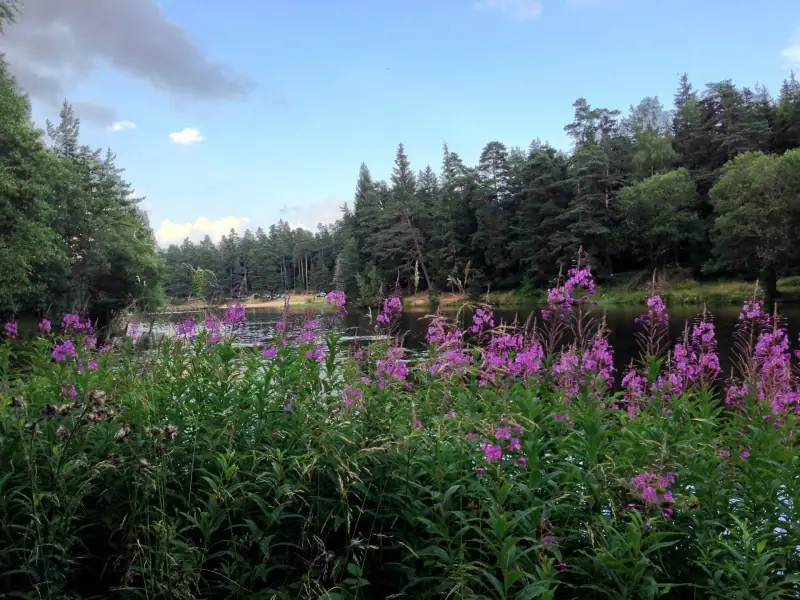
What to see in the Monts du Cantal: Puy Mary, Plomb du Cantal, Salers, Murat, glacial valleys and summer pastures. Plan 2 to 4 days in the massif.
What to see in Livradois-Forez: Thiers, Ambert, La Chaise-Dieu and the high pastures
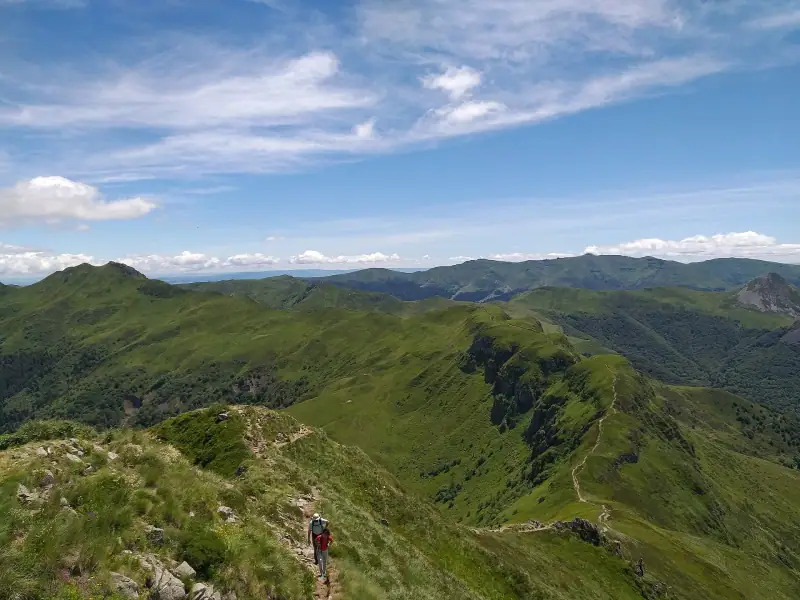
What to see in the Livradois-Forez nature park: Thiers knives, Ambert's fourme cheese, La Chaise-Dieu abbey, the Forez mountains. A guide for 2 to 4 days.
Ready-made
Auvergne itineraries
7 days
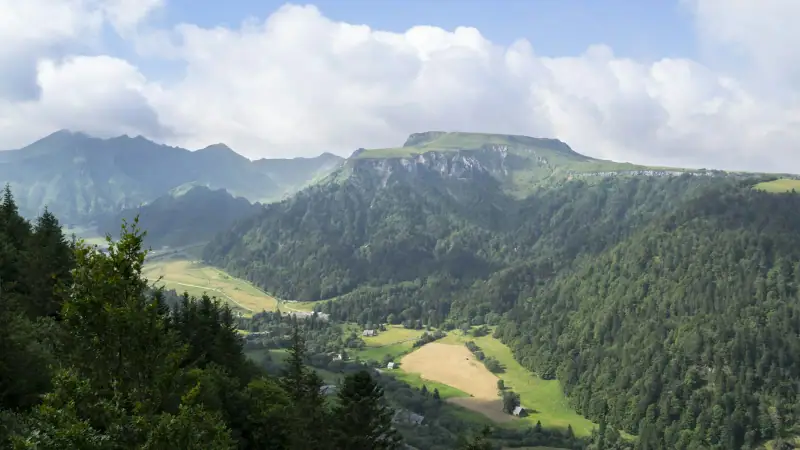
A week in Auvergne with kids: day-by-day itinerary
Clermont-FerrandLe Mont-DoreSalers
3 days
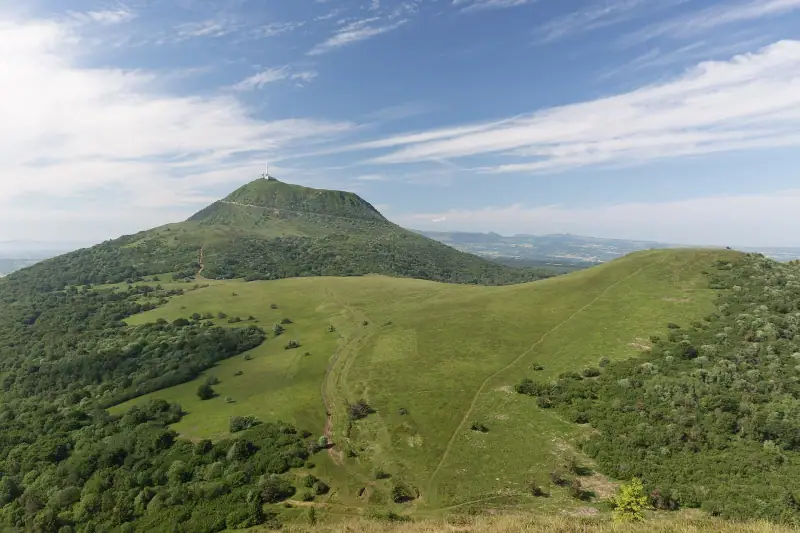
3 days in Auvergne: an itinerary of volcanoes, lakes and stone villages
Clermont-FerrandLe Mont-Dore or Besse-et-Saint-Anastaise
7 days
Auvergne road trip in 7 days: volcanoes, Cantal and Haute-Loire
A 7-day driving itinerary in Auvergne: Puy de Dôme, Sancy, Lake Pavin, Salers, Puy Mary, Le Puy-en-Velay. Stops, realistic drives and practical tips.