Plan your trip
When to visit Auvergne: best time, weather and seasons
We may earn a commission when you book through links on this page, at no extra cost to you. We don't visit or try the places we cover: we summarize published sources. How we work
In short
- Late spring to early fall is the most versatile period, with a preference for June and September.
- Summer offers the longest and warmest days but also the biggest crowds; fall brings colors, light and calm.
- Temperatures differ strongly between the Limagne plain and summits like the Puy de Sancy (1,886 m / 6,188 ft) or the Puy de Dôme (1,465 m / 4,806 ft).
- Book lodging ahead in summer and school holidays, especially in the Sancy and around the Chaîne des Puys.
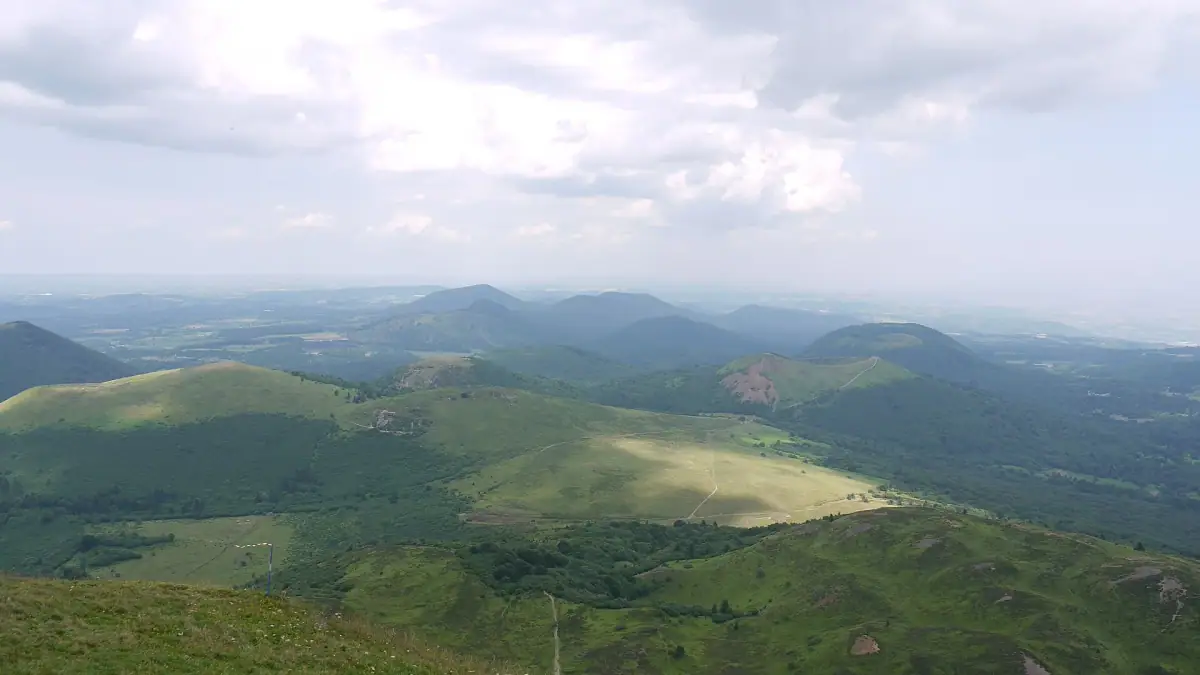
Auvergne is not a destination to visit at random on the calendar. A mid-mountain region, it combines very different landscapes: rounded volcanoes, summer-pasture plateaus, gorges, crater lakes and dark-stone towns. The climate varies strongly with altitude, and a single day can offer bright sun in the valleys and thick mist at the top of the Puy de Dôme. Choosing the right season therefore really changes the travel experience.
This guide helps you understand the region’s climate, compare seasons according to your wishes (hiking, relaxing, food, skiing, culture) and anticipate crowds and budget. It complements our other practical guides, such as getting around Auvergne, and our suggestions for activities and itineraries.
Auvergne’s climate in brief
Auvergne lies in the heart of the Massif Central, away from the direct influence of the sea. Its climate is called semi-continental: summers are hot on the plain and milder at altitude, winters are cold, with regular snow on the heights. Altitude plays a decisive role. Around Clermont-Ferrand, in the Limagne plain, temperatures are higher and the climate drier. On the summits of the Sancy Massif, which peaks at about 1,886 m (6,188 ft), or on the Puy de Dôme, at about 1,465 m (4,806 ft), the air is much cooler and wind is often present.
A few useful benchmarks for packing:
- Temperature differences are large between town and mountain: always bring an extra layer.
- The weather changes fast: a clear sky in the morning can give way to clouds or a storm in late afternoon.
- Fog and clouds can hide panoramic views: check the weather at the summit, not only in the town you start from.
- Snow can arrive early at altitude and stay late in spring, which affects the opening of some trails and roads.
These principles hold all year. Now let us see how each season looks.
Spring: nature waking up
Spring is a transition season, sometimes capricious but often very beautiful. At low altitude, meadows turn green, orchards and hedges bloom, and villages gradually regain their activity. In the mountains, snow melts gradually and summer pastures turn green later in the season.
Advantages:
- Crowds still moderate at the best-known sites.
- Lively nature, waterfalls better fed after the snowmelt.
- Lodging rates generally more accessible than in midsummer, outside holiday periods.
Drawbacks:
- Changeable weather, with frequent showers and still-cool days.
- High-altitude trails sometimes snowy or muddy, calling for good shoes.
- Some seasonal sights, lodgings or activities that have not yet reopened.
Who is it for? People who enjoy quiet walks, town visits and awakening nature, and who accept variable weather. Choose mid-altitude hikes and always keep a sheltered plan B, such as a museum or an urban visit, for rainy days.
May and June are often the most pleasant months for combining bright greenery and mild temperatures, with days already long. Long weekends in May can concentrate visitors, however: book ahead if you travel on these dates.
Summer: high season for volcanoes and lakes
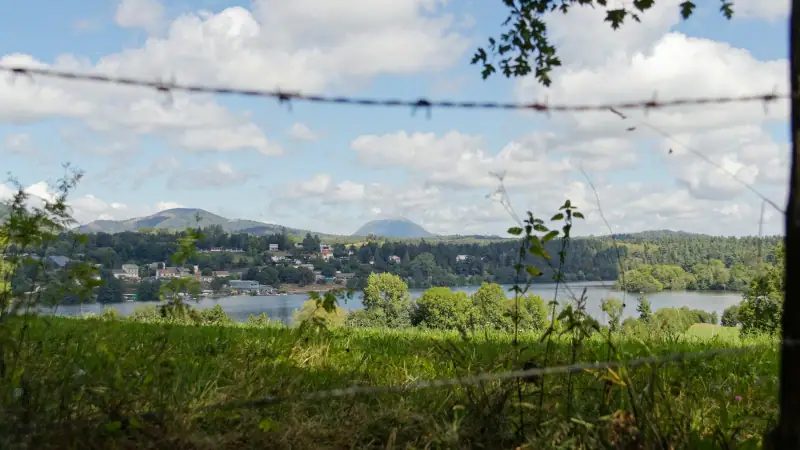
Summer is the most popular season, and for good reason. Days are long, trails are clear, all tourist sights and services are open, and the crater lakes invite relaxation. It is also the time when herds go up to the summer pastures and when markets and village festivals enliven the towns. Several festivals take place in this period, such as the international street theater festival in Aurillac, traditionally held in August: check the dates of the current edition on the official site.
Advantages:
- The best conditions for hiking and outdoor activities.
- A complete offer: guided tours, activities, restaurants and lodging open.
- Long evenings, ideal for enjoying terraces and panoramas.
Drawbacks:
- Heavy crowds at emblematic sites, with car parks sometimes full and queues.
- Higher lodging rates and reduced availability: you need to book early.
- Possible storms late in the day, which can be dangerous at altitude.
Our tips for summer:
- Start early: in the morning, the light is beautiful, the air is cool and sites are calmer.
- Avoid summits when a storm is forecast: come down as soon as the sky clouds over.
- Bring water and sun protection: at altitude, the sun is more intense than it seems.
- Book your lodging and popular activities in advance, especially in August.
If you want to enjoy summer while limiting the crowd, choose weekdays over weekends, and the start or end of the summer season rather than the heart of August. For outing ideas, see our guide to hiking in Auvergne.
Book your lodging in Auvergne
In summer and during holidays, the best options go quickly: compare and book early.
Fall: colors, calm and indulgence
For many regular travelers, fall is the most beautiful season in Auvergne. September often extends summer with still-pleasant days and fewer crowds after the school year starts. Then, from October, forests and summer pastures take on orange, yellow and russet hues that contrast with the dark shapes of the volcanoes. The low light makes the landscapes particularly photogenic.
Advantages:
- Colorful landscapes and magnificent light for photography.
- Fewer people on trails and in villages, and lodging easier to book.
- An indulgent seasonal atmosphere, with comforting regional specialties.
Drawbacks:
- Days that shorten quickly: plan your hikes accordingly and bring a flashlight.
- More unstable weather late in the season, with more mist, rain and cool air.
- Some seasonal establishments that cut their hours or close as winter approaches.
Fall is also the ideal season for combining hiking and food: after a day of walking, the region’s generous dishes make perfect sense. Our guide to the AOP cheeses of Auvergne will help you choose what to taste. In a town like Le Puy-en-Velay, major historical events take place in early fall, notably the Renaissance festival, generally in September: check the official program before planning your stay around this event.
Winter: snow, calm and towns with character
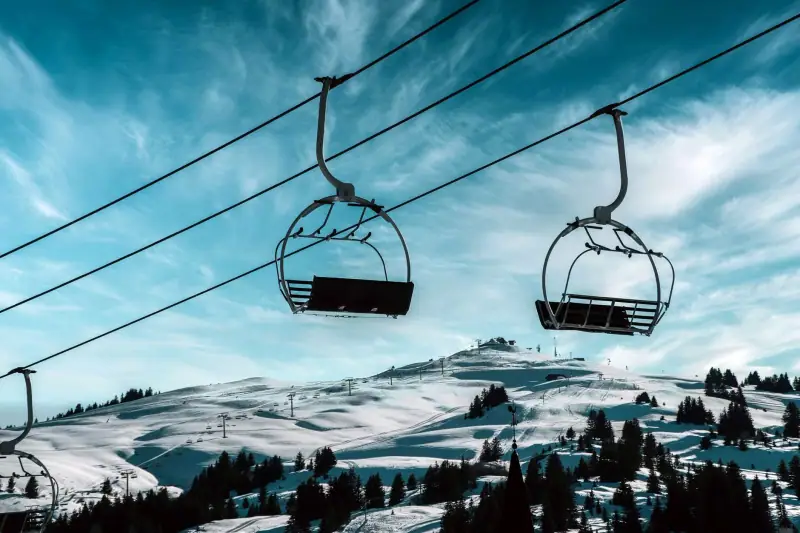
Winter deeply transforms the region. Summits are covered in snow, lakes sometimes freeze, and landscapes take on a silent, stripped-down atmosphere. Several massifs have family ski resorts: in the Sancy, Le Mont-Dore and Super-Besse, and in the Monts du Cantal, Le Lioran. The atmosphere there is generally friendlier and more affordable than in the big Alpine areas, even if snow depends a lot on the year and the altitude.
Possible activities:
- Downhill and cross-country skiing, depending on snow and the opening of the slopes.
- Snowshoe hikes in marked areas.
- Visits to towns, museums and heritage sites in Clermont-Ferrand, Vichy or Le Puy-en-Velay.
- Relaxing stays, with spa establishments, notably in the historic spa towns like Vichy or Le Mont-Dore.
Good to know:
- Snow conditions vary from year to year: check the bulletins before booking a ski-centered stay.
- Mountain roads can be difficult: find out about mandatory equipment (snow tires, chains) in signposted areas, as we explain in our guide to getting around Auvergne.
- Some sights, restaurants and lodgings close or cut their hours in low season.
- Days are short: plan outdoor outings in the middle of the day.
Towns remain safe bets in winter. Clermont-Ferrand, with its old center and its volcanic-stone cathedral, can be visited all year; the Auvergne capital also hosts, in late January or early February, a major international short film festival, one of the most followed film events of its kind. Our guide to visiting Clermont-Ferrand details the highlights.
Activities and tours in Auvergne
Guided tours, experiences and outings to book in advance, whatever the season.
Which season for your wishes?
The best moment depends above all on your travel plan. Here is a summary to help you decide.
| Your wish | Recommended period | Why |
|---|---|---|
| Hiking on the volcanoes | June to September | Clear trails, long days |
| Landscape photography | September to October | Soft light, fall colors |
| Avoiding crowds | May, June, September, October | More moderate crowds |
| Skiing and winter sports | Midwinter, depending on snow | Slopes open in the Sancy and Cantal |
| Town visits | All year | Museums and heritage accessible in any weather |
| Food and regional products | All year, with a bonus in fall | Seasonal dishes, markets, producers |
| Family trip | July and August, or school holidays | Activities open, milder weather |
| Small budget | Outside school holidays | Cheaper and more available lodging |
Season and budget: what to know
Prices follow crowds. In summer, during school holidays and on long weekends, lodging is more expensive and fills quickly, especially in the most touristy areas like the Sancy. Conversely, in spring and fall, outside school holidays, you will generally get lower rates and more availability. In ski resorts, winter holiday periods are the peak.
A few tips to control your budget:
- Travel midweek when possible: rates and crowds are often lower.
- Book early for peak periods, to have a choice and get the best rates.
- Choose lodging with a kitchen to limit restaurant costs on a stay of several days.
- Compare options: gîtes, bed and breakfasts, campgrounds or hotels offer very different price ranges. Our guide to where to stay in Auvergne details the possibilities by area.
Prices change every year: check the rates in force at the time of booking rather than relying on a fixed figure.
Organizing your stay by season
Once you have chosen the season, adapt the pace and the program. A few realistic combinations:
A spring or fall weekend: concentrate on Clermont-Ferrand and the Chaîne des Puys, with a climb on foot or by cog railway up the Puy de Dôme. Keep half a day for the city, its Romanesque churches and its cathedral.
A summer week: settle for a few days in the Sancy Massif for the lakes and hikes, then continue to the Monts du Cantal and a stone village like Salers. Our 3-day itinerary in Auvergne offers an easy base to extend.
A winter stay: combine a day of skiing or snowshoeing in the Sancy or the Cantal with urban visits and, why not, a spa break in Vichy or Le Mont-Dore.
A spiritual or cultural stay: Le Puy-en-Velay, the starting point of a famous pilgrimage route to Santiago de Compostela, is a pleasant visit in spring or fall, when the town is calmer and the weather better for walking.
Whatever the period, keep some flexibility in your program: mountain weather can force you to reorganize a day. Plan covered alternatives for rainy days and keep free time for the unexpected, often the best memories of the trip.
What to pack by season
The “three layers” principle applies in Auvergne all year: a breathable layer, a warm layer and a waterproof, windproof jacket.
- Spring and fall: fleece or warm sweater, waterproof jacket, waterproof hiking shoes, light hat.
- Summer: light clothing, hat, sunglasses, sunscreen, but also a jacket for evenings and summits, and rain gear for storms.
- Winter: warm, insulating clothing, gloves, hat, shoes suited to snow, and if you drive, check the vehicle’s equipment.
In all cases, good walking shoes, a water bottle and a headlamp are valuable allies. For the car, remember to check the weather and traffic conditions before each departure into the mountains.
Final thoughts
There is not one good time to visit Auvergne, but several, depending on what you are looking for. For volcanoes and lakes, June to September offers the best conditions. For colors, calm and food, fall is hard to beat. For snow and the friendly atmosphere of family resorts, dive into winter. And for towns with character, every season works.
Whatever you choose, keep in mind that mountain weather is changeable: dress in layers, start early and stay flexible in your plans. With a little foresight, you will fully enjoy this authentic region, at your own pace and in the season that suits you.
Frequently asked questions
What is the best time to visit Auvergne?
To combine pleasant weather, clear trails and reasonable crowds, late spring to early fall is the most versatile period, with a preference for June and September. Summer offers the longest days and the hottest weather, but also the biggest crowds at popular sites. Fall appeals for its colors and light.
Can you visit Auvergne in winter?
Yes, provided you adapt the program. The Sancy and Cantal massifs have ski resorts and cross-country trails, and towns like Clermont-Ferrand, Vichy or Le Puy-en-Velay can be visited all year. However, some mountain roads are difficult, some sights close or cut their hours, and days are short. Check the weather and traffic conditions before each trip.
Is it very hot in Auvergne in summer?
Temperatures are generally milder than on the plain, especially at altitude, but heat episodes exist, notably in the Limagne and around the big towns. Evenings often stay cool in the mountains. Storms can break out late in the day: start hikes early and watch the sky.
When can you see the most colorful landscapes?
Fall is the season of orange and golden hues in the forests and on the summer pastures, generally from mid-October depending on altitude and year. The exact date varies: the heights take on their colors before the valleys. For a trip devoted to this show, keep your dates flexible.
Which season should you choose for cheese and regional products?
Cheeses can be tasted all year at producers, markets and farms. The warm season, however, lets you meet the herds on the summer pastures and combine farm visits with hikes. Check opening days and visiting arrangements with producers or tourist offices before going.
Do you need to book in advance?
In summer and during school holidays, it is wise to book lodging in advance, especially in tourist areas like the Sancy or around the Chaîne des Puys. Off season, you will find availability more easily, but some establishments close for longer or shorter periods. A glance at opening conditions avoids unpleasant surprises.
How much time should you plan for a first stay?
A weekend is enough for a town like Clermont-Ferrand and a first volcano climb, but three to five days lets you combine volcanoes, lakes and stone villages without rushing. If you want to add the Cantal or the Haute-Loire, a week is more comfortable.
More Auvergne guides
Keep reading
Auvergne trip budget: costs by item and 3 priced traveler profiles
What budget for Auvergne? Lodging, transport, meals, activities: three priced traveler profiles and tips to spend less.
Auvergne with kids: 15 activities sorted by age and weather
What to do in Auvergne with children? Volcanoes, lakes, animals, summer luge and rainy-day ideas, sorted by age, with tips for parents.
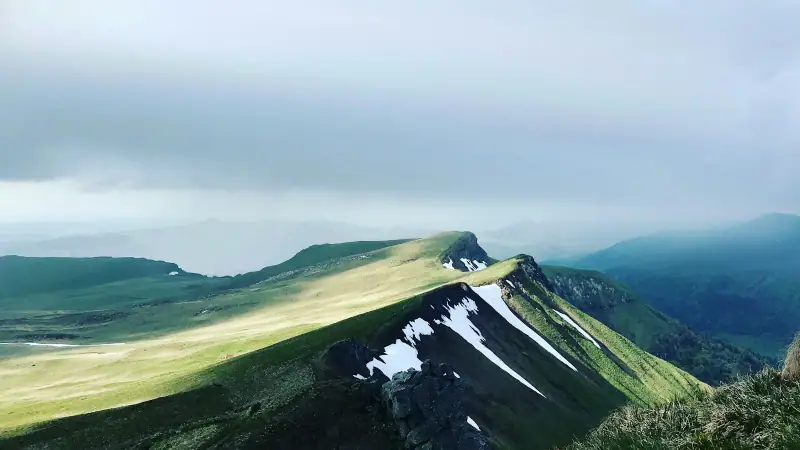
What to see in the Sancy Massif: summits, lakes and villages not to miss
What to see in the Sancy Massif: Puy de Sancy, Le Mont-Dore, Lake Pavin, Chambon, Murol, Saint-Nectaire, Besse and Orcival. Plan 2 to 4 days.
Ready-made
Auvergne itineraries
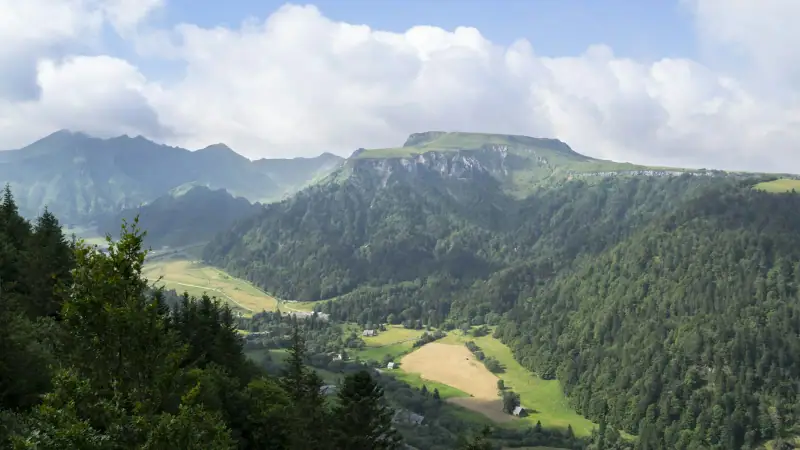
7 days
A week in Auvergne with kids: day-by-day itinerary
Clermont-FerrandLe Mont-DoreSalers
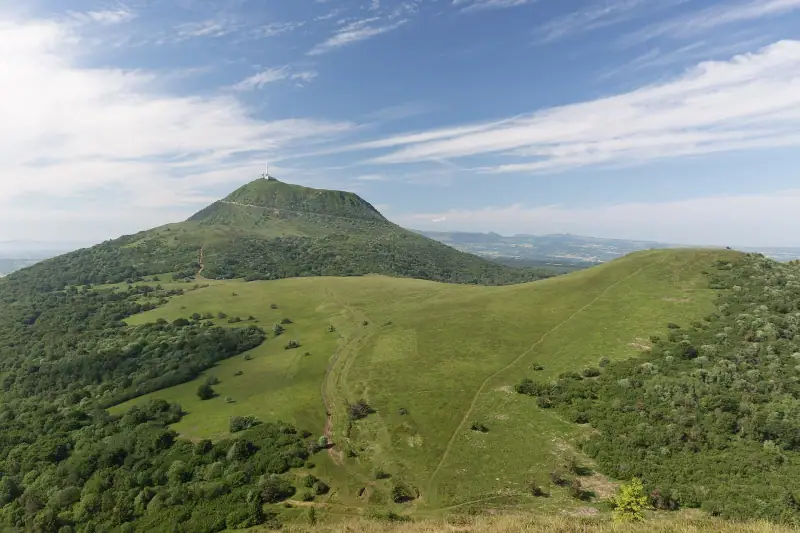
3 days
3 days in Auvergne: an itinerary of volcanoes, lakes and stone villages
Clermont-FerrandLe Mont-Dore or Besse-et-Saint-Anastaise
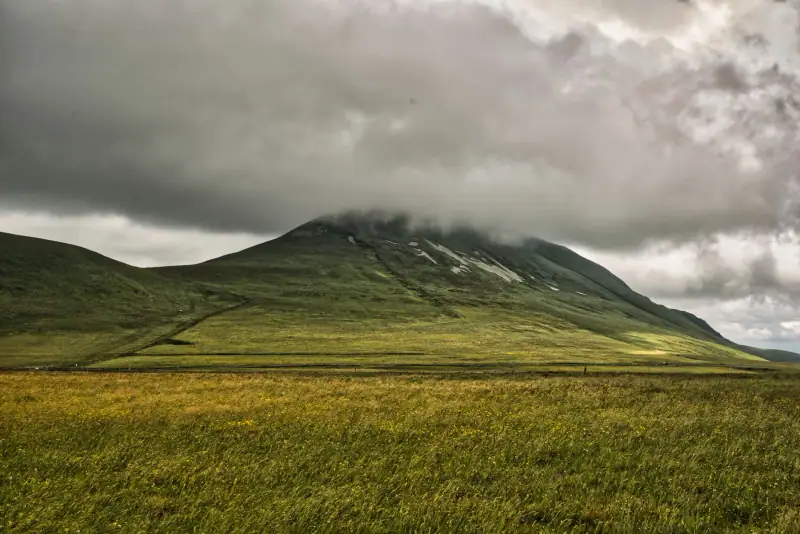
7 days
Auvergne road trip in 7 days: volcanoes, Cantal and Haute-Loire
A 7-day driving itinerary in Auvergne: Puy de Dôme, Sancy, Lake Pavin, Salers, Puy Mary, Le Puy-en-Velay. Stops, realistic drives and practical tips.