Itineraries
3 days in Auvergne: an itinerary of volcanoes, lakes and stone villages
We may earn a commission when you book through links on this page, at no extra cost to you. We don't visit or try the places we cover: we summarize published sources. How we work
Day by day
- Day 1Puy de Dôme, then Clermont-Ferrand old town and Notre-Dame-du-Port
- Day 2Le Mont-Dore, Puy de Sancy, Lake Pavin, Besse-et-Saint-Anastaise
- Day 3Drive to Salers and the Monts du Cantal
Where to sleep
- Clermont-Ferrand1 night
- Le Mont-Dore or Besse-et-Saint-Anastaise1 night
Weather through the year on this route
| Jan | Feb | Mar | Apr | May | Jun | Jul | Aug | Sep | Oct | Nov | Dec | |
|---|---|---|---|---|---|---|---|---|---|---|---|---|
| High °F (°C) | 436 | 457 | 5211 | 5714 | 6418 | 7323 | 7926 | 7926 | 7222 | 6116 | 5010 | 436 |
| Low °F (°C) | 30-1 | 30-1 | 341 | 394 | 468 | 5211 | 5714 | 5714 | 5010 | 457 | 362 | 320 |
| Rain in (mm) | 1.845 | 1.435 | 1.640 | 2.460 | 3.180 | 2.870 | 2.665 | 2.665 | 2.665 | 2.665 | 2.460 | 2.050 |
Normals 1991–2020 at Clermont-Ferrand: averages over 30 years, not a forecast. Source: NASA POWER (MERRA-2), grid of about 50 km. Figures computed by us in November 2026.
In short
- Day 1 covers the Puy de Dôme and Clermont-Ferrand, day 2 the Sancy Massif and Lake Pavin, day 3 Salers and the Monts du Cantal.
- Allow about one hour between Clermont-Ferrand and the Sancy, and nearly two hours between the Sancy and Salers; no day goes far beyond 100 km (62 mi) of driving.
- A car is strongly advised; the best period is May to October.
- Bring walking shoes, a windbreaker and a warm layer, even in summer: weather changes quickly at altitude.
Auvergne is perfect for a short escape: in three days, you can climb a volcano, walk along a crater lake, hike in mid-mountain landscapes and end in a dark-stone village perched on its plateau. This itinerary was designed to stay realistic: few kilometers each day, coherent stages on the map and time to stop when the landscape invites it.
The thread is simple. The first day is devoted to the Chaîne des Puys and Clermont-Ferrand, the second to the Sancy Massif and its lakes, the third to the Monts du Cantal and Salers. Each stage can be shortened or lengthened according to your pace, your weather and your desire to walk.
Overview of the itinerary
| Day | Area | Highlights | Suggested night |
|---|---|---|---|
| 1 | Chaîne des Puys and Clermont-Ferrand | Puy de Dôme, historic center of Clermont-Ferrand | Clermont-Ferrand or surroundings |
| 2 | Sancy Massif | Le Mont-Dore, Puy de Sancy, Lake Pavin, Besse | Le Mont-Dore or Besse-et-Saint-Anastaise |
| 3 | Monts du Cantal | Salers, summer pasture landscapes, cheeses | Depending on your return |
Distances between these stops are modest, but mountain roads are slower than the map suggests. Allow about an hour between Clermont-Ferrand and the Sancy, and nearly two hours between the Sancy and Salers, stops included. No day goes far beyond 100 km (62 mi) behind the wheel.
Day 1: the Chaîne des Puys and Clermont-Ferrand
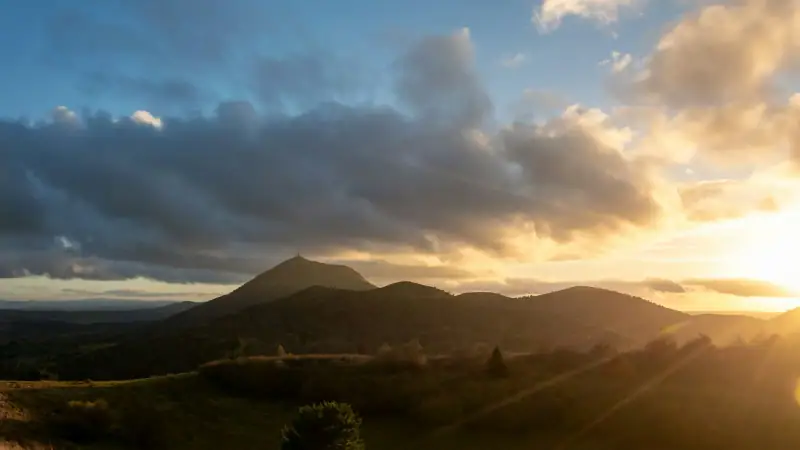
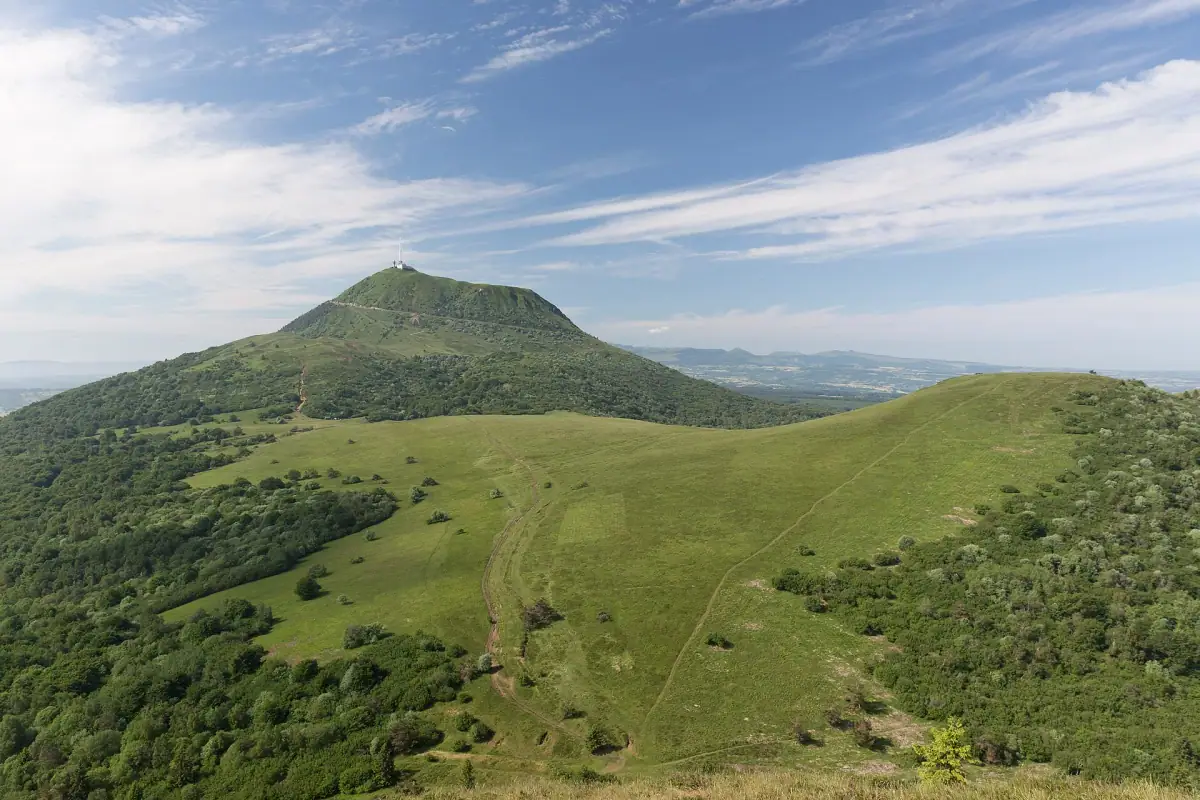
Start with the region’s most emblematic site: the Puy de Dôme. This volcano overlooks the Chaîne des Puys, a line of volcanic cones listed as a UNESCO World Heritage Site together with the Limagne fault. Its summit, at about 1,465 m (4,806 ft), offers a 360-degree panorama over the other puys, the Limagne plain and, on a clear day, the neighboring reliefs.
You have two options to get up: the climb on foot by a well-marked trail, which takes some effort but remains accessible to most walkers, or the cog railway that leaves from the foot of the volcano. The summit also holds the remains of a Gallo-Roman temple dedicated to Mercury, a reminder that these heights have been visited since Antiquity. Plan half a day, more if you like to linger at the top.
Arrive early in the morning if possible: the light is better, there are fewer people and clouds often form later in the day. Check the weather before committing, as the summit is exposed to wind.
Excursions and tours in Auvergne
Guided hikes, walks on the volcanoes and visits to book in advance.
Clermont-Ferrand in the late afternoon
Come back down to Clermont-Ferrand for a walking visit of the old center. The city is built largely of Volvic stone, a dark volcanic rock that gives the facades their almost black tint. Notre-Dame-de-l’Assomption cathedral, raised in this material, is the most striking example: its Gothic silhouette stands out from afar in the urban landscape.
Also take time to go to Notre-Dame-du-Port basilica, a jewel of Auvergne Romanesque art, listed as a World Heritage Site as part of the Routes of Santiago de Compostela in France. End with a walk in the pedestrian streets and an evening in one of the restaurants of the center, where you can taste the cheese-based specialties described in our guide to the AOP cheeses of Auvergne.
Where to sleep after this first day
Clermont-Ferrand is the most practical choice if you arrive by train or want an evening in town: the offer is wide, from downtown hotels to quieter small addresses. If you prefer nature, villages near the Chaîne des Puys offer bed and breakfasts and gîtes with views of the volcanoes, a short distance from the center.
Book early in summer and on long weekends, when the best addresses fill up quickly. Whatever you choose, choose lodging with parking: you will take the car again first thing the next morning.
Stay in Clermont-Ferrand
Compare downtown and nearby hotels for your first night.
Day 2: the Sancy Massif and its lakes
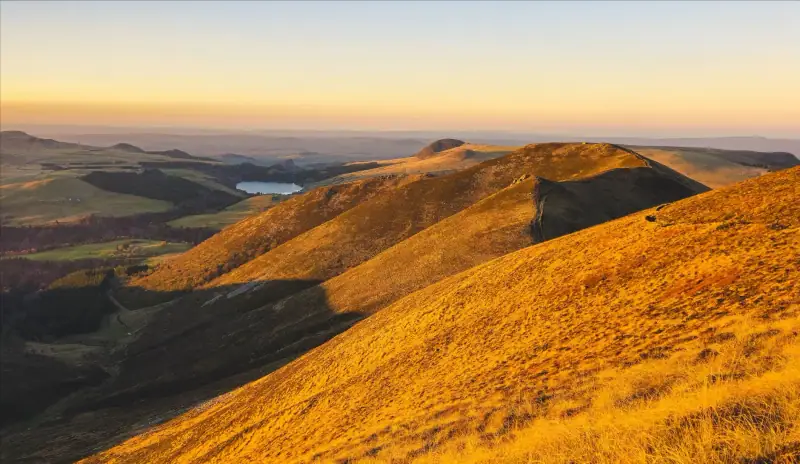
The second day takes you to the Sancy Massif, a largely eroded former stratovolcano that holds the highest point of the Massif Central, the Puy de Sancy, at about 1,886 m (6,188 ft). The drive from Clermont-Ferrand is about an hour, which leaves the whole day to explore.
Start with Le Mont-Dore, a spa and mountain resort whose 19th-century architecture recalls the era when people came here to treat respiratory ailments. It is the most common starting point to reach the summit of the Sancy: a cable car lets you gain altitude, then a marked trail leads to the highest point. Even with this help, the final climb calls for good shoes and clear weather.
If you prefer to stay at mid-altitude, many trails cross the ridges and valleys around Le Mont-Dore, with waterfalls, flowering meadows in early summer and wide views over the neighboring puys.
Lake Pavin, a crater lake
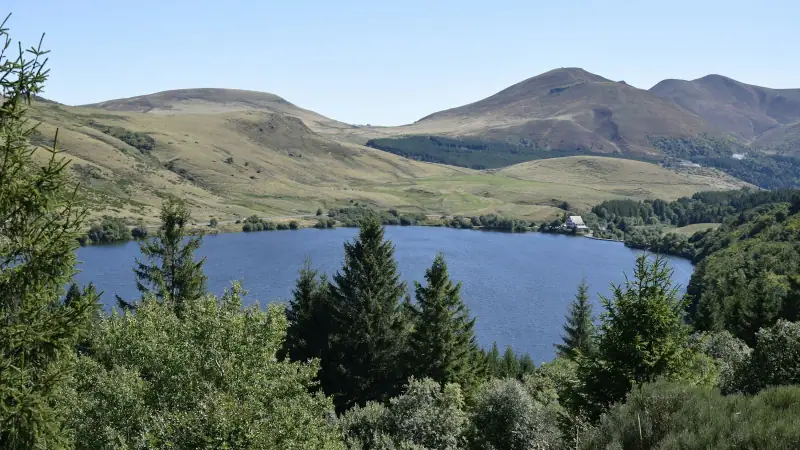
In the afternoon, head to Lake Pavin, near Besse-et-Saint-Anastaise. This lake occupies an almost perfectly circular volcanic crater, surrounded by forest. A trail goes around it: the walk is easy, lasting about one to two hours depending on your pace, and suits most families. The dark surface of the lake, framed by firs, changes appearance with the light and the season.
Then continue to Besse-et-Saint-Anastaise, a medieval village with cobbled lanes and lava houses. It is a good place to have dinner and taste a Saint-Nectaire on the spot, since the village lies in its production area.
A night in the heart of the Sancy
Hotels, gîtes and bed and breakfasts in Le Mont-Dore and around Besse.
Day 3: Salers and the Monts du Cantal
For the last day, head southwest to the Monts du Cantal, an immense volcanic massif with glacial valleys and high pastures. The drive from the Sancy is the longest of the itinerary: allow about two hours on mountain roads, winding but spectacular. Leave early to make the most of the day.
The road crosses summer-pasture plateaus where Salers cattle graze, recognizable by their mahogany coats and lyre-shaped horns. It is in this setting that Salers and Cantal are born, two AOP cheeses whose differences we detail in our guide to the cheeses of Auvergne.
Salers, a village with character
Salers is one of the most remarkable villages in the region. Its houses with dark volcanic stone walls and stone-slab roofs crowd around a central square, in a remarkably preserved medieval ensemble. Stroll the lanes, enter the regional product shops and take a break in a traditional restaurant where truffade and aligot are classics.
In the afternoon, enjoy the landscape: the region offers many walks on the plateaus and in the surrounding valleys. If you have time and conditions allow, the Puy Mary area, one of the most famous sites in the Monts du Cantal, is a much-loved hiking destination, best planned for a dedicated day rather than at the end of the route.
Heading home or extending
From Salers, Aurillac is a reasonable distance to reach a train station or continue your route. If you return to Clermont-Ferrand, allow a comfortable time margin, as mountain roads are slower than main roads. You can also add a night there to enjoy the village once the day visitors have left.
Stay in Salers
Bed and breakfasts and hotels to extend your stop in the Monts du Cantal.
Getting around: car, train and organization
To follow this itinerary as it is, a car is almost essential. Lakes, trailheads and mountain villages are poorly served by public transport, and schedules there are often limited. Renting a vehicle on arrival in Clermont-Ferrand is the simplest solution, especially if you come by train.
A few practical driving tips:
- Allow for travel times: mountain roads are winding and you will often drive more slowly than planned.
- Fill up before going up: gas stations get rarer in high-altitude areas.
- Check road conditions in winter: some high-altitude roads can be difficult or closed in the cold season.
- Download offline maps: mobile coverage is patchy in some valleys.
When to go and what to pack
The ideal period runs from May to October. Spring brings flowering meadows and summits sometimes still snow-covered; summer offers the longest days but also the biggest crowds; early fall is often very pleasant, with superb colors and calmer trails. Outside this period, check access conditions before leaving.
For equipment, bring good walking shoes, a windbreaker, a warm layer, water, sunscreen and a hat. At altitude, the weather can flip within minutes, even in midsummer. A small backpack with a picnic lets you enjoy the viewpoints without depending on restaurant hours.
Indicative budget for three days
The budget depends mostly on your type of lodging and the season. The main items are car rental, fuel, two nights of lodging, meals and a few paid admissions or activities such as the Puy de Dôme train or the Sancy cable car. Compare offers and current rates on the official sites before leaving, as they change from one season to the next.
To limit spending, you can have lunch with local products bought at markets or from producers, choose gîtes or bed and breakfasts, and choose free hikes. The region offers a lot of pleasure for a reasonable cost, especially outside school holidays.
Variations to adapt the itinerary
If you have less time, concentrate on the first two days: the Chaîne des Puys and the Sancy Massif make a complete and coherent weekend. If you have more time, devote a whole day to the Puy Mary and the Cantal valleys, or extend toward other towns in the region such as Aurillac or Vichy.
For a family trip, replace the Sancy climb with shorter walks around Le Mont-Dore and Lake Pavin, and include a visit to a volcanism park. For a food-focused trip, make more stops at farm producers and markets, and leave room in the cooler for the cheeses.
Wrapping up
Three days are enough to understand why Auvergne appeals as much to hikers as to food lovers: extinct volcanoes, crater lakes, black-stone villages and generous cooking. By keeping stages short and a little flexibility, you will enjoy every landscape without rushing. Plan your car, your lodging and your shoes, and the rest will follow.
Sources
- Panoramique des Dômes: figures checked November 2026
- Sancy tourist office (sancy.com): figures checked November 2026
Frequently asked questions
Are three days enough to visit Auvergne?
Three days let you discover the essentials of volcanic Auvergne: the Chaîne des Puys, the Sancy Massif and a village with character like Salers. You will have to make choices, as the region is large. To add Le Puy-en-Velay or Vichy, plan a week instead.
Do you need a car to follow this itinerary?
It is strongly advised. Public transport serves Clermont-Ferrand and a few towns, but the lakes, mountain villages and trailheads are much simpler to reach by car. Book it in advance in high season.
What is the best period for this loop?
From May to October, mountain roads are clear and trails passable. Summer offers the longest days but also the biggest crowds; early fall often brings beautiful colors and more calm. In winter, some high-altitude roads can be difficult or closed.
Do you need to book to climb the Puy de Dôme?
Depending on the season and the way up you choose (cog railway, on foot), a reservation can be useful, especially on weekends and in summer. Check the official Puy de Dôme site before leaving for current arrangements and hours.
Where should you sleep to limit driving?
One night in or near Clermont-Ferrand for the first day, then one night in the Sancy Massif (Le Mont-Dore or Besse-et-Saint-Anastaise) avoids long returns. The last leg to Salers can be done during the day, with a return to Clermont-Ferrand or Aurillac depending on your transport.
What equipment should you bring?
Good walking shoes, a windbreaker jacket and a warm layer, even in summer: the weather changes quickly at altitude. Add water, sunscreen and a hat, as volcanic summits offer little shade.
Is this itinerary suitable for children?
Yes, with a few adjustments. The Puy de Dôme by train, easy walks around Lake Pavin and a visit to a volcanism park appeal to younger children. Avoid linking too many kilometers of winding roads in a single day.
More Auvergne guides
Keep reading
Auvergne with kids: 15 activities sorted by age and weather
What to do in Auvergne with children? Volcanoes, lakes, animals, summer luge and rainy-day ideas, sorted by age, with tips for parents.
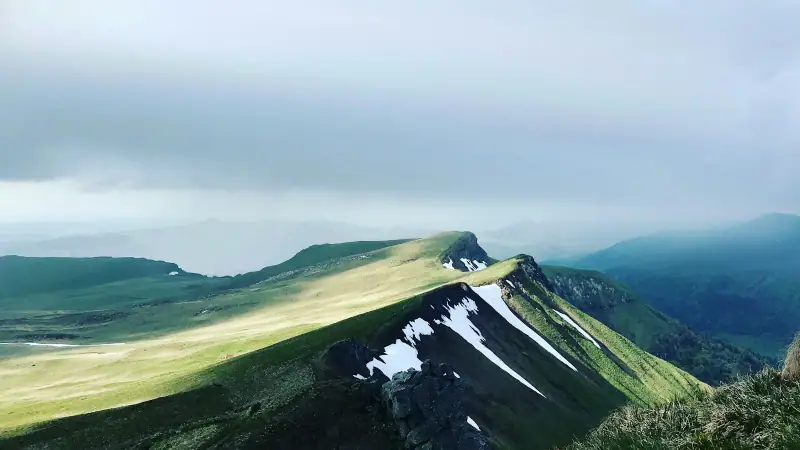
What to see in the Sancy Massif: summits, lakes and villages not to miss
What to see in the Sancy Massif: Puy de Sancy, Le Mont-Dore, Lake Pavin, Chambon, Murol, Saint-Nectaire, Besse and Orcival. Plan 2 to 4 days.
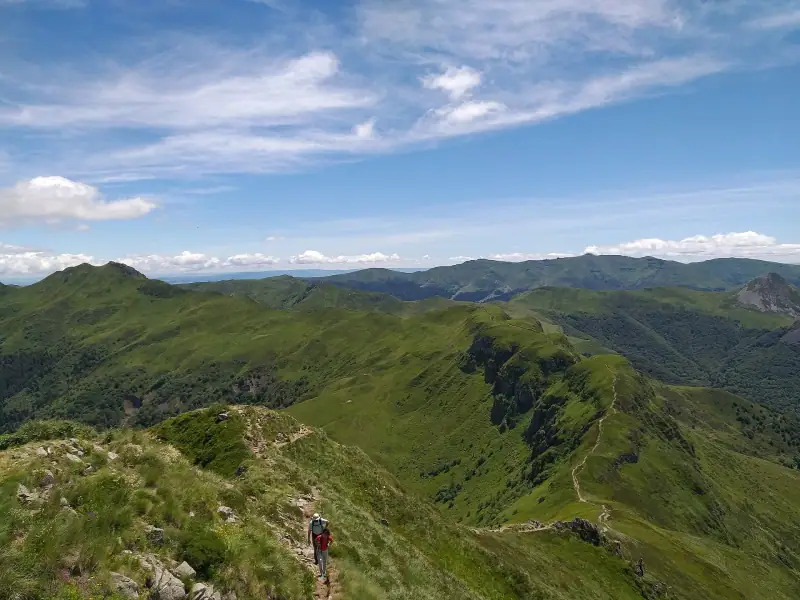
What to see in the Monts du Cantal: Puy Mary, Salers, Le Lioran and the valleys
What to see in the Monts du Cantal: Puy Mary, Plomb du Cantal, Salers, Murat, glacial valleys and summer pastures. Plan 2 to 4 days in the massif.
Ready-made
Auvergne itineraries
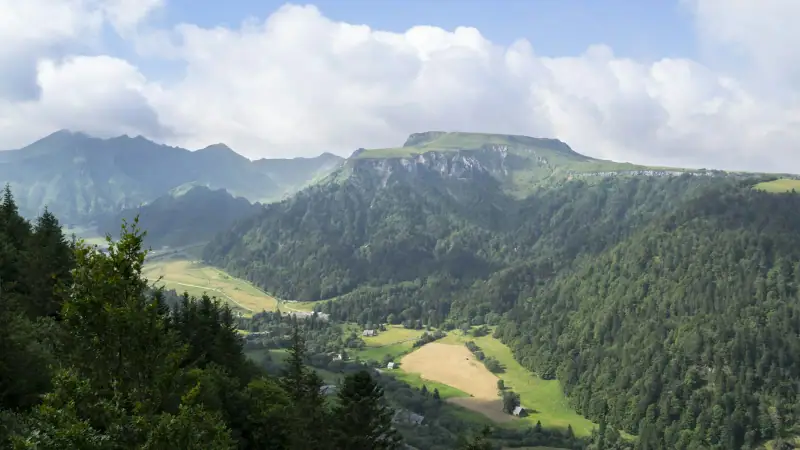
7 days
A week in Auvergne with kids: day-by-day itinerary
Clermont-FerrandLe Mont-DoreSalers
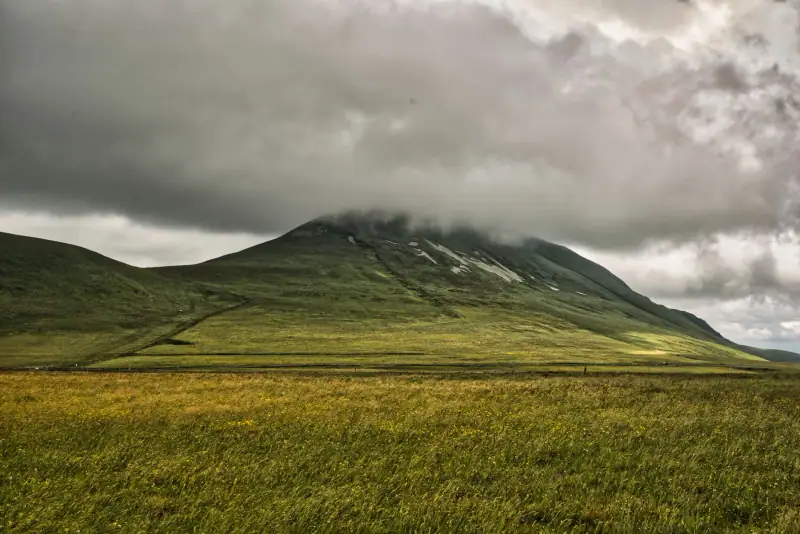
7 days
Auvergne road trip in 7 days: volcanoes, Cantal and Haute-Loire
A 7-day driving itinerary in Auvergne: Puy de Dôme, Sancy, Lake Pavin, Salers, Puy Mary, Le Puy-en-Velay. Stops, realistic drives and practical tips.