What to see
What to see in Livradois-Forez: Thiers, Ambert, La Chaise-Dieu and the high pastures
We may earn a commission when you book through links on this page, at no extra cost to you. We don't visit or try the places we cover: we summarize published sources. How we work
In short
- Three stops stand out: Thiers (French cutlery capital, half-timbered old town), Ambert (fourme cheese, paper mill, round town hall) and La Chaise-Dieu abbey (Danse Macabre).
- Two days cover Thiers and Ambert; three or four days add La Chaise-Dieu and the Forez high pastures.
- The park covers about 3,350 km2 (1,293 sq mi) east of Clermont-Ferrand; a car is strongly advised.
- Best period is May to October; the Forez mountains peak at Pierre-sur-Haute, about 1,630 m (5,348 ft).
Livradois-Forez is one of the great secrets of Auvergne. East of Clermont-Ferrand, this vast regional nature park mixes wooded hills, industrious valleys, stone villages, a medieval abbey and open ridges where herds still graze. You meet fewer tourists here than in the Chaîne des Puys or the Sancy, which is exactly its charm.
This guide answers the question “what to see in Livradois-Forez?” by following the main areas: Thiers and cutlery, Ambert and its food heritage, La Chaise-Dieu and its abbey, then the Forez mountains. This guide does not name specific restaurants or hotels: hours, rates and addresses change, and it is better to check them with the tourist offices before you leave.
Livradois-Forez at a glance
Created in 1986, the Livradois-Forez regional nature park extends over three departments: Puy-de-Dôme, Haute-Loire and Loire. It covers about 3,350 km2 (1,293 sq mi) and gathers more than 160 member municipalities. Its name combines two areas: the Livradois to the west, made of hills and plateaus, and the Forez to the east, dominated by the Forez mountains. The highest point of the park is Pierre-sur-Haute, at about 1,630 m (5,348 ft).
| Need | Short answer |
|---|---|
| Ideal length | 2 to 4 days |
| Main towns | Thiers and Ambert |
| Major historic site | La Chaise-Dieu abbey |
| Specialties | Thiers knives, fourme d’Ambert, paper |
| Best time | May to October |
| Recommended transport | Car |
The territory is vast and its attractions are scattered. Rather than aiming to see everything, choose a common thread: crafts (Thiers, Ambert), heritage (La Chaise-Dieu) or nature (Forez). To place this park within the region, see our complete guide to Auvergne.
Thiers: the cutlery capital
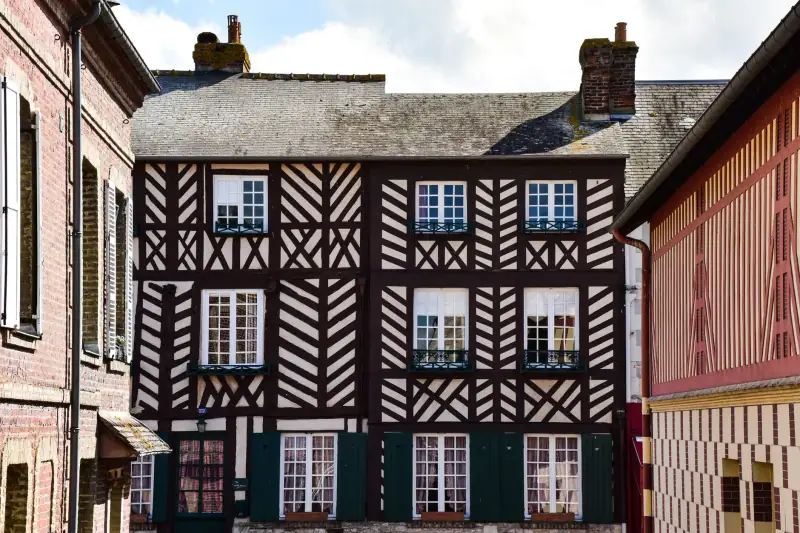
Perched on an escarpment overlooking the Durolle valley, Thiers is the natural gateway to the park. The town is about 40 km (25 mi) east of Clermont-Ferrand, which makes it an easy excursion from the regional capital, whose sights you will find in our guide to visiting Clermont-Ferrand.
Thiers presents itself as the French capital of cutlery: more than 80% of the knives made in France would come from Thiers companies, and the town has nearly a hundred businesses in the sector. This tradition relies on the water power of the streams that cut the valley.
The old town and its half-timbered houses
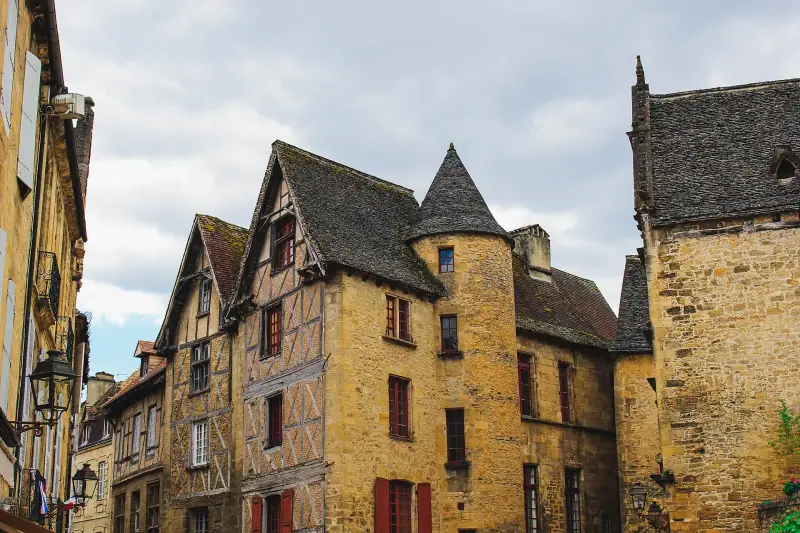
The upper part of the old town keeps many half-timbered houses, many of which date back to the 15th century. The streets are steep and narrow: wear good shoes. As you stroll, you will discover carved facades, stepped lanes and viewpoints over the valley and, on a clear day, the Forez mountains.
The cutlery museum
A museum devoted to cutlery presents the history of the trade, the craftsmen’s gestures and the variety of blades. It is the best starting point to understand why the town is famous, before entering a shop. Check hours and annual closing periods before going.
The Vallée des Rouets and the Creux de l’Enfer
The Vallée des Rouets, which descends toward the Durolle, holds old workshops where cutlers worked using water power. The site is visited on foot and gives an idea of the labor of the past. In the same area, the Creux de l’Enfer, set in a former factory, is a contemporary art venue: an interesting contrast with the medieval heritage of the upper town.
If you want to bring home a knife, buy it from a shop or a craftsman, and ask about the characteristics of the blade. A genuine Thiers knife lasts a long time, but prices vary enormously by model and finish.
Stay in Livradois-Forez
Compare lodging in Thiers and the surroundings on Booking.com.
Ambert: fourme, paper and the round town hall
About 80 km (50 mi) from Clermont-Ferrand by road, Ambert is the park’s second town. It is known for three things: its fourme cheese, its paper mill and its curious circular town hall.
The round town hall and Saint-Jean church
Ambert’s town hall is a round building, built in 1816: it was originally a grain hall, built so that the grain trade would no longer take place in the neighboring church. Saint-Jean church, in Gothic style, was built between 1471 and 1550. It holds an organ by the maker Joseph Merklin. Both monuments are easily visited on a short walk in the town center.
The Richard-de-Bas mill
In a nearby small valley, the Richard-de-Bas mill is a paper mill still in operation, whose wheel is driven by a stream. It bears witness to a papermaking tradition present in the region since the 14th century and also houses a museum. It is a very pleasant visit for families, as you can see paper made by hand.
Fourme d’Ambert
Fourme d’Ambert is a blue cheese with a veined paste, with a protected designation of origin (AOP). It used to be made in the jasseries (summer shepherd huts) of the Forez mountains during the summer pasture season. Milder than other blues, it is eaten at the end of a meal, in a salad or melted into a sauce. To place it among the region’s other cheeses, read our guide to the AOP cheeses of Auvergne.
The market and the cheesemongers of Ambert are good places to taste. Market days and hours change: ask the tourist office.
La Chaise-Dieu: the abbey and its Danse Macabre
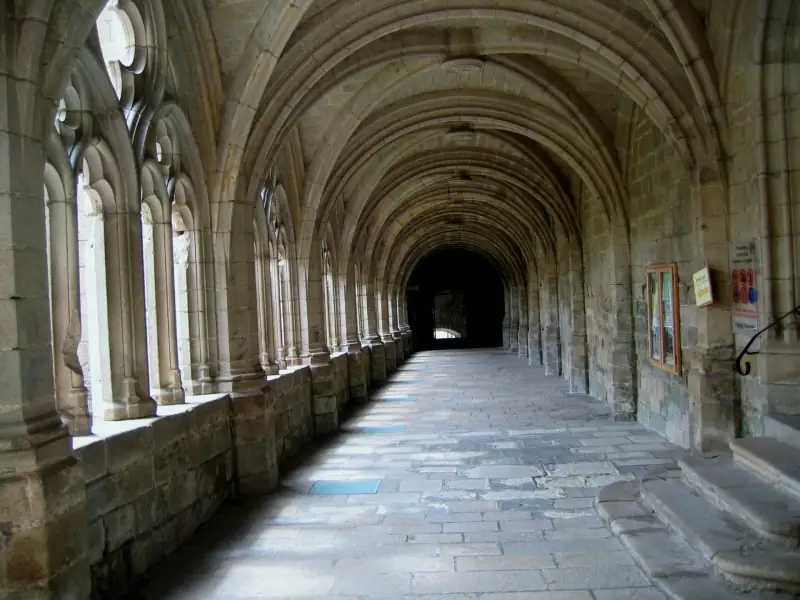
On the plateau, La Chaise-Dieu is a village in the Haute-Loire dominated by an imposing abbey. It was founded in 1043 by Robert de Turlande, a hermit, and its status as an abbey was confirmed in 1052 by King Henry I. To go deeper into the neighboring department, see our guide on what to see in the Haute-Loire.
Saint-Robert abbey church
The abbey church, in Gothic style, was built between 1344 and 1352 to house the tomb of Pope Clement VI, a former monk of the abbey (Pierre Roger, who became pope in 1342). The whole is impressive in its proportions, especially considering the modest size of the village.
The Danse Macabre and the tapestries
The Danse Macabre fresco, made around 1470, is one of the few of its kind to survive in France. It shows death leading people of all conditions, from pope to peasant, in a round. The choir also holds twelve Flemish tapestries. These two treasures alone justify the detour.
The music festival
Every year, La Chaise-Dieu hosts a classical music festival created in 1966 by Georges Cziffra. Concerts take place in the abbey church, whose 17th-century organ, restored in the 1990s, adds to the atmosphere. Dates change from year to year: check the official program before booking your stay.
Rent a car in Auvergne
Compare car rental companies: essential to link the towns, abbey and villages of the park.
The Forez mountains and the high pastures
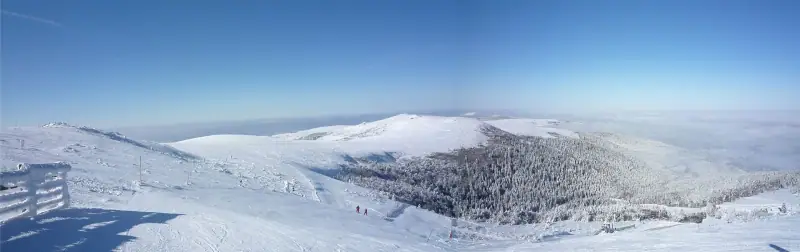
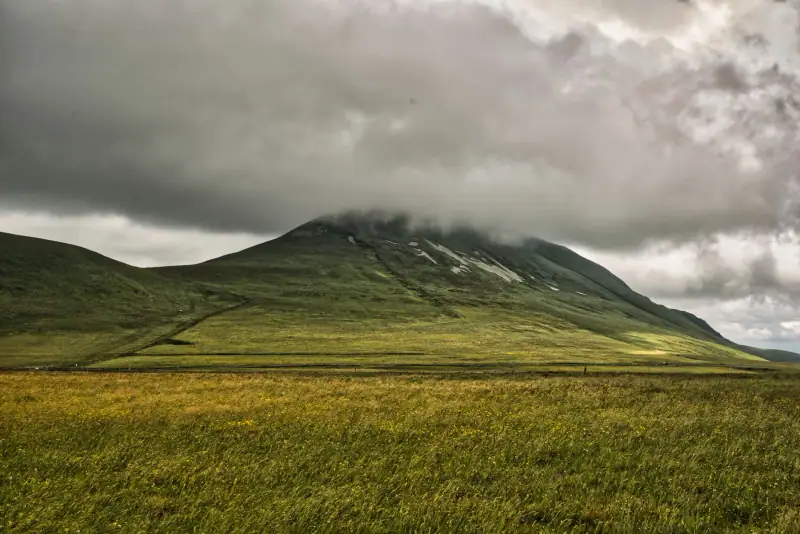
In the east of the park, the Forez mountains form a long rounded ridge whose highest point, Pierre-sur-Haute, reaches about 1,630 m (5,348 ft). The summits are covered in hautes-chaumes, high-altitude meadows where herds used to go to spend the summer. You can still see jasseries, old stone sheepfolds that served as shelter for shepherds and for cheese making.
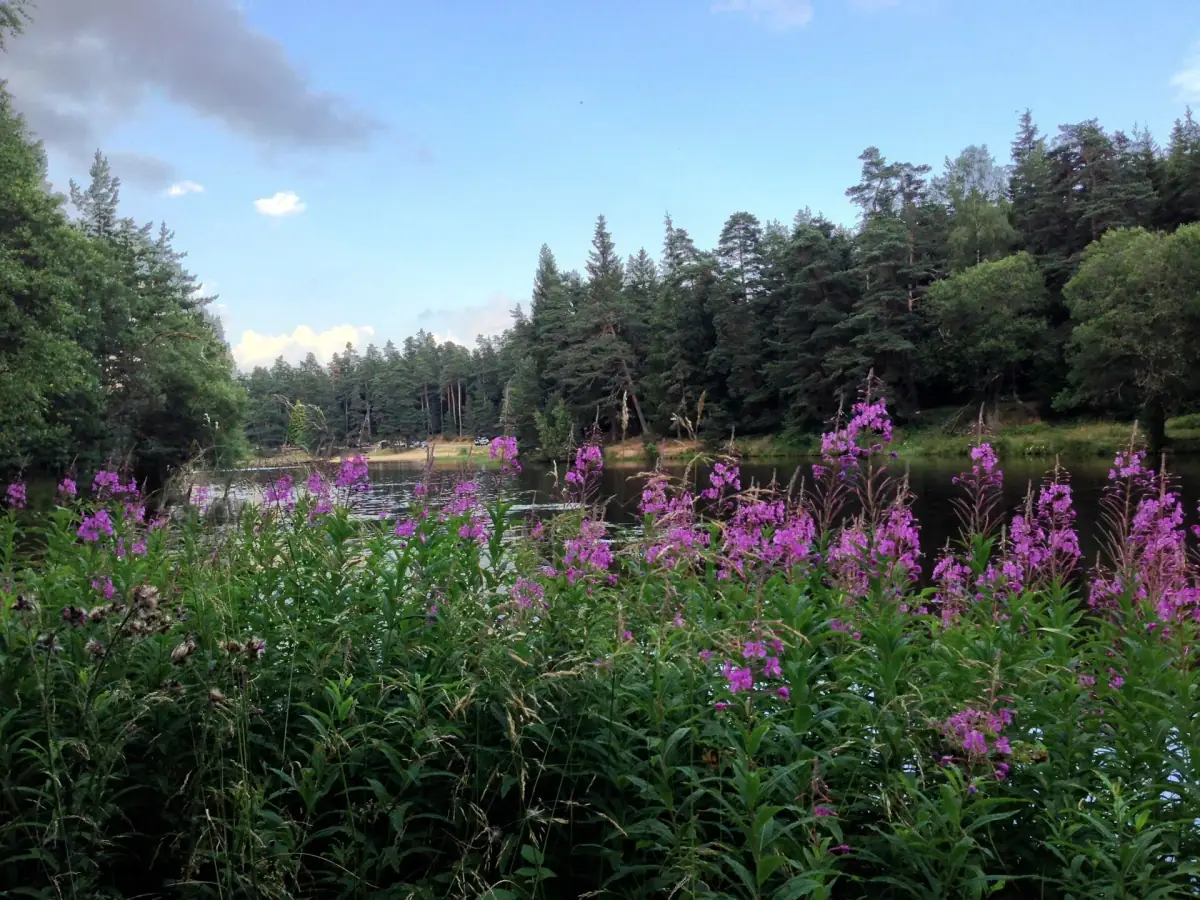
Trails here are generally moderate: long open ridges, peat bogs, fir and beech forests. In fine weather, the view stretches very far. The weather can change quickly at altitude, however: bring a jacket, water and suitable shoes. Off season, some access roads may be snow-covered.
If volcanoes attract you more, our article on hiking in Auvergne between volcanoes and lakes offers more ideas farther west.
Villages and small stops
Between the major stops, the park is full of small towns and villages to stop in: arcaded squares, Romanesque churches, wash houses, viewpoints. Rather than draw up an exhaustive list, let yourself be guided by tourist signs and the advice of tourist offices. The charm of Livradois-Forez lies precisely in these unplanned discoveries on back roads.
A few benchmarks to help:
- Mid-mountain roads are winding: allow some margin.
- Shops sometimes close early and on Sundays in small villages: stock up on provisions in advance.
- Mobile coverage can be weak in some valleys: download your maps before leaving.
What to eat in Livradois-Forez
Local cooking reflects the mid-mountain setting: dairy products, charcuterie, potato dishes. Besides fourme d’Ambert, you will find the classic specialties of the Massif Central. For an overview, read our typical dishes of Auvergne: truffade, aligot and other must-tries.
Activities and excursions in Auvergne
Discover the guided tours and experiences offered in the region on GetYourGuide.
How to organize your stay
Here is a suggested pace, to adapt to the season and your wishes:
- Day 1: Thiers. Old town, cutlery museum, Vallée des Rouets and Creux de l’Enfer.
- Day 2: Ambert. Round town hall, Saint-Jean church, Richard-de-Bas mill and a fourme tasting.
- Day 3: La Chaise-Dieu. Abbey church, Danse Macabre and tapestries.
- Day 4 (optional): Forez mountains. A hike on the high pastures, depending on the weather.
This pace is relaxed, because roads are slow. If you have a week, include the park in our 7-day road trip in Auvergne.
Getting around and choosing your season
A car is the most practical way to explore the park. Our guide to getting around Auvergne details the possibilities. To choose your period, also see when to go to Auvergne. Spring and fall suit walks; summer lets you enjoy the heights; winter calls for more caution on high-altitude roads.
Whatever the season, dress in layers: temperatures drop quickly at altitude, even after a sunny day in the valley.
Key takeaways
Livradois-Forez appeals through its authenticity: a knife capital, a town of cheese and paper, a remarkable medieval abbey and peaceful ridges. In two to four days, you will discover a different, more discreet Auvergne. Before leaving, check hours and rates with the local tourist offices.
Frequently asked questions
What should you see first in Livradois-Forez?
Three stops stand out: Thiers, the French capital of cutlery, with its half-timbered old town; Ambert, for its fourme cheese, its paper mill and its round town hall; and La Chaise-Dieu abbey, with its famous Danse Macabre. Add a walk in the Forez mountains if you like wide-open spaces.
How long does it take to visit Livradois-Forez?
Two days let you see Thiers and Ambert. With three or four days, you add La Chaise-Dieu, the Forez high pastures and a few villages. The park is large: it is better to choose one or two areas than to see everything in a rush.
Where is the Livradois-Forez regional nature park?
It extends east of Clermont-Ferrand, over three departments: Puy-de-Dôme, Haute-Loire and Loire. It covers about 3,300 km2 (1,274 sq mi) and has more than 160 municipalities. Thiers and Ambert are its two main towns.
Do you need a car to visit Livradois-Forez?
Yes, it is strongly advised. Sights are scattered, roads are mid-mountain and public transport is limited. Our guide to getting around Auvergne details the options, including car rental.
Which cheese should you try in Livradois-Forez?
Fourme d'Ambert, a blue cheese with a veined paste, has a PDO (AOP). Traditionally linked to the summer pastures of the Forez mountains, it is eaten at the end of a meal or used in cooking. The markets and cheesemongers of Ambert are good places to start.
What is the best time to go?
From May to October for walks and villages. Summer is pleasant at altitude, fall offers beautiful colors. In winter, the Forez mountains can be snow-covered and some sights close or cut their hours: check before leaving.
Can Thiers be visited in one day?
Yes. One day is enough for the old town, a museum devoted to cutlery and a walk in the Vallée des Rouets. If you want to visit a workshop or take a longer break, plan an extra half day.
More Auvergne guides
Keep reading
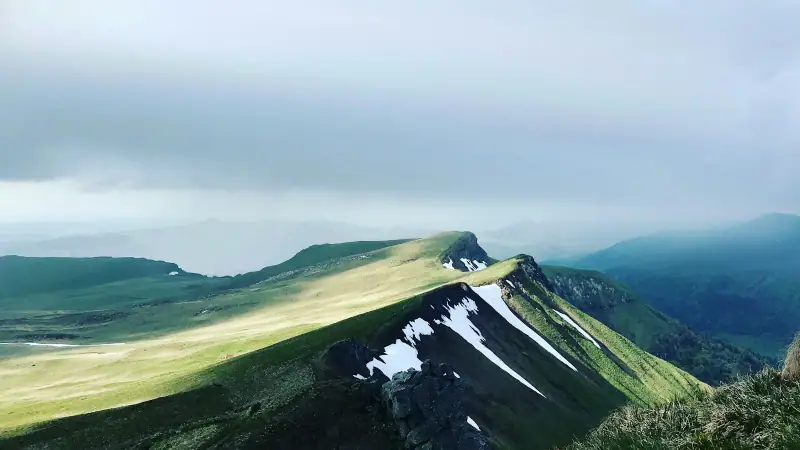
What to see in the Sancy Massif: summits, lakes and villages not to miss
What to see in the Sancy Massif: Puy de Sancy, Le Mont-Dore, Lake Pavin, Chambon, Murol, Saint-Nectaire, Besse and Orcival. Plan 2 to 4 days.
What to see in the Monts du Cantal: Puy Mary, Salers, Le Lioran and the valleys
What to see in the Monts du Cantal: Puy Mary, Plomb du Cantal, Salers, Murat, glacial valleys and summer pastures. Plan 2 to 4 days in the massif.
What to see in the Haute-Loire: Le Puy, gorges, villages and abbeys
What to see in the Haute-Loire: Le Puy-en-Velay, Polignac, La Chaise-Dieu, Brioude, Loire and Allier gorges, villages. A guide for 3 to 5 days.
Ready-made
Auvergne itineraries
7 days
A week in Auvergne with kids: day-by-day itinerary
Clermont-FerrandLe Mont-DoreSalers
3 days
3 days in Auvergne: an itinerary of volcanoes, lakes and stone villages
Clermont-FerrandLe Mont-Dore or Besse-et-Saint-Anastaise
7 days
Auvergne road trip in 7 days: volcanoes, Cantal and Haute-Loire
A 7-day driving itinerary in Auvergne: Puy de Dôme, Sancy, Lake Pavin, Salers, Puy Mary, Le Puy-en-Velay. Stops, realistic drives and practical tips.