Where to stay
Where to stay in Le Puy-en-Velay: neighborhoods and types of accommodation
We may earn a commission when you book through links on this page, at no extra cost to you. We don't visit or try the places we cover: we summarize published sources. How we work
In short
- The old town around the cathedral is the most atmospheric but has slopes and stairs; the flat lower center and station area suit luggage or a car.
- You do not need a car if you sleep in the center or near the station; a car helps for Polignac, the gorges and the lakes.
- Le Puy-en-Velay is the starting point of the via Podiensis pilgrim route, so hostels and guesthouses for walkers are common; book ahead in high season.
- One night shows the essentials; two nights allow the cathedral, Aiguilhe, Corneille Rock and the old quarter without rushing.
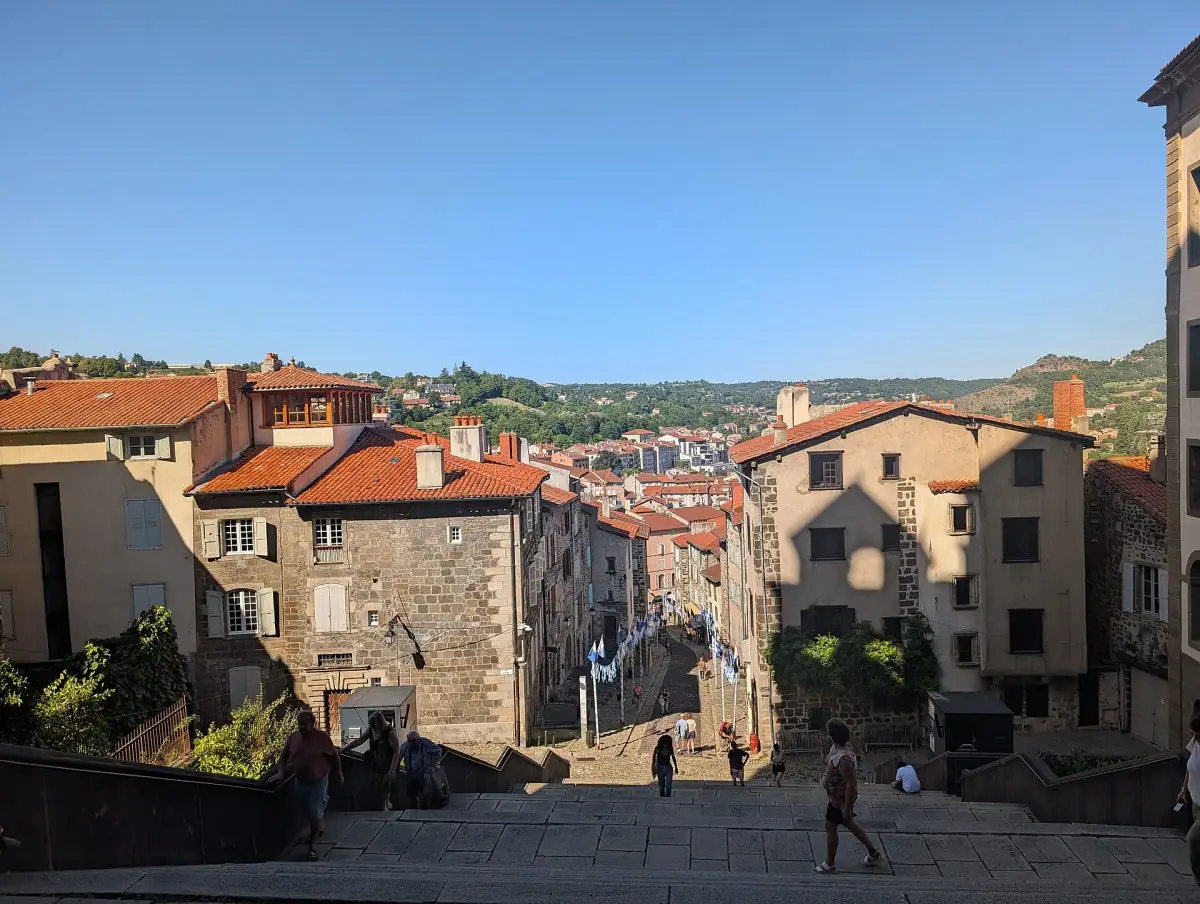
Le Puy-en-Velay is one of those towns where the choice of lodging really changes the experience. Built in a basin dotted with volcanic pinnacles, the capital of the Haute-Loire department rises up a hillside: the cathedral towers over the roofs, the Aiguilhe chapel stands on its needle of rock, and the streets of the old center go up and down without a break. Sleeping high or low, in the old town or near the station, in town or in the countryside, is neither the same effort nor the same atmosphere.
This guide goes through the main areas where you can stay, the types of lodging found there, the points to watch (relief, parking, the pilgrim season) and recommendations by traveler profile. For an overview of the region, first read our guide to where to stay in Auvergne; to discover the monuments and what to see, read our article on visiting Le Puy-en-Velay. This guide does not name specific properties: availability, reviews and rates change quickly, so it is better to compare at the time you book.
How to choose your neighborhood in Le Puy-en-Velay
The town is compact, but its relief makes it more demanding than a town on flat ground. A few minutes as the crow flies can mean a serious climb. Ask yourself three questions before booking.
- How are you arriving? By train, lodging near the station or the flat center spares you climbs with suitcases. By car, parking should be part of your criteria.
- What are you here to do? A two-day cultural getaway, the start of the Way of St. James, a base to explore the Haute-Loire: the needs differ.
- What evening pace do you want? Lively lanes within a few steps, or a silent night with a view of the volcanoes.
| Area | Best for | Atmosphere | Car |
|---|---|---|---|
| Old town and around the cathedral | First visit, couples, heritage | Cobbles, slopes, dark stone | Difficult, avoid if possible |
| Lower center and Place du Breuil | Balance of amenities and visiting on foot | Urban, shopping | Optional, car parks nearby |
| Station area | Arriving by train, short stop | Practical, functional | Not needed |
| Aiguilhe and Espaly-Saint-Marcel | Views of the rocks, quiet stay | Residential, picturesque | Optional |
| Neighboring villages (Vals-près-le-Puy, Brives-Charensac) | Budget, easy parking | Suburban | Recommended |
| Surrounding countryside | Hiking, quiet, long stays | Rural | Essential |
The old town and around the cathedral
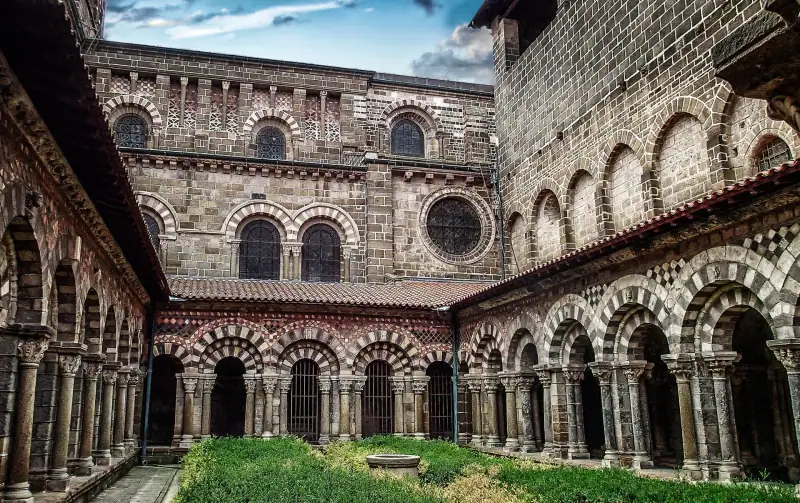
Stay in Le Puy's old town
Compare hotels, bed and breakfasts and apartments in the old center.
This is the historic heart, and the most evocative choice. The old center stretches up the slope leading to Notre-Dame-du-Puy cathedral, listed with other monuments as a UNESCO World Heritage Site as part of the Routes of Santiago de Compostela in France. Cobbled streets, dark stone facades, fountains and small craft shops create an atmosphere that no modern neighborhood can reproduce.
Advantages. You walk from your door to the main monuments in a few minutes, you walk back after dinner and you enjoy the town early in the morning, before the groups arrive. The offer is mostly small hotels, bed and breakfasts with character and apartments in old buildings, often with beams, exposed stone and views over the roofs.
Drawbacks. The relief is the main constraint. Many streets are steep, some have stairs, and it is not unusual for car access to be complicated or limited. If you travel with heavy suitcases, a stroller or reduced mobility, ask your host whether there is an elevator, a ground-floor room or level access. Old buildings do not always offer the air conditioning or soundproofing of a recent hotel: ask for a room on the courtyard side if you are a light sleeper.
Key takeaway: choose the old town for a discovery stay, a couple’s weekend or if atmosphere matters more to you than convenience. Bring good shoes and arrive light.
The lower center and Place du Breuil
Below the old town, the center is flatter and more commercial. Streets are wider, shops more numerous, and you find hotels of different standards, restaurants and cafés in a perimeter where the car and suitcases become easy to handle again. Place du Breuil, a large square well known to visitors, serves as a landmark and a parking point for walking to the historic heart.
Who is it for? This area is an excellent compromise. You are a few minutes’ walk from the monuments without suffering most of the slopes on the way back in the evening. It suits families, travelers who arrive by car and those who want shops and services nearby. In return, you lose the charm of the lanes: the atmosphere is that of an active small town more than a medieval set.
If you arrive by car, this is generally the area where parking is most accessible. Check whether your lodging has parking, whether it is paid and whether it accepts large vehicles. To understand how to reach the town and get around afterwards, see our guide to getting around Auvergne.
The station area
If you arrive by train, staying near the train station has an obvious advantage: you drop your bags in a few minutes and leave without stress the next day. The center is reached on foot, on a fairly flat route, before the climb to the old town begins.
You mostly find simple, practical hotels, suited to passing travelers, business visitors and walkers starting or finishing a stage. Prices are often gentler than in the old town and availability wider, including at the last minute.
On the other hand, the neighborhood is functional rather than picturesque. To enjoy the atmosphere of the old center in the evening, you will have to walk a little. If you have only one night and an early train the next day, it is nevertheless the most comfortable solution.
Key takeaway: choose this area for a short stop or an early departure, not for a charming stay.
Aiguilhe and Espaly-Saint-Marcel: sleeping at the foot of the rocks
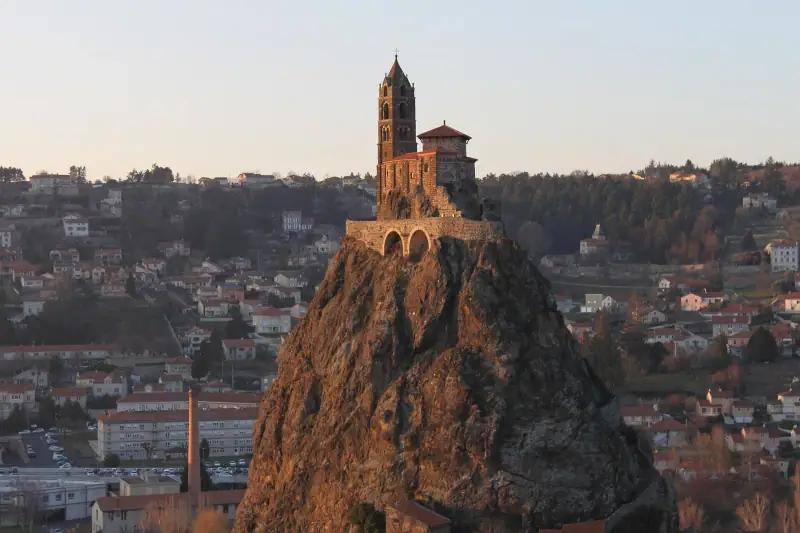
A quiet stay near Aiguilhe
Bed and breakfasts and small hotels near the rocks of Le Puy to compare.
Aiguilhe is famous for its Saint-Michel chapel, perched on top of a volcanic needle. Neighboring Espaly-Saint-Marcel is overlooked by a rock bearing a fortress. These two areas, right next to the town, offer a more residential and quieter setting than the center, with views of the pinnacles that give Le Puy its identity.
Choice is more limited here: a few bed and breakfasts, gîtes, small hotels and rentals. The main asset is the setting. Waking up facing a volcanic pinnacle, seeing the chapel lit up in the evening or reaching the trails on foot are rare pleasures. The center remains reachable on foot or in a few minutes by car, depending on the exact spot.
Before booking, check the real distance to the center and the elevation gain on the evening return. Restaurants are fewer in these areas: plan to dine in town or choose a table d’hôte (host’s dinner).
Who is it for? Couples seeking calm, photographers and travelers who want a base with a striking view without the cobbles of the center.
Neighboring villages: Vals-près-le-Puy, Brives-Charensac and beyond
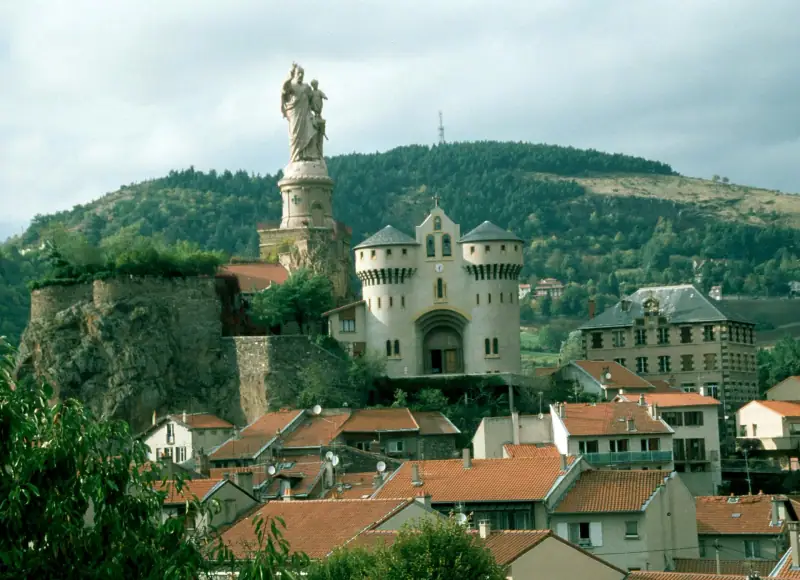
A few kilometers from the center, several villages make up the Le Puy urban area. Vals-près-le-Puy and Brives-Charensac, crossed by the Loire, offer quiet lodging, easier parking and often more affordable rates than the center. You find roadside hotels, residences and furnished rentals.
This option makes sense if you come by car, travel as a family or have a tight budget. It is not ideal if you want to enjoy the town in the evening without driving. Check bus schedules if you plan to go without a car, and keep in mind that the last buses sometimes run early.
Beyond the urban area, the Haute-Loire countryside offers gîtes, farm inns and bed and breakfasts with a garden, sometimes half an hour away by road. For a stay of several days mixing a town visit and walks, it is an attractive formula, provided you have a vehicle.
Sleeping when you set out on the Way of St. James
Le Puy-en-Velay is the starting point of the via Podiensis, one of the great French routes to Compostela. Every year, walkers begin their journey here, which has shaped the lodging offer: hiker hostels (gîtes d’étape), bed and breakfasts that welcome hikers and small establishments used to serving an early breakfast.
If you are about to walk, the night before departure matters. Choose lodging in the center or on the route out of town to avoid a long approach walk in the morning. Look for a host who offers an early breakfast, a place to dry your things and, if possible, a space to safely leave gear you do not want to carry.
If you are coming back from several days of walking, you will probably prefer a comfortable bed and a hot bath: a hotel in the lower center or by the station is then a reasonable choice. To warm up without commitment, our article on hiking in Auvergne between volcanoes and lakes gives more walk ideas.
Which type of accommodation to choose?
Each option has its strengths. Here is an overview to help you decide.
The hotel. The simplest solution: front desk, breakfast, housekeeping. Hotels in the lower center and by the station are generally easier to reach; those in the old town have more character but are sometimes less well equipped. If parking matters, ask before booking.
The bed and breakfast (chambre d’hôtes). It appeals through its welcome and local tips. In the old center as in the nearby countryside, you find them in stone houses with individually styled rooms. Breakfast is often homemade and a table d’hôte is sometimes offered by reservation. Check arrival times, often set in advance.
The gîte and the furnished rental. For a stay of several nights, an apartment or a gîte with a kitchen offers flexibility and savings, especially for families. In the old center, apartments in old buildings are charming, but car access remains the point to check.
The hiker hostel (gîte d’étape). Designed for hikers and pilgrims, it offers simple beds, sometimes in dormitories, at a moderate rate. It is the most convivial option, but also the most rustic: bring a sleeping bag liner if needed and check what is provided.
The campground. For those traveling with a tent, caravan or motorhome, the edges of the urban area offer reasonably priced solutions. Pitches closest to the center are more in demand in summer: book ahead.
Tours and activities around Le Puy
Discover the guided tours and excursions offered in the Haute-Loire.
When to book and what to expect by season
Crowds in Le Puy-en-Velay follow a particular calendar. Summer months attract regional visitors and passing tourists. In spring and fall, walkers setting out for Compostela take up part of the offer, notably hiker hostels and bed and breakfasts. The big September festivals tend to fill rooms in the center several weeks ahead.
As a rule, book early for a weekend or a festival period, and choose a free-cancellation rate when possible: the weather changes quickly at altitude, and a hiking plan can evolve. In winter, days are short and the cold can be sharp: check the heating and car access in case of snow, especially if you stay in the countryside. The rest of the year, finding a room is much easier than in high season.
To estimate your overall spending on lodging, food and transport, see our guide to the budget for Auvergne. To choose the best time to travel, our article on the best time to visit Auvergne details the seasons.
Parking and mobility: points to check
Parking is the most frequent question for anyone visiting Le Puy-en-Velay by car. In the old town, streets are narrow, sloping, sometimes pedestrian or regulated. Rather than looking for a space near the cathedral, it is better to leave the vehicle in a car park on the edge of the center or at your lodging, then walk.
Before booking, ask your host three questions: is the parking on the property or nearby, is it paid, and how do you reach it with luggage? If you travel with a large vehicle, a motorhome or a trailer, say so: some lanes are not made for them.
If you have no vehicle, sleeping in the center or near the station is enough: everything is done on foot and you can rent a car for a day for excursions to Polignac, the gorges or the volcanic lakes. For a wider loop in the region, our 7-day Auvergne road trip includes Le Puy-en-Velay among its stops, and our guide to where to stay in Clermont-Ferrand complements the urban stop.
Book near the station or the center
Practical hotels and apartments for a train arrival or an early departure.
Which neighborhood for which trip?
To sum up, here are recommendations by traveler profile:
- First stay, weekend or couple’s trip: the old town, around the cathedral, if slopes do not bother you.
- Arriving by car, family: the lower center, near Place du Breuil, to balance proximity and parking.
- Train stopover or early departure: the station area.
- Quiet, views of the rocks: Aiguilhe or Espaly-Saint-Marcel.
- Tight budget, car available: Vals-près-le-Puy, Brives-Charensac or a neighboring village.
- Walkers and pilgrims: a hiker hostel or a bed and breakfast in the center for the night before departure.
- Stay of several days in the Haute-Loire: a gîte or bed and breakfast in the countryside, with a vehicle.
Whatever you choose, do not reduce Le Puy-en-Velay to a simple stop. Between its cathedral, its perched chapel, its volcanic rocks and its lanes, the town deserves at least a quiet evening and a morning of sightseeing. Book with flexible cancellation, check parking and access, and keep a little slack in your schedule to enjoy the setting without rushing.
Frequently asked questions
What is the best neighborhood to stay in Le Puy-en-Velay?
For a first stay on foot, the old town, around the cathedral and the lanes that descend toward the center, is the most pleasant: monuments, restaurants and shops are a few minutes away. You have to accept slopes and stairs. The flat center, toward the station, is more practical with luggage or a car.
Do you need a car to stay in Le Puy-en-Velay?
No, if you stay in the center or near the station: the town is visited on foot and the train station serves the town. A car becomes useful for the Polignac fortress, the gorges and the lakes nearby, or if you stay in a gîte or bed and breakfast in the countryside.
Where do you park when you sleep in Le Puy's old town?
The old center is narrow, with sloping streets, some of them pedestrian or regulated. Ask your host where to leave the car and whether parking is provided. Failing that, find a public car park on the edge of the center and finish on foot with your luggage.
Is there lodging suited to pilgrims and hikers on the Way of St. James?
Yes. Le Puy-en-Velay is the starting point of the via Podiensis, and the town and its surroundings offer hiker hostels (gîtes d'étape), bed and breakfasts and lodging designed for walkers: early breakfasts, a place for backpacks, simple rates. Book ahead in high season.
When should you book lodging in Le Puy-en-Velay?
The busiest periods are summer, big festival weekends and the pilgrims' departure season in spring and fall. Book several weeks ahead, with free cancellation if possible. Outside these periods, the town is much quieter and availability wider.
Is it better to stay in Le Puy-en-Velay or in a neighboring village?
For one or two nights centered on the town, stay in Le Puy: you save time and enjoy the evenings. For a longer stay mixing hikes, gorges and lakes, a gîte or bed and breakfast in the surrounding countryside offers more calm, provided you have a car.
How many nights should you plan in Le Puy-en-Velay?
One night lets you see the essentials if you arrive early; two nights leave time to visit the cathedral, Aiguilhe, Corneille Rock and the old quarter without rushing. Add a third night if you want to explore the surroundings by car.
More Auvergne guides
Keep reading
Where to stay in Aurillac: neighborhoods and types of accommodation
Where to stay in Aurillac? Old town, Saint-Géraud, near the station, outskirts and countryside: compare areas and lodging for your trip.
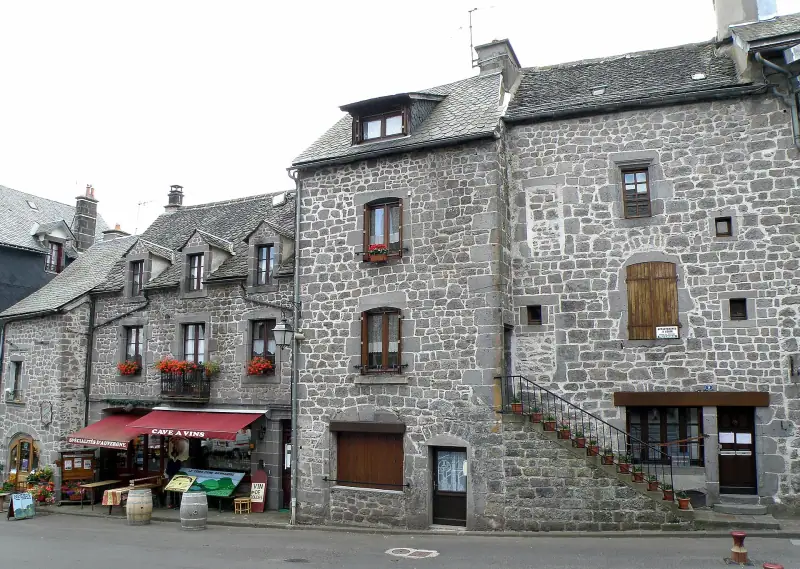
Where to stay in Besse-et-Saint-Anastaise: areas and types of accommodation
Where to stay in Besse-et-Saint-Anastaise? Medieval village, Saint-Anastaise, Super-Besse, countryside: compare areas and lodging in the Sancy.
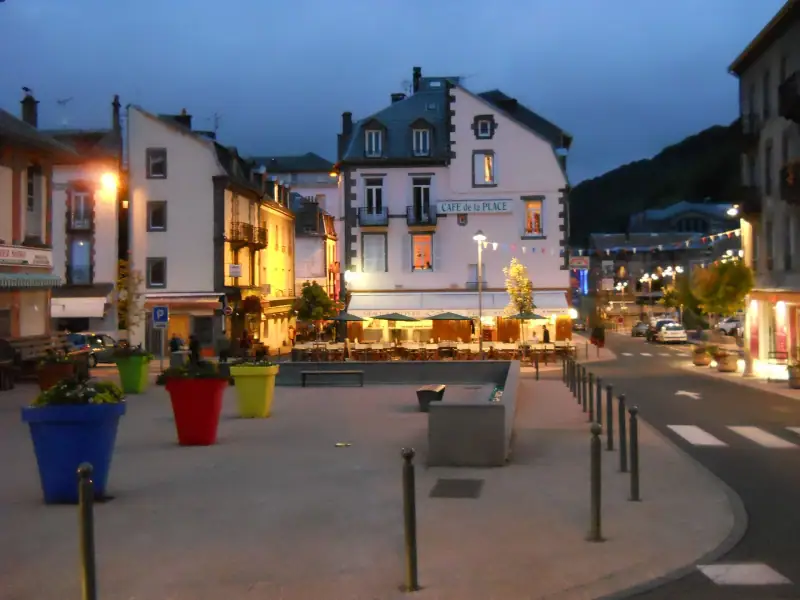
Where to stay in Le Mont-Dore: areas and types of accommodation
Where to stay in Le Mont-Dore? Spa center, cable car area, neighboring La Bourboule: compare areas and types of lodging for your trip.
Ready-made
Auvergne itineraries
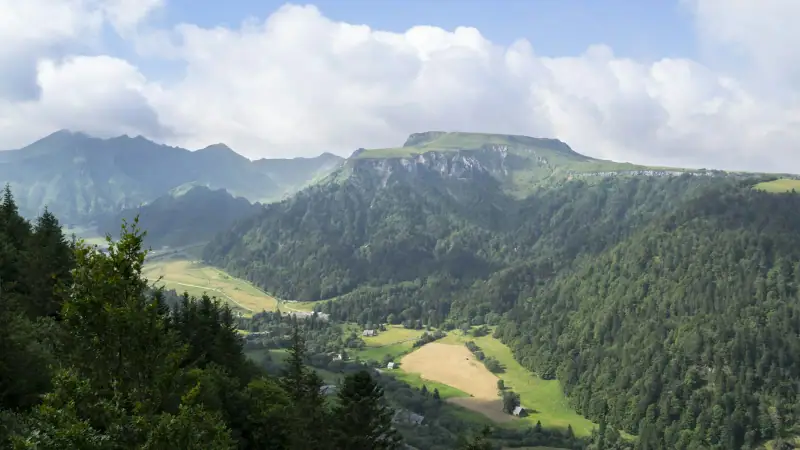
7 days
A week in Auvergne with kids: day-by-day itinerary
Clermont-FerrandLe Mont-DoreSalers
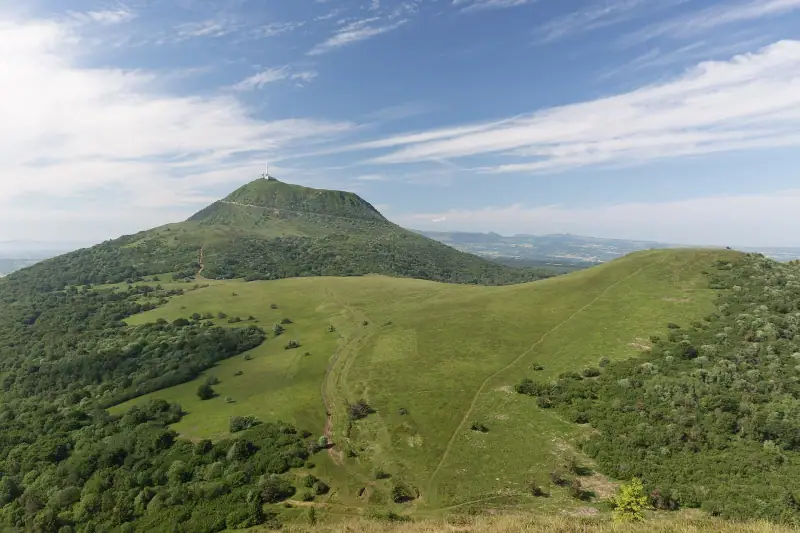
3 days
3 days in Auvergne: an itinerary of volcanoes, lakes and stone villages
Clermont-FerrandLe Mont-Dore or Besse-et-Saint-Anastaise
7 days
Auvergne road trip in 7 days: volcanoes, Cantal and Haute-Loire
A 7-day driving itinerary in Auvergne: Puy de Dôme, Sancy, Lake Pavin, Salers, Puy Mary, Le Puy-en-Velay. Stops, realistic drives and practical tips.