What to see
Visiting Linz: what to see and do on the banks of the Danube
We may earn a commission when you book through links on this page, at no extra cost to you. We don't visit or try the places we cover: we summarize published sources. How we work
In short
- A two-day weekend covers the essentials: Hauptplatz and the old town, Pöstlingberg, the Ars Electronica Center, the Lentos museum and the Mariendom.
- Linz is on the main rail axis between Vienna and Salzburg, about 1 h 15 to 1 h 30 by train from each; the center is walkable.
- The Linzer Torte is the city's emblem, and the Ars Electronica festival in September fills lodging quickly, so book early.
- Linz is generally more affordable than Vienna or Salzburg and works as a base for the Danube valley and the Salzkammergut.
Linz is Austria’s third-largest city and the capital of Upper Austria. Set on the banks of the Danube, between Vienna and Salzburg, it is often passed through without a stop. That is a pity: the former industrial city has been deeply transformed since the 2000s, to the point of becoming a European Capital of Culture in 2009, then a UNESCO City of Media Arts in 2014. Today, it mixes an old town with colorful facades, bold museums, river promenades and a traditional pastry.
This guide details what to see in Linz, how to get there, how to organize a visit of one to three days and what to taste. Because hours, prices and closing days vary with the season, always check them on official sites before you go. Linz combines very well with a wider trip: it finds its natural place in our 7-day Austria itinerary.
Why visit Linz?
Linz is not Austria’s most spectacular city, and that is precisely what makes it interesting. Here, no crowd in front of every monument: you stroll through a mid-sized city, with a little over 200,000 residents, where people really live. The Danube structures the whole visit, with riverbanks landscaped for walking, cycling and terrace breaks.
The city also has a singular identity. Its industrial past, tied to steel and chemicals, long hurt its image. Its cultural conversion changed the game: Ars Electronica, a festival and center devoted to art and technology, gave Linz an international reputation in digital arts. The Lentos museum, devoted to modern and contemporary art, completes this modern profile.
Finally, Linz offers a practical base. It sits on the main rail axis between Vienna and Salzburg, about 1 h 15 to 1 h 30 by train from each depending on the connection. You can spend two days there and then continue to the Wachau and the Danube valley, or make it a transition stop toward the Salzkammergut.
Getting there and around
The train is by far the most comfortable way. The main station is south of the center, about twenty minutes’ walk from the main square, or a few tram stops. Connections from Vienna and Salzburg are frequent during the day. Linz also has an airport, but the flight offer remains limited: most travelers go through Vienna or Salzburg.
In town, the historic center is pedestrian and covered on foot. A network of trams and buses serves the farther districts. The Pöstlingberg tram, which we describe below, is part of the urban transit network and is an attraction in its own right. Cycling is also an excellent option: the cycle path following the Danube is one of the best known in Central Europe, and the city is largely flat apart from the hill.
A rental car is only useful if you want to explore the surroundings, for example the Upper Austrian countryside or the Danube villages. In that case, you can compare rental companies.
Where to stay in Linz: the center and the surroundings of Hauptplatz let you do everything on foot, while the districts near the station are often more affordable. Compare hotels for your dates.
Hauptplatz and the old town
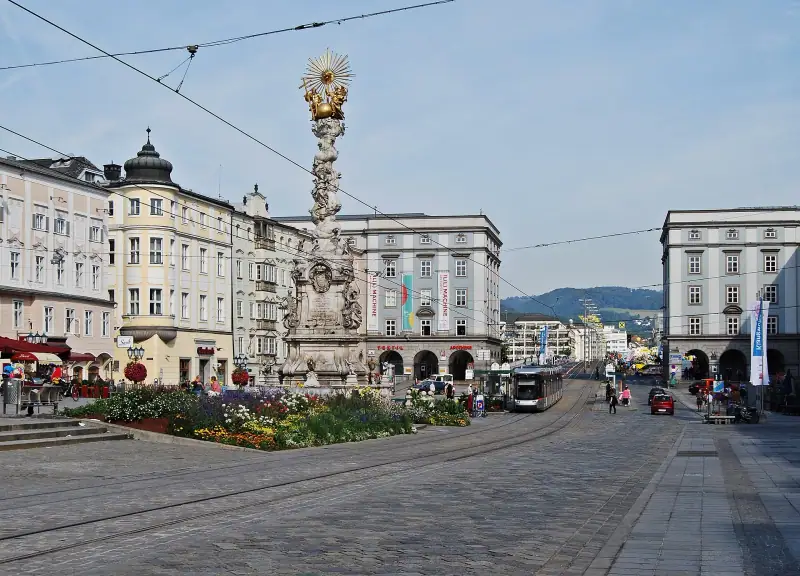
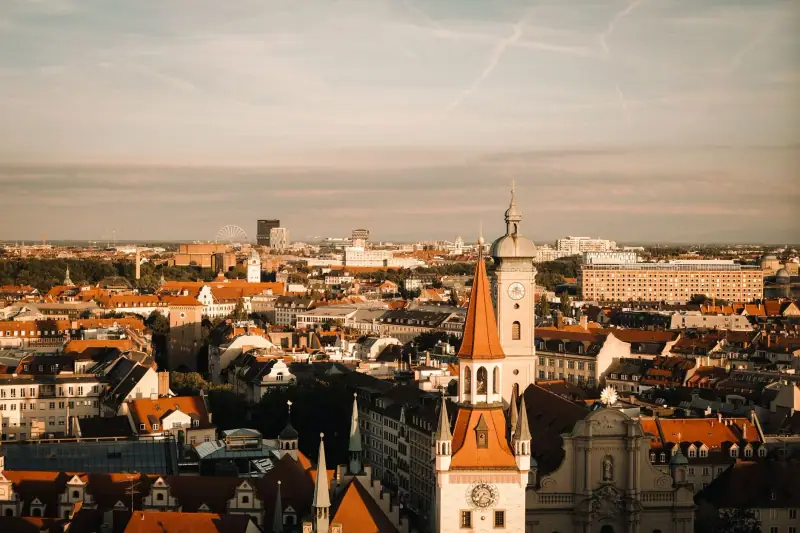
The heart of Linz is Hauptplatz, a vast rectangular square whose origin goes back to the Middle Ages. It is among the largest squares of its kind in Central Europe, with its Baroque facades painted in pastel shades and its Trinity Column (Dreifaltigkeitssäule), erected in the early 18th century in thanks for the end of the plague and wars. The Old Town Hall (Altes Rathaus) closes one side. The square hosts a market, terraces in season and Christmas events in winter.
Around the square, a few streets are worth the walk. Landstraße, a long pedestrian shopping street, crosses the center: it is the main axis for shopping and coffee breaks. Herrenstraße, quieter, holds cafés and traditional pastry shops. The inner courtyards, often hidden behind porches, offer havens of calm and sometimes galleries or designer boutiques.
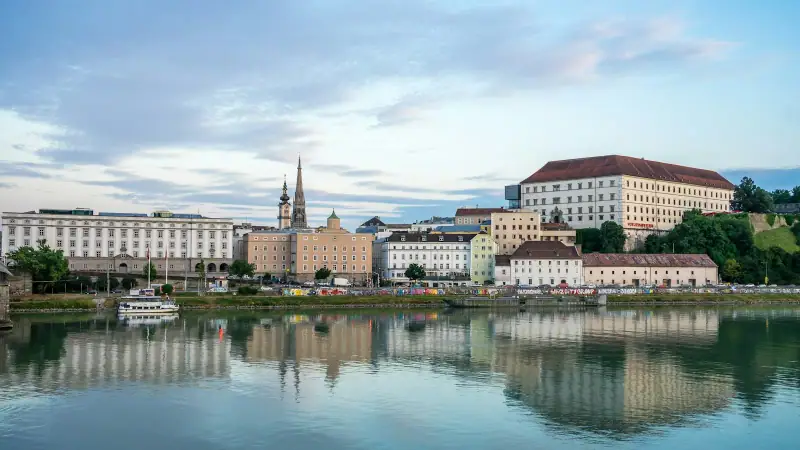
Nearby, the old town district (Altstadt) is a tangle of lanes where Renaissance buildings, Baroque churches and craftsmen’s workshops stand side by side. The Linzer Schloss, a former castle overlooking the Danube, now houses historical and cultural collections; its terraces offer a fine panorama of the river and the rooftops. Allow a good half day to wander this area without rushing.
The Pöstlingberg and its little tram
The Pöstlingberg is the hill overlooking Linz to the north of the city, and its summit is the best viewpoint for understanding the geography. You go up aboard the Pöstlingbergbahn, a mountain tram considered one of the steepest adhesion railways in Europe. The ride lasts about twenty minutes from the center and is already part of the pleasure.
At the top, the Pöstlingberg basilica, Baroque in style and visible from afar, is a well-known pilgrimage site. In front of the church, a terrace offers a panorama over the city, the Danube and, in clear weather, the foothills of the Alps. You can also enjoy a café-restaurant and small walking paths in the park. Another curiosity for families: the Grottenbahn, a little cave train with fairy-tale scenery, which mainly amuses children.
To go down, several paths let you walk back to the center through the woods, which can make a nice half-day loop. Choose a day of good weather: under clear skies, the view is one of the high points of the visit. Sunset is especially pleasant in summer.
Guided tours in Linz: old-town tour, Danube cruises, bike rides... Compare the activities offered for your dates.
The Ars Electronica Center and the Lentos
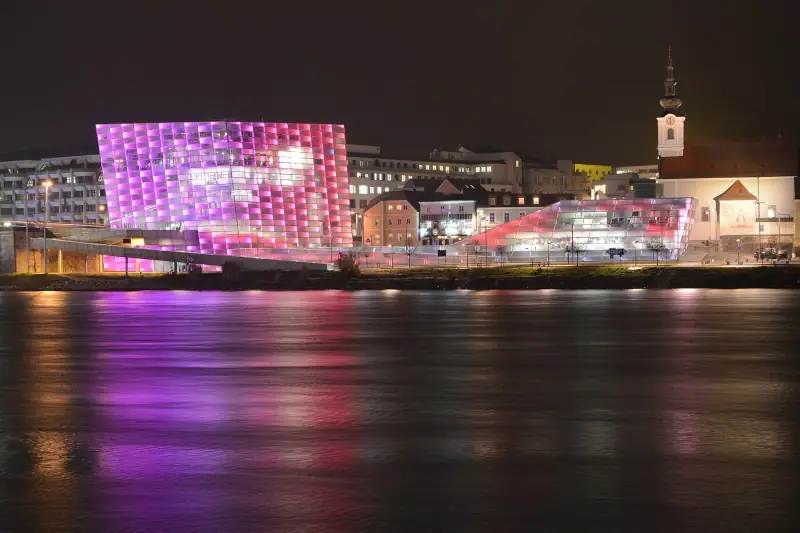
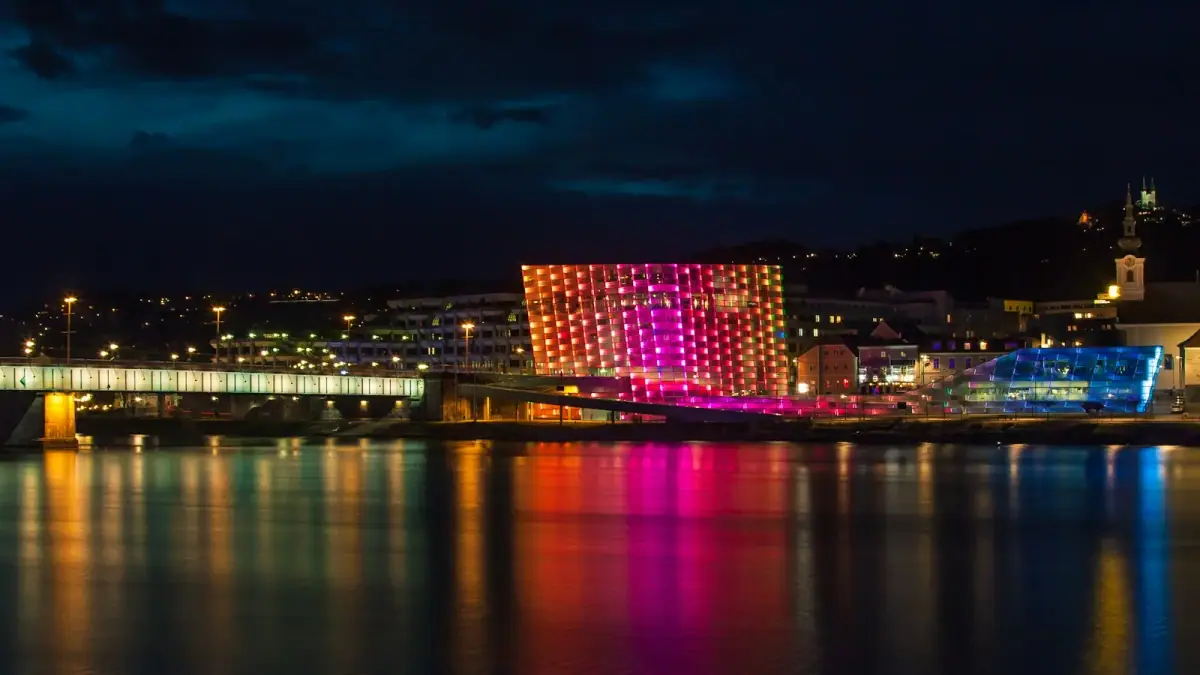
To discover Linz’s contemporary face, cross the Danube by the Nibelungen Bridge and reach the north bank. The Ars Electronica Center occupies a glass building there whose facade lights up in colors at nightfall. The venue, often nicknamed “the museum of the future”, presents interactive exhibitions on artificial intelligence, robotics, biotechnology and digital arts. It is a museum designed to be handled and experienced, popular with teenagers and technology enthusiasts. Allow about two hours.
On the south bank, the Lentos Kunstmuseum Linz is the city’s big modern and contemporary art museum. Opened in 2003, it looks like a long glass box set on the riverbank, its facade changing color in the evening. The collections cover modern and contemporary art, with regular temporary exhibitions. Even if you do not go in, the walk along the water between the two institutions is one of the most pleasant moments of a stay: you meet joggers, cyclists and residents enjoying the banks.
If you can only choose one, pick the Ars Electronica Center for a playful and original approach, and the Lentos for a more classic visit. The evening is ideal to see the lit facades from the opposite bank.
The Mariendom, Austria’s largest church
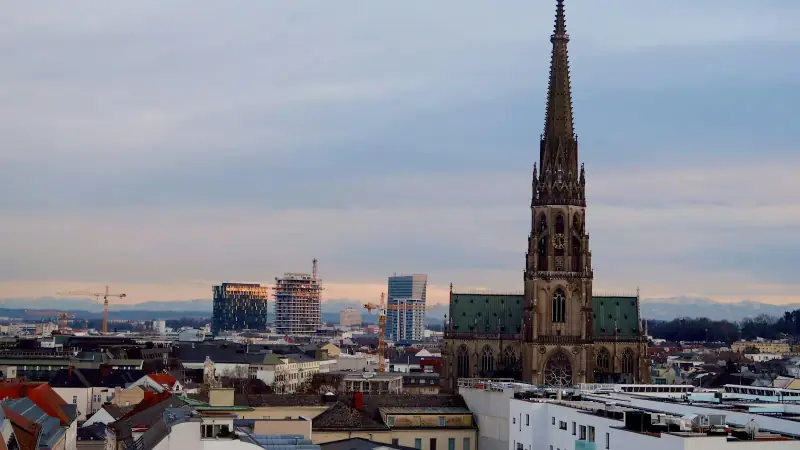
South of Hauptplatz, the Mariendom (the “Cathedral of the Immaculate Conception”, also called the Neuer Dom or New Cathedral) is a Neo-Gothic building constructed in the 19th century and completed in the first decades of the 20th. It is Austria’s largest church: it can hold about 20,000 people. Its spire peaks at about 134 m (440 ft), deliberately a few meters lower than that of St. Stephen’s Cathedral in Vienna.
Inside, the colorful stained-glass windows are the main attraction. Some evoke the history of the city and the region, which makes them also a reading of local identity. Entry is generally free, but the building is a place of worship: proper dress and discretion are expected, notably during services. The composer Anton Bruckner, born nearby, was organist at the city’s older cathedral, and the Brucknerhaus concert hall now pays tribute to him.
What to taste in Linz: the Linzer Torte and more
The Linzer Torte is the city’s great culinary pride. This cake, with a spiced shortcrust pastry filled with almonds or hazelnuts, covered with red currant jam and decorated with a lattice of dough, is considered one of the oldest known cakes in the world. Its recipe is attested since the 17th century. There are many variants, more or less spiced, and each pastry shop defends its own: taste several to compare.
For the rest, Upper Austrian cuisine is hearty. You find dishes based on meat, potatoes and flour, like Knödel (dumplings), as well as freshwater fish from nearby lakes and rivers. Breweries and traditional Gasthäuser serve good portions, often with local beer. For a broader overview of the country’s specialties, see our guide what to eat in Austria.
For lunch, move a few streets away from Hauptplatz: neighborhood inns and old-town cafés are generally more affordable and more authentic. Farmers’ markets are also a good way to taste cheeses, cold cuts and seasonal fruit without booking.
Taste the region: food tours, tastings and culinary discoveries in Upper Austria. Compare the experiences offered.
Linz and its 20th-century history
A visit to Linz would not be complete without mentioning its recent history. Adolf Hitler attended school there in his youth and, after the Anschluss of 1938, the city was given a special status by the Nazi regime, which planned large development projects there. Linz then became a major industrial hub, and the steel industry born at that time is the ancestor of today’s big groups.
The city today acknowledges and questions this past, notably through its cultural institutions and places of remembrance. The memorial of the former Mauthausen concentration camp is about thirty kilometers (19 mi) from Linz. It is visited in a spirit of reflection, and it is advisable to devote half a day to this visit, preparing the trip in advance. It is not a light excursion, but it is an important stop for understanding Austria’s 20th-century history.
What to do around Linz
If you have an extra day, the region offers several possibilities. Going up or down the Danube lets you discover villages, abbeys and valley landscapes. The Danube valley continues east to the Wachau, famous for its vineyards and its Melk Abbey: our article on the Wachau and the Danube valley details this excursion.
To the southwest, the Salzkammergut landscapes are reached in a few dozen minutes by road or regional train, with its lakes and villages. For Hallstatt and its surroundings, see our guide Hallstatt and the Salzkammergut. To go farther, Salzburg is within train reach: see Salzburg in 2 days.
A car makes these outings easier, especially if you want to stop in small villages or on the Danube roads. You can compare rental companies.
Rent a car: to explore the Danube valley, the villages of Upper Austria and the Salzkammergut at your own pace, compare rental companies.
Organizing your visit: length and program ideas
With a single day, start with Hauptplatz and the old town in the morning, have lunch in an inn in the center, then go up to Pöstlingberg early in the afternoon. End with a walk along the Danube and, if the weather allows, a visit to the Ars Electronica Center at nightfall to see its lit facade. It is dense but doable: everything is relatively close.
With two days, spread the visits better. On the first day, devote yourself to the old town, the Linzer Schloss and the Mariendom; on the second, to the Ars Electronica Center, the Lentos and a walk on the riverbanks, with a pastry stop to taste the Linzer Torte. This formula lets you enjoy the city without rushing.
With three days, add an outing: the Mauthausen memorial for those who wish, a day in the Danube valley or an excursion toward the Salzkammergut. Linz works very well as a base for exploring the region, with hotels generally cheaper than in Vienna or Salzburg. To compare options, see our guide where to stay in Austria.
When to visit Linz
Linz can be visited all year, but spring and early fall are the most pleasant: temperatures are mild, the Danube terraces are open and walks on foot or by bike are ideal. Summer can be hot, but it remains very lively by the river. In September, the Ars Electronica festival turns the city into a digital-art laboratory: book early if you want to attend, as lodging fills quickly.
Winter is colder, sometimes with snow, but the Christmas markets bring a nice atmosphere. Our guide to Christmas markets in Austria will help you choose your destinations. For a full picture of the seasons, read when to go to Austria.
Practical tips
Bring comfortable shoes: the old town lanes are partly cobbled and the walk down from Pöstlingberg can be slippery after rain. Bring a light jacket in every season, as the weather changes quickly on the Danube.
On budget, Linz is generally more affordable than Vienna or Salzburg, as our article on the budget for a trip to Austria details. If you stay several days, find out whether a local tourist pass exists on the city’s official site before booking your admissions.
Austria being in the European Union does not mean your home mobile plan works there: check your carrier’s international plan before you go, or use a travel eSIM. Finally, consider travel insurance to cover medical costs and cancellation.
With its accessible old town, its panorama over the Danube, its forward-looking museums and its traditional pastry, Linz deserves much more than a simple stop between two stations. It speaks to travelers who like to discover a lesser-known Austria, at a quiet pace, before continuing to Vienna, Salzburg or the Salzkammergut. Do not hesitate to give it at least a weekend: the city knows how to reward those who take the time to discover it.
Frequently asked questions
How long does it take to visit Linz?
A two-day weekend is enough to see the essentials: Hauptplatz and the old town, Pöstlingberg, the Ars Electronica Center, the Lentos museum and the Mariendom. With a single day, focus on the center, the climb to Pöstlingberg and one of the two art institutions. A third day lets you explore the surroundings.
Is Linz worth the detour?
Yes, especially if you like authentic cities off the tourist trail. Linz does not have the fame of Vienna or Salzburg, but it offers a pleasant old town, a famous viewpoint, contemporary and digital art museums and real local life, with generally shorter queues.
How do you get from Vienna or Salzburg to Linz?
The train is simplest: allow about 1 h 15 to 1 h 30 from Vienna and a similar time from Salzburg, depending on the connection. Linz is on the main rail axis between the two cities, which makes it a natural stop. Check schedules and fares on the rail operator's website before booking.
What should you taste in Linz?
The Linzer Torte is the city's emblem: a shortcrust cake with almonds or hazelnuts, filled with red currant jam and topped with a lattice of dough. It is enjoyed in the pastry-tea rooms of the center. It also makes an easy souvenir to bring back.
Is Linz easy to visit without a car?
Yes. The center is walkable, and trams, buses and the Pöstlingberg tram serve the rest. A car is only useful for exploring the Upper Austrian countryside or the Danube valley beyond the city.
Can you visit the Mauthausen memorial from Linz?
The memorial of the former concentration camp is about thirty kilometers (19 mi) from Linz. It is visited in a spirit of reflection and takes at least half a day. Find out about access and visiting conditions on the memorial's official website before going.
More Austria guides
Keep reading
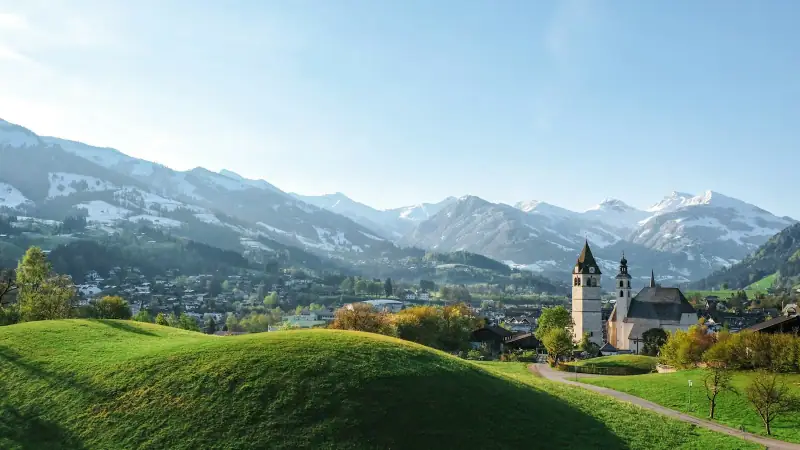
Visiting Kitzbühel: what to see and do in the heart of Tyrol
What to see in Kitzbühel? Old town, Kitzbüheler Horn, Schwarzsee, the Streif and Hahnenkamm: a guide to plan your stay in Tyrol's famous resort.
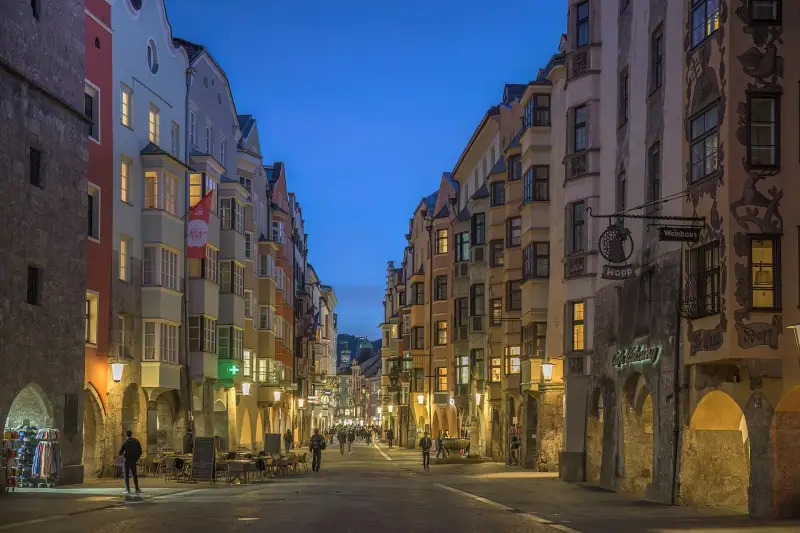
Innsbruck and Tyrol: what to do between city and mountains
What to see in Innsbruck and Tyrol? Old town, Nordkette, Bergisel, Ambras Castle: a guide to plan 2 to 3 days between heritage and Alpine peaks.
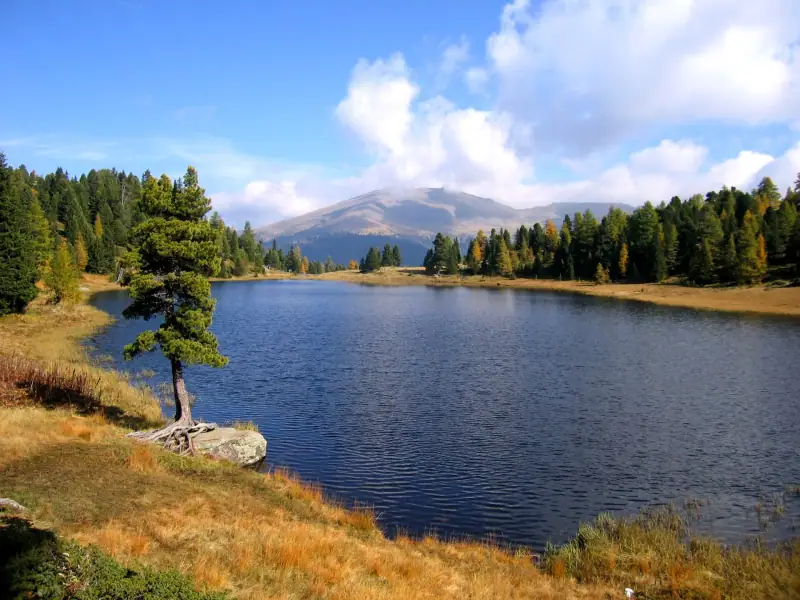
What to see in Styria and Carinthia: lakes, vineyards and mountains of southern Austria
What to see in Styria and Carinthia? Wine road, Admont Abbey, Dachstein, Wörthersee, Grossglockner and castles: a guide to southern Austria.
Ready-made
Austria itineraries
3 days
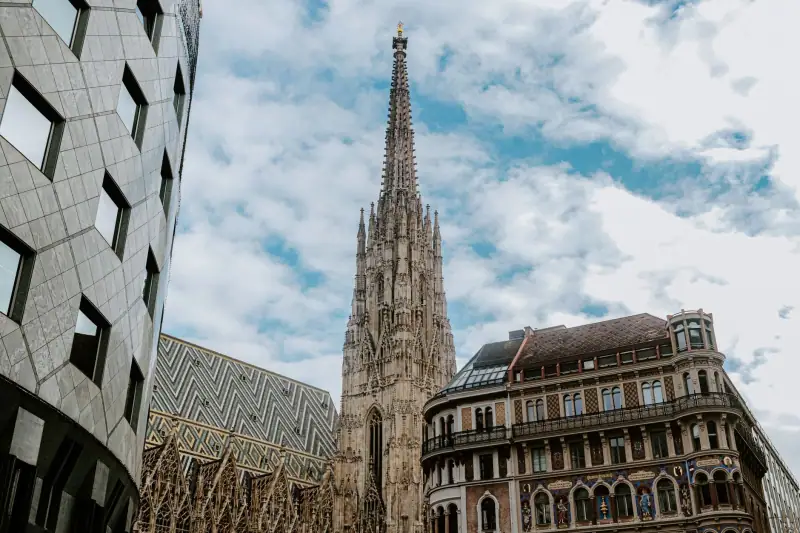
Vienna in 3 days: a day-by-day itinerary to see it all
What to see in Vienna in 3 days: the Ring, Hofburg, Schönbrunn, Belvedere, Prater and cafés, as a walking and tram itinerary with practical tips.
7 days
Austria in 7 days: Vienna, the Wachau, Salzburg, Hallstatt and Innsbruck
A one-week itinerary in Austria: Vienna, the Wachau, Salzburg, Hallstatt and Innsbruck, with train journeys, day-by-day stops and tips on where to stay.
2 days
Salzburg in 2 days: an itinerary through Mozart, the fortress and the gardens
What to see in Salzburg in 2 days: old town, Hohensalzburg Fortress, Mozart's birthplace, Mirabell Gardens and Hellbrunn, as a walking itinerary.