What to see
Visiting Graz: what to see and do in the capital of Styria
We may earn a commission when you book through links on this page, at no extra cost to you. We don't visit or try the places we cover: we summarize published sources. How we work
In short
- Two days cover the essentials: the old town, the Schlossberg, the Kunsthaus and Eggenberg Palace; with one day, focus on the historic center and the castle hill.
- The center is largely pedestrian and trams serve farther sites; the train from Vienna takes about 2 h 30 to 3 h.
- The historic center has been UNESCO-listed since 1999, and Eggenberg Palace was added in 2010; its state rooms are open only part of the year.
- A third day leaves room for the South Styrian vineyards, where a car makes exploring easier.
Graz is Austria’s second city, but it remains largely off the main circuits. That is precisely what makes it charming: a red-roofed UNESCO old town, a hill planted in the middle of the center, bold contemporary architecture and real student life, in a region known for its vineyards and hills. Capital of Styria, in the southeast of the country, it can be visited at your own pace, without the crowds of Vienna or Salzburg.
This guide presents what to see, how to organize your visit and what to expect there. Hours, prices and closing days change with the season: check them on official sites before you go. If Graz is a stop on your trip, you will find it as a complement to our 7-day Austria itinerary.
Why visit Graz?
Graz has many assets for a city trip. Its historic center, one of the best preserved in Central Europe, has been on UNESCO’s World Heritage list since 1999. The city was also European Capital of Culture in 2003, which left it two modern constructions that have become emblematic: the Kunsthaus and the island on the Mur. It has also been recognized as a UNESCO City of Design, which shows in its shops, galleries and public spaces.
Another advantage is that the city is compact. Almost everything that matters lies within a radius of a few hundred meters around the main square, Hauptplatz, and the Mur River that crosses the center. The many students give the cafés and terraces a relaxed atmosphere, and the proximity of the Styrian countryside lets you combine city and wine tasting.
For a comparison with the capital, read our guide Vienna in 3 days: Graz offers a calmer experience, with generally lower prices and shorter queues.
Getting there and around
From Vienna, the train is the most practical: allow about 2 h 30 to 3 h, with several departures a day. The station is west of the center, a short tram ride or walk from the old town. Graz also has an international airport, used by several scheduled routes, but many travelers arrive via Vienna.
In town, the center is easy to cover on foot. Trams serve the farther districts, including Eggenberg Palace. Cycling is very common: the city is flat, apart from the Schlossberg hill. A rental car is only useful if you plan to explore the countryside and the wine roads. In that case, compare rental companies.
Where to stay in Graz: the old town is ideal for doing everything on foot, while the districts across the Mur are often more affordable. Compare hotels for your dates.
The old town and Hauptplatz
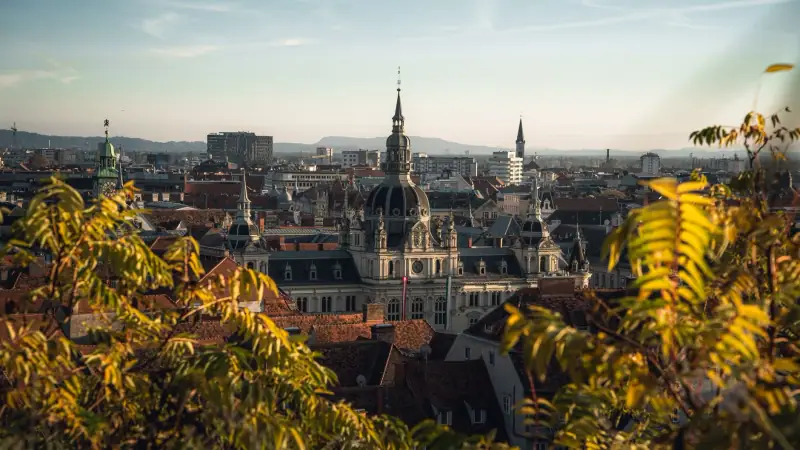
Start with the historic heart. Hauptplatz is the big square in the center, lined with colorful facades and dominated by the city hall. It hosts a market and, in winter, part of the Christmas festivities. It is an ideal starting point to get your bearings before heading into the neighboring lanes.
Herrengasse, a pedestrian shopping street starting from the square, links several landmark buildings. You pass arcaded inner courtyards, often hidden behind plain carriage gates: do not hesitate to push a few open. The city is known for these passages, which open onto cafés, shops or old staircases.
The Landhaus, former seat of the Styrian Estates, is one of the city’s finest Renaissance examples, with an arcaded courtyard. Nearby, the Armory (Landeszeughaus) houses an immense collection of weapons and armor kept in their original setting, presented as the largest of its kind in the world. It is a surprising visit, even if you are not especially interested in military history.
For the religious side, the cathedral and the neighboring mausoleum, dedicated to Emperor Ferdinand II, are worth a detour. They illustrate the weight of the Habsburgs in the city’s history; in the 16th century, it was one of the residences of the Inner Austrian branch of the dynasty.
The Schlossberg and the Clock Tower
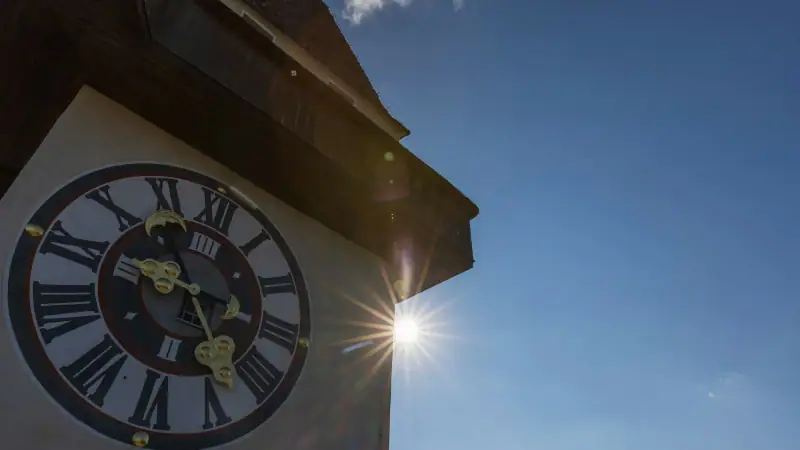
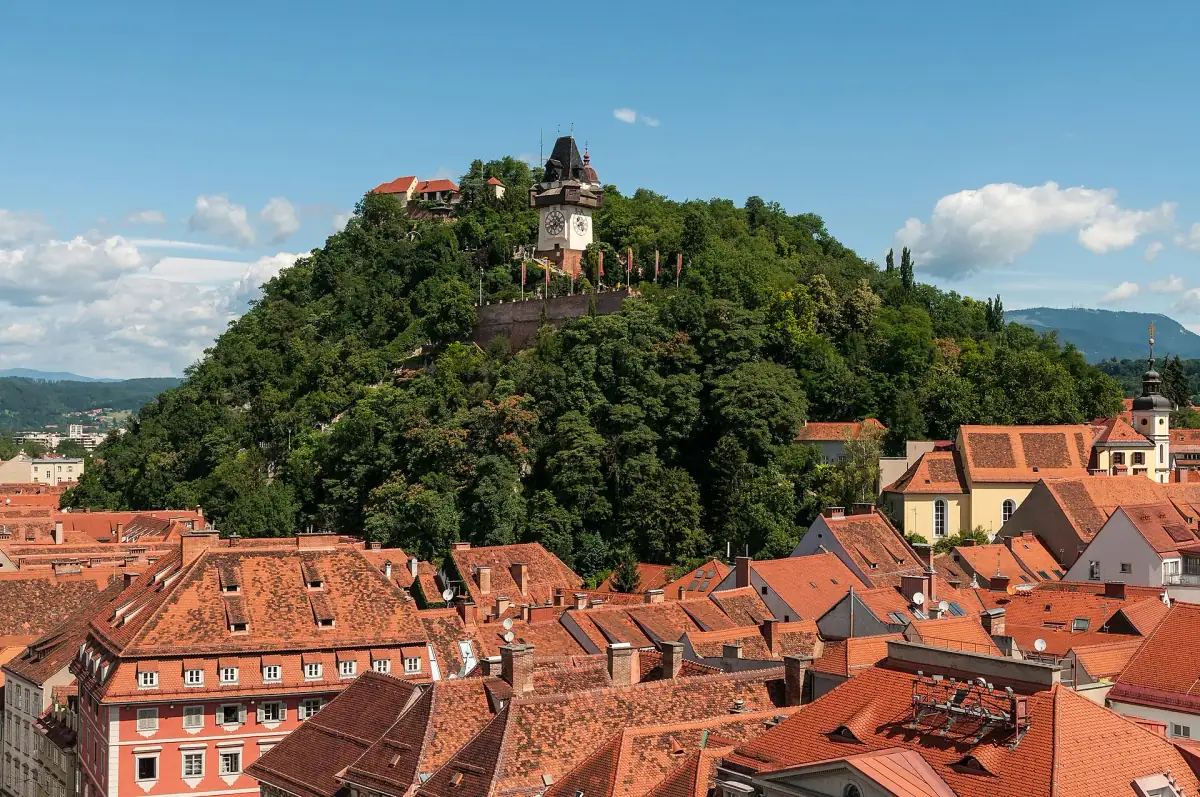
The Schlossberg is the hill rising in the middle of the center, about 120 m (394 ft) above the city. It carries Graz’s emblem: the Clock Tower (Uhrturm), recognizable by its large dial. A fun peculiarity is that the hands’ roles are reversed: the big one shows hours and the small one minutes, a trick inherited from the time when the hour had to be readable from afar.
There are several ways up. A funicular and an elevator carved into the rock reach the top effortlessly, while stairs and paths offer a more athletic climb of a few dozen minutes. At the top, the park is pleasant for a break, with a café-restaurant and clear views over the red rooftops, the Mur and the hills.
Only a few elements of the fortress remain, as Napoleon’s troops had the stronghold dismantled in the early 19th century. The Clock Tower and the neighboring belfry were spared thanks to a buyout by the townspeople. Allow about an hour and a half for the climb, the walk and the descent, and choose a moment of good weather to enjoy the view.
Guided tours in Graz: old-town tour, walking or cycling circuits, tastings in the region... Compare the activities offered for your dates.
The Kunsthaus and the island on the Mur
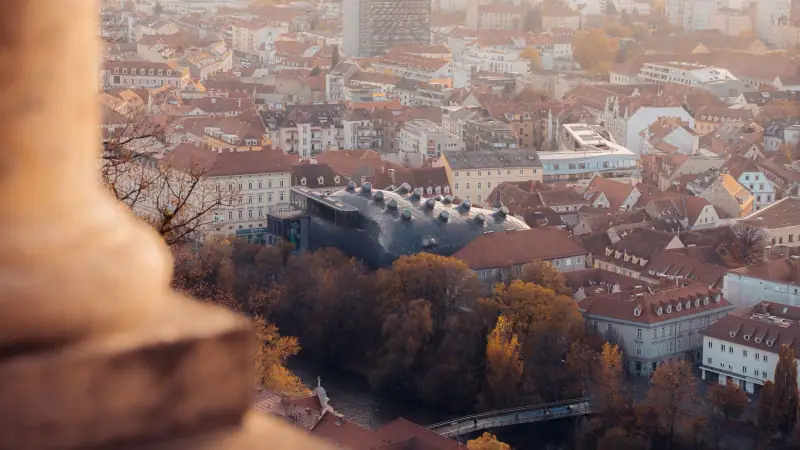
To discover Graz’s other face, cross the river. The Kunsthaus, a contemporary art museum opened in 2003 for the European Capital of Culture, looks like a big blue bubble with organic curves, nicknamed the “Friendly Alien”. It was designed by the British architects Peter Cook and Colin Fournier, and deliberately contrasts with the neighboring tiled roofs. Even without going in, the exterior is worth a look, especially at nightfall when the facade is lit.
A few steps away, the island on the Mur (Murinsel) is a steel and glass platform shaped like a shell, set on the river. It was designed by the American artist Vito Acconci and is reached by two footbridges. There is a café and a small space for performances. It is popular with residents and very pleasant for a break above the water.
These two creations show that Graz is not a city frozen in its past: it readily mixes old architecture and contemporary boldness, which gives the walk its particular rhythm.
Eggenberg Palace
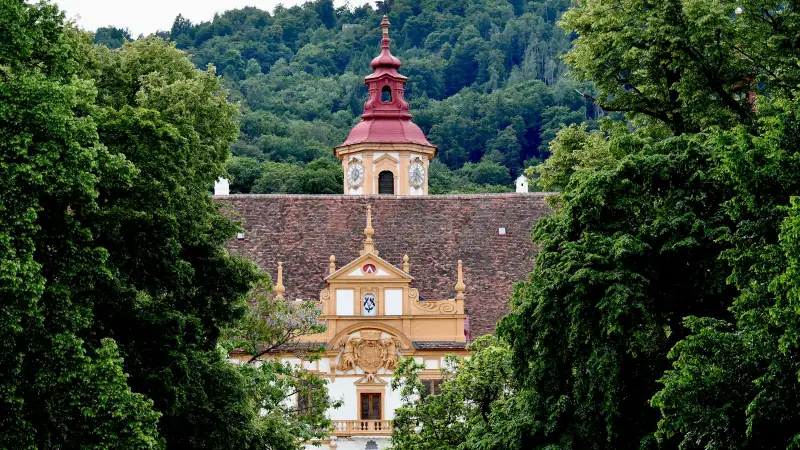
West of the center, Eggenberg Palace is the city’s second UNESCO site, added to the listing in 2010. It is a large Baroque palace from the early 17th century, surrounded by a park where peacocks roam. The state rooms (Prunkräume) are generally visited on a guided basis and only part of the year, while the park is open more widely.
The palace also houses archaeological collections and exhibitions. To get there, a tram links the center to the district: check the line and opening hours on the official site before your visit, as the rooms are not open all year. Allow half a day for the palace and the park.
Where to eat and what to taste
Styria is nicknamed the “garden of Austria”, and Graz is its culinary showcase. The emblematic ingredient is pumpkin seed oil, Kürbiskernöl, deep green with a roasted-hazelnut taste. It seasons salads, soups and eggs, and is even found on vanilla ice cream. It is also an excellent souvenir to bring back.
You also find classic Central European dishes, like schnitzel or Styrian-style breaded chicken, as well as the region’s seasonal specialties: mushrooms, chestnuts, game in fall. The white wines of South Styria, notably Sauvignon and Welschriesling, are renowned. For a broader picture, see our guide on what to eat in Austria.
For lunch, leave the busiest streets around Hauptplatz and walk a few minutes: you will find traditional inns and quieter cafés. Farmers’ markets, very present in town, are also a good way to taste cheeses, cold cuts and local fruit without booking. For reservations, it is best to plan ahead on weekends and in high season.
Tastings in Styria: cellar visits, wine tastings and food discoveries around Graz. Compare the experiences offered.
What to do around Graz
If you have an extra day, the Styrian countryside is worth the trip. The south of the region is famous for its wine road, a succession of hills covered in vines, small villages and cellars where you taste directly at the producer. The landscapes sometimes recall Tuscany, but greener. A vehicle makes exploring easier, and the driver should of course go easy at tastings. You can compare rental companies.
Rent a car: to explore the wine hills and villages around Graz at your own pace, compare rental companies.
You can also combine Graz with Vienna, a few hours away by train, or with the rest of Austria in a wider itinerary.
Organizing your visit: length and program ideas
A single day lets you see the essentials: morning in the old town and on the Schlossberg, lunch in a traditional restaurant, then afternoon at the Kunsthaus and on the Mur island before dinner in the center. It is dense but doable, as everything is close.
With two days, add Eggenberg Palace on the second morning, then free time for the shops, cafés and a museum of your choice. That is the pace to aim for to enjoy it without rushing.
With three days, devote the last day to the countryside and the vineyards of South Styria, by car or on an organized excursion. This formula suits travelers who like to alternate city and food.
Practical tips
Bring comfortable shoes: the lanes are partly cobbled and the Schlossberg climb can be steep on foot. Bring a jacket in every season, as the weather changes quickly, with hot summers and cold winters. December’s Christmas markets give the city a special atmosphere; our guide to Christmas markets in Austria will help you choose your destinations.
For the ideal period, see when to go to Austria. On budget, Graz is generally more affordable than Vienna or Salzburg, as our article on the budget for a trip to Austria details. Austria being in the European Union does not mean your home mobile plan works there: check your carrier’s international plan before you go, or use a travel eSIM. Finally, consider travel insurance to cover medical costs and cancellation.
To choose a neighborhood or type of lodging, our guide on where to stay in Austria gives useful pointers, valid for a stop in Graz too. With its mix of heritage, modernity and food, the capital of Styria fully deserves a place in your trip.
Frequently asked questions
How long does it take to visit Graz?
Two days let you see the essentials: the old town, the Schlossberg, the Kunsthaus and Eggenberg Palace. With a single day, focus on the historic center and the castle hill. A third day leaves room for an outing to the vineyards of South Styria.
Is Graz easy to visit without a car?
Yes. The historic center is largely pedestrian, and the tram and bus network serves farther sites such as Eggenberg Palace. A car is only useful for excursions into the Styrian countryside.
How do you get from Vienna to Graz?
The train is the simplest way: allow about 2 h 30 to 3 h depending on the connection. Long-distance buses also exist. Check schedules and fares on the rail operator's website before booking.
Why is Graz UNESCO-listed?
The historic center has been listed since 1999 for the harmony of its architectural styles, from the Renaissance to the Baroque, inherited from Habsburg influence and Central European culture. Eggenberg Palace was added to the listing in 2010.
What specialty should you try in Graz?
Pumpkin seed oil (Kürbiskernöl), a very dark green, is the culinary emblem of Styria. It goes with salads, soups and even vanilla ice cream. The white wines of the south of the region are the other specialty worth trying.
When is the best time to visit Graz?
From spring to early fall, the weather is pleasant for terraces and walks on the Schlossberg. In December, the city comes alive with its Christmas markets. Our guide to the best time to go to Austria details the seasons.
More Austria guides
Keep reading
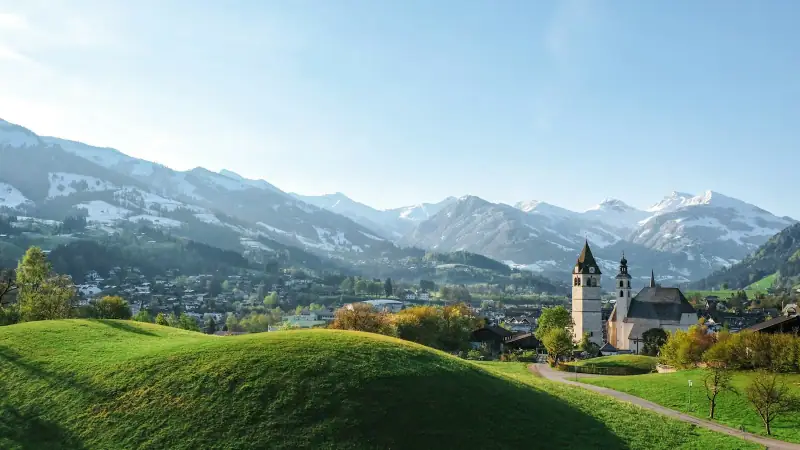
Visiting Kitzbühel: what to see and do in the heart of Tyrol
What to see in Kitzbühel? Old town, Kitzbüheler Horn, Schwarzsee, the Streif and Hahnenkamm: a guide to plan your stay in Tyrol's famous resort.
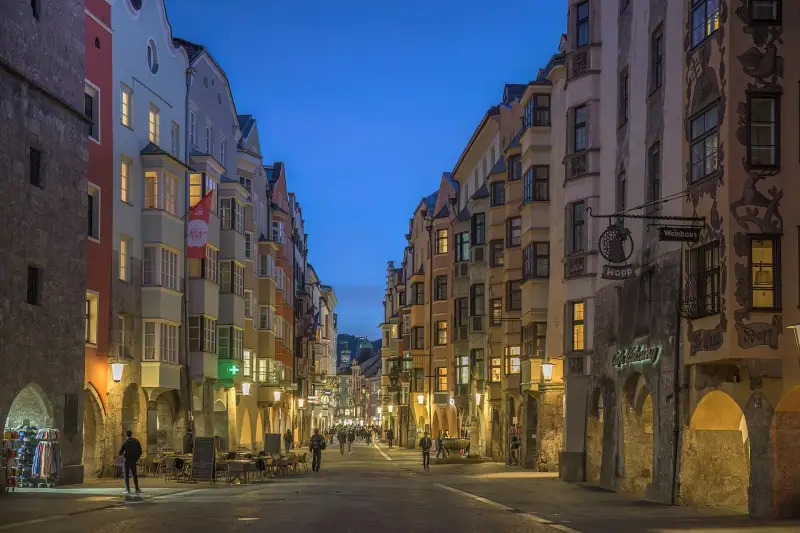
Innsbruck and Tyrol: what to do between city and mountains
What to see in Innsbruck and Tyrol? Old town, Nordkette, Bergisel, Ambras Castle: a guide to plan 2 to 3 days between heritage and Alpine peaks.
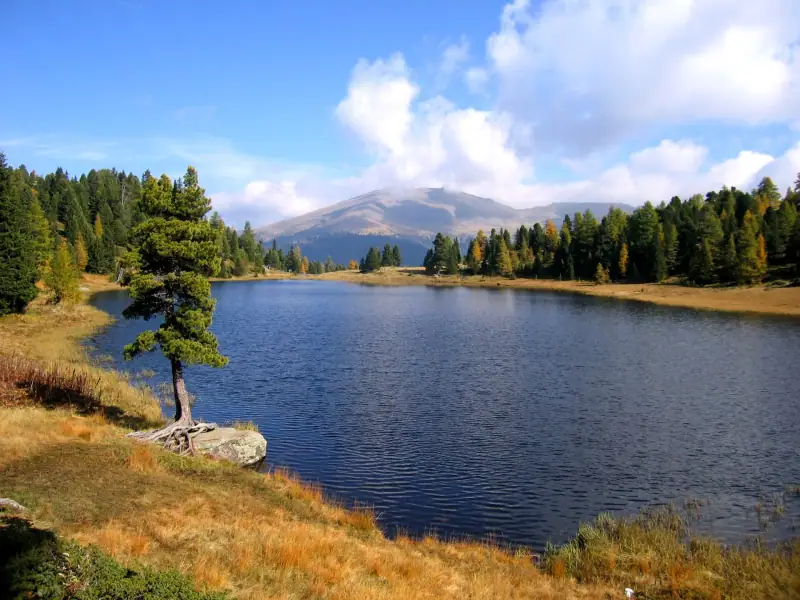
What to see in Styria and Carinthia: lakes, vineyards and mountains of southern Austria
What to see in Styria and Carinthia? Wine road, Admont Abbey, Dachstein, Wörthersee, Grossglockner and castles: a guide to southern Austria.
Ready-made
Austria itineraries
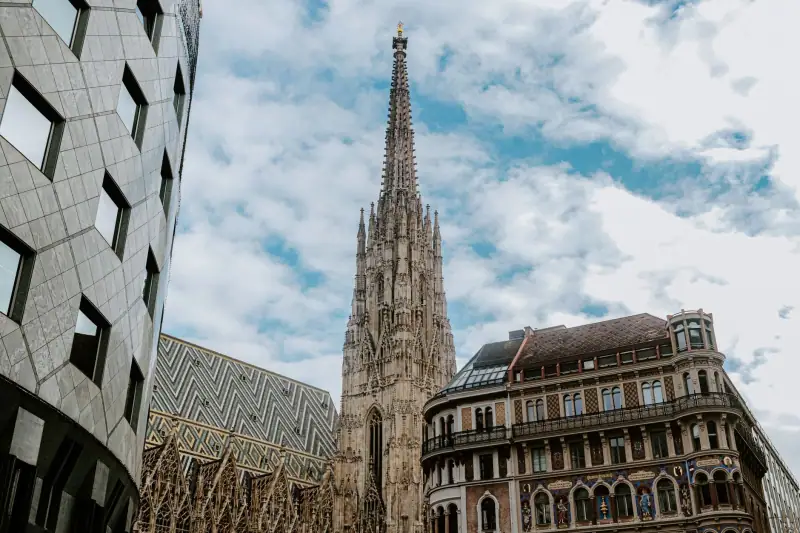
3 days
Vienna in 3 days: a day-by-day itinerary to see it all
What to see in Vienna in 3 days: the Ring, Hofburg, Schönbrunn, Belvedere, Prater and cafés, as a walking and tram itinerary with practical tips.
7 days
Austria in 7 days: Vienna, the Wachau, Salzburg, Hallstatt and Innsbruck
A one-week itinerary in Austria: Vienna, the Wachau, Salzburg, Hallstatt and Innsbruck, with train journeys, day-by-day stops and tips on where to stay.
2 days
Salzburg in 2 days: an itinerary through Mozart, the fortress and the gardens
What to see in Salzburg in 2 days: old town, Hohensalzburg Fortress, Mozart's birthplace, Mirabell Gardens and Hellbrunn, as a walking itinerary.