Where to stay
Where to stay in Las Vegas: the Strip, Downtown or off-Strip?

We may earn a commission when you book through links on this page, at no extra cost to you. We don't visit or try the places we cover: we summarize published sources. How we work
In short
- The Strip suits a first visit and an immersive stay; Downtown around Fremont Street is often cheaper; off-Strip motels and chain hotels suit a simple transit night.
- Compare the total price: many hotels add a mandatory resort fee per night, and parking is often paid at Strip hotels.
- Midweek (Sunday to Thursday) rates are generally lower than weekends and big event dates.
- One or two nights in Las Vegas is usually enough in a road trip; rent the car only on departure day if you stay on the Strip.
Las Vegas is, for most travelers, the gateway to the American West: flights are plentiful, car rental companies have permanent counters there and the national parks of Utah and Arizona are a few hours’ drive away. But choosing where to stay is trickier here than elsewhere. Between the Strip, Downtown, the giant resorts, the motels on the outskirts and the hidden fees, a seemingly cheap hotel can quickly cost double what you had planned.
This guide helps you choose your area, understand the extra fees and fit your nights into a road trip. To compare all the bases of the American West, first see our guide to where to stay in the American West.
Understanding the geography of Las Vegas

Las Vegas is a sprawling city, and the words “Las Vegas” in a booking cover very different realities. Three areas hold most of the lodging:
- The Strip: the great avenue of mega-resorts, with its casino hotels, shows and luxury shops. It is the image you have in mind.
- Downtown: the historic center, around Fremont Street, older, more compact and generally more affordable.
- The outskirts: motels, chain hotels and residences around the airport, toward the west of the city or along the main roads, often cheaper and with easy parking.
Distances are deceptive. Strip hotels look like neighbors on the map, but the buildings are huge and walking between two resorts can take much longer than expected, especially in summer heat. Before booking, look at the hotel’s exact location on a map and not just its name.
Staying on the Strip: the Las Vegas experience

Staying on the Strip means choosing immersion. Hotels like the Bellagio, the Venetian, the Luxor or the Excalibur are real small cities, with a casino, restaurants, pools and shopping arcades. You come down from your room and you are already in the setting. It is the best choice for a first visit, for a short stay centered on shows and atmosphere, or if you simply want to live the experience at least once.
Advantages:
- Everything is nearby: restaurants, shows, casinos and free shows in front of the hotels.
- A huge choice of categories, from luxury resorts to simpler hotels.
- Easy transport along the Strip by monorail, bus, taxi or ride-hailing.
Drawbacks:
- Extra fees (see below) can weigh heavily on the bill.
- Noise, crowds and casino corridors, which you often cross to reach the elevator.
- Parking that is often paid at the big hotels.
A few practical tips: aim for midweek for more reasonable rates, compare rooms by the final total and not the advertised price, and choose a central hotel rather than one at either end if you plan to walk. A hotel at one end of the Strip can look like a bargain, but it forces you to take transport every evening.
Compare Las Vegas hotels
See rates for Strip and Downtown hotels for your dates, with free cancellation on many offers.
Staying Downtown: the more affordable alternative
Downtown gathers the city’s historic casinos around Fremont Street, a pedestrian street covered by a large light screen. The atmosphere is more retro, rawer and less flashy than on the Strip. You find hotels that are often cheaper, bars, restaurants and museums related to the city’s history.
It is a good base if you want to limit spending without giving up the casino atmosphere. Nights can be lively: check recent reviews, especially on noise and cleanliness, and preferably choose a well-rated hotel rather than the cheapest on the list. In the evening, stay on busy, well-lit streets, as you would in any big American city, and avoid walking off into the empty streets of the area.
Downtown is farther from the big hotels at the south end of the Strip: allow for a trip by car, bus or ride-hailing to go from one to the other. If your goal is to see the themed hotels, the fountains and the shows of the Strip, you will go back and forth. If you mainly want a transition night between two stages of the road trip, Downtown is perfectly suited.
Stay near Fremont Street
For a more affordable base, look at lodging in downtown Las Vegas.
Hidden fees: resort fees, parking and taxes
This is the point that surprises travelers most. In Las Vegas, the advertised price of a room is not always the final price.
The resort fee
Many hotels add a mandatory resort fee to each night. It is supposed to cover access to wifi, the pool, the gym or other services, but you pay it even if you use none of them. Its amount varies from one property to another and changes from year to year: check it on the booking page, then on the final confirmation. On a stay of several nights, it weighs heavily.
Parking
At many Strip hotels, parking has become paid, sometimes with two rates: self-parking and valet. Some properties remain free, particularly off the Strip. If you arrive in a rental car and stay several nights, this item counts as much as the resort fee.
Taxes and tipping
American prices are often shown before tax. Also budget for the usual small tips for staff (bellhops, housekeeping), as explained in our article on tipping in restaurants in the American West for current customs. To fit everything into your overall envelope, see our budget for the American West.
Tip: always compare the “total to pay” including taxes and fees, rather than the first-line rate. A hotel advertised as cheaper can end up costing more than another once the fees are added.
Staying off the Strip: motels and chain hotels
If casino life doesn’t interest you, a room in a chain hotel or a motel on the outskirts can be the most practical option, especially for a single night between the airport and the road. You gain quiet, free or easy parking, and often a lower price. You lose proximity to the attractions: you will need a vehicle or ride-hailing to reach the Strip.
This option suits three cases:
- You arrive late after a long flight and leave early the next day for the national parks.
- You travel as a family and prefer spacious rooms, with breakfast included or a kitchenette.
- You want to control your budget without resort-related extra fees.
Beware, though: the “Las Vegas” address of a motel can hide an unpleasant area or one far from everything. Read recent reviews, look at travelers’ photos and check the real distance to the center.
How many nights to plan in Las Vegas on a road trip
Las Vegas is above all a starting and ending point: the airport is well served and the city is within driving range of many major sights. Our 8-day itinerary through Las Vegas, Zion, Bryce and the Grand Canyon shows how to fit it in without losing time.
A few benchmarks:
- 1 night: enough if you are in a hurry and mainly want to recover from the flight.
- 2 nights: ideal to enjoy an evening on the Strip, a show or a tour of the themed hotels, then leave rested.
- 3 nights or more: for those who like the city’s atmosphere or who want to add day trips.
If you arrive after a long flight, the first night is often more useful for sleeping than for going out. If you plan to drive the next day, avoid booking a hotel too far from the road you will take to leave the city.
For the general calendar, including the very strong summer heat in the desert, see our guide to when to go to the American West.
Excursions from Las Vegas: should you change hotels?
From Las Vegas, you can reach several iconic sites in a day on an organized excursion or by car: the Grand Canyon, the Valley of Fire, gorges in Arizona. Staying in a single hotel for a few nights and making day trips is a comfortable formula: you unpack only once. But the days are long and you spend a lot of time on the road.
For a full road trip, it is better to sleep as close to the parks as possible: in Springdale for Zion, in Page for Antelope Canyon, in Moab for Arches. Our guides to visiting Zion National Park and visiting Antelope Canyon and Horseshoe Bend detail these bases. And if you are considering nights in a tent, see our article on camping in the national parks.
Excursions from Las Vegas
Grand Canyon, Antelope Canyon, Valley of Fire or shows: compare guided outings from the city.
How to choose: three profiles
You want the big Las Vegas thrill: choose a Strip hotel, midweek if possible, and accept paying the extra fees in exchange for the experience. Choose a central hotel.
You want a good compromise: Downtown offers a casino atmosphere, a lively nightlife and often lower rates, as long as you choose a well-rated property.
You simply want to sleep: a chain hotel or a motel on the outskirts, with parking included, is the most efficient for a transition stop.
In every case, book early for big event dates or busy weekends, and choose free cancellation: it leaves you the freedom to adjust your road trip if the itinerary changes.
Tips for booking smart
- Compare the total price (room, resort fee, parking, taxes), not the teaser rate.
- Choose the week: Sunday to Thursday rates are generally lower than weekend rates.
- Read recent reviews: a hotel can change management or standard from one year to the next.
- Check the cancellation terms before paying, especially if your flight isn’t set yet.
- Ask for a room away from noise if you are a light sleeper: casino corridors and ground floors are noisy.
- Rent the car on the way out of the city if you don’t plan to drive during the stay, to avoid paying for parking for nothing.
Also think about your luggage logistics: a casino hotel is big and the path between the parking and the room can be long. Pack manageable bags, especially if you chain several stops. Our article on useful accessories for the American West helps you make the right choices.
In short
Las Vegas is an excellent anchor to start or end a road trip, provided you choose your hotel methodically: the Strip for the experience, Downtown for value, the outskirts for simplicity. Watch the extra fees, book with free cancellation and don’t stay longer than necessary: the real scenery of the American West awaits east and south of the city.
Frequently asked questions
Where should you stay in Las Vegas for a first visit?
The Strip is the most obvious choice for a first time: casinos, shows and restaurants are within walking or monorail distance. If budget matters more than atmosphere, Downtown around Fremont Street often offers lower rates for an equally lively stay.
What is the resort fee in Las Vegas?
It is a mandatory fee that many hotels add to the room price, per night, on top of the advertised rate. It is supposed to cover wifi and access to the gym or the pool. Always read the final total before confirming a booking.
Is parking paid at Las Vegas hotels?
At many Strip hotels, parking has become paid, sometimes with a different rate for self-parking and valet. Some properties remain free, especially off the Strip. Check the hotel's parking policy before booking if you arrive in a rental car.
How many nights should you plan in Las Vegas on a road trip?
One or two nights are generally enough to enjoy the city, before or after the national parks. Longer, you risk cutting into the landscapes that are the main draw of the American West. One night at the start and one at the end is a good compromise.
When are hotel prices lowest?
Rates generally drop midweek, Sunday to Thursday, and outside big events or conventions. Weekends and major calendar dates are clearly more expensive. Comparing several dates on a booking site often saves a lot.
Do you need to rent a car in Las Vegas if you stay on the Strip?
Not for the city itself: the Strip can be explored on foot, by monorail, by bus or by taxi. A car becomes useful as soon as you head to the Grand Canyon, Zion or the Valley of Fire. To avoid paying for parking during the whole stay, rent it only on departure day.
More American West guides
Keep reading
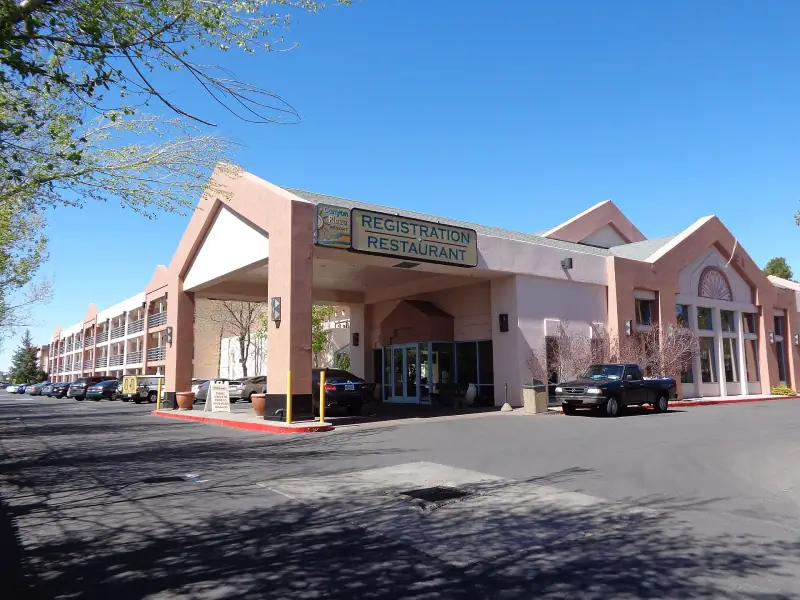
Tusayan, Williams or Flagstaff: where to stay for the Grand Canyon by car
Tusayan, Williams or Flagstaff to stay near the Grand Canyon South Rim? Drive times, budget, atmosphere and pitfalls: a comparison to choose your base.
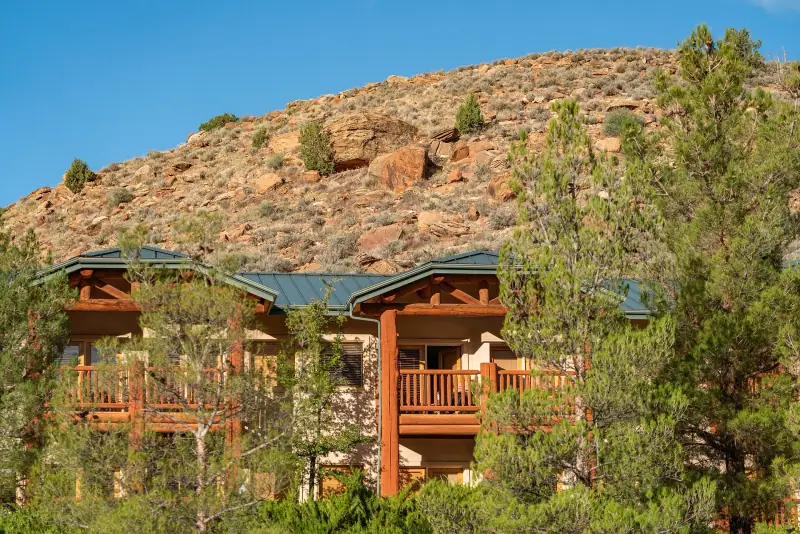
Where to stay in the American West: the best bases for each park
Where to stay in the American West? Springdale, Page, Moab, Tusayan, Las Vegas, Yosemite: tips for choosing the right base and booking at the right time.
Visiting Yosemite: waterfalls, cliffs and tips for your road trip
Plan your Yosemite visit: valley, El Capitan, Yosemite Falls, Glacier Point, Mariposa Grove, Tioga Road, best season and where to stay.
Ready-made
American West itineraries
8 days
American West road trip in December: 8-day itinerary and passable roads
Las VegasSpringdaleBryce CanyonPageGrand Canyon South Rim
8 days
8-day road trip from Las Vegas: Zion, Bryce, Page and the Grand Canyon
Las VegasSpringdaleBryce CanyonPageGrand Canyon South RimLas Vegas
9 days
9-day road trip: San Francisco, Yosemite, Death Valley and Las Vegas
San FranciscoYosemiteLee ViningLone PineDeath ValleyLas Vegas