What to see
Complete guide to visiting the Amalfi Coast: towns, highlights and tips
We may earn a commission when you book through links on this page, at no extra cost to you. We don't visit or try the places we cover: we summarize published sources. How we work
In short
- Three days cover the essentials (Amalfi, Ravello, Positano and the Path of the Gods). Five to seven days add Capri, Pompeii or Herculaneum.
- May, June, September and early October are generally the best compromise between pleasant sea, running ferries and manageable crowds.
- A car is not necessary and often not advised in high season: the road is narrow and parking is scarce. Buses and ferries link the main villages.
- Amalfi is a practical base for a first stay; Positano is more spectacular but pricier and steeper; Praiano is quieter; Sorrento suits tighter budgets.
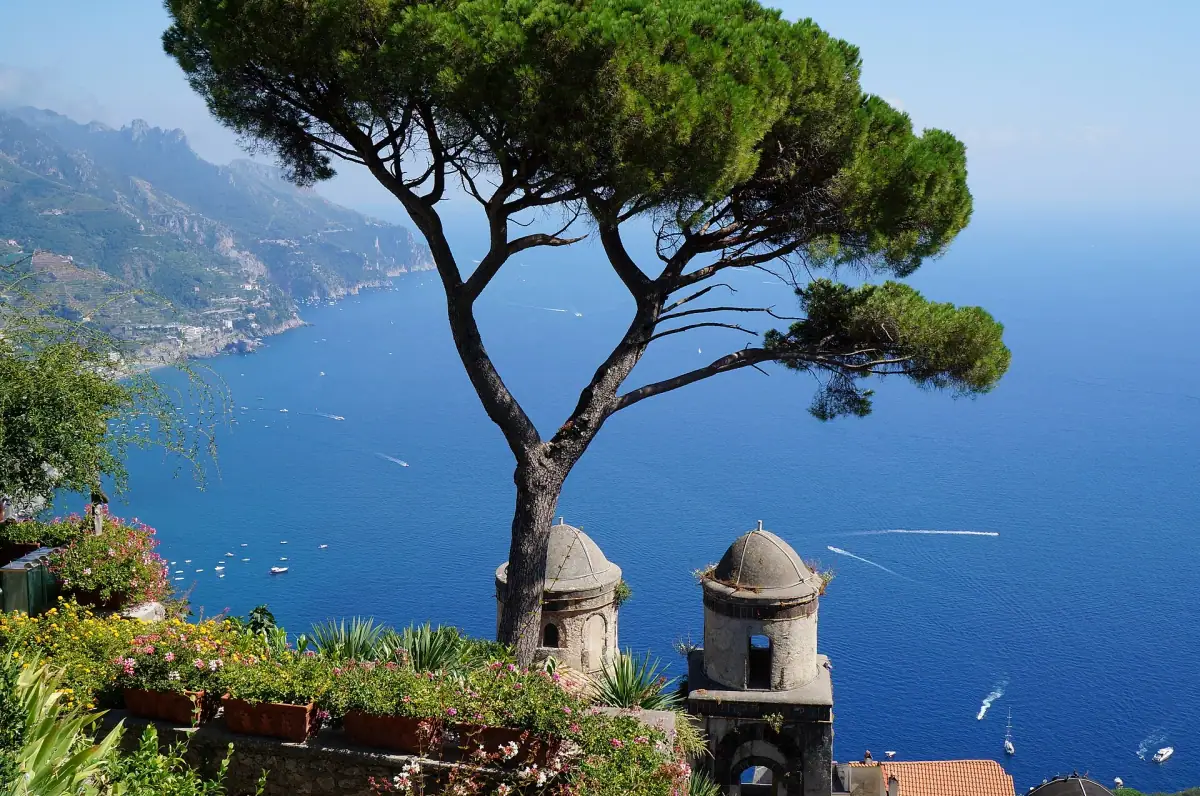
A few dozen kilometers of cliffs plunging into the Gulf of Salerno, villages of pastel houses stacked on terraces of lemon trees, stairs that run down to the sea and a dizzying corniche road: the Amalfi Coast is one of the most photographed destinations in Italy. A UNESCO World Heritage Site since 1997, it appeals as much for its landscapes as for its cuisine, its maritime history and its hikes above the Mediterranean.
It also takes a little preparation. Distances are short but travel is slow, high season is very busy, and the choice of base (Positano, Amalfi, Praiano, Ravello or Sorrento) shapes the whole stay. This main guide gives you the overview: where the coast is, which towns make it up, what the highlights are, when to go, how to get there and around, where to sleep and how much to budget. At each step, links lead you to our detailed articles.
Introducing the Amalfi Coast
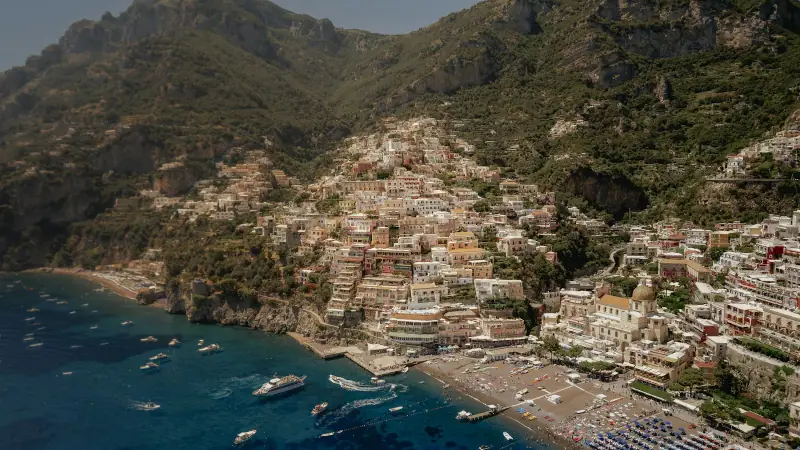
The Amalfi Coast, called Costiera Amalfitana in Italian, lies in Campania, in southern Italy, south of Naples. It occupies the southern side of the Sorrento Peninsula, between Sorrento in the west and Salerno in the east, and borders the Gulf of Salerno. It is often described as a shoreline of about 40 km (25 mi), backed by the Lattari Mountains, which drop almost straight into the sea.
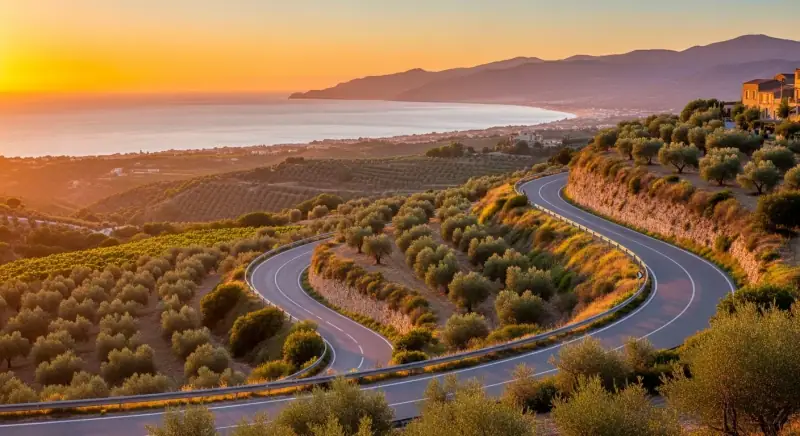
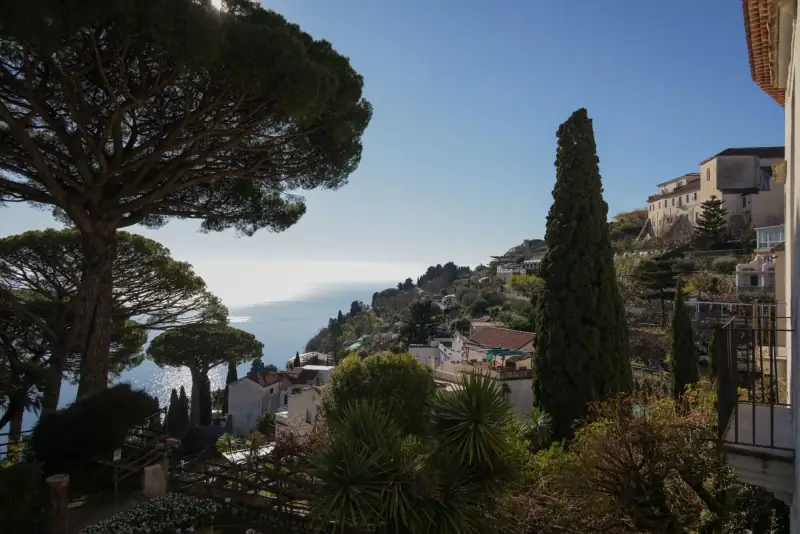
This terrain explains everything. The villages sit in the few hollows of the cliff, on ledges or at the mouths of small valleys. Residents built cultivated terraces held by dry-stone walls, where lemons, vines and olive trees grow. Houses, churches and lanes climb the slope, linked by sometimes endless stairs. Only one road runs along the coast: the SS163, known as the “Amalfitana”, narrow, winding, and shared by buses, cars, scooters and pedestrians.
A history of sea and trade
In the Middle Ages, Amalfi was one of the first maritime republics of Italy, active in trade with the eastern Mediterranean. This history left visible traces: Amalfi’s cathedral with its varied influences, the shipyards, the watchtowers scattered along the shore and the patrician villas of Ravello. Later, the coast became a destination for travelers, artists and writers, which explains its romantic image.
What makes the place unique
Three elements combine, rarely so strongly elsewhere: the landscape, the food and the human scale. The villages remain small. You get around on foot, eat fresh fish and seafood pasta, drink limoncello made with local lemons, and move from one panorama to the next in a few minutes by bus or boat. This very concentration explains the crowds: a small territory, many visitors.
The areas and towns of the coast
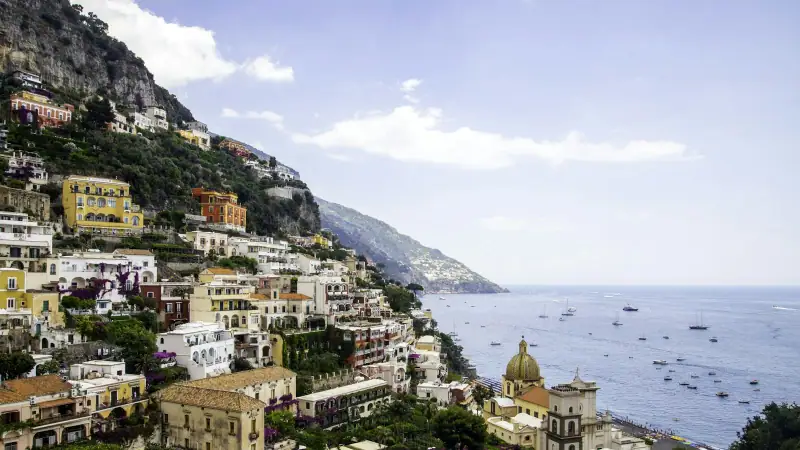
To find your way, you can divide the area into six zones, from west to east, with the island of Capri offshore and the archaeological sites around Mount Vesuvius set back. Each has its own character and matches a type of stay.
Sorrento and the Sorrento Peninsula
At the western end, Sorrento is a proper town, perched on a cliff above the Bay of Naples. It has more hotels, restaurants and shops than the villages of the coast, and it is a starting point for Capri, Pompeii and Positano. The atmosphere is more urban, less spectacular, but very practical. The peninsula, with Massa Lubrense and its fishing villages, remains quieter and less visited.
Positano and Praiano
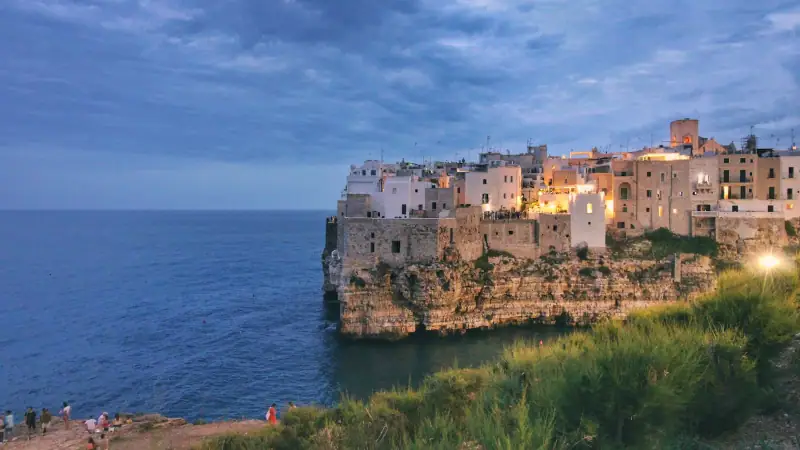
Positano is the classic image of the coast: an amphitheater of colorful houses descending to a beach of dark pebbles. It is beautiful, expensive and very lively in season. For details (beaches, lanes, church, tips), see our guide to visiting Positano. Nearby, Praiano is quieter and more affordable, with remarkable sunset views and easier access to some trails.
Amalfi, Minori and Ravello
Amalfi is the town that gave the coast its name. Its compact heart is organized around the cathedral square, with the Duomo, its stairs and shopping lanes that climb inland. Minori, a few kilometers away, is a quieter village, appreciated for its pastry and its beach. Above, several hundred meters up, Ravello shows a completely different face: villas, gardens and terraces overlooking the sea. Our article on Ravello, its villas and gardens covers the visit.
The Path of the Gods
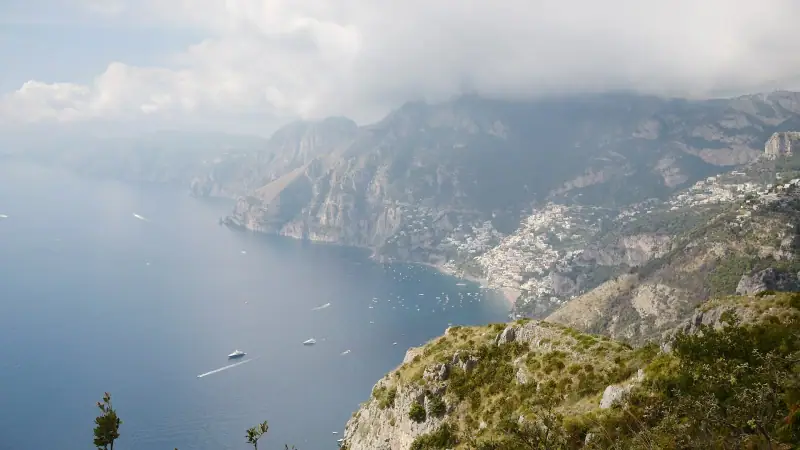
This is not a town but a legendary hike linking Bomerano to Nocelle high above the coast. It is one of the most beautiful walks in Campania, accessible to many walkers, provided you bring good shoes and water. All the details are in our guide to the Path of the Gods.
Capri
Off Sorrento, the island of Capri combines cliffs, the Faraglioni rocks, gardens, luxury boutiques and the Blue Grotto. It is usually visited on a day trip from the coast. Our article on the Capri excursion from the Amalfi Coast helps you organize the day and avoid pitfalls.
Pompeii and Herculaneum
In the Bay of Naples, at the foot of Mount Vesuvius, Pompeii and Herculaneum preserve Roman cities buried by the eruption of AD 79. They are not sites of the Amalfi Coast proper, but they combine very well with a stay, especially from Sorrento. Our guide to Pompeii and Herculaneum from the Amalfi Coast explains how to choose the site and organize the day.
The highlights not to miss
If you could keep only a few experiences, these are the ones that come up in almost every successful stay.
- Stroll through Positano: walk down to the beach, get lost in the lanes and look at the houses from the sea.
- Visit Amalfi’s cathedral: a monument remarkable for its facade, its staircase and its cloister, in the middle of a small town that is pleasant to explore on foot.
- Go up to Ravello: the gardens of Villa Rufolo and Villa Cimbrone offer some of the finest panoramas on the coast.
- Walk the Path of the Gods: a half day of hiking above the sea, with views of Capri in clear weather.
- Take a boat: seeing the villages from the sea is another way to understand the landscape, on a regular ferry or an excursion.
- Spend a day on Capri: the Faraglioni, Anacapri and panoramas.
- Explore a Roman city: Pompeii or Herculaneum, to change era.
- Taste the local cuisine: lemons, fish, pasta and pastries, detailed in our guide to Amalfi Coast food.
Boat excursions along the coast
Compare day cruises from the villages of the Amalfi Coast to see the cliffs from the sea.
How much time to spend?
The coast does not work as a quick visit. For a first stay, plan at least three days: one for Amalfi and Ravello, one for the hike, one for Positano and the beach. With a week, you add Capri and Pompeii and keep rest days at the beach. If you lack ideas for structuring those days, our Amalfi Coast in 3 days itinerary offers a plan without a car.
When to go to the Amalfi Coast
The season affects the weather, but also the price, the crowds and the services available. Here are the main lines; our article on when to go to the Amalfi Coast details the situation month by month.
- Spring (April to June): vegetation in bloom, pleasant hikes and ferries gradually resuming. May and June are often the best compromise, even if the sea is still cool early on.
- Summer (July and August): heat, warm sea and peak crowds. Buses are full, prices rise and trails become punishing in the hot hours. If you go then, book early and get up early.
- Fall (September and October): the sea is still pleasant, crowds drop and the light is beautiful. September is often considered one of the best months, as long as the weather stays stable.
- Winter (November to March): calm and low rates, but many hotels, restaurants and sea connections slow down or close. Rain can also make the trails slippery.
A simple rule: if your schedule is flexible, avoid the heart of summer and aim for the shoulder seasons. If you have no choice, adapt your pace to the heat: activities early in the morning, beach and a break in the afternoon, strolls in the evening.
Getting there and getting around
Getting there
There is no airport or train station on the coast itself. Most travelers land in Naples, the main international airport (NAP). Salerno, farther east, is another possible gateway by train. From Naples, two main routes lead to the coast: the Sorrento side (by the Circumvesuviana line) or the Salerno side (by train, then bus or ferry).
Flights to Naples
Compare flights to Naples, the main airport for reaching the Amalfi Coast.
Getting around locally
Once on the coast, three main options are open to you: bus, ferry and car.
- The bus takes the SS163 and links the villages. It is cheap, but slow and often full in season.
- The ferry links Salerno, Amalfi, Positano, Sorrento and Capri in season. It avoids the road and offers superb views. Service depends on the season and the weather.
- The car gives freedom, but the road is narrow, traffic is dense and parking is scarce and expensive. Many travelers do without one.
To compare the options, understand the pitfalls and prepare your timetables, read our guide to getting around the Amalfi Coast. One general tip: always allow a margin, especially before a return train or flight, because journeys lengthen quickly when the road is congested.
Where to stay on the Amalfi Coast
Choosing your base is the most important decision of the stay, because travel between villages is slow. Here are the main options.
- Amalfi: a balanced base, well served by bus and boat, close to Ravello. Good for a first stay, but busy by day with day-trippers.
- Positano: the most spectacular and the most expensive. Lodging is often up high, with many stairs, but the atmosphere is unique.
- Praiano: quieter and more affordable, with superb views, between Positano and Amalfi.
- Ravello: peaceful and elegant, above the sea. Ideal for a romantic mood, less so for the beach.
- Minori: a quieter village, good for families and moderate budgets.
- Sorrento: more urban, with a wide choice of lodging and good connections to Capri, Pompeii and Naples.
Comparing these bases in detail takes a little time: our article on where to stay on the Amalfi Coast analyzes the atmosphere, access and budget of each village. Whatever your base, book early for high season: the best addresses fill up several months ahead, and rates climb quickly.
Hotels on the Amalfi Coast
Compare the lodging available in Amalfi, Positano, Praiano, Ravello and Sorrento for your dates.
Budget: how much to plan for a stay
The Amalfi Coast has a reputation for being expensive, and that is partly true, especially in Positano and in high season. Lodging weighs the most in the budget, followed by terrace meals, transport and paid visits. But differences are large depending on the village, the period and your travel style.
A few ways to control spending:
- Choose the season: shoulder seasons cost clearly less than July and August.
- Choose the base: Praiano, Minori or Sorrento are often more affordable than Positano.
- Alternate meals: a simple lunch and a more refined dinner, or takeaway specialties, lower the bill.
- Favor public transport: buses and ferries cost far less than a private driver or a car with parking.
- Enjoy free activities: walking the lanes, swimming, hiking and admiring panoramas cost nothing.
For figures item by item and three traveler profiles, see our article on the Amalfi Coast budget. Amounts change from season to season: always check current rates before you book.
Food: what to expect on your plate
The cuisine of the coast is simple, fragrant and based on local products: fish and seafood, vegetables from the terraces, olive oil, Campanian mozzarella and above all lemons. You find them in pasta, desserts and the famous limoncello. Among the most cited specialties are colatura di alici (an ancient fish sauce), scialatielli with seafood and lemon pastries.
One tip: be wary of the most visible restaurants, set on the most touristy squares, and prefer addresses a little off to the side, where menus are shorter and more seasonal. For a full introduction to the specialties to try, read our article on Amalfi Coast food.
Cooking classes and tastings
Discover cooking classes, tastings and visits to lemon producers in the region.
Preparing your trip: entry rules and practical tips
Italy uses the euro. Entry rules depend on your passport. Check the official travel advice of your government before you book: travel.state.gov (US), GOV.UK (UK), travel.gc.ca (Canada), Smartraveller (Australia) (checked November 2026). Depending on your trip, consider insurance covering cancellation and repatriation. Our article on entry rules for the Amalfi Coast details documents, health, insurance and customs.
A few more habits:
- Shoes: bring comfortable shoes, because you will walk a lot, often on stairs and uneven cobbles.
- Light luggage: stairs and crowded buses make big suitcases a pain. Travel light if you can.
- Sun protection: sun exposure is strong from spring on, especially on the trails.
- Dress: to enter churches and cathedrals, cover your shoulders and knees.
- Reservations: in high season, book lodging, ferries and much-requested activities ahead.
- Pace: do not try to see everything. A few villages seen calmly beat ten villages in a rush.
Common mistakes to avoid
Some pitfalls come up in almost every traveler’s report. Knowing them avoids a lot of frustration.
- Underestimating travel times. On a single road, a few kilometers can take an hour. Plan generously and avoid tight connections.
- Trying to see everything in one day. Amalfi, Positano, Ravello and Capri cannot seriously be combined in 24 hours. Choose two sites at most per day.
- Renting a car in midsummer. Traffic jams, no parking and stressful driving: the bus or the boat is often simpler.
- Booking too late. Good lodging and popular boats fill up ahead in high season.
- Relying only on images. Photos hide the stairs, the crowds and the pebble beaches. Realistic expectations avoid disappointment.
- Hiking unprepared. Water, shoes, sun protection and return bus times are essential.
- Eating in the most touristy places. More discreet addresses often offer better food at a lower price.
Itinerary ideas by length of stay
Here is how to split your time depending on how long you have. These are general guidelines, to adapt to your pace and season.
A two-day weekend
Focus on a single area. Sleep in Amalfi or Praiano and spend one day on Amalfi and Ravello, the other on Positano or the hike. Do not try to add Capri: you would run out of time.
Three to four days
This is the ideal length for a first look. You can visit Amalfi and Ravello, walk the Path of the Gods and spend a day in Positano, with free time for the beach. The day-by-day detail is in our Amalfi Coast in 3 days itinerary.
One week
With seven days, you can add a day on Capri and a day at Pompeii or Herculaneum, while keeping a day for rest and swimming. A stay in two stages (three nights on the Amalfi side, three nights on the Sorrento side) reduces travel and lets you vary the atmosphere. Use our guides to the Capri excursion and to Pompeii and Herculaneum to organize these excursions.
Long stay or slow travel
Beyond a week, slow down: choose a base, explore neighboring villages on foot, discover lesser-known trails and keep days without a program. The coast reveals itself above all in simple moments: a coffee on a square in the morning, a sunset from a terrace, a fish dinner by the harbor.
All our guides to the Amalfi Coast
To go deeper into each aspect of your preparation, here are all our articles:
- See: Visiting Positano, Ravello, villas and gardens, Pompeii and Herculaneum.
- Stay: Where to stay on the Amalfi Coast.
- Itineraries: The Amalfi Coast in 3 days.
- Plan: When to go, Getting around, Budget, Entry rules.
- Do: Path of the Gods, Capri excursion.
- Eat: What to eat on the Amalfi Coast.
Prepare well to enjoy more
The Amalfi Coast keeps its promises when you prepare for it realistically. Choose the right season, a base that fits your travel style, simple transport and a pace that leaves room for the unexpected. Accept that travel is slow, that crowds are there in summer and that stairs are part of the scenery: it is the price of a landscape that more than deserves the detour.
Start by fixing your dates and your base, then book the lodging and key transport, and build the program around a few highlights. The rest will come on its own, between a terrace of lemon trees, a trail above the sea and a dinner facing the gulf.
Frequently asked questions
How many days do you need to visit the Amalfi Coast?
Three days let you see the essentials (Amalfi, Ravello, Positano and the Path of the Gods) without rushing. With five to seven days you add Capri, Pompeii or Herculaneum and keep time for the beach and meals. A single day is not enough: travel is slow.
What is the best time to visit the Amalfi Coast?
May, June, September and early October generally offer the best compromise between pleasant sea, running ferries and crowds that are more bearable than in midsummer. July and August are hot and very busy; winter is quiet but many businesses and sea connections slow down.
Do you need to rent a car on the Amalfi Coast?
It is not necessary and often discouraged in high season: the road is narrow, congested and parking is scarce. Buses and ferries link the main villages. A car can make sense off-season or to explore hamlets at altitude.
Where should you sleep on the Amalfi Coast for a first stay?
Amalfi is a practical base, well served by bus and boat and close to Ravello. Positano is more spectacular but pricier and steeper; Praiano is a quieter alternative. Sorrento suits tighter budgets and excursions to Capri and Pompeii.
Is the Amalfi Coast suitable for kids and travelers with reduced mobility?
The villages are built on the cliffside, with many stairs and steep lanes, which complicates getting around with a stroller or a wheelchair. Choose accessible lodging near a bus stop or a port, and favor Amalfi or Minori, which are flatter than Positano.
Do you need a visa to visit the Amalfi Coast?
Entry rules depend on your passport. Check the official travel advice of your government before you book: travel.state.gov (US), GOV.UK (UK), travel.gc.ca (Canada), Smartraveller (Australia) (checked November 2026). Consider travel insurance as well.
Can you visit the Amalfi Coast without a car?
Yes, it is even the most common way. The train goes to Salerno or Sorrento, then the bus along the SS163 and the seasonal ferries serve Amalfi, Positano and Praiano. Allow time margins, because traffic slows the buses.
More Amalfi Coast guides
Keep reading
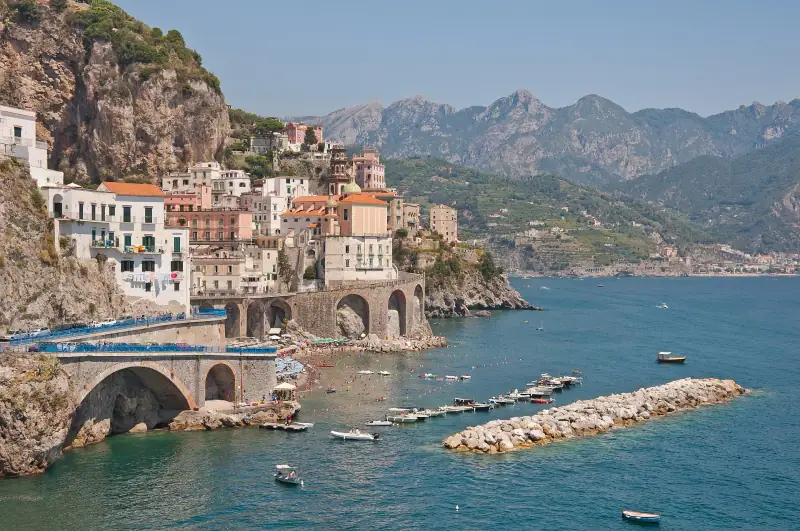
Is Atrani worth the detour from Amalfi? A half-day walking visit
Is Atrani worth the detour from Amalfi? Walking access, churches, beach, stairs to the Santuario del Bando, where to eat and visit length for half a day.
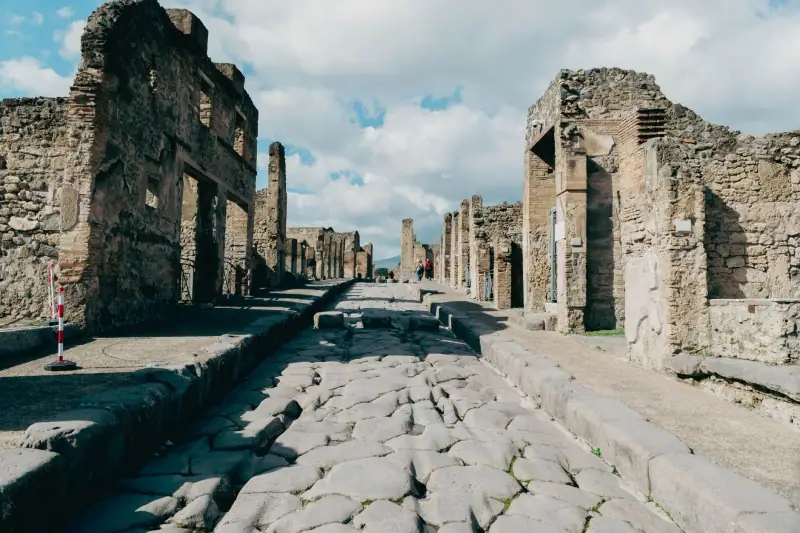
Pompeii and Herculaneum from the Amalfi Coast: how to organize the visit
Visit Pompeii and Herculaneum from the Amalfi Coast: train, bus or ferry, choosing a site, visit length, heat tips and a one-day plan.
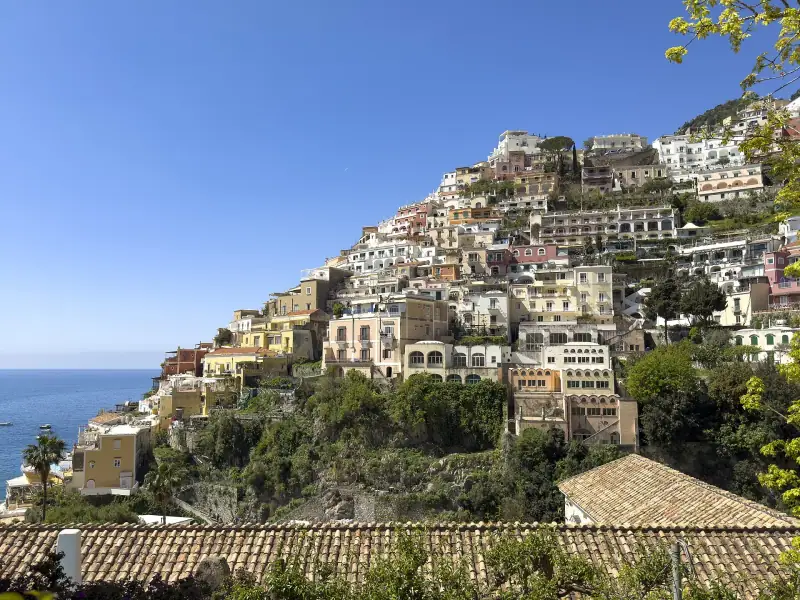
Visiting Positano: beaches, lanes and practical tips
What to do in Positano: Spiaggia Grande, Fornillo beach, lanes, Santa Maria Assunta church, getting there by bus or ferry and tips to avoid the crowds.
Ready-made
Amalfi Coast itineraries
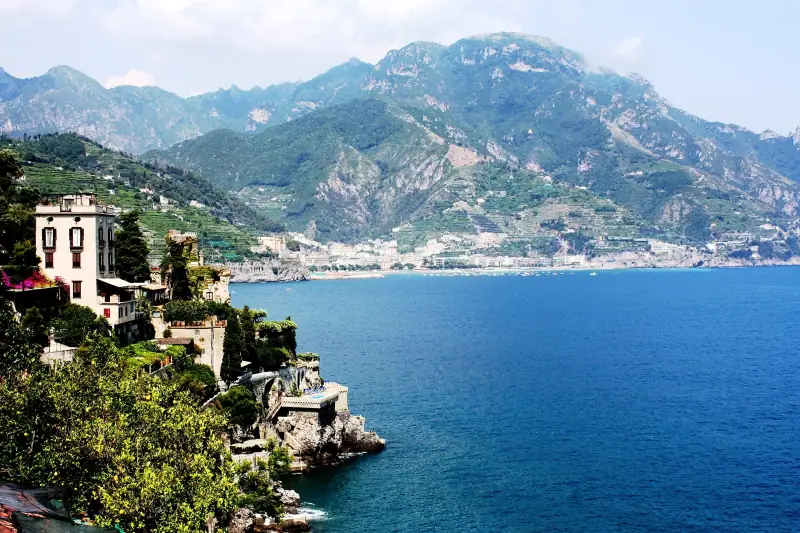
3 days
Amalfi Coast in 3 days: a day-by-day itinerary without a car
Plan 3 days on the Amalfi Coast without a car: Amalfi, Ravello, the Path of the Gods and Positano, with bus, ferry and practical tips for each day.
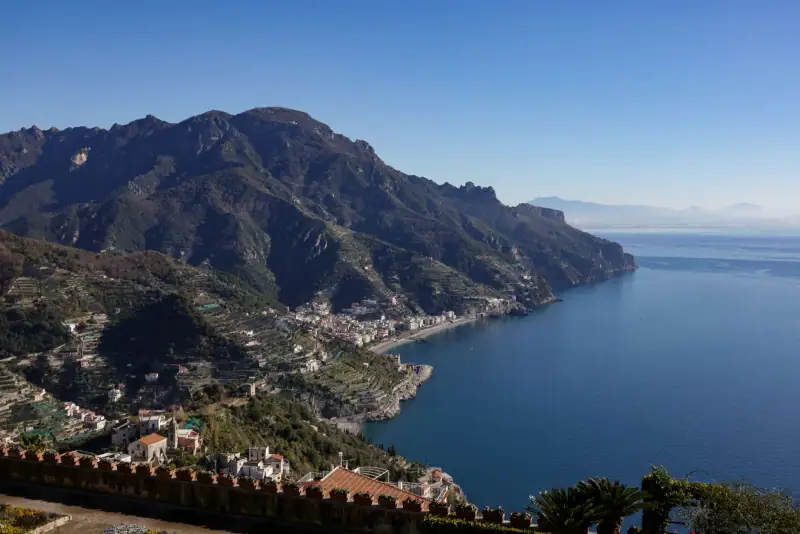
5 days
Amalfi Coast road trip by car: a Sorrento to Salerno itinerary
Drive the Amalfi Coast from Sorrento to Salerno on the SS163: stops in Positano, Amalfi and Ravello, parking, and tips for narrow roads.
5 days
Amalfi Coast without a car: a 5-day itinerary by bus, ferry and train
Visit the Amalfi Coast without a car in 5 days: day-by-day itinerary by bus, ferry and train, with Amalfi, Ravello, Positano, Capri, Pompeii and tips.