What to see
Jambiani: Complete Guide to the Authentic Village on Zanzibar's East Coast
We may earn a commission when you book through links on this page, at no extra cost to you. We don't visit or try the places we cover: we summarize published sources. How we work
In short
- Jambiani is a quiet Swahili fishing village about 55 km (34 mi) from Stone Town, with a 4 to 6 km (2.5 to 4 mi) beach and seaweed farms in the lagoon.
- Getting there: daladala from Stone Town in 1.5 to 2 hours (1,500-3,000 TZS), or a private taxi for 25 to 35 USD in about 1 hour.
- Best months are June to October and December to March; avoid April-May (Masika rains). Kitesurfing runs June to October and December to March.
- No ATM in Jambiani; the nearest is in Paje, about 5 km (3 mi) away, so bring cash (USD or TZS).
Jambiani is one of the most authentic destinations in Zanzibar, yet it remains surprisingly under-covered by mainstream travel guides. Perched on the southeast coast of the island, about 55 kilometers (34 mi) from Stone Town, this fishing village of quiet beauty offers what Nungwi and Paje have partly lost to tourist development: a huge, nearly empty beach, a living Swahili village life, seaweed farms coloring the lagoon, and a 180-degree horizon.
Here there are no nightclubs, no overly pushy beach vendors, no 300-room resorts. Jambiani is a village that lives at its own pace, where women tend seaweed in the lagoon at sunrise, where fishermen return with their dhows loaded with fish, and where children play soccer on the beach in the evening. A Zanzibar of the past, almost intact.
Why Jambiani is a destination of its own
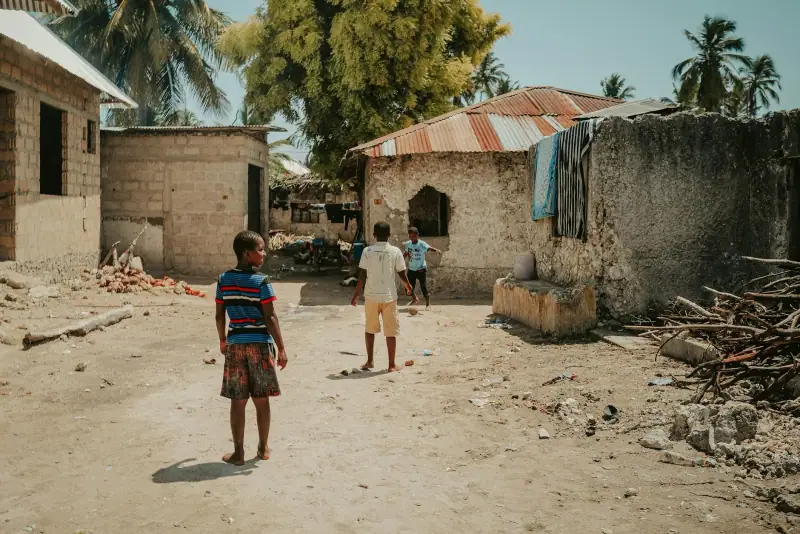
Jambiani is unlike any other place in Zanzibar. Several things give it a unique identity.
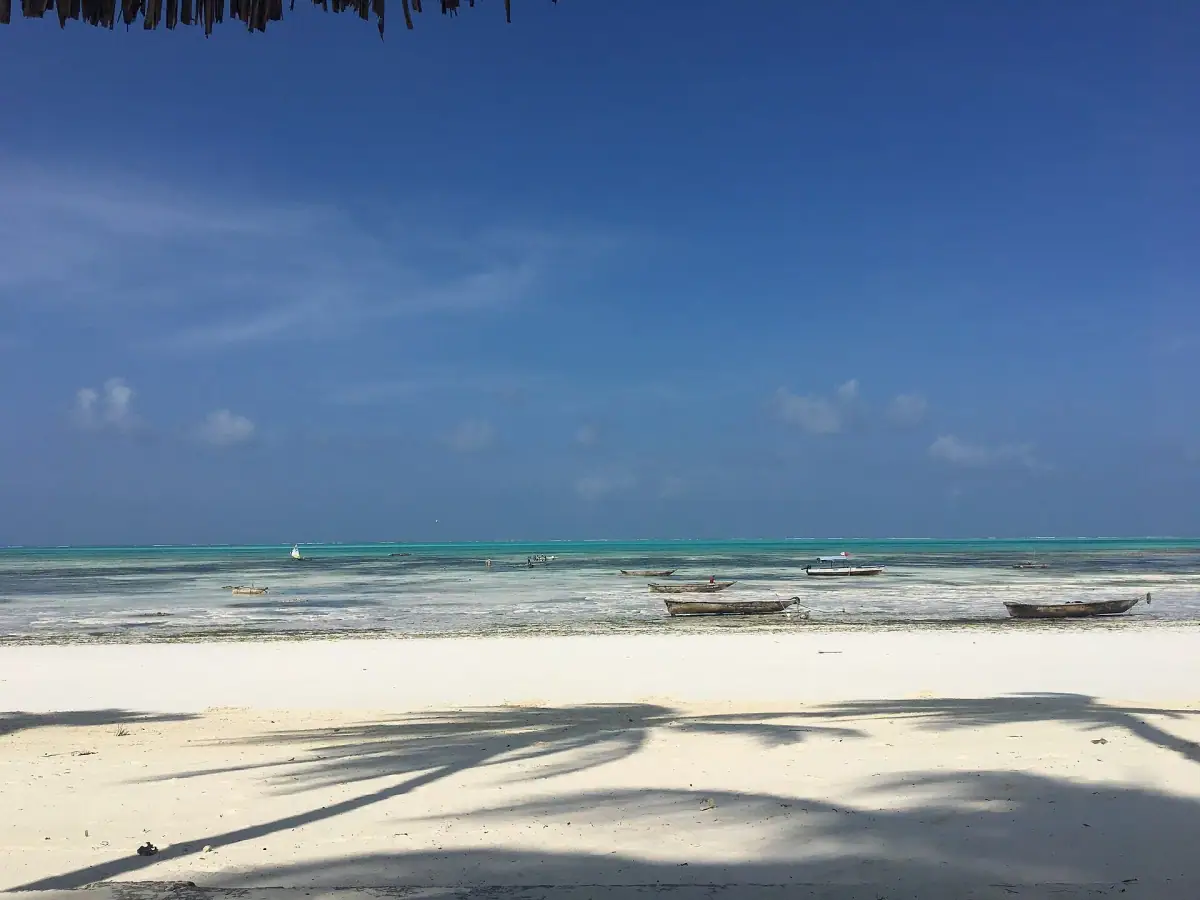
An exceptionally long beach. Jambiani beach stretches for several kilometers of fine white sand, separated from the sea by a wide band of turquoise lagoon. This particular layout of Zanzibar’s east coast creates a striking visual: at high tide, the sea gradually floods the reef and the water takes on a translucent blue-green tint. At low tide, the reef is exposed for hundreds of meters, revealing natural pools and coral gardens where starfish, sea urchins and small tropical fish play.
Seaweed farms, a unique sight. In Jambiani’s lagoon, you will see dozens of parallel rows of rope stretched between small stakes planted in the sand. These are seaweed farms, tended mainly by the village’s women since the 1990s. Each morning they wade knee-deep in the water to tie, check and harvest this seaweed, which is exported to Asia. The activity is both a vital source of income for the community and a fascinating ethnographic sight for travelers.
A living, welcoming village. Unlike some Zanzibar resort areas that lost their soul under hotel concrete, Jambiani is still a real village with its coral alleys, its central mosque broadcasting the call to prayer five times a day, its grocery shops and its craftspeople. Residents are used to tourists but have not lost their natural manner. Exchanges are simple, warm and genuine.
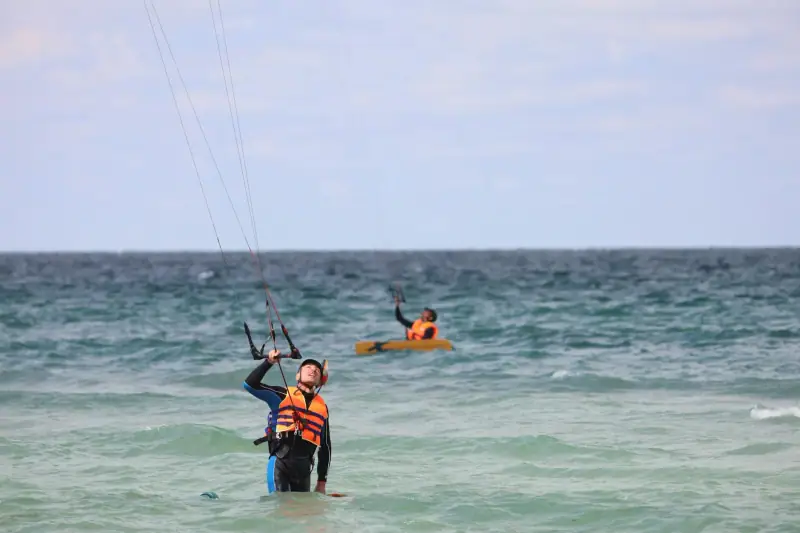
An ideal spot for kitesurfing. Zanzibar’s east coast is the favorite destination of East Africa’s kitesurfers. Jambiani and its neighbor Paje (5 km / 3 mi to the north) have steady winds, a safe lagoon for beginners and a well-established network of schools. For thrill seekers and beginners alike, it is a top spot.
How to get to Jambiani
Jambiani is on Zanzibar’s southeast coast, about 55 km (34 mi) from Stone Town. The road is now paved almost the whole way, which makes access much easier.
From Stone Town by daladala (local minibus): This is the cheapest option. Daladalas leaving the Darajani bus station (Creek Road) serve Jambiani regularly. Expect 1,500 to 3,000 TZS (0.60 to 1.20 USD) for a 1.5- to 2-hour trip depending on stops. Allow some extra time because daladalas only leave when they are full.
From Stone Town by taxi: Expect 25 to 35 USD for a direct trip of about 1 hour. Negotiate the price before getting in. It is the most comfortable solution if you have heavy luggage or are traveling with children. Some hotels arrange transfers from the airport or Stone Town at similar rates.
From Paje: Jambiani is 5 to 7 km (3 to 4 mi) south of Paje. A bajaj (motorized tricycle) or local taxi will take you there in 10 to 15 minutes for 5 to 10 USD. You can also walk along the beach in about 1.5 hours, a lovely stroll if the tide is right.
From the airport: Zanzibar International Airport is well placed for the east coast: expect 20 to 30 USD by taxi and about 45 minutes on the road. Much shorter than the trip to the north coast.
Hotels and guesthouses in Jambiani
Authentic beachfront lodging in Jambiani, from budget guesthouses to charming boutique hotels.
Jambiani beach: everything you need to know
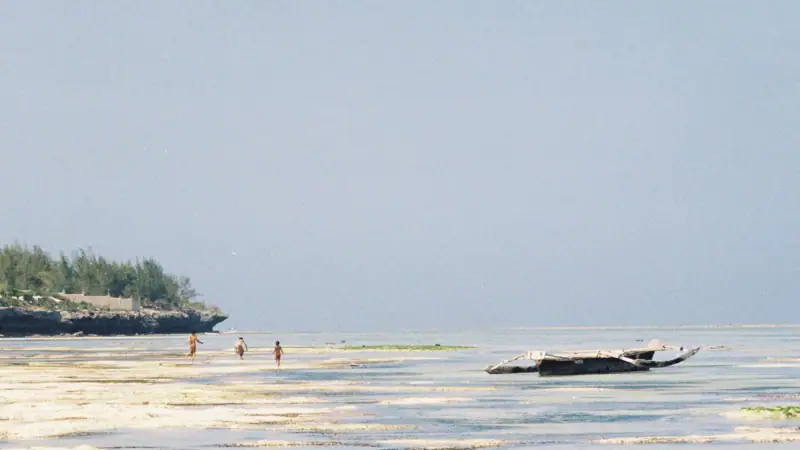
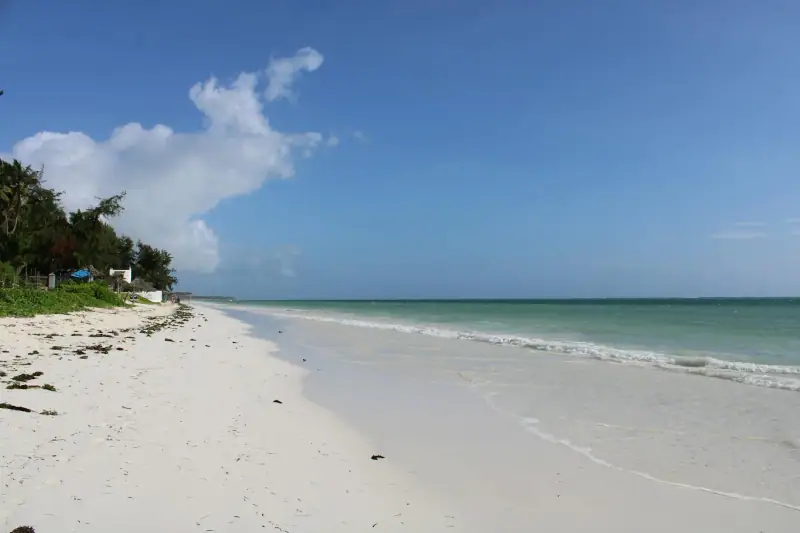
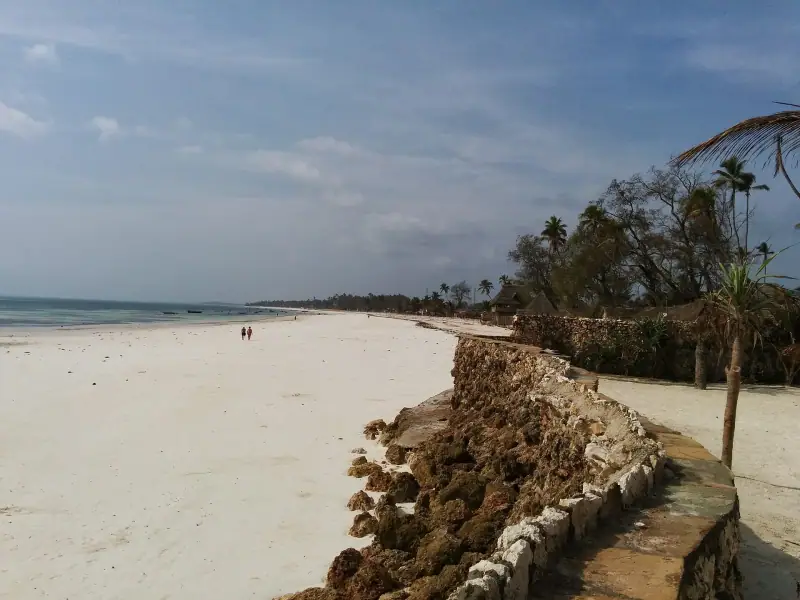
Jambiani beach is one of the longest and least crowded in Zanzibar. It can stretch 4 to 6 kilometers (2.5 to 4 mi) depending on where you are in the village.
The sand. White, fine, soft underfoot. The beach is clean and well kept by residents, who consider it their common heritage. There is sometimes seaweed in season, but nothing like the more exposed coasts.
The tides. Zanzibar’s east coast is strongly influenced by tides, more than the north coast (Nungwi, Kendwa). At high tide the water reaches the beach and swimming is excellent. At low tide the reef is exposed for several hundred meters and the sea seems to recede to infinity. This can throw off travelers who do not plan for it, but it also offers unique possibilities: exploring the reef on foot, watching marine life in the natural pools, walking on the lagoon floor. Ask your hotel for the tide calendar to plan your swims.
The water. The color of the water at Jambiani is spectacular. The shallow lagoon takes on impossible shades: pale turquoise, emerald green, azure blue depending on the time and the light. The sea stays warm all year (27 to 30 °C / 81 to 86 °F). Underwater visibility is excellent in the dry season.
The calm. This is Jambiani’s main asset. Even in peak tourist season (July-August), the beach is never packed. You can easily find a patch of sand to lay down your towel with no one next to you.
What to do in Jambiani
Jambiani is not a destination for those seeking constant activity. It is a destination for those who can appreciate slowness, nature and authentic human exchanges.
Discover the seaweed farms
Visiting the seaweed farms is Jambiani’s most emblematic and original activity. Each morning between 6 and 10 am (and again late in the afternoon depending on the tide), dozens of women go down into the lagoon to work their plots.
Several guesthouses and local associations run guided visits (5 to 10 USD per person) where you can accompany the farmers, learn how the seaweed is grown and dried, and understand its economic importance. It is a strong, respectful human experience, very different from standard tourist activities.
Kitesurfing and water sports
Jambiani is one of the best kitesurfing spots in Zanzibar. The combination of a shallow lagoon and steady winds makes it ideal terrain for beginners, who can practice without risking ending up in open water. Several schools operate on the beach between Jambiani and Paje, offering courses of 3 to 10 days.
For experienced kitesurfers, the main season runs from June to October (southeast winds, Kusi) and from December to March (northeast winds, Kaskazi). Free sessions are possible all year for those with their own gear.
Other water activities are available: stand-up paddleboarding, sea kayaking, windsurfing and small sailboats. Ask the local schools directly. For kitesurfing in Zanzibar in detail, see our article Kitesurfing in Zanzibar: the guide to Paje and the east coast.
Snorkeling on the reef
Jambiani’s coral reef is home to remarkable marine life. Dhow trips to deeper snorkeling areas leave from the beach every morning (15 to 25 USD per person). You may see manta rays, sea turtles, schools of tropical fish and sometimes dolphins.
At low tide you can also explore on foot the natural pools formed in the exposed reef. These shallow pools teem with small sea creatures: starfish, sea cucumbers, crabs, sea urchins and colorful fish. A snorkeling mask is enough to enjoy them fully.
Sea turtle conservation
Jambiani is one of the sites where hawksbill sea turtles come to lay their eggs on the beach, mainly between November and March. A local conservation initiative protects these nests and guides travelers who want to watch a hatching in a respectful, supervised way.
If your stay coincides with this period, ask your lodging or the conservation station directly to find out whether any nests are being monitored. It is one of the most moving nature experiences in Zanzibar.
Village visits and cooking classes
Several local guides offer walking tours of Jambiani village, passing the mosque, the coral alleys, the craft workshops and the traditional houses. These visits put you in direct contact with Swahili culture.
Some families also offer traditional cooking classes: preparing biryani, spiced pilau, grilled coconut and mkate wa sinia (sesame bread). A good way to bring home more than a postcard.
Activities in Jambiani and the east coast
Kitesurfing, snorkeling, dhow trips and cultural visits departing from Jambiani and Paje.
Where to eat in Jambiani
Jambiani’s food scene is modest but genuine. You will not find a Michelin-starred restaurant, but you will discover the authentic flavors of coastal Swahili cooking in warm, affordable places.
Hotel restaurants. Most guesthouses and boutique hotels have a restaurant open to non-guests. Menus revolve around grilled seafood, the fish of the day and Swahili dishes. Expect €10 to 20 (about $12-23) for a full meal with a drink.
Small local restaurants. The village has a few very simple restaurants (sometimes with no sign or written menu) serving the food of the day: pilau rice, biryani, fish curry, chapati freshly cooked over embers. You will not find a printed menu, but you will eat something authentic for €3 to 6 (about $3-7).
Fresh fish. In Jambiani, fish and seafood come straight from the fishing dhows. Ask your hotel what the local fisherman will bring back that evening, and you can often build your menu around it. Lobster, octopus, squid, zebra shark, tropical sea bream… A platter of seafood grilled over a wood fire and served on the beach at sunset is a memorable food experience at a very reasonable price.
Markets and grocery shops. In the village center, a few shops sell basic provisions: tropical fruit (mangoes, pineapples, papayas), roasted peanuts, cookies and drinks. A useful supplement if you are staying somewhere with a kitchen.
For a full overview of Zanzibar cooking, see our article Zanzibar food: Swahili flavors and Indian Ocean spices.
Where to stay in Jambiani
Jambiani offers a range of authentic lodging, without the big resorts that have disfigured some of the island’s shores. The offer runs from very affordable family guesthouses to charming boutique hotels, with a few beachfront lodges in between.
Guesthouses and bed-and-breakfasts (€20-60 per night, about $23-70). These are the most common lodgings in Jambiani. Often run by local families or long-established expats, they offer an authentic immersion in village life. Rooms are clean and functional, service is personal, and the homemade breakfasts are often delicious.
Boutique hotels (€60-150 per night, about $70-175). Several well-designed boutique hotels have opened in recent years in Jambiani, with carefully decorated rooms, a pool and quality restaurants. Some sit right on the beach, with terraces facing the ocean.
Beachfront lodges (€100-200 per night, about $115-230). At the top end of the market, a few places offer wood or coral-stone bungalows right on the beach, with private sea access and resort-level services.
Booking tips. In high season (July-August and December-January), Jambiani’s lodgings are under less pressure than those in Nungwi or Paje. Booking 3 to 4 weeks ahead is generally enough. Off season, many places offer very attractive rates.
Practical information for Jambiani
Budget and money
Jambiani is one of the most affordable destinations in Zanzibar. Here is an estimate of daily spending:
- Lodging: €30 to 150 per night depending on category (about $35-175)
- Meals: €5 to 20 per meal depending on the type of restaurant (about $6-23)
- Activities: €15 to 40 per excursion or kite session (about $17-46)
- Transport (taxi from Stone Town): 25 to 35 USD by taxi
ATMs. Do not count on finding an ATM in Jambiani: ATMs are reported in Paje (about 5 km / 3 mi away, sometimes out of cash) and in Stone Town. Withdraw money before arriving and check locally. Most hotels accept bank cards, but local restaurants and activities run on cash (USD or TZS).
Local transport
From Jambiani, several options let you explore the area:
- Bajaj (tricycle): To Paje (10 to 15 min, 5 to 10 USD), perfect for getting between the two villages.
- Bicycle: Some hotels rent bicycles (5 to 10 USD per day). The coastal road between Jambiani and Paje is rideable by bike.
- Daladala: The Jambiani-Stone Town line is the main public link, with regular departures during the day.
- Taxi: Independent taxi drivers wait in the village center for one-off rides.
Health and safety
Jambiani is a safe destination, but a few precautions are in order:
Malaria: Zanzibar is a moderate-risk area. Talk to your doctor before departure about preventive treatment. Use mosquito repellent, especially in the evening. Mosquito nets are generally provided in rooms.
Drinking water: Drink only bottled or filtered water. Tap water is not safe to drink.
Sun: The sun is intense. SPF 50+ sunscreen is essential, and a hat and sunglasses are recommended, especially in the first few days.
Tides: Do not swim far from shore if you are not familiar with local currents. Strong spring tides can create unexpected currents near gaps in the reef.
Respecting local culture
Jambiani is a practicing Muslim village. Respecting local customs is essential for a smooth trip:
- Dress modestly in the village (shoulders and knees covered away from the beach)
- Ask permission before photographing residents, especially women
- Greet villagers with “Jambo” (hello in Swahili) or “Habari” (how are you?)
- During Ramadan, avoid eating, drinking or smoking in public in non-tourist areas
- Avoid overly demonstrative displays of affection outside beach areas
Jambiani vs. Paje: which east coast base to choose
Jambiani and Paje are neighbors and often compared. Here are the key differences:
| Criterion | Jambiani | Paje |
|---|---|---|
| Atmosphere | Very authentic, living village | More touristy, kite-oriented |
| Kitesurfing | Good spot, fewer schools | Better spot, more schools |
| Restaurants | Few, mostly local food | More numerous, international |
| Lodging | Guesthouses + boutique hotels | Wide range, many resorts |
| Average prices | More affordable | Slightly higher |
| Mass tourism | Limited | Moderate |
| Local culture | Very present | Less noticeable |
| Access | Direct daladala | Direct daladala |
Choose Jambiani if: you want authenticity, immersion in Swahili life, tranquility and lower prices.
Choose Paje if: you come mainly for kitesurfing, or want more activity and a more varied food scene.
The ideal solution: The two villages are only 5 to 7 km (3 to 4 mi) apart. Base yourself in Jambiani for the atmosphere and take a bajaj to Paje for a day of kiting or a dinner at an international restaurant. To learn more about the different beaches, see our article The best beaches in Zanzibar.
When to visit Jambiani
Jambiani follows the same climate calendar as the rest of Zanzibar’s east coast.
June to October (cool dry season, Kusi): The best period overall. Little rain, pleasant temperatures (25 to 28 °C / 77 to 82 °F), steady southeast winds perfect for kitesurfing. Underwater visibility is best for snorkeling. It is also high season: in July-August, expect slightly higher prices.
December to March (hot dry season, Kaskazi): An excellent period, with warmer water (29 to 31 °C / 84 to 88 °F) and northeast winds that also feed kitesurfing. This is the sea turtle nesting season. December-January is high season (Christmas, New Year).
April-May (long rainy season, Masika): To avoid. Intense daily rain, rough sea, and many lodgings are closed.
November (short rainy season, Vuli): Short but regular rain. Off season with very attractive prices. Possible for those who accept a few showers.
For a complete climate guide, read our article Best time to visit Zanzibar.
Car rental in Zanzibar
Rent a 4x4 or a scooter to explore the east coast freely and reach Stone Town at your own pace.
Insider tips for Jambiani
Watch the fishermen land their catch. Each morning between 7 and 9 am, the fishing dhows come into Jambiani’s landing. It is a moment of authentic, photogenic life, with exchanges between fishermen and buyers. Ask your hotel what time and exactly where they land.
Get up early for the seaweed. The sight of women in the lagoon tending seaweed is most beautiful at dawn, when the golden morning light brushes the turquoise water. Many travelers miss it by staying in bed. Yet it is one of the best shots on the whole east coast.
Explore on foot to the south. Beyond Jambiani village, the beach stretches south toward wilder, little-visited areas. An hour’s walk from the center will take you to places where you may be alone with the local fishermen.
Learn a few words of Swahili. “Asante” (thank you), “Karibu” (welcome), “Mambo” (hi, informal) and “Poa” (cool, fine) open incredible doors in Jambiani. Residents greatly appreciate the effort, even a clumsy one.
Visit Stone Town for a day. Even from Jambiani, a day in Stone Town is well worth it to understand Zanzibar’s history. Our article Stone Town highlights will help you organize this cultural outing.
Enjoy the night silence. Nights in Jambiani are among the quietest in all of Zanzibar. Turn off your phone, step out onto the beach and look at the southern hemisphere’s starry sky, far from any light pollution. A moment of absolute grace that few travelers experience.
Jambiani is not for everyone. It is not a destination for those seeking constant activity, fine-dining restaurants or luxury spas. But for those who want to touch something real in Zanzibar (a village that lives, a sea that breathes, a culture that holds on), Jambiani may be the best address on the whole island.
Frequently asked questions
Is Jambiani suitable for families with children?
Yes, Jambiani suits families very well. The beach is long and safe, the village is calm and safe, and the local community is welcoming. However, east coast tides expose the reef at low tide, which can limit swimming at certain hours. Plan your swims around high tide times, available from local hotels.
How do you get to Jambiani from Stone Town?
From Stone Town, take a daladala (local minibus) toward Jambiani from the Darajani terminal. The trip takes about 1.5 to 2 hours depending on stops and costs 2,000 to 3,000 TZS (1 to 1.5 USD). A more comfortable option is a private taxi (25 to 35 USD, 1 hour direct). Some east coast hotels also run shared shuttles.
Can you kitesurf in Jambiani?
Yes, Jambiani and its neighbor Paje are the two best kitesurfing spots in Zanzibar. The east coast has steady winds and a big low tide that turns the lagoon into ideal terrain for beginners. Several kitesurfing schools operate between Jambiani and Paje, a few kilometers apart. The main season is June to October.
Is Jambiani cheaper than Nungwi or Paje?
Generally yes. Jambiani attracts fewer mass-tourism visitors, which keeps prices lower for lodging, food and activities. Expect €30 to 80 (about $35-93) per night for a decent guesthouse, and €5 to 15 (about $6-17) for a meal at a local restaurant. Water activities cost about the same as in Paje.
Are there sea turtles in Jambiani?
Yes, Jambiani is one of the Zanzibar villages involved in sea turtle conservation. A turtle nest protection station operates on the beach, supported by a local NGO. In season (November to March) you can sometimes see turtles coming to lay eggs, or hatchlings making their way to the ocean. Ask your hotel.
What is special about Jambiani's seaweed farming?
Jambiani is one of Zanzibar's main seaweed farming centers. In the lagoon you will see dozens of rows of stretched ropes on which seaweed grows, tended mainly by local women. The seaweed is exported to Asia for the food, cosmetics and pharmaceutical industries. It is a traditional activity and economically vital for the community.
More Zanzibar guides
Keep reading
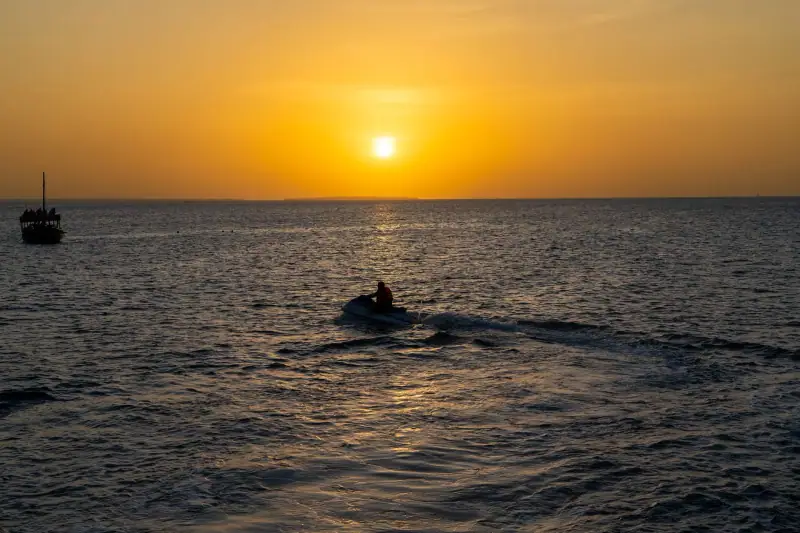
Visiting Michamvi: Complete Guide to Zanzibar's East Coast Peninsula
Michamvi, a wild peninsula in southeast Zanzibar: pristine beaches, coral reef, total calm and sunsets over the lagoon. 2026 guide.
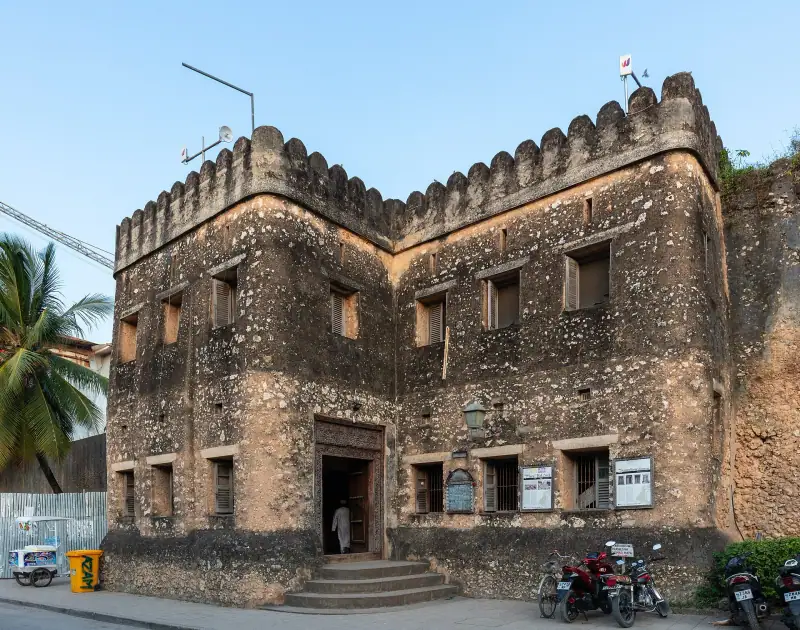
Stone Town Highlights: What to See and Do in the Old Town
Stone Town, Zanzibar highlights: House of Wonders, Darajani Market, Freddie Mercury's birthplace, Forodhani night market and more.
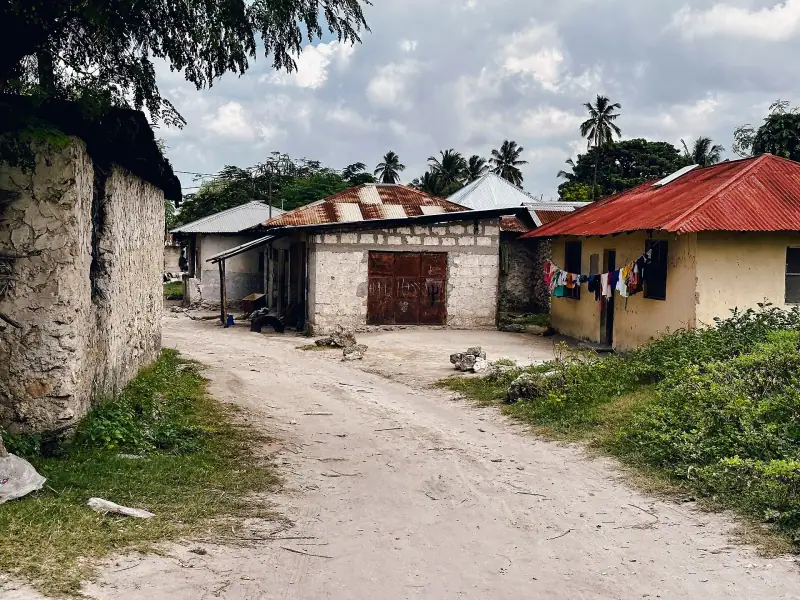
Matemwe: Complete Guide to the Dive Village by Mnemba Atoll
Matemwe is a fishing village on Zanzibar's northeast coast and the gateway to Mnemba for diving and snorkeling. Complete 2026 guide.
Ready-made
Zanzibar itineraries
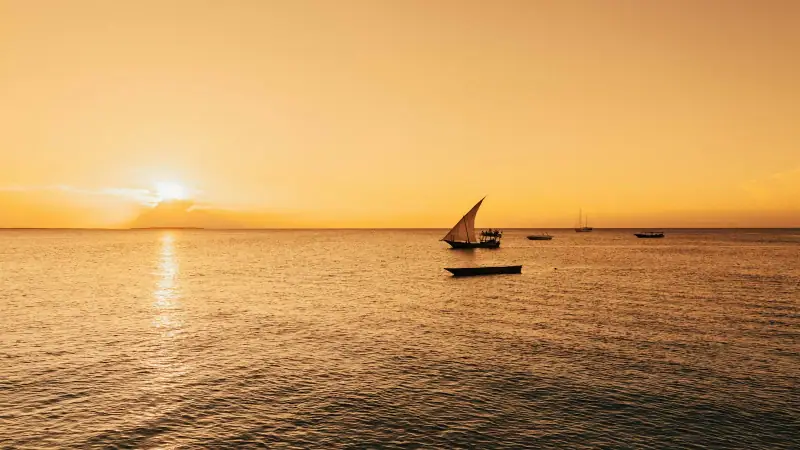
5 days
Zanzibar in 5 Days Without a Car: A Realistic Itinerary With Transport
Zanzibar in 5 days without a car: Stone Town, Nungwi and Paje with distances, travel times, taxi and daladala prices, and pitfalls to avoid.
10 days
Zanzibar Island Tour: Complete 10 to 14-Day Itinerary
Stone TownNungwi and KendwaMatemwePaje and JambianiStone Town
3 days
Zanzibar's East Coast: A Complete Guide to Paje and Jambiani
Paje, Jambiani, kitesurfing and Swahili villages: a guide to Zanzibar's east coast, with beaches, dramatic tides and authentic village life.