Plan your trip
Best time to visit Zanzibar: when to go

We may earn a commission when you book through links on this page, at no extra cost to you. We don't visit or try the places we cover: we summarize published sources. How we work
In short
- The best season is the long dry season, June to October: sun, calm sea and ideal temperatures. July and August are the best months and the priciest.
- The short dry season, December to March, is also very good, especially for kitesurfing in Paje and watching sea turtles. December is very expensive.
- Avoid April and May, the long rainy season (masika): torrential rain, many hotels closed and sea activities canceled. November is a cheaper in-between month.
- For the best value, go in September or October; for kitesurfing, January-February (north winds) or July-August (south winds).
Choosing when to travel is one of the most important decisions for a stay in Zanzibar. The archipelago follows a monsoon system that divides the year into distinct seasons: a long dry season, a short dry season and two rainy seasons. Picking the right time can make the difference between a dream vacation and an experience spoiled by constant rain.
This guide explains month by month what to expect from Zanzibar’s climate, and helps you choose the best time for your activities and budget.
Zanzibar’s climate
Zanzibar is subject to the two Indian Ocean monsoons that define the seasons:
- The northeast monsoon (kasikazi) blows from November to March, bringing hot, sunny weather with a few light rains.
- The southeast monsoon (kusi) blows from April to October. It first brings the heavy rains (April-May), then gives way to the long dry season (June-October).
Temperatures and rainfall
Zanzibar has a hot, humid tropical climate all year:
- Air temperatures: 25-32 °C (77-90 °F) (as low as 20 °C, or 68 °F, at night in the tropical winter, June-July)
- Sea temperatures: 25-29 °C (77-84 °F) depending on the season
- Rainfall: from almost none (July) to very heavy (April: 300+ mm, or 12+ in)
- Humidity: high all year (70-90%)
Zanzibar’s four seasons
The long dry season: June to October (rating 5/5)
This is the best time to visit Zanzibar. The sky is blue, the sun shines and rain is almost nonexistent. The sea is generally calm on the west coast and in the north, ideal for swimming and diving.
Month-by-month details:
June: Start of the dry season. Some leftover monsoon showers early in the month. From mid-June, the weather becomes beautiful. Temperatures: 26-28 °C (79-82 °F). Calm sea on the west coast.
July: Peak of high season. Perfect weather, sun everywhere. Nights can be cool (20-22 °C, or 68-72 °F), so bring a light sweater. It is also the humpback whale period around Pemba (August-September). Temperatures: 25-28 °C (77-82 °F).
August: Ideal conditions. Clear sea, excellent underwater visibility (20-30 m, or 65-100 ft). It is high tourist season, prices are at their peak and bookings are essential. Temperatures: 26-29 °C (79-84 °F).
September: Still excellent. High season starts to ease slightly, but conditions stay perfect. A good time to find last-minute deals. Temperatures: 27-30 °C (81-86 °F).
October: Transition to the short rainy season. The first rains may arrive at the end of the month, but most of the month is still very pleasant. Prices drop. Temperatures: 28-31 °C (82-88 °F).
Advantages of the long dry season:
- Perfect weather, guaranteed sun
- Calm sea (especially west and north coasts)
- Excellent underwater visibility
- Ideal for sea excursions
Drawbacks:
- High season means high prices
- Bookings needed several months ahead
- Nungwi and Stone Town packed in July-August
Hotels in Zanzibar
Book early for high season, since the best places go fast.
The short dry season: December to March (rating 4/5)
The second good period for Zanzibar. Rain is rare, temperatures are higher than in high season, and humidity is more noticeable. It is the perfect season for kitesurfing (steady winds in Paje) and for watching sea turtles that come to nest on the northern beaches.
December: Excellent period. Start of the short dry season. Nice weather, calm sea. It is also the Christmas and New Year high season: prices are very high and hotels are full. Be sure to book 3 to 6 months ahead. Temperatures: 28-31 °C (82-88 °F).
January: Very good period. Hot temperatures (29-32 °C, or 84-90 °F), high humidity, but little rain. Turtles nest on the beaches of Nungwi. It is the best period for kitesurfing in Paje. Prices more reasonable than in December.
February: Similar conditions to January. Very hot and humid but sunny. Excellent for kitesurfing. Whale sharks appear around Pemba and Mnemba. Temperatures: 29-32 °C (84-90 °F).
March: End of the short dry season. The first rains may arrive at the end of the month, announcing the big monsoon. Conditions generally stay good until mid-March. Prices are among the lowest of the year outside the rains.
Advantages:
- Hot temperatures ideal for swimming
- Steady winds for kitesurfing
- Sea turtles on the northern beaches
- Prices more affordable than in the long dry season
Drawbacks:
- High humidity
- December very expensive (end-of-year holidays)
- Risk of rain in March
The long rainy season: April and May (rating 1/5)
Avoid at all costs. The long rainy season (masika) hits Zanzibar from mid-March to the end of May. The rain is torrential, often in violent storms that can last days. Dirt roads become impassable, sea excursions are canceled, and many hotels and restaurants close during this period.
If you end up in Zanzibar in April or May (a layover, tickets that cannot be changed), Stone Town can still be visited between downpours, but forget about sea activities.
Average rainfall:
- April: 250-350 mm (10-14 in)
- May: 200-300 mm (8-12 in)
That is a large share of the year’s rain, concentrated in two months.
The short rainy season: November (rating 3/5)
November is the least clearly defined month climatically in Zanzibar. It is the short rainy season (vuli), but rainfall is much less intense than during the big monsoon. In practice, it may rain a few hours a day, often at night or late in the afternoon, without ruining the days.
November is an interesting time to visit Zanzibar at a lower cost. Prices are among the lowest of the year, and the kitesurfing season in Paje starts to pick up. Bargain hunters can find what they are looking for.
Which period for your activity?
Best time for diving
June to October: maximum visibility (20-30 m, or 65-100 ft), calm sea, water at 25-27 °C (77-81 °F). The reefs around Mnemba are magnificent; access is with an authorized operator and a conservation fee (check current rates). December to March: also a good period, with whale sharks from October to March.
Best time for kitesurfing
January to March: strong, steady north winds, ideal for kitesurfing in Paje. June to October: south winds (trade wind), also good for kitesurfing.
Best time for sea turtles
November to March: green and hawksbill turtles come to nest on the beaches of Nungwi and the north coast. All year: turtles are present in the waters around Zanzibar, but the best snorkeling sightings are from June to October.
Best time for sea excursions (Safari Blue)
June to October: calm sea, perfect conditions for the Safari Blue and trips to the Sand Banks islands. December to March: possible but with some risk of swell.
Best time for whales and dolphins
July to September: dolphins at Kizimkazi year-round, but especially in the dry season. August to November: humpback whales around Pemba.
Activities in Zanzibar
Diving, Safari Blue, kitesurfing: book your excursions online.
Month-by-month summary table
| Month | Weather | Sea | Prices | Verdict |
|---|---|---|---|---|
| January | Hot | Calm | Medium | Very good |
| February | Very hot | Rough (east) | Medium | Very good |
| March | Risk of rain | Variable | Low | Fair |
| April | Rain | Difficult | Very low | Avoid |
| May | Rain | Difficult | Very low | Avoid |
| June | Nice | Calm | Rising | Excellent |
| July | Perfect | Calm | High | Best |
| August | Perfect | Calm | Very high | Best |
| September | Perfect | Calm | High | Excellent |
| October | End of season | Variable | Medium | Very good |
| November | Some rain | Variable | Low | Fair |
| December | Nice | Calm | Very high | Very good |
Recommendations
Best value for money: September or October. You still get the excellent high-season conditions, but prices start to drop and there are fewer tourists.
For a tight budget: November or March (without taking the risk of the rainy season creeping in early March). Prices are attractive and conditions stay acceptable.
For luxury without worrying about price: July or August, when you will find the best weather and resorts with all their services running.
For kitesurfing: January-February for the north winds, July-August for the south winds in Paje.
To plan your stay, see our complete Zanzibar guide and our beach guide to pick the right corner of the island for the season.
Frequently asked questions
What is the best season for Zanzibar?
The best season is the long dry season from June to October: sun, calm sea and ideal temperatures. The short dry season from December to March is also excellent, perfect for kitesurfing and turtle watching.
Can you go to Zanzibar in November?
November is the short rainy season (vuli). It can rain, but showers are usually short. It is a good time to travel on a budget because prices are lower, and it is the start of the kitesurfing season in Paje.
Is it hot in Zanzibar in December?
Yes, December is an excellent time in Zanzibar. It is the start of the short dry season, with temperatures of 28 to 32 °C (82 to 90 °F) and little rain. It is also high tourist season (Christmas, New Year), so book ahead.
When can you see whales in Zanzibar?
Dolphins can be seen year-round in Zanzibar, humpback whales mostly from August to November. For whale sharks, the best period is October to March, especially around Pemba Island and the Mnemba reefs.
When should you avoid going to Zanzibar?
Avoid April and May, which are the long rainy season (masika). The rain is torrential, many hotels close and sea activities are impossible. The quality of the trip is considerably reduced.
More Zanzibar guides
Keep reading
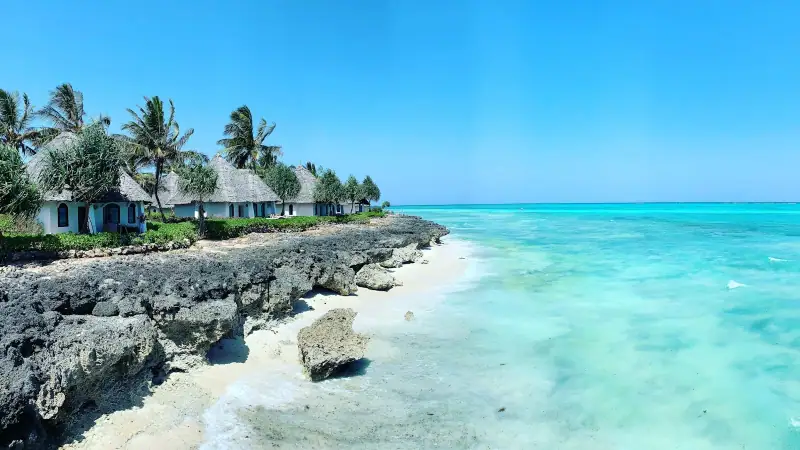
Tides in Zanzibar: when to swim in Paje, Jambiani and Nungwi
At low tide the lagoon empties for up to 1 km (0.6 mi) in Zanzibar. Times, reliable apps and how Paje, Jambiani and Nungwi differ.
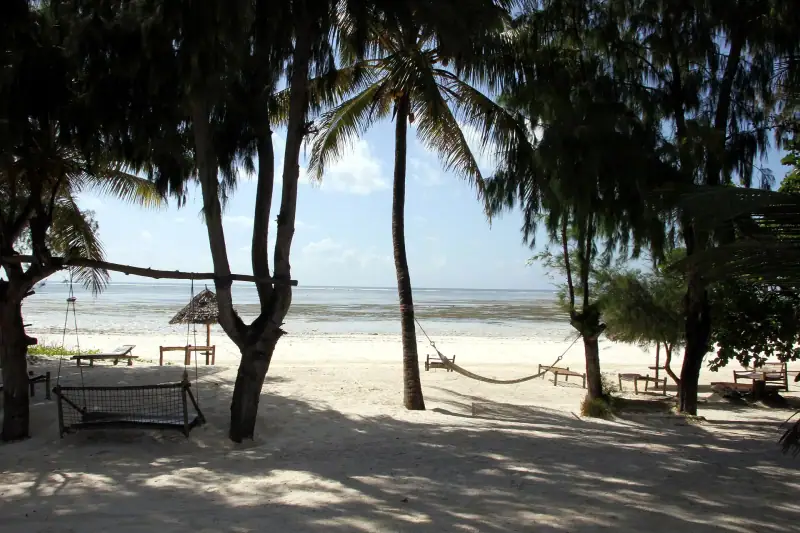
Where to Stay in Bwejuu, Zanzibar: Village, Beach and East Coast Hotels
Bwejuu, between Paje and Michamvi: which lodging to pick, what it costs, which beach, and how to handle the tides, cash and transport without a car.
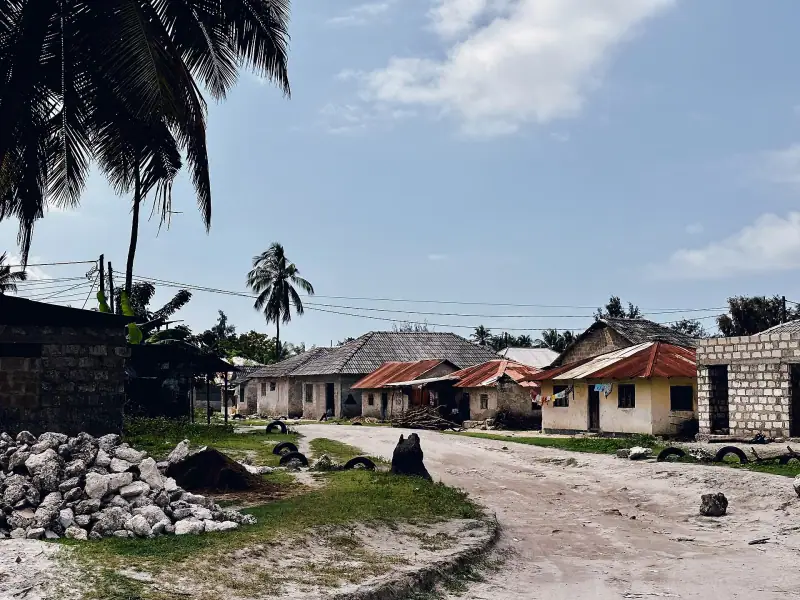
Where to Stay in Matemwe: The Best Lodging Near Mnemba Atoll
Where to stay in Matemwe, Zanzibar: dive lodges, charming bungalows, guesthouses. Areas, budget and tips for the northeast coast.
Ready-made
Zanzibar itineraries
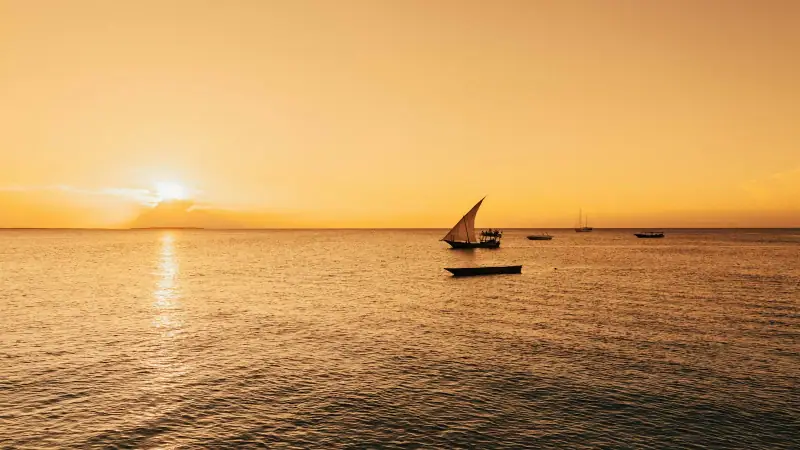
5 days
Zanzibar in 5 Days Without a Car: A Realistic Itinerary With Transport
Zanzibar in 5 days without a car: Stone Town, Nungwi and Paje with distances, travel times, taxi and daladala prices, and pitfalls to avoid.
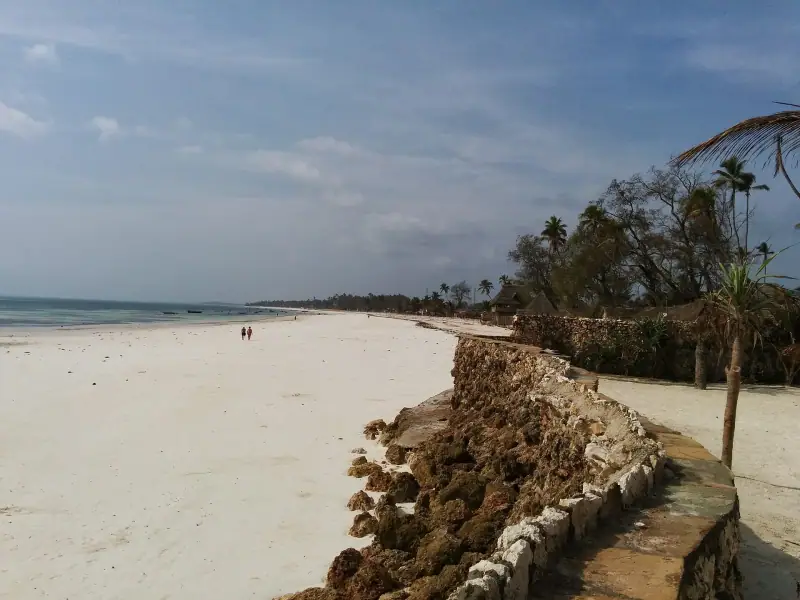
10 days
Zanzibar Island Tour: Complete 10 to 14-Day Itinerary
Stone TownNungwi and KendwaMatemwePaje and JambianiStone Town
3 days
Zanzibar's East Coast: A Complete Guide to Paje and Jambiani
Paje, Jambiani, kitesurfing and Swahili villages: a guide to Zanzibar's east coast, with beaches, dramatic tides and authentic village life.