Things to do
Kitesurfing in Zanzibar: Paje, Jambiani and what to know
We may earn a commission when you book through links on this page, at no extra cost to you. We don't visit or try the places we cover: we summarize published sources. How we work
In short
- Paje's shallow lagoon (50 cm to 1.5 m deep) and steady trade winds suit every level, from first lessons to freestyle.
- Main wind season is June to October (15 to 25 knots); a lighter season runs December to March. April, May and November are best avoided.
- Expect about $350 to $450 for a 9-hour IKO beginner pack, and $50 to $80 for gear rental if you ride independently.
- Plan at least 7 to 10 days in Paje to learn; 5 to 7 days is enough to ride on vacation.
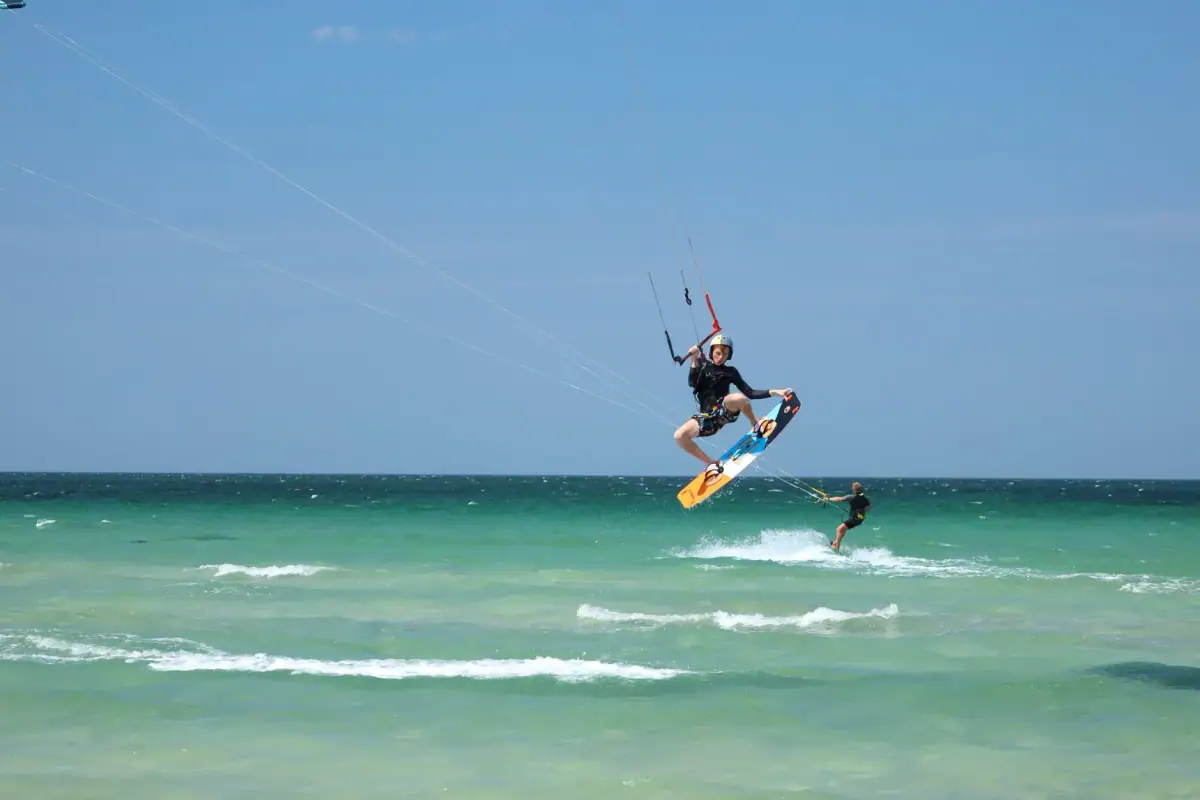
Zanzibar has been in the top 10 of world kitesurfing destinations for years. For good reason: the Paje lagoon, on the island’s east coast, has all the ideal conditions. Shallow turquoise water as far as you can see, steady and reliable trade wind, and a water temperature of 28 °C (82 °F) all year round. It is simply one of the best kitesurfing spots in the Indian Ocean.
Whether you come to Zanzibar to learn, to improve or just to ride in a dream setting, this guide gives you what you need to plan your kitesurfing stay.
Why Paje is an exceptional kitesurfing spot
Zanzibar’s east coast has a rare geography. A coral reef runs parallel to the beach, about 1 to 2 kilometers (0.6 to 1.2 mi) from shore. The reef creates a natural lagoon with unique conditions:
Shallow water: The lagoon is between 50 centimeters and 1.5 meters (20 in to 5 ft) deep at low tide. That matters for beginners, who can stand almost everywhere, and for riders who want to practice tricks without risking a serious injury if they fall.
Flat water: The inside of the lagoon is almost flat in light to moderate wind. This flat water is ideal for riders who want to refine their basic technique or learn jumps and slow-mo moves.
Trade wind: Paje gets southeast winds (kaskazi and kuzi in Swahili) that blow steadily and regularly through both wind seasons. The direction is predictable and the strength is stable, which makes for ideal conditions to learn and progress.
Lagoon size: The Paje lagoon is huge. Its usable area is estimated at several square kilometers. There is no crowding problem even in high season, unlike some European or Asian spots.
Kitesurfing seasons in Zanzibar
Zanzibar has two well-defined kitesurfing seasons. Planning your trip around them is essential.
Main season: June to October
The main season is by far the best for kitesurfing in Zanzibar. It is the dry season (kiangazi), and the southeast winds (kusi) blow especially steadily.
- Wind speed: 15 to 25 knots, with gusts up to 30 knots in July and August
- Consistency: 90% of days have rideable wind
- Weather: Clear skies, little rain, pleasant temperatures (27 to 29 °C, or 81 to 84 °F)
- Peak period: July and August are the busiest months
This is also Zanzibar’s high tourist season. Book your accommodation and lessons in advance.
Light season: December to March
The light season offers lighter but often very enjoyable conditions, especially for intermediate riders.
- Wind speed: 12 to 20 knots (lighter than in summer)
- Consistency: Less predictable, but 70 to 80% of days are rideable
- Weather: Hotter, some showers, but mostly sunny
- Advantage: Fewer people on the lagoon, lower accommodation rates
Periods to avoid
April and May coincide with the long rainy season (masika). Wind is weak and irregular, and showers are frequent. Not a good time for kitesurfing.
November is also a transition period with unreliable winds.
Stays in Paje
Find a lodge or hotel right on Paje beach, in the heart of the kitesurf spot.
The best kitesurfing spots on the east coast
Paje: the heart of Zanzibar kitesurfing
Paje is the most popular and best equipped spot on the island. The village has been completely transformed by the rise of kitesurfing over the past twenty years. Today Paje beach is lined with kitesurf schools, restaurants, bars and lodges designed for kitesurfers.
Lagoon access: Paje beach opens directly onto the lagoon. The launch area is on the main beach, clearly marked off by the schools. Advanced riders can leave the lagoon through the channel to ride in the open sea.
Infrastructure: Several IKO-certified schools operate permanently on the beach. Expect recent gear, multilingual instructors, changing rooms and showers.
Atmosphere: Paje is a lively village with a relaxed, international vibe. Many digital nomads and travelers stay several weeks or months.
Jambiani: the alternative spot
Located 8 kilometers (5 mi) south of Paje, Jambiani has a similar lagoon but a quieter atmosphere. The village is less developed for tourism than Paje, and the spot is less crowded.
Conditions: Slightly different from Paje. Some experienced riders find the conditions more technical (the wind differs slightly depending on the season). A good option for riders who want some solitude.
Infrastructure: A few kitesurf schools are present, but the choice is smaller than in Paje. Ideal if you have your own gear.
Matemwe and the northeast coast
The northeast coast, around Matemwe, also gets wind during the season. There is less kitesurf infrastructure (Matemwe is more focused on diving around Mnemba Atoll), but there are wild spots for independent riders looking for a different experience.
Learning to kitesurf in Paje: how it works
Paje is one of the best places in the world to learn kitesurfing. Here is why and how it works.
The standard IKO program
Most schools in Paje use IKO (International Kiteboarding Organization) certification, the worldwide standard.
Level 1, Assistant Kiteboarder (9 to 12 hours):
- Theory on gear, safety and weather (2 to 3 hours)
- Handling the kite on land (bar, lines, safety)
- Handling the kite in the water (body dragging)
- Board with assistance (water start)
- First independent runs
With Paje’s shallow lagoon, beginners progress very fast. Some students are independent by the end of the first 9-hour pack.
Level 2, Kiteboarder (6 to 9 additional hours): Consistent turns, upwind riding, independent water start, full control in all conditions.
Tips for choosing a school
Here are the key criteria:
- IKO certification of the school and the instructors: Essential. Ask to see the certifications.
- Student-to-instructor ratio: At most 2 students per instructor on the water. Beyond that, progress is slow and supervision is not enough.
- Recent gear: Kites from 2022 or newer. Avoid schools with worn equipment.
- Radio system: The best instructors communicate through radio helmets to guide the student from a distance. Very effective for progress.
- Language: Check which languages the instructors teach in before you book.
- Recent reviews: Check TripAdvisor and Google Maps for recent feedback.
Lessons and water activities in Zanzibar
Book kitesurf lessons and water activities online with certified instructors.
Kitesurfing budget in Paje: typical prices
Prices vary by school and season (high season is slightly more expensive).
| Service | Typical price |
|---|---|
| Intro lesson (2-3 h) | $100-150 |
| IKO level 1 beginner pack (9 h) | $350-450 |
| IKO level 2 progression pack (6 h) | $250-320 |
| Full levels 1+2 pack (15 h) | $550-700 |
| Gear rental (2-3 h, independent rider) | $50-80 |
| Gear rental (full day) | $100-140 |
| Private lesson, 1 h (improvement) | $80-120 |
| Buying used gear locally | $500-1,500 |
Budget tip: If you are coming specifically for kitesurfing and plan to ride for several days, negotiate a weekly package. Most schools offer discounts for 5 or more days of rental.
Used gear: There is an active resale market for gear in Paje. Riders who are leaving often sell their equipment at the end of their stay. Check the notice boards in restaurants and schools.
Advanced level: riding Zanzibar as an experienced rider
Paje is not only a beginner spot. Experienced riders find plenty to like too.
The flat-water lagoon
In light to moderate wind (12 to 18 knots), the lagoon offers dream flat water for freestyle: back rolls, front rolls, slow-mo moves, handle passes. The shallow depth lets you work on tricks with extra safety.
Open sea
In strong wind (20 to 28 knots), experienced riders leave the lagoon through the channel and find waves on the outer reef. Wave riding in Zanzibar is possible but takes solid open-sea experience.
Downwinders
A popular activity is to organize “downwinders” along the east coast: start from Matemwe in the north and ride to Jambiani in the south, covering 15 to 20 kilometers (9 to 12 mi) of coast with a car to pick you up.
Car rental in Zanzibar
Essential for exploring the east coast, organizing downwinders and getting around between Paje and Jambiani.
Where to stay in Paje for kitesurfers
Paje has accommodation aimed specifically at kitesurfers: cheap dorms for budget travelers, charming lodges for couples, whole houses for groups.
Types of accommodation
Kite lodges: Places right on the beach, often run by kitesurfers themselves. Gear storage on site, morning weather briefings, community atmosphere. Expect $40 to $80 per night for a double room.
Village guesthouses: Set farther back from the beach and cheaper ($15 to $30 per night). Good for long stays when you want to save money.
Charming lodges: For a more comfortable stay without giving up proximity to the spot. Expect $80 to $180 per night.
Dorms and kite camps: For budget travelers ($15 to $25 per night). Several places offer an all-inclusive kitesurf and accommodation package.
How long to stay in Paje
To learn: plan at least 7 to 10 days in Paje. Kitesurfing is not learned in a weekend. The best progress comes with daily repetition, and no-wind days let you recover.
To ride on vacation: 5 to 7 days let you enjoy the spot while exploring the rest of Zanzibar.
Combining kitesurfing and sightseeing in Zanzibar
Zanzibar is an island with many faces. If the wind fails you for a day (or if you need rest), here are some ideas for things to do near Paje:
Jozani Forest: Only 30 minutes from Paje by car, Jozani Forest is Zanzibar’s only national park. It is home to the Zanzibar red colobus (an endemic red and black monkey), a critically endangered species. A guided walk of 2 to 3 hours takes you to see them.
Stone Town: Zanzibar’s old town, about 1 hour by road from Paje, is a UNESCO World Heritage site. Maze-like alleys, Arab palaces, spice markets, sunset on the waterfront near Africa House (the garden has reopened, the former hotel is being restored: check on site). Plan a full day at the very least. See our guide to Stone Town’s highlights so you miss nothing.
Reef snorkeling: From Paje beach, local boats offer snorkeling trips to the outer reef ($20 to $30 per person). The coral is less dense than at Mnemba, but the trip is pleasant and open to everyone.
Jambiani beach: 8 km (5 mi) south of Paje, Jambiani is a fishing village with authentic charm. The beach is beautiful and less crowded, and the sunsets are spectacular. Our Nungwi vs. Paje comparison will help you choose the part of the island that best fits what you want.
Flights to Zanzibar
Compare flights to Zanzibar (ZNZ). Connections are common via Nairobi, Dar es Salaam or Addis Ababa.
Practical tips before you go
Gear to bring:
- Your IKO certification or equivalent if you are an independent rider
- Reef-safe sunscreen (SPF 50 minimum, since the tropical sun is intense, especially on the water)
- Polarized sunglasses with a neck strap
- Rash guard or light wetsuit (sun protection and jellyfish)
- GoPro or waterproof camera to record your sessions
Health and safety:
- Malaria is present in Zanzibar. Talk to your doctor or a travel clinic about preventive medication before you leave.
- Use mosquito repellent in the evening (the risk is lower on the east coast thanks to the wind, but not zero)
- Tap water is not safe to drink. Buy bottled water or use a filter.
Money and payments:
- The local currency is the Tanzanian shilling (TZS), but US dollars are accepted everywhere in Paje.
- Kitesurf lessons are most often paid in USD.
- There are few ATMs in Paje. Bring enough cash from Zanzibar City (Stone Town).
Getting there from Stone Town:
- Daladala (shared minibus): 2,000 to 3,000 TZS, 1 h 30 to 2 h, not practical with gear
- Shared taxi: $10 to $15 per person, 45 to 60 min
- Private taxi: $25 to $40, more comfortable for carrying gear
- Scooter rental: $15 to $20 per day, ideal for exploring the coast
Internet and phone: In Paje, 4G coverage from Vodacom and Airtel Tanzania is good. Buy a local SIM at the airport or in Stone Town. Lodges offer Wi-Fi, but the connection can be slow in high season.
Zanzibar, much more than a kitesurfing spot
What makes Paje and Zanzibar appealing beyond kitesurfing is the full island experience: blazing sunsets over the Indian Ocean from your lounger, grilled fish and lobster meals on the beach, morning conversations with local fishermen, and the relaxed nightlife of Paje’s restaurants.
Zanzibar is an island that invites you to stay. Many kitesurfers come for two weeks and leave planning their return. The combination of exceptional wind conditions, natural beauty and Swahili culture is hard to find elsewhere.
To learn more about organizing your trip, see our complete guide to Zanzibar or our guide to the best time to visit Zanzibar to plan your stay around the wind.
Frequently asked questions
Is Paje really a good kitesurfing destination?
Yes, Paje is one of the best kitesurfing destinations in the world. The shallow lagoon (50 cm to 1.5 m, or 20 in to 5 ft), steady wind from a constant direction (trade winds) and clear water make it an ideal spot for all levels, from beginners to experienced riders.
What level do you need to kitesurf in Paje?
All levels are welcome. The Paje lagoon is great for learning thanks to its shallow water (you can stand almost everywhere) and steady winds. Beginners can get their IKO certification in 9 to 12 hours of lessons. Advanced riders enjoy the flat water for tricks and jumps.
What is the best time for kitesurfing in Zanzibar?
Zanzibar has two wind seasons. The main one runs from June to October (steady 15 to 25 knot winds, the long dry season). The second runs from December to March (slightly lighter but reliable winds). April-May and November are best avoided because winds are weak and the weather is unsettled.
How much do kitesurfing lessons cost in Paje?
A 3-hour introductory lesson costs about $120 to $150 (USD). A 9-hour pack (IKO beginner certification) costs $350 to $450. Gear rental alone (for independent riders) runs $50 to $80 per 2 to 3 hour session. Prices vary by school.
Can you rent kitesurf gear in Zanzibar without taking lessons?
Yes, but only if you are an independent rider with an IKO or equivalent certification. Every serious school asks for proof of level before renting gear. For your safety and that of other lagoon users, this rule is not negotiable. Bring your logbook or your IKO certification.
Is it better to kitesurf in Paje or Jambiani?
Both spots are excellent. Paje is busier, with more developed infrastructure (more schools, restaurants and places to stay). Jambiani is slightly farther south, less touristy, and some experienced riders prefer its more technical conditions. To get started, Paje is more convenient.
More Zanzibar guides
Keep reading
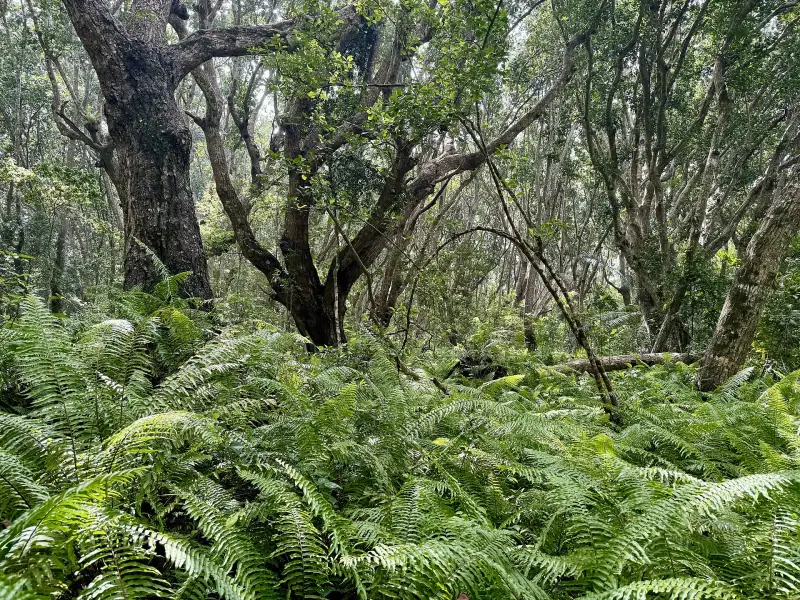
Visiting Jozani Forest in Zanzibar Without a Tour: Prices, Daladala and Practical Tips
Hike Jozani without a tour: real entry fee, getting there by daladala or car, opening hours and tips to avoid tour groups.
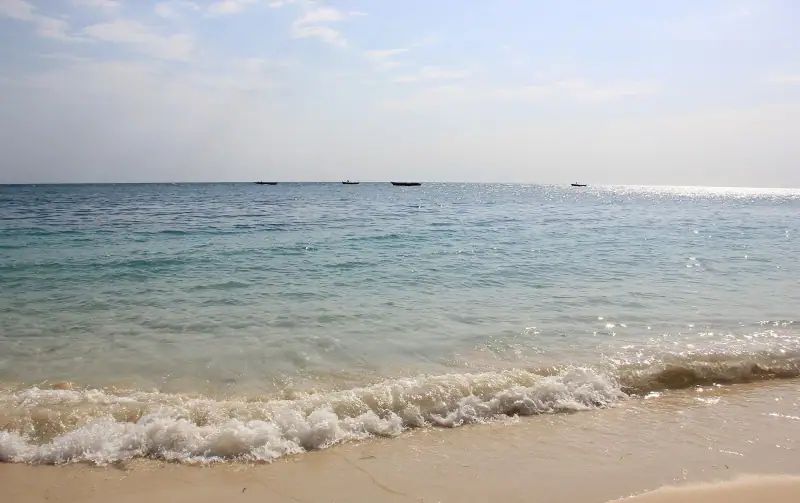
Mangapwani, Zanzibar: visiting the slave chamber and coral cave without a tour
Mangapwani, 20 km (12 mi) from Stone Town: slave chamber, coral cave and beach. Getting there without a tour, hours, prices to check and practical tips.
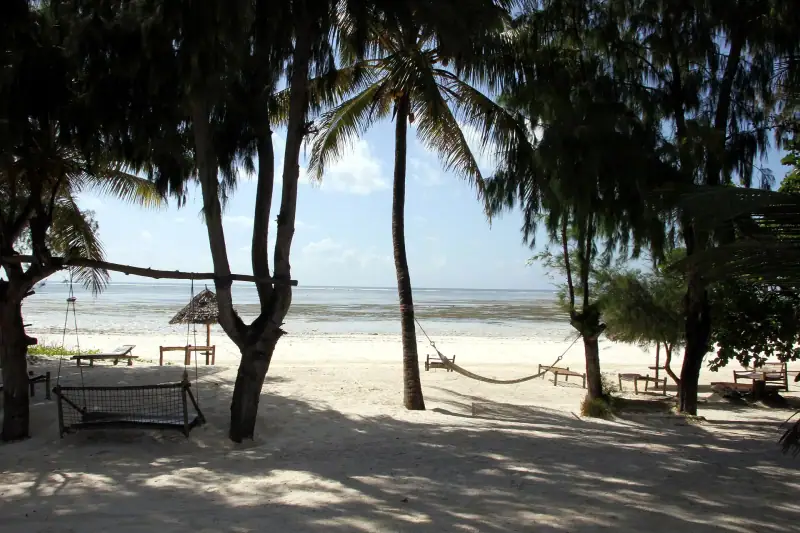
Where to Stay in Bwejuu, Zanzibar: Village, Beach and East Coast Hotels
Bwejuu, between Paje and Michamvi: which lodging to pick, what it costs, which beach, and how to handle the tides, cash and transport without a car.
Ready-made
Zanzibar itineraries
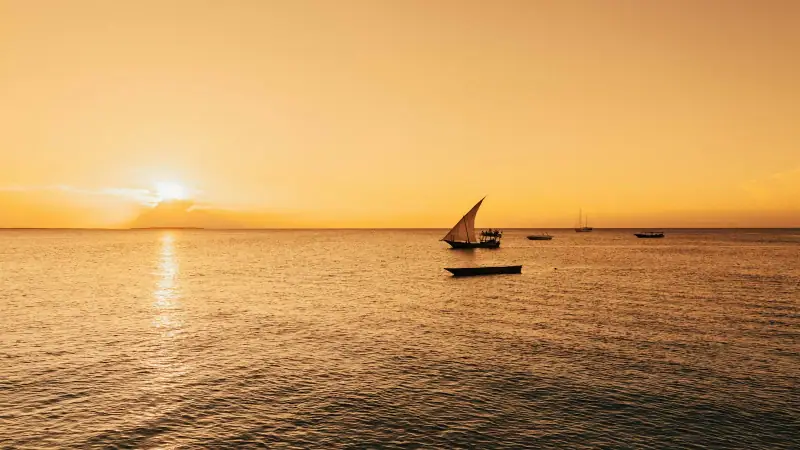
5 days
Zanzibar in 5 Days Without a Car: A Realistic Itinerary With Transport
Zanzibar in 5 days without a car: Stone Town, Nungwi and Paje with distances, travel times, taxi and daladala prices, and pitfalls to avoid.
10 days
Zanzibar Island Tour: Complete 10 to 14-Day Itinerary
Stone TownNungwi and KendwaMatemwePaje and JambianiStone Town
3 days
Zanzibar's East Coast: A Complete Guide to Paje and Jambiani
Paje, Jambiani, kitesurfing and Swahili villages: a guide to Zanzibar's east coast, with beaches, dramatic tides and authentic village life.