Things to do
Mekong Delta: excursions, floating markets and tips for choosing well
We may earn a commission when you book through links on this page, at no extra cost to you. We don't visit or try the places we cover: we summarize published sources. How we work
In short
- A day trip from Ho Chi Minh City (My Tho and Ben Tre) gives an overview; My Tho is about 70 km (43 mi) away, a little over 1 h 30 by road.
- To see a real floating market at dawn, plan at least one night in Can Tho: Cai Rang is the largest and most spectacular, and is busiest from sunrise to about 8 or 9 am.
- Two days and one night (Cai Be, Vinh Long, Can Tho) is the best balance of time and discovery; add Chau Doc and Tra Su Forest for a third day.
- The dry season (about December to April) is the most stable; from August to November the water rises and landscapes are greener, with more rain.
South of Ho Chi Minh City, the Mekong ends its course of several thousand kilometers by splitting into a multitude of arms before flowing into the South China Sea. This Mekong Delta, which the Vietnamese call Đồng bằng sông Cửu Long (the “Nine Dragons delta”), covers about 40,000 km² (15,400 sq mi) and is home to millions of people. It is the country’s rice bowl and orchard, a world of canals, wooden footbridges, orchards and markets where fruit is sold straight from boats.
For a traveler, it is also one of Vietnam’s most accessible experiences: from Ho Chi Minh City, you can spend a day, a night or several days there. This guide helps you choose the right option, understand what you really do there, and avoid overly touristy excursions that skim the essentials.
Understanding the delta: geography and organization
Before choosing, you need to picture the region. The delta extends southwest of Ho Chi Minh City, to the tip of Cà Mau, and groups twelve provinces as well as the city of Can Tho. For a traveler, it can be split into three main zones:
- The “near” delta: My Tho, Ben Tre, Cai Be, Vinh Long. One to two hours by road from Ho Chi Minh City, it is the territory of day excursions.
- The heart of the delta: Can Tho, the region’s largest city, an ideal base for the Cai Rang floating market and the small canals around it.
- The west, toward the border: Chau Doc and An Giang province, with their landscapes of isolated hills, flooded forests and a strongly multicultural character (Vietnamese, Khmer and Cham communities).
Distances are modest on the map, but roads are busy and ferries sometimes slow traffic. Allow approximately:
| Trip | Distance | Time by bus or car |
|---|---|---|
| Ho Chi Minh City → My Tho | about 70 km (43 mi) | 1 h 30 to 1 h 40 |
| Ho Chi Minh City → Ben Tre | about 85 km (53 mi) | about 2 h |
| Ho Chi Minh City → Can Tho | about 170 km (106 mi) | about 4 h |
| Can Tho → Chau Doc | about 115 km (71 mi) | about 3 h |
| Ho Chi Minh City → Chau Doc | about 245 km (152 mi) | 6 to 7 h |
These times vary with traffic and roadworks: leave some slack, especially on a Friday evening or the eve of a public holiday.
Day trip from Ho Chi Minh City: My Tho and Ben Tre
This is the classic option, and a perfectly decent one if you only have a day. Tours leave Ho Chi Minh City early in the morning, drive to My Tho, the delta town closest to the metropolis, then head onto the river and its canals.
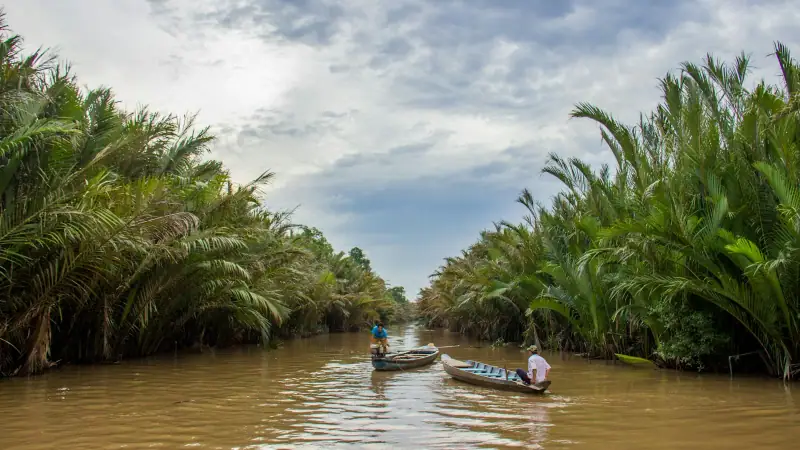
The typical flow looks like this: a boat crossing to an island in the middle of the river, a visit to a small workshop where coconut-based candy is made, a tasting of seasonal fruit with honey tea, a bike or cart ride on small paths, then a crossing of a narrow canal in a rowboat, under water palms. Lunch is often freshwater fish, a typical dish of the region.
What is worth the trip
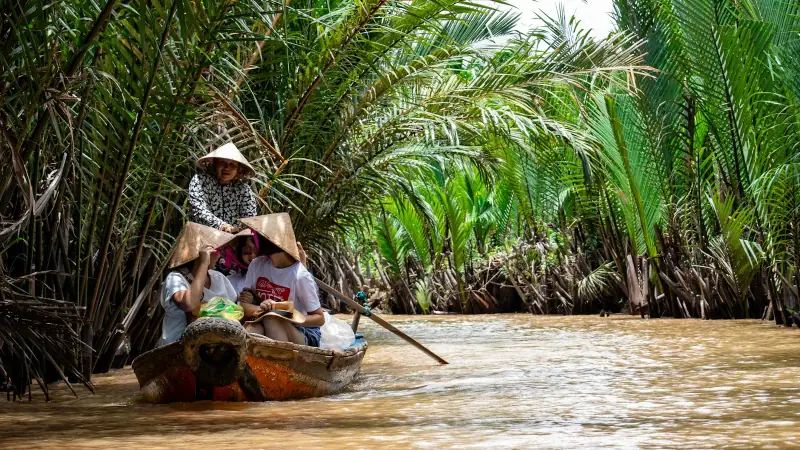
The shaded canals. The most pleasant part of the day is usually the descent of a small creek in a rowboat, when the motor goes quiet and the palms meet above the water. It is the most authentic moment of the excursion.
The processing workshops. Ben Tre province is renowned for its coconut palms and coconut candy. Watching the coconut caramel being made, cut by hand, is fun and unpretentious.
Orchard life. Depending on the season, you will see fruits you may not know: rambutan, longan, pomelo, sapodilla, jackfruit. Harvests vary from month to month, which is why two travelers do not taste exactly the same thing.
The limits to know
The cheapest excursions tend to chain stops at a fast pace, with a lot of time in the minibus and commercial stops (workshops where you are offered things to buy). It is not a scam, but it is better to know. Small groups limit this effect and leave more time for the canals. Our article on Ho Chi Minh City in 3 days explains how to place this excursion in a stay in Ho Chi Minh City.
My Tho and Ben Tre excursion from Ho Chi Minh City
Boat ride on the canals, orchards and tastings: compare day excursions, their group size, program and cancellation terms.
Can Tho and the Cai Rang floating market

If you have an extra night, Can Tho is the best option. This riverside city, the most important in the delta, is calm in the evening and practical for leaving very early the next day. It is the starting point for the Cai Rang floating market, a few kilometers from the center (about 6 km / 4 mi).
Why go at dawn
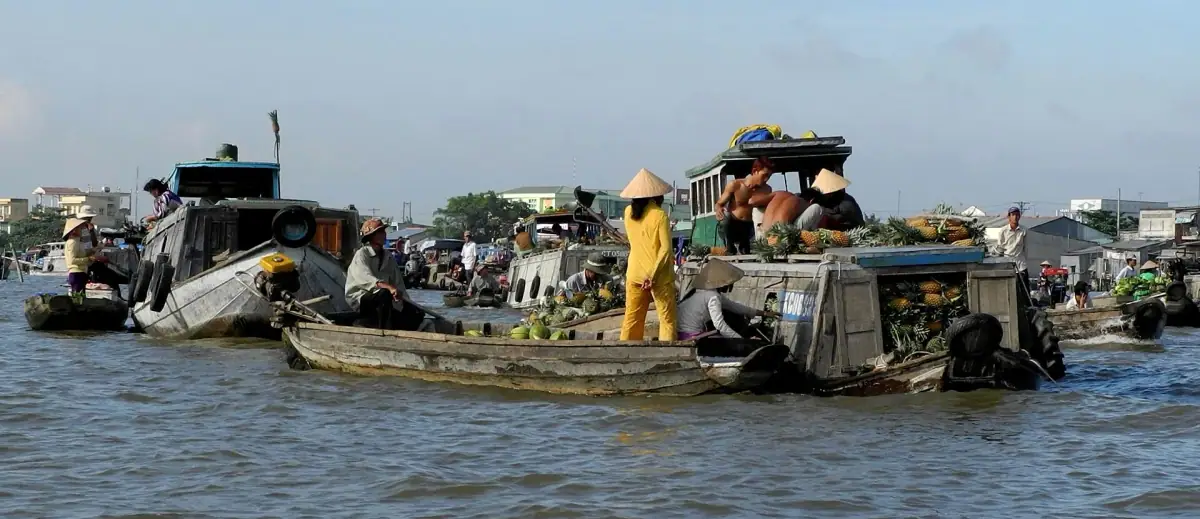
Cai Rang is above all a wholesale market. Producers’ boats come to sell their fruit and vegetables to traders who then resell them in the region’s markets. A pole planted at the front of each boat serves as a sign: a pineapple, watermelon, sweet potato or cabbage is hung on it to show what is for sale. The market is busiest from sunrise until about 8 or 9 am. In late morning, only a few boats remain.
In practice, this means leaving around 5 to 5:30 am by boat from the city dock. You go for the atmosphere and the photography, to buy a fruit straight from a boat, or to have a coffee served from a neighboring vessel. The sight is less of a cliché than you might imagine: you mostly see work, which is exactly the interest.
A few tips for a successful floating market
- Book a boat the day before, through your accommodation or a local provider, agreeing in advance on the price, the duration and the route.
- Dress lightly but bring a thin layer: the river is cool early in the morning, even in hot weather.
- Do not ask to buy everything: a fruit or two is enough, and vendors appreciate being paid properly rather than haggled over for each piece.
- Avoid photographing locals on board too closely without a smile or asking them: it is their workplace.
Cai Be, the alternative closer to Ho Chi Minh City
The Cai Be floating market, straddling the provinces of Tien Giang, Ben Tre and Vinh Long, is about 110 km (68 mi) from Ho Chi Minh City. Smaller and less spectacular than Cai Rang, it is however easier to fit into a two-day excursion. Again, the ideal is to arrive very early in the morning.
Vinh Long and homestays
Between Ho Chi Minh City and Can Tho, Vinh Long is an excellent base for getting off the classic tours. The town is about 135 km (84 mi) from Ho Chi Minh City, and the region is known for its orchard-covered islands and small canals. Several families host travelers there as homestays, that is, a room in a local home, with shared meals and bike rides.
This option means giving up a little comfort: a simple room, a mosquito net, a shower that is sometimes not very hot. In exchange, you sleep to the rhythm of the delta, eat what comes from the garden or the river and talk with your hosts, even without a common language. For the details of the types of accommodation in the country, see where to stay in Vietnam.
Stay in Can Tho, base for the floating market
A night there lets you leave at dawn for Cai Rang without traveling from Ho Chi Minh City. Compare hotels and guesthouses, reviews and cancellation terms.
Chau Doc and Tra Su Forest: the delta differently
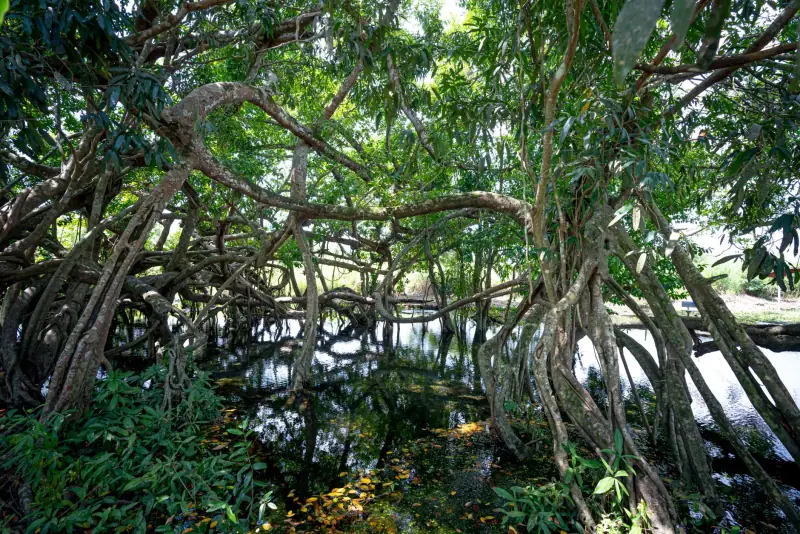
The further you get from Ho Chi Minh City, the calmer the delta becomes. Chau Doc, in An Giang province, is about 245 km (152 mi) from Ho Chi Minh City and about 115 km (71 mi) from Can Tho. This riverside town, near the Cambodian border, lives to the rhythm of floating fish cages, markets and pagodas. You meet Vietnamese, Khmer and Cham communities, and the mood is far less touristy than in the near delta.
Tra Su cajeput forest
About twenty kilometers (12 mi) from Chau Doc, Tra Su Forest is a wetland planted with cajeput trees (trees of the melaleuca family, not true mangroves, even though people often say “mangrove”). You explore it in a small boat across a bright green carpet of duckweed, with bamboo walkways for walkers. It is especially beautiful from September to the end of the year, when water has flooded the whole forest: in the dry season, the level drops and the route is less spectacular.
Bring sunscreen and insect repellent, and plan an early-morning or late-afternoon visit to avoid the heat.
An entry point to Cambodia
Chau Doc is also a known crossing point between Vietnam and Cambodia, by river or by road. Entry rules depend on your passport: check the official travel advice of your government before planning a land crossing: travel.state.gov (US), GOV.UK (UK), travel.gc.ca (Canada), Smartraveller (Australia) (checked November 2026). See also Vietnam entry formalities.
When to go to the Mekong Delta
The delta can be visited all year, but the experience changes clearly from one season to another.
From December to April: the dry season. This is the most comfortable period, with little rain, a clear sky and canals passable everywhere. Temperatures rise from March and April, and humidity stays high. It is the best option for a first visit.
From May to November: the rainy season. Showers are generally brief and fall mostly in the afternoon. The morning often stays clear, which suits floating markets well. It is also the season of many tropical fruits.
From August to November: the floating water season. When the river level rises, the lowlands are flooded. Locals speak of the “floating water season,” a time when the water brings fertile silt and abundant fish, and when some regions such as Chau Doc or Tra Su Forest are at their best. Roads can however be less practical in places.
To cross-check this information with the rest of the country and organize your calendar, read our guide when to go to Vietnam.
Eating in the delta
The delta is one of the country’s most food-loving regions: freshwater fish, shrimp, fruit, coconut in all its forms. You taste, among other things, fish simmered in a clay pot, spring rolls you assemble yourself at the table, sweet-and-sour soups and crispy crêpes filled with shrimp and bean sprouts. Many families also offer to cook with you.
A simple tip: ask what is in season and what was caught the same day. Our guide to the must-try dishes of Vietnamese cuisine details the southern dishes not to miss.
Cooking class and food tour in the delta
Learn to prepare southern specialties with a local host, or go on a food tour in Can Tho. Compare experiences and traveler reviews.
Which option to choose? Three sample itineraries
One day: My Tho and Ben Tre
For those with only one day. Early departure from Ho Chi Minh City, canals, orchards, tastings, back in late afternoon. You will see the essence of the “postcard delta,” without the Cai Rang floating market.
Two days and one night: Cai Be, Vinh Long and Can Tho
The best ratio of time to discovery. Day 1: leave Ho Chi Minh City, boat to Cai Be, visit the islands and a night in Vinh Long or Can Tho. Day 2: dawn start for the Cai Rang floating market, then back to Ho Chi Minh City during the day (about 4 hours by road from Can Tho). This is the option that suits most travelers.
Three days and two nights: with Chau Doc
Add a stop at Chau Doc and Tra Su Forest, about 115 km (71 mi) more between Can Tho and Chau Doc. The return to Ho Chi Minh City from Chau Doc takes six to seven hours by road, which makes it an option reserved for those who like to take their time or who continue to Cambodia. You can insert these days in a big circuit, such as the one in our 15-day Vietnam itinerary.
Organizing your excursion: agency or independently?
On an organized excursion, everything is taken care of: transport, boat, guide, meals. It is practical, quick to book and free of logistics worries. It is the logical choice for a day from Ho Chi Minh City.
Independently, you take a bus from Ho Chi Minh City’s Western bus station, or private transport, to My Tho, Ben Tre or Can Tho, then organize your boat or bike rides once there. It takes more preparation but gives freedom, notably for stays of several days. Always negotiate the price of a boat before boarding, and confirm the route.
With accommodation in the delta, the delta is discovered differently: sunrise, the silence of the night, family meals. If you hesitate, a night there is well worth an extra trip.
Budget and preparation
Day excursions from Ho Chi Minh City remain affordable, but rates vary a lot with group size, service level and season. Stays with a night in the delta cost more but remain reasonable. To fit your spending into your whole trip, see our budget for traveling in Vietnam.
What to put in your bag:
- a hat and sunscreen, because the sun on the water is strong;
- insect repellent, especially early in the morning and in the evening;
- light shoes that stay on your feet, for getting on and off boats;
- a small waterproof bag or a phone pouch;
- cash in small bills for buying fruit or treats.
Good to know: respect, safety and environment
- Life jackets: ask for one for each passenger before getting on a boat, particularly with children.
- Water and ice: drink bottled water with a sealed cap and avoid raw vegetables washed in canal water.
- Waste: the delta suffers from plastic pollution. Refuse straws and bags when possible, and take your trash with you.
- Animals: avoid photographs with wild animals or chained monkeys, even when they are offered to you.
- Respect for locals: ask before photographing a person or entering a private courtyard.
Final thoughts
The Mekong Delta is not a single place, but a mosaic of landscapes and rhythms. For an overview, a day in My Tho and Ben Tre is enough. To really see life on the water, plan a night in Can Tho and a pre-dawn wake-up for Cai Rang. And if you have time, Chau Doc and Tra Su Forest offer a wilder face, especially from September to the end of the year. Whatever the option, leave early, bring what you need to protect yourself from the sun and give yourself time to stop.
Frequently asked questions
How long do you need to visit the Mekong Delta?
One day is enough for an overview from Ho Chi Minh City (My Tho and Ben Tre, for example). To see a real floating market at dawn, allow at least one night in Can Tho, and two to three nights if you want to add Vinh Long or Chau Doc.
What is the best floating market in the delta?
Cai Rang, near Can Tho, is the largest floating wholesale market in the region and the most spectacular. Cai Be, closer to Ho Chi Minh City, is easier to fit into a day excursion. In both cases, you need to arrive early in the morning: activity fades in late morning.
When should you go to the Mekong Delta?
The dry season (about December to April) offers the most stable weather. From August to November, the rising water, called the "floating water season," brings greener landscapes and flooded forests, but with more rain. See our guide on when to go to Vietnam for the detail by region.
Can you do the Mekong Delta as a day trip from Ho Chi Minh City?
Yes, it is the most common option. My Tho is about 70 km (43 mi) from Ho Chi Minh City, a little over an hour and a half by road. Excursions generally last a full day and combine a boat ride, orchards and tastings. The Cai Rang floating market, however, is too far for a comfortable single day.
Do you need to book in advance?
Outside Tết and public holidays, you can easily find a place the day before or the same day at Ho Chi Minh City agencies. For a small-group excursion, a stay with a night in a local home or a busy period, book a few days ahead.
Is the Mekong Delta suitable for children?
Yes, many activities suit them: boat rides, bike rides on small roads, fruit tasting, making coconut candy. Bring a hat, sunscreen and insect repellent, and avoid days that are too packed in the heat.
More Vietnam guides
Keep reading
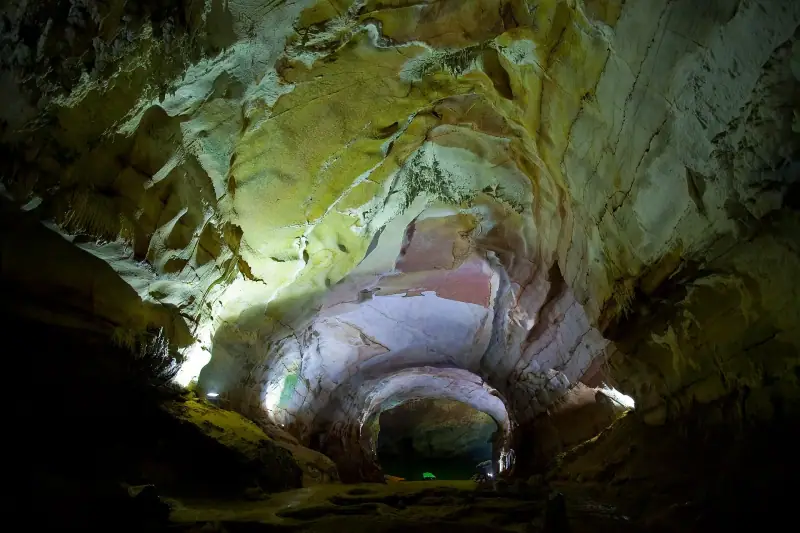
Phong Nha caves without a tour agency: prices, transport and which cave to choose
Visiting Phong Nha without an agency: ticket prices (Paradise Cave, Phong Nha, Dark Cave), access from Dong Hoi, rainy season and booking.
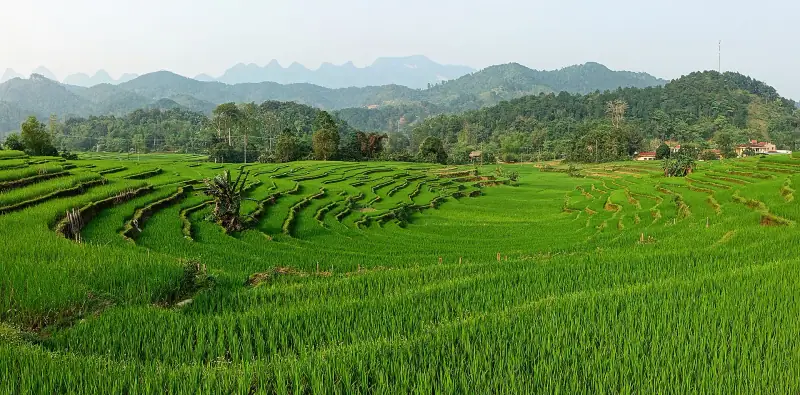
The Hà Giang Loop: a motorbike road trip in the northern mountains
The Hà Giang Loop in Vietnam: a 3 to 4-day itinerary, Mã Pí Lèng Pass, licenses, safety, motorbike with a rider, season, budget and tips for preparing.
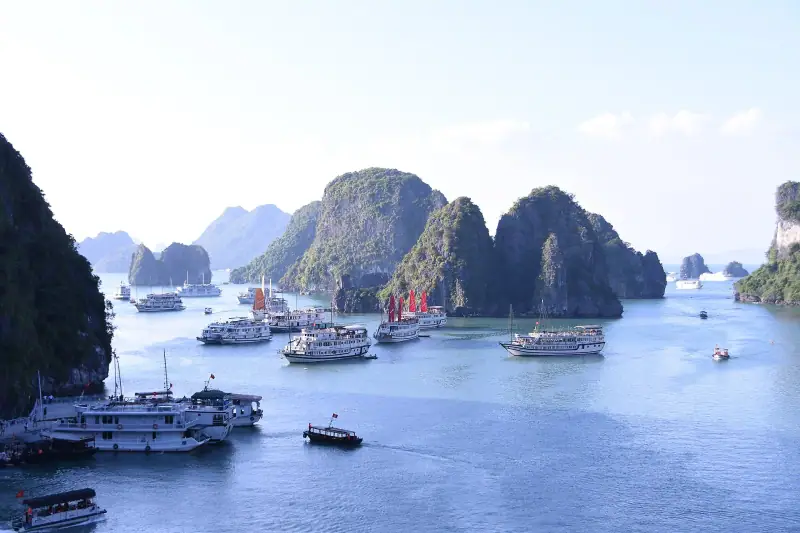
Ha Long Bay cruise: choosing between Ha Long, Lan Ha and Bai Tu Long
Which Ha Long Bay cruise to choose? Ha Long, Lan Ha or Bai Tu Long, 1 or 2 nights, season, activities on board and tips for booking from Hanoi.
Ready-made
Vietnam itineraries
10 days
Vietnam in 10 days without a car: a realistic itinerary by train, bus and plane
Vietnam in 10 days without a car: Hanoi, Ninh Binh, Hue, Hoi An and Ho Chi Minh City, with distances, real travel times and train, bus or plane options.
7 days
Northern Vietnam in 7 days: Hanoi, Ninh Binh and Ha Long Bay
HanoiNinh BinhHa Long Bay cruise
15 days
Vietnam 15-day itinerary: north to south, day by day
HanoiNinh BinhHa Long or Lan Ha Bay cruiseHoi An