Plan your trip
Budget for a Trip to Turkey: Real Costs, 3 Costed Profiles and Ways to Spend Less

We may earn a commission when you book through links on this page, at no extra cost to you. We don't visit or try the places we cover: we summarize published sources. How we work
In short
- Excluding flights, plan about €40 to €55 per person per day on a tight budget (about $46 to $64), €55 to €90 mid-range and €120 or more high-end.
- Lodging is usually 35 to 50% of the daily budget; meals are where you save most, from a few euros in a lokanta.
- Major sites charge high foreign-visitor rates (Topkapı about €50 to €70, balloon flights about €80 to €300): prioritize three or four must-sees.
- Pay in Turkish lira and refuse the conversion to your home currency at the terminal; keep some cash for dolmuş, markets and tips.
Turkey has a reputation as a cheap country, and that is partly true: a full meal in a local restaurant, a tram ride or a night in a simple guesthouse cost relatively little. But the real budget of a trip depends a lot on what you are aiming for. Between a backpacker who sleeps in a dorm and eats simit, and a couple who stay in a cave hotel and treat themselves to a balloon flight, the gap is hundreds of euros per day.
This guide details costs item by item, offers three costed budget profiles and gathers the tips that really lower the bill. The amounts are orders of magnitude gathered in early 2026 from several price guides and tourism sources; Turkish inflation is high, site fees are regularly raised by the Ministry of Culture and the exchange rate moves, so always check prices when you book. Euro amounts are followed by dollar equivalents at 1 € = $1.16; lira (TL) amounts are left as published.
Currency, exchange and payment: understanding the basis of the budget
The currency is the Turkish lira (TRY). It has been losing value against the euro for several years, which has two practical consequences. First, prices in lira shown in guides age quickly: a museum or bus fare quoted a year ago has probably gone up. Second, many tourism providers (tours, balloons, transfers, boutique hotels) display their rates directly in euros to protect themselves from inflation.
For everyday life, bank cards are accepted almost everywhere in cities and tourist areas, including for small amounts. Cash remains useful for local minibuses, markets, tips and small stalls. To get lira, withdraw at a bank ATM, or change at a downtown exchange office: rates there are generally better than at the airport or at your home bank.
A habit to adopt: when a payment terminal or ATM offers to charge in your home currency rather than lira, refuse. This “dynamic conversion” almost always applies a less favorable rate than your bank’s. Also check your card’s foreign transaction fees before leaving. Our guide cash or bank card in Turkey details withdrawals and the traps to avoid.
Lodging: the first spending item
Lodging usually weighs between 35 and 50% of the daily budget. The ranges below, per night, correspond to rates seen in early 2026 outside holiday periods:
| Type of lodging | Indicative price per night |
|---|---|
| Hostel dorm bed | €10 to €20 per person (~$12 to $23) |
| Simple double room (guesthouse, small hotel) | €25 to €50 (~$29 to $58) |
| 3-star hotel | €40 to €80 (~$46 to $93) |
| Boutique or charming hotel | €70 to €150 (~$81 to $175) |
| 5-star all-inclusive resort (Turkish Riviera) | €100 to €200 per person (~$115 to $230) |
Gaps widen by destination. Istanbul and Cappadocia are more expensive in the most sought-after areas: the historic Sultanahmet district and the Galata surroundings in the metropolis, central Göreme for cave hotels. Small interior towns and slightly out-of-the-way neighborhoods are markedly more affordable. Our guide to where to stay in Istanbul details neighborhoods by budget, and the one on where to stay in Cappadocia does the same for rock-cut hotels.
The hearty Turkish breakfast (cheeses, olives, eggs, jams, bread, tea) is very often included in the room price. It can replace a light lunch, which lowers the meal budget accordingly.
Compare hotels in Turkey
Filter by price, rating and breakfast included to find good value for your dates.
Transport: flights, buses and local travel
The flight
It is often the first big item. Fares vary widely by season and by where you start, so compare dates and airports. Offers under €100 (about $116) exist on low-cost carriers when you book two to four months ahead.
Flights to Turkey
Compare carriers and dates: shifting a departure by a few days can change the price noticeably.
Getting around Istanbul
The city has a dense network of metro, tram, bus, funiculars and ferries, usable with the Istanbulkart, a rechargeable card. The anonymous card costs about 165 TL (with no credit) and a full-fare ride is around 35 TL in 2026, roughly €1 or less depending on the rate (about $1 or less), with discounts for transfers. The public ferry on the Bosphorus costs a few tens of euro cents, far from private cruises at €20 to €40 (about $23 to $46). To reach the center from Istanbul airport, the Havaist shuttle to Taksim costs about 275 TL (around €7, about $8), payable by contactless card or QR code. Day to day, allow €3 to €5 (about $3 to $6) per day for local transport.
Traveling between regions
The long-distance bus is the great Turkish classic: comfortable, air-conditioned, with frequent departures. A few benchmarks noted in 2026: about €15 to €25 (~$17 to $29) for Istanbul-Ankara, €20 to €30 (~$23 to $35) for Istanbul-Izmir, and 800 to 1,500 TL for Istanbul-Göreme, for a trip of 10 to 11 hours. Short trips, such as Antalya-Pamukkale, run around €4 to €6 (~$5 to $7).
For very long distances, flying becomes competitive: Istanbul-Kayseri (the airport for Cappadocia) is shown from about €50 (~$58) one way when booking early, for about an hour and a half of flying, versus a whole night by bus. A night bus does, however, save a hotel night, a calculation to keep in mind.
Renting a car
A rental car generally costs €25 to €60 per day (~$29 to $70), not counting fuel, tolls and any deductibles. It is mostly relevant for the Lycian coast, the Aegean or Cappadocia, where distances between sites and the lack of frequent transport make a vehicle handy.
Meals: the item where you save the most
This is where Turkey is most generous. The following orders of magnitude apply to places frequented by locals:
- Street food: a simit (sesame bread ring) costs a few tens of euro cents, a lahmacun around €1 to €1.50 (~$1 to $2), a balık ekmek (fish sandwich) €2 to €3 (~$2 to $3) in popular areas, more near tourist quays.
- Lokanta (casual restaurant with daily dishes): a full meal for about €4 to €7 (~$5 to $8).
- Mid-range restaurant: €8 to €15 per person (~$9 to $17).
- Restaurant with a view or tourist menu: €25 to €45 per person (~$29 to $52), even more on the Bosphorus.
- Tea (çay): €0.40 to €0.75 a glass (~$0.46 to $0.87), against €4 to €8 (~$5 to $9) for a coffee in a tourist establishment.
In practice, a thrifty traveler spends €10 to €15 (~$12 to $17) a day on food, and a couple at comfort level €20 to €35 per person (~$23 to $41). Alcohol is heavily taxed and clearly expensive in restaurants: do not count on it to keep a small budget. To know what to order and where, read our guide to Turkish cuisine specialties.
Rather than picking a restaurant for its menu translated into several languages, look for rooms full of locals at lunchtime. Multilingual menus often come with prices two to five times higher.
Food tour and cooking class in Istanbul
A guided tasting to try local specialties without picking the wrong address.
Activities and site entries: foreign rates
The major sites apply high rates to foreign visitors. Noted in early 2026, with the usual reservations about changes:
| Site or activity | Indicative price |
|---|---|
| Hagia Sophia (foreign access, upper floor) | about €25 (~$29) |
| Topkapı Palace (with Harem) | about €50 to €70 depending on source and date (~$58 to $81) |
| Dolmabahçe Palace | about €38 (~$44) |
| Ephesus | about €40 (~$46) |
| Pamukkale and Hierapolis | about €30 (~$35) |
| Göreme Open-Air Museum | about €20 (~$23) (+ about €6 / ~$7 for the Dark Church) |
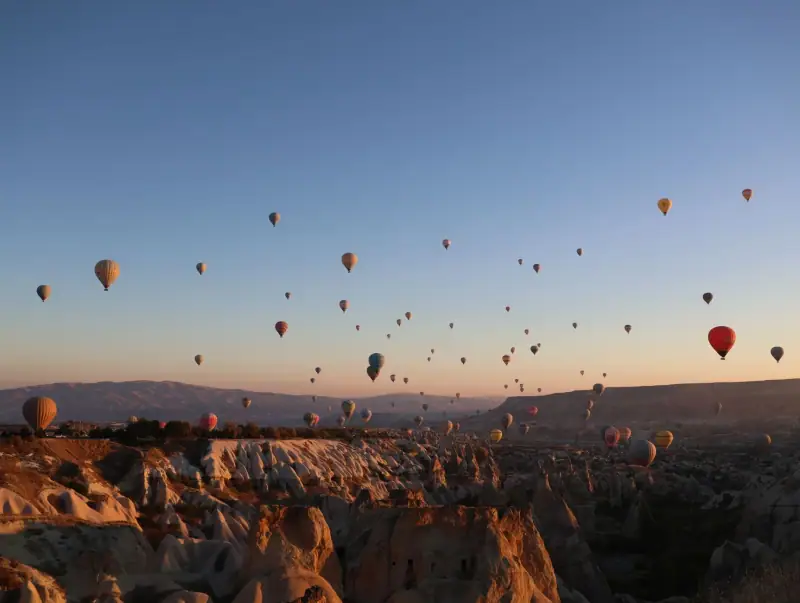
| Hot air balloon flight in Cappadocia | about €80 to €300 (~$93 to $350) (standard flight, by season) |
| Local hammam | about €8 to €13 (~$9 to $15) |
| Historic hammam for tourists | about €50 to €90 (~$58 to $105) |
The Istanbul Museum Pass cost about 6,500 TL for five days in April 2026; it covers notably Topkapı with the Harem and the archaeological museums, but neither the upper floor of Hagia Sophia, nor the Basilica Cistern, nor Dolmabahçe. It becomes worthwhile from about four included sites: do the math before buying. Our article what to see in Istanbul helps you decide your list of visits.
Many sights are free: the outside and inside of the Blue Mosque (outside prayer hours), the Grand Bazaar, walks on the Bosphorus, and the Cappadocia valleys explored on foot. For a first visit, it is better to keep your entry budget for three or four essentials than to visit everything.
Hot air balloon flight in Cappadocia
The price varies widely with the season and basket size: compare before you book.
Three costed budget profiles
Here are three profiles, in euros per person per day in Turkey, excluding flights. They rest on the ranges above and on daily budgets published in early 2026.
Profile 1: thrifty traveler (€40 to €55 a day, ~$46 to $64)
Dorm or simple shared room at €12 to €25 a night per person (~$14 to $29), meals in lokantas and street food (€10 to €15 / ~$12 to $17), public transport and night buses, one or two big entries per city and many free visits. No balloon, but hikes in the valleys. Over 14 days, that comes to about €560 to €770 in Turkey (about $650 to $895), before flights, insurance and a SIM card.
Profile 2: mid-range comfort (€55 to €90 a day, ~$64 to $105)
A 3-star hotel or small charming guesthouse (€40 to €80 for a double room, i.e. €20 to €40 per person for a couple, ~$23 to $46), mid-range restaurants, a few domestic flights, main entries and one or two tours. Over 14 days, allow about €770 to €1,260 in Turkey (about $895 to $1,460), plus flights and extras; sharing the room between two reduces the lodging share.
Profile 3: high-end stay (€120 and more a day, ~$140 and more)
A charming cave hotel or 5-star resort, restaurant meals with a view, private transfers, a balloon flight in a comfort basket, guided tours and a historic hammam. Over 14 days, spending in Turkey starts at about €1,700 per person (about $1,970) and easily exceeds €2,500 (about $2,900), before flights.
| Profile | Per day (excluding flights) | 14 days in Turkey (per person, excluding flights) |
|---|---|---|
| Thrifty | €40 to €55 (~$46 to $64) | about €560 to €770 (~$650 to $895) |
| Comfort | €55 to €90 (~$64 to $105) | about €770 to €1,260 (~$895 to $1,460) |
| High-end | €120 and more (~$140) | from about €1,700 (~$1,970) |
For a one-week stay, halve the cost on the ground and keep the flight item whole: that is what makes short stays proportionally more expensive.
Tips to spend less in Turkey
A few habits are enough to lower the bill noticeably without cutting into the experience:
- Travel in the shoulder season. From April to June and September to October, lodging and flight prices are often 20 to 40% lower than in July-August, with a more pleasant climate. Our guide when to go to Turkey details the seasons region by region.
- Book the flight early. Two to four months ahead lets you find the best offers, especially on low-cost carriers.
- Stay a bit out of the way. A hotel ten minutes’ walk from the most touristy areas frequently costs 50 to 70% less.
- Eat where locals eat. Lokantas, bakeries, street food stalls: meals are better and much cheaper.
- Use public transport. A tram ride costs about €1 or less (about $1 or less), against several euros by taxi, and the public ferry advantageously replaces a private cruise.
- Take the night bus on long trips to save a hotel night, if you accept the tiredness.
- Get a local SIM card or an eSIM: about €8 to €15 (~$9 to $17) for 20 to 30 GB over two weeks; compare with your carrier’s international plan before you go.
- Haggle in bazaars, without excess: discounts of 20 to 30% on big purchases are common, but not on small items.
- Choose paid visits carefully. Prioritize: better three paid sites you really want than a Museum Pass that does not pay off.
- Pay in lira, refuse the conversion to your home currency at the payment terminal, and avoid airport exchange offices.
- Compare tours. Local agencies in Göreme, Fethiye or Kaş often show different prices from one shop to the next; compare three offers and check what is included (transfers, entries, lunch).
Hidden costs not to forget
Several expenses slip under the radar easily. Travel insurance first, which generally costs €20 to €60 per person (~$23 to $70) depending on duration and coverage; it is worth it, especially if you plan sports activities or a car rental. Transfers from the airport next, from €15 to €40 (~$17 to $46) depending on the mode of transport and distance. Tips, customary in restaurants (about 5 to 10%) and for certain services. Entries to bathhouses and spas, often sold separately. Finally, an envelope for the unexpected and souvenirs of €100 to €200 per person (~$115 to $230) avoids dipping into the daily budget.
If your circuit combines several regions, add the plane or bus tickets between them: an Istanbul-Cappadocia-coast trip can weigh more than the lodging of several nights. For an example of a short, well-optimized circuit, see our three-day Cappadocia itinerary, which gives an idea of the pace and distances to budget.
How to build your own budget
A simple method is to start from the number of nights, then add the items in this order: round-trip flights, lodging (nights multiplied by the target rate), transport between cities, meals per day, chosen entries and tours, then a margin of 10 to 15% for the unexpected. Then calculate the total per person and divide it by the number of days: if the result far exceeds the target profile, it is generally lodging or tours that need adjusting first.
Finally, keep an eye on the currency: if the lira keeps depreciating, prices displayed in euros will stay stable while prices in lira rise, which benefits the traveler paying by card. The budgets in this guide are therefore ballpark figures, not promises: check the official rates of sites, compare lodging offers for your dates and keep a margin, and your trip to Turkey will remain, in most cases, markedly more affordable than many other Mediterranean destinations.
Sources
- Ministry of Culture and Tourism (Museums): prices checked November 2026
- Ministry of Culture and Tourism (Museums): prices checked November 2026
- İstanbulkart (Istanbul Metropolitan Municipality): figures checked November 2026
Frequently asked questions
What budget should you plan per day in Turkey?
Excluding flights, plan about €40 to €55 per person per day on a tight budget (about $46 to $64), €55 to €90 ($64 to $105) for mid-range comfort and from €120 ($140) for a high-end stay. These orders of magnitude vary with region, season and exchange rate.
Is Turkey a cheap country for travelers?
Yes for meals, local transport and simple lodging, which remain markedly inexpensive. The flagship sites (Hagia Sophia, Topkapı Palace, balloons), however, have high foreign rates, in euros or aligned with them, and inflation moves prices in lira.
How much does a week in Turkey cost?
For one person on a tight budget, plan about €280 to €385 in-country costs (about $325 to $447), based on €40 to €55 per day. A round-trip flight and insurance come on top, and flight prices vary widely by origin and season; the total is higher at mid-range comfort.
Is it better to pay in euros or Turkish lira?
Pay in Turkish lira when possible: merchants who display prices in euros often apply an unfavorable rate. By card, if the terminal offers to charge in your home currency, refuse the conversion and choose the local currency. Keep a little cash for small shops, dolmuş and tips.
How do you save on transport in Turkey?
In town, an Istanbulkart makes metro, tram, bus and ferry trips much cheaper than a taxi. Between cities, long-distance buses are comfortable and economical, and domestic flights booked ahead can cost barely more than a bus for long trips such as Istanbul-Cappadocia.
Should you buy the Istanbul Museum Pass?
It only pays off if you visit several of the sites it covers, such as Topkapı Palace with the Harem and the archaeological museums. It does not cover the Hagia Sophia upper floor, the Basilica Cistern or Dolmabahçe: add up the entries you plan before buying it.
Can you haggle in Turkey?
Yes in bazaars and with carpet, leather or jewelry sellers, where a 20 to 30% discount on big purchases is nothing unusual. You do not haggle in restaurants, on transport or in shops with posted prices.
More Turkey guides
Keep reading
When to Go to Turkey? Best Time, Weather and Seasons Region by Region
When to go to Turkey: weather, sea, crowds and prices in Istanbul, Cappadocia, the Aegean and the Mediterranean coast, to pick the right season.
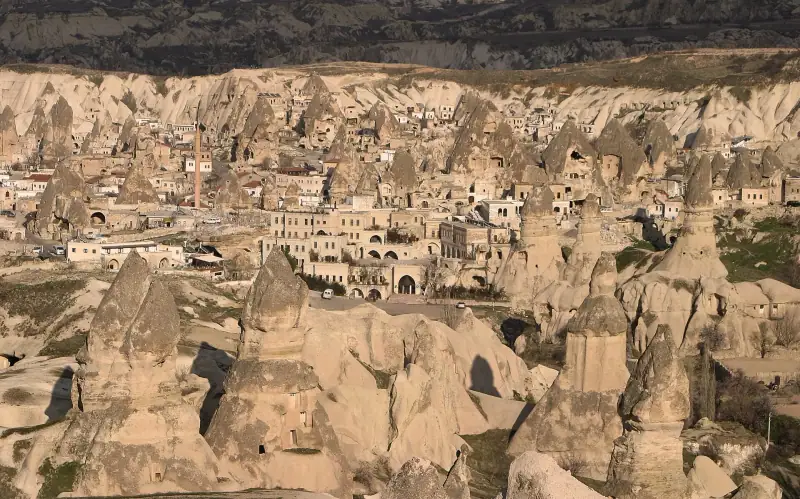
Complete Guide to Visiting Turkey: Regions, Highlights, Budget and Tips
Istanbul, Cappadocia, Ephesus, the Lycian coast, Antalya: a complete guide to planning a trip to Turkey, from the ideal season to the budget.
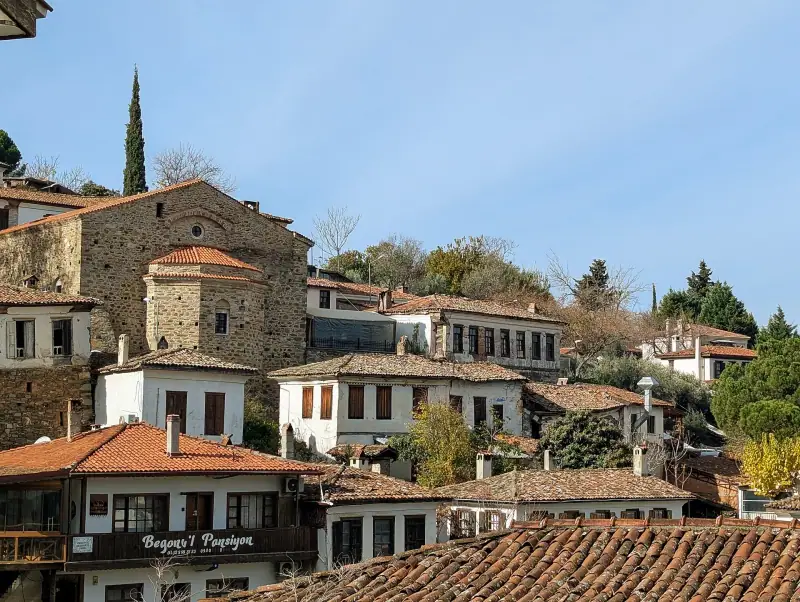
Şirince: Is It Worth the Detour from Ephesus and Selçuk?
Şirince, a hill village near Ephesus: is it worth the detour? Getting there from Selçuk, visit length, fruit wines, tourist traps and alternatives.
Ready-made
Turkey itineraries
2 days
3 days
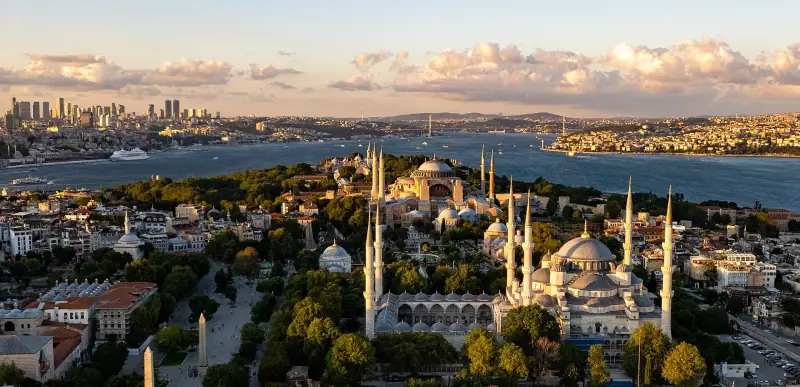
Istanbul in 3 Days: A Day-by-Day Itinerary to See It All
A 3-day Istanbul itinerary: Hagia Sophia, Topkapı, Grand Bazaar, Bosphorus, Galata and the Asian side, with a realistic pace and practical tips.
3 days
Cappadocia in 3 Days: A Detailed Itinerary of Valleys, Underground Cities and Hot Air Balloons
What to see in Cappadocia in 3 days? Day-by-day itinerary: Göreme, valleys, Uçhisar, Derinkuyu, Avanos, hot air balloons and tips for your stay.