Itineraries
Ephesus and Pamukkale in 2 Days: An Itinerary Combining Both Sites
We may earn a commission when you book through links on this page, at no extra cost to you. We don't visit or try the places we cover: we summarize published sources. How we work
Day by day
- Day 1Ephesus in the morning, Selçuk, drive to Pamukkale
- Day 2Pamukkale travertines, Hierapolis, theater, necropolis and antique pool
Where to sleep
- Selçuk1 night
- Pamukkale1 night

In short
- Sleep one night in Selçuk and one in Pamukkale: Ephesus on day 1, the travertines and Hierapolis on day 2.
- The drive from Selçuk to Pamukkale takes about three hours; allow two to three hours at Ephesus and three to four for the travertines, Hierapolis and a swim.
- Arrive at opening time at both sites: shade is scarce and large groups arrive later in the morning.
- Access to the Pamukkale pools is regulated to protect the travertines; you walk barefoot, and the antique pool costs extra.
Ephesus and Pamukkale are among the most visited sites in Aegean Turkey, and they link together very well: on one side, one of the best-preserved ancient cities of the eastern Mediterranean; on the other, terraces of white limestone and the ruins of Hierapolis, a UNESCO World Heritage Site. It takes a little organization to see everything without rushing, but two days are enough for a first look. If you are wondering whether to add the nearby village, see whether Şirince is worth the detour from Ephesus.
This guide offers a simple day-by-day itinerary, with suggested timing, transport choices and mistakes to avoid. Opening hours and entry fees change: check them on the official sites before you go. If you are still unsure about the season, see our article on when to go to Turkey.
Organizing the circuit: base, drive and duration
The most practical plan is to sleep one night in Selçuk, a quiet small town a few kilometers from Ephesus, then a second night in Pamukkale. Selçuk is a little over an hour by road from Izmir airport, by train, bus or private transfer. From Selçuk, allow about three hours by road to Pamukkale, a little more by public transport with a change at Denizli.
This setup has one advantage: you visit Ephesus in the morning, before the heat and the cruise ship groups, then drive in the afternoon to Pamukkale to settle in. The next day, you climb the travertines early, before the light becomes too harsh. If you arrive by plane, avoid planning a return flight too early on the day after: getting back to Izmir or Istanbul takes time.
A longer stay of course lets you add the beach or other sites. But in two days, it is better not to try to see everything: concentrate on the two major places and keep time for meals. For those continuing to Cappadocia, our 3-day Cappadocia itinerary complements this program well.
Compare flights to Izmir
Izmir is the closest gateway to Ephesus: compare dates before you book.
Day 1 morning: Ephesus, the great ancient city
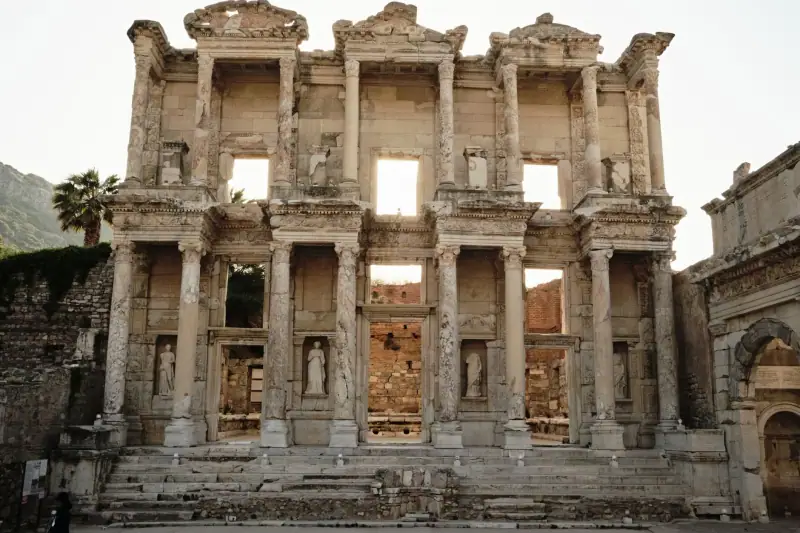
Ephesus was one of the main cities of Greek and then Roman antiquity in Asia Minor. You tour the site by following a long paved street lined with columns, fountains and public buildings. There are two entrances: the upper entrance, which lets you walk gently down through the site, and the lower entrance, closer to the Great Theater. Many visitors prefer to start at the top so they can walk downhill.
Among the highlights, the facade of the Library of Celsus is the site’s emblematic image. The Great Theater, which could hold several thousand spectators, overlooks the old avenue that led to the harbor. The Temple of Hadrian, on Curetes Street, is one of the best-preserved small buildings. The Terraced Houses, protected by a cover, show mosaics and frescoes from the homes of notables; they often need an extra ticket, but they are one of the best moments of the visit.
Allow about two to three hours there. Arrive at opening time, and bring water and a hat: the site offers little shade. A guide or an audio guide helps in understanding how the city was organized. You can book a guided tour in advance, which avoids waiting and adds historical context.
Guided tour of Ephesus
Compare guided tours of the ancient site, with or without transfer, depending on your schedule and starting point.
Day 1 afternoon: Selçuk, then the road to Pamukkale
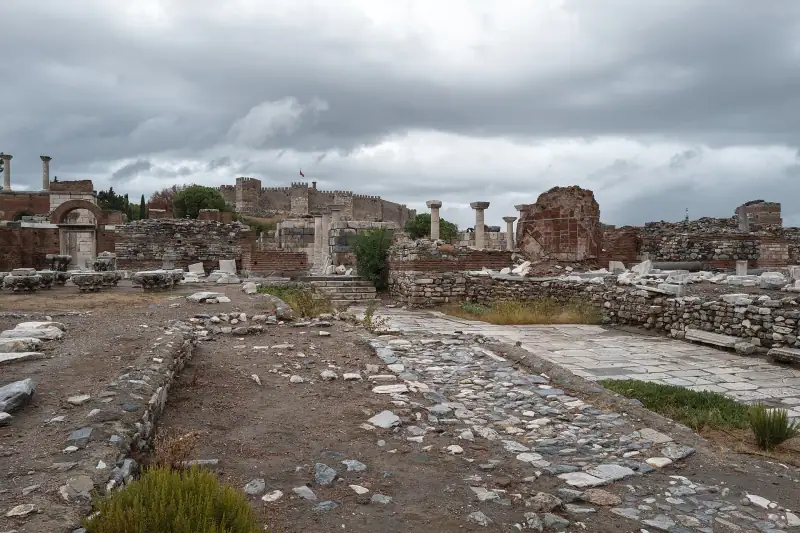
Before leaving the area, take the time to see Selçuk. The Ephesus Museum displays a large share of the objects found at the site and gives meaning to what you saw in the morning. Close by, the Basilica of St. John overlooks the town and offers a view over the plain, and a column of the Temple of Artemis, one of the seven wonders of the ancient world according to tradition, stands off to one side. Lunch is easy in the center, in one of the traditional restaurants near the main square. Our guide to Turkish cuisine gives a few pointers for ordering.
Then set off for Pamukkale in the early afternoon: this leaves time to arrive, drop your bags and enjoy the sunset over the travertines if conditions allow. The road crosses the Meander valley, with farmland scenery; plan a break. By bus, the trip generally goes through Denizli, where you change for a minibus to the village. Check the schedule of the last connection, especially off-season.
On arrival, settle into lodging near the site: you can climb the next day before the crowds. Many guesthouses offer an early breakfast and, sometimes, a transfer to the entrances. To compare the village, Karahayıt and Denizli without a car, read our guide to where to stay in Pamukkale.
Hotels in Pamukkale
Sleeping at the foot of the travertines lets you climb early in the morning, when it is least crowded.
Day 2: the Pamukkale travertines
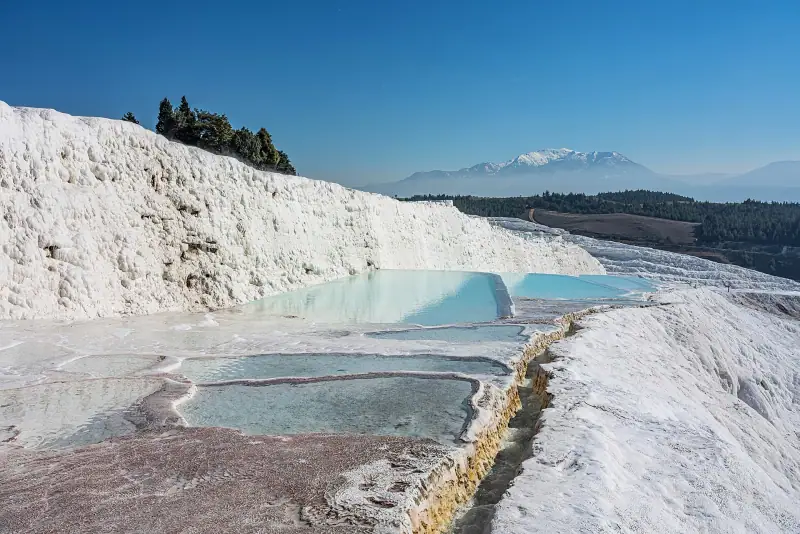
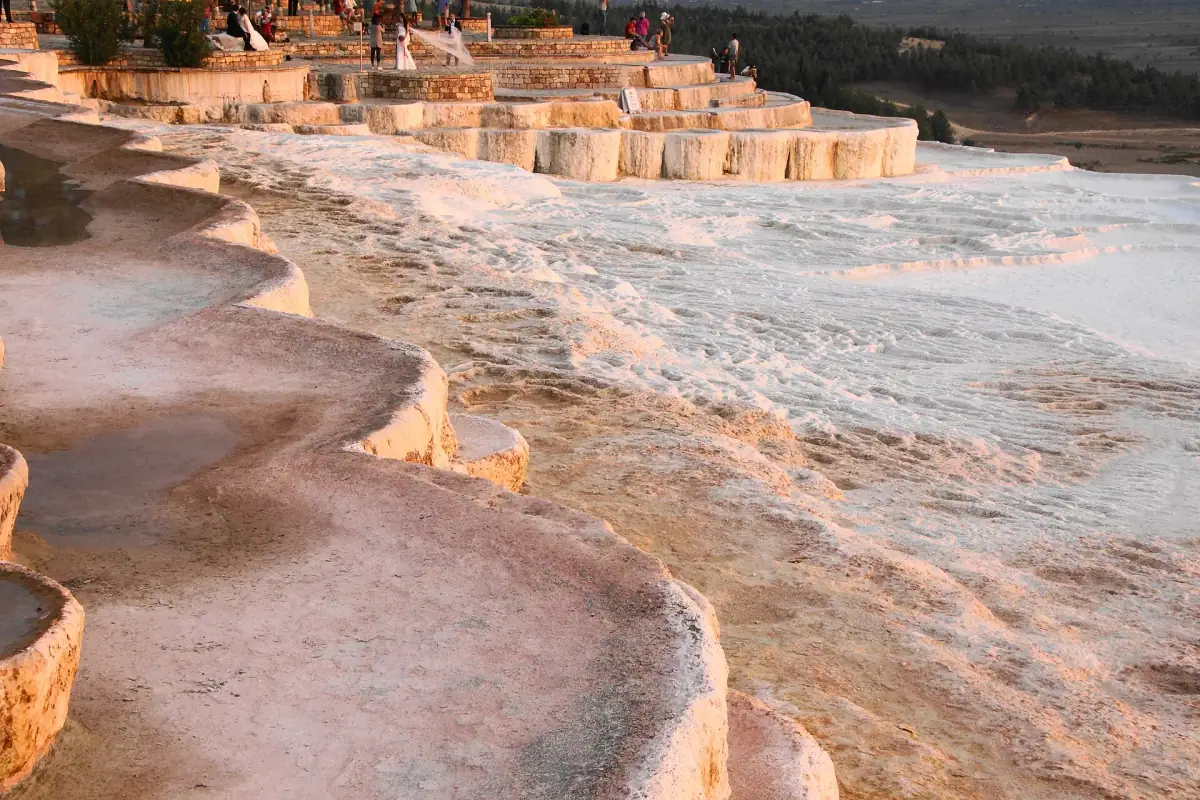
Pamukkale means “cotton castle” in Turkish, a name you understand on seeing the white terraces running down the slope. They formed from limestone deposited by mineral-rich hot springs. The site is a UNESCO World Heritage Site together with Hierapolis, the ancient city just above.
To protect the formations, access is controlled: you walk barefoot on the permitted parts, and some pools are open for swimming or wading, others are not. Water and limestone can be slippery, so move carefully. How full the basins are varies with the seasons and maintenance work: do not count on the pools always being full. Ideally, arrive at opening time or late in the day, when the light is softer and groups are smaller.
The site has two main entrances: one in the south, at the village, which lets you climb the travertines on foot; the other in the north, with a parking lot that is more convenient by car. The walk up takes under an hour at a leisurely pace, with photo stops. If you visit in summer, avoid the middle of the day: the white limestone strongly reflects the sun, and sunglasses are essential.
Hierapolis: theater, necropolis and antique pool
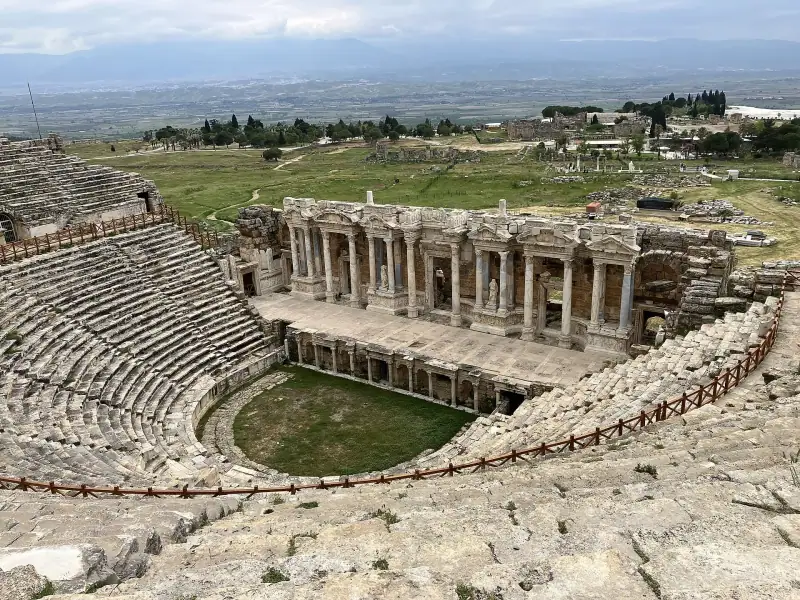
At the top of the terraces, Hierapolis was a renowned spa city in antiquity. The very well-preserved Roman theater overlooks the plain, and the vast necropolis, which stretches over several hundred meters, is one of the most important in Anatolia. The museum set in former Roman baths displays sarcophagi and sculptures found there.
The antique pool, fed by a hot spring and strewn with ancient columns that fell into the water, is one of the highlights: you can swim there for an extra fee. Bring a swimsuit and towel, as well as suitable shoes for getting around the site, because the paving is uneven. Allow about three to four hours for the travertines, Hierapolis and the swim, more if you want to see everything without hurrying.
For the afternoon, there are two options: head back toward Izmir or Selçuk, or extend the stay by continuing to the Lycian coast or Antalya. In both cases, plan for the length of the drive and avoid night driving if you are not used to driving in Turkey.
Pamukkale day tour
Day tours with transport, entry to the travertines and a visit to Hierapolis, from the main towns of the region.
Car, bus or tour: which to choose?
A rental car gives the most freedom: it lets you arrive when the sites open and adjust the route. The drive between Selçuk and Pamukkale is direct and easy, but respect the speed limits, which are frequently checked, and keep something to pay any tolls. Compare rental offers, especially in high season.
Buses and minibuses are an economical and reliable alternative, at the cost of a longer travel time and connections. Organized tours, finally, suit those with little time: they handle transport and entry to the sites, but impose a group pace and fixed schedules.
Practical tips
- Shoes and clothing. Bring comfortable shoes for Ephesus and sandals that are easy to take off for the travertines. Pack a swimsuit, towel and sunglasses.
- Timing. Arrive at opening time at both sites: large groups and cruise passengers arrive later in the morning.
- Water and sun protection. Both sites offer little shade, even in spring. Bring water, sunscreen and a hat.
- Tickets. Check what is included in the entry: the Terraced Houses, the museum and the antique pool are generally charged separately.
- Season. Spring and fall are the most comfortable; in midsummer it is very hot.
- Scams. Be wary of unofficial guides who approach you at the entrance: prefer tours booked in advance.
Frequently asked questions
Ephesus or Pamukkale, if you can only pick one? Ephesus appeals to history lovers, Pamukkale to those looking for a singular natural landscape. The two complement each other, and combining them is possible in two days.
Can you do Pamukkale in half a day? Yes, if you are already there: allow at least three hours for the travertines and Hierapolis, more if you swim.
What is the best time of day? Early in the morning or late in the afternoon, for the light and the crowds.
What to do after Pamukkale? You can head to the Lycian coast or Antalya, or return to Izmir; for a longer stop in central Anatolia, consider Cappadocia.
Frequently asked questions
Can you visit Ephesus and Pamukkale in two days?
Yes. Spend the first day on Ephesus and Selçuk, then head to Pamukkale in the late afternoon to visit the travertines and Hierapolis the next day. The drive between the two sites takes about three hours.
How long should you allow for Ephesus?
Allow about two to three hours for the ancient site, more if you add the Terraced Houses (which often need a separate ticket) or the Ephesus Museum in Selçuk.
Can you swim in the Pamukkale pools?
Access to the natural basins is regulated to protect the travertines: only certain areas are open, and you must walk barefoot. Swimming in the Hierapolis antique pool is possible for an extra fee. Ask there about the current rules.
Should you sleep in Pamukkale or in Denizli?
Sleeping at the foot of the site, in Pamukkale village, lets you climb early in the morning or late in the day, when it is less crowded. Denizli, larger, offers more transport options but is a few kilometers away.
Do you need a car for this circuit?
It is not required: buses and minibuses link Selçuk, Denizli and Pamukkale, and organized tours exist. A car does give more flexibility with timing, especially if you want to be at the sites when they open.
What is the best season for this circuit?
Spring and fall are the most pleasant: in midsummer temperatures are high and the white travertine strongly reflects the sun. Bring sunglasses, water and a hat in any season.
More Turkey guides
Keep reading
Budget for a Trip to Turkey: Real Costs, 3 Costed Profiles and Ways to Spend Less
What budget for Turkey in 2026? Lodging, transport, meals and activities, three costed profiles and concrete tips to save money.
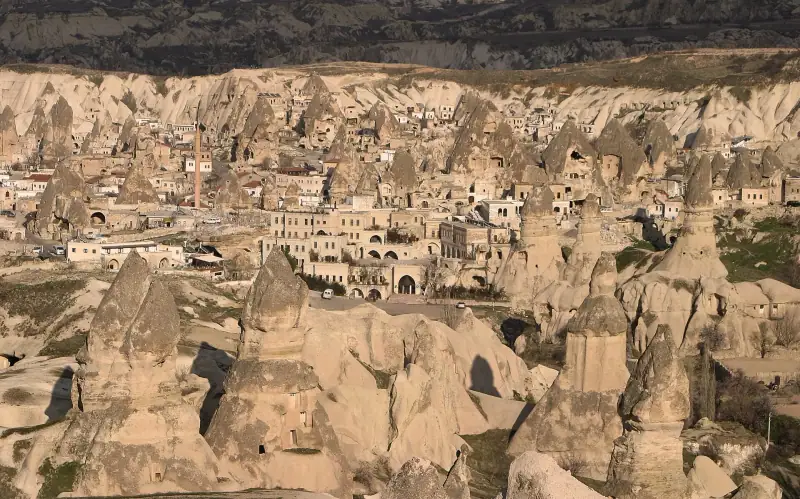
Complete Guide to Visiting Turkey: Regions, Highlights, Budget and Tips
Istanbul, Cappadocia, Ephesus, the Lycian coast, Antalya: a complete guide to planning a trip to Turkey, from the ideal season to the budget.
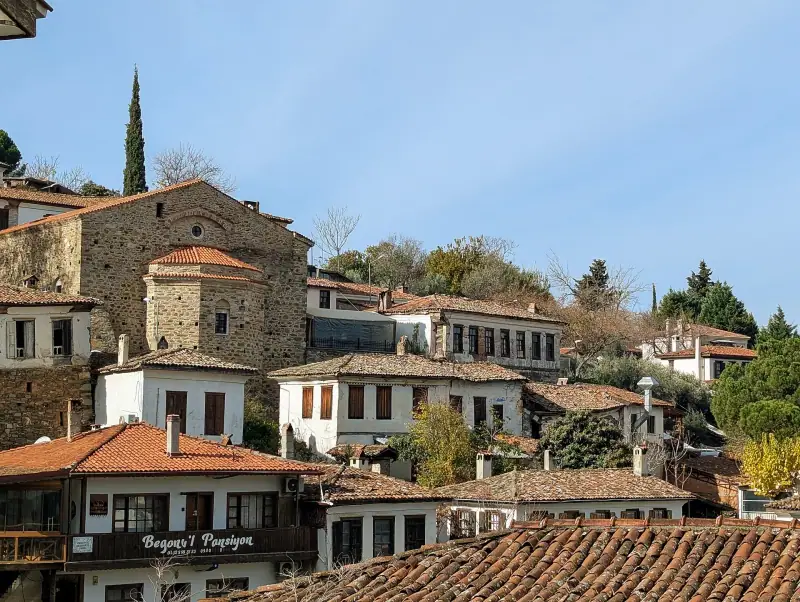
Şirince: Is It Worth the Detour from Ephesus and Selçuk?
Şirince, a hill village near Ephesus: is it worth the detour? Getting there from Selçuk, visit length, fruit wines, tourist traps and alternatives.
Ready-made
Turkey itineraries
3 days
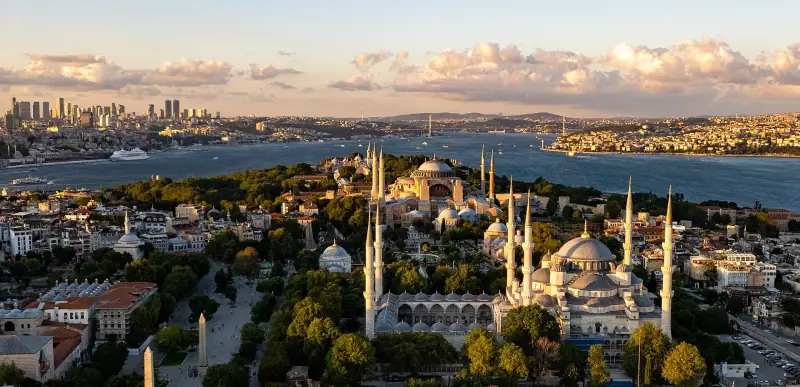
Istanbul in 3 Days: A Day-by-Day Itinerary to See It All
A 3-day Istanbul itinerary: Hagia Sophia, Topkapı, Grand Bazaar, Bosphorus, Galata and the Asian side, with a realistic pace and practical tips.
3 days
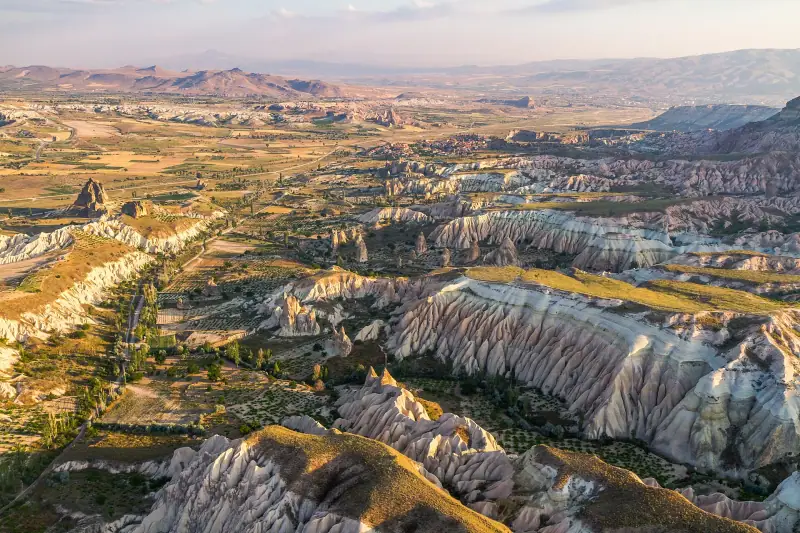
Cappadocia in 3 Days: A Detailed Itinerary of Valleys, Underground Cities and Hot Air Balloons
What to see in Cappadocia in 3 days? Day-by-day itinerary: Göreme, valleys, Uçhisar, Derinkuyu, Avanos, hot air balloons and tips for your stay.
5 days