Itineraries
Lycian Coast: 5-Day Itinerary from Fethiye to Kaş
We may earn a commission when you book through links on this page, at no extra cost to you. We don't visit or try the places we cover: we summarize published sources. How we work
Day by day
- Day 1Fethiye waterfront, Lycian tombs, Ölüdeniz lagoon
- Day 2Boat day in the Gulf of Fethiye
- Day 3Saklıkent Gorge, Tlos, Xanthos, road to Patara
- Day 4Patara beach and ruins, Kalkan, drive to Kaş
- Day 5Kekova by boat, evening in Kaş
Where to sleep
- Fethiye2 nights
- Patara1 night
- Kaş2 nights
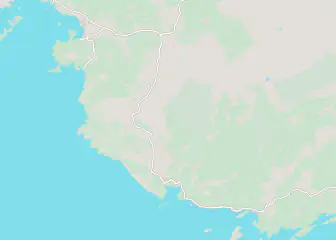
Opens the trip planner with these stops and nights already filled in. Add a stop, drop one or change the nights.
In short
- Five days link Fethiye (2 nights), Patara (1 night) and Kaş (2 nights): Ölüdeniz, a boat day, Saklıkent, Tlos, Patara beach and Kekova.
- A rental car gives the most freedom; daily drives stay well under 200 km (124 mi), but coastal roads are winding, so allow more time than your GPS says.
- Spring and early fall suit sightseeing and walking; summer is hot but best for swimming. Book lodging and boat trips ahead in high season.
- Swimming at the submerged Kekova site is prohibited; boat trips stop for swims elsewhere.
Between Fethiye and Kaş, the Lycian coast alternates turquoise bays, mountains plunging into the sea, huge beaches and the ruins of an ancient civilization, the Lycians, whose tombs carved into the rock can still be seen. It is one of the most beautiful stretches of the Turkish Mediterranean coast, and one of the best settings for an easygoing road trip.
This five-day itinerary follows the coast from northwest to southeast, with short drives and varied stops: swimming, a canyon, archaeological sites and a boat trip. Distances stay modest, but the roads are winding: always allow more time than your GPS shows. To choose your dates, start with our guide to when to go to Turkey.
Before you go: airport, transport and organization
The simplest arrival point is Dalaman Airport, about an hour by road from Fethiye depending on traffic and the type of transfer. You can also arrive via Antalya and do the itinerary in reverse: the route stays the same, only the order of the stops changes. If you pass through the Mediterranean coast first, our article Antalya: what to see and do helps you plan the first days.
Compare flights to Turkey
Fares vary by season and day of the week: compare several dates before you book.
For transport, a rental car offers the most freedom: it lets you stop at coves, reach remote ancient sites and adapt to the weather. Local minibuses (dolmuş) link the main towns at low cost, but the schedules are less practical for isolated sites. Driving is perfectly doable as long as you stay careful on the coastal roads, avoid driving at night and plan breaks. The drives in this itinerary stay well under 200 km (124 mi) per day.
Boats also play a central role on this coast: several sites, such as certain bays or the island of Kekova, are best seen from the sea. Plan at least one day on the water during your stay.
Day 1: Fethiye and Ölüdeniz
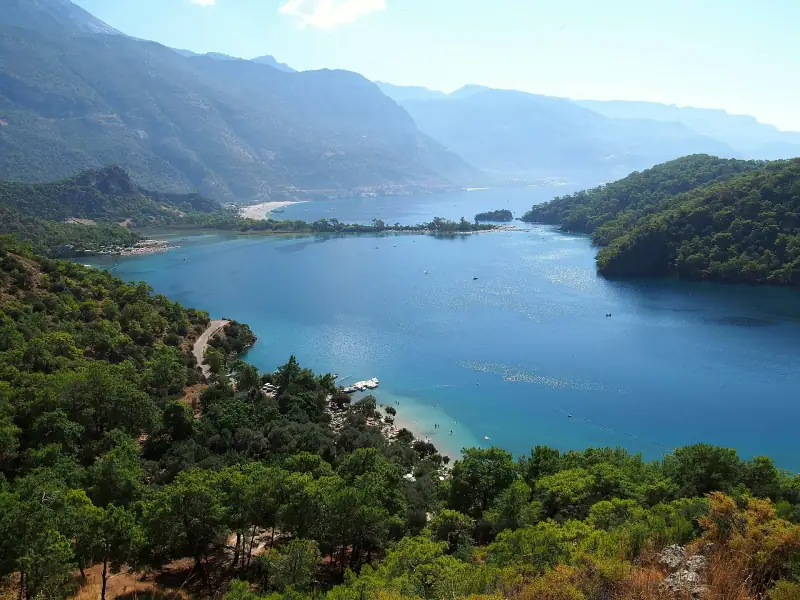
Fethiye is a lively port town at the head of a gulf dotted with islets. It is a good base for two nights: you will find lodging at every level, a harbor from which many boats leave, and fish restaurants. On arrival, stroll along the waterfront, then visit the Lycian tombs carved into the cliff above the town: they are among the most visible remains of Lycian civilization and can be seen from the center.
The rest of the day goes to Ölüdeniz, one of the most photographed sites in Turkey: a protected lagoon with turquoise water, separated from the sea by a long sand spit. The beach and lagoon are very busy in summer: arrive early in the morning or late in the day to enjoy the site with fewer people. Thrill seekers can try a paragliding flight from Mount Babadağ, which overlooks the bay. Flights depend on the weather, so it is best to book while leaving some slack in the schedule.
Hotels in Fethiye
Compare hotels and guesthouses in Fethiye and Ölüdeniz by dates and budget.
Day 2: a day at sea around Fethiye
The second day is ideal for a boat trip in the Gulf of Fethiye. Day trips (often called “twelve islands tours” or gulf excursions) stop at several coves for swimming and lunch on board, at a relaxed pace. The exact routes vary by operator: check the stops, the duration and what is included before you book.
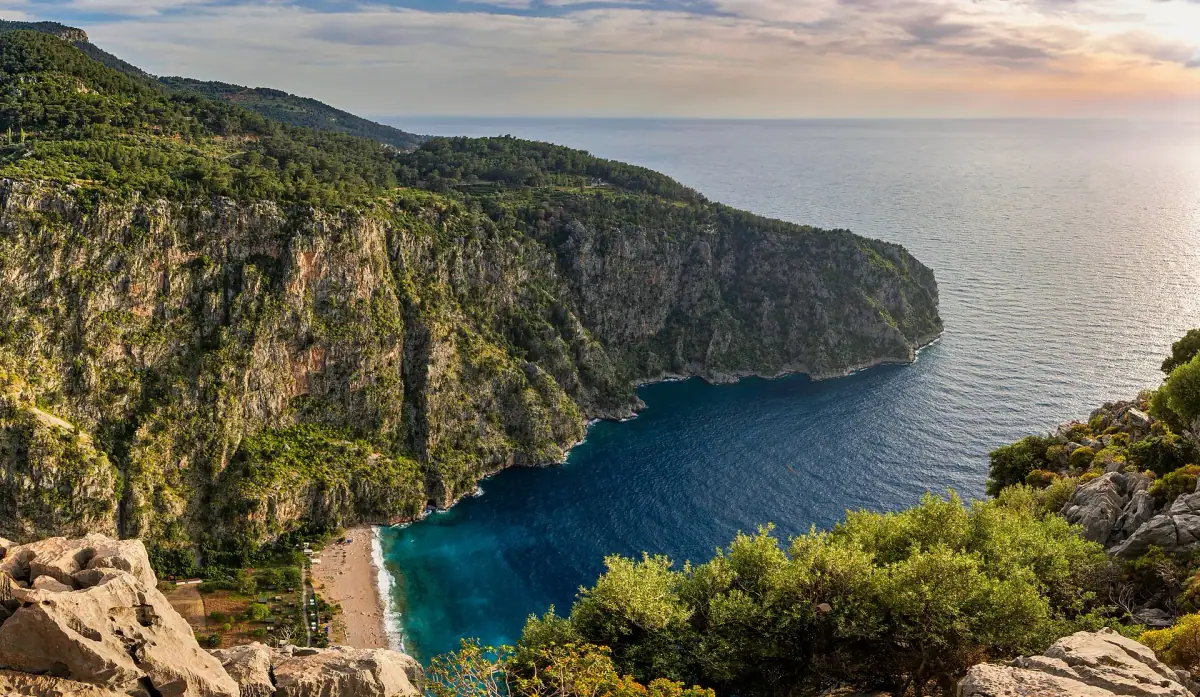
If you would rather stay on land, an alternative is to visit Butterfly Valley, a cove wedged between two cliffs, reached mainly by boat. The place is spectacular but very busy in summer, and getting there on foot is reserved for experienced hikers. Keep the evening for dinner in Fethiye: fish and meze are a specialty there, covered in our guide to Turkish cuisine.
Boat trips in Fethiye
Compare day trips in the gulf: stops, meals included and cancellation terms.
Day 3: Saklıkent Gorge, Tlos and the road to Patara
Leave Fethiye in the morning for the interior. Saklıkent Gorge, a narrow canyon cut into the mountain, is one of the most popular attractions in the region. You walk in cool, fast water between high walls: bring shoes that fasten securely to your feet, quick-drying clothes and a waterproof bag for your belongings. The water level varies by season, and some sections may be restricted by the site’s managers.
Very close by, Tlos is one of the oldest Lycian cities. Perched on a hill, it keeps rock-cut tombs, an ancient theater and fortification remains, with a wide view over the valley. The visit is short and combines easily with Saklıkent. In the afternoon, head south to Patara, where you will spend the night: the drive crosses the Xanthos valley and can include a stop at the ancient city of Xanthos, a UNESCO site, with the neighboring Letoon.
Day 4: Patara, Kalkan and the road to Kaş
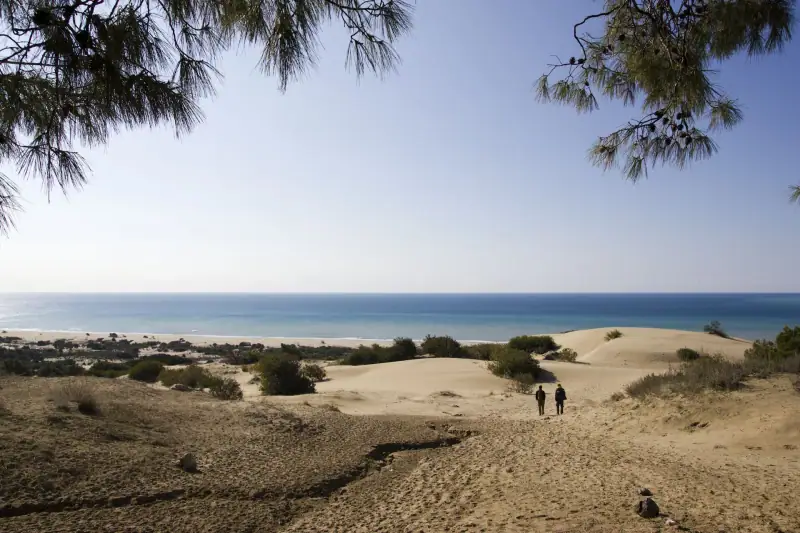
Patara has one of the longest sand beaches on the Turkish coast, backed by dunes and protected: it is also a nesting site for sea turtles, which means rules of conduct apply. Follow the posted instructions, avoid the beach at night during the nesting season and do not use direct light. Behind the beach, the ruins of ancient Patara, with its theater, baths and monumental gate, can be visited in one to two hours.
After a swim, continue to Kalkan, a small port with white lanes stacked above the sea, ideal for a coffee break or lunch facing the bay. End the day in Kaş, where you will spend two nights. The coastal road between Kalkan and Kaş has many viewpoints: take the time to stop rather than photographing from the car.
Day 5: Kekova, Kaş and the Lycian sea
The last day goes to Kekova, an island near the coast, famous for its partly submerged ancient city, hit by an earthquake in antiquity. You see it by boat, sailing along the remains visible beneath the surface of the water. Swimming at the archaeological site is prohibited to protect the remains: the excursion usually includes swim stops elsewhere. Trips leave from Kaş or neighboring villages; compare duration, stops and meals.
In the evening, stroll around Kaş: a small seaside town that has kept a relaxed character, with a harbor, lanes lined with Ottoman houses and shops, and an ancient theater west of the center, with a view of the sea and of the nearby Greek island of Meis. It is a good place to end the trip, or to extend it with diving, one of the town’s flagship activities.
Tours and activities in Kaş
Boat to Kekova, diving, canyoning: compare the activities offered from Kaş.
Going further: the Lycian Way
If you have more time, the Lycian Way is a coastal hiking trail linking several stages between Fethiye and the Antalya region, with landscapes of cliffs, coves and ruins. You can walk a section as a day hike, for example around Ölüdeniz or Kaş, without committing to the whole route. Find out about waymarking, weather and available water before you go, and avoid hiking in midsummer, when the heat makes effort difficult.
Practical tips for your stay
- Season. Spring and early fall suit combining sightseeing and swimming best. Summer is hot: favor sites early in the morning.
- Driving. Coastal roads are winding: leave slack in your schedule and avoid driving at night.
- Protecting the sites. At Patara and at ancient sites, follow the posted instructions: take nothing and stay on the paths.
- What to wear. Bring water shoes for Saklıkent, a hat, sunscreen and something to drink.
- Budget. Prices for tours, site entries and lodging vary widely by season: compare several offers and check what is included.
- Booking. In high season, book lodging and boat trips ahead.
Rental cars should be booked ahead, especially in summer: compare offers to pick up your vehicle in Dalaman or Antalya.
Frequently asked questions
Can you do this itinerary by public transport? It is possible between the main towns thanks to minibuses, but isolated sites such as Tlos or some beaches take more logistics. A car or organized tours simplify the route.
Where should you sleep during these five days? A simple plan is two nights in Fethiye, one night in Patara or Kalkan, then two nights in Kaş. This limits hotel changes and leaves time for each stop.
Do you need to know how to swim for the boat trips? No, but swimming is part of the experience. Life jackets are generally available on board: ask for them if needed.
Can you extend the trip to Antalya? Yes. From Kaş, the road continues to Antalya along the coast. Our article Antalya: what to see and do will help you plan that stage.
Frequently asked questions
How many days do you need for the Lycian coast between Fethiye and Kaş?
Five days let you see the main sites without rushing: Ölüdeniz, Saklıkent, Xanthos and Patara, then Kekova and Kaş. With a week, you can add beach days, extra boat trips or a section of the Lycian Way.
Do you need a rental car for this itinerary?
It is very convenient, because the sites are spread along the coast and public transport does not go everywhere. Minibuses (dolmuş) do link the main towns, and tours let you see Saklıkent or Kekova without driving.
What is the best time of year for this route?
Spring and early fall offer pleasant temperatures for visiting ancient sites and walking. Summer is very hot, but it is the best period for swimming. Our guide on when to go to Turkey covers the coastal climate in detail.
Which airport should you pick to start in Fethiye?
Dalaman Airport is the closest to Fethiye and the most convenient for starting this itinerary. You can finish in Kaş and then reach Antalya by road, which takes half a day depending on traffic.
Can you do this route with children?
Yes, as long as you keep stages short. Beaches, boats and ruins appeal to children, but the coastal roads are winding and summer heat calls for plenty of water and frequent stops.
More Turkey guides
Keep reading

Budget for a Trip to Turkey: Real Costs, 3 Costed Profiles and Ways to Spend Less
What budget for Turkey in 2026? Lodging, transport, meals and activities, three costed profiles and concrete tips to save money.
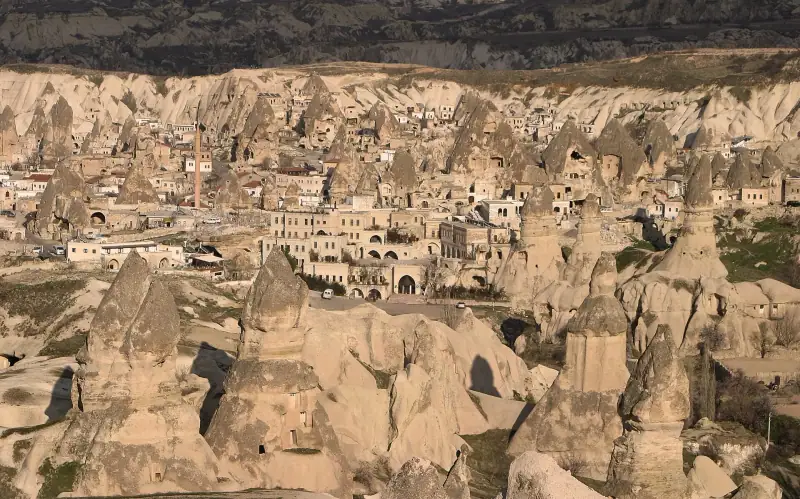
Complete Guide to Visiting Turkey: Regions, Highlights, Budget and Tips
Istanbul, Cappadocia, Ephesus, the Lycian coast, Antalya: a complete guide to planning a trip to Turkey, from the ideal season to the budget.
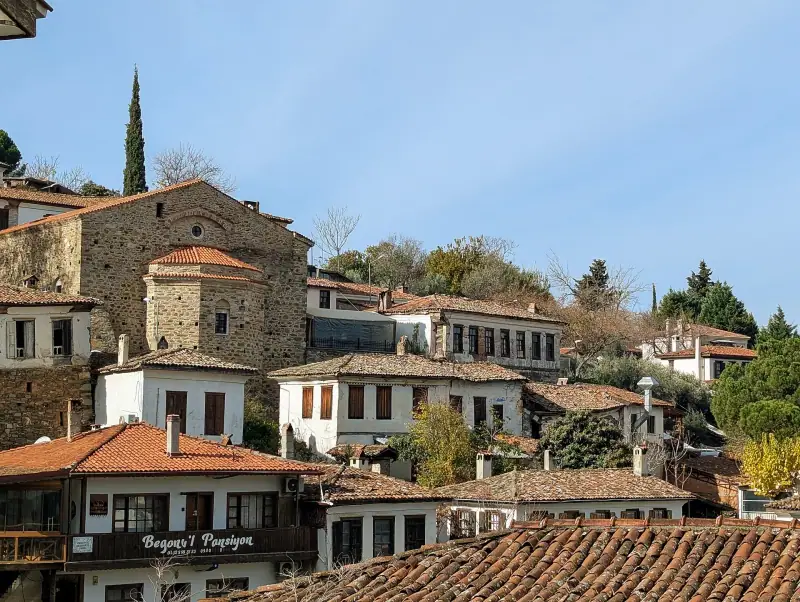
Şirince: Is It Worth the Detour from Ephesus and Selçuk?
Şirince, a hill village near Ephesus: is it worth the detour? Getting there from Selçuk, visit length, fruit wines, tourist traps and alternatives.
Ready-made
Turkey itineraries
2 days

3 days
Istanbul in 3 Days: A Day-by-Day Itinerary to See It All
A 3-day Istanbul itinerary: Hagia Sophia, Topkapı, Grand Bazaar, Bosphorus, Galata and the Asian side, with a realistic pace and practical tips.
3 days
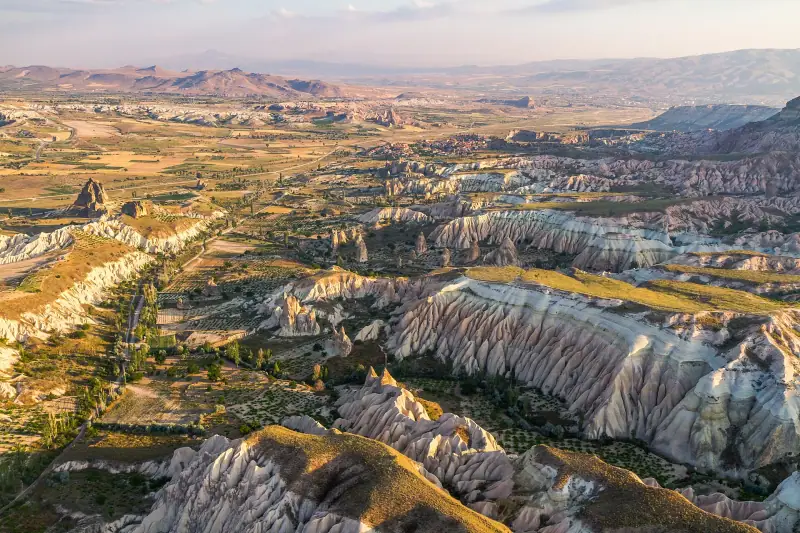
Cappadocia in 3 Days: A Detailed Itinerary of Valleys, Underground Cities and Hot Air Balloons
What to see in Cappadocia in 3 days? Day-by-day itinerary: Göreme, valleys, Uçhisar, Derinkuyu, Avanos, hot air balloons and tips for your stay.