What to see
Visiting Koper: a complete guide to the capital of the Slovenian coast
We may earn a commission when you book through links on this page, at no extra cost to you. We don't visit or try the places we cover: we summarize published sources. How we work
In short
- Half a day (3 to 4 hours) covers Titov trg, the cathedral, the Loggia and the lanes; a full day adds the regional museum and a lunch stop.
- Koper is about 110 km (68 mi) from Ljubljana: 1 h to 1 h 30 by car, or 2 h 40 to 3 h 40 by train (check Slovenian Railways, since 2026 works may replace some trains with buses).
- Piran is 17 km (11 mi) away, Izola 7 km (4 mi) and Trieste about 23 km (14 mi): Koper works well as a base for the whole coast.
- The town has about 25,000 residents, a compact walkable center and is less touristy and often better value than Piran.
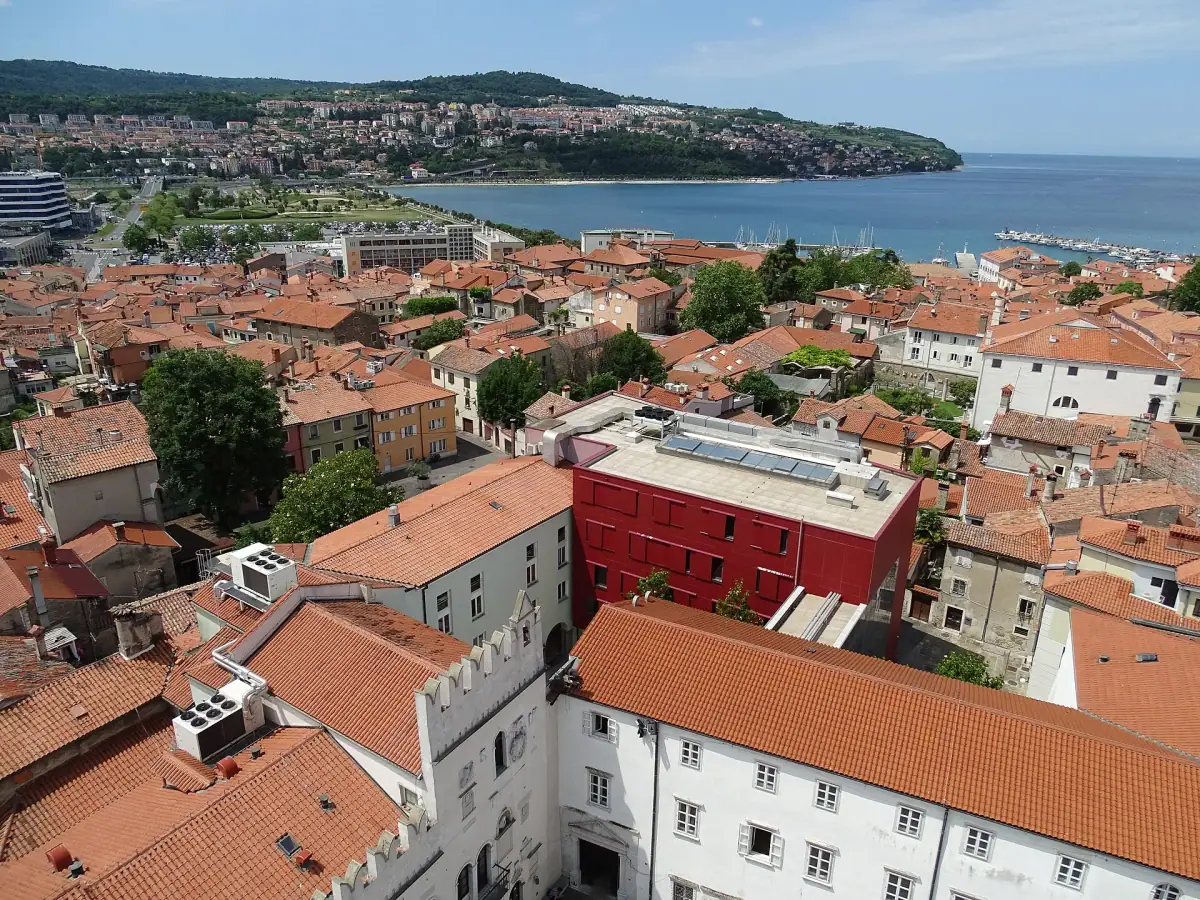
Koper, or Capodistria for those who grew up with its Italian name, is often relegated to the role of a simple stopover on the way to Piran. That is a mistake. This town of some 25,000 residents, the largest on the Slovenian coast, has a historic center of exceptional architectural richness, a resolutely Mediterranean character and an authenticity that mass tourism has not yet erased. A former island linked to the mainland, a former capital of Venetian Istria, Koper carries on its facades five centuries of Venetian rule, Italian influences and Slovenian resistance.
The town is also the best connected of the coast: reachable by train from Ljubljana, close to the Italian and Croatian borders, and home to Slovenia’s largest commercial port. For the traveler, it is a practical base as well as a destination in its own right. Here is how to make the most of it.
Titov trg: the big square at the heart of town
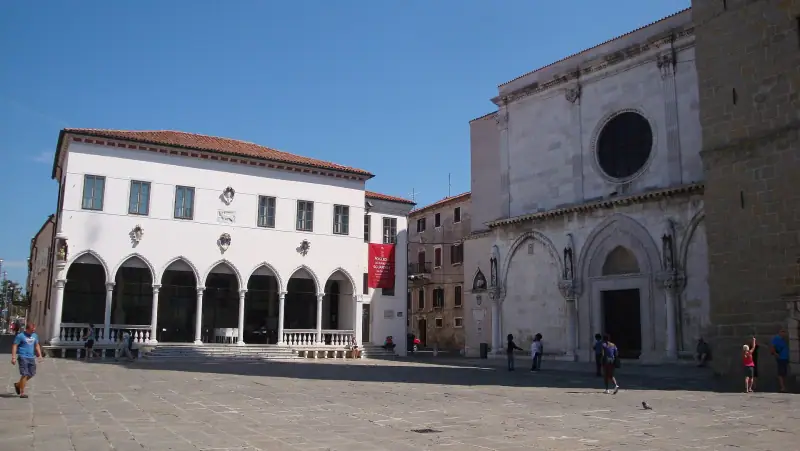
Tito Square (Titov trg) is the epicenter of Koper. Vast and surrounded by monuments of remarkable architectural coherence, it forms a medieval and Renaissance ensemble that few towns of this size can claim. If you remember only one place in Koper, this is it.
The main historic monuments are concentrated on and around this square:
- The Praetorian Palace (Pretorska palača): a masterpiece of 15th-century Venetian Gothic architecture, this building with slender arches and floral ornaments is one of the most beautiful civic buildings on the whole eastern Adriatic coast. Its facades mix Gothic and Renaissance styles; the winged lions of St. Mark, symbol of the Republic of Venice, are still visible.
- The Loggia (Loggia): dating from the 15th century, this Venetian arcaded gallery now houses a café, ideal for a break on the terrace facing the Praetorian Palace.
- The City Tower (Mestni stolp): Koper’s 54 m (177 ft) bell tower can be climbed for a panoramic view over the square, the old town rooftops and the Adriatic Sea.
The square is entirely pedestrian. In the morning it hosts a small market and the café regulars. In the evening it becomes the town’s living room, where families and strollers meet under soft lights.
Hotels in Koper
Stay in the heart of the Slovenian coast, between Piran and Ljubljana.
The Cathedral of the Assumption and the religious heritage
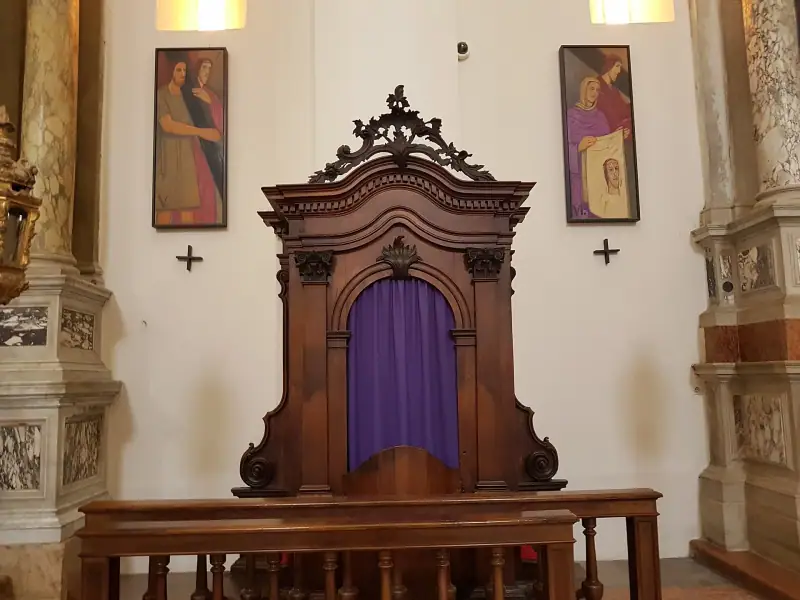
The Cathedral of the Assumption (Stolnica Marijinega vnebovzetja), founded in the second half of the 12th century and remodeled in the 14th, 15th and 18th centuries, dominates the main square with its imposing Gothic and Renaissance facade. The interior, rearranged over the centuries, keeps Romanesque elements in its structure and several remarkable works of art, including paintings and sculptures from the 16th to the 18th century.
Next to the cathedral, the baptistery (Rotunda) is a 12th-century Romanesque building, one of the few buildings of pure Romanesque style still standing in the region. Its dome and interior columns recall the Tuscan baptisteries of the same period.
The Porta Muda
A few streets from the main square, the Porta Muda (1516) is the only gate still standing out of the twelve original gates of the old town walls. Built by the Venetians, it bears the arms of the Republic of Venice and marks the traditional entrance to the old town from the mainland. Its sober, elegant Renaissance arch contrasts with the Gothic character of much of the center.
Koper at a glance: what to know
What exactly is Koper? It is the main town of the Slovenian coast, on the Adriatic, in the southwest of the country, in the historic region of Istria. It has about 25,000 residents, lies a few meters above sea level and has the country’s only commercial port. Its Italian name, Capodistria, still appears on many inscriptions.
| Key point | What to remember |
|---|---|
| Italian name | Capodistria |
| Population | about 25,000 (town) |
| Location | Slovenian coast, Istria, Gulf of Trieste |
| History | former island, linked to the mainland; inhabited since pre-Roman and Roman times |
| Central square | Titov trg, pedestrian |
| Tourist information | tourist office in the Praetorian Palace, on Titov trg |
| Currency | euro |
| Visit time | half a day for the essentials, a full day with the museum |
Koper: where to start in half a day
If you simply type “Koper” to find out whether the town is worth a stop, here is a simple route, entirely on foot:
- Arrive at the train or bus station, close to each other, then walk to the historic center.
- Porta Muda, the old gate of 1516, to enter the old town like the Venetians.
- Titov trg: Praetorian Palace, Loggia, cathedral and baptistery, to see from outside before choosing what to visit.
- Stop at the tourist office in the Praetorian Palace for a town map.
- Coffee break under the Loggia, then climb the City Tower if the weather is clear.
- Fish or pasta lunch in a lane near the square, preferably a set menu of the day.
Koper is an easy stop: the center is compact, you get around without a car and the town stays alive out of season. For swimming, turn to Izola or Portorož, which are better suited.
The Koper Regional Museum
Housed in the former Belgramoni-Tacco Palace, the Koper Regional Museum (Pokrajinski muzej Koper) traces the history of the town and the Slovenian coast from prehistory to the 20th century. The permanent collections include Roman objects (Koper was already inhabited in Roman times), medieval pieces and documents from the Venetian period. One room is devoted to the region’s rich musical tradition.
The museum is worth a visit even for non-specialists: the frescoes preserved in some rooms of the palace, dating from the 16th century, are a sight in themselves. Allow about 1 h to 1 h 30 for the visit.
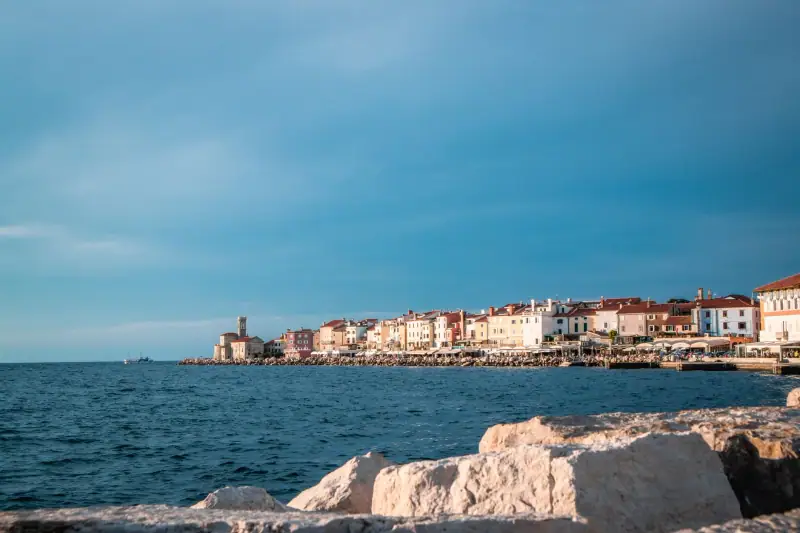
Food in Koper: flavors of the coast
Koper’s food is that of the Slovenian coast in all its richness: seafood, Venetian and Italian influences, local wines and olive oils. It is a town where eating is a pleasure.
Specialties to try
- Buzara: mussels, shrimp or other seafood cooked in a broth of white wine, garlic and herbs. It is the most typical seafood preparation of the coast.
- Grilled squid (lignji na žaru): simple, fresh, drizzled with olive oil. An institution in every seaside restaurant.
- Pasta with clams or shrimp: a direct legacy of Italian culinary tradition, found everywhere in the old town’s restaurants.
- Kraški pršut (Karst prosciutto): raw ham cured in the brisk air of the neighboring karst plateau, served as an antipasto in almost every restaurant.
- Coastal wines: the region produces characteristic white wines, including Malvasia (malvazija) and the red Refošk. Ask for local wines: they go perfectly with seafood.
Where to eat in Koper
The old town and the waterfront hold most of the restaurants. The lanes around Titov trg offer trattorias and bistros with Mediterranean cooking. Away from the main square you will find places more oriented toward residents, with set menus of the day that are often very good value on weekdays. Since Koper is a working town (port, industry, university), there are more reasonably priced options than in Piran.
Excursions from Koper
Postojna Cave, salt pans, Piran: explore the coast and the Karst.
What to do around Koper: the best excursions
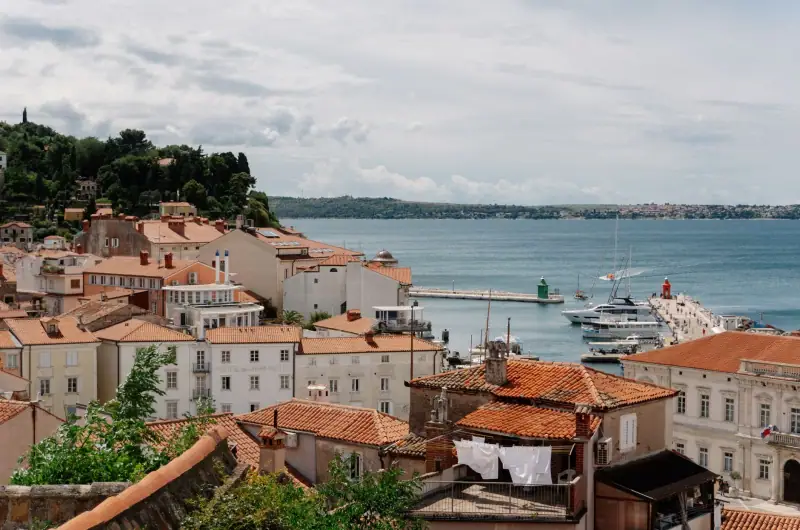
Koper’s position, halfway between Trieste and Piran, makes it a strategic base for exploring the whole region.
Piran (17 km / 11 mi, about 25 min by car)
Piran is the essential neighbor: a medieval town on a peninsula, with its Tartini Square, its walls and its Adriatic atmosphere. You can do Koper to Piran and back in the same day without difficulty. Local buses link the two towns regularly. See our complete guide to Piran.
The Sečovlje salt pans (20 min by car)
About twenty kilometers (12 mi) south of Koper, the Sečovlje Salt Pans (Sečoveljske soline) form a unique nature and ethnological park. Salt production by solar evaporation is practiced there using age-old methods, and the site is home to many migratory bird species. A salt museum open in season explains the harvesting techniques and the history of this thousand-year-old local industry.
Izola (7 km / 4 mi, about 10 min by car)
Izola (Isola in Italian) is a coastal town halfway between Koper and Piran. Less touristy than its two neighbors, it has a small historic center on a former island, an active fishing port and several restaurants much loved by locals for the quality of their fresh fish.
Postojna Cave (about 58 km / 36 mi, about 40-45 min by car)
Postojna Cave is the most visited tourist attraction in Slovenia. This network of more than 24 km (15 mi) of underground galleries is visited by small electric train. 10 km (6 mi) from there, Predjama Castle, set into a cliff at mid-height, is a striking architectural sight. These two sites combine easily into a day excursion from Koper. To learn more, read our guide to the caves of Slovenia.
Trieste, Italy (about 23 km / 14 mi, about 20-25 min by car)
Koper is about 23 km (14 mi) from Trieste, a large Italian city with Central European influences. Crossing the border for half a day is a pleasant excursion: Grand Canal, Piazza Unità d’Italia, a historic café and a cosmopolitan atmosphere. The border lies within the Schengen area. Entry rules depend on your passport. Check the official travel advice of your government before you book: travel.state.gov (US), GOV.UK (UK), travel.gc.ca (Canada), Smartraveller (Australia) (checked November 2026).
Where to stay in Koper
Koper offers a more varied choice of accommodation than Piran, with several hotels of different categories, rental apartments and a few guesthouses in the historic center.
In the historic center
Several modest hotels occupy historic buildings in the old town. Sleeping in the center lets you enjoy the town in the evening and morning, when tourist activity is at its lowest. Prices are generally more affordable than in Piran, in a similar setting.
Practical options on the outskirts
A few chain hotels and business-oriented places (linked to the port and the town’s commercial activity) are on the edge of the historic center. Less picturesque, they are very well connected to the center on foot and often offer good options for travelers with a car.
If you combine Koper with Piran on your trip, you can sleep in Koper for more choice of accommodation and make daily excursions to Piran and the coast’s sights.
Accommodation in Koper and the Slovenian coast
Hotels, apartments and guesthouses in the region.
How to get to Koper and get around
By train from Ljubljana
Koper is one of the few towns on the Slovenian coast reachable directly by train from Ljubljana. The railway crosses the Karst hills and offers remarkable panoramas over the Gulf of Trieste as it approaches the coast. The trip takes between 2 h 40 and 3 h 40 depending on the type of train and connections. Check timetables with Slovenian Railways (SŽ) before you leave: works are under way in 2026 and may replace some trains with buses. This is often the most comfortable and least stressful option.
By car
From Ljubljana, allow about 1 h to 1 h 30 depending on traffic. The A1 motorway (toll road; the motorway vignette is compulsory in Slovenia) links Ljubljana to Koper directly. From Piran, allow about 25 to 30 minutes to the north.
The Slovenian motorway vignette (vinjeta) is compulsory on all motorways and can be bought online or at gas stations near the borders. It is sold by the week, month or year.
By bus
Buses link Koper to Ljubljana, Piran, Izola, Portorož and the Italian border (Trieste). Koper’s bus station is close to the train station.
In town
Koper’s historic center is compact enough to be visited entirely on foot. Paid parking lots are available on the edge of the old town.
To explore the whole coast and Karst, however, a car is far more practical. To rent a vehicle, online comparison sites let you find the best offers at Ljubljana airport or in the large towns.
Car rental in Slovenia
Explore the coast, the Karst and the Julian Alps at your own pace.
How long to spend in Koper
- Half a day: enough for Titov trg, the cathedral, the Loggia and a stroll through the lanes. This is the minimum for a stop.
- A full day: lets you add the regional museum, a relaxed lunch in the old town, a walk on the waterfront and possibly a short trip to Izola or the salt pans.
- 2 days (Koper + excursion): ideal for combining Koper with Piran on one side and Postojna Cave on the other. This is also the recommended length if you use Koper as a base to explore the whole Slovenian coast.
Koper fits naturally into a road trip in Slovenia or a 7-day itinerary combining Ljubljana, the Julian Alps and the coast.
Practical tips for visiting Koper
- Koper is less touristy than Piran: restaurants there are often better value and queues at sights are more reasonable, even in high season.
- The motorway vignette (vinjeta) is compulsory if you come by car on the Slovenian motorway. It is bought online or at gas stations near the border.
- The currency is the euro: Slovenia has been in the euro area since 2007.
- Koper is bilingual: you will often hear and read Italian as well as Slovenian. It reflects the history of the town and its still-active Italian-speaking community.
- The morning market on and around Titov trg is a nice way to start the day: local produce, vegetables, cheeses and a few craftspeople.
- Avoid high-season weekends (July-August) if you plan to combine Koper and Piran on the same day: the coastal road can be jammed.
- The University of Koper gives the town a younger, livelier atmosphere than its coastal neighbors. The student districts, active even outside the tourist season, have their own lively cafés and bars.
To plan your overall budget in Slovenia, see our complete budget guide.
Koper is the Slovenian town people skip because they have never heard of it, and later regret not having visited. Its Venetian historic center, lively lanes, Adriatic food and strategic position on the coast make it a must-stop for anyone who takes the time to discover coastal Slovenia beyond the postcard of Piran. The two towns complement each other: do not choose, visit both.
Sources
Frequently asked questions
How do you get to Koper from Ljubljana?
Koper is about 110 km (68 mi) from Ljubljana, 1 h to 1 h 30 by car depending on traffic. It is one of the few towns on the Slovenian coast directly reachable by train: the Ljubljana-Koper line exists and the trip takes about 2 h 40 to 3 h 40 depending on the train. Check timetables with Slovenian Railways (SŽ), since works in 2026 may replace some trains with buses. Direct buses from Ljubljana are also available.
Is Koper worth the detour compared with Piran?
Koper and Piran complement rather than compete with each other. Piran is more picturesque and typically Mediterranean; Koper is bigger, livelier, less touristy and has an equally impressive historic center. If you are in the area, both deserve a visit. Half a day in Koper is enough for the essentials.
What is the best time to visit Koper?
May-June and September-October are ideal: pleasant temperatures (18-25 °C / 64-77 °F), the sea warm enough for swimming in summer, reasonable crowds. July and August are the busiest and hottest months. Winter is quiet and not very touristy, but the town stays alive thanks to its residents and port activity.
Can you visit Koper by car?
Koper's historic center is partly closed to traffic. Public parking lots are available on the edge of the historic center. The town is well connected by train from Ljubljana, which makes it an easy stop even without a car.
How long does it take to visit Koper?
Half a day (3 to 4 hours) is enough to see the essentials of the historic center: Titov trg, the cathedral, the Loggia and a stroll through the lanes. A full day lets you add the regional museum, a food break and possibly an excursion to the Sečovlje salt pans or Piran.
Is Koper the same town as Capodistria?
Yes, Koper is the Slovenian name of the town and Capodistria its historic Italian name. For centuries under Venetian rule, the town bore this Italian name. Today with a Slovenian majority, it keeps a sizable Italian-speaking community and monuments that bear witness to this shared past.
Is there a beach in Koper?
Koper has a few swimming areas along the waterfront, but it is not a beach resort in the classic sense. For proper developed beaches, Izola (about 7 km / 4 mi) and Portorož (about 3 km / 2 mi from Piran) are better options. Piran, 17 km (11 mi) away, remains the most emblematic coastal destination of the region.
What should you see first in Koper?
Titov trg and its monuments (Praetorian Palace, Loggia, cathedral, baptistery), the Porta Muda of 1516 and the City Tower for the view. Half a day on foot is enough for the essentials.
Is Koper a big city?
No: it is the largest town on the Slovenian coast, but it has about 25,000 residents. Its historic center is compact and walkable.
More Slovenia guides
Keep reading
Visiting Bovec: a complete guide to Slovenia's adventure capital
Discover Bovec and the Soča: rafting, canyoning, Julian Alps hikes, Boka Waterfall and practical tips for an unforgettable stay.
Visiting Ljubljana: a complete guide to Slovenia's capital
Complete guide to visiting Ljubljana: castle, old town, districts, food, where to stay and practical tips for the capital of Slovenia.
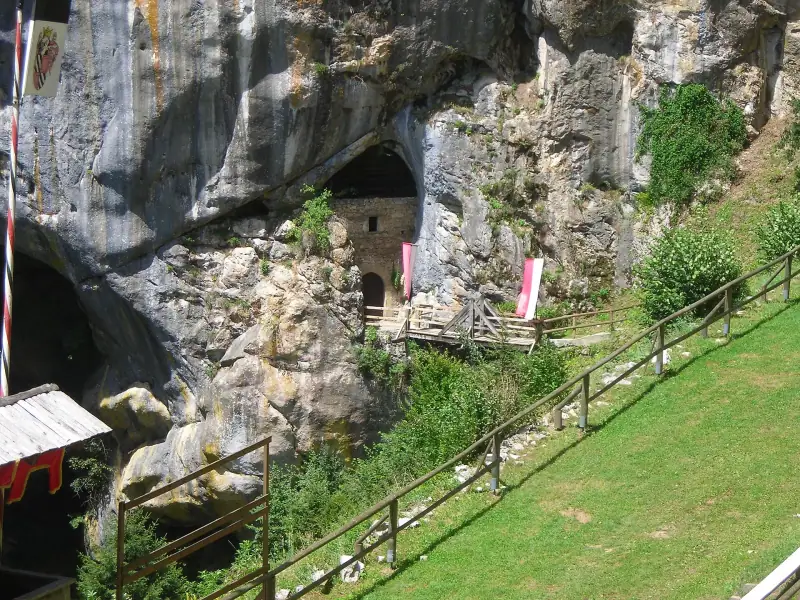
Visiting Postojna: a complete guide to the caves and Predjama Castle
Discover Postojna, capital of the Slovenian Karst: Postojna Cave, Predjama Castle, hikes and practical tips to plan your stay.
Ready-made
Slovenia itineraries
10 days
Slovenia in 10 days: the complete itinerary to see it all
LjubljanaBledBovecPiran or KoperLjubljana
5 days
Slovenia road trip: the complete guide to driving the country
Plan your Slovenia road trip: itineraries, scenic roads, practical tips and the highlights you should not miss by car.
6 days