What to see
Visiting Postojna: a complete guide to the caves and Predjama Castle
We may earn a commission when you book through links on this page, at no extra cost to you. We don't visit or try the places we cover: we summarize published sources. How we work
In short
- Postojna is about 50 km (31 mi) from Ljubljana, 40 to 50 minutes by car on the A1; trains and buses take about 1 hour.
- The guided cave visit takes about 1 h 30 (2 hours in all) with a 10 °C (50 °F) temperature all year, so bring a sweater; book online in summer.
- Predjama Castle is about 9 km (5.5 mi) from the cave and a combined ticket is available; one day is plenty for both.
- There is no direct public transport to Predjama: a car, taxi or bike is needed.
Postojna is a town you visit first for what it hides underground. Postojna Cave (Postojnska jama in Slovenian) is one of the most visited tourist attractions in central Europe, and for good reason: this underground network of more than 24 kilometers (15 mi) of galleries, giant stalactites and underground rivers is truly stunning. But Postojna is also a castle set into a cliff, a karst region unique in the world, stone villages that seem frozen in time, and a local food scene whose tastiest ambassador is Karst prosciutto.
About 50 km (31 mi) from Ljubljana and 65 km (40 mi) from the Adriatic coast, Postojna occupies an ideal position in the puzzle of Slovenian tourism. It fits naturally between the capital and the coast, or between the Julian Alps and the Karst. It is not a destination for a long stay (two days are enough to see it all), but it is a worthwhile stop for anyone interested in Slovenia beyond the Lake Bled postcards.
Postojna Cave: the underground wonder
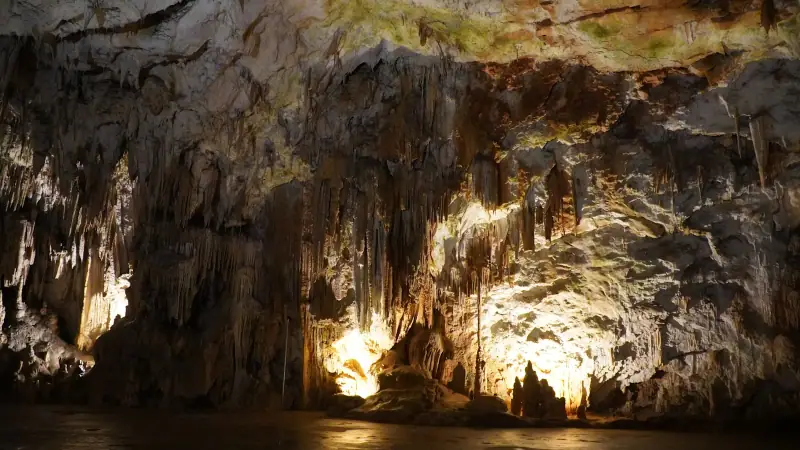
Postojna Cave (Postojnska jama) is among the most visited caves in the world. This karst network, whose formation began several million years ago through the action of the Pivka River on the limestone, extends over more than 24 kilometers (15 mi) of explored galleries, of which about 5 kilometers (3 mi) are open to the public.
The visit is an extraordinary experience: you board a small electric train that goes deep into the mountain for about twenty minutes, passing galleries of dizzying size and rock formations of incredible richness. Then comes the guided walking part, through the most spectacular halls.
What you see in the cave
The formations are of exceptional variety:
- Stalactites and stalagmites: some rise several meters high, others form translucent curtains of extreme delicacy
- The “Brilliant” (Brillant): a white stalagmite of pure calcite, which has become the emblem of the cave, about 5 m (16 ft) high
- The Spaghetti Hall: a hall covered with fine tubular stalactites that look like spaghetti, astonishingly fragile
- The underground Pivka River: visible in places, it keeps sculpting the galleries in real time
- The olm (Proteus anguinus): the star animal. This mysterious blind, pale pink, translucent amphibian is endemic to the karst waters of the western Balkans. Postojna Cave raises some in a vivarium that you can see during the visit.
The constant temperature of 10 °C (50 °F), the half-darkness and the huge echoes of the galleries create an atmosphere that impresses adults as much as children.
Postojna Cave + Predjama Castle tickets
Book online ahead to avoid queues in high season.
Practical tips for the visit
- Book ahead: in July and August, slots are sometimes full several days in advance. Online booking is strongly advised.
- Dress warmly: 10 °C (50 °F) in the cave is cool even in midsummer. Bring a sweater or light jacket, whatever the weather outside.
- Children: the cave is accessible to young children from about 4 years old. The ride on the small train is an adventure in itself that delights them.
- Duration: allow about 1 h 30 to 2 h there, guided visit included.
- Parking: a large parking lot is available in front of the main entrance of the cave, usually paid (check the rate there or on the official website).
Predjama Castle: the incredible fortress in the cliff
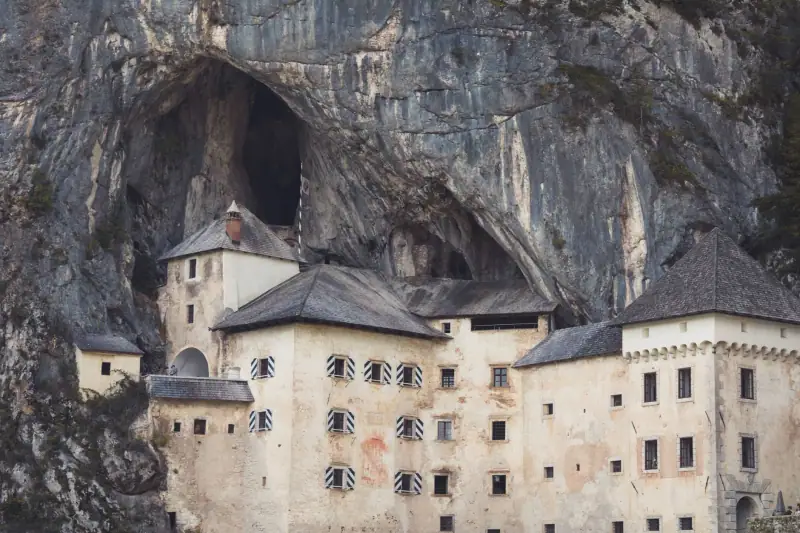
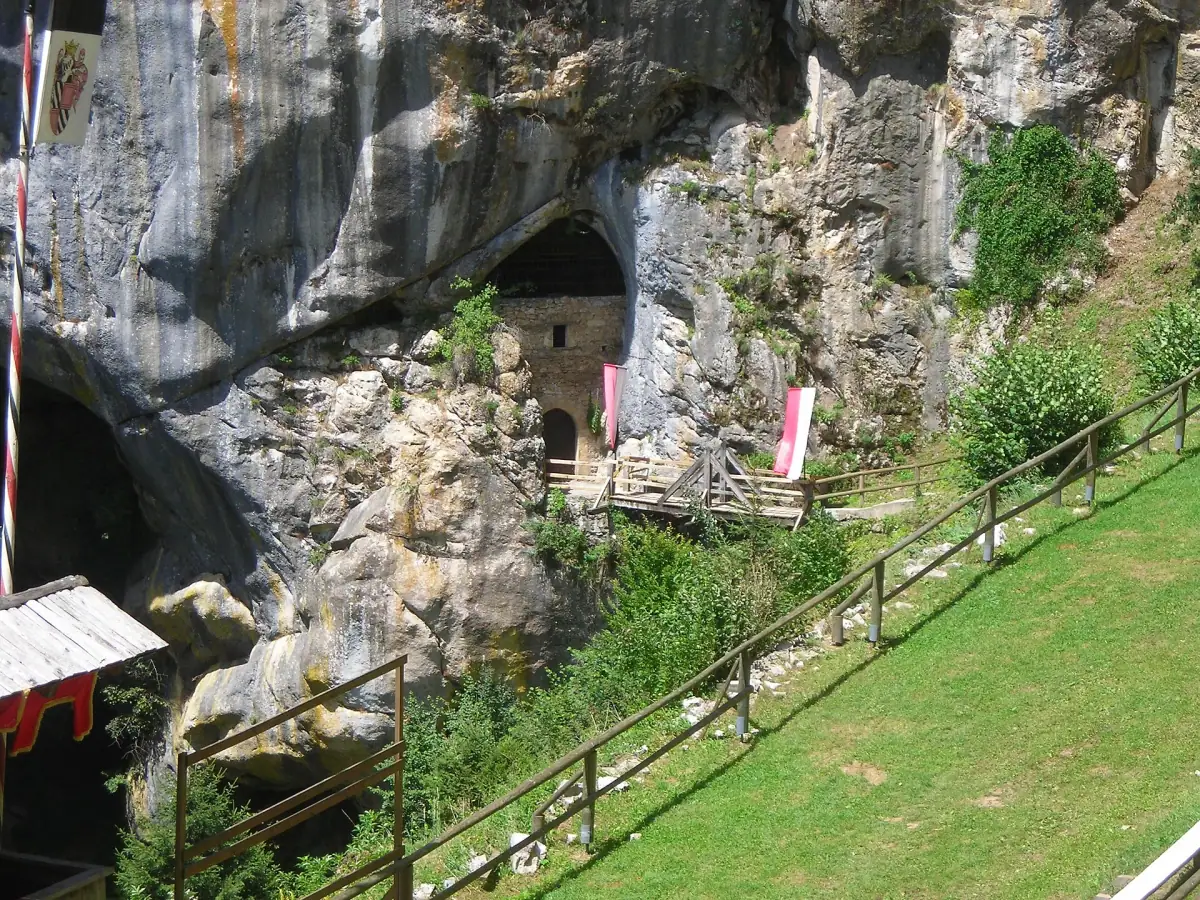
About 11 kilometers (7 mi) northwest of Postojna (9 km / 5.5 mi from the cave), Predjama Castle (Predjamski grad) is one of the most photogenic and unusual sites in Slovenia. Originally built in the 13th century, then rebuilt in its present form in the late 16th century, this Renaissance castle is literally set into the opening of a natural cave halfway up a vertical limestone cliff about 123 m (404 ft) high.
The result is spectacular: the castle seems to spring from the rock, its walls blending perfectly into the cliff face. The whole forms an architectural composition with no equivalent in Europe.
The story of Erazem of Predjama
The legend of Predjama is inseparable from the robber knight Erazem of Predjama (or Erasmus of Lueg), who is said to have lived in this castle in the 15th century. Having taken refuge in this impregnable fortress after killing a nobleman close to the Emperor, he is said to have resisted a siege for more than a year thanks to a secret passage linking the castle to the underground galleries opening behind it. The legend says he regularly taunted his besiegers by having fresh cherries delivered from distant orchards at the height of the siege. His end, they say, was less glorious: betrayed by a servant, he was killed by a cannonball while on the toilet.
Visiting the castle
The interior of the castle can be visited and includes several rooms furnished with period furniture, exhibitions on local medieval history and viewpoints over the gorge below. A combined cave + castle ticket is available and is a clear saving compared with separate purchases.
Note: the natural cave behind the castle can also be visited in season. Wilder and less developed than Postojna Cave, it offers a more rustic and intimate experience.
Postojna town center and surroundings
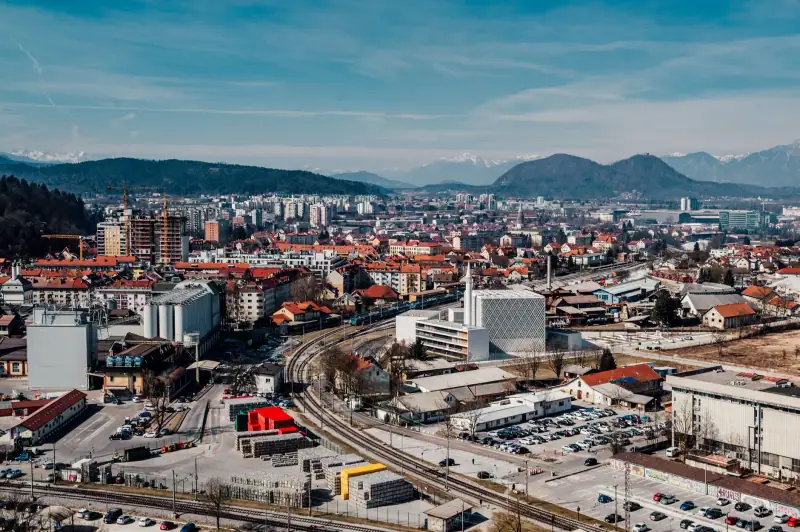
Strictly speaking, Postojna’s center is a modest town (about 10,000 residents). Its central square and shops have the appeal of a quiet Slovenian provincial town rather than a tourist destination in itself. But a few things deserve attention:
- Pivka Park and the river running through it offer a pleasant evening walk
- The parish Church of St. Stephen (Župnijska cerkev sv. Štefana), built in the 18th-19th centuries, stands on the main square
- The weekend local markets are a place to stock up on Karst products (prosciutto, cheeses, honey)
Hotels in Postojna
Sleep in Postojna to visit the cave at opening, before the tour buses.
The Karst around Postojna: landscapes and hikes
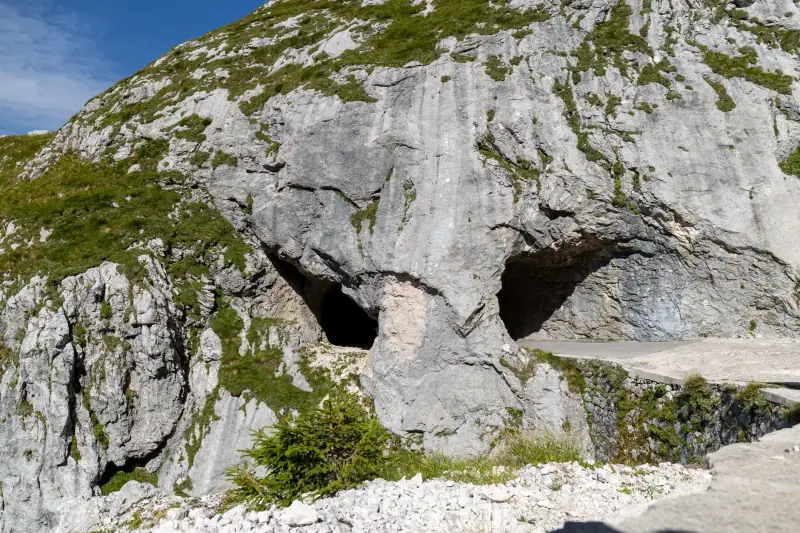
The karst region around Postojna is an ideal playground for outdoor lovers and fans of distinctive landscapes. The Karst (Kras in Slovenian) is the limestone plateau pierced by sinkholes, dry valleys and underground galleries. The geological term comes from the Slovenian word kras, so emblematic is this landscape of the region.
The Pivka Valley
The Pivka River, whose underground course forms part of Postojna Cave, winds through a green valley upstream. Many hiking trails follow its banks and let you watch local wildlife (gray herons, kingfishers, otters). It is a walk accessible at all levels.
The Pivka Lakes (Pivška jezera)
A few kilometers from Postojna, a series of seasonal lakes appear in winter and spring in the karst depressions, then dry up in summer. This unique phenomenon, directly linked to karst geology, forms a landscape that changes with the seasons and that birdwatchers particularly appreciate during the spring migrations.
The Karst stone villages
Moving away from Postojna toward the karst plateau, you find villages with gray limestone houses, red-tiled roofs and cobbled streets that seem unchanged for centuries. These villages, less touristy than the region’s big attractions, give an authentic glimpse of Slovenian rural life.
What to eat in Postojna and the Karst
The food of the karst region is dominated by a few star products that deserve a culinary detour in themselves.
Karst prosciutto (kraški pršut)
This is THE product of the region. This raw ham cured in the brisk air of the karst plateau has a protected geographical indication (PGI) of the European Union. Kraški pršut stands out for its firm texture, dark red color and complex aromas of hazelnut and wild herbs, a character quite different from Italian prosciutto di Parma or Spanish jamón, with which it has no reason to feel inferior.
In the Postojna area, many farms and small grocery stores sell Karst prosciutto sliced to order. You can also find it in local restaurants, served simply with country bread and a few olives.
Hinterland cooking
Beyond prosciutto, the cooking of the Karst and the Postojna region reflects both alpine and Mediterranean influences:
- Žlikrofi: small ravioli filled with potato, onion and herbs, a specialty of the Idrija region but common throughout southwestern Slovenia
- Grilled meats (roštilj): grilled lamb and pork chops, served with garden vegetables
- Local cheeses: several artisan Karst producers age sheep’s or cow’s milk cheeses in natural cellars
- Coastal wines: the neighboring Slovenian coast produces red wines (Teran, made from the Refošk grape) and whites that go ideally with the local charcuterie
Where to eat in Postojna
Restaurants in the town center and around the cave offer affordable set menus of the day (between €10 and €15 / ~$12 and $17 at lunch). Most serve traditional Slovenian cooking with a few Karst specialties. Away from the cave’s immediate tourist circuits, the places are more authentic and the prices reasonable.
Car rental in Slovenia
Essential for linking the cave, castle and Karst villages at your own pace.
Where to stay in Postojna
Postojna has a more developed choice of accommodation than most small Slovenian towns, because of its role as a tourist hub for the cave.
Hotels and guesthouses
In Postojna and its immediate surroundings you will find several mid-range hotels (3-4 stars), hostels and guesthouses (gostišče). Prices are generally lower than in Ljubljana or Bled for comparable quality. Allow between €60 and €120 (~$70 and $140) a night for a double room depending on the season.
Sleeping in Postojna has a tactical advantage: the cave attracts thousands of visitors a day in summer, but the crowd only really arrives in mid-morning. By staying in Postojna, you can take the first visit slot at opening, an infinitely more pleasant experience.
Camping and rural stays
The surrounding karst countryside offers campgrounds and rural lodgings (turistična kmetija, agritourism farms) that let you immerse yourself in local life. It is often a chance to taste farm products directly at the producer’s. This option is ideal for families or couples looking for authenticity.
Option from Ljubljana
If your stay in Ljubljana is your main base, Postojna is perfectly doable as a day trip. The road via the A1 motorway is fast and well signposted. That said, spending at least one night in Postojna lets you visit the cave calmly and discover the region at a less hurried pace.
How to get to Postojna
By car
A car is the most practical means of transport for Postojna, since it makes it easy to link the cave and Predjama Castle (9 km / 5.5 mi separate the two sites, with no direct public transport link). From Ljubljana, allow about 40-50 minutes via the A1 motorway toward Koper. From Piran or Koper on the coast, allow about 1 hour.
By train or bus
Trains link Ljubljana to Postojna several times a day, in about 1 hour. Buses also link Ljubljana to Postojna regularly. Once there, the train station and bus station are within walking distance of the town center and about 2 km (1.2 mi) from the cave (25 minutes on foot). For Predjama Castle, a taxi or bike rental is needed in the absence of a direct public transport link; all the details are in our guide to Predjama Castle without a car.
How long to spend in Postojna
- One day: perfectly doable as an excursion from Ljubljana or Piran. Cave in the morning, Predjama Castle in the afternoon, back in the evening.
- 2 days: lets you add a hike in the karst landscapes, a stop in a stone village and a dinner in a local restaurant with a more relaxed atmosphere than during the day.
- 3 days or more: justified if you want to combine Postojna with the Slovenian coast (Piran, Koper) or explore the karst region in depth with its many secondary underground sites.
Postojna fits naturally into a road trip in Slovenia or a week in Slovenia linking Ljubljana, the Julian Alps, the Karst and the coast.
Practical tips for visiting Postojna
- Book cave tickets online: essential in July-August to avoid waits of several hours. The official site lets you choose a precise time slot.
- Combined ticket: the cave + Predjama Castle ticket is offered at a reduced rate compared with separate purchases. Worth choosing if you visit both on the same day.
- Bring a jacket: the golden rule for the cave. 10 °C (50 °F) inside, whatever the season.
- Reduced mobility: the small-train part of the visit is wheelchair accessible, provided you notify the cave management at least 2 days ahead. Predjama Castle, however, is not suitable for wheelchairs.
- Avoid July-August weekends: the cave can receive thousands of visitors a day in high season. Weekdays, especially early in the morning, are much more pleasant.
- Slovenia uses the euro, so there is no need for other currency on the ground.
- Kids love it: the train in the cave, the castle in the cliff, the olm. Postojna is one of the Slovenian destinations best suited to families with young children.
To plan your budget, see our Slovenia budget guide.
To learn more about the underground sites of the region, read our complete guide to the caves of Slovenia.
Postojna is one of those stops that transform a trip to Slovenia. You arrive for the cave, and you leave with the feeling of having touched something much bigger: a thousand-year-old underground landscape, an extraordinary medieval castle, and a karst region that has not said its last word. Postojna deserves to be far more than a box ticked on an itinerary.
Frequently asked questions
How do you get to Postojna from Ljubljana?
Postojna is about 50 km (31 mi) southwest of Ljubljana, 40 to 50 minutes by car on the A1 motorway. Trains and buses link the two towns regularly, taking about 1 hour. A car remains the most practical way to combine the cave and Predjama Castle in the same day.
How long does it take to visit Postojna Cave?
A guided visit of Postojna Cave lasts about 1 h 30, including about 15 to 20 minutes on the small electric train (one way) to reach the deepest galleries. Adding waiting time in high season and the walking part in the halls, allow 2 hours there. It is strongly advised to book tickets online in advance in summer.
Can you combine Postojna and Predjama Castle in one day?
Yes, it is the classic combination and entirely doable. Postojna Cave and Predjama Castle are linked by a good-value combined ticket. Allow a morning for the cave, a quick lunch, then the afternoon for Predjama (about 9 km / 5.5 mi separate the two sites). One day is more than enough for both.
What is the temperature inside Postojna Cave?
The temperature in the cave is constant all year, around 10 °C (50 °F). Even in midsummer it is cool: bring a sweater or jacket whatever the weather outside. The cave is open all year, with no seasonal closure.
Is Postojna worth it beyond the cave?
Yes. Besides the cave and Predjama, the region offers hikes in the Karst, Karst prosciutto (kraški pršut), typical stone villages and unique sinkhole landscapes. Piran and the Slovenian coast are only about 65 km (40 mi) away. Postojna is also an excellent base for exploring all of southwestern Slovenia.
Is there accommodation in Postojna?
Yes, Postojna has hotels, guesthouses and hostels. The offer is more developed than in many small Slovenian towns, because of the tourist flow linked to the cave. Sleeping in Postojna rather than Ljubljana lets you visit the cave at opening, before the tour buses arrive.
More Slovenia guides
Keep reading
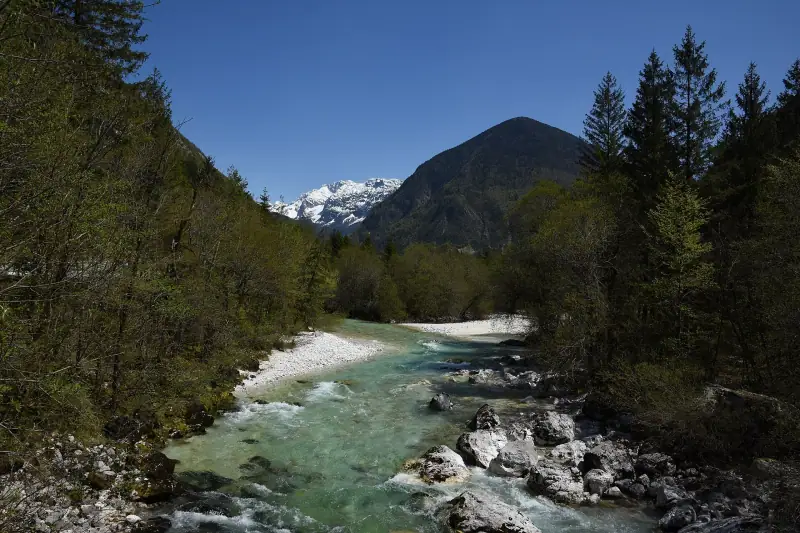
Visiting Bovec: a complete guide to Slovenia's adventure capital
Discover Bovec and the Soča: rafting, canyoning, Julian Alps hikes, Boka Waterfall and practical tips for an unforgettable stay.
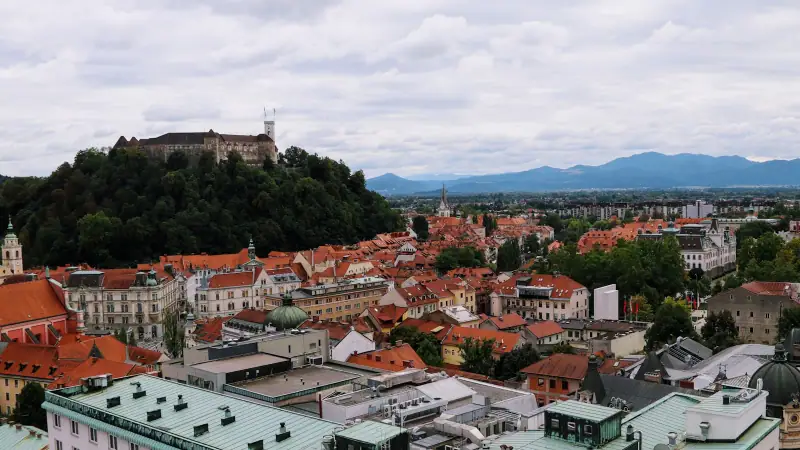
Visiting Ljubljana: a complete guide to Slovenia's capital
Complete guide to visiting Ljubljana: castle, old town, districts, food, where to stay and practical tips for the capital of Slovenia.
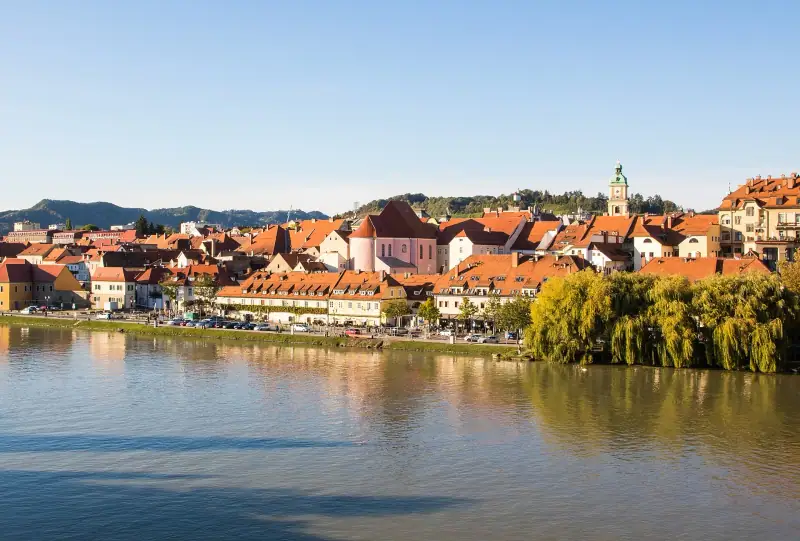
Visiting Maribor: a complete guide to Slovenia's second city
Discover Maribor, cultural capital of eastern Slovenia: the world's oldest vine, the Lent district, Pohorje and Styrian wines.
Ready-made
Slovenia itineraries
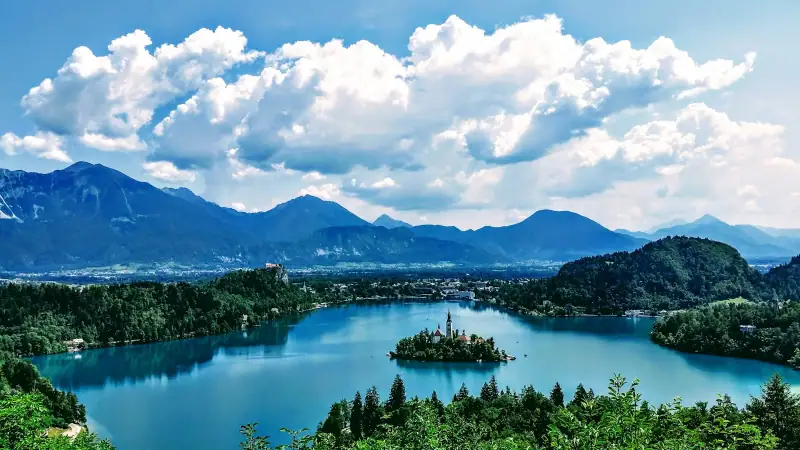
10 days
Slovenia in 10 days: the complete itinerary to see it all
LjubljanaBledBovecPiran or KoperLjubljana
5 days
Slovenia road trip: the complete guide to driving the country
Plan your Slovenia road trip: itineraries, scenic roads, practical tips and the highlights you should not miss by car.
6 days