Itineraries
Slovenia in 10 days: the complete itinerary to see it all
We may earn a commission when you book through links on this page, at no extra cost to you. We don't visit or try the places we cover: we summarize published sources. How we work
Day by day
- Day 1Arrive in Ljubljana: central market, Triple Bridge
- Day 2Ljubljana Castle, museums, Metelkova
- Day 3Škofja Loka, Kranjska Gora, Bled Castle, lake walk
- Day 4Vintgar Gorge, Lake Bohinj, back to Bled
- Day 5Vršič Pass to Bovec, Soča source
- Day 6Bovec: hiking, rafting, canyoning or kayaking
- Day 7Soča road, Tolmin Gorge, Škocjan Caves, Lipica, coast
- Day 8Piran and Koper on the Adriatic coast
- Day 9Postojna Cave and Predjama Castle, then Ljubljana
- Day 10Maribor, then back to Ljubljana
Where to sleep
- Ljubljana2 nights
- Bled2 nights
- Bovec2 nights
- Piran or Koper2 nights
- Ljubljana1 night
In short
- The 10-day loop covers about 1,100 km (684 mi), roughly 15 hours of driving in total: Ljubljana, Bled, Bovec, the coast, Postojna and Maribor.
- A car is strongly recommended; Bovec, Škocjan and the Adriatic coast are much harder to reach without one.
- May-June and September-October give the best balance; the Vršič Pass is closed in winter, so the loop cannot be done as written.
- Budget about €1,200 (~$1,390) per person for 10 days at the economy level and about €2,500 (~$2,900) at the comfort level, excluding flights.
Ten days in Slovenia is the ideal length to really see the country: not just Lake Bled and Ljubljana, but a true loop that takes in the Julian Alps, the turquoise Soča Valley, the mysteries of the Karst, the mildness of the Adriatic coast and the bourgeois charm of Maribor. This guide gives you a day-by-day program, with distances, logistics tips and the highlights of each stop.
With an average of 100 to 150 km (62 to 93 mi) of driving per day, the pace stays comfortable. Slovenia is small and its roads are in excellent condition. The hardest part is often not lingering too long in one place.
Overview of the itinerary
| Day | Stage | Night |
|---|---|---|
| 1 | Arrival in Ljubljana | Ljubljana |
| 2 | Ljubljana (full visit) | Ljubljana |
| 3 | Škofja Loka → Kranjska Gora → Bled | Bled |
| 4 | Bled + Vintgar Gorge + Lake Bohinj | Bled |
| 5 | Vršič Pass → Bovec | Bovec |
| 6 | Bovec (Soča Valley, activities) | Bovec |
| 7 | Soča road → Škocjan → Lipica | Piran or Koper |
| 8 | Adriatic coast (Piran + Koper) | Piran or Koper |
| 9 | Postojna + Predjama Castle | Ljubljana |
| 10 | Maribor → back to Ljubljana | Flight or night in Ljubljana |
Total distance: about 1,100 km (684 mi) Total driving time: about 15 hours spread over 10 days
Days 1 and 2: Ljubljana, a lively capital
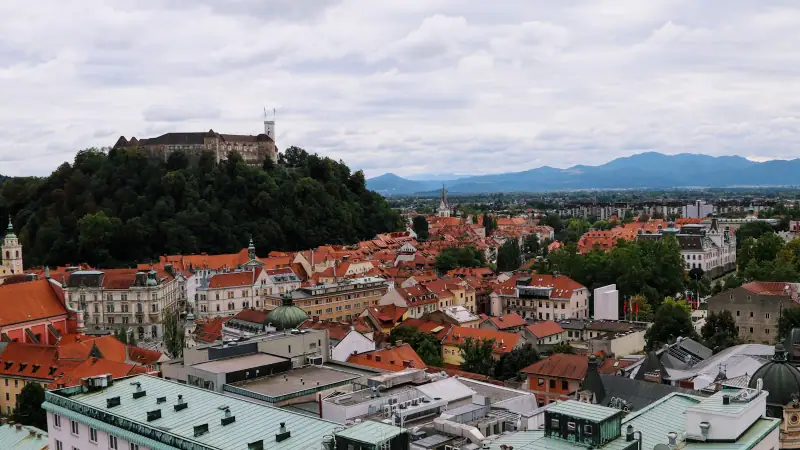
Day 1: arrival and first impressions
Ljubljana Jože Pučnik Airport (LJU) is 25 km (16 mi) north of the center. A shuttle, a bus or a rental car brings you into the city center in 30 to 40 minutes.
Spend the first afternoon easing in. The central market (Tržnica) by the river is the best place to start: fruit, cheeses, honey and local specialties. There are also small takeaway snacks. Walk along the Ljubljanica to the Triple Bridge (Tromostovje), a masterpiece by the architect Plečnik that spans the river in three elegant arches.
In the evening, settle on one of the lively terraces along the Ljubljanica. In summer the cafés and restaurants spill onto the banks until midnight. Order a glass of white wine from Slovenian Styria or a Laško, the national beer, to go with your first meal.
Day 2: Ljubljana in depth
The full day in Ljubljana starts early, before the tour groups arrive.
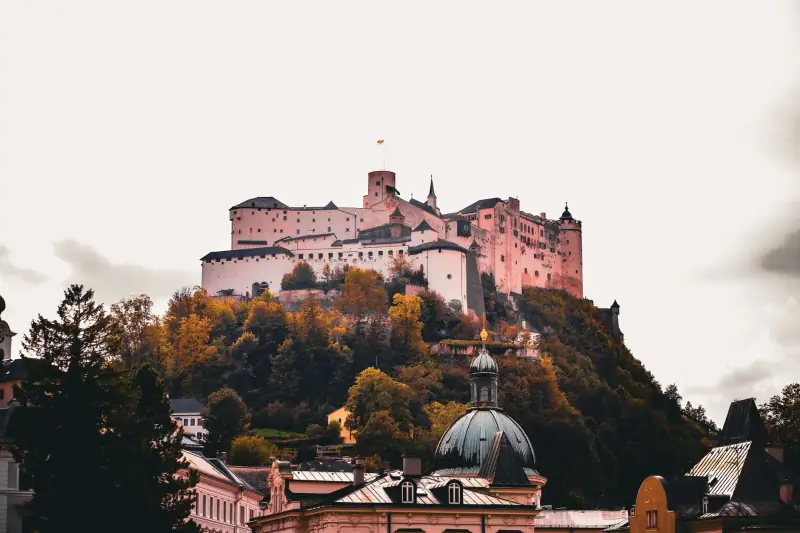
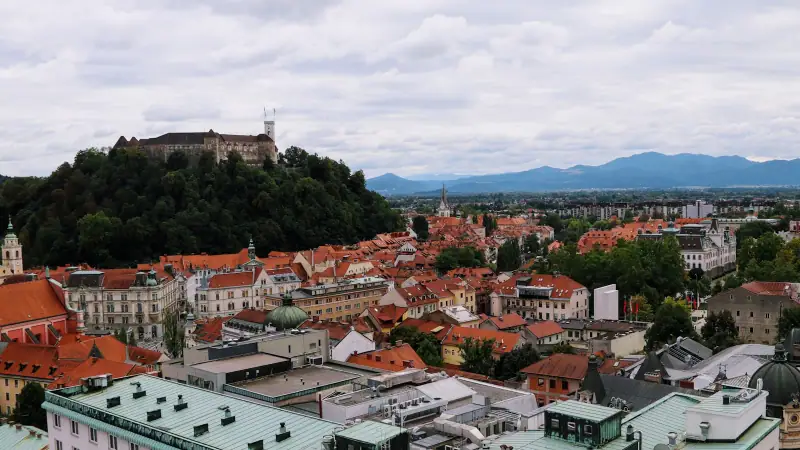
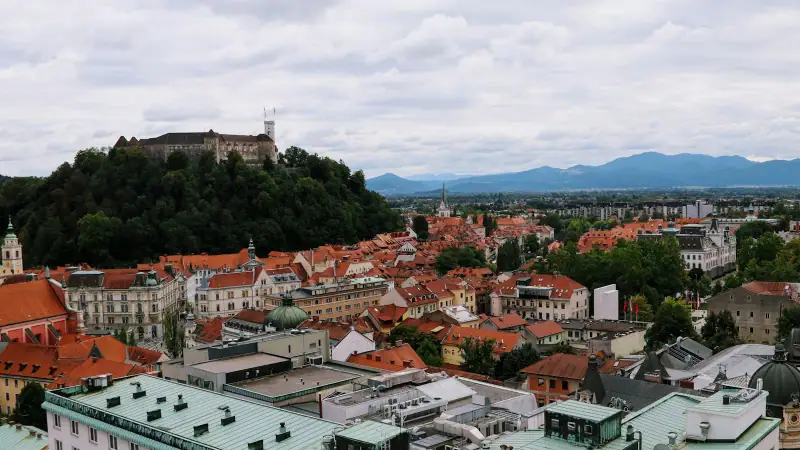
Morning: Go up to Ljubljana Castle, either on foot by the ramparts path or by funicular from the old town. The view from the panoramic tower takes in the whole city, the surrounding hills and, on a clear day, the peaks of the Julian Alps to the north. The visit takes 1 h 30 to 2 h.
Afternoon: Come back down into the old town and explore the galleries and museums. The National Museum of Slovenia has collections ranging from prehistory to Roman times. The Museum of Modern Art is ideal if you prefer contemporary work. The Metelkova district, a former military barracks turned alternative cultural space, has a very lively music and arts program in the evening.
Optional excursion: If the weather is not good for museums, the medieval town of Škofja Loka (25 km / 16 mi, 25 minutes) is an excellent break: cobbled lanes, a medieval castle, fountains and half-timbered houses. It is one of the best-preserved historic centers in the country.
Get the car ready for the next morning.
Days 3 and 4: Lake Bled and the Julian Alps
Day 3: scenic road to Bled
Distance Ljubljana to Bled: 55 km (34 mi), about 50 minutes by motorway. But why take the motorway?
The recommended route goes through Škofja Loka (if you did not visit it the day before), then climbs toward Kranjska Gora, the big Slovenian ski resort nestled in the Julian Alps. From Kranjska Gora, the road follows the Sava Dolinka through striking alpine scenery before reaching Bled from the north.
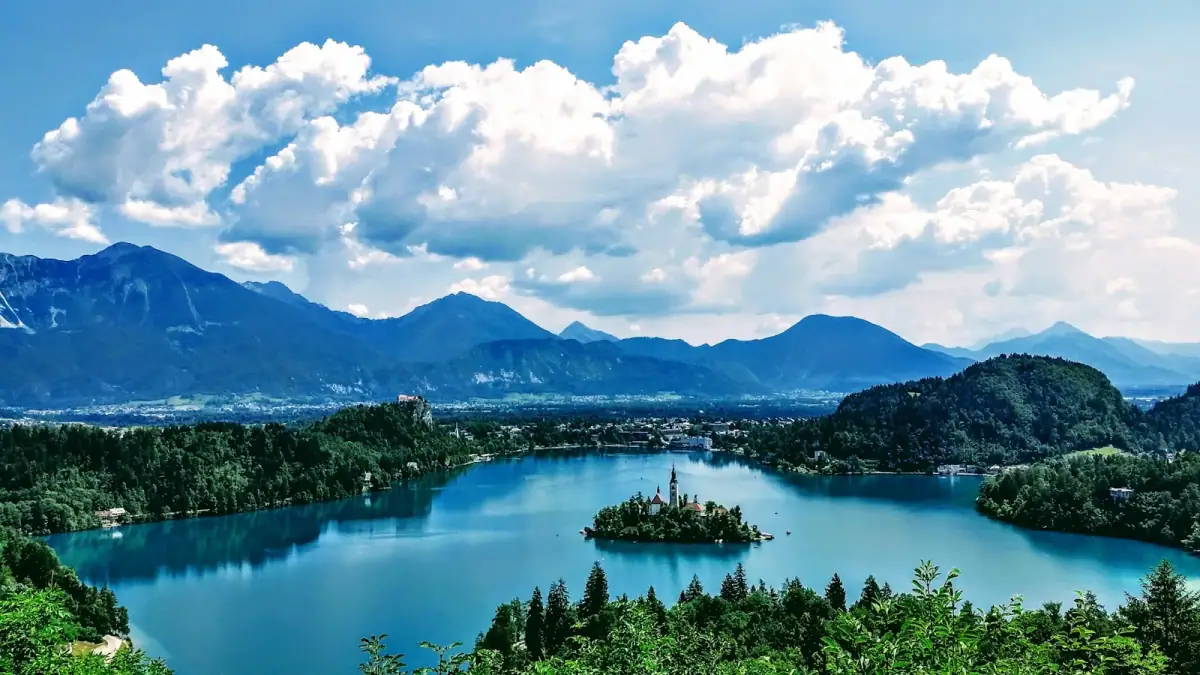
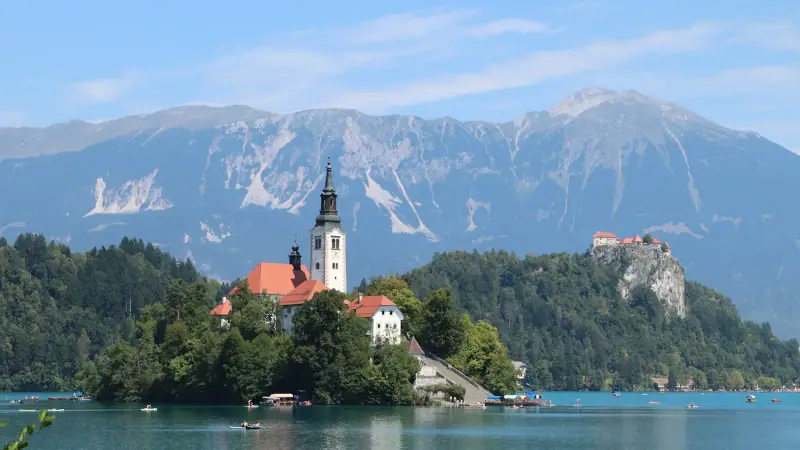
In Bled, be sure to walk up to Bled Castle (paid entry). It overlooks the lake from a 130 m (427 ft) cliff and offers the most photographed panorama in Slovenia: the round lake with blue-green water, the island in the middle with its baroque church, the forests framing the shores and the snow-capped peaks of the Julian Alps in the background.
In the late afternoon, walk around the lake (6 km / 3.7 mi, about 1 h 30). The path follows the shores and changes perspective at every bend. Do not leave without trying the kremna rezina (or cremsnita), Bled’s signature pastry: a thick layer of custard and whipped cream between two layers of puff pastry, a local invention of the 1950s found in several pastry shops and cafés by the lake.
Night: Bled
Where to stay in Bled?
From hostels to lake-view resorts. Book early in summer.
Day 4: Vintgar, Bohinj and Lake Bled
Morning: Vintgar Gorge
Leave early (before 9 am) for Vintgar Gorge, 4 to 5 km (2.5 to 3 mi) from Bled (about 10 minutes by car). Carved into the limestone by the Radovna River, the gorge has 1.6 km (1 mi) of wooden walkways suspended above impossibly turquoise water, up to the Šum waterfall. Allow 1 h to 1 h 30 round trip. Arriving early lets you avoid the dense crowds of organized groups.
Afternoon: Lake Bohinj
Lake Bohinj (26 km / 16 mi from Bled, 30 minutes) is the big alpine lake of Triglav National Park. Larger, less touristy and wilder than Bled, it offers good swimming from June to September and hikes accessible to everyone. The Savica Waterfall, reached by a 20-minute walk from the Ukanc campground at the western end of the lake, drops 78 m (256 ft) into a narrow gorge: a striking sight.
For the more motivated, the Vogel cable car goes up to about 1,535 m (5,036 ft) (check hours and season on vogel.si), with a panorama over Lake Bohinj and the surrounding peaks.
Back to Bled for the evening. Sunset over the lake is the best time for photos.
Night: Bled
Days 5 and 6: the Soča Valley
Day 5: Vršič Pass and Bovec
This is one of the most spectacular days of the itinerary.
Distance Bled to Bovec via Vršič: about 105 to 110 km (65 to 68 mi), 1 h 30 to 2 h (with stops)
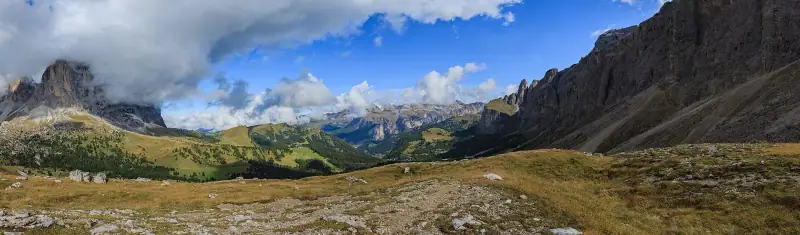
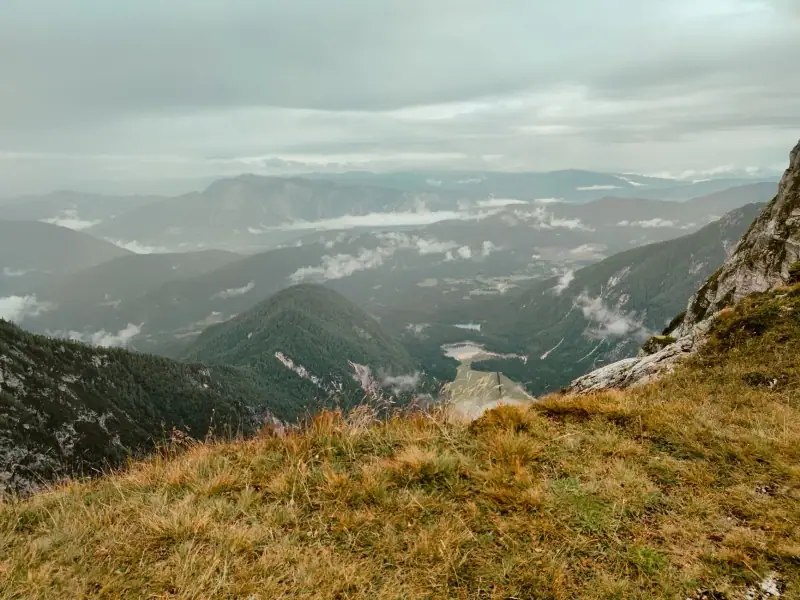
The road climbs from Kranjska Gora to the Vršič Pass (1,611 m / 5,285 ft), the highest road in the Julian Alps. There are fifty numbered hairpin bends on both sides, and part of the road is still cobbled, a legacy of its construction by Russian prisoners during World War I. The Russian Chapel, built in memory of these prisoners, deserves a stop halfway up the climb.
At the top, the view takes in a ring of peaks above 2,500 m (8,200 ft). Take time for a short walk (15 minutes) to the viewpoint above the pass.
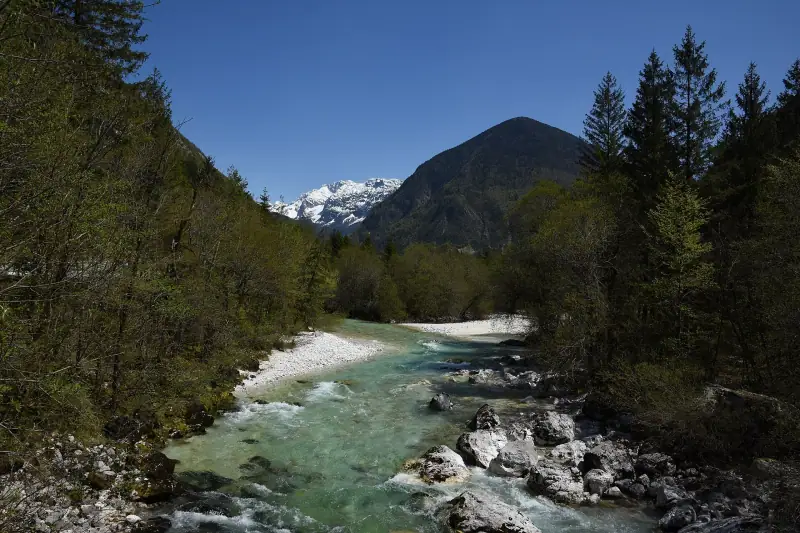
The descent toward Trenta reveals the source of the Soča, a thin trickle of water coming out of a rocky cave at 876 m (2,874 ft), which a few kilometers lower becomes the most famous turquoise river in Slovenia.
In Bovec, settle in and use the afternoon for a first walk along the Soča. The river is a striking emerald green, in contrast with the white pebbles and the conifer forests. The bravest swim: the water is very cold even in summer (about 12-15 °C / 54-59 °F).
Night: Bovec
Day 6: activities in the Soča Valley
A free day in Bovec and the valley, with little or no driving.
Options depending on your profile:
-
Hiking: The Soča Gorge trail (Soška pot) starts in Bovec and follows the river for about 25 km (16 mi) to Trenta. You can do a 2 to 3 hour section between two points, then come back by shuttle or taxi. Easy terrain, extraordinary scenery.
-
Rafting: The Soča is one of the best rafting rivers in central Europe. Several local operators offer descents accessible to beginners (class II-III rapids), lasting 2 to 3 hours. Equipment is provided. Book through your accommodation or directly at the activity offices in Bovec.
-
Canyoning: The Boka and Fratarica canyons are among the most popular in Slovenia, with natural slides, jumps and rappels.
-
Kayaking: For the more experienced, sections of the Soča offer technical river kayaking (class III-IV).
See our guide to water sports in Slovenia for details on operators and required levels.
Night: Bovec
Days 7 and 8: the Karst and the Adriatic coast
Day 7: Soča road, Škocjan and Lipica
Distance Bovec to Škocjan: about 100 km (62 mi), 1 h 45
Leave Bovec following the Soča to the south. The road goes through Tolmin and the Tolmin Gorge, reached by a short paid trail from a parking lot at the entrance of the site. These deep gorges where the Soča and the Tolminka meet are worth a 45-minute stop.
At Škocjan, the Škocjan Caves have been a UNESCO World Heritage Site since 1986 and remain among the most impressive underground cavities in Europe. The great hall of the cave (Martel Chamber) is 146 m (479 ft) high, crossed by the Reka River in a dizzying underground canyon. The guided visit lasts about 1 h 30 and can only be done in a group. Book ahead in high season.
About fifteen kilometers (9 mi) away, the Lipica Stud Farm is the historic home of the white Lipizzaner horses, a breed founded in the 16th century. Classical riding performances are held there regularly. A visit of about 1 hour is enough for horse lovers.
End the day by reaching the coast: Piran (45 km / 28 mi, 40 minutes) or Koper (closer to the caves, 35 km / 22 mi, 30 minutes).
Night: Piran or Koper
Day 8: Piran and the Adriatic coast
The Slovenian coast is only 47 km (29 mi) long, but it holds some of the most charming coastal towns on the Adriatic.
Piran is the most beautiful town on the coast: its medieval center with Venetian influences is surrounded by sea on three sides. Wander the medieval lanes, climb the bell tower of St. George’s Church for a panoramic view over the sea and the orange roofs, and walk around the town walls.
Tartini Square is the nerve center of Piran: fountains, café terraces and the statue of the violinist Giuseppe Tartini, a Piran native, towering over the square. In the evening, the seafood restaurants along the harbor serve excellent Adriatic fish: sea bass, sea bream, grilled squid.
Koper, 15 km (9 mi) to the north, is the main port and commercial town of the Slovenian coast. Its old center, surrounded by Gothic palaces and alleys, is less touristy than Piran but just as interesting. The medieval loggia, the Cathedral of the Assumption and the Clock Tower deserve a visit of an hour or two.
If you have a car and time, the coastal road between Koper, Izola and Piran offers panoramas over the Adriatic with the Croatian and Italian coasts in the background.
Night: Piran or Koper
Day 9: Postojna and Predjama Castle
Distance coast to Postojna: about 55 km (34 mi) from Koper (about 45 min) / about 74 km (46 mi) from Piran (about 55 min). If you plan Postojna the next day, prefer Koper for the night of day 7.
This day is devoted to the two most spectacular sites of the Slovenian Karst, often presented together because they are 10 km (6 mi) apart.
Postojna Cave
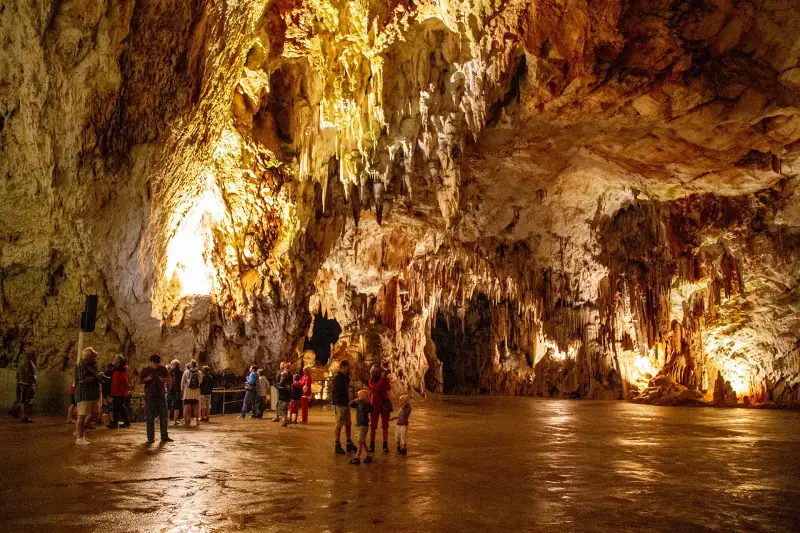
Postojna Cave is the most visited cave in Slovenia and one of the most impressive in Europe: 24 km (15 mi) of galleries explored for more than 800 years, decorated with stalactites, stalagmites, columns and limestone formations of remarkable variety. The visit begins with a ride on a small electric train for 3.7 km (2.3 mi) into the depths, then continues on foot for an hour of walking.
Do not miss the Brilliant (the cave’s most emblematic stalagmite) and the concert hall, where musical performances are held thanks to the exceptional acoustics. The cave is also home to the olm (Proteus anguinus), a blind, depigmented cave-dwelling amphibian that can live more than 100 years; you can see specimens in an aquarium at the exit.
Book your ticket ahead on the Postojnska Jama website: in high season, time slots go quickly.
For more details, see our complete guide to the caves of Slovenia.
Predjama Castle
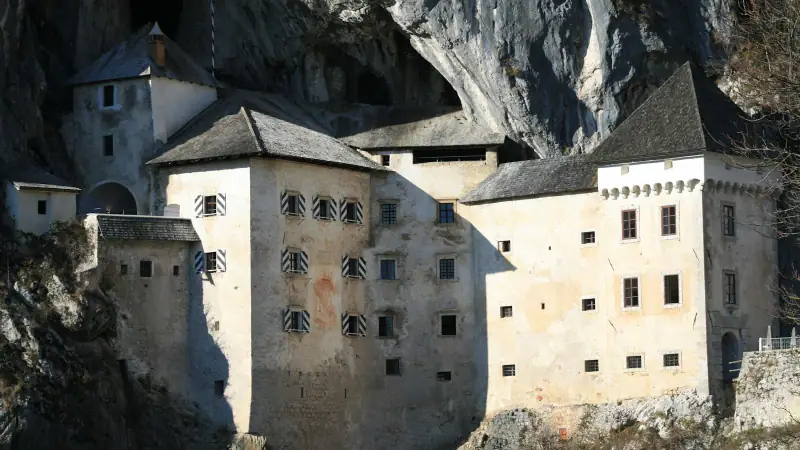
10 km (6 mi) from Postojna, Predjama Castle (Predjamski grad) is one of the most photographed and most original castles in the world. Built in the 12th century in the mouth of a karst cave, it clings to a vertical cliff 123 m (404 ft) high. The interior tells the story of Erazem Lueger (Erasmus of Lueg), a 15th-century knight-robber who held out for a year against a siege in this impregnable castle, thanks to a secret tunnel leading to the forest at the top of the cliff.
The visit takes 45 minutes to 1 hour. Kids love it.
Return to Ljubljana: 50 km (31 mi), 45 minutes. Spend the last night in Ljubljana, or leave in the evening if your flight allows.
Night: Ljubljana
Accommodation in Ljubljana
Last night in the capital before you head home.
Day 10: Maribor and Slovenian Styria
Distance Ljubljana to Maribor: 130 km (81 mi), about 1 h 15 by motorway.
If your flight is late in the day or the next day, day 10 can include a detour to Maribor, the second city of Slovenia and capital of Slovenian Styria.
Maribor, between culture and wine
Maribor is a lively university town, much less touristy than Ljubljana. Its old center around the main square (Glavni trg) and the Cathedral of St. John the Baptist holds well-preserved medieval and baroque houses.
Walk down to the Lent district, the old fishermen’s quarter on the banks of the Drava. This is where the oldest vine in the world still in production grows (the Žametovka variety, a red grape native to Slovenia), more than 400 years old by estimate, whose grapes yield a few hundred bottles each autumn that are sold at auction.
The city is surrounded by the hills of Podravje, Slovenia’s largest wine region, which mainly produces whites (Welschriesling, Sauvignon, Pinot Gris). If you have time, a short wine route in the hills above Maribor (Maribor Pohorje) offers fine views and a few cellars open for tastings.
Also read our article on Slovenian wines to better understand the country’s wine regions.
Return to Ljubljana for the airport: about 1 h 15. Do not count on Maribor Edvard Rusjan Airport: it has been closed to passengers since 2024 and, as far as published information shows, has no scheduled flights (check with the airport).
Practical tips for this itinerary
Car logistics
- Motorway vignette (vinjeta): compulsory on all Slovenian motorways. Buy it online on the official site evinjeta.dars.si or at gas stations at the border. €16 (~$19) for 7 days, €32 (~$37) for a month (official rates, class 2A car). It is linked to your license plate, with no sticker to put on.
- Parking in Ljubljana: the center is largely pedestrian. Paid underground parking garages (about €1.50 to €2.50 per hour / ~$1.75 to $2.90) are on the edge of the center.
- Vršič Pass: usually open from late May or June to October or November, depending on snow (check the road status before you leave). Outside that period, you have to take the longer Sava valley road.
Accommodation and bookings
In high season (July-August), book at least 3 to 4 weeks ahead for Bled, which is often full. Accommodation in Ljubljana and Bovec is more available but also fills up quickly.
For Postojna, book cave tickets on the official site beforehand: the morning slots go first.
Estimated budget
| Item | Economy budget | Comfort budget |
|---|---|---|
| Accommodation | €40-60/night (~$46-70) | €80-150/night (~$93-175) |
| Meals | €20-30/day (~$23-35) | €40-70/day (~$46-81) |
| Car | €30-50/day (~$35-58) | €50-80/day (~$58-93) |
| Sights and activities | €15-30/day (~$17-35) | €30-80/day (~$35-93) |
| Total (10 days, 1 person) | ~€1,200 (~$1,390) | ~€2,500 (~$2,900) |
For a more detailed budget, see our Slovenia budget guide.
Variations and adaptations
Add canyoning in Bovec
If adventure sports are your priority, turn day 6 into a full adventure day: canyoning in the morning and rafting in the afternoon. Some operators offer combined packages.
Include Croatia
From Piran, Croatian Istria is only 30 to 45 minutes away. The Premantura peninsula, the town of Pula and its Roman ruins (amphitheater), or the Brijuni islands make a nice Slovenia-Croatia extension.
Shorten it to 7 days
If you only have a week, drop day 3 (Kranjska Gora) and day 10 (Maribor), and go to Bled directly from Ljubljana. You still cover the essential stops: Ljubljana, Bled, Soča, caves, coast.
For the short version, our Slovenia 7-day itinerary is made for you.
For hikers
Add an extra night at Bohinj and devote a day to the climb of Mount Triglav (2,864 m / 9,396 ft), Slovenia’s national summit. The normal ascent takes 2 days with a night in a mountain hut (good physical condition required). For more accessible hikes, our guide to hiking in Slovenia lists the best trails by level.
This 10-day itinerary gives you the best of Slovenia without ever rushing. From the alpine lakes to the Karst caves, from the turquoise Soča to the Venetian lanes of Piran, the country offers a diversity of landscapes and experiences that is remarkable for its size. Enjoy the drive!
Sources
- DARS (e-vinjeta): prices checked November 2026
- Postojna Cave Park: figures checked November 2026
- Vintgar Gorge (Turistično društvo Gorje): figures checked November 2026
Frequently asked questions
Are 10 days enough to visit Slovenia?
Yes, 10 days is the ideal length to cover the essentials without rushing. You will have time to see Ljubljana, the alpine lakes, the Soča Valley, the Karst, the Adriatic coast and Maribor, with days that do not involve too much driving.
What car should you rent for this itinerary?
A compact car is fine for two people. If you plan to drive the Vršič Pass or forest tracks, choose an SUV or a car with good ground clearance. Check that the motorway vignette (vinjeta) is included in the rental.
What is the best season for this 10-day itinerary?
May-June and September-October offer the best balance: mild weather, every site open (including the Vršič Pass) and moderate crowds. July-August is magnificent but very busy, especially in Bled. In winter this itinerary cannot be done as written (the pass is closed).
How much does this trip to Slovenia cost?
Allow between €1,200 and €2,500 (~$1,390 to $2,900) per person excluding flights for 10 days, depending on comfort level. Slovenia is moderately expensive: accommodation and restaurants cost less than in much of Western Europe's big destinations, but more than in the Balkans.
Can you do this itinerary without a car?
Partly. Ljubljana is easy to visit on foot. Buses link Ljubljana to Bled and Postojna (check timetables with Nomago and Arriva). Bovec, Škocjan and the Adriatic coast, however, are much harder to reach without a car. A car is strongly recommended for this itinerary.
Can this itinerary be adapted for a family with kids?
Absolutely. Postojna Cave and Predjama Castle fascinate children. Lake Bled and its boats are perfect for families. The Soča offers beginner-level rafting. Adjust the length of the hikes and add a swimming day on the Adriatic coast.
More Slovenia guides
Keep reading
Caves in Slovenia: Postojna, Škocjan and the other underground wonders
Complete guide to the caves of Slovenia: Postojna, Škocjan (UNESCO), Predjama. Prices, tips and advice to plan your visit.
Visiting Bovec: a complete guide to Slovenia's adventure capital
Discover Bovec and the Soča: rafting, canyoning, Julian Alps hikes, Boka Waterfall and practical tips for an unforgettable stay.
Visiting Ljubljana: a complete guide to Slovenia's capital
Complete guide to visiting Ljubljana: castle, old town, districts, food, where to stay and practical tips for the capital of Slovenia.
Ready-made
Slovenia itineraries
5 days
Slovenia road trip: the complete guide to driving the country
Plan your Slovenia road trip: itineraries, scenic roads, practical tips and the highlights you should not miss by car.
6 days