What to see
Visiting Bovec: a complete guide to Slovenia's adventure capital
We may earn a commission when you book through links on this page, at no extra cost to you. We don't visit or try the places we cover: we summarize published sources. How we work
In short
- Bovec is about 150 km (93 mi) from Ljubljana, 1 h 45 to 2 h 15 by car; buses take about 3 hours with one or two departures a day, so a car is strongly recommended.
- June to September is the water-sports season on the Soča; rafting for beginners (class II-III) starts at about €40 (~$46) per person for 2 hours.
- Plan at least 2 nights; 3 to 4 days let you combine activities, Boka Waterfall and the Kobarid museum.
- Kanin's cable car has been out of service since winter 2023-2024: check with the tourist office before planning to ski.
If you dream of a wild, alpine, adrenaline-filled Slovenia, there is only one address: Bovec. This mountain village nestled in the heart of the Julian Alps, a stone’s throw from the Italian border, has become in a few decades the undisputed capital of adventure sports in Slovenia, and one of the best-known outdoor destinations in all of central Europe.
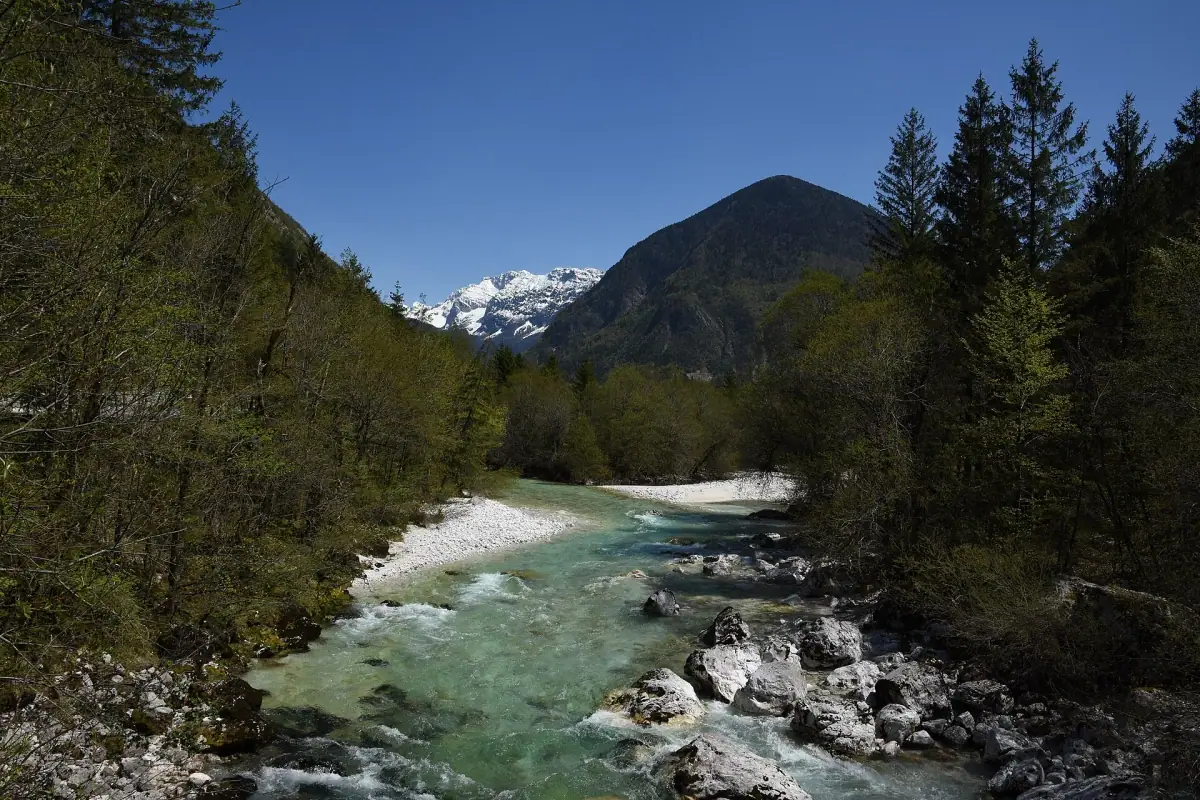
Bovec’s main attraction has a name: the Soča River. Its supernaturally turquoise waters, sculpted over millennia in the limestone gorges of the Julian Alps, have made this valley a first-class playground for fans of rafting, kayaking, canyoning, via ferrata and paragliding. But Bovec is also hiking trails that climb to the summits of Triglav National Park, Boka Waterfall (the most powerful in Slovenia), and the moving memory of World War I at Kobarid, twenty minutes away by road.
Whether you are an adventurer, a hiker, a photographer or simply looking for unspoiled nature, Bovec will take your breath away.
The Soča River: the turquoise pearl of the Julian Alps
Everyone thinks they have seen turquoise rivers in photos, over-edited. And then you arrive on the banks of the Soča and understand: reality beats fiction. This color, somewhere between emerald green, cyan blue and crystal, results from the mineral makeup of the valley’s limestone rocks, which filter and scatter the light in the glacial water. It is absolutely real, absolutely natural, and absolutely stunning.
The Soča rises from a karst spring at the bottom of the upper Trenta Valley, at about 990 m (3,248 ft) below the Travnik massif (2,379 m / 7,805 ft), and runs southwest for about 138 km (86 mi) before reaching the Adriatic Sea in Italy under the name Isonzo. The stretch through the Bovec Valley is its most spectacular: deep gorges, waterfalls, rapids and clear pools follow one another over some thirty kilometers (19 mi).
The best spots to admire (and jump into) the Soča
Several access points to the river let you enjoy its waters without necessarily doing a supervised adventure sport:
- Soča Gorge (Soška soteska): about 10-11 km (6-7 mi) northeast of Bovec (on the road to the Vršič Pass), this gorge cut into limestone over a few hundred meters is reached on foot from a parking lot. The water rushes through strange sculpted shapes: caves, basins, natural tunnels. The round-trip walk takes about 45 minutes.
- Napoleon Bridge (Napoleonov most): a few kilometers south of Bovec, this stone bridge crosses the Soča at one of its most photogenic stretches. Built during the Napoleonic wars to allow the passage of French troops, it offers a striking view of the river and the surrounding cliffs.
- The natural pools of Srpenica: a little off the tourist circuits, this natural basin formed by the river is a place locals like for swimming in summer. The water is cold (around 10-14 °C / 50-57 °F even in summer), but the setting is exceptional.
Where to stay in Bovec
Accommodation in the heart of the Julian Alps, facing the Soča.
Adventure sports on the Soča: Europe’s playground
Bovec built its international reputation on an exceptionally varied offer of adventure sports. Every summer, thousands of European enthusiasts converge on the valley to take on the Soča.
Rafting and kayaking
Rafting on the Soča is Bovec’s flagship activity. Several local operators offer descents led by certified guides, with all equipment provided (wetsuit, life jacket, helmet). Runs vary by level:
- Family/beginner runs: calm sections with a few gentle rapids (class II), ideal for non-athletes or families with children from 8-10 years old.
- Intermediate runs: class III rapids, for people in good physical condition without previous experience.
- Advanced runs: reserved for experienced paddlers, with class IV rapids that can be very demanding depending on the flow.
River kayaking is also very present in Bovec, with courses for beginners and guided outings on the sportiest sections. The Soča is recognized as one of the best whitewater kayaking spots in Europe.
Canyoning
The many canyons of the Bovec region offer unforgettable descents: rappels down waterfalls, natural slides, jumps into turquoise pools. The level of commitment varies from one canyon to another. For an introduction to canyoning in Slovenia, see our complete guide to canyoning in Slovenia.
Via ferrata and climbing
The limestone cliffs surrounding the Soča Valley are a recognized climbing ground. Several equipped routes (via ferrata) let non-climbers try climbing safely, with the right equipment and a guide. The views from the walls over the river below are breathtaking.
Paragliding
Bovec is one of the best-known tandem paragliding spots in Slovenia. Introductory flights with a licensed pilot take off from the heights above the village and fly over the Soča Valley, an aerial perspective on the turquoise river and the alpine peaks that is absolutely unmatched.
Adventure activities in Bovec
Rafting, canyoning, via ferrata, paragliding: book online.
Hiking in Triglav National Park
The Bovec Valley is bordered by Triglav National Park (Triglavski narodni park), Slovenia’s only national park. Created in 1981, it protects 83,807 hectares (207,100 acres) of alpine pastures, forests, lakes, glaciers and peaks, including Triglav (2,864 m / 9,396 ft), whose ascent is considered a national rite of passage for Slovenes.
Hikes accessible from Bovec
- The Trenta Valley: reached by car from Bovec (about 20 km / 12 mi northeast on the Vršič road), the upper Soča Valley is one of the most beautiful entrances to the park. A path along the river in its wild state lets you walk for 2 to 4 hours in preserved alpine scenery.
- Monte Rombon (2,208 m / 7,244 ft): from Bovec, a marked trail climbs this summit on the Italian border. The climb takes about 4 hours and offers extraordinary panoramas over the Soča Valley and the Italian Dolomites to the south. Reserved for hikers in good physical shape with suitable equipment.
- Lake Predil (Lago del Predil): about 12 km (7.5 mi) from Bovec toward the Predil Pass (Italian border), this high-altitude lake with green water surrounded by forests is easy to reach by car. A path goes around the lake in 45 minutes. Altitude: about 900 m (2,953 ft).
For a selection of the best hikes in Slovenia, see our guide to hiking in Slovenia.
The Vršič Pass: Slovenia’s most spectacular alpine road
About 33-34 km (21 mi) from Bovec by road, the Vršič Pass (1,611 m / 5,285 ft) is reached by a road built during World War I with fifty numbered hairpin bends. It is the highest mountain road in Slovenia, and it is open only from May to November (closed in winter because of snow). Driving it is an experience in itself: the panoramas over the Julian Alps, the Karavanke and the plains of Carniola are absolutely grand.
Boka Waterfall: the most powerful in Slovenia
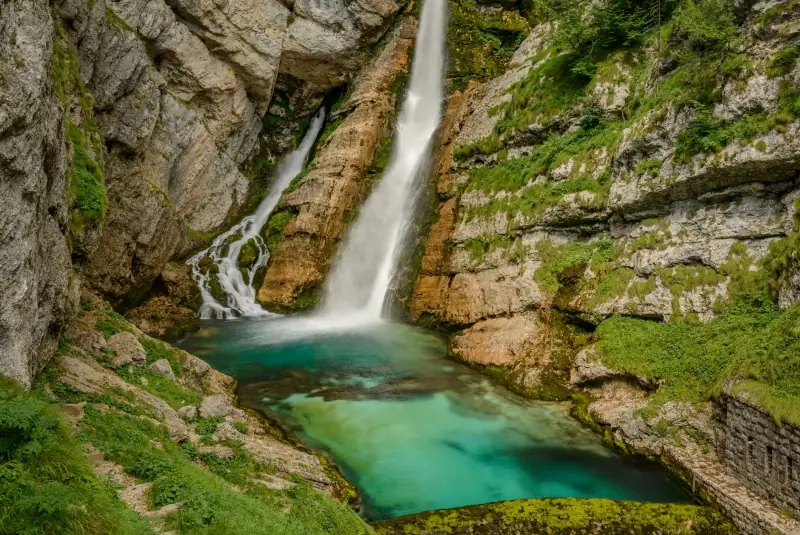
Few waterfalls in Europe have such a theatrical presence as Boka Waterfall (Slap Boka). With a total height of about 139 m (456 ft) (main drop: 106 m / 348 ft, second drop: 33 m / 108 ft), it is considered the most powerful waterfall in Slovenia by average flow, and it can be seen from the main road a few kilometers west of Bovec.
The path leading to the foot of the waterfall from the parking lot takes about 30 to 40 minutes on foot through steep forest. In spring and early summer, fed by melting alpine snow, the Boka pours out an impressive volume of water that creates a microclimate of mist around its spray. In August the flow decreases, but the view remains striking.
The visit to Boka Waterfall is one of the most accessible walks in the region, doable by children and people not used to hiking. Bring good shoes: the trail is sometimes slippery.
Kobarid and the Soča Front Museum (World War I)
About 20 km (12 mi) south of Bovec, the small town of Kobarid (formerly called Caporetto by the Italians) is inseparable from the history of World War I. It was here in October 1917 that the Battle of Caporetto took place, one of the most disastrous defeats of the Italian army, in which Austro-Hungarian and German troops (among them the young Erwin Rommel) broke through the front in a lightning operation.
The Kobarid Museum (Soča Front)
The Kobarid Museum (Kobariški muzej), winner of the Council of Europe Museum Prize in 1993, traces the Soča battles (1915-1917) with great sensitivity and historical care. Models, maps, testimonies, military equipment and an impressive diorama room help you understand this forgotten mountain front, which caused more than 300,000 deaths in two years.
The town also has an Italian ossuary on the hill above Kobarid, dedicated to the Italian soldiers who fell on the Soča front. The view from this memorial over the valley and the Alps is striking.
The Soča trail, which includes several memorial points reached on foot from Kobarid, is ranked among the most important sites of remembrance of the Great War in Europe.
Car rental in Slovenia
Essential for exploring the Soča Valley and the Julian Alps freely.
Food in Bovec and the valley
The cooking of the Bovec region is rooted in the mountain tradition of the Julian Alps, with strong Italian influences (the border is a few kilometers away) and high-quality local products.
Specialties to try
- Karst lamb and alpine cheeses: sheep farming is traditional in the region’s mountain pastures. The cheeses aged in the mountains are delicious, best with local rye bread.
- Soča trout (soška postrv): the river is home to an endemic trout species, the marble trout of the Soča, a protected species. But farmed trout, found on every restaurant menu, is excellent and often prepared the alpine way: grilled, with potatoes in olive oil and fresh herbs.
- Struklji: rolls of dough filled with fresh cheese, boiled or baked, a staple of traditional Slovenian cooking found on almost every menu.
- Polenta: a legacy of the Italian proximity, polenta regularly accompanies meat or fish dishes in the region.
Where and how to eat
The village of Bovec has about ten restaurants and pizzerias concentrated around the central square (Trg Golobarskih žrtev). In high season, dinner time can be crowded: plan to eat early or book. Activity operators often offer lunch packs or point participants to their favorite places.
Where to stay in Bovec
Bovec offers a wide range of accommodation for a mountain village: campgrounds on the banks of the Soča, hostels, guesthouses (sobe), small hotels and eco-lodges in the forest.
In the village
Most hotels and guesthouses are grouped in or around the village. This is handy for walking to restaurants and activity operators. Prices range from €50 to €150 per night (~$58 to $175) for a double room in high season.
By the river
Several campgrounds and glamping sites (equipped tents, yurts, tiny houses) sit directly on the banks of the Soča, with direct access to the river. This is a very popular option for young travelers and families, in an unmatched natural setting. Book well ahead for July-August.
Around Bovec: Kobarid and the neighboring valleys
If Bovec is full or too expensive in high season, the town of Kobarid (20 km / 12 mi away) offers a quieter and often cheaper choice of accommodation, with easy access to all the Soča activities.
Campgrounds and accommodation in Bovec
From glamping by the Soča to mountain guesthouses.
How to get to Bovec
By car
A car is the most practical and recommended way to get to Bovec. From Ljubljana, two main roads reach the Soča Valley:
- Via the Vršič Pass (usually open from late May or June to October or November, depending on snow): about 2 hours, but a spectacular mountain road with 50 hairpin bends, not to be missed.
- Via Tolmin and Most na Soči: about 1 h 45, a road open all year, less spectacular but more direct.
From Trieste (Italy): about 130-135 km (81-84 mi), 1 h 45 to 2 h via the Predil Pass. From Ljubljana, allow about 150 km (93 mi) by road.
By bus
Buses link Ljubljana to Bovec, sometimes with a change at Most na Soči or Tolmin. The trip takes about 3 hours. Service is limited (one or two departures a day) and impractical if you want to explore the valley freely. If you do not have a car, ask local operators, who sometimes offer transfers from Ljubljana or from Tolmin station.
When to go to Bovec
| Period | Activities | Conditions |
|---|---|---|
| May-June | Hiking, via ferrata, start of rafting | Fresh greenery, high river flow, fewer people |
| July-August | All water sports, paragliding, climbing | High season, warmest water, heavy crowds |
| September | Rafting, hiking, canyoning | Water still fine for activities, fewer crowds, fall colors |
| December-April | Snowshoeing, skiing (Kanin: check opening) | Quiet village, ski area above the village |
The Kanin ski area, reached from Bovec, is the highest ski area in Slovenia (summits around 2,300 m / 7,550 ft). Note: its cable car has not obtained an operating permit in recent seasons and the replacement is still being studied; check with the Bovec tourist office whether skiing is possible before planning a winter stay. The neighboring resorts of Kranjska Gora, Vogel and Krvavec are compared in our guide to skiing in Slovenia.
Practical tips for visiting Bovec
- Book your activities ahead: in July-August, rafting and canyoning sessions are often full several days in advance. Book as soon as you know your dates.
- Be ready for cold water: even in midsummer the Soča is a cold mountain river (10-14 °C / 50-57 °F at the surface). Operators provide wetsuits, but bring a dry change of clothes for afterward.
- Download offline maps: the mobile network disappears quickly outside the village. Maps.me and offline Google Maps are essential for hikes.
- Check your insurance: make sure your travel insurance covers mountain and water sports. Some standard policies exclude them.
- Respect protected areas: a large part of the trails along the Soča runs through Triglav National Park. Stay on marked trails, do not pick alpine flowers and take your trash with you.
- Currency: Slovenia uses the euro. ATMs in Bovec are few, so withdraw cash in Ljubljana before you leave.
- Fuel: the Bovec gas station is open in high season. Fill up before heading onto the passes.
To plan your overall budget in Slovenia, see our Slovenia budget guide. And if you want to fit Bovec into a longer stay, our Slovenia road trip offers an itinerary combining Ljubljana, Bled and the Soča Valley in a week.
Bovec is one of those destinations that transform a trip. You come for the turquoise river and leave with much more: the omnipresent mountains, the air of the Julian Alps, the memory of the Great War engraved in the cliffs, and the adrenaline of a day on the Soča. In a country that is already exceptional, the Bovec Valley may be the ultimate moment of grace of a trip to Slovenia.
Frequently asked questions
How do you get to Bovec from Ljubljana?
Bovec is about 150 km (93 mi) northwest of Ljubljana by road, through the Julian Alps: allow 1 h 45 to 2 h 15 by car depending on the route. The most spectacular road goes over the Vršič Pass (closed in winter). Regular buses link Ljubljana to Bovec (about 3 hours, one or two departures a day). A car is still strongly recommended to explore the region freely.
What is the best time to visit Bovec?
June to September is the high season for water sports on the Soča, with water warm enough for rafting and canyoning (about 10 to 14 °C / 50 to 57 °F at the surface). July and August are the liveliest but also the most crowded. Spring (May-June) is ideal for hiking, with melting snow and alpine flowers. In winter the Kanin ski area looks down on Bovec, but its cable car has been out of service since winter 2023-2024: check with the tourist office before planning to ski.
Is rafting on the Soča suitable for beginners?
Yes, there are rafting runs for every level. The sections between Bovec and Trnovo ob Soči are class II to III rapids, perfectly doable without previous experience with a qualified guide. Local operators offer supervised sessions with all equipment provided, from about €40 (~$46) per person for 2 hours.
Can you visit Bovec without doing extreme sports?
Absolutely. The Soča Valley offers riverside walks for everyone, outstanding viewpoints, Boka Waterfall (the most powerful in Slovenia), a visit to Kobarid and its World War I museum, and many cafés and restaurants in the village. Bovec is spectacular even for travelers who do not want to do adventure sports.
How much time should you plan for Bovec?
A minimum of 2 nights is recommended to enjoy Bovec and the Soča Valley. Three to four days let you combine several activities (rafting, hiking, a visit to Kobarid, a walk to Boka Waterfall) without rushing. Bovec fits ideally into a Slovenia road trip together with Bled and Ljubljana.
Is there mobile coverage and Wi-Fi in Bovec?
The village of Bovec has decent 4G coverage. However, as soon as you head out on a hike or go down to the river in the gorges, there may be no signal at all. Tell someone before you set off on an excursion and download offline maps (maps.me, offline Google Maps) before leaving the village.
More Slovenia guides
Keep reading
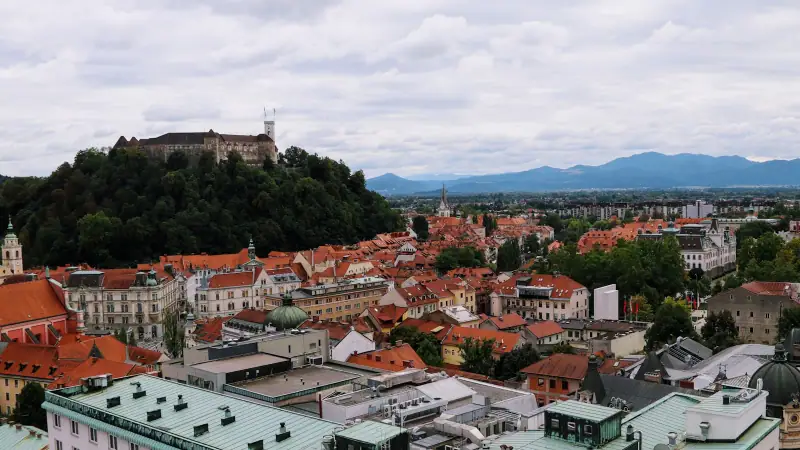
Visiting Ljubljana: a complete guide to Slovenia's capital
Complete guide to visiting Ljubljana: castle, old town, districts, food, where to stay and practical tips for the capital of Slovenia.
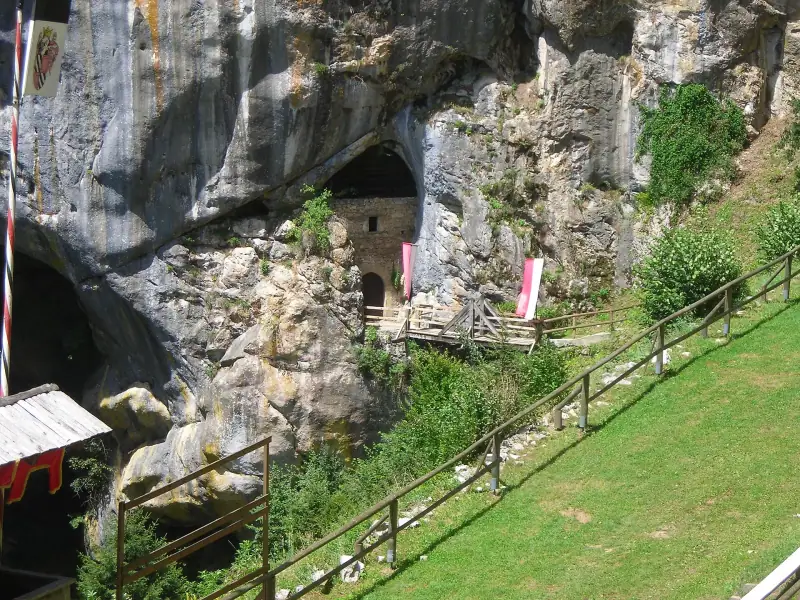
Visiting Postojna: a complete guide to the caves and Predjama Castle
Discover Postojna, capital of the Slovenian Karst: Postojna Cave, Predjama Castle, hikes and practical tips to plan your stay.
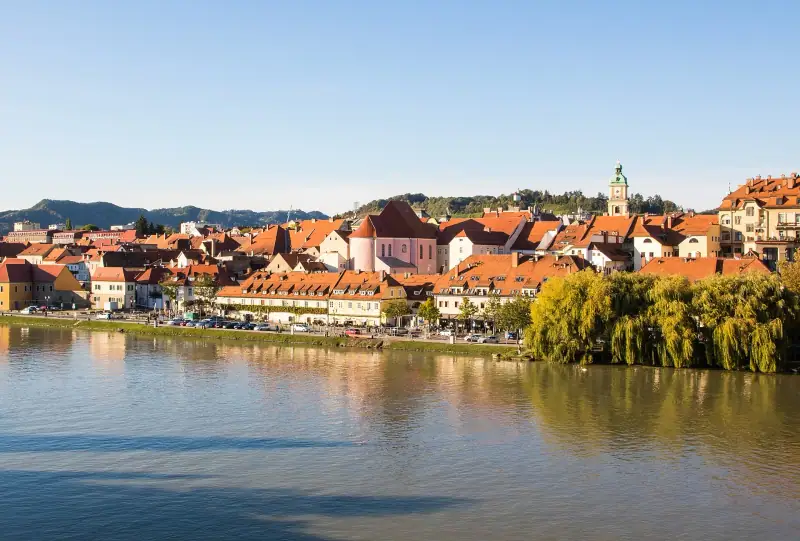
Visiting Maribor: a complete guide to Slovenia's second city
Discover Maribor, cultural capital of eastern Slovenia: the world's oldest vine, the Lent district, Pohorje and Styrian wines.
Ready-made
Slovenia itineraries
10 days
Slovenia in 10 days: the complete itinerary to see it all
LjubljanaBledBovecPiran or KoperLjubljana
5 days
Slovenia road trip: the complete guide to driving the country
Plan your Slovenia road trip: itineraries, scenic roads, practical tips and the highlights you should not miss by car.
6 days