What to see
Visiting Aix-les-Bains: what to see and do on the shores of Lac du Bourget
We may earn a commission when you book through links on this page, at no extra cost to you. We don't visit or try the places we cover: we summarize published sources. How we work
In short
- One day covers the essentials: spa district, Roman remains, Faure Museum, harbor and the lakeside promenade; with two days add a boat trip to Hautecombe Abbey or the Revard.
- Lac du Bourget is the largest natural lake entirely in France, about 18 km (11 mi) long; swimming is popular on the landscaped beaches in summer.
- You don't need to be on a spa treatment to enjoy the baths: wellness treatments and relaxation access are generally open to all; check current terms.
- The Revard plateau, at about 1,500 m (4,920 ft), is the mountain escape above town, with a wide panorama in clear weather.
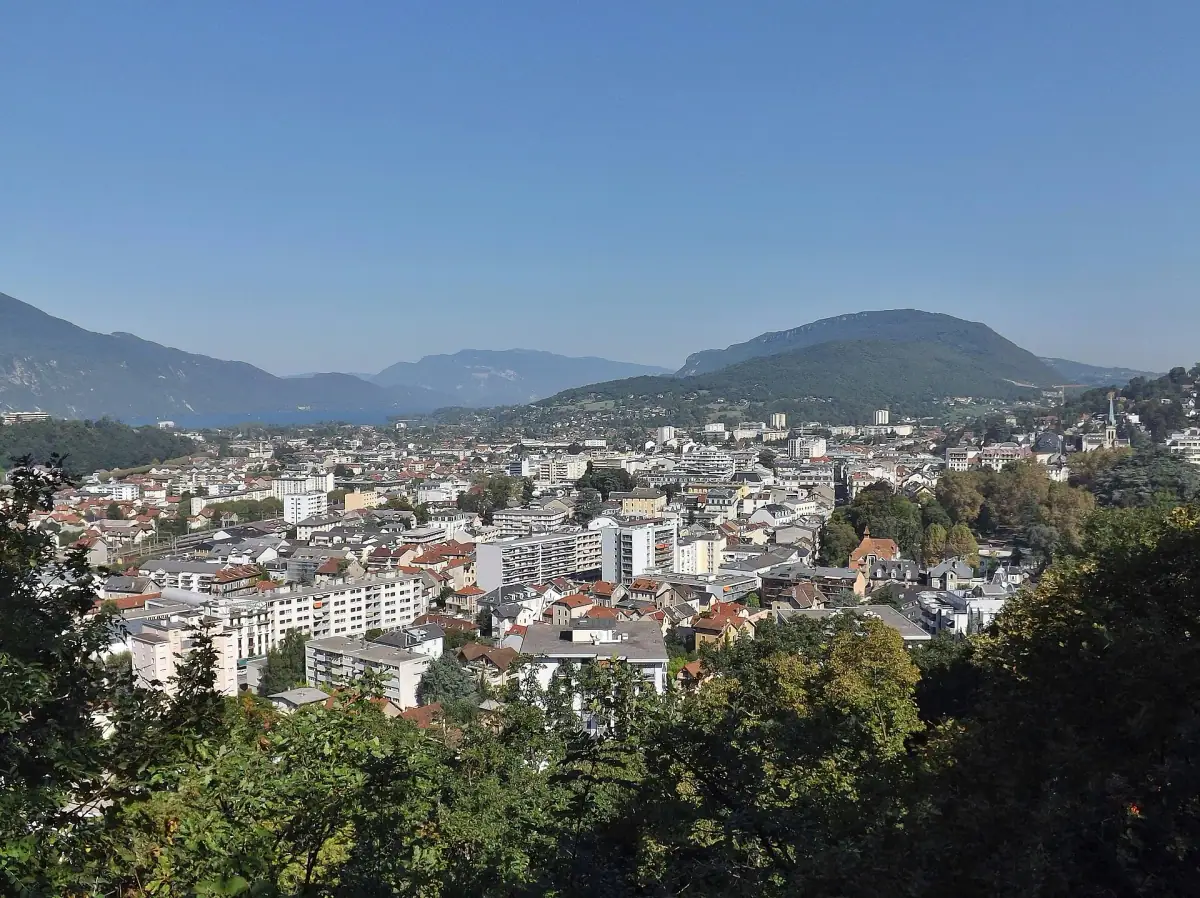
Set on the east shore of Lac du Bourget, Aix-les-Bains has a rare feature in Savoie: it brings together a lake, a mountain and a long history as a spa town in a single place. The Romans already came here to take the waters, and in the 19th century European aristocracy stayed here, drawn by the reputation of its hot springs. What remains are baths, villas, a casino and a slightly old-fashioned elegance that contrasts with the sporty image of Savoie.
This guide focuses on the town itself: what to see, how to organize a day or two, what to taste and where to go on excursions. To place Aix-les-Bains in a wider route with Chambéry and the tour of the lake, see our weekend in Chambéry and Lac du Bourget.
Aix-les-Bains at a glance
Aix-les-Bains has about 30,000 inhabitants, making it one of the largest towns in Savoie after Chambéry. It is built between the lake, to the west, and the first foothills of the Revard mountain, to the east. This layout gives the town a pleasant elevation change: the center is fairly flat, the lakefront stretches below, and the residential districts climb gently toward the hillsides.
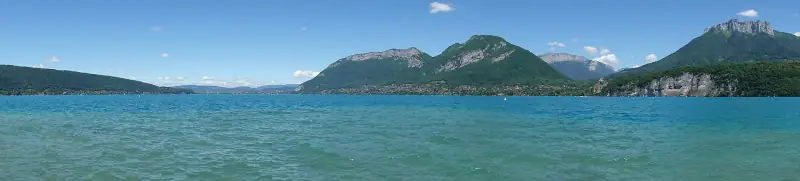
Lac du Bourget is the largest natural lake entirely in France. It is about 18 km (11 mi) long and 3 to 4 km (2 to 2.5 mi) wide. Aix-les-Bains occupies its east shore, facing the wild coast of the Dent du Chat and the cliffs that overlook the west shore.
The town’s history is inseparable from water. From Antiquity, the Roman city, known as Aquae, used the hot springs. Spa culture then boomed in the 19th century, after Savoie was attached to France in 1860. The poet Lamartine, who stayed here and composed his famous poem Le Lac (The Lake), helped make the place known, and several figures of the time, including Queen Victoria, stayed here.
The town divides into three easy-to-spot areas:
- The spa and historic center, around the baths, the casino and the Roman remains.
- The lakefront, with the harbor, beaches, park and promenades.
- The heights, toward the Revard, with viewpoints, forests and trails.
The baths: the historic heart of the town
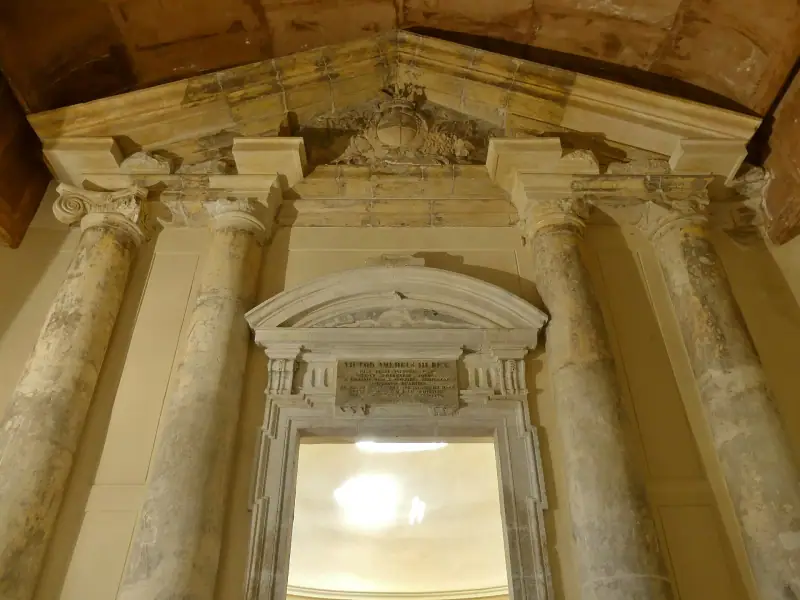
To understand Aix-les-Bains, you have to start with the water. The town’s springs are hot and sulfurous, and they made its fortune. Even today, the thermal facilities are one of the main economic and tourist activities. Treatments are mostly oriented toward rheumatism and conditions of the locomotor system, with treatment stays that draw spa guests from across France.
You don’t need to be on a treatment to enjoy the atmosphere. The surroundings of the baths, their 19th-century facades and the park around them can be visited freely. The facilities also offer, at certain times, wellness treatments and relaxation access open to all: massages, heated pools, hammams. Packages and rates change regularly, and booking ahead is recommended in high season.
For history buffs, the tourist office generally organizes guided tours of the thermal heritage. They give access to places that are not always open to the public, show how the spa town worked in the 19th century and point out details you don’t notice on your own.
Roman remains: the Arch of Campanus and the Temple of Diana
Before being an elegant resort, Aix-les-Bains was a Roman town, and several remains bear witness to this in the center.
The Arch of Campanus is the easiest monument to spot. This stone arch, dating from Roman times, stands near a small park in the middle of town. It was probably a funerary monument rather than a triumphal arch, and it bears the name of a notable of the time. Take time to look at it up close: although its dimensions are modest, it is remarkably well preserved.
Not far away, the remains of the so-called Temple of Diana are in the courtyard of a public building, and access depends on hours and events. They recall that the town was a place of worship and healing nearly two thousand years ago. Archaeology fans can also explore the remains of the Roman baths, which you can see on organized tours: ask the tourist office for the time slots.
These visits are short: allow an hour for the whole, combining them with a walk in the center. It is an excellent way to start the day before heading down to the lake.
The Faure Museum: an Impressionist surprise
You might not expect it, but Aix-les-Bains is home to one of the finest small museums in Savoie. The Faure Museum occupies a 19th-century villa, surrounded by a garden, and presents a very rich art collection for a town this size.
The museum is best known for its late-19th-century paintings and its collection of Rodin sculptures, one of the most important in France outside Paris. You will also find works by Impressionist and Post-Impressionist painters. The visit is manageable: one to two hours is enough, making it a very good option for a rainy morning or a cultural break in the middle of a stay.
Hours, closing days and rates vary with the season, and some areas may be closed for works or temporary exhibitions. Always check the official information before you go.
Sleeping in Aix-les-Bains
Compare hotels, apartments and guesthouses in the town center, near the baths or facing the lake.
The casino and resort architecture
The Grand Cercle casino is one of the town’s symbols. It recalls the time when spa guests alternated treatments, walks and society evenings. Even without gambling, its architecture and atmosphere are worth a look: the building also hosts shows, restaurants and events. Access to the gaming room is regulated and reserved for adults, with ID to show.
Around the casino, you discover the resort architecture by strolling. Large villas, former palace hotels turned into residences, gardens and ornate facades bear witness to the town’s prestige in the Belle Époque. There is no set route: look up, follow the tree-lined avenues and let yourself be guided by the wrought-iron balconies and elaborate roofs.
This part of the visit is ideal at the end of the day, when the light softens the facades and the town regains its calm. Many visitors combine it with dinner on a terrace in the center.
The harbor, beaches and lakeside promenade
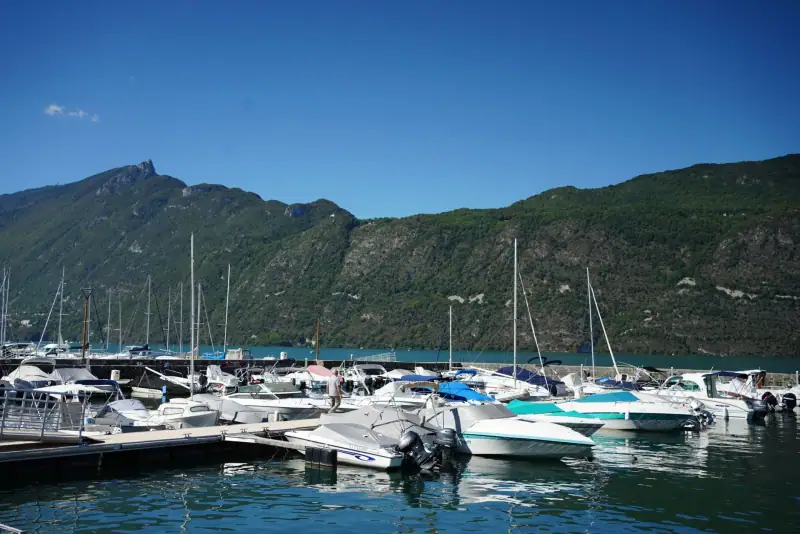
This is probably the most appreciated part of the visit in summer. The lakefront of Aix-les-Bains stretches over several kilometers, with a marina, landscaped beaches, a park and wide promenades.
The Grand Port is the starting point for most water activities. You will find cruise boats, boat rentals, sailing and paddleboard schools, and many restaurants and cafés with a view of the water. The beaches are supervised in summer: it is the ideal place for a swim break after visiting the center.
The water of Lac du Bourget is known to be warmer than that of other Alpine lakes, which makes swimming pleasant from late spring for the bravest, and above all from July to September. Respect the marked swimming zones and the safety instructions posted.
For a quieter walk, follow the promenade northward, where the shores become more natural. You will pass anglers, families on bikes and walkers who stop to watch birds. The lake is also a playground for kayak, paddleboard and sailing fans: several operators rent equipment in season.
By boat to Hautecombe Abbey
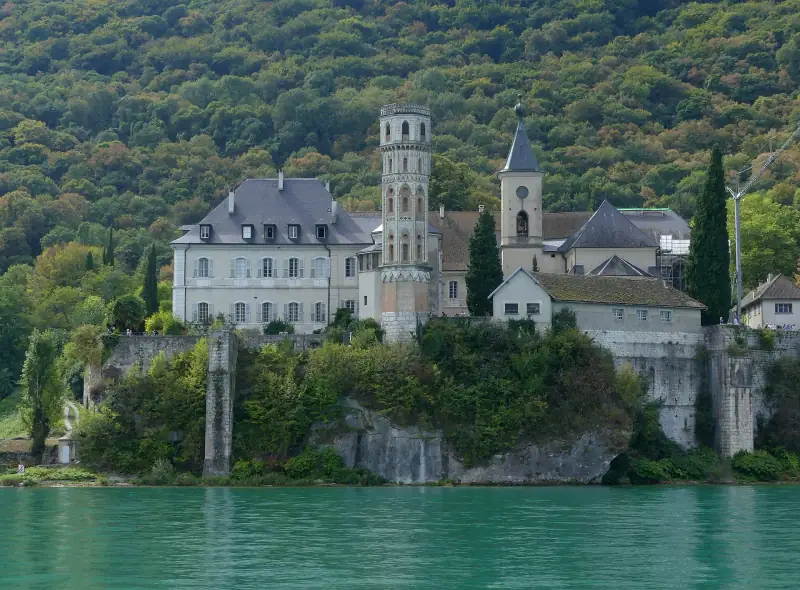
The most emblematic outing from Aix-les-Bains is the crossing of the lake to Hautecombe Abbey. Founded in the 12th century, it occupies a spectacular site on the west shore, at the water’s edge. It long served as the necropolis of the princes of the House of Savoy, which gives it major historical importance for the whole region.
The best way to get there is to take a boat from the port of Aix-les-Bains. The crossing gives an overview of the lake, the ridge line of the Dent du Chat and the abbey itself, which is gradually revealed from the water. Cruises run mostly in season, with frequencies and rates that vary: check the timetables before planning your day.
The abbey is still a place of monastic life. Visits are therefore supervised and depend on the community’s hours and services. Plan about two hours there and respect the silence and the instructions. For a complete program combining Hautecombe, Chanaz and the lake shores, see our weekend itinerary at Lac du Bourget.
Excursions around Lac du Bourget
Cruises, water activities, guided tours and tastings: discover the outings you can book around Aix-les-Bains.
The Revard: the balcony of Aix-les-Bains
When it is hot on the lake, the Revard plateau offers an escape. This mountain that overlooks the town peaks at about 1,500 m (4,920 ft) and is reached by car on a winding mountain road. Distances are short, but the elevation gain is large: the temperature is cooler and the landscape changes completely.
At the top, the panorama is one of the finest in the region. In clear weather, you take in Lac du Bourget, the Chambéry valley, the neighboring massifs and, in the distance, the silhouette of Mont Blanc. The plateau is a hiking area in summer and a small Nordic ski area in winter, with cross-country trails and snowshoe routes, depending on snow.
A few tips for this excursion:
- Choose a clear day: without visibility, the interest of the panorama is limited.
- Bring a jacket, even in midsummer: the temperature difference with the lakeshore is noticeable.
- Check the road condition and snow cover in winter before leaving.
- For outing ideas accessible without difficulty, see our selection of easy hikes in Savoie.
Nature walks around town
Aix-les-Bains is not limited to the lake and the Revard. Around town, several short outings let you enjoy nature without excessive effort.
- The Sierroz gorges, a small enclosed trail near town, suit families and walkers looking for coolness in summer.
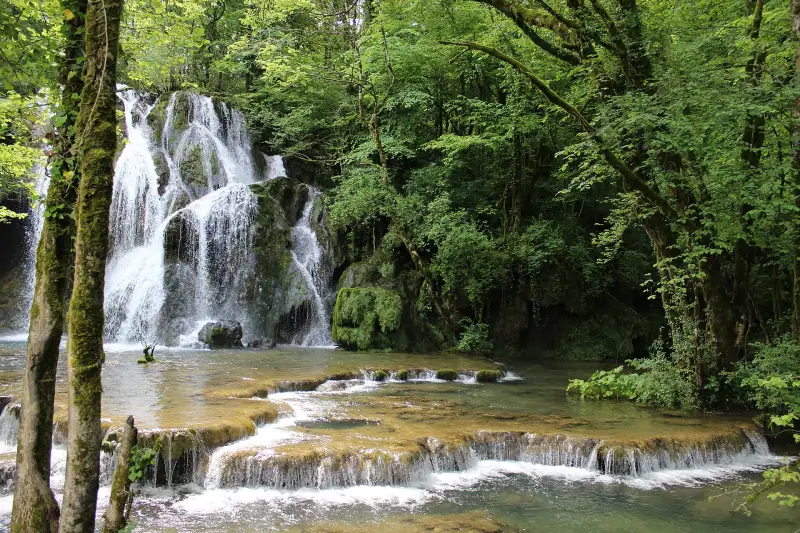
- The Grésy waterfall, a short distance away, is a classic for an easy walk. It is tied in local imagination to Lamartine’s romantic story.
- The greenway around the lake, which lets you ride or walk along the shores on safe sections. The town’s bike rental shops offer standard and electric models.
- The viewpoints of the east shore, which offer plunging views of the lake and are reached by small roads.
Access conditions, trail condition and possible closures vary with the season and the weather. Ask the tourist office before leaving, especially after heavy rain.
What to eat and drink in Aix-les-Bains
On the plate, Aix-les-Bains benefits from both Savoyard cooking and the nearby lake. The restaurants of the center and the harbor offer the great classics: fondue, raclette, tartiflette, diots in white wine, but also lake fish, such as Arctic char or féra, prepared in a traditional or more modern way. Fish makes a nice change from mountain dishes.
The region is also a vineyard area. Savoie wines pair very well with the region’s dishes, and several estates nearby can be visited for tastings. Before choosing a bottle, read our guide to Savoie wines to spot the appellations and grape varieties worth knowing.
A few practical tips:
- Book in the evening in summer and on weekends, especially for lakeside terraces.
- Be wary of places set right in front of the water: the view is superb, but quality and prices vary widely. Compare menus before sitting down.
- To taste local products at lower cost, visit a market: days and places vary with the season, so ask the tourist office.
Getting there and getting around
Aix-les-Bains is well served. The train station is linked to Chambéry, Lyon and Annecy, with direct connections depending on the timetable. Durations depend on the days and trains: check before booking. By road, the motorway passes nearby and lets you quickly reach Chambéry, Annecy or Lyon. The airports of Lyon-Saint-Exupéry and Geneva are the two main air gateways.
In town, the center is walkable, and the lakefront is a few minutes’ walk away. A bus network serves the outer districts and some points of interest. For the Revard, the west shore of the lake and the neighboring villages, a car remains the most flexible means. Our article on car rental in Savoie details the points to check depending on the season.
Where to stay in Aix-les-Bains
For a first stay, three areas stand out:
- The town center, close to the baths, casino and restaurants: ideal for doing everything on foot.
- The lakefront, for nights facing the water, near the harbor and beaches: perfect in summer.
- The heights, quieter, with guesthouses and rentals sometimes offering a fine view.
Rates are generally lower than in Annecy, but they rise in summer, during school holidays and in the height of the spa season. Book ahead if you travel on a sunny weekend. To estimate your whole stay, also see our guide to the budget in Savoie.
When to visit Aix-les-Bains
The town can be visited all year, with very different moods:
- Spring: gardens in bloom, terraces reopening and a still-calm lake.
- Summer: swimming, boats, evenings on terraces. It is high season, with more people and higher rates.
- Fall: golden light, mild temperatures and peaceful shores, ideal for walking.
- Winter: quiet spa atmosphere, with ski resorts reachable in a day and the Revard for Nordic skiing depending on snow.
To compare the seasons across the whole region, read our article on when to go to Savoie.
A program for one day in Aix-les-Bains
If you only have one day, here is a realistic sequence that avoids rushing:
- Morning: walk in the center, Arch of Campanus and Roman remains, surroundings of the baths and casino.
- Late morning: visit the Faure Museum, or a coffee break in the center.
- Lunch: lake fish or a Savoyard specialty, on a terrace at the harbor or in the center.
- Early afternoon: walk by the lake, swim in summer.
- Afternoon: cruise to Hautecombe, or drive up the Revard if the weather is clear.
- Evening: dinner on a terrace, then an evening walk on the lakefront.
With one more day, add Chambéry, the old town and its passageways: our guide to visiting Chambéry will help you organize this stop, about twenty minutes away by car or train.
A stay by Lac du Bourget
Find lodging in Aix-les-Bains to enjoy the lake, the baths and the excursions nearby.
In summary
Aix-les-Bains is a town to discover without hurrying. People come for its baths and its resort past, for the Arch of Campanus and the Faure Museum, but also for a lakefront that pleases swimmers and walkers alike. The Revard offers a mountain counterpoint a few kilometers away, and Hautecombe, along the water, adds a historical and scenic dimension. To place this stop in a wider trip, see our complete guide to Savoie.
Frequently asked questions
How long do you need to visit Aix-les-Bains?
One day is enough to see the essentials: spa district, Roman remains, museum, harbor and lakeside walk. With two days, you add a boat trip to Hautecombe Abbey, a swim or a walk on the heights of the Revard.
What is there to do in Aix-les-Bains when it rains?
The Faure Museum, the baths and their treatments, the casino, and the shops and cafés of the center can be visited under cover. The thermal facilities also offer relaxation areas accessible for the day: find out about packages and reservations before you come.
Can you swim in Lac du Bourget at Aix-les-Bains?
Yes, swimming is very popular in summer on the town's landscaped beaches. The water is warmer than in many other Alpine lakes. Favor supervised areas and follow the instructions posted there, which vary with the season.
Can you visit Aix-les-Bains without a car?
Yes. The train station is close to the center, which is walkable, and the lakefront is a few minutes away. A car, an electric bike or buses become useful for the heights of the Revard, the west shore of the lake and neighboring villages.
How do you get to Hautecombe Abbey from Aix-les-Bains?
The most pleasant way is by boat from the port of Aix-les-Bains, in season. You can also go by car along the west shore of the lake. Check crossing and visiting times before you leave, as the abbey is still a place of monastic life.
Aix-les-Bains or Annecy: which to choose?
Annecy is more famous, livelier and busier in summer. Aix-les-Bains is quieter, well placed between Chambéry and the lake, and its spa atmosphere is unique. The two are close: if you have time, combine them in one trip.
What is the best time to visit Aix-les-Bains?
May to September to enjoy the lake, beaches, boats and terraces. Early fall is also very pleasant, with soft light and fewer people. Spa treatments run for much of the year.
Do you need to be on a spa treatment to enjoy the baths of Aix-les-Bains?
No. Besides prescribed treatments, the thermal facilities generally offer wellness treatments and relaxation access open to all. Packages, rates and conditions change: check the official sites before booking.
More Savoie guides
Keep reading
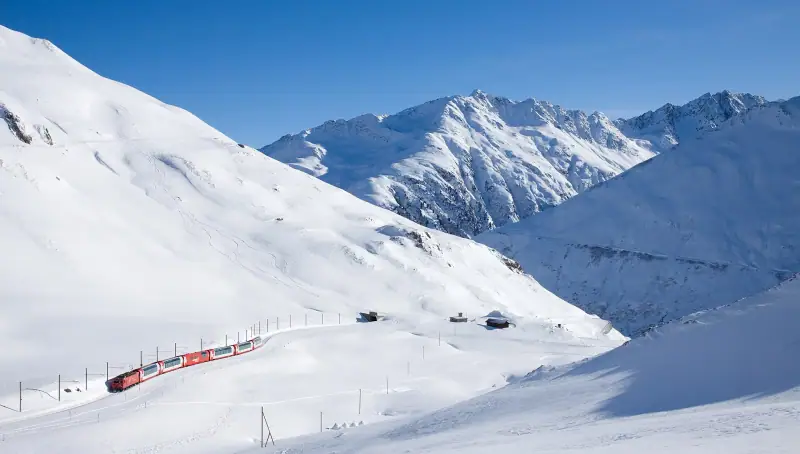
What to see in Maurienne: legendary passes, forts, villages and the Vanoise
What to see in Maurienne? Saint-Jean-de-Maurienne, Valloire, Col du Galibier, Aussois, Bessans, Bonneval-sur-Arc: stops, an itinerary and planning tips.
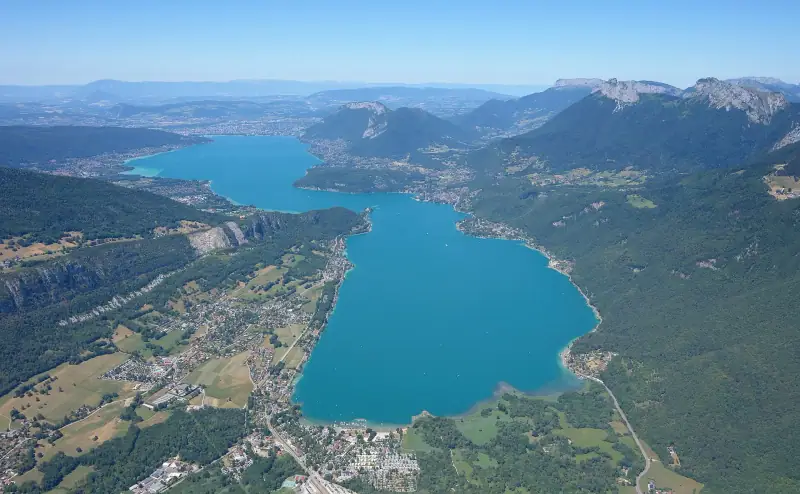
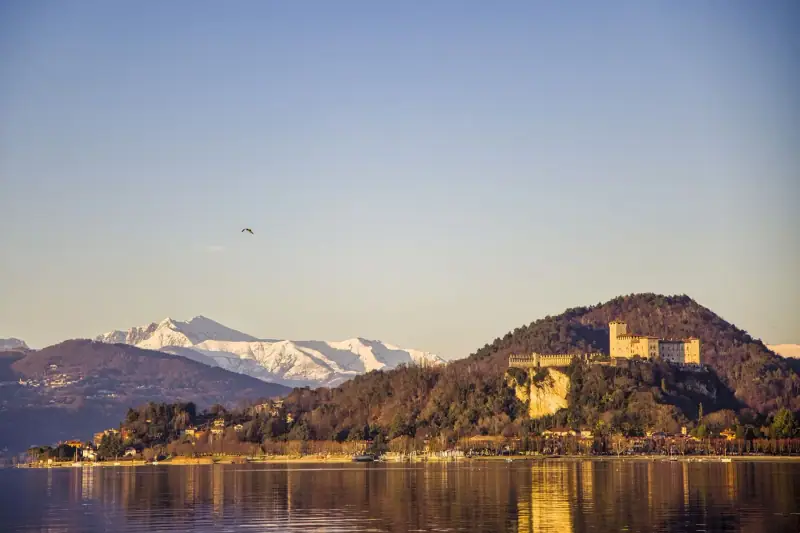
What to see around Lake Annecy: villages, castles and nature sites
What to see around Lake Annecy? Talloires, Menthon, Duingt, Bout-du-Lac, Roc de Chère: the prettiest villages and natural sites around the lake.
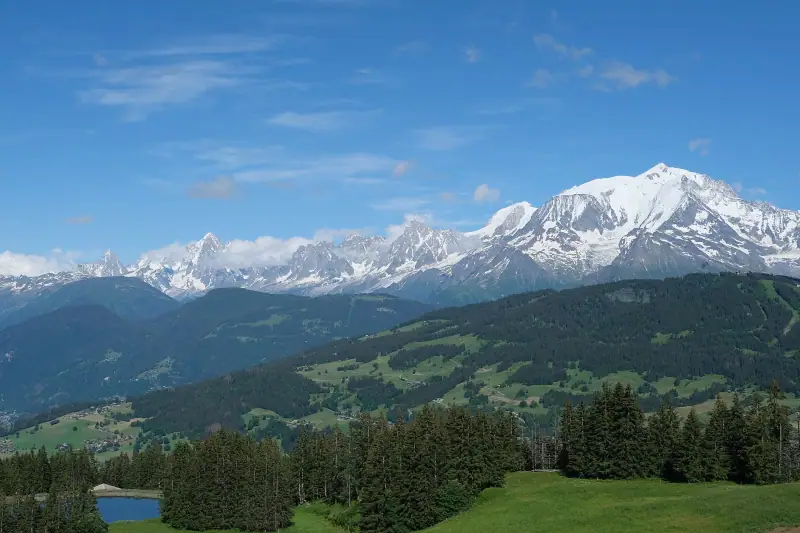
What to see in the Mont Blanc region: Saint-Gervais, Les Contamines, Megève and Passy
What to see around Mont Blanc? Saint-Gervais, Les Contamines, Combloux, Megève, Passy: tramway, Baroque chapel, lake and viewpoints, with planning tips.
Ready-made
Savoie itineraries
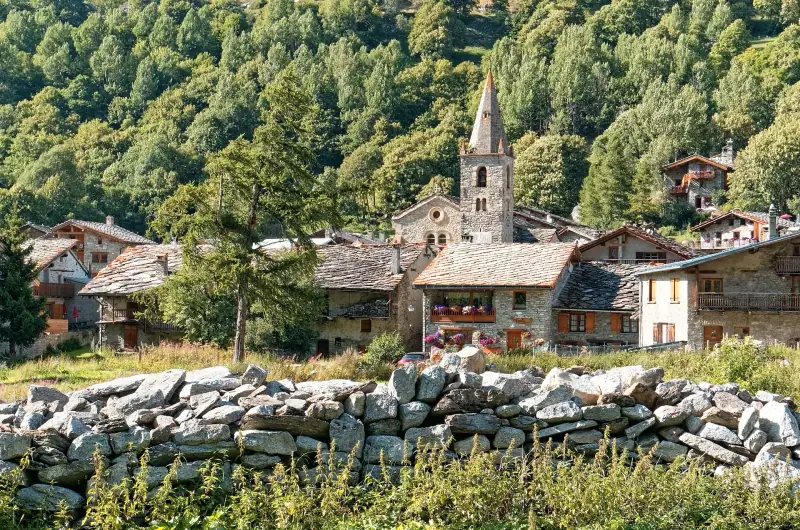
7 days
One week in Savoie: a day-by-day road trip itinerary
Chambéry or Aix-les-BainsAnnecyMegève or ChamonixTarentaise (Bourg-Saint-Maurice or Val d'Isère)
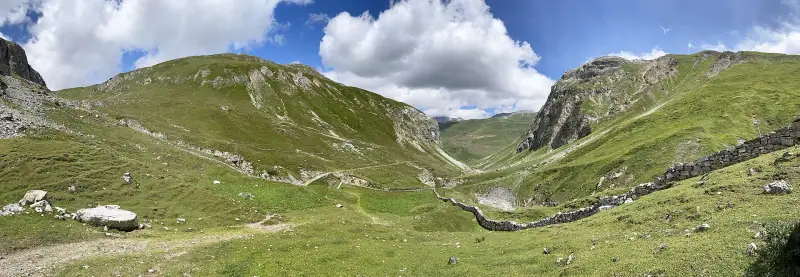
5 days
Savoie in 5 days without a car: a realistic itinerary by train and bus
ChambéryAnnecyChamonix
3 days
3 days around Lake Annecy: a day-by-day itinerary
What to do in 3 days in Annecy and around the lake? Old town, Talloires, Menthon, Duingt, cycling, swimming and Semnoz: a detailed, realistic itinerary.