Plan your trip
When to go to Savoie: seasons, weather and best times
We may earn a commission when you book through links on this page, at no extra cost to you. We don't visit or try the places we cover: we summarize published sources. How we work
In short
- For hiking and the lakes, June to September, with the heat peaking in July and August; for skiing, late December to March, depending on altitude.
- If you can pick only one period, choose September: pleasant weather, lakes still accessible, trails open and reasonable crowds.
- The most expensive periods are the February holidays, late December, July and August; spring (late April to June) and fall (September to early November) are generally the cheapest.
- Some resorts, lodging and lifts close between seasons, so check opening dates before booking.
Savoie changes face radically from month to month. In January, it is a white playground where you ski from village to village; in July, a paradise of lakes, trails and flowering mountain pastures; in October, a setting of golden forests and silent valleys. Choosing the right moment is therefore the first decision to make: it shapes your budget, your activities, the type of lodging and even how you get around. This guide goes through each season, with its strengths, its limits and tips to organize your stay without unpleasant surprises.
Savoie: what to know before choosing your season
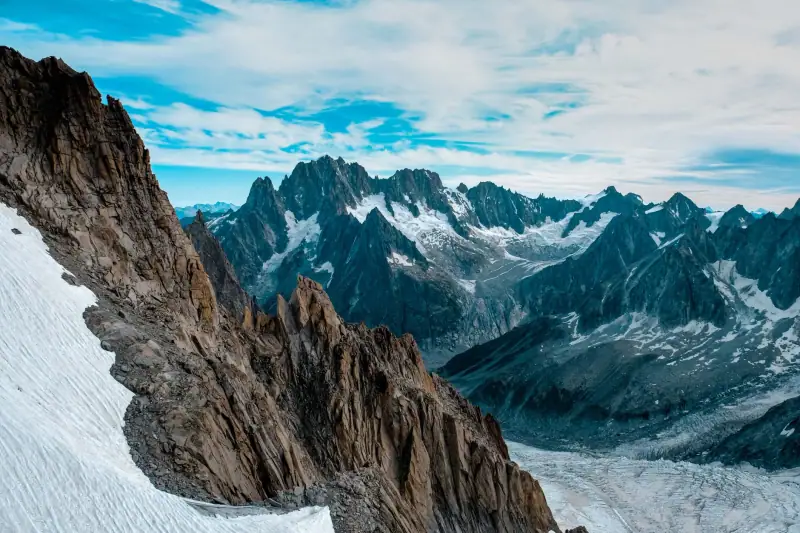
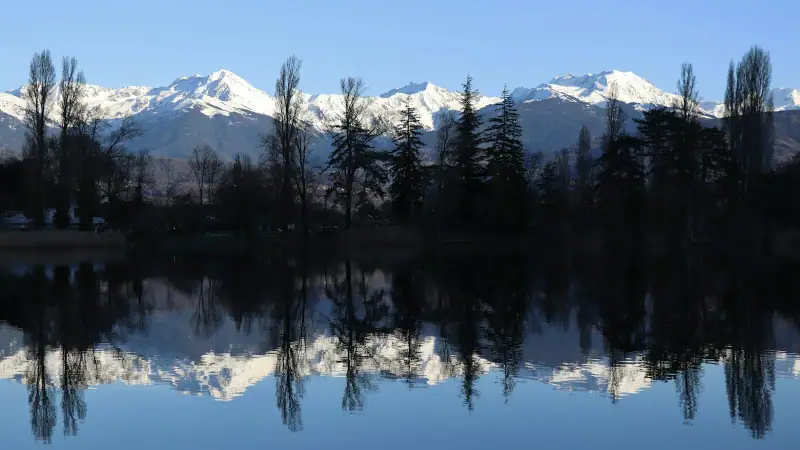
The area covers Savoie and Haute-Savoie, that is, very varied landscapes: from the shores of Lake Annecy and Lac du Bourget, at modest altitudes, up to the high valleys of the Tarentaise, the Maurienne or the Mont Blanc region, where summits rise well above 3,000 m (9,840 ft). This range of altitude explains why you can swim in a lake in the afternoon and meet snow the same day at the pass, at the start or end of the season.
A few useful benchmarks:
- By the lakes and in towns (Annecy, Chambéry, Aix-les-Bains): the climate is milder, with hot summers and cool, sometimes misty winters.
- In mid-mountain (Megève, villages of the Bauges, intermediate valleys): summers are pleasant, winters snowy but variable from year to year.
- In high mountain (Val d’Isère, Chamonix, upper Vanoise valleys): winters are long and snowy, summers short, and the weather can change very fast.
Keep a simple rule in mind: the higher the altitude, the more unstable the weather and the more marked the transition seasons (spring and fall). Temperature and snow figures vary from year to year, so it is better to check the Météo-France forecasts and the resorts’ bulletins a few days before leaving rather than relying on averages.
Winter: December to March, the ski season
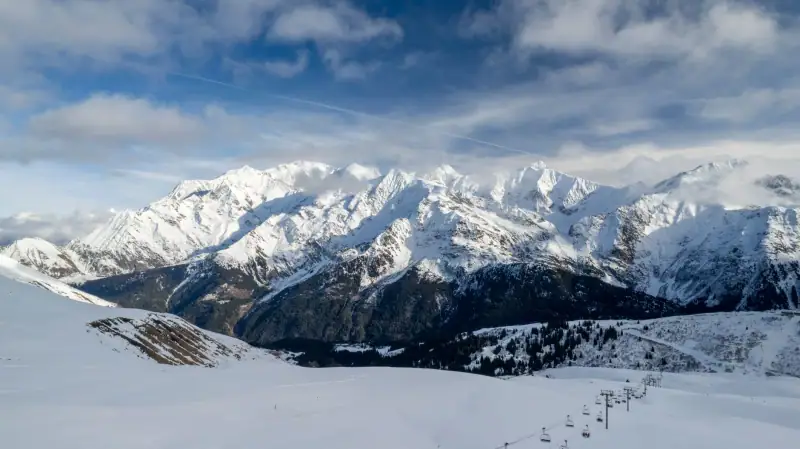
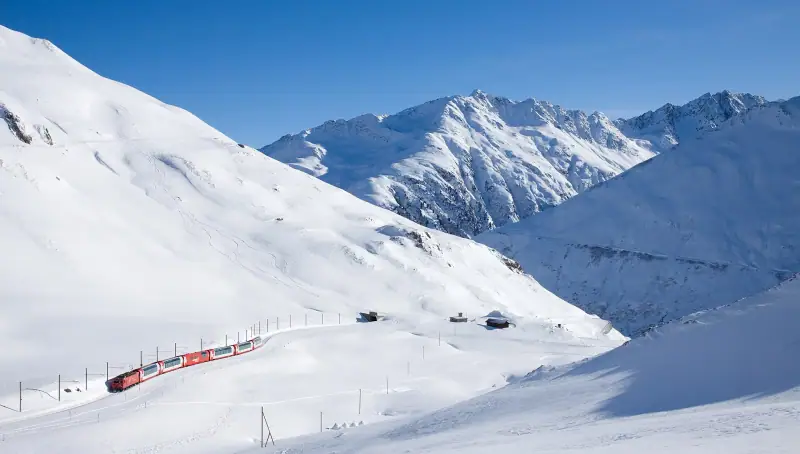
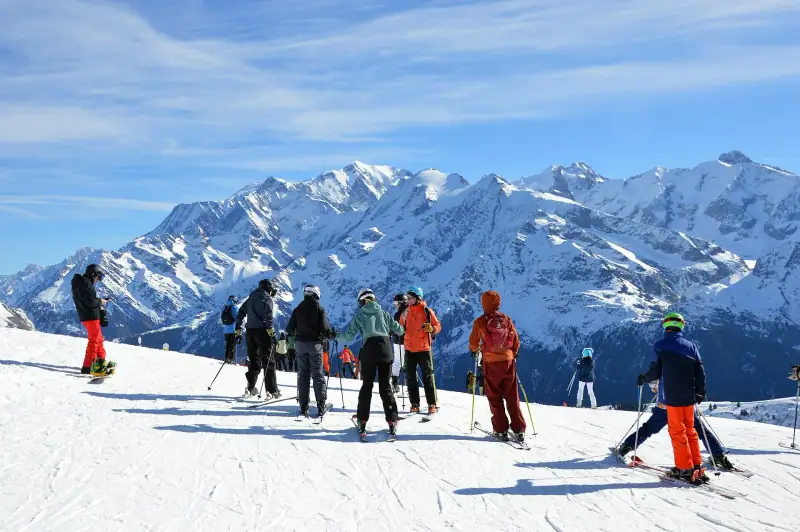
Winter is the main season for many travelers. Savoie is home to some of the largest ski areas in the world, notably in the Tarentaise, where several resorts are linked together. People come to ski, but also for snowboarding, snowshoeing, cross-country skiing, dogsled rides or simply the atmosphere of the mountain villages. To choose your ski area, see our comparison of the best ski resorts in Savoie.
Key dates of the season
Most resorts open around mid-December and close between late March and April, depending on altitude. Exact dates vary every year: check them on the resort’s website. The main periods to know:
- Late December and early January: festive atmosphere, but maximum crowds and high rates.
- January: often calmer outside school holidays, with well-covered slopes at altitude.
- February and early March: school holidays in France, staggered by region, so heavy crowds and rising prices.
- Late March and April: a gentler mood, more sun, but more fragile snow at low altitude.
Which altitude to choose?
To maximize your chances of snow, opt for a high-altitude resort, especially if you travel at the start or end of the season. Mid-altitude resorts have their charm: more authentic villages, sometimes gentler rates and a family atmosphere. But they depend more on the winter weather. If you are after quality downhill skiing, check the latest snow report before booking.
What to do without skiing
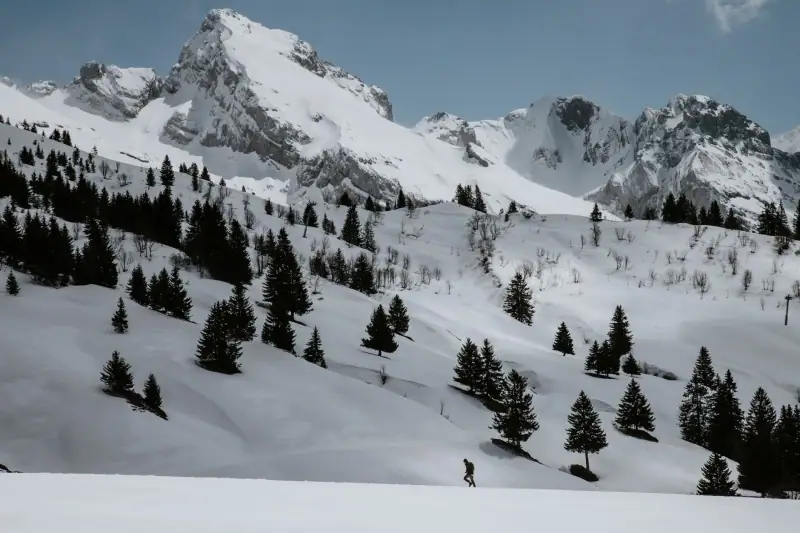
Winter is not limited to the slopes. Chamonix, Megève or Annecy can be visited very well in winter: Christmas markets, ice rinks, spas, snowshoe walks, wood-fired restaurants and mountain dishes. Resorts also often offer sledding runs, groomed walking routes and introductory activities for children.
Book early for winter
Chalets, apartments and resort hotels fill quickly for school holidays. Compare availability in Savoie.
Spring: April to June, a transition season
Spring is the hardest season to anticipate. In the valleys, meadows turn green again, fruit trees blossom and the lakes regain their clarity. But at altitude, the snow melts slowly: mid- and high-mountain trails often remain impassable until early summer, and some pass roads closed in winter reopen gradually.
The advantages
- Fewer crowds: you enjoy the towns and lakes without the summer crowd.
- Lower prices: hotels, rentals and activities are generally cheaper.
- Contrasting landscapes: snowy summits, rivers swollen by melt, powerful waterfalls.
- Spring skiing: in the big high-altitude resorts, the season sometimes extends into early spring, with heavier snow but pleasant sun.
The limits
- Some lodging, restaurants and lifts close between the winter and summer seasons. Always check opening dates before booking.
- The weather is changeable: rain, sun and snow can alternate on the same day.
- High-mountain routes are not accessible before the melt, and avalanche risk persists at altitude.
Spring is ideal for an urban stay in Annecy or Chambéry, a walk on the lakeshore, or a cultural getaway. If you like quiet, it is a moment of grace, as long as you accept adapting your plans to the weather.
Summer: June to September, the season of lakes and trails
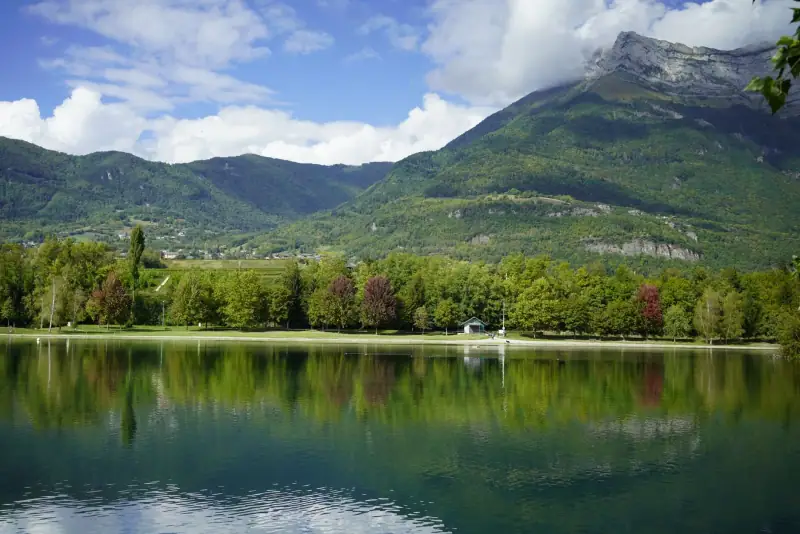
Summer is the season of hiking, lakes and mountain pastures. Days are long, trails are open, mountain huts and inns are running, and the villages host many festivals and markets. It is also the high tourist season: there are more people, especially in July and August.
Lake Annecy and Lac du Bourget
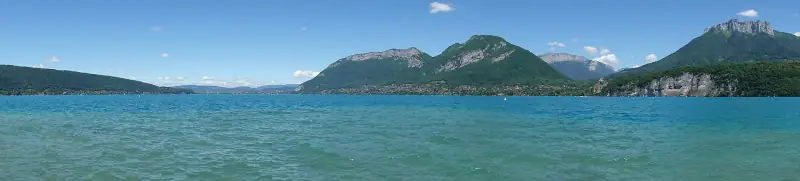
This is the ideal period for swimming, paddleboarding, kayaking or sailing. Lake Annecy draws many visitors, with its beaches, cycle paths and old districts crossed by canals. Lac du Bourget, larger, often stays calmer, with Aix-les-Bains as a spa town and marina. In July and August, it is better to arrive early to find parking and a spot on the beach.
Mountain hiking
From late June to September, most mid-mountain trails are accessible. High-altitude routes, though, can keep snow late in the season. In the Mont Blanc massif, the Vanoise or the Beaufortain, the possibilities range from the family walk to multi-day treks. A few tips:
- Start early: storms often form in the afternoon in the mountains.
- Always carry a waterproof jacket, a warm layer and enough water, even in fine weather.
- Check the weather and trail condition before every outing, and adapt your route to your level.
- In a national park like the Vanoise, respect the regulations: they protect the wildlife and plants.
Mountain pastures and food
Summer is also the season of herds in the mountain pastures, open cheese dairies and high-altitude meals. It is the best time to taste dairy products where they are made. To prepare your food trail, see our guide to Savoie cheeses: reblochon, beaufort and where to taste them.
Summer activities in Savoie
Guided hikes, water sports, paragliding, via ferrata: discover the experiences offered in Savoie.
The downsides of summer
- Crowds: Annecy, Chamonix and the lakes are very busy in July and August.
- Prices: lodging and car rentals are more expensive and need to be booked ahead.
- Storms: frequent in the mountains in the afternoon, they call for an early start and a plan B.
- Roads: traffic can be heavy on peak-departure weekends and around the lakes.
Fall: September to early November, the season of quiet
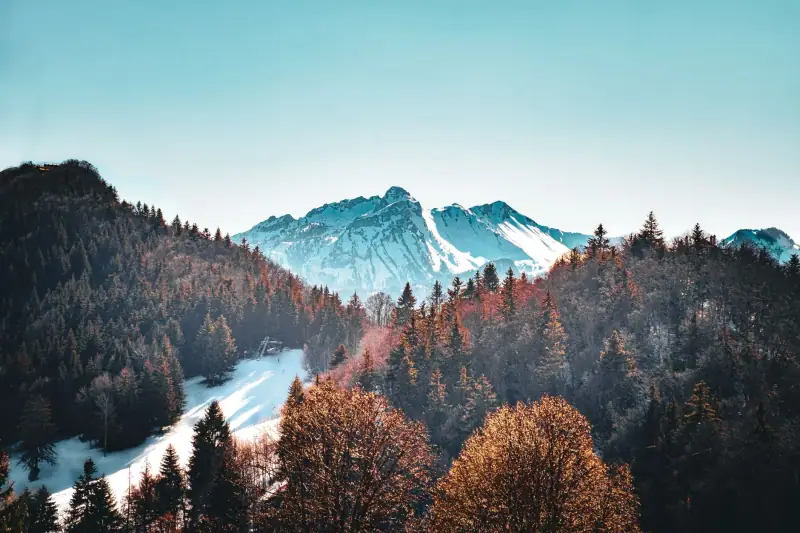
Many connoisseurs consider September one of the best months to visit Savoie. The summer crowds have dispersed, the lake water is still pleasant early in the month, the trails are passable and the light is beautiful. From October, the forests take on golden and russet tones, and the mountain gradually empties.
Why it is a very good period
- Fewer people and a more authentic atmosphere in the villages.
- More reasonable rates than in high season.
- Good conditions for hiking, with cooler days and good visibility in clear weather.
- The time of the mountain-pasture festivals: the descent of the herds gives rise to events and local markets in several villages. Ask the tourist offices for the dates.
Things to watch
- Days shorten fast: plan shorter outings and get back before dark.
- The first snow can arrive at altitude as early as fall, and some passes or trails become difficult.
- Between summer and winter, some lodging, restaurants and lifts close. Always check hours and opening dates before you go.
When to go according to your budget
The rate calendar follows that of skiing and school holidays. Here is a simple benchmark:
- The most expensive: February holidays, late December, July and August.
- Intermediate: January outside holidays, late March, June and early September.
- The most economical: May and late fall, with a reduced offer in return.
To limit spending, travel on weekdays rather than weekends, book early and compare formats: hotel, apartment, gîte or guesthouse. Rentals with a kitchen save on meals, especially for families.
When to go according to your profile
For ski fans
January to March, preferring high-altitude resorts at the start and end of the season. Book early for school holidays and check the snow cover.
For hikers
July to September for the high mountains, June to October for mid-mountain. September often combines good conditions with lighter crowds.
For families
Summer for swimming and easy walks, winter to learn to ski. In both cases, book early during school holidays.
For city and culture lovers
Spring and fall are perfect: Annecy, Chambéry and Aix-les-Bains can be visited comfortably, without the heat or the crowds of summer.
For food lovers
Summer and fall, when the cheese dairies are open and the markets overflow with local products. Winter also suits, with its mountain dishes.
Getting around by season
The season also influences how you travel. In winter, mountain roads can require special equipment: regulations in many mountain municipalities require winter tires or chains depending on the period. Check the rules in force before leaving and equip your car accordingly, or rent from a company that provides the equipment. In summer, a car remains practical to reach trailheads and lakes, but parking can be complicated in very busy places.
Several main towns are reachable by train, which lets you travel without a car if you stay in the main towns or in some resorts served by shuttles. To explore several valleys freely, renting a car remains the most flexible choice.
What to pack by season
- Winter: warm clothes in layers, gloves, hat, glasses or goggles, sunscreen (glare on snow is strong) and walking shoes for the villages.
- Spring and fall: a windbreaker, waterproof shoes, several layers.
- Summer: swimsuit for the lakes, suitable hiking shoes, cap, sunscreen, waterproof jacket and a small fleece for outings at altitude.
Whatever the season, pack layers: temperature varies markedly between morning and afternoon, and between the valley and the summits.
Bottom line
If you had to pick only one period, choose September for a balance of pleasant weather, lakes still accessible, open trails and reasonable crowds. For skiing, aim for January or March outside school holidays. For swimming and big hikes, July and August remain the surest months, as long as you book early and accept the crowds.
Prepare your stay
Once your dates are chosen, compare hotels and lodging from Lake Annecy to the big resorts.
Frequently asked questions
What is the best time to visit Savoie?
It all depends on your plan. For hiking and the lakes, favor June to September, with a heat peak in July and August. For skiing, aim for late December to March, keeping in mind that snow cover varies with altitude. September and October are lovely periods for quiet and colors.
When is snow most reliable in Savoie?
High-altitude resorts, like those of the Tarentaise, are generally the most reliable, especially from January to March. Mid-altitude resorts depend more on winter conditions. Check the resort's snow report before booking.
Can you swim in the lakes of Savoie?
Yes, Lake Annecy and Lac du Bourget have beaches and supervised swimming areas in summer, generally from June to September. The water stays cool early in the season. Ask the tourist office about the landscaped beaches and supervision periods.
When are mountain trails passable?
Mid-mountain routes are generally accessible from late June to September, but snow can linger late at altitude and return as early as fall. Check the weather, trail condition and snow cover before every outing, especially above 2,000 meters (6,560 ft).
Do you need to book far in advance?
For winter school holidays, peak weekends and the months of July and August, it is better to book several months ahead, especially in the resorts and on Lake Annecy. Outside holidays, availability is more flexible and lower rates.
Which period should you choose to travel with a family?
Summer is ideal for children: swimming, easy walks, parks and nature activities. Winter suits families who want to ski very well, as long as they book early. School holidays are the most expensive and busiest.
What is the cheapest period?
Spring, from late April to June, and fall, from September to early November, are generally the most economical periods. Note that some resorts and facilities close between the two seasons, which limits the offer.
More Savoie guides
Keep reading
Budget for a stay in Savoie: real costs and 3 priced profiles
How much does a stay in Savoie cost? Lodging, transport, meals, lift passes and activities: three priced budgets and tips to spend less.
The best ski resorts in Savoie: ski areas, levels and budgets compared for 2026-2027
Which ski resort to choose in Savoie in 2026-2027? Ski areas, levels, opening dates and lift passes compared to match your budget.
What to do in Savoie in winter without skiing: snowshoeing, dog sledding, ice climbing, thermal baths
What to do in Savoie in winter without skiing? Snowshoeing, dog sledding, ice climbing, thermal baths, sledding and villages: ideas and points to check.
Ready-made
Savoie itineraries
7 days
One week in Savoie: a day-by-day road trip itinerary
Chambéry or Aix-les-BainsAnnecyMegève or ChamonixTarentaise (Bourg-Saint-Maurice or Val d'Isère)
5 days
Savoie in 5 days without a car: a realistic itinerary by train and bus
ChambéryAnnecyChamonix
3 days
3 days around Lake Annecy: a day-by-day itinerary
What to do in 3 days in Annecy and around the lake? Old town, Talloires, Menthon, Duingt, cycling, swimming and Semnoz: a detailed, realistic itinerary.