What to see
What to see in the Mont Blanc region: Saint-Gervais, Les Contamines, Megève and Passy
We may earn a commission when you book through links on this page, at no extra cost to you. We don't visit or try the places we cover: we summarize published sources. How we work
In short
- The region (Pays du Mont-Blanc) lies on the west side of the massif, around Saint-Gervais, Sallanches, Combloux, Megève and Les Contamines-Montjoie.
- Highlights: the Mont Blanc Tramway at Saint-Gervais, the Baroque sanctuary of Notre-Dame-de-la-Gorge, Combloux's panorama, Megève's pedestrian center and the Assy church.
- Three days cover the essentials; distances between stops range from a few minutes to about half an hour by road.
- Check tramway and lift timetables before you go, as they change from one season to the next.
When you mention Mont Blanc, you immediately think of Chamonix. Yet on the other side of the massif, on the west slope, lies a more discreet, greener and often more accessible area: the Pays du Mont-Blanc, or Mont Blanc region. Villages of character, pastoral valleys, a Baroque church, thermal baths, mid-mountain lakes and panoramas over the roof of the Alps make up a trip in their own right, one you can do as a family, as a couple or with friends, in summer as in winter.
This guide helps you decide what to see in this region, choose your stops according to the time you have and avoid the classic pitfalls (changeable weather, lift timetables, summer crowds). For the big neighboring valley, see our article Visiting Chamonix-Mont-Blanc, and for the chic resort of the area, Visiting Megève: what to see and do.
Understanding the Mont Blanc region
The Pays du Mont-Blanc is in Haute-Savoie, between the Arve valley and the massifs that separate France from Italy and Switzerland. Its heart is formed around Saint-Gervais-les-Bains, Sallanches, Combloux, Megève and Les Contamines-Montjoie, with which Passy and its plateau are readily associated. The Chamonix valley, a little farther east, has its own identity but makes an easy addition.
What strikes you first is the variety of moods over short distances:
- Saint-Gervais: a spa town and resort, gateway to the Mont Blanc Tramway.
- Les Contamines-Montjoie: a wilder valley, turned toward mountain pastures and long-distance trails.
- Combloux: a panoramic village, facing the massif.
- Megève: an elegant resort, with a carefully designed pedestrian center.
- Passy and the Assy plateau: a viewpoint, lakes and an unexpected artistic heritage.
Allow between a few minutes and half an hour of driving between these stops, which makes combinations easy. If you hesitate on the season, our guide When to go to Savoie: seasons and weather details the strengths of each period.
Saint-Gervais-les-Bains and the Mont Blanc Tramway
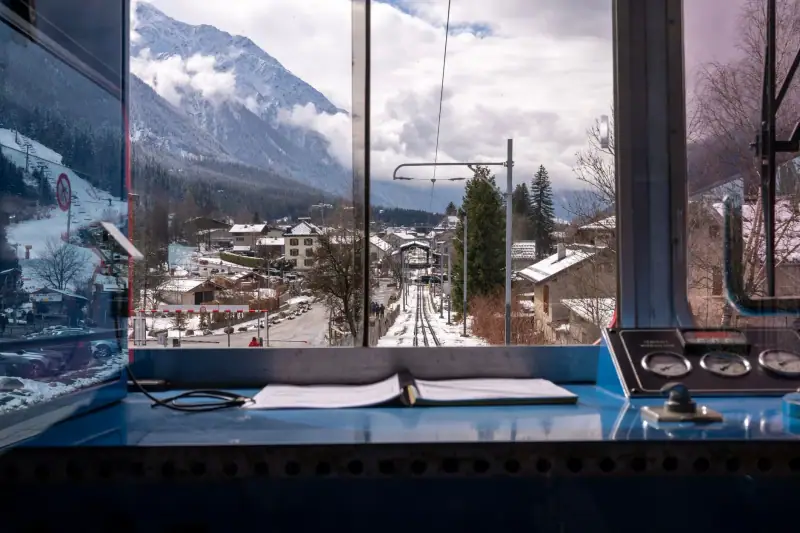
Saint-Gervais is the natural gateway to the region. The municipality is split between the town, perched on a shelf, and the Le Fayet district, at the valley floor, where the train station and the start of the famous Mont Blanc Tramway are located. This rack railway, one of the highest in France, climbs through forests and mountain pastures to the end of its line, facing the glaciers, with intermediate stops including the Col de Voza. It generally runs from summer to early fall, with more limited service in winter: check the official timetables and fares before you go, as they change from one season to the next, and extension works have recently changed the terminus.
The ride is a highlight of the stay, even if you don’t walk: you cross the landscapes in under an hour and gradually discover the ice domes of the massif. Many visitors use it to set off on foot from an intermediate station and come back down by train, or the reverse.
In Saint-Gervais itself, several things are worth the detour:
- The thermal baths: spa treatment is an old tradition in the town, which has a facility devoted to relaxation and care. Hours and packages vary, so find out before you go.
- The town center and its church, for a quiet break, with sunny terraces.
- Walking paths to torrents and waterfalls, accessible to all levels.
Sleeping in Saint-Gervais
Compare hotels, chalets and apartments for a stay at the foot of the Mont Blanc massif.
Les Contamines-Montjoie and Notre-Dame-de-la-Gorge
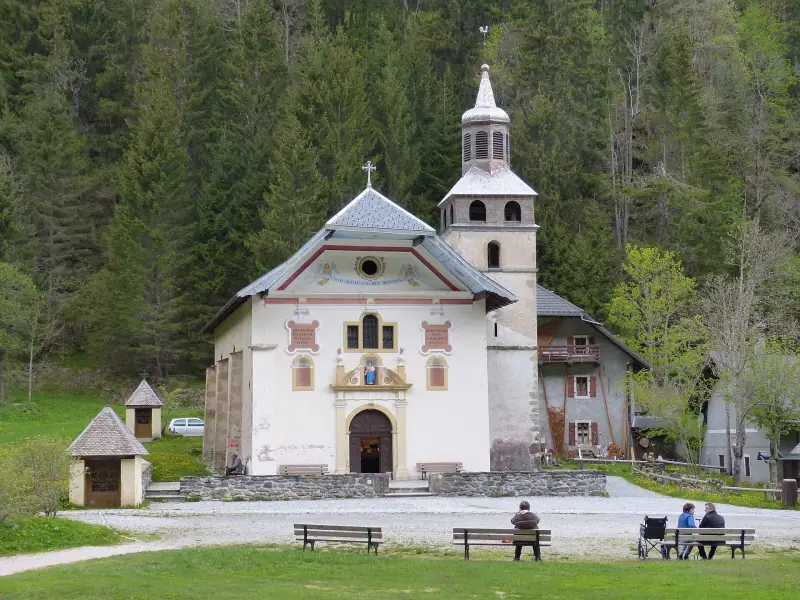
A short distance from Saint-Gervais, the Val Montjoie valley runs south toward the Col du Bonhomme. It is one of the most endearing places in the Mont Blanc region: meadows, chalets and torrents take precedence over big resort facilities. The village of Les Contamines-Montjoie is a base for hikes of all levels, on well-marked trails.
The best-known site is the sanctuary of Notre-Dame-de-la-Gorge, in the upper valley. People come for its richly decorated Baroque chapel, whose history goes back several centuries and which is protected as a historic monument, and for the Roman road that continues toward the Col du Bonhomme, an old route to Italy. The setting is both spiritual and natural: the forest, the sound of the torrent and the coolness of the gorge give the visit a special atmosphere.
A few tips for enjoying the valley:
- Leave early in summer: parking lots fill quickly, especially in fine weather.
- Favor an easy walk if you travel with children: several short trails let you discover the river and the mountain pastures without much climbing.
- Respect the site: the atmosphere is calm, the chapel is a place of contemplation.
For walk ideas within everyone’s reach, our selection of easy hikes in Savoie: lakes and viewpoints will give you good leads for other areas of the region.
Combloux: the village of the grand panorama
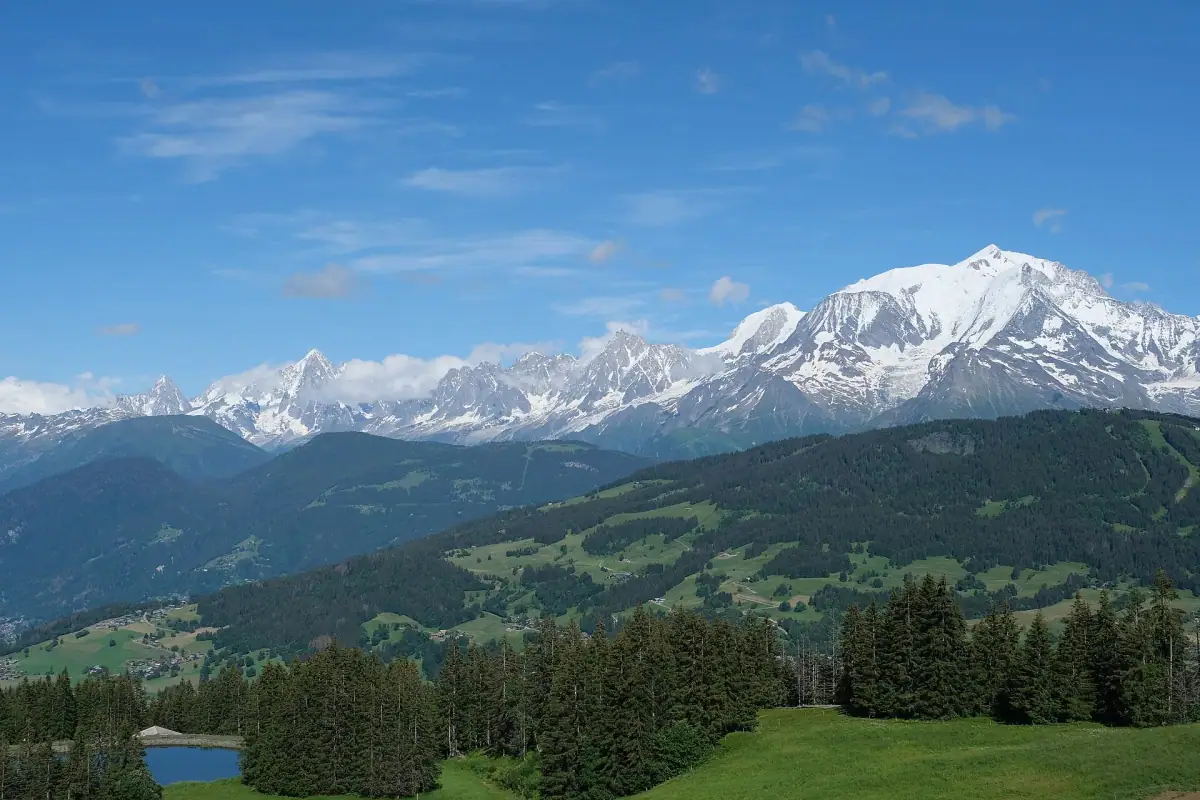
Between Saint-Gervais and Megève, Combloux occupies a sunny shelf facing the Mont Blanc massif. The village draws its reputation from the view it offers of the range: in clear weather, the line of glaciers stands out sharply above the valley, and you understand why so many photographers and painters have stopped here.
Its charm also comes from its Baroque church, typical of the religious heritage of these valleys, and its traditional farms, which recall that mountain farming is still alive. In summer, easy walks leave from the village across meadows and small woods. In winter, the resort offers slopes accessible to skiers of all levels, in a less formal atmosphere than its neighbor Megève.
If your trip runs through food, it is also a chance to taste the region’s products: reblochon, tomme, cured meats and mountain pastries. Our article on Savoie cheeses: reblochon, beaufort and other specialties will help you choose what to buy from producers.
Megève: elegance and a pedestrian village
Megève is both a renowned ski resort and a mountain village with a particular atmosphere. Its center, largely pedestrian, is organized around a lively square lined with terraces, boutiques, wooden chalets and horse-drawn carriages in season. The church bell tower, cobbled lanes and ornate facades give it the look of a postcard setting, but without the artificial side: you meet locals, skiers and walkers.
For a half-day visit, plan:
- A stroll in the center, starting at the main square and continuing through the adjacent streets.
- A detour to a viewpoint on the heights: several lifts link the village to the ridges and mountain pastures, in summer as in winter.
- A treat break in a tea room or an inn: Savoyard specialties, desserts and hot chocolate depending on the season.
We have a full guide to the resort: Visiting Megève, complemented by Where to stay in Megève if you are planning a stay of several nights.
Passy and the Assy plateau: sacred art and lakes
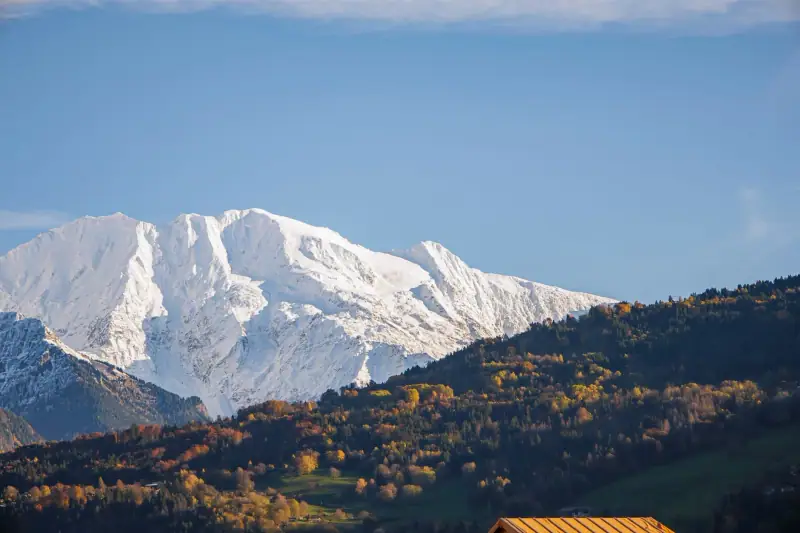
People often drive past Passy without stopping, which is a pity. The Assy plateau, a natural balcony above the Arve valley, offers an open view of the massif and holds a rare heritage ensemble: the church of Notre-Dame-de-Toute-Grâce, built in the mid-20th century and decorated by great names of modern art. Mosaics, stained glass, tapestries and monumental works blend with the mountain architecture, in a place that surprises even visitors unfamiliar with contemporary art.
The area also offers fine walks around the lakes: the Lac Vert (Green Lake), whose name evokes the color of the water in summer, is one of the families’ favorite sites for its easy walk and its reflections of Mont Blanc in calm weather. Access is by road and then a short path; find out about parking, limited in high season, and about swimming rules, which can differ from one body of water to another.
Most visitors combine a cultural visit in the morning with a walk by the water in the afternoon, which makes a lovely day without long trips.
Excursions around Mont Blanc
Guided hikes, paragliding, tours and mountain outings: discover the activities you can book in the region.
Sallanches and the Arve valley
Sallanches, the largest town of the area, mostly plays the role of a crossroads: it has most of the shops, services and connections. It also offers one of the finest viewpoints over the massif from the valley floor, with a town edge open onto the west face of Mont Blanc. A few monuments, a modest town center and parks make the stop pleasant, but it is more a practical stage than a destination in itself.
The Arve valley itself is industrial in places; don’t stop at that first impression. As soon as you climb toward the plateaus or the side valleys, the scenery changes completely, and that is where most of the local charm lies.
Getting organized: transport, duration and routes
The Mont Blanc region is well organized around three possible bases:
- Saint-Gervais / Le Fayet if you travel by train and want to reach the tramway easily.
- Combloux or Megève for a village atmosphere, with many lodgings and shops.
- Les Contamines-Montjoie for a stay focused on nature and hiking.
Here is a sample three-day program:
- Day 1: Saint-Gervais, thermal baths or a walk, then the Mont Blanc Tramway depending on the season.
- Day 2: Contamines valley and Notre-Dame-de-la-Gorge, an easy or more demanding hike depending on your level.
- Day 3: Combloux in the morning, Megève at midday, Assy plateau and Lac Vert in the afternoon.
Trips between these stops stay short, but traffic can be heavy in high season and on heavy-snow days. A car simplifies things; you can compare rental companies and read our advice in Renting a car in Savoie: winter and summer. In winter, check the mandatory equipment for your vehicle.
If you prefer not to drive, some lodgings are reachable by train and shuttle, as our article on how to stay in Chamonix without a car details, whose principles also apply to Saint-Gervais.
Tips for a successful visit
- Watch the weather: the massif often clears in the morning, then clouds over in the afternoon. Always keep a plan B for hazy days.
- Dress in layers: even in summer, it can be cold at altitude.
- Book ahead in July, August and during the February holidays.
- Check the timetables of the tramway, lifts and high-altitude facilities, as they vary from year to year.
- Respect the mountain: stay on marked trails, carry water and don’t head into the high mountains without equipment or experience.
- Bring home local products: cheeses, cured meats, honey and jams make lovely souvenirs.
Rent a car
Compare rental companies to explore villages and valleys at your own pace.
Mont Blanc region or Chamonix: how to choose?
The question comes up often. Chamonix offers more spectacular, more mineral scenery, with its needles, its glaciers and a town that is lively all year, but it is also busier. The Mont Blanc region offers a gentler pace, a village atmosphere and less crowded trails, while keeping the panorama of the massif.
A good strategy is to combine the two: a base in the Mont Blanc region for quiet and often more reasonable prices, a day trip to Chamonix for the great classics. Distances are short and the road is direct. Our guide Visiting Chamonix-Mont-Blanc will give you benchmarks for this outing.
In summary
The Mont Blanc region earns its keep through the variety of its faces: tramway and baths in Saint-Gervais, Baroque sanctuary and mountain pastures in Les Contamines, panorama in Combloux, elegance in Megève, modern art and lakes in Passy. With three days, you will get a very fine overview; with a week, you will have time to hike, taste the specialties and go as far as Chamonix. Just choose a base, stay flexible about the weather and let yourself be guided by what appeals to you.
Frequently asked questions
What should you see first in the Mont Blanc region?
The highlights are Saint-Gervais-les-Bains and the start of the Mont Blanc Tramway, the Les Contamines-Montjoie valley with the sanctuary of Notre-Dame-de-la-Gorge, the village of Combloux and its panorama, Megève for its pedestrian center, and the Assy plateau with its church decorated by great 20th-century artists. Depending on your time, choose two or three stops rather than skimming everything.
How many days do you need to visit the Mont Blanc region?
Three days let you discover the essentials without rushing: a day for Saint-Gervais and the tramway, a day for Les Contamines, a day for Combloux, Megève and Passy. With a week, you can add the neighboring Chamonix valley and a few hikes.
Is the Mont Blanc region different from Chamonix?
Yes. Chamonix is a separate valley, at the foot of the north face of the massif. The Pays du Mont-Blanc refers to the towns around Saint-Gervais, Sallanches and Megève, with mid-mountain villages, mountain pastures and a quieter atmosphere. The two areas are easy to visit in the same trip, as they are neighbors.
Can you see Mont Blanc without a big hike?
Yes. Several villages offer open views of the massif from the road or a short walk, and the Mont Blanc Tramway lets you gain altitude without effort. In bad weather or low cloud, the summit stays hidden: keep a spare day and check the forecast the day before.
Do you need a car to visit the region?
It is not essential for Saint-Gervais-Le Fayet, served by the train station, nor for the main stops in season, as shuttles and buses run between several towns. For small villages, viewpoints and flexible timing, a car remains more practical. Find out about connections before you go.
What is the best time to visit the Mont Blanc region?
June to September for hiking, mountain pastures and the tramway, with summits often clear early in the morning. Winter suits fans of skiing and snowy villages. May and October are quieter but some high-altitude facilities are closed: check opening dates.
Is the Mont Blanc region good for families?
Yes: walks open to everyone, the tramway, lakes, forest trails and mountain-pasture activities appeal to children. Bring warm clothes even in summer, as the temperature drops fast at altitude, and protect yourself from the sun.
More Savoie guides
Keep reading
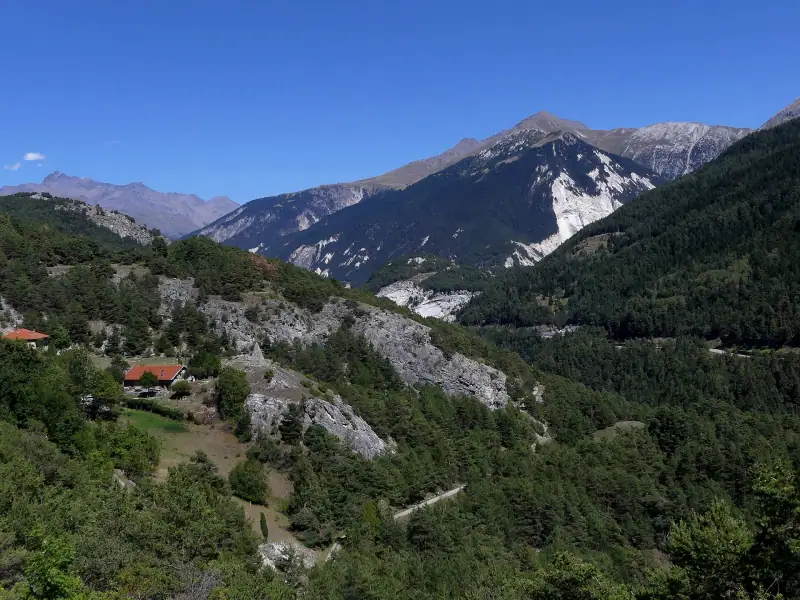
What to see in Maurienne: legendary passes, forts, villages and the Vanoise
What to see in Maurienne? Saint-Jean-de-Maurienne, Valloire, Col du Galibier, Aussois, Bessans, Bonneval-sur-Arc: stops, an itinerary and planning tips.
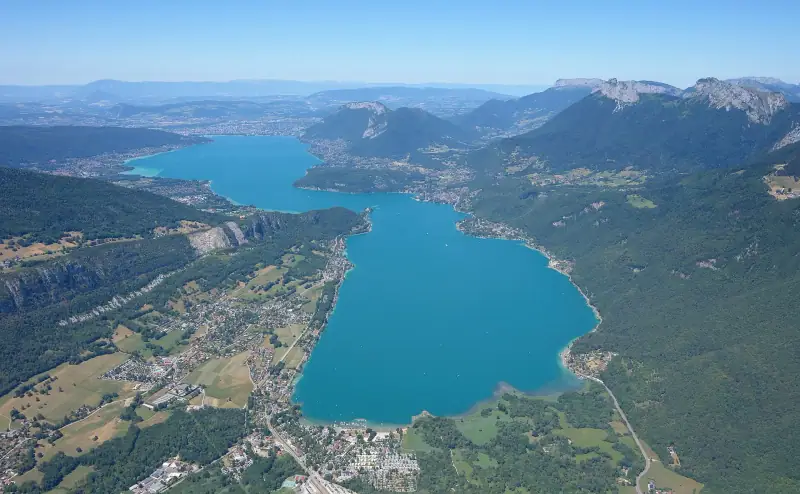
What to see around Lake Annecy: villages, castles and nature sites
What to see around Lake Annecy? Talloires, Menthon, Duingt, Bout-du-Lac, Roc de Chère: the prettiest villages and natural sites around the lake.
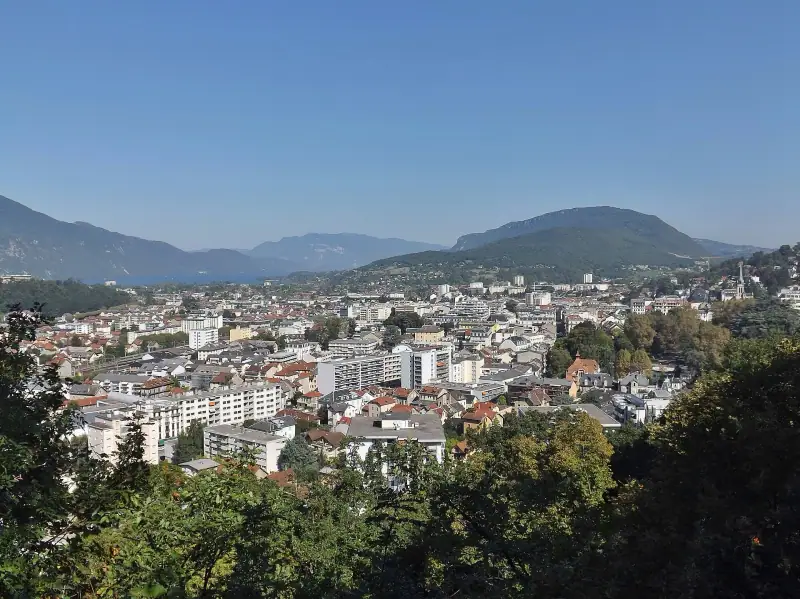
Visiting Aix-les-Bains: what to see and do on the shores of Lac du Bourget
What to see in Aix-les-Bains? Thermal baths, Roman remains, Faure Museum, harbor, beaches, Revard and Hautecombe Abbey: a guide to the Savoyard spa town.
Ready-made
Savoie itineraries
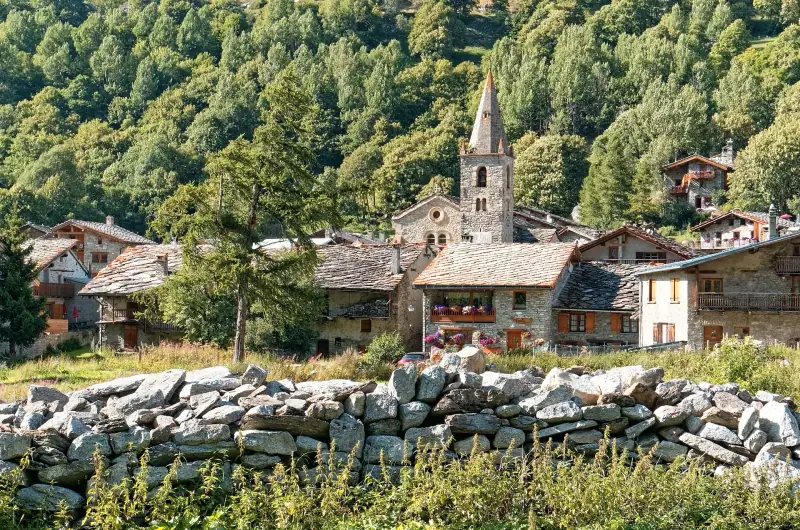
7 days
One week in Savoie: a day-by-day road trip itinerary
Chambéry or Aix-les-BainsAnnecyMegève or ChamonixTarentaise (Bourg-Saint-Maurice or Val d'Isère)
5 days
Savoie in 5 days without a car: a realistic itinerary by train and bus
ChambéryAnnecyChamonix
3 days
3 days around Lake Annecy: a day-by-day itinerary
What to do in 3 days in Annecy and around the lake? Old town, Talloires, Menthon, Duingt, cycling, swimming and Semnoz: a detailed, realistic itinerary.