Where to stay
Where to stay in Rotorua: neighborhoods, types of lodging and tips for choosing well
We may earn a commission when you book through links on this page, at no extra cost to you. We don't visit or try the places we cover: we summarize published sources. How we work
In short
- Downtown and the lakefront are the most practical for a first stay: restaurants, shops, parks and activity departures are on foot.
- Stay near Whakarewarewa to reach the geothermal sites early, or on a neighboring lake for quiet (a car is essential there).
- Two nights cover the essentials; make it three to add a lake excursion, an adventure activity or more volcanic sites.
- Auckland is about 230 km (143 mi) away, roughly three hours; Taupō is about 80 km (50 mi), around one hour.
Rotorua is one of the North Island’s most iconic stops: steam escaping from the sidewalks, bubbling mud pools, a very present Māori culture and redwood forests a stone’s throw from downtown. But behind this postcard image, the town is spread along the shore of a large lake, and the choice of accommodation noticeably changes the experience of your stay.
This guide compares the main areas to sleep in Rotorua, reviews the most common types of lodging and gives pointers to choose the right option for your budget, your transport and the length of your stop.
Downtown: the most practical for a short stay
Downtown Rotorua is the default choice for most travelers, and for good reasons. Restaurants, cafés, supermarkets and activity operators are grouped in a compact area. A pedestrian dining street concentrates much of the evening dining, which saves you from taking the car again after a day of sightseeing.
You will find hotels of different categories, motels, hostels and a few apartments. Downtown properties are often older than those in the rest of the town: read recent reviews to check the condition of the rooms, soundproofing and the presence of parking, which is not guaranteed.
Downtown suits you if you spend one or two nights, travel without a car or like going out in the evening with no transport constraint. The weak points are possible noise on weekends and slightly higher rates than on the outskirts.
Hotels in Rotorua
Compare accommodation downtown and by the lake by your dates.
The lakefront and gardens: calm and walks
Rotorua’s lakefront is a pleasant setting to sleep in: promenades, playgrounds, open views over the lake and historic gardens nearby. Lodgings on this side of town are a few minutes’ walk from downtown, while offering more space and a more relaxed feel.
It is an area appreciated by families and couples who want to walk in the morning or evening without taking the car. Some hotels and motels there have geothermally heated pools, a typical detail of the region that delights children. Always check what is actually offered in the property description rather than assuming that all have thermal pools.
The lake itself is mostly a backdrop: swimming is discouraged in some places because of geothermal activity, so always follow local signs.
Around Whakarewarewa: close to the geothermal sites
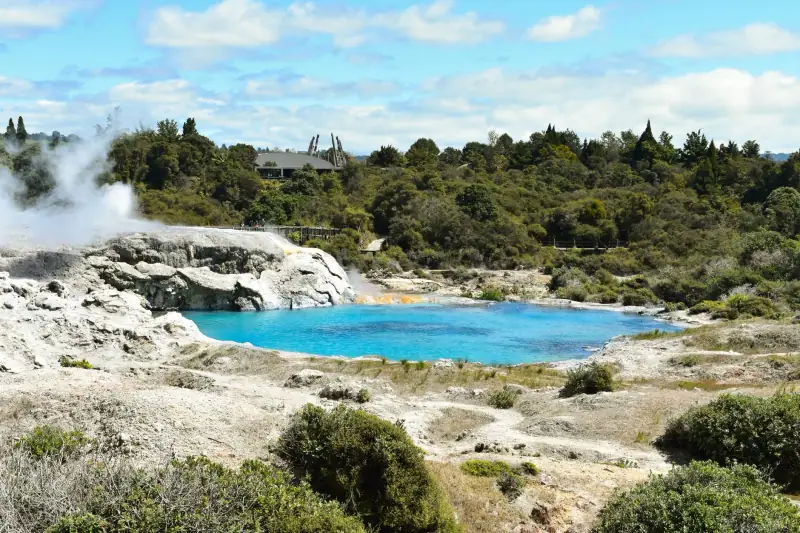
South of the town are the village of Whakarewarewa, the Te Puia site and the redwood forest. Sleeping in this area cuts morning travel and lets you arrive at opening time, before the tour groups. Lodgings here are mostly motels, guesthouses and a few hotels, often quieter than downtown.
The main drawback is the distance to downtown for dinner: plan on the car or a taxi, or choose a property with a shared kitchen or dining corner. To organize your geothermal visits, our guide on things to do in Rotorua details the main sites, from Te Puia to Waimangu Valley and Wai-O-Tapu.
The neighboring lakes: a different atmosphere
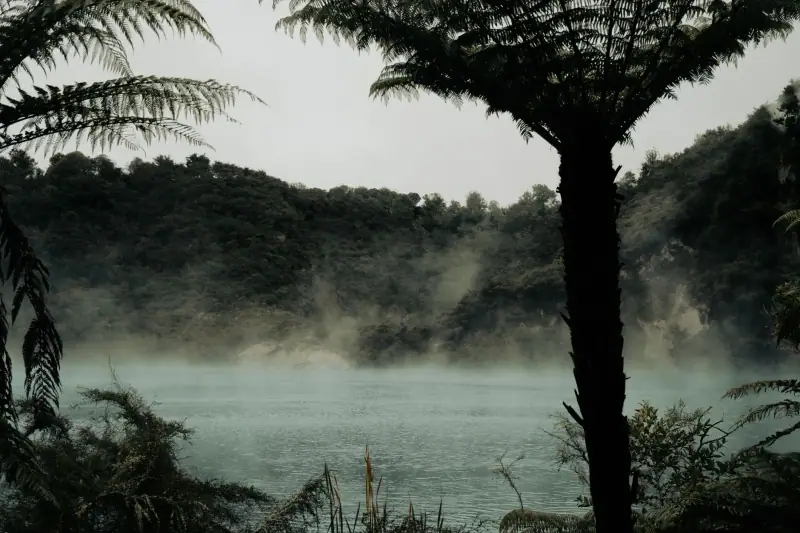
Around Rotorua stretches a series of lakes of volcanic origin, with discreet villages and hamlets. Sleeping on the shore of one of them, for example near Lake Tarawera or Lake Okareka, offers a radically different atmosphere: more forest, more silence, and outdoor activities such as kayaking, fishing or hiking within reach.
The offer is smaller and mostly made up of lodges, small houses for rent and campgrounds. Allow about thirty minutes of driving to reach downtown depending on the lake, so a car is essential. Shop before you arrive, because shops are rare.
This option suits travelers staying three nights or more, or those who prefer a nature stay to an urban stop.
Which type of accommodation to choose in Rotorua?
The town’s offer is wide and fits every profile:
- Hotels: practical, often well located downtown or by the lake, with breakfast optional.
- Motels: the quintessential New Zealand option, with a kitchenette and parking in front of the room. Well suited to families and travelers by car.
- Holiday parks: equipped campgrounds offering pitches for vans and tents, but also cabins and small chalets. Many have pools heated by geothermal water, shared kitchens and laundries.
- Hostels: dorms and private rooms, an economical solution for solo or budget travelers.
- Guesthouses and lodges: more charm and calm, often on the outskirts or near the lakes.
- Vacation rentals: apartments and houses for stays of several nights or groups.
Holiday parks deserve a special mention: they are at the heart of travel culture in New Zealand, notably for travelers in vans. Expect clean, functional facilities with a friendly atmosphere. Book ahead in summer, because pitches are in high demand.
How long to stay in Rotorua?
Two nights are enough for a first look: a geothermal site, a Māori cultural show or meal, and a walk in the forest. With three nights, you can add an excursion to a lake, an adventure activity or a second volcanic site, without rushing.
A single night is a minimum if Rotorua is only a stop between Auckland and the Taupō region. Auckland is about 230 km (143 mi) away, roughly three hours by road, and Taupō about 80 km (50 mi), about one hour. These distances make it a natural stage of a tour like our 7-day North Island road trip.
Activities in Rotorua
Geothermal sites, Māori cultural evenings and excursions: compare and book ahead.
Getting around and parking
Without a vehicle, it is possible to stay in Rotorua by sleeping downtown, but your plans will depend on organized excursions and local transport. With a vehicle, you gain freedom: the geothermal sites, lakes and forests are scattered, and opening hours sometimes require an early start.
Before booking, check three things:
- The presence of free parking at the property, especially downtown.
- The height and size of the pitches if you travel in a campervan.
- Late arrival conditions, if you come from Auckland after a long-haul flight.
To compare vehicle options, the box below points you to rental solutions.
Rent a car for your road trip
Compare rental offers to link Auckland, Rotorua and Taupō in complete freedom.
What budget to plan?
Rates vary a lot with the season, the type of lodging and proximity to downtown. A hostel dorm or holiday park pitch remains the cheapest option, a motel offers a good compromise, and well-located hotels or lodges sit at the top of the range. Rotorua is generally more affordable than the most touristy destinations on the South Island.
A few tips to reduce the bill:
- Travel outside New Zealand school holidays and busy weekends.
- Choose a motel with a kitchen to prepare some meals.
- Compare downtown with neighboring districts, often cheaper.
- Book early with free cancellation, then watch prices.
To set an overall travel budget, see our article on the budget in New Zealand.
When to book and which season to choose?
Rotorua can be visited all year, because the geothermal sites are accessible in every season. The southern summer, from December to February, is the busiest period: book several months ahead. Spring and fall offer a good balance of weather, crowds and prices. In winter, days are cooler, which makes heated pools and steam particularly pleasant.
Our article when to go to New Zealand will help you choose your dates according to your priorities. If you plan the Tongariro crossing afterwards, take a look at the guide to the Tongariro Alpine Crossing and keep a margin of days for mountain weather.
Practical tips
- Book early for summer and weekends, with a free cancellation option.
- Read recent reviews: a property’s condition can change from one season to the next.
- Check parking, the kitchen and soundproofing before confirming.
- If you are sensitive to the sulfur smell, choose a property a little away from steam areas.
- Respect signs and barriers around geothermal areas: the ground can be very hot and unstable.
- Keep slack in your schedule to absorb a delay on the road or a change in weather.
- To sleep in a van, use only authorized spots; local camping rules are strict.
Rotorua suits a quick stop as well as a longer stay. By choosing your area well, you will enjoy the life of the town, the cultural richness of the region and its spectacular volcanic landscapes.
Frequently asked questions
What is the best neighborhood to stay in Rotorua?
For a first stay, downtown and the lakefront are the most practical: restaurants, shops, parks and activity departures are reachable on foot. Areas near Whakarewarewa suit you if you want to visit the geothermal site early in the morning, and the shores of nearby lakes if you are after quiet.
How many nights should you plan in Rotorua?
Two nights let you see the essentials: a geothermal site, a Māori cultural evening and a walk in the forest or by a lake. Make it three nights if you want to add an excursion to a neighboring lake, an adventure activity or several volcanic sites.
Do you need a car to stay in Rotorua?
Downtown is walkable, but most of the major sites are on the outskirts or several dozen kilometers away. A car or campervan is therefore very useful, especially if Rotorua fits into a North Island road trip. Without a vehicle, choose organized excursions with pickup.
Is the sulfur smell a problem for sleeping?
It is noticeable across much of the town, with an intensity that varies with the wind and the area. Most travelers get used to it within a few hours. If you are sensitive to smells, read recent reviews and avoid staying too long near steam areas.
Is Rotorua expensive compared with other New Zealand towns?
Rates are generally more moderate than in Queenstown or Auckland, but they rise during school holidays and summer weekends. Motels and holiday parks often offer the best value; book early for high-demand periods.
Can you stay in Rotorua to do the Tongariro crossing?
It is possible but not very practical: Tongariro National Park is closer to Taupō and National Park village. Rotorua works better as a stop before or after the crossing, on a road trip. Our guide to the Tongariro Alpine Crossing details the starting bases.
More New Zealand guides
Keep reading
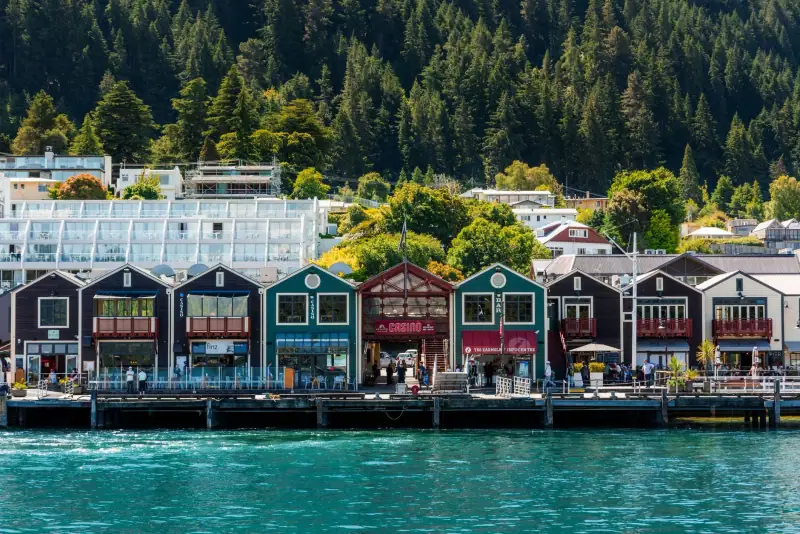
Te Anau or Queenstown: where to stay to visit Milford Sound?
Sleep in Te Anau or Queenstown for Milford Sound? Distances, drive time, budget and recommended nights: the comparison to choose without losing a day.

Sleeping near Auckland Airport: spend the night there or head into the city?
Arriving or departing in Auckland: sleep near the airport (Māngere) or downtown? A comparison of options, prices and transfers to choose stress-free.
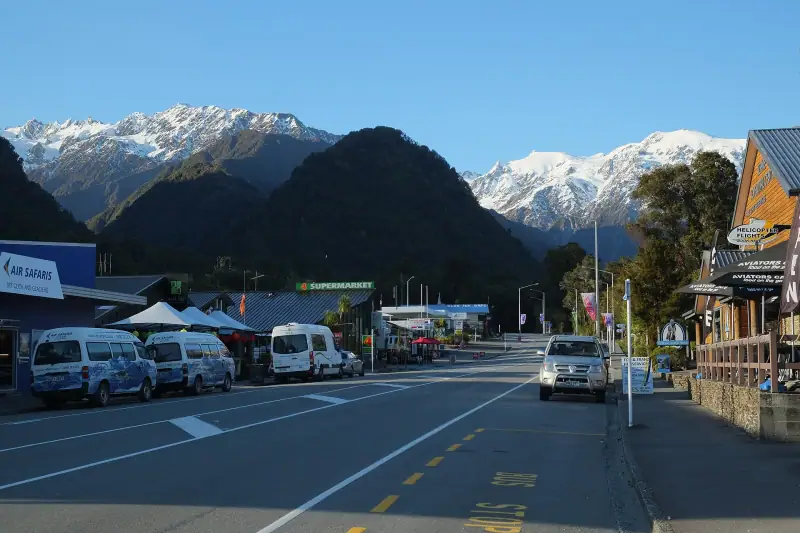
Franz Josef or Fox Glacier: where to stay to see the glaciers?
Franz Josef or Fox Glacier: which village to sleep in on the West Coast? Services, prices, activities and travel: a comparison to help you decide.
Ready-made
New Zealand itineraries

3 days
3 days in Auckland: a day-by-day itinerary with islands, volcanoes and beaches
What to do in 3 days in Auckland: Sky Tower, urban volcanoes, Waiheke Island and west coast beaches, with a day-by-day plan and practical tips.
3 days
3 days in Queenstown: a day-by-day itinerary with activities and tips
What to do in 3 days in Queenstown: Lake Wakatipu, Arrowtown, Glenorchy and adventure activities, in a day-by-day plan with tips to organize it.
7 days
North Island road trip in 7 days: Auckland to Wellington
7-day North Island road trip: Auckland, Waitomo, Rotorua, Taupō, Tongariro and Wellington, with drive times, stops and practical tips.