Where to stay
Where to stay in Dole: neighborhoods and types of accommodation
We may earn a commission when you book through links on this page, at no extra cost to you. We don't visit or try the places we cover: we summarize published sources. How we work
In short
- The historic center around the Notre-Dame collegiate church is best for a first visit; the Canal des Tanneurs is the most photogenic area, a few minutes' walk from the center.
- Near the train station, simple hotels suit arrivals without a car and one-night stops; Mont-Roland and the outskirts offer calm, gardens and parking.
- Dole is a good base for the north of the Jura: the Chaux forest, the Royal Saltworks (about 30 minutes), Arbois (a little over half an hour) and Salins-les-Bains.
- For the High Jura, the waterfalls and the lakes, choose a base further south, such as Lons-le-Saunier.
In the north of the department, Dole is one of the most pleasant towns in the Jura to unpack your bags. A former capital of Franche-Comté, it offers a historic center on a gentle slope, a canal lined with former tanners’ houses and a collegiate church that dominates the plain. One practical question remains: where to stay in Dole when discovering the town? The choice of neighborhood noticeably changes the experience: cobbles and waterside terraces, residential calm, easy arrival by train or countryside nearby.
This guide details the neighborhoods, types of accommodation, traveler profiles and mistakes to avoid when booking. It complements our article on visiting Dole and our overview on choosing where to stay in the Jura. If you hesitate with another base, compare with staying in Arbois.
Dole in a few words: what matters for choosing
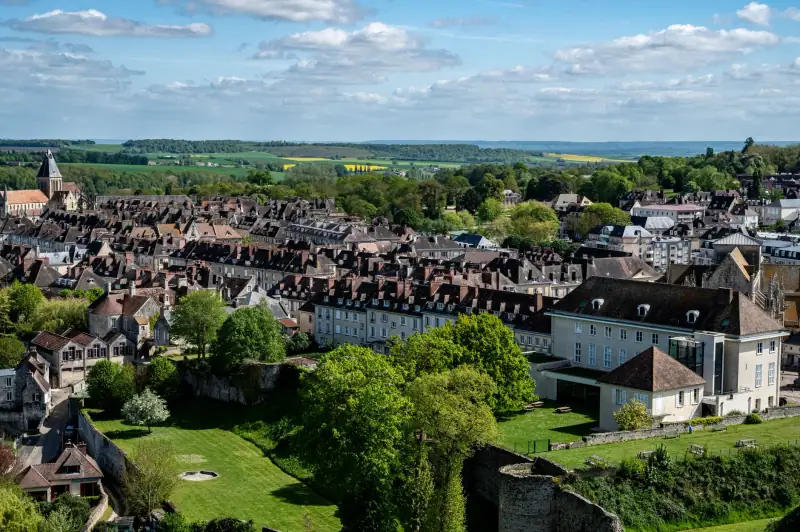
Dole has a little over 23,000 residents. The town spreads along the bank of the Doubs, at the foot of a hill crowned by the Notre-Dame collegiate church. The old center is dense, hilly and very walkable; the more recent neighborhoods spread around it, with more space and parking.
A few simple criteria help guide your choice even before looking at listings:
- Your mode of transport: by car, parking becomes the first criterion; by train, distance to the station matters more.
- The nature of your stay: a romantic getaway, a one-night stop, a week with family or a business trip do not call for the same lodging.
- The terrain: the historic center goes up and down. With a suitcase or a stroller, a few sloping lanes and stairs can quickly wear you out.
- Calm: the surroundings of terraces and squares are lively in the evening in good weather, residential neighborhoods much less so.
- Your excursion radius: Dole is well placed for the north of the Jura, less so for the waterfalls and lakes of the south.
To organize your trips around the town, our guide to getting around the Jura details solutions depending on your pace.
The historic center and the collegiate church: everything on foot
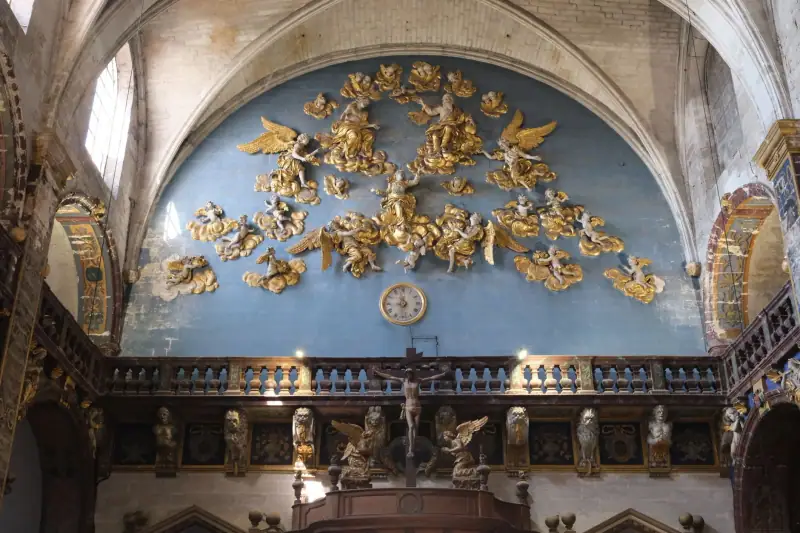
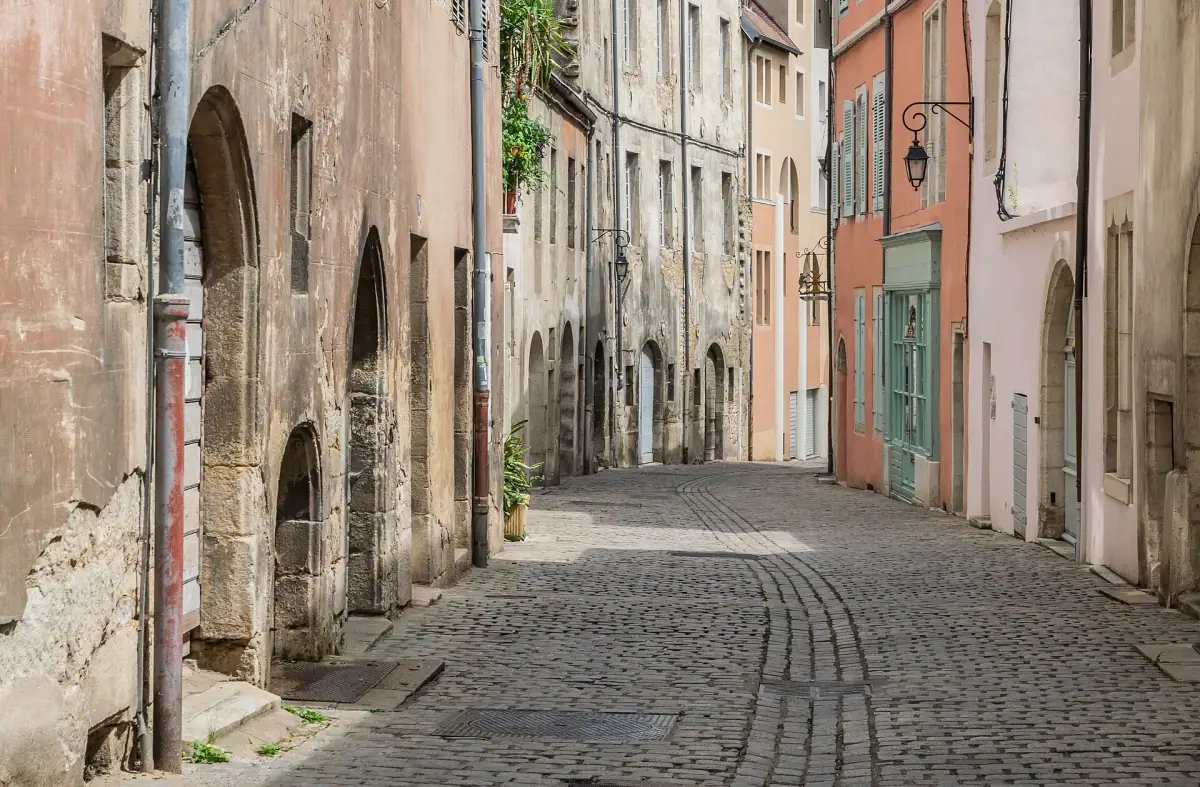
The historic center, around the Notre-Dame collegiate church, is the area to favor for a first discovery. You find cobbled lanes, mansions, squares, shops and cafés. Staying here means you can step out of your accommodation and find yourself immediately in the scenery you came to see.
The advantages
- No trips: the main sites, from the canal to the collegiate church, are a few minutes’ walk apart.
- A genuine old-town atmosphere: light on the stone in the morning; quiet streets in the evening once shops close.
- Restaurants within walking distance: you can taste Jura wines without getting behind the wheel.
- Lodgings with character: hotels in old buildings and guesthouses in houses with character, with inner courtyards and period staircases.
The limits
Old buildings often have narrow stairs, sometimes without an elevator: if you travel with heavy luggage or someone with reduced mobility, ask before booking. Parking is limited on steep streets; ask your host where to leave the car. Finally, a room facing a square can be noisy on some summer evenings: prefer the courtyard or upper floors.
Who is it for?
Couples, weekend travelers and heritage buffs will find what they want. It is also the best option if you arrive by train, provided you do not have a suitcase that is too heavy to carry uphill.
Stay in the heart of Dole
Hotels, guesthouses and apartments: compare availability for your dates.
The Canal des Tanneurs: the most photogenic neighborhood
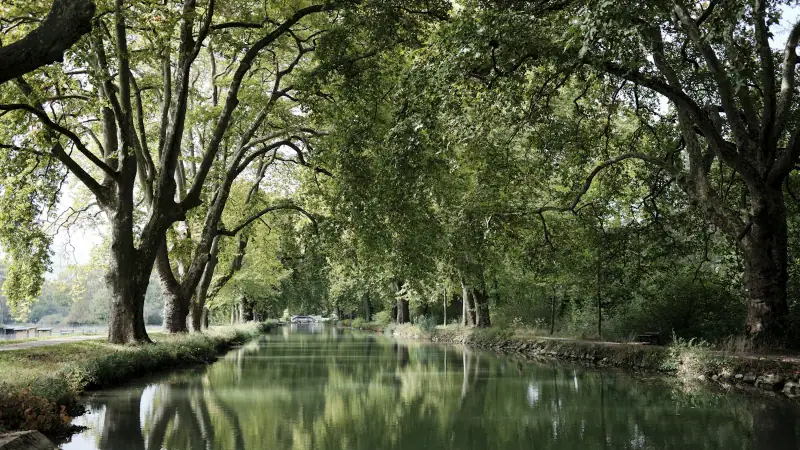
Along the Canal des Tanneurs stretches the old craftsmen’s quarter, with its stone and timber houses descending to the water. This is also where Louis Pasteur’s birthplace is. Staying nearby means waking up by the water and taking a morning walk almost alone, before the day’s visitors arrive.
Why choose this area
This neighborhood is ideal for a romantic stay or for photography fans. In the evening, reflections on the canal and terraces set up on the banks give the town the air of a small water town. The center and the climb to the collegiate church remain a few minutes’ walk away.
What to check before booking
As in any old neighborhood, some rooms are small, without air conditioning, and the nearby terraces can create noise in the evening in summer. Look at recent photos of the rooms and read reviews from the last two or three years. If you come for Pasteur’s house, check its opening hours with the tourist office, as they vary by season.
A good “atmosphere / practicality” balance
This area offers perhaps the best compromise for a stay of two or three nights: remarkable setting, restaurants and cafés close by, and an easy walk to the collegiate church, the market and the museums.
The station district: practical for arriving without a car
If you arrive by train, staying near the station has an obvious advantage: no transfer, an easy departure the next morning, and a center reachable on foot. Dole station is served by regional connections to Dijon and Besançon among others. You mostly find simple, functional hotels.
The assets
- Stress-free arrival and departure: ideal for a one-night stop or an early departure.
- Generally lower rates: functional hotels often cost less than the charming addresses of the old center.
- More parking: streets in nearby neighborhoods are less restrictive than in the historic center.
The constraints
The district is less picturesque than the canal or the old town. For a romantic weekend, you will lose atmosphere. On the other hand, for a business trip or a stopover, it is an excellent choice. Keep in mind that without a car, excursions around Dole remain limited: see our guide to getting around the Jura before building your program.
Mont-Roland and the residential outskirts: calm and a view
A few minutes from the center, the Mont-Roland hill holds a pilgrimage sanctuary and a viewpoint overlooking the town and the valley. Around it, residential areas and hamlets offer guesthouses and gîtes in a greener setting, with a garden, a terrace and parking spaces.
The principle
You trade proximity to the center for space and silence. A car, a bike or a good walk is needed to reach the town center: this choice therefore suits motorized travelers, couples seeking tranquility and families who appreciate a garden.
Points to watch
If you plan to dine in town every evening, plan a designated driver or a taxi, and find out the actual distance to the center. Many small-town restaurants close relatively early out of season: better to book your table and confirm your arrival time with your host.
The banks of the Doubs and the Rhône-Rhine canal: nature within bike range
Water is everywhere in Dole. The towpath of the Rhône-Rhine canal and the banks of the Doubs are very popular with walkers and cyclists. A few lodgings, campsites and rentals are located nearby, and it is a relevant choice if your stay revolves around cycling or walking.
Who is it for?
Cycle tourists, families and fans of quiet walks. The path is flat, which suits almost all levels. In return, the old-town atmosphere is further away: the center can be reached by bike in a few minutes, but you need to plan for evening returns.
Practical tips
Check that the accommodation has secure bike storage and a way to dry equipment in case of rain. In summer, think about mosquitoes near water and bring repellent.
Compare places to stay around Dole
Check rates and cancellation terms for your dates before choosing your neighborhood.
Types of accommodation in Dole
Beyond the neighborhood, the type of lodging defines the experience. Here is how to find your way.
Hotels
Hotels in town range from simple, economical addresses to charming establishments in old buildings. They suit a weekend, a one-night stop or a late arrival. Services vary from one place to another: breakfast, parking, restaurant or not. Read recent reviews and cancellation conditions before choosing.
Guesthouses
This is the most personal type of lodging. Mansions, bourgeois houses, former farms: each address has its personality, with a breakfast often prepared by the host. There are few rooms, so book early. Some require a minimum of two nights on weekends or in high season: check the conditions and confirm your arrival time by message.
Apartments and furnished rentals
For three nights or more, a furnished apartment is often very appealing: equipped kitchen, more space, the chance to prepare market products. Check key handover arrangements, whether there is an elevator and parking. For menu ideas, see our guide to the gastronomic specialties of the Jura.
Gîtes and country houses
For a week with family or friends, the gîte is still hard to beat. It is found rather in the municipalities around Dole, in the countryside or near the Chaux forest. Many rentals run Saturday to Saturday in summer, with a garden and a barbecue. Plan on a car for shopping and reaching the center.
Camping and motorhomes
Camping is the cheapest lodging, especially in summer. The town and its surroundings have campsites, often seasonal: check opening dates, services and reception conditions before you go. Motorhome travelers should check existing areas and their rules. For more swimming choice, the lake district campsites are further south.
Unusual lodgings
In the countryside around Dole, you sometimes find cabins, caravans or converted barns. They appeal to couples seeking a particular experience. Always check the actual comfort (heating, bathrooms, access) outside the good season.
Which accommodation for your profile
Couple on a romantic weekend
A guesthouse or charming hotel in the historic center or near the Canal des Tanneurs. Book a dinner for your arrival evening: the good tables fill quickly at the end of the week.
Family with children
An apartment or gîte with a kitchen, ideally with parking. Children will enjoy the canal, the Chaux forest and the path along the Rhône-Rhine canal for safe cycling.
Traveler by train
The station district or the historic center. Everything is on foot, and you can complement with a day rental for excursions.
Cycle tourist or hiker
Lodging near the banks, with bike storage, or a gîte at the forest edge. You set off on a walk directly without getting back in the car.
Business traveler or one-night stop
A functional hotel near the station or on the outskirts, with parking. No need to pay the price of charm for a single night.
Dole as a base for exploring the north of the Jura
Dole’s position is one of its big assets. Several major sites are easy to reach by car:
- The Chaux forest, one of the largest forests in France, east of the town, for walks on foot or by bike.
- The Royal Saltworks of Arc-et-Senans, a UNESCO site, about thirty minutes by road.
- Arbois and its vineyard, a little over half an hour away, with its cellars and its link to Pasteur. See our guide to visiting Arbois and the one on the Jura wine route.
- Salins-les-Bains, further east, for its salt heritage.
For the High Jura, the waterfalls and the lakes, the distance is greater: if you want to spend several days there, it is wiser to change base. Our 3-day itinerary in the Jura shows how to link the stops without driving too much.
Tastings and visits in the Jura
Discover experiences around wine, cheese and the region, to book in advance.
Budget: what to expect
Prices vary strongly with the period, the type of lodging and the booking lead time, and precise rates would quickly go out of date. In general:
- Simple hotels near the station are the most affordable option for a night.
- Apartments become advantageous as soon as you stay several nights or travel with several people.
- Charming guesthouses and hotels with character in the center are in the upper range.
- Camping is the cheapest, but seasonal.
For an overview of your spending, our article on the budget for a trip to the Jura details the items to plan. Always compare several dates: a weekday night is often cheaper than a weekend, and do not forget the tourist tax, which is generally added to the displayed price.
Tips for booking well
Choosing your period
Dole is pleasant from spring to autumn: terraces along the canal, cycling on the towpath, the Chaux forest in full leaf, colors and grape-harvest atmosphere in autumn. Winter is quieter, but the town remains pleasant and rates lower. To refine your dates, read our guide on when to go to the Jura.
Reading the conditions
Systematically check free cancellation, parking, arrival times and breakfast. For guesthouses, confirm your arrival time by message, as there is not always someone to welcome you late in the evening.
Planning your vehicle
If you come by train and want to branch out around Dole, compare rental offers before you arrive, in particular for the Chaux forest and the Royal Saltworks. Also consider travel insurance to cover cancellation and the unexpected.
Thinking about accessibility
The old center has steep streets, cobbles and buildings without elevators. If you travel with a stroller, heavy luggage or someone with reduced mobility, ask about access conditions before booking and favor a ground-floor room or a recent building.
To wrap up: which neighborhood to choose?
If you should remember only one idea: the historic center for a first discovery on foot, the Canal des Tanneurs for atmosphere and photos, the station for a stop without a car, Mont-Roland and the outskirts for calm and a garden, and the banks of the Doubs and the canal for cycling. Dole is a simple, human-scale and still little-visited base, which lets you mix urban visits, forest and vineyards.
To go further, see our complete guide to the Jura, our article on visiting Dole and our advice on choosing where to stay in the Jura.
Frequently asked questions
What is the best neighborhood to stay in Dole?
For a first visit, the historic center and the banks of the Canal des Tanneurs are the most pleasant: everything is on foot, from restaurants to the collegiate church. If you arrive by train or want calm and easy parking, the station district or the residential outskirts are good compromises.
Do you need a car to stay in Dole?
Not to visit the town: the center is compact and the station is linked to several towns in the region. A car becomes useful for the Chaux forest, the Royal Saltworks of Arc-et-Senans or the Arbois vineyards. If you have one, check your accommodation's parking before booking.
Is Dole a good base for visiting the Jura?
Yes for the north of the department: the Chaux forest, the Royal Saltworks, Arbois and Salins-les-Bains are reached by car in under an hour or so. For the High Jura or the lakes, the distance is greater and a base further south, such as Lons-le-Saunier, will be more practical.
When should you book accommodation in Dole?
Off-season, two to three weeks ahead is generally enough. For summer, May long weekends and event weekends, book several weeks before, especially for guesthouses that have few rooms.
What type of accommodation should a family choose?
An apartment or gîte with a kitchen offers more flexibility for meals and naps. If you prefer a hotel, look for a family or connecting room, and check for parking and a breakfast suited to children.
Are there campsites near Dole?
Yes, the town and its surroundings have campsites, often seasonal. Check opening dates and services before you go. The Chaux forest and the riverbanks also offer countryside stays in neighboring municipalities.
Can you stay in Dole without a car?
Yes, provided you sleep in the center or near the station. You can visit the town on foot and take the train to other towns in the region. For forest or vineyard excursions, plan a day rental or a guided visit.
More Jura guides
Keep reading
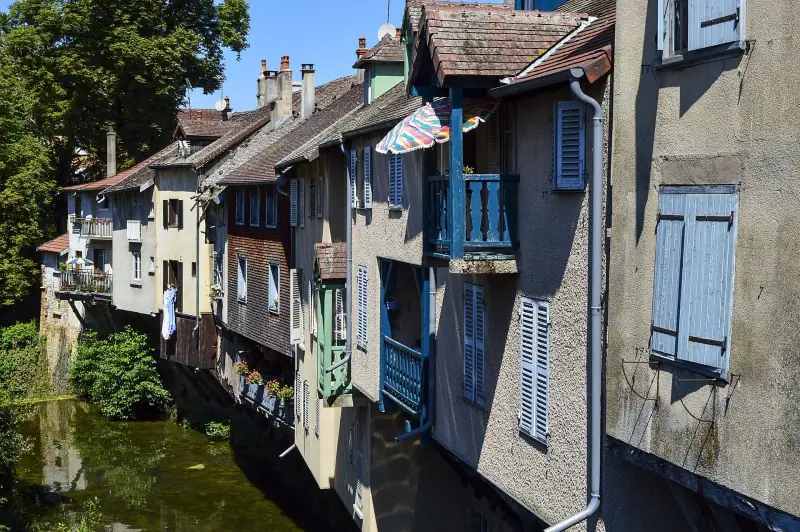
Where to stay in Arbois: neighborhoods and types of accommodation
Where to stay in Arbois? Historic center, Cuisance banks, vineyards and nearby villages: compare areas and types of accommodation before you book.
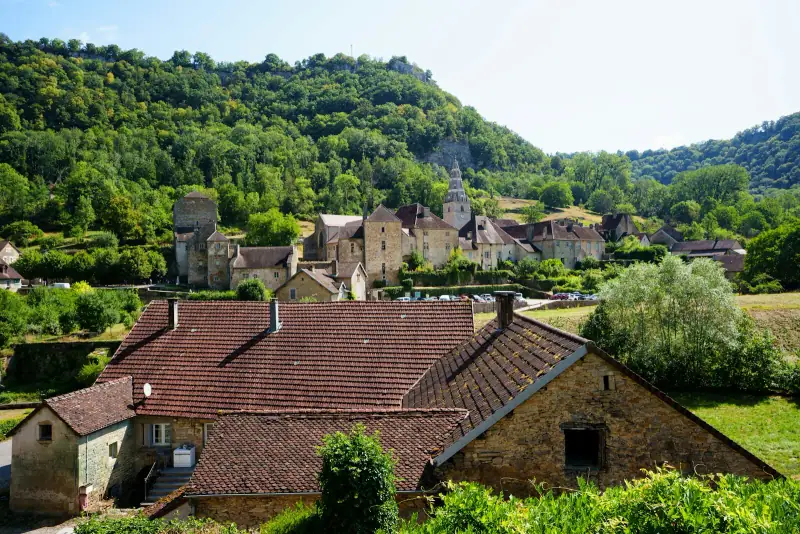
Where to stay in the Jura: which base to choose for your trip
Where to stay in the Jura? Arbois, Lons-le-Saunier, Les Rousses, Saint-Claude, the lake district: a comparison of bases, lodging types and booking tips.
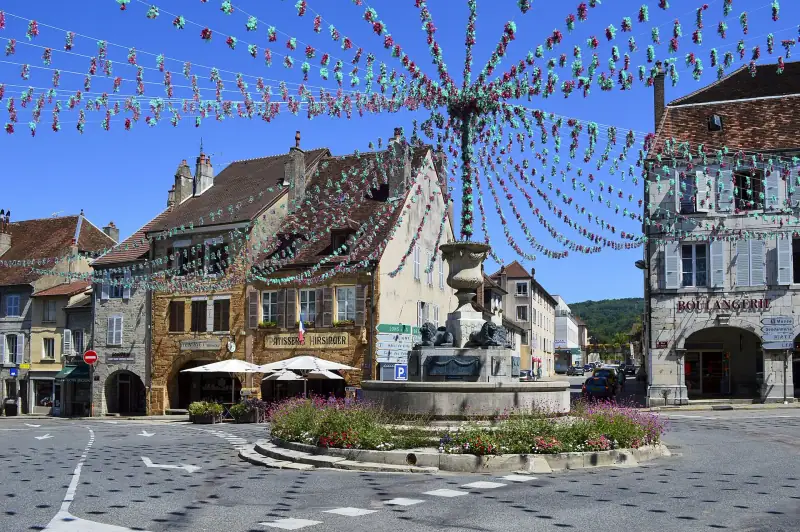
Visiting Arbois: what to do in the capital of Jura wine country
What to see and do in Arbois: Pasteur's house, vineyards, vin jaune, the Planches reculée and Pupillin. A guide to planning your visit in the Jura.
Ready-made
Jura itineraries
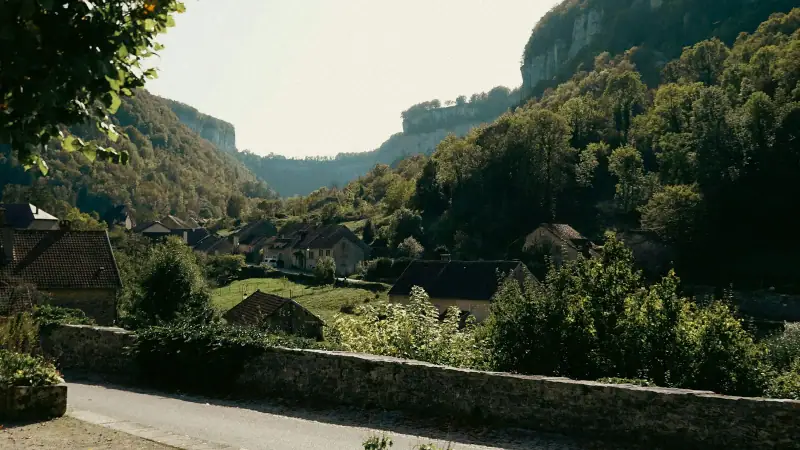
3 days
The Jura in 3 days without a car: a realistic itinerary by train, on foot and by bike
Visiting the Jura in 3 days without a car: a base in Arbois, trains from Mouchard, Salins-les-Bains, Lons-le-Saunier. Stages, distances, times and limits.
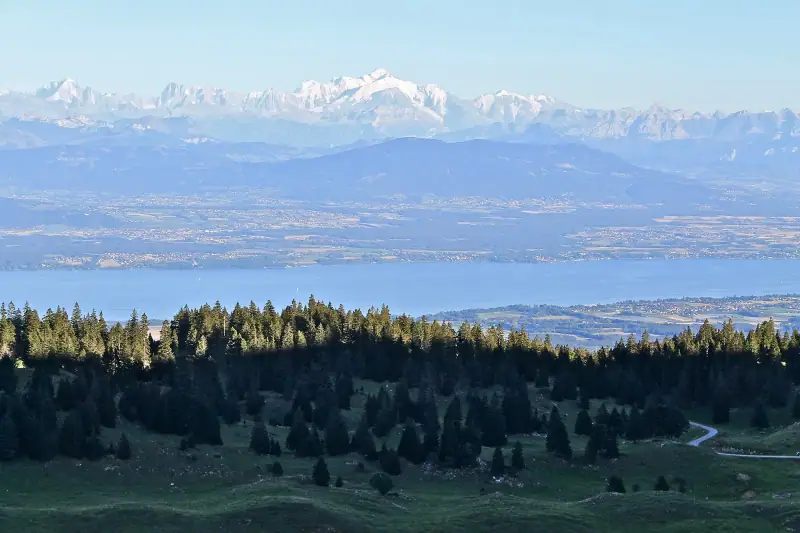
3 days
3 days in the Jura: a day-by-day itinerary through vineyards, waterfalls and the High Jura
A 3-day Jura itinerary by car: Arbois and the vineyards, Baume reculée, Hérisson waterfalls, lakes and the High Jura. Detailed plan and tips.
4 days
The Jura with kids: a 4-day family itinerary through waterfalls, lakes and caves
A 4-day Jura itinerary with children: Hérisson waterfalls, lake swimming, Baume reculée and the High Jura. Pace, tips and practical advice.