Plan your trip
Jura trip budget: real costs, 3 profiles and tips to spend less
We may earn a commission when you book through links on this page, at no extra cost to you. We don't visit or try the places we cover: we summarize published sources. How we work
In short
- Accommodation is the first expense (often half the budget or more), followed by meals and fuel; much of the nature is free.
- For two people over 3 days, ballpark figures are €250 to 400 (~$290-465) budget, €600 to 900 (~$695-1,045) comfort and €1,200 to 1,700 (~$1,390-1,970) foodie.
- Spring and autumn outside holiday weekends usually offer the best value; July-August and winter holidays are the most expensive.
- Lunch menus, picnics with local products and one single fine meal per stay are the best savings. All figures are rounded orders of magnitude: check current prices.
The Jura has a reputation as a “nature and terroir” destination, fairly gentle on the wallet. That is partly true: you hike for free, picnic facing a lake, and find simple accommodation at reasonable rates. But the bill can also climb quickly if you stack charming lodging in high season, restaurants and tastings in the vineyards.
This guide breaks down the budget of a Jura trip item by item, offers three profiles with figures and ends with concrete tips for spending less without sacrificing the essentials.
Important: the amounts below are rounded orders of magnitude, meant to prepare a budget and compare scenarios. Rates change every year and vary with the season, the location and demand: always check up-to-date prices with hosts, sites and tourist offices before you book.
What makes the budget vary in the Jura
Before putting figures on it, four factors explain most of the differences from one traveler to another.
- The season: July-August and winter holidays (cross-country skiing, snowshoeing) push accommodation prices up. Spring and autumn are generally cheaper. Our guide when to go to the Jura details the seasons.
- The base you choose: sleeping in a vineyard village, in town or in a High Jura resort does not cost the same, especially in periods of high demand.
- The mode of transport: your own car, a rental or the train change the transport item sharply.
- The level of dining: the Jura is a land of good food. Between a Comté picnic and a meal in a fine restaurant, the meal budget can vary threefold.
Accommodation: the first expense
It is generally half or more of the budget of a stay. The type of accommodation weighs more than the choice of town.
Camping and outdoor lodging
Camping is the cheapest way to sleep in the Jura, and it is well developed around the lake district, where summer swimming attracts families. A tent or motorhome pitch costs clearly less than a room, while mobile homes and chalets come closer to the price of a small gîte. In high season, book early: campsites near the lakes are full.
Gîtes, apartments and rentals
For a stay of several nights with four or five people, a gîte often becomes better value than hotel rooms: a kitchen cuts the meal item, and the rental is shared. Many gîtes are rented by the week or weekend, with higher rates in summer. For very short stays, nightly rates are less advantageous.
Guesthouses and hotels
Guesthouses are very common in the vineyards and the Revermont. They generally include breakfast, which saves a meal in the budget, and their hosts can point you to nearby cellars and farms. Town hotels (Dole, Lons-le-Saunier) are often a little cheaper than the charming village establishments, but less atmospheric. Hotels and residences in the High Jura rise in winter, near the slopes.
For an overview of the areas, read our guide where to stay in the Jura.
Indicative benchmarks per night for two people
| Type of accommodation | Order of magnitude per night (2 people) |
|---|---|
| Campsite pitch | about €15 to 30 (~$17-35) |
| Inn or simple hotel | about €60 to 90 (~$70-105) |
| Guesthouse or comfortable hotel | about €90 to 140 (~$105-160) |
| Charming establishment, high season | €150 and up (~$175+) |
These ranges are planning benchmarks, not guaranteed rates: actual prices fluctuate a lot from one date to another.
Compare places to stay in the Jura
Hotels, guesthouses and apartments: compare rates for your dates to spot the most affordable periods.
Transport: the car, pivot of the budget
The Jura is mostly explored by car. Transport therefore has two parts: getting there and getting around once there.
Getting to the Jura
By train, the stations of Dole, Mouchard and Lons-le-Saunier let you arrive without a car. Tickets booked early are generally cheaper than those bought at the last minute. With your own car, the cost depends on distance: fuel, and tolls depending on the route. For the High Jura, Geneva airport is an option, but the final leg adds a rental or transfer cost.
Getting around once there
If you have your own vehicle, the budget boils down to fuel: mountain roads use more and the distances between sites add up fast, even if each trip seems short. Allow generously for a week of day trips from a base. If you rent a car, add the rental rate, insurance and deductible; prices climb in high season and during school holidays. Compare before you book, and read our complete guide to getting around the Jura.
Parking and small fees
Parking is paid in some town centers and at a few very busy natural sites. Keep some change or a payment app, and arrive early at popular sites, which is also better for the experience.
Meals: from picnic to fine dining
The Jura is a region of exceptional products: Comté, Morbier, vin jaune, vin de paille, smoked cured meats. The good news is that you can enjoy them without blowing your budget.
Lunch, the smart move
In many restaurants in the region, the lunch menu is noticeably more affordable than the evening menu. Plan your big meal at noon and keep dinner light. For the specialties not to miss, see our guide to the gastronomic specialties of the Jura.
Picnics and local products
Cheese shops, bakeries and small producers sell quality products at often very reasonable prices. A picnic of Comté, bread, sausage and fruit, eaten facing a waterfall or a lake, is one of the best memories of the stay and one of the cheapest meals.
Indicative benchmarks
| Type of meal | Order of magnitude per person |
|---|---|
| Picnic of local products | about €6 to 12 (~$7-14) |
| Lunch menu in a simple restaurant | about €15 to 25 (~$17-29) |
| À la carte dinner in a good restaurant | about €30 to 50 (~$35-58) |
| Meal in a fine-dining restaurant | €60 and up (~$70+) |
A glass of vin jaune or vin de paille quickly adds to the bill, but a tasting at a winemaker’s is often cheap, even free when you buy a few bottles. To go further, our guide to the Jura wine route helps you organize these visits.
Activities and visits: plenty of free options
This is the easiest item to control, because the Jura’s main attraction is its nature.
What costs almost nothing
- Hikes to waterfalls, viewpoints and reculées: see our hikes, waterfalls and lakes in the Jura.
- Walks by the lakes and swimming in summer.
- Wandering through villages, for example our guide to visiting Arbois.
- Tastings of cheese or wine at many farms and estates.
What costs a bit more
Museums, caves, cheese dairy visits and developed sites charge admission, generally moderate, often with discounts for children, students and families. In winter, cross-country skiing requires a trail access pass (fee) and possibly equipment rental: see details in our guide to cross-country skiing and snowshoeing in the High Jura. Guided outings (canoeing, nature activities, guided walks) cost more, but they help you enjoy the place without logistical hassle.
Excursions and activities in the Jura
Tastings, nature outings and guided visits: compare offers and book ahead to keep better control of the budget.
Three budget profiles for a Jura trip
Here are three typical scenarios, expressed per person per day and then applied to a three-day stay for two. Figures are rounded and assume travel by your own car; they do not include the trip to get there.
Profile 1: the budget traveler
Campsite or simple lodging, homemade breakfasts and picnics, a single restaurant meal (at noon), free hikes and walks.
- Accommodation: campsite or inn, shared between two.
- Meals: local groceries, one lunch menu.
- Activities: mostly free, one or two paid entries.
- Transport: fuel only.
Order of magnitude: about €50 to 70 (~$58-81) per person per day, or €250 to 400 (~$290-465) for two people over 3 days (fuel included).
Profile 2: balanced comfort
A guesthouse or comfortable hotel with breakfast, one restaurant a day (lunch or dinner), a few paid visits and a tasting at a winemaker’s.
- Accommodation: guesthouse or hotel, shared between two.
- Meals: one restaurant a day, groceries for the rest.
- Activities: two or three visits, one tasting.
- Transport: your own car or a short rental.
Order of magnitude: about €110 to 150 (~$130-175) per person per day, or €600 to 900 (~$695-1,045) for two people over 3 days.
Profile 3: the foodie and maximum comfort
Charming lodging, two restaurant meals a day including a fine table, multiple tastings, a guided activity, purchases of bottles and cheeses.
- Accommodation: charming establishment.
- Meals: à la carte restaurants, one fine-dining table.
- Activities: guided outing, tastings, visits.
- Transport: rental and parking fees.
Order of magnitude: about €200 to 280 (~$230-325) per person per day, or €1,200 to 1,700 (~$1,390-1,970) for two people over 3 days, excluding souvenir purchases.
Summary table
| Profile | Per person per day | 2 people, 3 days |
|---|---|---|
| Budget | about €50 to 70 (~$58-81) | about €250 to 400 (~$290-465) |
| Comfort | about €110 to 150 (~$130-175) | about €600 to 900 (~$695-1,045) |
| Foodie | about €200 to 280 (~$230-325) | about €1,200 to 1,700 (~$1,390-1,970) |
To build your program within these budgets, draw inspiration from our 3-day itinerary in the Jura.
Tips to spend less in the Jura
A few well-chosen habits often save more than trimming every expense.
Choose the right date
- Travel outside school holidays: spring and autumn remain very pleasant and clearly less in demand.
- Favor midweek: weekends, especially holiday or harvest ones, are pricier and busier.
- Book early for summer and winter, when affordable offers go first.
Optimize accommodation
- Compare several platforms and dates: shifting a night can change the price.
- Choose a gîte if you are four or more, and cook partly.
- Sleep a little away from the most touristy places: a few kilometers often suffice to gain in calm and price.
- Look for free cancellation options to book early without risk.
Eat smart
- Have lunch at a restaurant, dine light: the lunch menu is better value.
- Picnic with products from cheese shops and local producers.
- Ask for tap water (a carafe) rather than bottled drinks.
- Book a single fine table for the stay, not one per day.
Get around smartly
- Group your visits by area to limit kilometers.
- Share the car: the fuel cost is split between passengers.
- Avoid unnecessary trips on mountain roads, which use more fuel.
- If you rent, compare companies and book in advance.
Make the most of the free
- Count on nature: hikes, viewpoints, lakes.
- Ask the tourist offices: some offer passes, discounts or free events in season.
- Check reduced rates (children, families, students) before paying full price.
Stay in Lons-le-Saunier
A central, practical base for exploring the region: compare rates and keep free cancellations in view.
The costs people often forget
A realistic budget takes into account the small expenses that add up.
- Food purchases: a bottle of vin jaune, a piece of aged Comté or smoked specialties easily push the total up on the way home.
- Gear: good hiking shoes, warm or waterproof clothing, depending on the season. Our page on accessories for the Jura lists the essentials.
- Insurance and the unexpected: plan a margin of about 10% to absorb a change of weather, an unplanned meal or an extra tank of fuel.
- Winter equipment: rental of cross-country skis, snowshoes, chains or special equipment if you come in the snow season.
Which budget to choose for your trip?
- You are going as a couple for a foodie weekend: aim for the comfort profile, with a single big meal and selected tastings.
- You are traveling as a family: a gîte or a campsite with a kitchen is almost always the cheapest choice, and the picnic is part of the fun.
- You are going with friends to hike: the budget profile is perfectly suited, since most of the Jura’s pleasures are free.
- You are coming for cross-country skiing: add trail access, rental and accommodation near the areas to the budget, pricier in winter.
Key takeaways
- Accommodation is the first item, followed by meals and fuel; nature activities are largely free.
- Three benchmarks for 2 people over 3 days: €250 to 400 (~$290-465) (budget), €600 to 900 (~$695-1,045) (comfort), €1,200 to 1,700 (~$1,390-1,970) (foodie).
- Traveling off-season, having lunch rather than dinner at a restaurant and picnicking with local products are the best savings.
- All figures in this guide are orders of magnitude: check current prices before you book.
Enjoy your Jura trip, and bon appétit!
Frequently asked questions
What budget should you plan for a weekend in the Jura?
For two people over three days, expect roughly €250 to 400 (~$290-465) in budget mode (campsite or simple lodging, groceries and picnics), €600 to 900 (~$695-1,045) in comfort mode (guesthouse, restaurants, a few visits) and over €1,000 (~$1,160) if you aim for fine dining and tastings. These are orders of magnitude: rates vary with the season and must be checked when you book.
Is the Jura an expensive destination?
It is generally more affordable than the big Alpine resorts or very touristy coastal destinations, especially outside school holidays. The two items that push the bill up are accommodation in high season (summer, winter holidays) and food if you multiply restaurants. Nature, for its part, is largely free.
What is the cheapest time to visit the Jura?
Spring and autumn, outside holiday weekends and local events, generally offer the best value: less sought-after accommodation, quieter sites and superb landscapes. Summer and winter holidays are the most expensive and busiest periods.
Can you visit the Jura without a car to save money?
For a stay centered on a town like Arbois, Dole or Lons-le-Saunier, yes, with the train. But for the waterfalls, lakes and High Jura, having no car strongly limits visits: fuel savings are often canceled out by taxis or lost days. Carpooling between travelers is a good compromise.
What can you do for free in the Jura?
Many hikes, viewpoints and lakeside walks are free to access, as is wandering through villages with character. Some very busy natural sites may charge for parking or access depending on the period: ask the tourist office before you go.
How can you keep the meal budget down in the Jura?
Go for lunch, often offered with a lower-priced menu than dinner, and on local products bought from producers and cheese shops (Comté, Morbier, cured meats, bread) to put together picnics. Save the big restaurants for a single meal of the stay.
More Jura guides
Keep reading
When to go to the Jura: season by season, what to do and what to plan
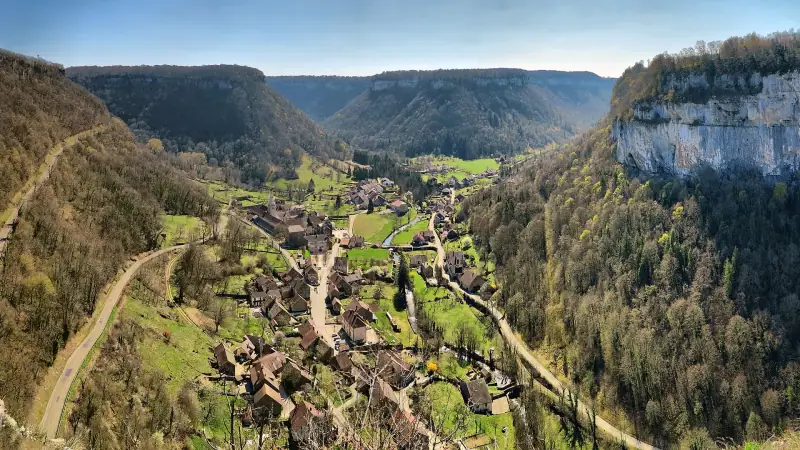
What is the best time to visit the Jura? Waterfalls in spring, lakes in summer, grape harvest in autumn, cross-country skiing in winter: a seasonal guide.
Visiting Arbois: what to do in the capital of Jura wine country
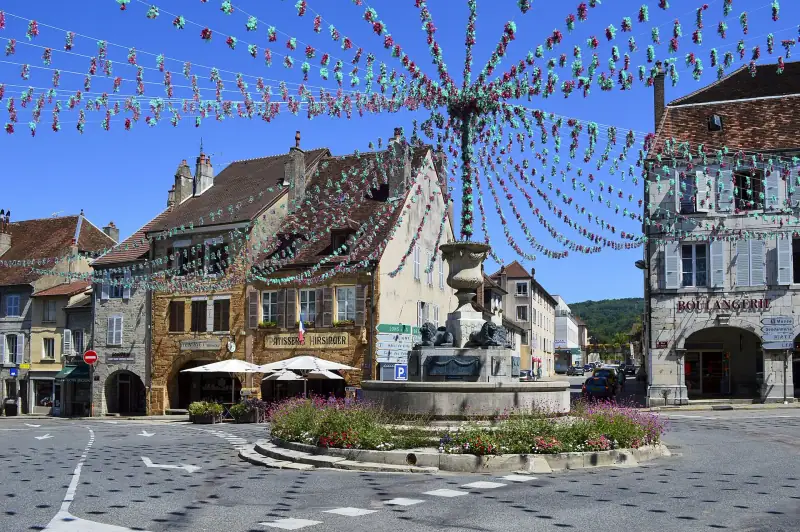
What to see and do in Arbois: Pasteur's house, vineyards, vin jaune, the Planches reculée and Pupillin. A guide to planning your visit in the Jura.
Alpine skiing in the Jura: Métabief, Les Rousses and the small resorts, passes and tips
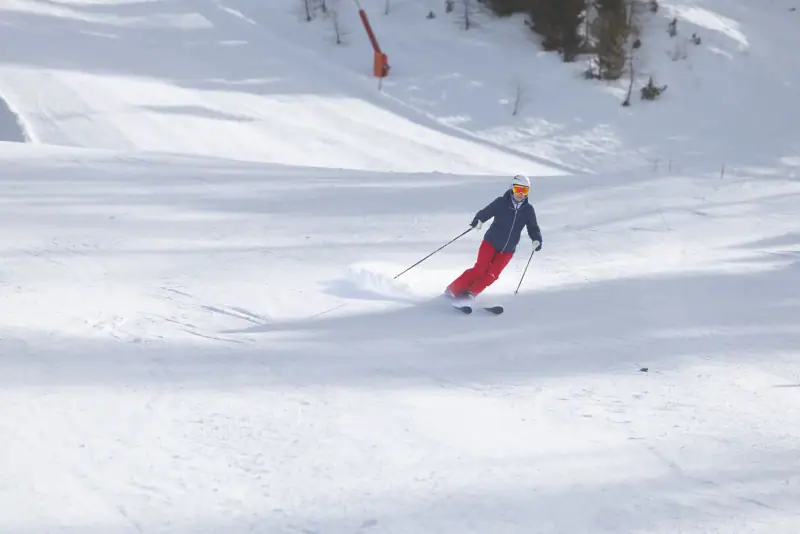
Alpine skiing in the Jura: Métabief, Les Rousses, Monts Jura and small family resorts. 2026-2027 dates, passes, levels, lodging and practical tips.
Ready-made
Jura itineraries
3 days
The Jura in 3 days without a car: a realistic itinerary by train, on foot and by bike
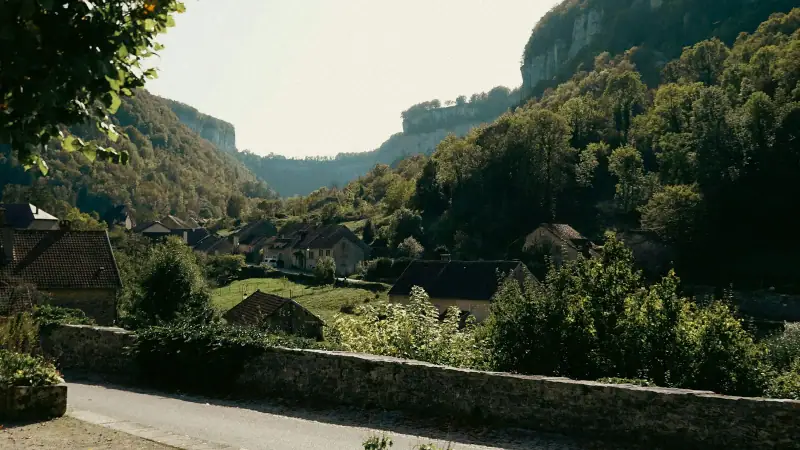
Visiting the Jura in 3 days without a car: a base in Arbois, trains from Mouchard, Salins-les-Bains, Lons-le-Saunier. Stages, distances, times and limits.
3 days
3 days in the Jura: a day-by-day itinerary through vineyards, waterfalls and the High Jura
A 3-day Jura itinerary by car: Arbois and the vineyards, Baume reculée, Hérisson waterfalls, lakes and the High Jura. Detailed plan and tips.
4 days
The Jura with kids: a 4-day family itinerary through waterfalls, lakes and caves
A 4-day Jura itinerary with children: Hérisson waterfalls, lake swimming, Baume reculée and the High Jura. Pace, tips and practical advice.