What to see
Pécs: what to see and do in southern Hungary's city
We may earn a commission when you book through links on this page, at no extra cost to you. We don't visit or try the places we cover: we summarize published sources. How we work
In short
- Pécs is a compact, largely pedestrian city about 200 km (124 mi) southwest of Budapest, roughly three hours by direct train.
- Main sights: Széchenyi Square, the Gazi Kasim Pasha Mosque-Church, the cathedral, the UNESCO early Christian necropolis and the Zsolnay Cultural Quarter.
- One full day covers the major sights, but one or two nights are far more comfortable and leave time for the Mecsek Hills and local wines.
- Spring and early autumn offer the mildest temperatures for walking in town and in the hills.
When planning a trip to Hungary, Budapest absorbs almost all the attention. Yet at the foot of the Mecsek Hills, in the south of the country, Pécs offers a completely different atmosphere: a compact pedestrian center, a climate reputed to be milder than the north’s, sunny terraces and a heritage of rare diversity. The city was a European Capital of Culture in 2010, and it still shows in its museums and renovated streets.
Here is how to organize your visit, from Roman remains to colorful ceramics, with practical information for getting there.
Pécs in brief: a human-scale city
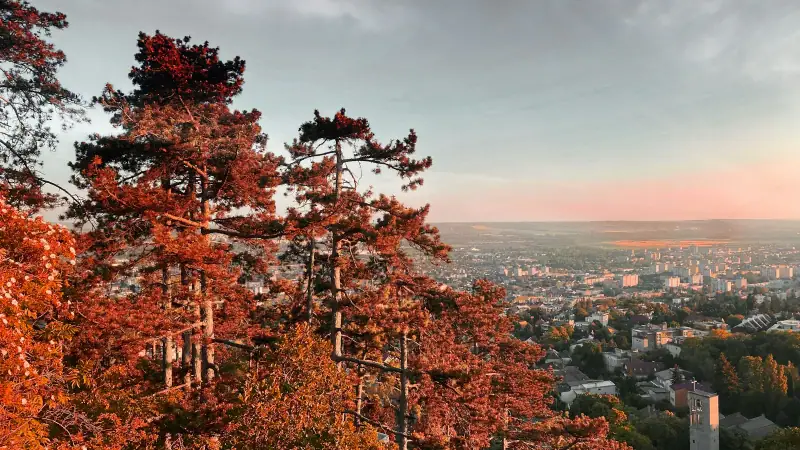
Pécs is one of the largest cities in southern Hungary, but the historic center is very easy to cover on foot. The major sights are grouped along a pedestrian axis that runs down from the main square to the cathedral, with cafés and galleries all along the way.
What stands out is the layering of eras. Under the Romans, the city was called Sopianae. The Ottomans left domes and minarets here in the 16th century, the Habsburgs then imposed the Baroque, and the ceramics industry gave the city its colorful identity in the late 19th century. This history can literally be read in the facades.
For a first stay in Hungary, Pécs makes an excellent complement to a three-day itinerary in Budapest: the pace is slower and the lines are much shorter.
How to get to Pécs from Budapest
Pécs is about 200 km (124 mi) southwest of the capital. Three options are available:
- By train: this is the simplest option, with a journey of about three hours. The station is within walking distance of the historic center, so you can start the visit without a transfer.
- By bus: services also exist, often a little longer. Compare the day’s timetables before choosing.
- By car: the road is about 200 km (124 mi), a comfortable distance in half a day. It is mostly worthwhile if you continue to Lake Balaton or the Villány vineyards.
Our guide to getting around Hungary by train, bus or car details these options and booking tips.
Flights to Budapest
Pécs is reached from the Hungarian capital: compare flights before booking.
Széchenyi Square and the Gazi Kasim Pasha Mosque-Church
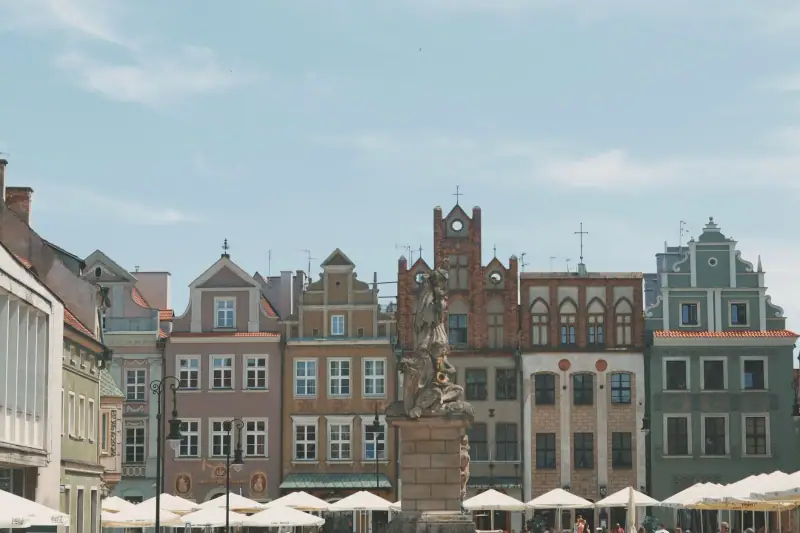
The heart of the city is Széchenyi Square, a vast pedestrian esplanade lined with colorful buildings, terraces and shops. It is the natural starting point: it is easy to find your bearings and this is where local life centers.
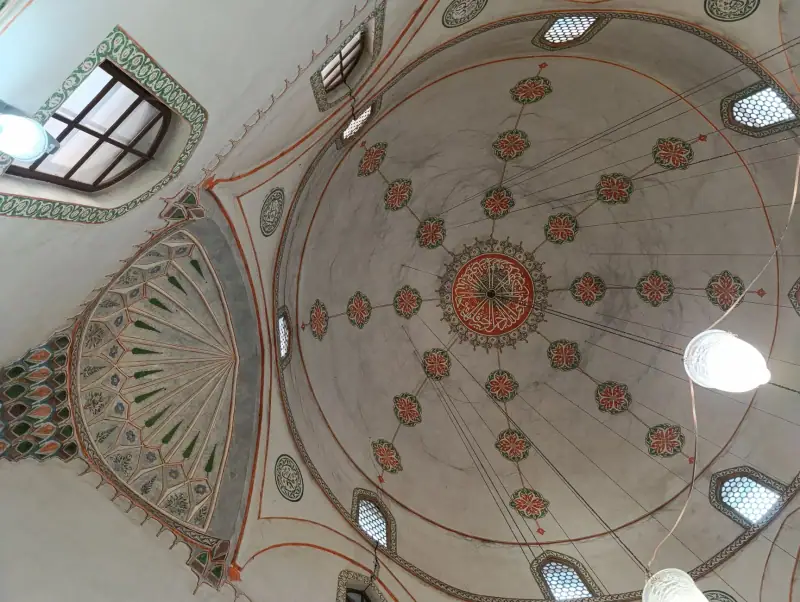
The most emblematic monument on the square is the Gazi Kasim Pasha Mosque-Church. Built in the 16th century by the Ottomans, it was the largest mosque built in Hungary. After the Habsburgs retook the city at the end of the 17th century, it was turned into a Catholic church. Its dome, square base and proportions still recall the building’s Islamic origin, while the Christian additions create an ensemble unusual in Central Europe.
Inside, Oriental-inspired motifs sit alongside Catholic liturgical elements. Allow about thirty minutes for the visit. Access hours can vary, notably during services: ask there.
The cathedral and the early Christian necropolis
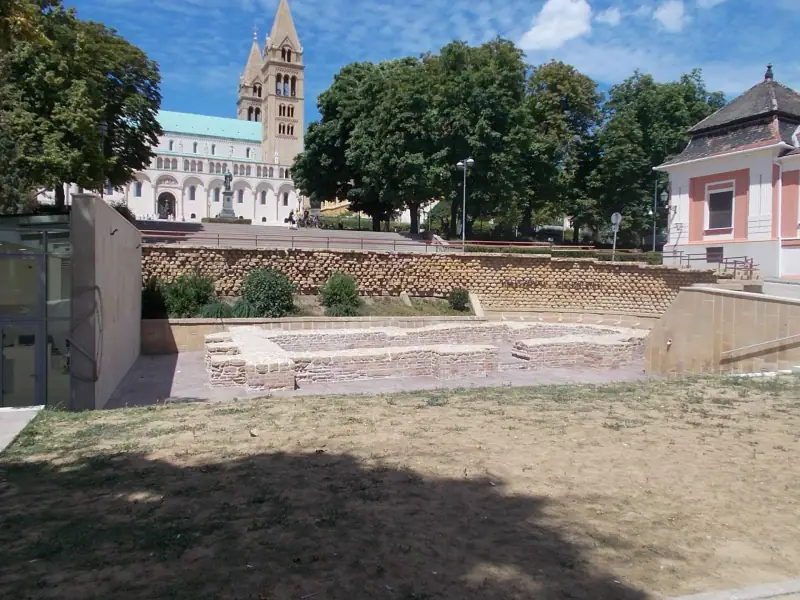
Heading up toward the top of the town, the Cathedral of Saints Peter and Paul dominates a large forecourt. Its four corner towers and neo-Romanesque silhouette make it a landmark visible from afar. It belongs to a quiet neighborhood, with its squares and small museums.
Nearby is the city’s most precious site: the early Christian necropolis of Sopianae, a UNESCO World Heritage site. In Roman times, wealthy citizens had multi-level funerary chapels built here, with underground chambers with painted walls. Excavations have uncovered about fifteen burial chambers and several hundred tombs.
The frescoes are the big surprise: you can recognize Adam and Eve, Daniel in the lions’ den or Jonah and the whale, in a late Roman style with colors still vivid. The spaces are small and visitor numbers may be restricted, hence the value of coming early or checking beforehand.
Sleep in Pécs
Hotels and apartments in the pedestrian center: compare prices for one or two nights.
The Zsolnay Cultural Quarter: ceramics in color
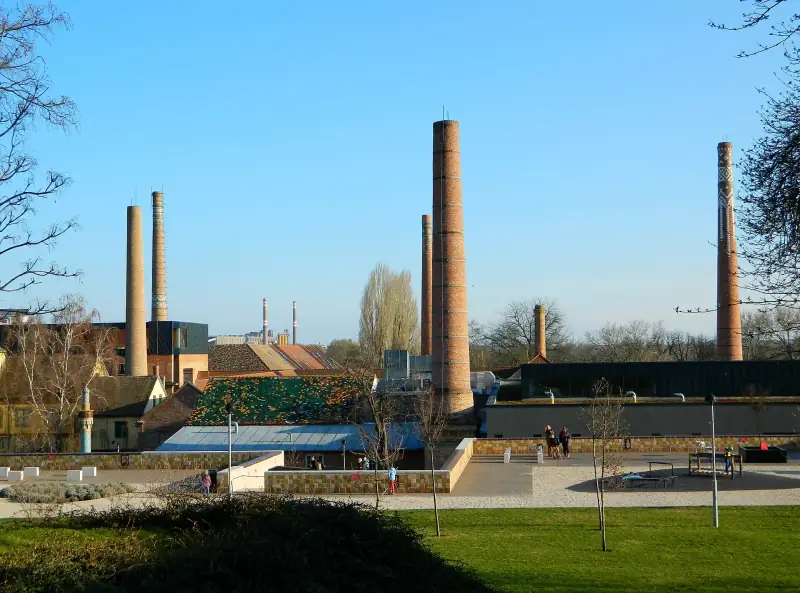
If Pécs has a visual signature, it is Zsolnay ceramics. This manufactory, founded in the 19th century, invented eosin, an iridescent glaze with metallic reflections found on many Hungarian roofs, including those of famous buildings in Budapest.
The Zsolnay Cultural Quarter was developed on the former factory grounds. It holds about fifteen renovated buildings, exhibitions on the family and the history of the manufactory, a ceramics museum, a mausoleum and many sculptures in a park setting. It is a pleasant place for a midday break, with cafés and shops.
Allow a good two hours there if you like decorative arts. For others, a walk in the park and a look at the facades are enough to understand the importance of this ceramics for the city’s identity.
The Mecsek Hills and cellars: nature close by
The city is backed by the Mecsek Hills, a wooded massif that offers easy walking trails and views over the rooftops of Pécs. It is an excellent option to round out a day of sightseeing with a moment of calm, especially in spring and autumn.
Southern Hungary is also a wine region. The surroundings of Pécs and the Villány vineyards, further south, are known for their reds. To extend your food-focused stay, also see our guide to Hungarian cuisine and its specialties and the one on the Eger and Tokaj wine route, in the north of the country.
Tours and tastings in southern Hungary
Guided tours, wine tastings and excursions: book in advance.
Organizing your stay: one day or two nights?
In one day from Budapest: take an early morning train, start with Széchenyi Square and the mosque-church, continue with the cathedral and the necropolis, have lunch downtown, then devote the afternoon to the Zsolnay quarter. It is dense, but doable, as long as you accept returning at the end of the day.
With one or two nights: you gain serenity. You can enjoy the square in the evening, climb into the Mecsek Hills the next day and taste the region’s wines. The town is a good starting point for continuing to Balaton, described in our guide to Lake Balaton.
If you are planning a big trip through Central Europe, Hungary combines easily with neighboring Austria, and with Poland to extend north.
To choose where to stay in the capital before or after your stop, see our guide where to stay in Budapest.
Frequently asked questions
Is Pécs worth the trip from Budapest?
Yes, if you like human-scale towns and a heritage mixing late antiquity, the Ottoman period and Art Nouveau ceramics. Pécs is about 200 km (124 mi) southwest of Budapest, roughly three hours by train. One day is enough for the major sights, but a night there is much more comfortable.
How long does it take to visit Pécs?
A full day lets you see Széchenyi Square, the mosque-church, the cathedral, the early Christian necropolis and the Zsolnay quarter. With one or two nights, you add the Mecsek Hills and the wine cellars without rushing.
How do you get from Budapest to Pécs?
The direct train is the simplest option: allow about three hours. The bus and the car are alternatives, the road being about 200 km (124 mi). Check the day's timetables on the Hungarian companies' sites before you leave.
What is the best time to visit Pécs?
Spring and early autumn offer mild temperatures for walking in town and in the hills. Summer can be hot, which does not prevent enjoying the terraces of the central square. Winter is calm, with quiet visits but short days.
Is Pécs suitable for a stay with children?
Yes: the center is compact and largely pedestrian, the Zsolnay quarter is airy and the Mecsek Hills allow easy walks. Underground sites such as the necropolis take little time to visit.
More Hungary guides
Keep reading
What to see on the Great Hungarian Plain: Hortobágy, Kecskemét, Szeged and Debrecen
What to see on the Great Plain (Alföld) in Hungary: Hortobágy puszta, Kecskemét's Art Nouveau, Szeged, thermal baths and tips for planning your circuit.
What to see in northern Hungary: villages, caves and mountains
Hollókő, Aggtelek caves, Lillafüred, Szilvásvárad, Sárospatak: what to see in northern Hungary beyond Eger and Tokaj, with journeys and tips.
Visiting Debrecen: what to see and do in eastern Hungary's big city
Debrecen in Hungary: Great Reformed Church, Déri Museum, Nagyerdő park, Aquaticum baths and the Hortobágy puszta. Access from Budapest and tips.
Ready-made
Hungary itineraries
7 days
A week in Hungary by car: a 7-day road trip from Budapest to Pécs
BudapestTihany or BalatonfüredKeszthelyPécs
3 days
Budapest in 3 days: a day-by-day itinerary for a first stay
Budapest in 3 days: a detailed plan across Buda and Pest, Parliament, the castle, thermal baths, the Great Market Hall and a Danube stroll.
7 days
Hungary in 7 days without a car: a realistic itinerary by train and bus
BudapestEgerSiófok