Where to stay
Where to stay in Budapest: which neighborhood to choose for your trip
We may earn a commission when you book through links on this page, at no extra cost to you. We don't visit or try the places we cover: we summarize published sources. How we work
In short
- For a first visit, central Pest (Belváros and Lipótváros) is the most practical: sights on foot, metro and trams nearby, many restaurants.
- The Jewish Quarter (7th district) suits nightlife; the Buda side suits calm and views. Ask for a courtyard room if you are a light sleeper.
- No car is needed: metro, trams, buses and suburban trains serve the city. Parking in town is difficult.
- Three nights cover the essentials. For weekends, holidays and Christmas market season, book several weeks ahead.
Budapest is really two cities joined by the Danube: Buda, hilly and historic on the right bank, and Pest, flat, lively and commercial on the left bank. This geography matters a great deal when booking, because the neighborhood where you sleep determines your trips, the atmosphere of your evenings and even the view from your window.
Good news: the Hungarian capital is compact, and the metro, trams and buses reach almost everywhere without a car. This guide compares the main neighborhoods to help you choose according to the length of your stay, your budget and what you are looking for.
Understanding the city’s layout
Budapest is divided into 23 districts (kerület), numbered in Roman numerals. The most useful for a traveler are:
- 1st district: the castle district, in Buda, with Fisherman’s Bastion and Matthias Church.
- 5th district: the heart of Pest, with Belváros (the old town) and Lipótváros, around Parliament and St. Stephen’s Basilica.
- 7th district: Erzsébetváros, the Jewish Quarter, known for its bars and nightlife.
- 6th district: Terézváros, around Andrássy Avenue, elegant and quieter.
- 11th district: Újbuda and the foot of Gellért Hill, on the Buda side.
District numbers appear in postal codes: the second and third digits indicate the district (a code starting with 1051 corresponds to the 5th). A handy clue when browsing listings.
Belváros and Lipótváros: the simplest choice for a first visit
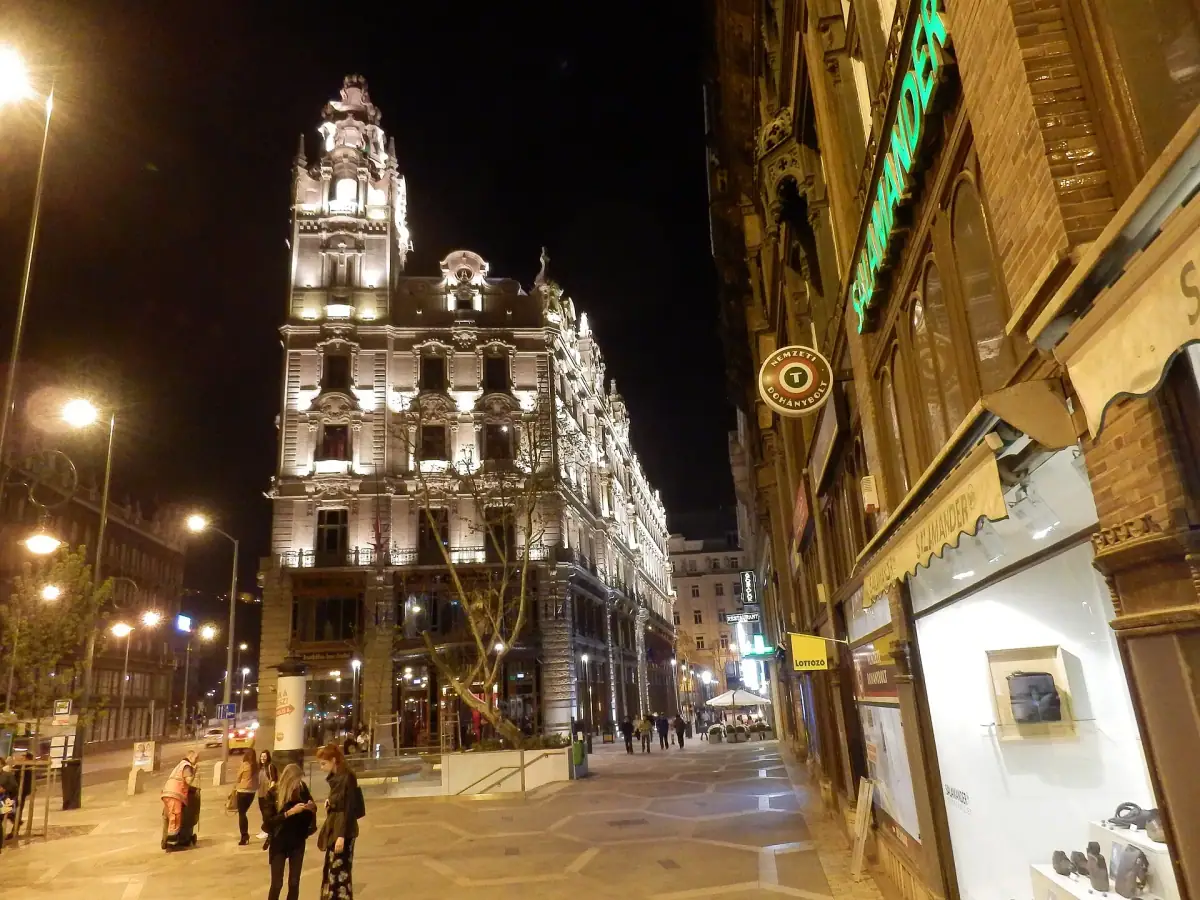
If you are discovering the city for three or four days, central Pest remains the safe bet. Belváros, the old town, runs along the Danube: the embankment promenade, the Chain Bridge and the view of Buda Castle are a few minutes’ walk away. Lipótváros, a little further north, is home to Parliament, St. Stephen’s Basilica and many 19th-century buildings.
Advantages
- The major sights can be visited on foot, with no transport.
- Metro lines converge at Deák Ferenc tér station, the network’s junction, which makes trips to other neighborhoods easy.
- The widest choice of lodging, from chain hotels to apartments and charming properties.
- Restaurants, cafés and shops are everywhere, until late in the evening.
Drawbacks
- Prices are generally higher than elsewhere, especially in high season.
- The most touristy streets are noisy and crowded: some restaurants near the big squares mainly target passing visitors.
- Less of a “neighborhood” feel than in more residential areas.
A tip: if you value calm, ask for a courtyard room. Many old buildings are organized around an inner courtyard, much quieter than the street.
Hotels in central Budapest
Compare hotels and apartments in Belváros and Lipótváros, within walking distance of the sights.
The Jewish Quarter (7th district): for night owls
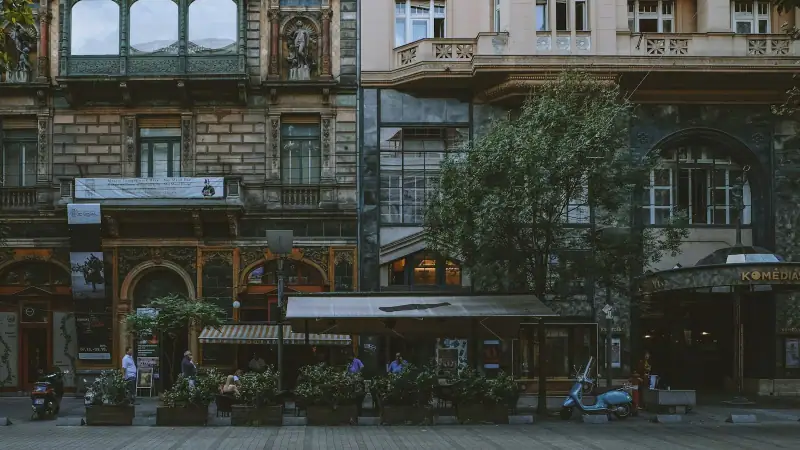
Erzsébetváros, which everyone simply calls the Jewish Quarter, is the playground of travelers who want to go out. It has the great synagogue on Dohány Street, one of the largest in Europe, but also the famous “ruin bars”, bars set in dilapidated buildings or courtyards, decorated with mismatched furniture. They have become one of the symbols of Budapest nightlife.
Who is it for?
- Groups of friends and travelers planning to come home late.
- Those who like lively neighborhoods, with cafés, street food and shops.
- Mid-range budgets: there are many hostels, apartments and hotels of varying standards.
Good to know
In the evening, especially at the end of the week, the liveliest streets are noisy late into the night. If sleep matters to you, avoid street-facing rooms, look at reviews that mention noise, and prefer high floors or an address set back from the bar streets. By day, the neighborhood is pleasant to explore on foot and suits themed visits.
The castle district (1st): calm and spectacular views
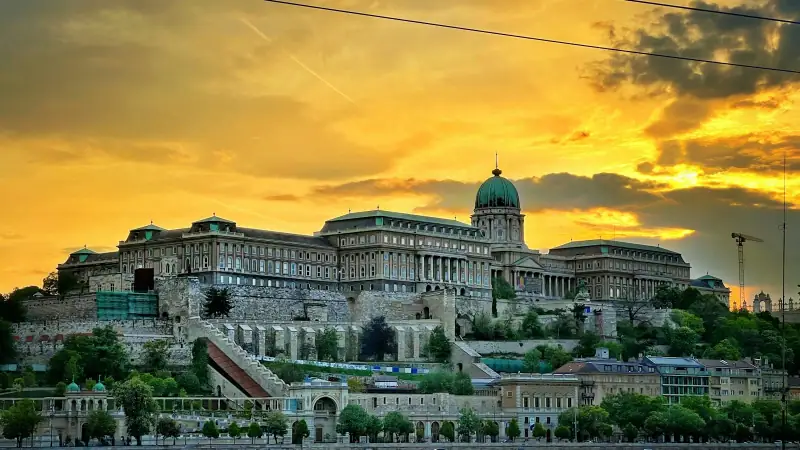
Sleeping in Buda means choosing a different rhythm. The castle district, a UNESCO World Heritage site along with the Danube embankments, offers cobbled lanes, colorful houses and panoramas of Parliament and Pest. In the evening, once the day-trip groups have left, the atmosphere is calm and romantic.
Strengths
- An old-town atmosphere, very different from Pest.
- Some of the finest views in the capital.
- An ideal setting for a couple’s stay.
Limits
- The terrain: the hill is a climb, with steep streets and more physical walks with suitcases.
- Fewer affordable restaurants than in central Pest, and an offer more aimed at tourists by day.
- Hotels are generally fewer, so book early.
Charming lodging and small places in old buildings are one of the area’s strong points, but plan to head back down to Pest for dinner if you like a variety of restaurants.
Terézváros and Andrássy Avenue: elegance without the crowds
The 6th district is organized around Andrássy Avenue, a long boulevard lined with 19th-century buildings, the Opera House and boutiques. It is a UNESCO World Heritage site and links the center to Heroes’ Square and City Park (Városliget). Beneath the avenue runs metro line M1, the oldest line on the European continent, opened in 1896.
Why stay here?
- A calmer setting than the Jewish Quarter, but a few minutes’ walk from the action.
- Easy access to City Park and the baths. To prepare this stop, read our guide to Budapest’s thermal baths.
- Very good metro service.
Tours and cruises in Budapest
Danube cruises, guided tours and activity tickets to round out your stay.
Gellért and Újbuda: near the baths and the river
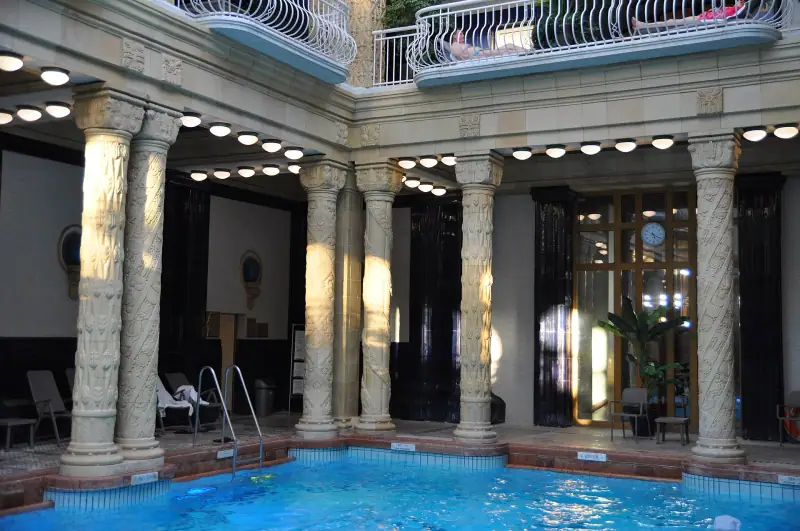
At the foot of Gellért Hill, on the Buda side, this area appeals to those who want relative calm and good connections. It is close to the Danube, Liberty Bridge and the baths on this bank. Trams and the metro (M4) get you quickly to central Pest.
Who is it for?
- Travelers who plan to spend part of their stay at the thermal baths.
- Those who want a less touristy neighborhood than the center, with visible local life: markets, cafés, shops.
- Slightly tighter budgets, as prices are often lower than in the very center.
Just remember to check the exact distance to the nearest metro or tram station before booking: on this bank, a few hundred meters’ difference changes the daily experience a lot.
How to choose according to your profile
A simple way to decide:
- First stay, 2 to 4 days: Belváros or Lipótváros, to do everything on foot.
- Festive stay with friends: the Jewish Quarter, choosing the room carefully.
- Romantic stay: the castle district, for the views and calm.
- Culture and elegance: Terézváros, around Andrássy.
- Tight budget and relaxation: Újbuda and Gellért, or neighboring districts well served by the metro.
- Family with children: an apartment or hotel near a metro line, in Pest, to limit travel.
Types of lodging: hotel, apartment or hostel
Budapest offers a full range. Hotels of all categories are concentrated in central Pest and along the Danube. Apartments are very common and handy for families or groups, as long as you read the reviews on soundproofing and the condition of the building carefully. Hostels are numerous, especially in the Jewish Quarter, and suit small budgets and solo travelers.
Prices vary greatly with the season, the day of the week and the proximity to the center. Rather than relying on fixed rates, compare offers for your dates and check what the price includes: breakfast, tourist tax, free cancellation or not.
What to check before booking
- The walking distance to a metro or tram station.
- Recent reviews that mention noise, especially in the 7th district.
- Whether there is an elevator: many old buildings do not have one.
- Air conditioning, useful in hot summers.
- Cancellation and late arrival conditions.
Getting there and getting around
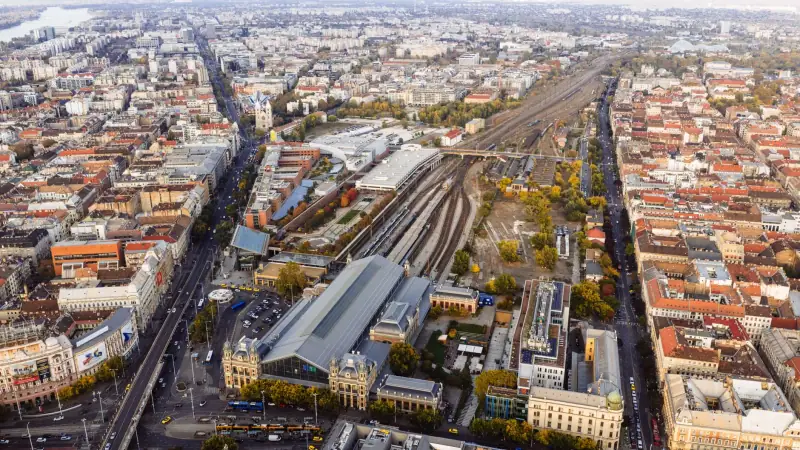
Ferenc Liszt International Airport is southeast of the city. An express bus line, the 100E, links the airport to central Pest; city buses and taxis also reach the city. International trains arrive at the capital’s main stations, including Keleti.
In the city, the transport network is dense: four metro lines, trams, buses and trolleybuses. Tickets and multi-day passes change regularly: check the public transport operator’s official site before you leave. Most visitors need no car, and the streets of the center are poorly suited to parking anyway.
When to book, and for how many nights
Fine-weather weekends, long weekends, the Christmas market season and major events push demand up: book several weeks ahead if you want the neighborhood of your choice. On weekdays and off season, the offer is more flexible.
As for length, three nights cover the essentials: the castle district, Parliament, a walk along the Danube and half a day at the baths. Four or five nights leave room for a trip, for example around the Danube Bend, and a little wandering.
Extending the trip in Central Europe
Budapest combines easily with other capitals in the region.
A stay in Budapest often serves as the entry point to a wider circuit: the Hungarian capital is well linked to the large neighboring cities by train, and these trips fit easily with well-located lodging. If you plan to leave by train, favor a neighborhood near a station or a direct metro line, to limit transfers with your luggage. For a combined trip, split the nights: two or three in Budapest are enough for the essentials, and the rest of the time can go to the next capital.
Our advice
For a first stay, settle in central Pest: it is the simplest and most efficient. If you want nightlife, choose the Jewish Quarter and pay attention to the room’s orientation; if you are after calm and views, try the castle district. In all cases, check the proximity of a metro or tram station before booking.
Frequently asked questions
What is the best neighborhood to stay in Budapest?
For a first visit, central Pest (Belváros and Lipótváros) is the most practical: sights on foot, metro and trams nearby, many restaurants. Those looking for nightlife will prefer the Jewish Quarter (7th district), and those who want calm and views the Buda side.
Is it better to stay in Buda or Pest?
Pest concentrates the restaurants, bars, shops and transport: it is the most practical base. Buda is hillier and more residential, with the castle district and superb views, but evening trips back are a little less simple.
Where should you stay in Budapest to go out at night?
The Jewish Quarter (Erzsébetváros, 7th district) concentrates the bars and "ruin bars". It is lively until late: ask for a courtyard room or a high floor if you are a light sleeper.
Do you need a car to stay in Budapest?
No, the city is well served by metro, trams, buses and suburban trains, and the center can largely be visited on foot. Parking in town is difficult: a car is only useful for trips outside the capital.
How do you get from Budapest airport to the center?
Ferenc Liszt Airport is linked to the center by an express bus (line 100E) to central Pest, as well as by city buses to the metro and by taxi or ride-hailing. Check fares and timetables on the official sites before you leave.
When should you book lodging in Budapest?
For fine-weather weekends, long weekends, the Christmas market season and major events, book several weeks ahead. Off season and on weekdays, the offer is more flexible and prices are lower.
More Hungary guides
Keep reading
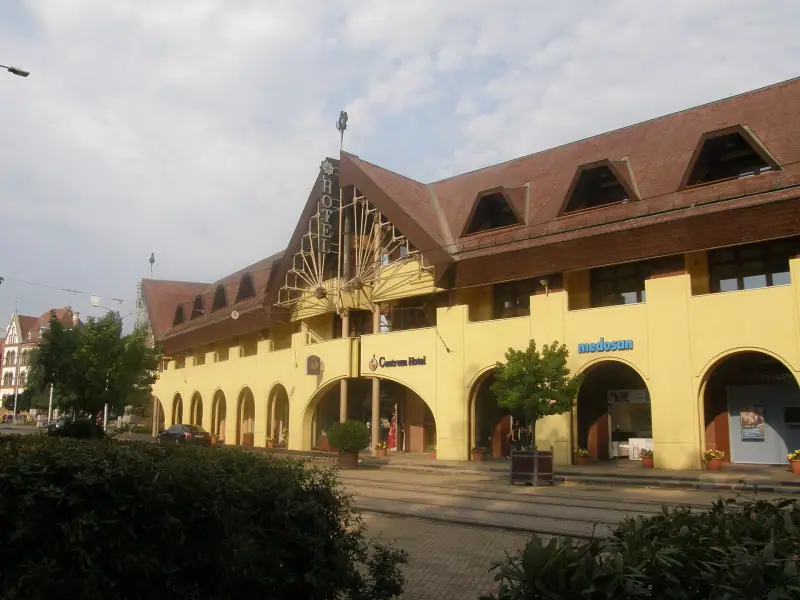
Where to stay in Debrecen: neighborhoods and lodging types to choose from
Where to stay in Debrecen? Historic center, station, Nagyerdő park and thermal baths: neighborhoods and lodging compared for a successful stay.
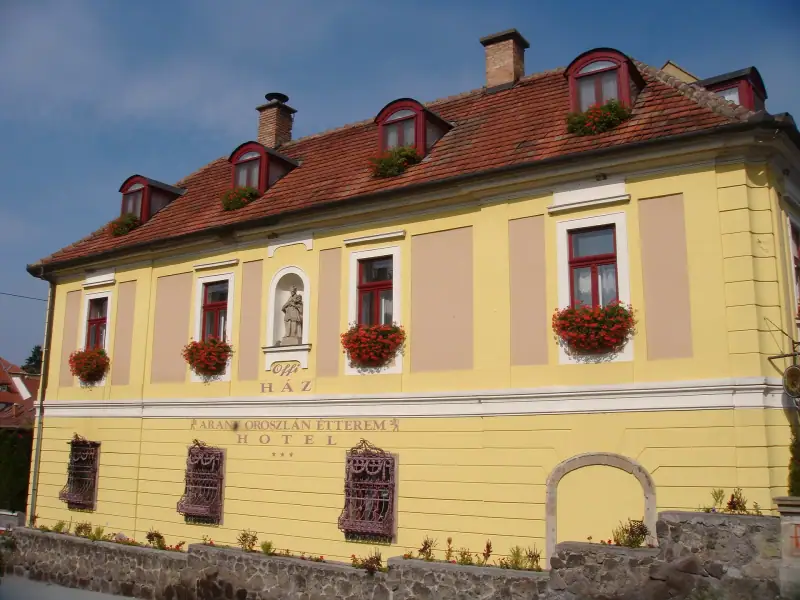
Where to stay in Eger: neighborhoods and lodging types to choose from
Where to stay in Eger? Baroque center, castle hill, Valley of the Beautiful Woman, thermal baths: neighborhoods and lodging compared for a successful stay.
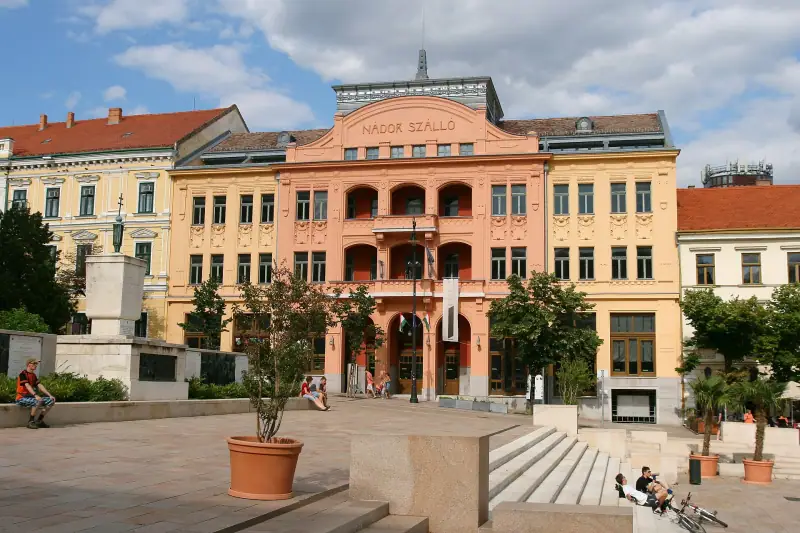
Where to stay in Pécs: neighborhoods and lodging types to choose from
Where to stay in Pécs? Pedestrian center, cathedral quarter, Zsolnay area, Mecsek slopes: neighborhoods and lodging compared for a successful stay.
Ready-made
Hungary itineraries
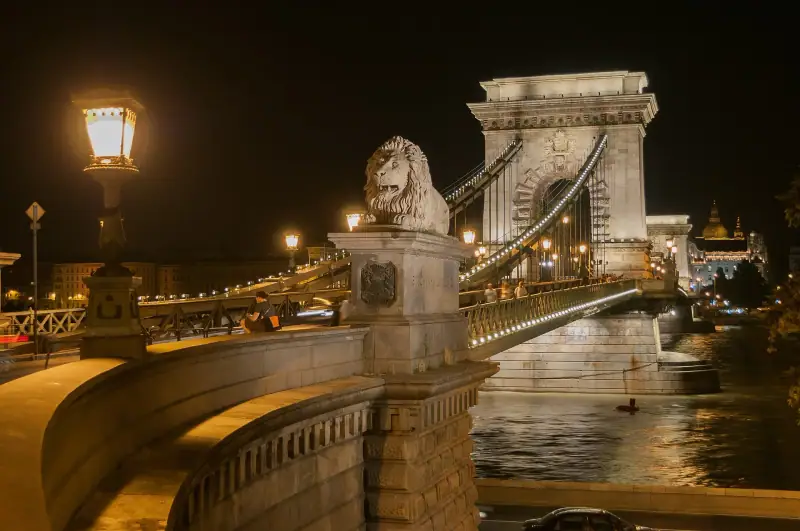
7 days
A week in Hungary by car: a 7-day road trip from Budapest to Pécs
BudapestTihany or BalatonfüredKeszthelyPécs
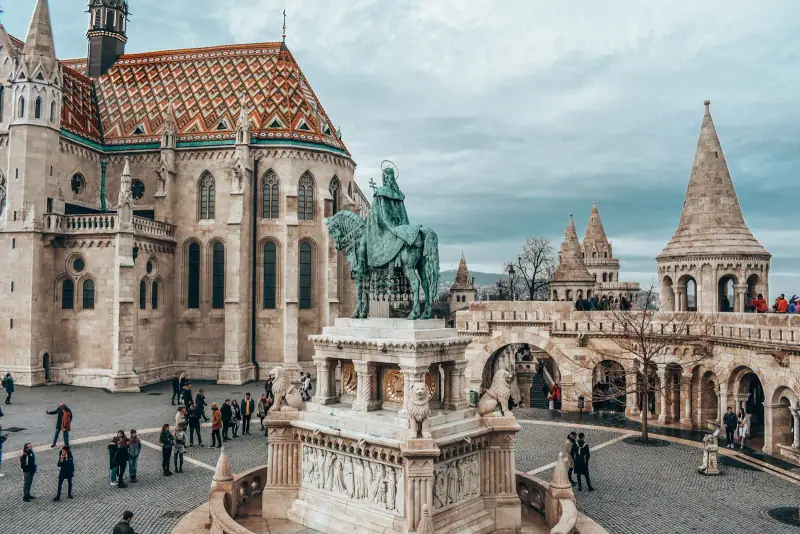
3 days
Budapest in 3 days: a day-by-day itinerary for a first stay
Budapest in 3 days: a detailed plan across Buda and Pest, Parliament, the castle, thermal baths, the Great Market Hall and a Danube stroll.
7 days
Hungary in 7 days without a car: a realistic itinerary by train and bus
BudapestEgerSiófok