Things to do
The Danube Bend: a day trip from Budapest (Szentendre, Visegrád, Esztergom)

We may earn a commission when you book through links on this page, at no extra cost to you. We don't visit or try the places we cover: we summarize published sources. How we work
In short
- The Danube Bend groups three towns: Szentendre (picturesque), Visegrád (royal) and Esztergom (religious), the farthest at about 50 km (31 mi) from Budapest.
- Limit yourself to two or three stops: Szentendre and Visegrád combine easily; adding Esztergom makes the day long, especially by public transport.
- The HÉV suburban train from Batthyány tér reaches Szentendre in about 40 minutes.
- Spring to early autumn is best; set out early and check return times before starting the day.
An hour or two from Budapest, the Danube, which flows east, bends sharply south between wooded hills. This curve is the Danube Bend. It groups three towns with very different personalities: picturesque Szentendre, royal Visegrád and religious Esztergom. It is one of the easiest excursions to organize from the capital.
This article helps you choose your stops, get around without stress and build a balanced day. If you have not yet planned your stay in the capital, start with our three-day itinerary in Budapest: the Danube Bend is its natural extension for a fourth day.
How to organize your day on the Danube Bend
The principle is simple: go up the river from south to north, then return in the evening. Szentendre is the closest to Budapest, Visegrád is about halfway, and Esztergom, the farthest, marks the end of the excursion. Distances remain reasonable: Esztergom is about 50 kilometers (31 mi) from the capital.
Three formulas are available:
- A relaxed day, two stops: Szentendre in the morning, Visegrád in the afternoon. This is the most pleasant formula for a first contact.
- A dense day, three stops: add Esztergom, preferably by car or with an organized tour, otherwise connections eat into your time.
- A themed excursion: Szentendre alone, with the neighboring open-air museum, if you travel with children or like to take your time.
Whatever the formula, set out early. Sites are calmer in the morning and you avoid the midday heat in summer. Also check museum opening days before leaving: they vary by season and are not always the same from one site to another.
Szentendre, the little artists’ town
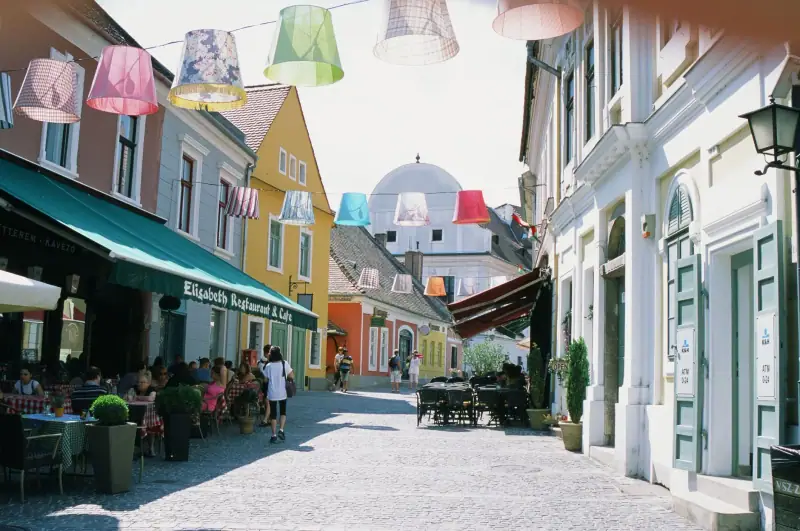
Szentendre is the easiest stop: the HÉV, the suburban train that leaves from Batthyány tér, gets you there in about forty minutes. You arrive right near the historic center, which is covered on foot.
The town charms with its cobbled lanes, colorful houses and bell towers. It once welcomed an important Orthodox community, whose heritage can be read in its churches. It is also known as an artists’ village: galleries, studios and craft shops line the streets of the center, and several small museums are worth the detour if the weather turns bad.
What to do in Szentendre
- Wander the historic center: head up to the main square, then let the lanes leading off it guide you.
- Climb to a church on the heights: the view of the tiled roofs and the Danube rewards the short climb.
- Take a food break: terraces and cafés abound. Try a pastry or artisan ice cream, and avoid having lunch on the busiest street.
- Walk by the river: the embankment promenade offers another, more peaceful atmosphere in late morning.
A few kilometers to the northwest is also the Skanzen, a large open-air museum devoted to Hungary’s traditional architecture and ways of life. It takes half a day on its own: a good option if you want to limit yourself to a single stop.
Accommodation in Budapest
Sleep in the capital and set out each day to explore the Danube Bend without changing hotel.
Visegrád, the citadel and the river meander
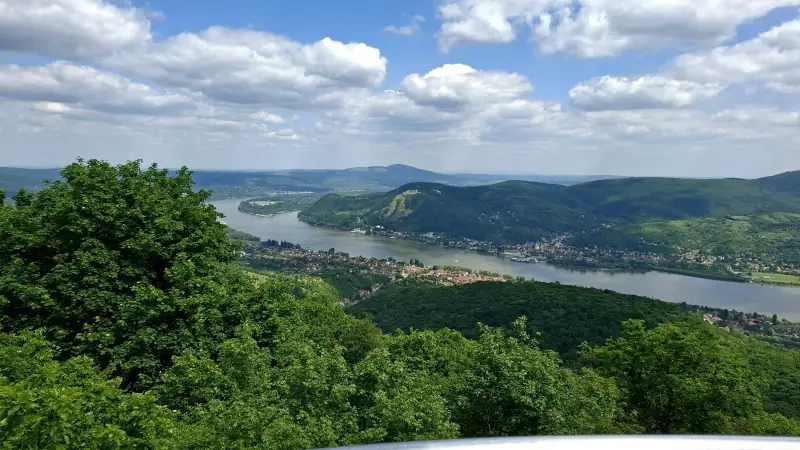
Visegrád is the smallest of the three towns but offers the most spectacular landscape. This is where the Danube draws its finest curve, seen from the heights. In the Middle Ages, the town was a royal residence: King Matthias Corvinus had a Renaissance palace built there, of which remains survive on the riverbank.
The two essentials
- The citadel: perched on the hill, it overlooks the river. It is the best viewpoint for understanding why this stretch of the Danube is called the “bend”. The climb can be made on foot by a path, by car or with local transport depending on the season.
- The ruins of the royal palace: set below, at the water’s edge, they tell of the place’s past grandeur. A small museum completes the visit.
Allow about two to three hours there, more if you walk up to the citadel. Bring good shoes and water, as the ascent is harder than it looks, especially in summer.
The contrast with Szentendre is striking: here, few shops, but nature and history. Hiking fans can enjoy the forest trails of the neighboring hills, which offer fine views of the river.
Esztergom, the basilica and the former capital
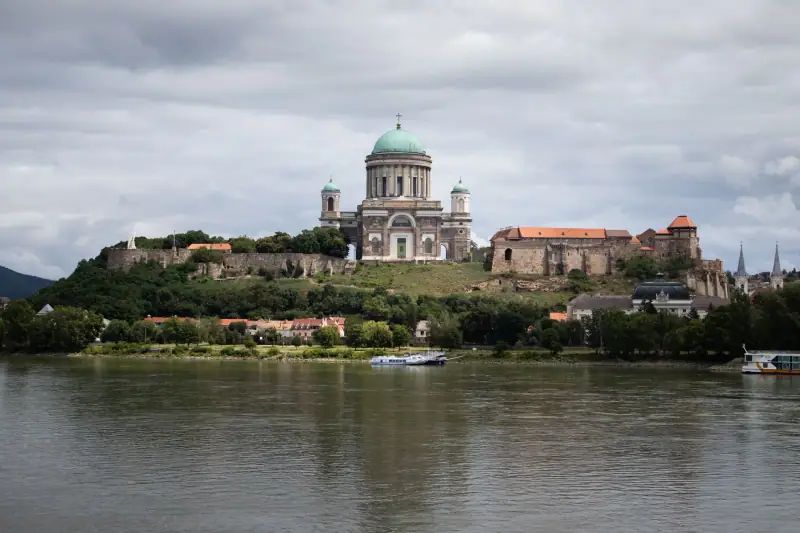
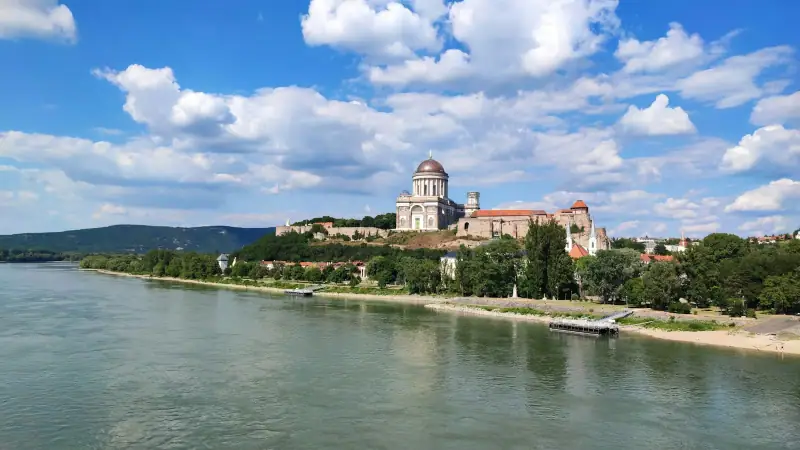
Esztergom is the farthest of the three stops, but the most impressive for the size of its main monument. The town was one of the great centers of the Kingdom of Hungary, and it remains the seat of the country’s Catholic Church. Its basilica, whose dome overlooks the Danube, is considered the largest church in Hungary.
What to see in Esztergom
- The basilica: visit the interior, then, if access is open, climb to the dome for the view of the river and the Slovak bank.
- The castle hill: it brings together the basilica and former royal buildings. Check in advance which rooms are open to visit.
- The old town: below, it offers a peaceful atmosphere, with its quiet streets and cafés.
- The Danube bank: across the river lies Slovakia, which you can see from the embankments.
Esztergom takes time. Including travel time, this stop is hard to add to a day when you have already seen Szentendre and Visegrád without a car. If you feel like seeing everything, consider spending a night there or booking an organized tour that groups the three towns.
Which means of transport to choose?
The right choice depends on your pace and the number of stops.
Train and HÉV. The HÉV is the cheapest and simplest option for Szentendre. For Esztergom, trains run from Budapest, generally taking about an hour and a half; check current timetables on the Hungarian rail company’s site before you leave.
Bus. Buses serve Visegrád and Esztergom from the capital. They are practical for directly linking towns that are not all on the same train line.
Boat. Some river services operate in season, often from spring to autumn. The trip is slower, but sailing on the Danube is part of the excursion’s charm. Schedules change from year to year: ask before leaving.
Car. Renting is useful if you want to link Visegrád and Esztergom, or if you travel as a family with luggage. The road follows the river and crosses pretty landscapes. Avoid, however, driving into Budapest at rush hour.
Organized tour. It simplifies everything: transport, visits and schedules are arranged in advance. It is the most comfortable option if you want to see the three towns without worrying about connections.
A typical program for the day
Here is an example of a two-stop day, easy to adapt:
- Morning: early departure from Budapest, a walk in Szentendre, a light lunch in the center.
- Early afternoon: head to Visegrád, climb to the citadel for the view of the meander.
- Late afternoon: a quick visit to the palace ruins, then back to the capital.
- Evening: dinner in Budapest. To choose, see our article on Hungarian cuisine.
You can also end the day in a thermal bath to rest your legs: our guide to Budapest’s baths helps you choose.
When to go and what to wear
The Danube Bend can be visited from spring to autumn. May and June offer green landscapes, while in October the hills take on golden tints. Summer can be very hot, notably at the Visegrád citadel, where shade is lacking. In winter, mist over the river has its charm, but some services and sites reduce their hours. To choose your period, see our guide when to go to Hungary.
Wear good walking shoes: Szentendre’s streets are cobbled and the climb to the citadel is steep. Bring a small water bottle, a hat in summer, and a light jacket for the riverbanks.
Extending to Central Europe
The Danube Bend lends itself well to a wider trip. From Budapest, you can continue to Vienna, or head north for a trip toward Poland. These destinations form a coherent circuit over one or two weeks.
Flights to Budapest
Compare timetables to organize a stay with a Danube excursion.
Practical tips
- Set out early to enjoy the sites before the crowds and the morning coolness.
- Check return times before starting the day, especially in the evening and off season.
- Do not pile on too many stops: better two towns well visited than three skimmed.
- Bring forints for small purchases, as not all shops accept cards.
- Keep a margin for the return: at the end of the day, transport can be packed.
Frequently asked questions
Can you see the whole Danube Bend in one day?
Yes, but it is better to limit yourself to two or three stops. Szentendre and Visegrád combine easily; adding Esztergom makes the day long, especially by public transport.
How do you get to Szentendre from Budapest?
The simplest is the HÉV, the suburban train that leaves from Batthyány tér station, served by the metro. The journey takes about 40 minutes. Check timetables and tickets on the network's site before you leave.
Do you need a car to visit the Danube Bend?
It is not essential: trains, buses and seasonal boats serve the three towns. A car does offer more flexibility for linking Visegrád and Esztergom on the same day.
What is the best time for this excursion?
From spring to early autumn, the landscapes are green or golden and services more frequent. Summer is hot and busy; autumn offers lovely colors on the hills.
How much time should you allow in Esztergom?
Allow at least two to three hours for the basilica, the castle hill and a walk by the river.
Can you extend to Slovakia?
Esztergom faces Slovakia across the Danube, but it is better to make it a separate project rather than add a border to a day trip.
More Hungary guides
Keep reading
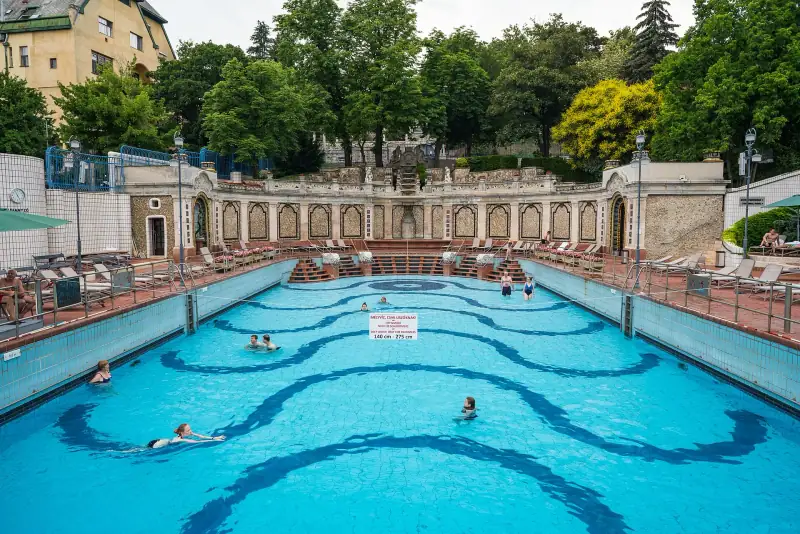
Hungary with kids: trip ideas and activities with children
Traveling in Hungary with children: thermal baths, zoo, Children's Railway, Danube, Balaton and open-air museum. Activity ideas, pace and practical tips.

Budapest thermal baths: Széchenyi, Rudas, Lukács, which to choose?
Guide to Budapest's thermal baths: Széchenyi, Rudas, Lukács, Gellért's status, swimsuit, lockers, best hours and tips to avoid the crowds.
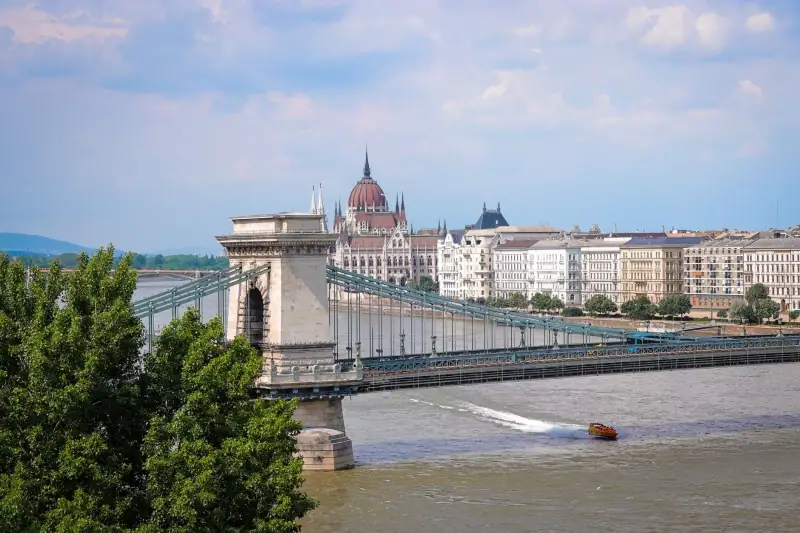
Budget for a trip to Hungary: real costs and 3 priced profiles
How much does a trip to Hungary cost? Real 2026 prices by item (lodging, transport, meals, activities), three priced budgets and tips to spend less.
Ready-made
Hungary itineraries
7 days
A week in Hungary by car: a 7-day road trip from Budapest to Pécs
BudapestTihany or BalatonfüredKeszthelyPécs
3 days
Budapest in 3 days: a day-by-day itinerary for a first stay
Budapest in 3 days: a detailed plan across Buda and Pest, Parliament, the castle, thermal baths, the Great Market Hall and a Danube stroll.

7 days
Hungary in 7 days without a car: a realistic itinerary by train and bus
BudapestEgerSiófok