Where to stay
Where to stay in Menton: neighborhoods and types of accommodation
We may earn a commission when you book through links on this page, at no extra cost to you. We don't visit or try the places we cover: we summarize published sources. How we work
In short
- The town center, between the station, the Biovès gardens and the seafront, is the simplest choice for a first stay without a car: flat, walkable and close to trains.
- The old town has the charm but also stairs and almost no parking. Garavan, to the east, is calmer and more residential.
- Menton has a winter peak with the Lemon Festival, held in February and sometimes into early March: book well ahead.
- Monaco is a few minutes by train and Nice about half an hour farther, so Menton works as a base for the eastern Riviera.
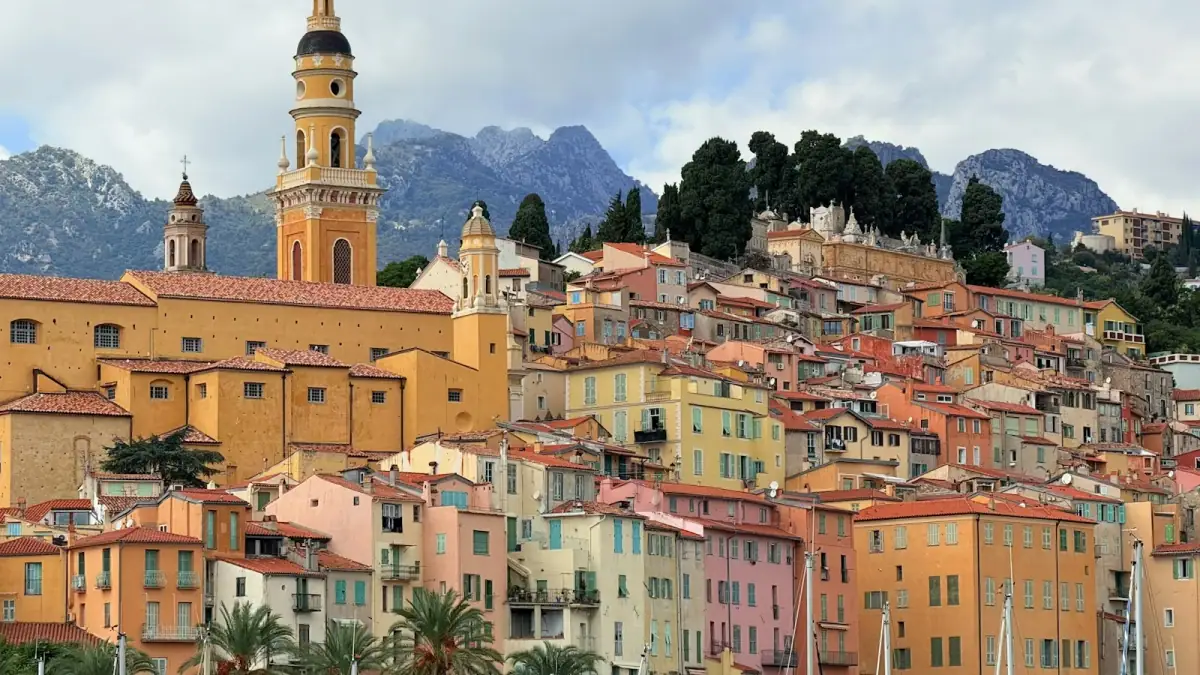
Menton is the last major French stop before Italy: a town facing south, backed by hills covered in gardens, with a very mild microclimate that made it famous as a winter resort as early as the 19th century. But this small town has several faces. Sleeping in the steep lanes of the old town, facing the seafront, in the quiet Garavan district or in the hills makes for very different stays. This guide presents the main areas, their pros and cons, then the types of accommodation available, so you can choose based on your budget, how you get around and the atmosphere you want. For the sights, see our guide to visiting Menton.
How to choose: the criteria that really matter
Before comparing addresses, a few simple questions will quickly rule out half the options.
1. Are you traveling with or without a car? Menton is one of the French Riviera towns where it is easiest to do without a car: the center, the seafront and the old town are walkable, and the regional train is within reach. On the other hand, parking is hard in high season and some places in the hills are only practical with a vehicle. Our article on getting around the French Riviera without a car details the region’s rail and bus links.
2. What atmosphere do you want? The lanes and little squares of the old town, the palm-lined promenade, the residential quiet of Garavan or the silence of the hills: each area has its own personality, and this choice weighs more than the hotel category.
3. How do you handle stairs? This criterion is specific to Menton. The old town climbs a hill, and many places are reached by ramps and steps. With a heavy suitcase, a stroller or reduced mobility, choose a flat area.
4. How long are you staying? For a night or two, closeness to the station and the center comes first. For a week, an apartment with a kitchen, a balcony and a neighborhood feel can make all the difference.
5. When are you coming? Rates vary strongly with the season, and Menton has the particularity of a second peak in winter with the Lemon Festival. More on that below.
The old town: the charm of the lanes and the square
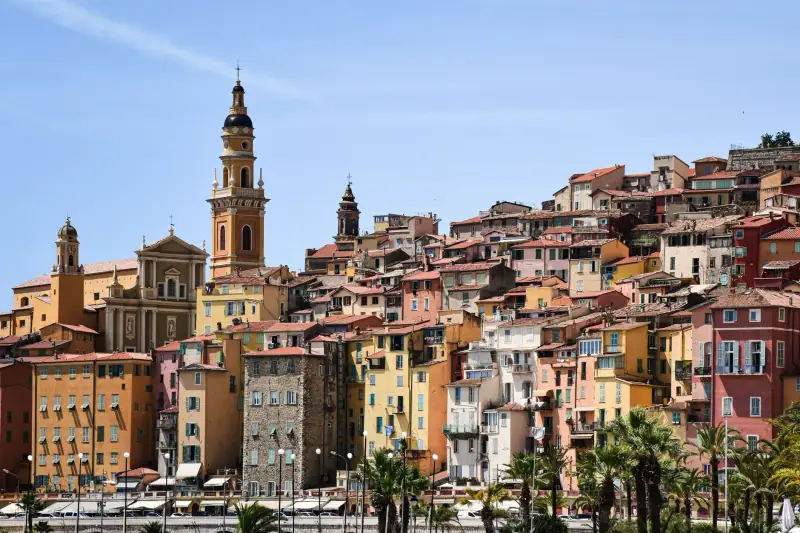
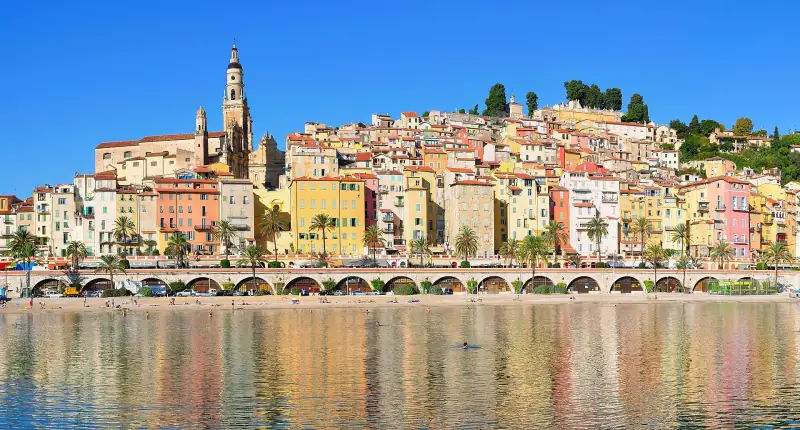
This is the most photogenic area: a tangle of lanes, vaulted passages and stairs climbing to the square of the Saint-Michel-Archange basilica, with its yellow, ocher and pink facades. Sleeping here means waking up in a very Mediterranean atmosphere, closer to neighboring Liguria than to the big resorts of the coast, and enjoying the lanes in the evening once the day visitors have gone.
Pros: the exceptional setting, views of the bay from some places, closeness to the harbor and little terraces, and a stay with character. It is the choice of couples and travelers who want to “feel” the town.
Cons: the stairs, first of all, which make arriving with luggage painful; almost no parking right nearby; possible noise in lanes where voices echo; and supply made up mostly of small hotels, B&Bs and apartments rather than large properties. Some older places are not air-conditioned: check this in summer.
Tip: ask for the exact route from the station or the nearest parking lot, and read recent reviews on access and noise before booking. If you travel light and like walking, it is an excellent choice for a short stay.
The town center, Biovès gardens and the station: the most practical
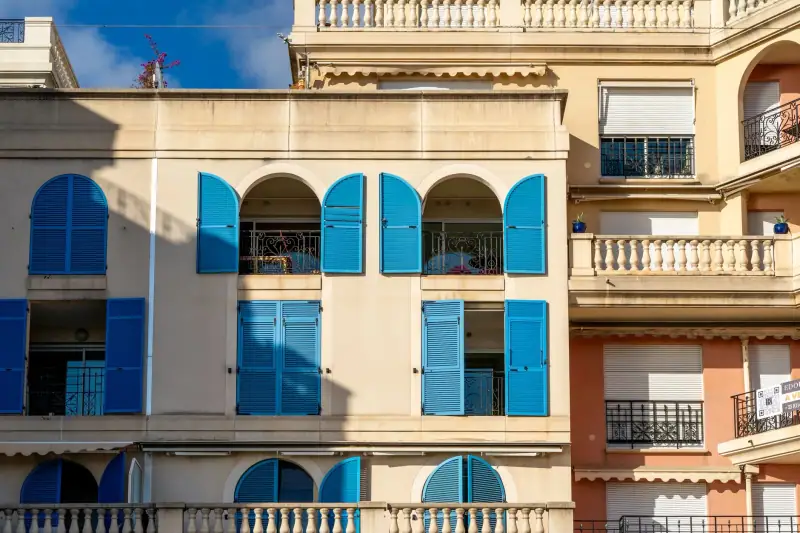
Between the station, the Biovès gardens (which host the big Lemon Festival sculptures) and the seafront, the center of Menton is the most balanced area. Shops, restaurants, services and the Halles market are within walking distance, and the old town is a short trip away.
Pros: flat ground, a nearby station for day trips to Monaco, Nice or Italy, a wider range of accommodation (hotels of various categories, residences, apartments) and rates often more reasonable than on the front line. It is the ideal area for a first stay without a car.
Cons: a more urban atmosphere, less picturesque than the old town, and some traffic noise depending on the street. Streets parallel to the sea and those facing inner courtyards are generally calmer.
Best for. Travelers who want to combine Menton with train excursions, families, mid-range budgets and anyone who prefers simplicity to the picturesque.
Compare stays in Menton
Hotels, apartments and B&Bs: filter by neighborhood, budget and free cancellation to find the place that suits you.
The seafront and the Promenade du Soleil: feet in the bay
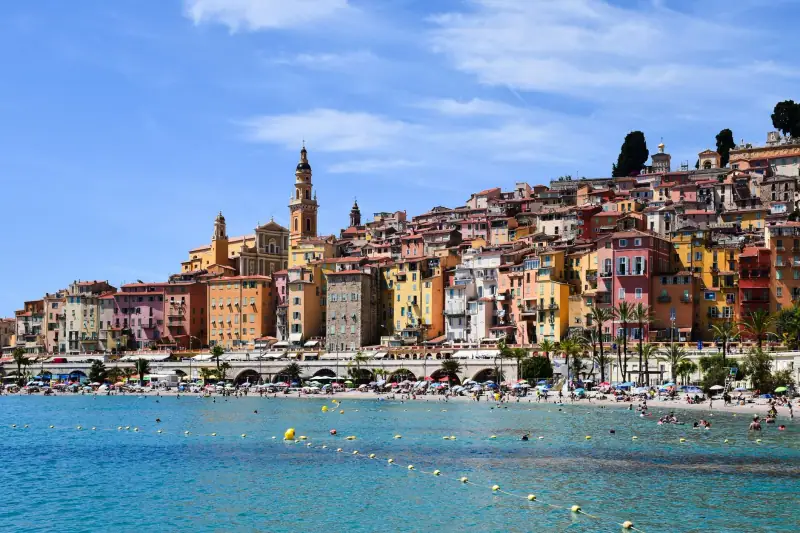
The Promenade du Soleil runs along the bay for several kilometers, lined with palm trees, terraces and Belle Époque facades. Sleeping on the front line means opening your shutters on the sea, hearing the waves and reaching the beach in a few steps. Menton’s beaches are mostly pebble; Les Sablettes, at the foot of the old town, is one of the most popular for its view of the colorful facades.
Pros: the view, the beach nearby, very pleasant morning or evening walks, and easy walking access to the center and the old town.
Cons: generally higher rates for sea-view rooms, some noise from the road and terraces, and heavy crowds in summer. A street-side or back room often costs less while remaining two minutes from the sea.
Tip: if the budget is tight, favor a place one or two streets from the promenade rather than on the front line. You keep the benefits of proximity at a lower price.
Garavan: residential quiet, the marina and the gardens
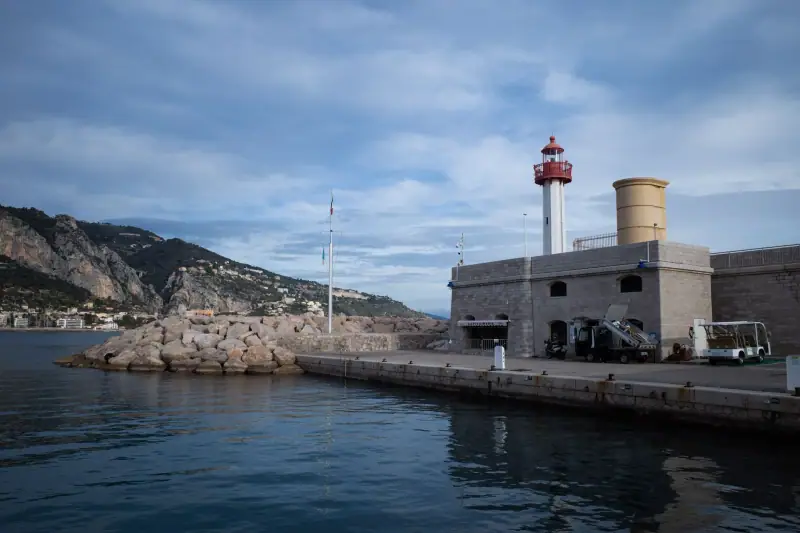
East of the town, toward the Italian border, Garavan is a quieter, more residential district. It has a marina, villas, terraced gardens and the feel of a peaceful beach resort. Several renowned botanical gardens are in this area or nearby, making it a good base for plant lovers and walkers. Garavan also has its own station, which makes trips to Italy or to the center easier.
Pros: quiet, open views, a more relaxed atmosphere than the center and closeness to the border for an outing to Ventimiglia or the Balzi Rossi on the Italian side (carry ID as a precaution).
Cons: less nightlife, shops farther apart and a longer walk to the old town, with a few climbs depending on the address. The district is mostly residences, apartments and a few hotels.
Best for. Relaxing week-long stays, travelers who like gardens and tranquility, and couples who want a residential setting with the sea within walking distance.
The hills: villas, views and silence
On the hills overlooking the bay, villas, small residences and B&Bs offer panoramic views over the sea, the old town and, on a clear day, the Italian coast. It is completely quiet, the gardens are in bloom, and the setting is often more spacious than in the center.
Pros: space, a possible terrace or pool, silence, and a feeling of being away from the crowds without leaving town.
Cons: slopes that make walking demanding, less frequent public transport and, in practice, the need for a car or taxis to go down to town in the evening. Check parking and access carefully before booking.
Best for. Travelers with a car, groups or families who want space, and those who favor view and quiet over activity.
Which type of accommodation to choose in Menton?
Beyond the neighborhood, the type of lodging affects budget, comfort and freedom of organization.
Hotels: from budget places near the station to charming seafront hotels, the offer is varied. A hotel suits short stays and travelers who want a welcome, breakfast and no constraints. Check the air conditioning, the elevator and whether you can leave luggage after check-out.
Apartments and residences: very common in Menton, they suit week-long stays or families. With a kitchen, you enjoy produce from the Halles and control your food budget. Check cleaning fees, deposit, tourist tax and arrival times.
B&Bs and small charming houses: they are more present in the hills and the old town. They offer a more personal experience, but capacity is limited and cancellation policies are sometimes stricter.
Campgrounds and outdoor accommodation: you will find them in the surroundings rather than right in the center. They are aimed at travelers with a car and tight budgets, especially in season. To compare the other towns of the coast, see our guides to where to stay in Nice and where to stay in Antibes.
Hostels and budget accommodation: supply is more limited than in Nice. Travelers on a small budget often also look at Nice or neighboring towns, and take the train to Menton.
When to book and how to avoid unpleasant surprises
Menton has two peaks that affect prices. Summer draws beach lovers, with warm sea but higher rates and a busier town. The second is the Lemon Festival, held in February and sometimes into early March: accommodation is then booked far ahead, and prices rise in what is otherwise the low season for the rest of the coast. To refine your dates, see our guide on when to go to the French Riviera.
Spring and early fall generally offer the best balance: gardens in bloom or soft light, moderate crowds and more reasonable rates. Winter outside the Lemon Festival is quiet, with reduced supply but often pleasant days.
A few habits for booking smartly:
- Plan ahead for high season and the Lemon Festival dates, with free cancellation if possible.
- Compare several dates: shifting your stay by a day or two can noticeably lighten the bill.
- Look at the total price: tourist tax, cleaning fees and extras are not always in the displayed rate.
- Read recent reviews rather than just the overall score, paying attention to noise, air conditioning, access and cleanliness.
- Check parking if you come by car: in Menton it is often the most constraining point.
- Check the stairs: ask for the number of steps or whether there is an elevator if you travel with luggage.
To estimate your overall budget, our guide to the French Riviera budget details the main spending items.
Menton or another base: where to sleep depending on your itinerary
Menton is a very good base for exploring the eastern Riviera: Monaco is a few minutes by train, Nice about half an hour farther, and Italy very close. It suits you well if you want a calm stay, gardens and a slow pace, with day excursions.
By contrast, Nice is more practical if you plan to visit the whole coast, from Antibes to Menton, thanks to its airport, central station and wider range of accommodation. For a stay that combines several towns, our 5-day road trip from Menton to Saint-Tropez offers a split of stops and nights. You can also stay in a neighboring village such as Roquebrune-Cap-Martin, medieval and perched, linked by train, for a more rural stay while remaining near Menton.
Tours and excursions around Menton
Guided tours, excursions to Monaco, Italy or the hilltop villages: compare the activities offered from Menton.
Our pick by type of traveler
To sum up, here is the area to favor depending on your profile:
- First visit, no car: the town center, between the station, the Biovès gardens and the seafront.
- Couple looking for charm: the old town, choosing an accessible place, or a quiet-side seafront spot.
- Family with kids: the center or the seafront, for the beach, shops and flat ground.
- Relaxing week: Garavan, in an apartment with a kitchen and terrace.
- Travelers with a car seeking quiet and views: the hills, with guaranteed parking.
- Small budget: a center street away from the sea, or a neighboring base linked by train.
- Visiting the Lemon Festival: book very early, preferably in the center, within walking distance of the Biovès gardens.
Whatever you choose, Menton remains a compact, well-connected town: a wrong neighborhood choice is fixed in a few minutes on foot or by train. The key is to book early in high season and during the Lemon Festival, check the cancellation terms, air conditioning, access and total price, and read recent reviews before confirming.
Frequently asked questions
What is the best neighborhood to stay in Menton on a first visit?
The town center, between the station, the Biovès gardens and the seafront, is the simplest choice: everything is on foot, trains to Nice, Monaco and Italy are close, and the old town is a few minutes away. If you want the atmosphere of the lanes, the old town is the alternative, provided you accept the stairs.
Is it better to stay in the old town or in Garavan?
The old town offers charm, views and lively evenings on the little squares, but means stairs and little parking. Garavan, to the east, is calmer, residential and close to the marina and the gardens. The first suits short stays on foot, the second relaxing stays.
Can you stay in Menton without a car?
Yes. The station is close to the center and the regional train links Menton to Monaco, Nice and Liguria. The town itself is walkable. A car is only useful for the hilltop villages of the hinterland or for staying in the hills, where slopes are steep.
When are Menton accommodations most expensive and most in demand?
In summer, of course, but Menton also has a winter peak tied to the Lemon Festival, held in February and sometimes into early March. On those dates, rooms are booked far ahead. Spring and early fall generally offer the best balance of weather, quiet and rates.
Is Menton cheaper than Nice or Monaco for accommodation?
It is often more affordable than Monaco and, out of season, comparable to or a little cheaper than Nice, though that is not a rule. Many travelers stay in Menton or a neighboring town precisely to cut the bill while staying a few minutes by train from Monaco.
Should you favor a hotel or an apartment in Menton?
For a short stay or a couple's trip, a hotel makes everything simpler. For a week or for a family, an apartment with a kitchen is more practical, especially near the Halles market. In both cases, check the air conditioning, access (stairs, elevator), parking, tourist tax and cancellation terms.
What should you check for accommodation in the old town or in the hills?
Look at the number of steps to the accommodation, whether there is an elevator, the actual walking distance from the station, the air conditioning in summer and the night noise from terraces. If you have a lot of luggage, a place reachable by car or taxi right to the door saves a lot of effort.
More French Riviera guides
Keep reading
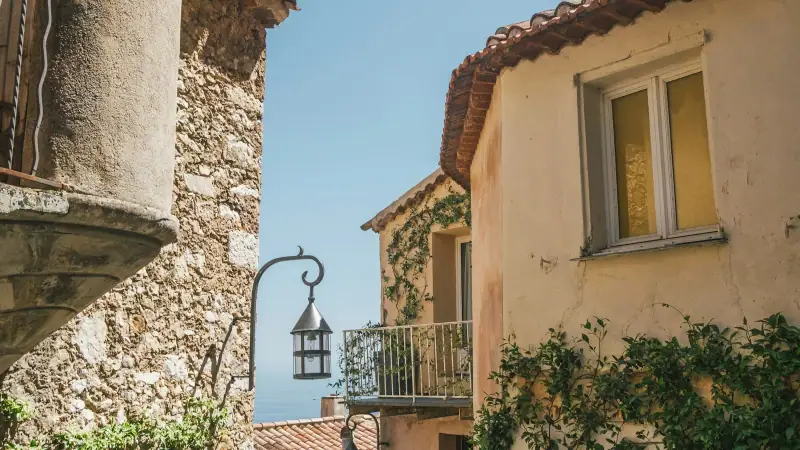
Where to stay in Èze: neighborhoods and types of accommodation
Medieval village, Èze-sur-Mer, Col d'Èze or Nice as a base: Èze neighborhoods and types of accommodation compared by budget and trip.
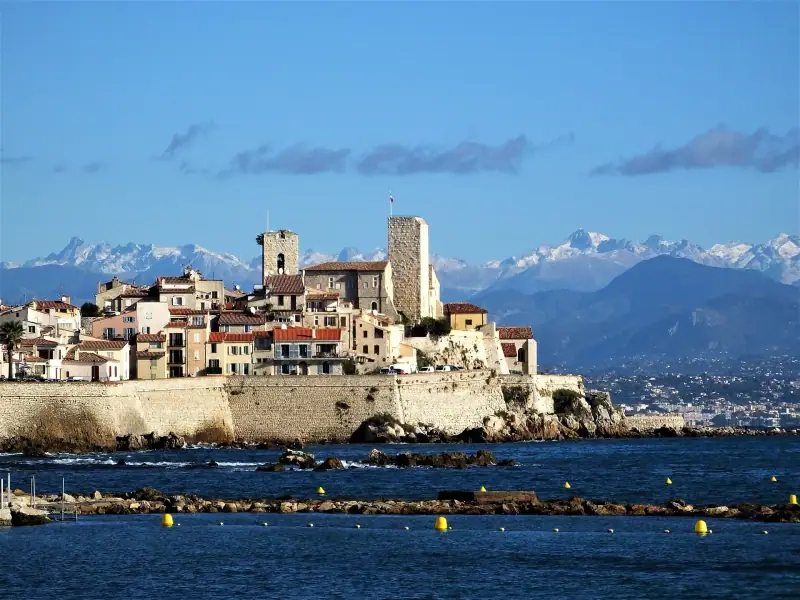
Where to stay in Antibes: neighborhoods and types of accommodation
Old Antibes, Juan-les-Pins, Cap d'Antibes, Port Vauban, the station: Antibes neighborhoods and types of accommodation compared by budget and trip style.
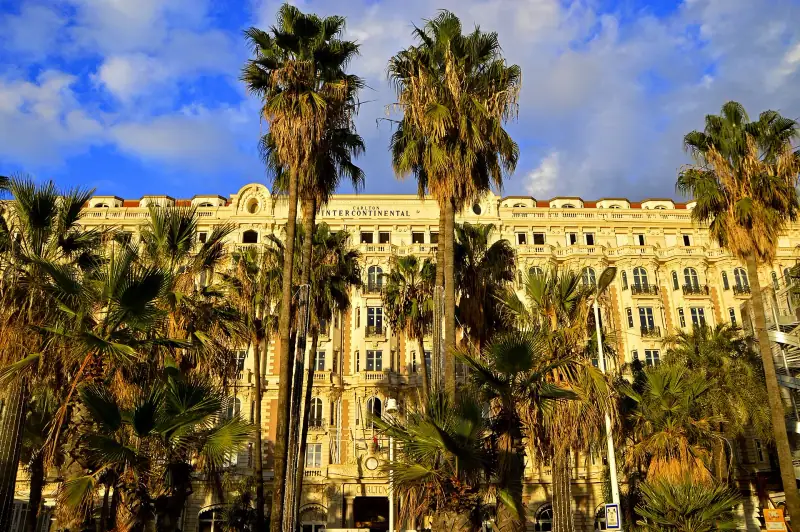
Where to stay in Cannes: neighborhoods and types of accommodation
Croisette, Suquet, Carnot, La Californie, La Bocca: Cannes neighborhoods and types of accommodation compared, by budget and style of trip.
Ready-made
French Riviera itineraries
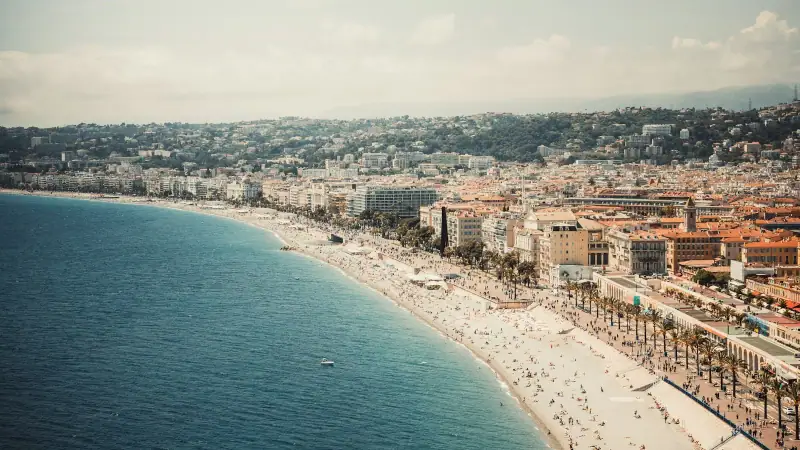
4 days
French Riviera in 4 days with kids: stops and pace
The French Riviera with kids in 4 days: a realistic plan from Nice, with travel times in minutes, short days, beaches and breaks, no car required.
Can be adapted in the planner
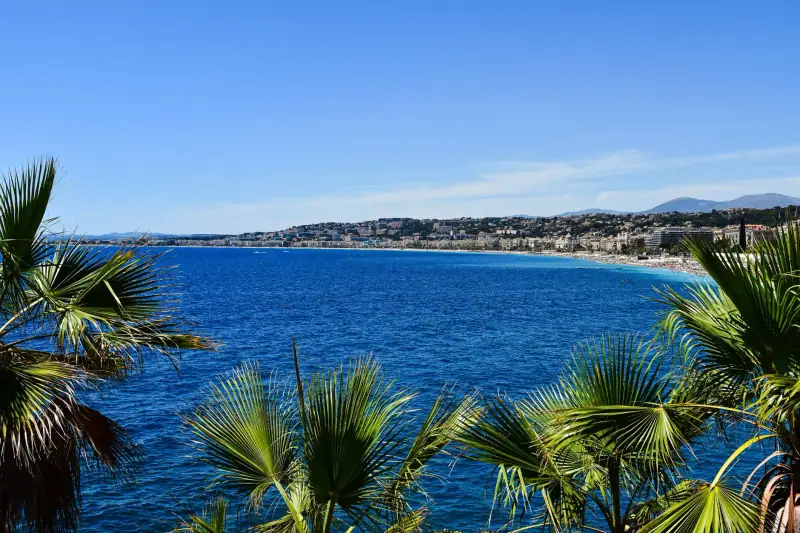
3 days
3 days on the French Riviera from Nice: a car-free itinerary by train
Nice, Villefranche, Èze, Menton, Antibes and Cannes in 3 days: a day-by-day itinerary by train and bus, with timing advice and tips to avoid crowds.
5 days
French Riviera road trip in 5 days: from Menton to Saint-Tropez by car
A 5-day road trip between Menton and Saint-Tropez: corniche roads, hilltop villages, the Esterel and parking tips to avoid traffic jams.