Where to stay
Where to stay in Bora Bora: overwater bungalow, motu hotel or guesthouse
We may earn a commission when you book through links on this page, at no extra cost to you. We don't visit or try the places we cover: we summarize published sources. How we work
In short
- Bora Bora has three accommodation zones: the main island (Vaitape village), the south coast and Matira, and the motu, where the big luxury hotels and overwater bungalows sit.
- The airport is on a motu: a boat shuttle reaches Vaitape, and motu hotels usually send their own boat, sometimes included and sometimes charged.
- For a tighter budget, sleep on the main island (Vaitape, Matira) rather than on a motu, and check access to the lagoon.
- A common formula: two or three nights on the main island, then one or two on a motu or in an overwater bungalow.
Bora Bora is a dream for its lagoon and overwater bungalows, but the island raises a practical question: where to stay? The choice determines the budget, the view, how you get around and even how you live the trip. An isolated motu hotel has nothing in common with a guesthouse near the village of Vaitape. This guide compares the main options, explains the island’s geography and helps you choose according to your budget and wishes.
Understanding Bora Bora’s geography before you book
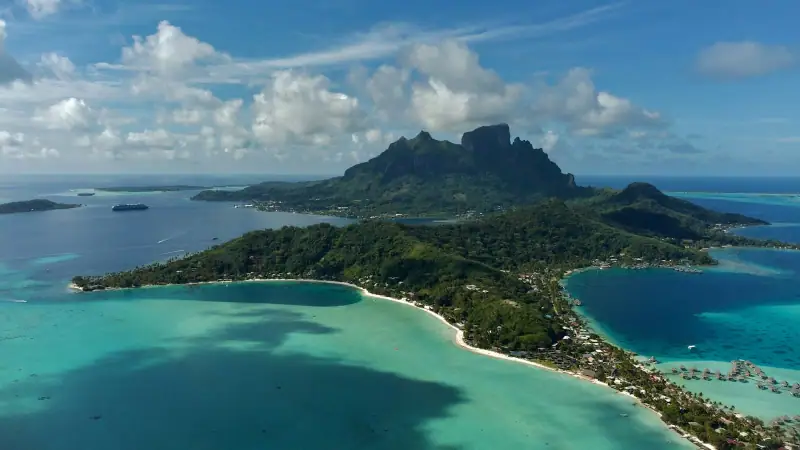
Bora Bora is a small volcanic island surrounded by a lagoon and a reef barrier, on which stand sand and coral islets called motu. Its silhouette is dominated by Mount Otemanu, which rises to about 700 m (2,300 ft). A single road runs along the coast of the main island, which keeps your bearings simple.
You need to tell apart three accommodation zones:
- The main island, with the village of Vaitape (the main center, with the dock, shops and services) and lodging spread along the ring road.
- The south coast and Matira, famous for its public beach and shallow lagoon, where you find hotels, small properties and a few restaurants.
- The motu, where the big luxury hotels and overwater bungalows are concentrated, reachable only by boat.
The airport itself is on a motu: on arrival, a boat shuttle reaches Vaitape, and the motu hotels generally send their own boat. To understand the island as a whole, see our guide to visiting Bora Bora.
Overwater bungalow: the dream, with its nuances
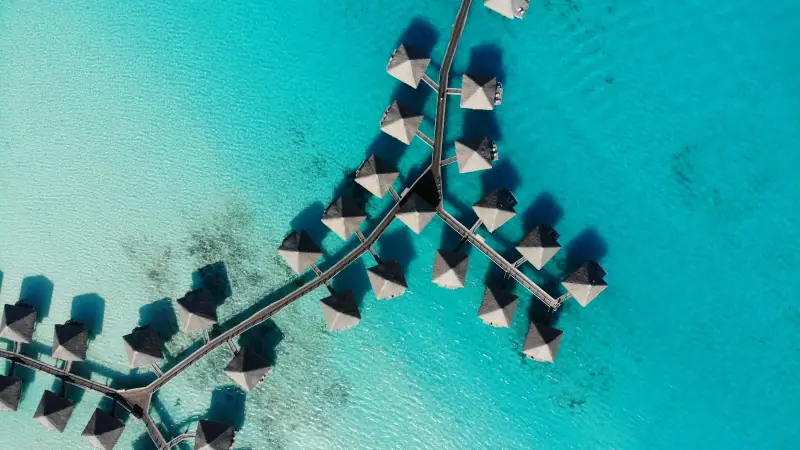
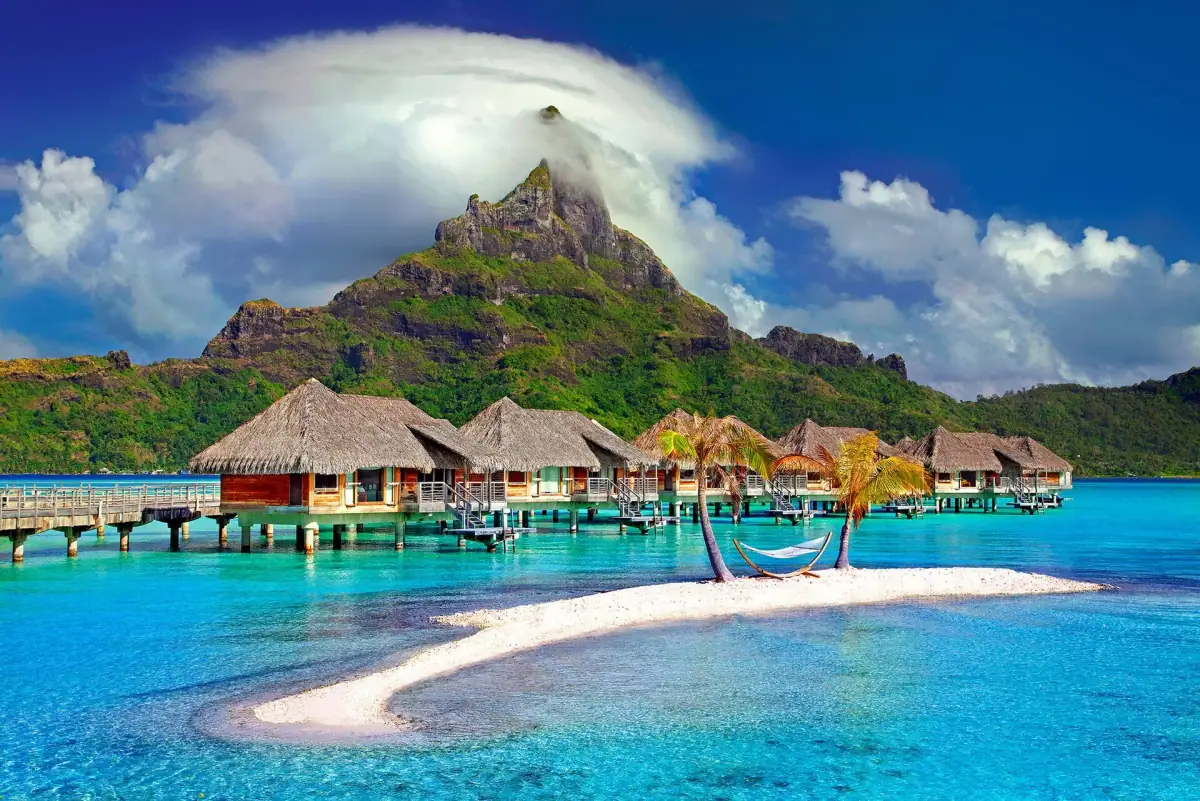
Sleeping over the water means opening the door onto the lagoon, sometimes stepping straight into the water by a small ladder and watching fish go by from the deck. It is the emblematic image of French Polynesia, and it partly justifies the price.
What you get
An overwater bungalow generally offers a private deck, water access, a big bed and a very photogenic setting. Some have a glass floor. The service is that of an upscale hotel: restaurants, bars, water activities, spa.
Points to check
Not all overwater bungalows are equal. A few useful questions:
- Orientation: a direct view of Mount Otemanu costs more than a lagoon view without the dominant mountain.
- Location within the hotel: a bungalow at the end of the pontoon may be far from the restaurant, but quieter.
- Access to swimming: the lagoon is calm, but depth and the nature of the bottom vary from place to place.
- Type of meals included: half board or full board changes the final bill a lot.
- The transfer: generally by boat, sometimes included, sometimes charged.
If you dream of overwater bungalows without spending the whole stay in one, a common solution is to sleep in one for two or three nights at the end of the trip, after a more economical first stage.
Stays in Bora Bora
Compare the bungalows, hotels and small places available for your dates.
Hotel on a motu: comfort, privacy and dependence on the boat
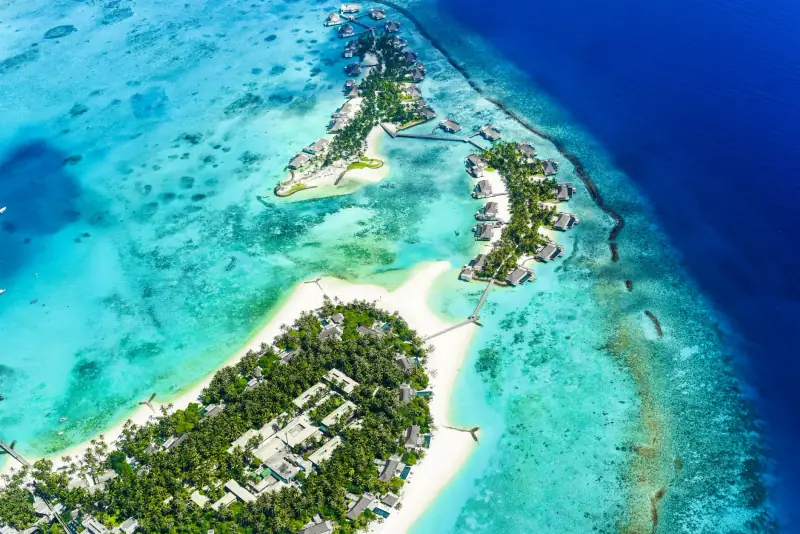
Motu hotels offer a complete experience: private beach, lagoon within reach, on-site restaurants and organized activities. Privacy is strong, as you are not in the middle of a village.
The advantages
- The setting: white sand beaches and an intensely blue lagoon.
- The calm: little traffic, no road noise.
- The services: everything is at the hotel, which suits honeymoons or relaxation stays.
- The views: several motu offer a panorama of Mount Otemanu.
The constraints
Sleeping on a motu means depending on shuttle schedules to go to dinner in the village or visit the island. Hotel meals are often pricier than in the village restaurants, and going out takes organization. If you want to go around the island, plan on an organized excursion or a shuttle booked in advance.
Bora Bora is also an island where luxury hotels change category, name or owner from time to time: always check recent information and reviews from the last few months rather than relying on an old brochure.
The main island: Vaitape, Matira and alternatives
For a more reasonable budget, the best solution is often to sleep on the main island. You are close to shops, restaurants, docks and public beaches.
Vaitape, handy for logistics
Vaitape is the island’s main village and the arrival point of the airport shuttle. It has the dock, shops, banks, services and several excursion departures. It is a good base for one or two nights on arrival or departure, especially if your inter-island flight arrives late or leaves early.
Matira, the beach and the sunsets
Matira Point is the most sought-after area for swimming: pale sand, shallow water and public access. Lodging in this area is pricier than in the rest of the main island, but is often still far more affordable than a motu hotel. You can walk to the beach, find restaurants and snack bars, and enjoy a pleasant setting without boat constraints.
Guesthouses and small properties
Family guesthouses are less common here than on Moorea or Huahine, but they exist, as do small hotels and rentals. Their big advantage is value and welcome. Their drawback: the lagoon is not always directly accessible from the property, and you sometimes need a way to get to the beach. To understand what to expect from this type of lodging, read our guide to family guesthouses in French Polynesia.
Quick comparison: which lodging for which traveler?
| Type of lodging | For whom? | Strengths | Limits |
|---|---|---|---|
| Overwater bungalow | Honeymoon, big occasion | View, privacy, lagoon access | Very high budget, dependence on the boat |
| Motu hotel | Couples, relaxation stay | Beach, services, calm | Far from the village, expensive meals |
| Hotel or residence at Matira | Active travelers, mid-range budget | Accessible beach, restaurants nearby | Less exclusive, view sometimes limited |
| Guesthouse or small property | Small budgets, curious travelers | Welcome, price, close to shops | Fewer services, limited capacity |
This table is not an absolute rule: some main-island places offer excellent comfort, while some on a motu remain simple. Recent reviews and traveler photos are worth more than official categories.
What budget to plan for sleeping in Bora Bora?
Bora Bora is one of the most expensive islands in French Polynesia. The nightly price depends on the season, the type of room and the meal plan. Rather than fixing on a figure, keep three price tiers in mind:
- Luxury overwater bungalows are in a range clearly higher than everything else on the trip.
- Mid-range hotels on the main island are more accessible but remain expensive for the region.
- Guesthouses and small properties bring the budget down to a more reasonable level.
Also think about extra costs: boat transfers, tourist taxes, meals, activities. Cheap but remote lodging can end up costing more if it requires taxis or shuttles. Our article on the budget for a trip to French Polynesia details the main expenses and helps you split the envelope between flights, lodging and activities.
When to book and how to avoid unpleasant surprises
High season coincides with the dry season, generally May to October, but demand stays strong all year. A few simple habits:
- Book early, several months ahead if you are after overwater bungalows or specific dates.
- Line up your flights: the stay on Bora Bora depends on the inter-island flight from Tahiti, about 50 minutes.
- Choose a flexible booking when possible, with free cancellation until a date close to arrival.
- Read the transfer conditions: airport pickup, shuttle included or not, last boat times.
- Check air conditioning and mosquito nets: essential in a humid tropical climate.
- Take out travel insurance: with long flights and linked stages, a mishap quickly gets expensive.
Flights to Tahiti
Lock in your flights first, then choose your nights in Bora Bora according to the schedules.
To know which period to choose, our guide on when to go to French Polynesia details the seasons, rain and temperatures.
Combining several types of lodging
The smartest approach is often to mix. A frequent formula is to sleep two or three nights on the main island to explore Matira, Vaitape and the island loop, then finish with one or two nights on a motu or in an overwater bungalow for relaxation. That way you enjoy the local atmosphere without giving up the emblematic experience.
This logic fits well with a multi-island trip: for example Huahine, Raiatea and then Bora Bora, as in our 8-day Leeward Islands itinerary. Ending with Bora Bora leaves the best for last, and the heaviest budget can be concentrated on a few nights.
Activities to plan from your lodging
Whatever you choose, a few activities are easy to organize:
- A boat trip in the lagoon, with snorkeling in an area of fish and rays.
- An island loop by bike, scooter or small car, where the single coastal road simplifies your bearings.
- A moment at Matira for swimming and sunset.
- A 4x4 excursion or a hike into the island’s interior, depending on the weather.
- A dive or an encounter with rays and reef sharks with a reputable operator.
These outings should be booked in advance in high season, especially as weather sometimes shifts or cancels some trips.
Bora Bora excursions
Lagoon tour, snorkeling, 4x4: compare the outings offered on the island.
Mistakes to avoid
Booking a motu without thinking about meals. Hotel restaurants are often pricier than those in the village, and going out takes a boat.
Choosing the main island to “save” without checking lagoon access. Some places are far from a beach. Look at the map and traveler photos.
Arriving with no margin. A delayed inter-island flight can shift your whole sequence. Keep a safety night before the return international flight, ideally on Tahiti.
Forgetting protection. Reef-friendly sunscreen, repellent and water shoes are essentials.
Neglecting mosquitoes. A mosquito net or repellent helps a lot, especially near vegetation.
Our advice
For a first stay, do not spend the whole budget on Bora Bora. Alternate stages: a guesthouse or mid-range lodging on the main island to enjoy Matira and the village, then a short overwater interlude if the budget allows. Book early, read recent reviews, check the transfers and keep flexibility for the unexpected. Bora Bora is beautiful everywhere: the difference comes mostly from logistics and the experience you are after.
Frequently asked questions
Where to stay in Bora Bora for the best view?
Overwater bungalows facing Mount Otemanu offer the most spectacular views, but they are generally in the luxury hotels on the motu. On the main island, lodging on the south coast and at Matira mostly looks onto the lagoon and sunsets. Check real photos and the map before booking.
Can you stay in Bora Bora without breaking the bank?
Yes, by choosing a family guesthouse or small property on the main island rather than an overwater bungalow. The budget remains high, but the gap with the big hotels is very large. Meals at the guesthouse or at a local snack bar also help keep spending down.
Do you need a boat to reach your accommodation?
Bora Bora's airport is on a motu and you reach the main island by boat shuttle. Many motu hotels arrange the boat transfer themselves, sometimes included, sometimes charged. Check this at booking, as it affects the budget and the schedule.
Do you need to rent a car in Bora Bora?
It is not essential. The main island is small, the ring road is single and you can also rent a bike, scooter or small car. If you sleep on a motu, you depend mostly on the hotel's shuttles.
What is the best time to book accommodation in Bora Bora?
The dry season, generally May to October, is the most in demand and the most expensive. Book several months ahead, at the same time as your inter-island flights, to keep choice and flexible cancellation terms.
Are there family guesthouses in Bora Bora?
Yes, a few guesthouses and small properties exist on the main island. They are fewer than on Moorea or Huahine and book early, as capacity is limited.
More French Polynesia guides
Keep reading
Moorea or Tahiti: where to stay in French Polynesia without a car
Without a rental car, where to sleep between Tahiti and Moorea? Neighborhoods, buses, ferry, guesthouses and pitfalls to avoid when choosing your base.
Family guesthouses in French Polynesia: how to choose your stay
Staying in a family guesthouse in French Polynesia: advantages, budget, islands, meals, transfers, pitfalls to avoid and tips for booking the right place.
Where to sleep near Papeete-Faa'a airport when you arrive late
Arriving at night on Tahiti: where to sleep near Faa'a airport, options (hotel, guesthouse, rental), indicative budget and transfers to plan.
Ready-made
French Polynesia itineraries
8 days
8-day Leeward Islands itinerary: Huahine, Raiatea, Taha'a and Bora Bora
An 8-day Leeward Islands itinerary: Huahine, Raiatea, Taha'a and Bora Bora, with transport, stays, excursions, budget and tips for linking the islands.
7 days
7-day Tuamotu itinerary: Rangiroa, Tikehau and Fakarava
Plan 7 days in the Tuamotu: Rangiroa, Tikehau and Fakarava in family guesthouses, Air Tahiti flights, diving, snorkeling, budget and atoll tips.
10 days
10-day French Polynesia itinerary: Tahiti, Moorea and Bora Bora
TahitiMooreaBora Bora