Where to stay
Where to stay in Jumeirah: areas and types of lodging
We may earn a commission when you book through links on this page, at no extra cost to you. We don't visit or try the places we cover: we summarize published sources. How we work
In short
- Jumeirah 1 and 2 are closest to the center and cafés; Umm Suqeim faces the Burj Al Arab; Palm Jumeirah is for big seaside resorts.
- Jumeirah (the mainland coast) and Palm Jumeirah (the artificial island) are two different places: check the map before booking.
- Allow about 15 to 30 minutes by car outside rush hour to reach Downtown; the airport is about thirty minutes away.
- The metro runs along an axis set back from the coast, so taxis and ride-hailing are often needed.
Jumeirah is among the most popular places in Dubai for those who want to stay near the sea without the forest of towers of the Marina. But the name covers several different places: a long residential shoreline, a very touristy area around the Burj Al Arab, and, a bit further away, the island of Palm Jumeirah. Depending on where you book, the atmosphere, price and travel times change a lot.
Our general guide where to stay in Dubai compares the city’s major neighborhoods. Here, we focus on Jumeirah to help you choose the right area and type of lodging. For what to see there during the day, see visiting Jumeirah: what to see and do.
In short: Jumeirah 1 and 2 for proximity to the center and cafés, Umm Suqeim for the view of the Burj Al Arab, Palm Jumeirah for the big seaside resorts, and a residence or apartment once you travel as a family or for more than a few nights.
Jumeirah: understanding the geography before booking
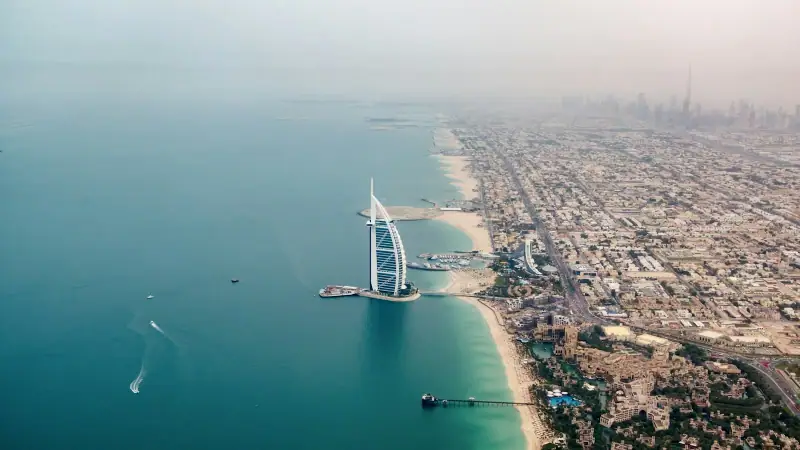
Jumeirah is a coast, not a single neighborhood. It stretches southwest of downtown, between old Dubai and the Marina, and is divided into numbered areas: Jumeirah 1, 2 and 3, then Umm Suqeim, further southwest. A major road runs along the shoreline, and the parallel streets have villas, small buildings, cafés and local shops.
This layout has a practical consequence: distances between points of interest are longer than they look on a map, and the heat discourages walking from one beach to another. Before confirming a booking, always look at where the lodging is relative to the sea, the main road and the place where you plan to spend your days.
Another source of confusion: Palm Jumeirah, the palm-shaped artificial island, has a similar name but lies further west, on the Marina side. Some travelers book “Jumeirah” thinking of the coast and end up on the island, or the reverse. Check the exact address and the map before paying.
Jumeirah 1 and 2: close to the center, neighborhood feel
The areas closest to the center are the most practical for a trip that mixes beach and sightseeing. There are mid-sized buildings, residences, a few hotels, and above all real neighborhood life: bakeries, cafés, small restaurants, supermarkets. The atmosphere is more local and less showy than the Marina’s.
This area is also close to the La Mer promenade and the public beaches, so you do not need a shuttle or a car to swim. As a first introduction to Dubai, it is a good compromise: the sea within walking distance, Downtown and old Dubai a reasonable taxi ride away.
Points to watch: noise from the main road if the lodging faces it directly, the real distance to the beach (some lodgings are more than fifteen minutes’ walk away), and the sometimes limited choice of classic hotels. Here, apartments and residences are often more numerous than big hotels.
Stay in Jumeirah
Hotels, residences and apartments by the sea: compare offers for your dates and budget.
Jumeirah 3: a residential in-between
Further southwest, Jumeirah 3 continues this neighborhood atmosphere, with tree-lined streets, villas and a few places to eat that residents like. There are few hotels, but there are residences and short-term rentals in quiet buildings.
It is a good choice if you want calm, a longer stay or a setting away from tourist bustle. In return, you will almost always depend on a taxi, ride-hailing or a car to get around. For travelers who like to live like a local, it is one of the most pleasant areas; for a short stay with lots of sightseeing, it is less practical.
Umm Suqeim and Madinat Jumeirah: facing the Burj Al Arab
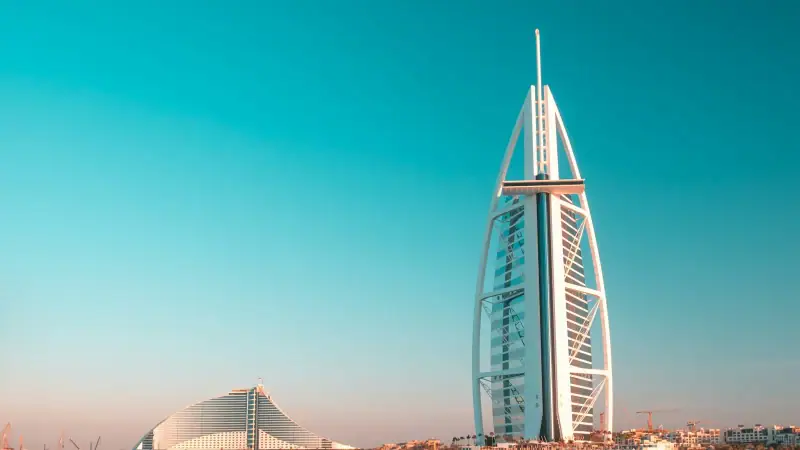
Umm Suqeim is the area of Kite Beach and of Jumeirah’s most famous view, that of the Burj Al Arab, the sail-shaped hotel. Around it is a complete tourist hub: the Madinat Jumeirah complex, with its traditionally inspired souk and canals, as well as several big seaside hotels, including the Jumeirah Beach Hotel.
Staying here is about the setting. Hotels generally have developed beaches, several pools and on-site restaurants, so you can spend several days without going anywhere. Families like the combination of beach and activities, couples the relaxing side. Rates, however, are at the high end, especially in high season.
If you do not want to pay the price of a big hotel, the streets of Umm Suqeim also have more affordable residences and apartments, a few minutes from the sea. They are often well placed for Kite Beach, the food trucks and the sunset promenade, without the services (and the price) of a hotel complex.
For details on these sights, see our article visiting Jumeirah.
Palm Jumeirah: the island of big resorts
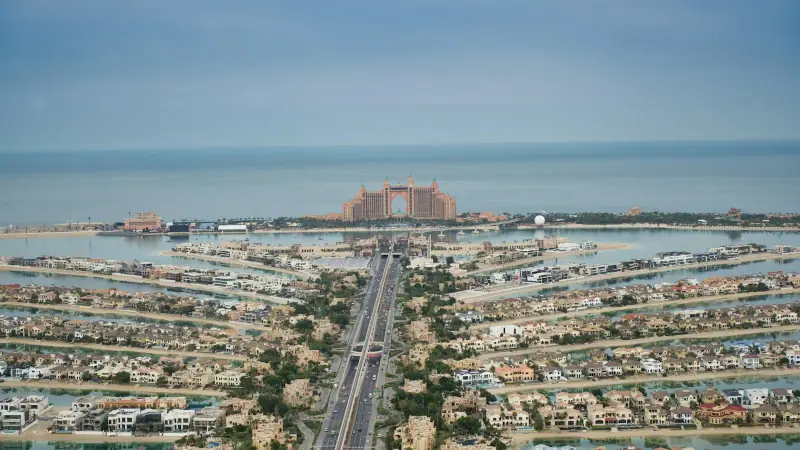
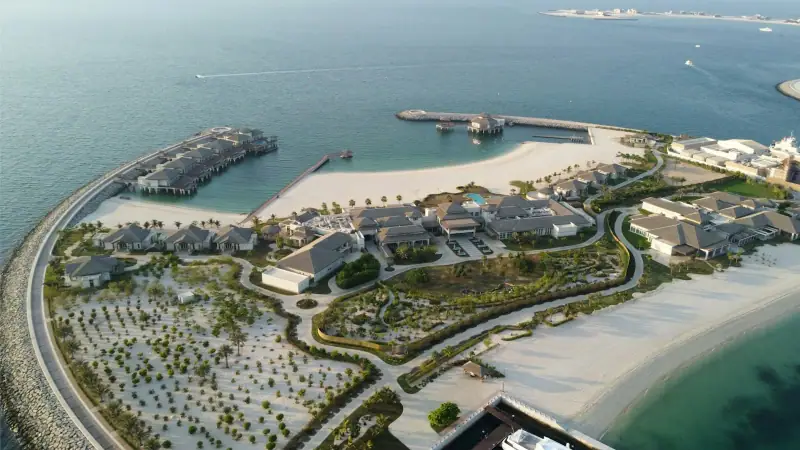
Palm Jumeirah is an artificial island linked to the coast, with residences and upscale hotels, especially on the crescent that surrounds it. There are very complete resorts, with private beaches, several pools, spas and restaurants. Atlantis The Palm is one of the best known.
It is the natural choice for a stay focused on relaxation, with the hotel as the destination. Families who want as many activities as possible at the resort often find what they need there. The advantages are the quiet and the beach; the drawback is the relative isolation: to visit Downtown or old Dubai, you need to plan a longer taxi or ride-hailing trip, and the return can take longer at rush hour.
The Palm also remains an expensive option overall. If your budget is tight, or if you want to see many urban sights, it is better to choose the mainland coast. For a comparison with another seaside area, see where to stay in Dubai Marina.
Sea outings from Dubai
Dhow or yacht cruise, views of the coast and towers: compare the outings offered.
Seafront hotel: turnkey comfort
Jumeirah’s hotels range from comfortable mid-range to palatial. The big asset is simplicity: a 24-hour reception, daily housekeeping, a pool, on-site breakfast, and often direct access to the beach. It is the right format for a stay of three to five nights, a couple’s trip or an arrival on a night flight.
A few points to check before booking:
- the beach: private, shared with other hotels or public a few minutes’ walk away;
- the pool: several pools, a kids’ pool, open all year;
- breakfast: included or not, because it changes the bill noticeably;
- the tourist tax: it is generally added to the nightly rate in Dubai, and it is not always included in the displayed price;
- alcohol: it is served in licensed hotels, which is not the case for small properties or most residences;
- extra fees: some resorts charge for additional services (activities, access to certain areas).
The rate depends a lot on the season: in the summer heat, prices drop sharply, while winter remains the most expensive period. Our article when to go to Dubai covers these differences.
Serviced residence, apartment or villa: space above all
Jumeirah is one of the few areas of Dubai where you find ground-level lodgings or villas, in addition to apartments in residences. For a week or more, or for a group, it is often more comfortable than a hotel room, with an equipped kitchen, washing machine, separate living room, and sometimes a garden or a private pool.
For a family, it is even the most flexible format. Our comparison apartment or hotel for a family of 4 covers the advantages of each. Here are some precautions specific to this type of lodging:
- registration of the property: in Dubai, short-term rental is regulated; choose listings from a clearly identified manager;
- access conditions: arrival time, key handover, possible deposit;
- house rules: noise, visitors, pool use;
- the real condition of the property: read recent reviews and travelers’ photos, not only the listing pictures;
- the exact location: a lodging “in Jumeirah” can be several streets from the sea.
Eating some meals at home also lightens the budget for a trip to Dubai, provided you have a supermarket nearby.
Hotels and residences on Palm Jumeirah
Big seaside resorts and residences: compare the island's lodging.
Which format to choose by profile
Here is a quick guide to decide without spending hours comparing:
- Couple, 3 to 5 nights: hotel in Umm Suqeim or on the Palm, with beach and breakfast;
- Family with kids: apartment or residence in Jumeirah 1 or 2, close to the beach and shops, or a big hotel with a kids’ club;
- Group of friends: multi-bedroom apartment or villa, preferably with easy access to taxis;
- Small budget: residential streets of Jumeirah 2 and 3, set back from the coast, with a short trip to the beach;
- Long, relaxing stay: big resort on the Palm or in Umm Suqeim, with everything within reach;
- Traveler who wants to see many sights: Jumeirah 1 or 2 for proximity to the center, or two successive lodgings.
For stays of more than five days, many travelers split their nights between two neighborhoods: a few nights facing the sea in Jumeirah, then a few nights in Downtown for the urban sights. This avoids spending long hours in transport each day.
Getting around from Jumeirah
Jumeirah’s main challenge is its layout. The metro serves an axis set back from the coast, which generally means an extra taxi, ride-hailing or bus trip to reach the station from the beach. Taxis and ride-hailing are plentiful and remain a simple solution, especially in the evening. The options are covered in our guide getting around Dubai.
To reach Downtown, generally allow 15 to 30 minutes by car outside rush hour, more at busy times. Dubai International Airport is about thirty minutes away by car depending on the area. Allow plenty of extra time on departure day.
If you plan to string together several excursions (desert, Hatta, Abu Dhabi), a rental car can simplify your trip. You can compare rental companies.
Rent a car in Dubai
Compare rental companies by dates and pickup location.
Organized excursions most often leave with hotel pickup: this is the case for the desert safari and the day trip to Abu Dhabi from Dubai.
When to come and when to book
Jumeirah is in high demand from fall to spring, when temperatures are right for the beach and terraces. For these periods, book several weeks ahead, especially for the end-of-year holidays and school holidays. If you want lower prices, summer is much cheaper, provided you accept the heat and stick to pools, shopping centers and indoor activities.
Always compare several options on the same dates, reading the cancellation terms. Free cancellation lets you change your mind if a better location appears or your plans change.
Mobile internet in Dubai
Saily offers eSIM plans in more than 150 countries: check the offer for the United Arab Emirates before you leave.
For more on connectivity there, see our article SIM cards and eSIMs in Dubai.
Common mistakes to avoid
A few traps come up often for travelers who book in Jumeirah:
- confusing Jumeirah and Palm Jumeirah: the two are far apart and very different; look at the map before confirming;
- underestimating the distance to the beach: a few hundred meters in full sun make a big difference in summer;
- booking without reading recent reviews: a property’s condition, noise or nearby construction can change fast;
- forgetting extra fees: tourist tax, deposit, cleaning, parking;
- not checking beach access: some properties advertise “seafront” without a direct beach;
- neglecting air conditioning: in summer, it is a decisive criterion.
Also respect local customs in common areas, at the pool and on the beach: our article on rules and customs in Dubai covers the basics. Consider comparing travel insurance policies before you leave. Entry rules depend on your passport; check the official travel advice of your government before you book: travel.state.gov (US), GOV.UK (UK), travel.gc.ca (Canada), Smartraveller (Australia) (checked November 2026). More in our article on entry requirements for Dubai.
Frequently asked questions
What is the best area to stay in Jumeirah?
It depends on your trip. Jumeirah 1 and 2 are closest to the center and restaurants, Umm Suqeim is ideal for facing the Burj Al Arab and Madinat Jumeirah, and Palm Jumeirah suits relaxing stays in a big resort. Residential streets set back from the coast are generally quieter and cheaper.
Are Jumeirah and Palm Jumeirah the same thing?
No. Jumeirah is the mainland shoreline, made up of residential neighborhoods and public beaches. Palm Jumeirah is a palm-shaped artificial island, linked to the coast, with big hotels and residences. The two are in different places and have very different atmospheres.
Can you do without a car if you stay in Jumeirah?
It is possible, but less simple than in Downtown. The metro follows an axis set back from the coast and distances between beaches are long in the heat. Taxis and ride-hailing are plentiful and inexpensive on short trips. A rental car can be useful for several excursions.
Are the beaches accessible from Jumeirah lodgings?
Yes, the coast has several free public beaches, and many hotels have their own beach. Before booking, check whether the beach is private, shared or a few minutes' walk away, and what is included (loungers, umbrellas, towels).
Is Jumeirah suitable for families with kids?
It is one of the most pleasant areas of Dubai for families: generally calm sea, public beaches, parks and promenades. An apartment or residence with a pool and kitchen often gives more flexibility than a simple hotel room.
When should you book lodging in Jumeirah?
High season broadly runs from fall to spring, when temperatures are pleasant. Book several weeks ahead for this period, especially for the end-of-year holidays and school holidays. Summer is much cheaper but very hot.
Is Jumeirah well located for visiting Dubai?
It is halfway between old Dubai and the Marina, which makes it a good base. Generally allow 15 to 30 minutes by car or taxi to reach Downtown outside rush hour, more at busy times.
More Dubai guides
Keep reading
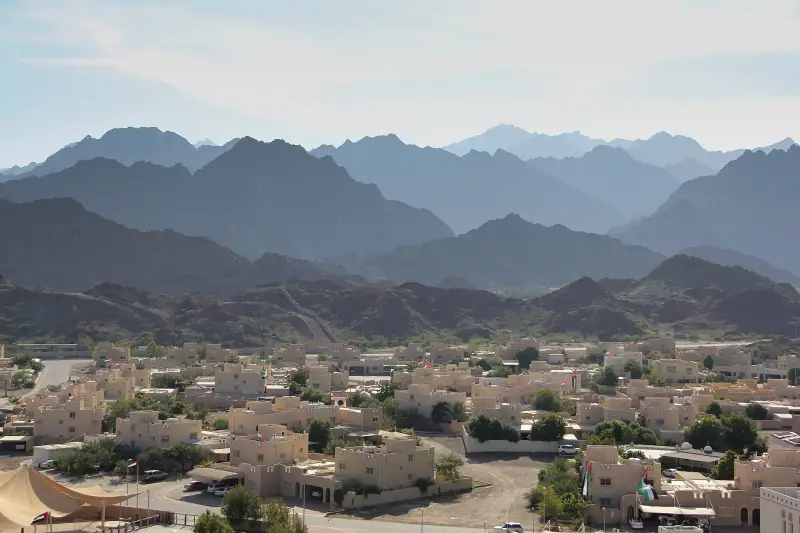
Where to stay in Hatta: areas and types of lodging
Hotel, lodge, dome, caravan or villa: compare Hatta's areas and lodging types to choose where to stay in the Hajar Mountains.
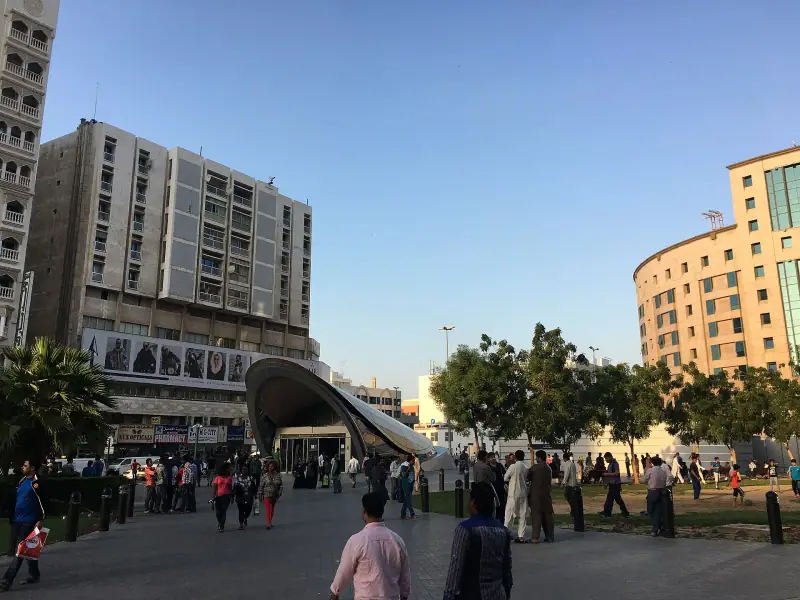
Where to stay in Deira: neighborhoods and types of lodging
Al Ras, Naif, Al Rigga, Port Saeed or Garhoud: compare Deira's areas and lodging types to choose where to stay for your budget and trip.
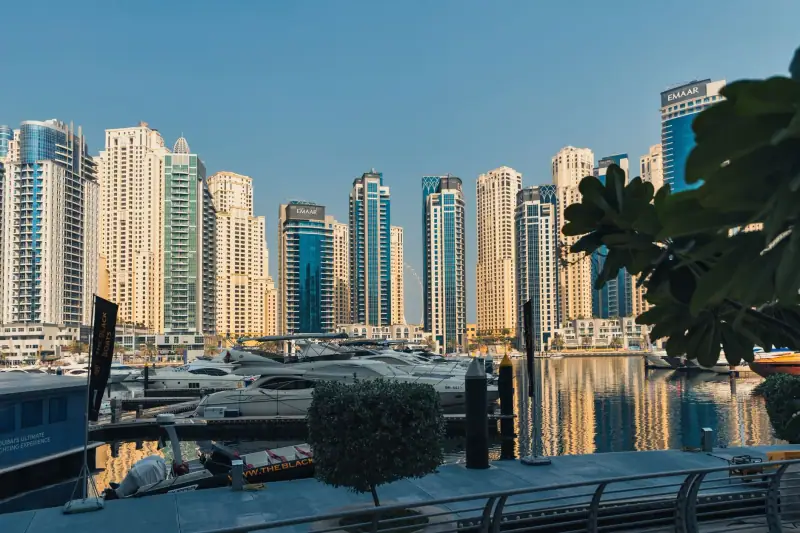
Where to stay in Dubai Marina: areas and types of lodging
Marina Walk, JBR, JLT, Bluewaters or Al Sufouh: compare areas and lodging types to choose where to stay in Dubai Marina for your trip.
Ready-made
Dubai itineraries
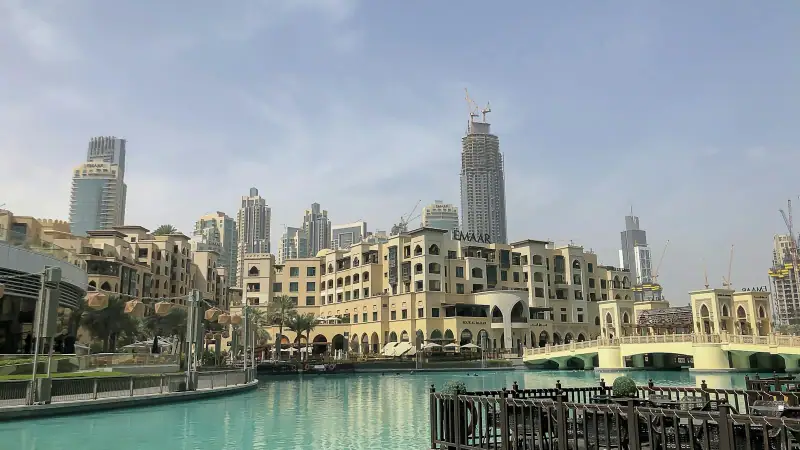
5 days
Dubai in 5 days with kids: stops, travel times and a realistic pace
Dubai in 5 days with children: a plan by area, distances and travel times, hotel breaks and ways to cope with the heat.
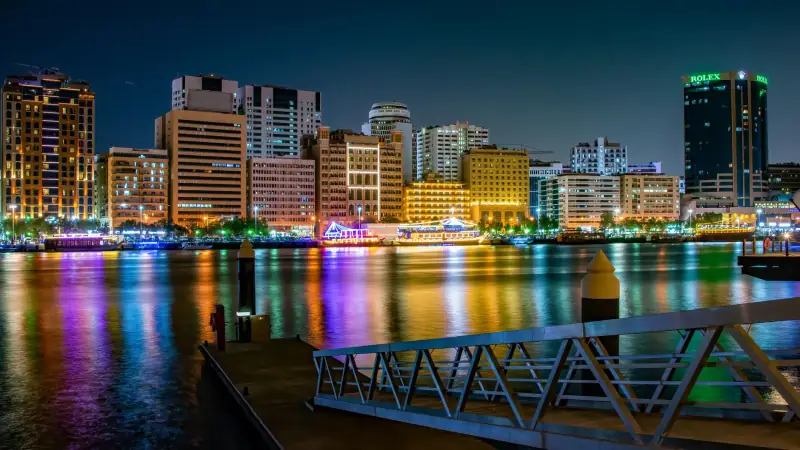
7 days
One week in Dubai: a day-by-day itinerary, from the modern center to the desert
Seven days in Dubai: Downtown, old Dubai, the coast, the desert, day trips to Abu Dhabi and Sharjah or Hatta. A day-by-day plan with transport and tips.
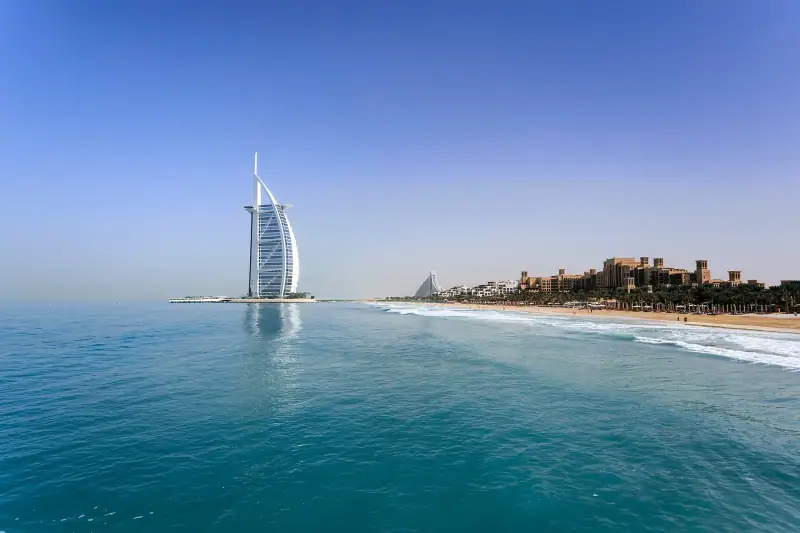
4 days
4 days in Dubai: a day-by-day itinerary for a first stay
A 4-day Dubai plan: Downtown and Burj Khalifa, old Dubai and the souks, Marina and Palm Jumeirah, and the desert. Transport, pacing and tips.