Where to stay
Where to stay in Deira: neighborhoods and types of lodging
We may earn a commission when you book through links on this page, at no extra cost to you. We don't visit or try the places we cover: we summarize published sources. How we work
In short
- Choose Al Ras for the souks and historic atmosphere, Al Rigga or Baniyas Square for the metro and restaurants, Port Saeed or Garhoud for the airport and business trips.
- Deira lodging is generally cheaper than in the tower districts, with the airport on this side of the Creek.
- There is no beach nearby: you need a taxi, ride-hailing or public transport to reach the big public beaches.
- Do not confuse Deira Islands (a sea development project) with Palm Deira, a metro station in historic Deira.
Deira is the Dubai from before the skyscrapers: a dense, cosmopolitan trading district on the northeast bank of the Creek. It is also one of the best places in the city to stay without blowing your budget. But “staying in Deira” can mean very different things: a room a few steps from the souks, a waterfront business hotel, a hotel near the airport or a quieter residence set back from the action.
Our general guide where to stay in Dubai compares the city’s major neighborhoods. Here, we focus on Deira to help you choose the right area and the right type of lodging, and avoid bad surprises.
In short: choose Al Ras for the souks and the historic atmosphere, Al Rigga or Baniyas Square for the metro and restaurants, Port Saeed or Garhoud for the airport and business trips, and accept that you will need to travel to reach the beach or Downtown.
Why choose Deira for your stay
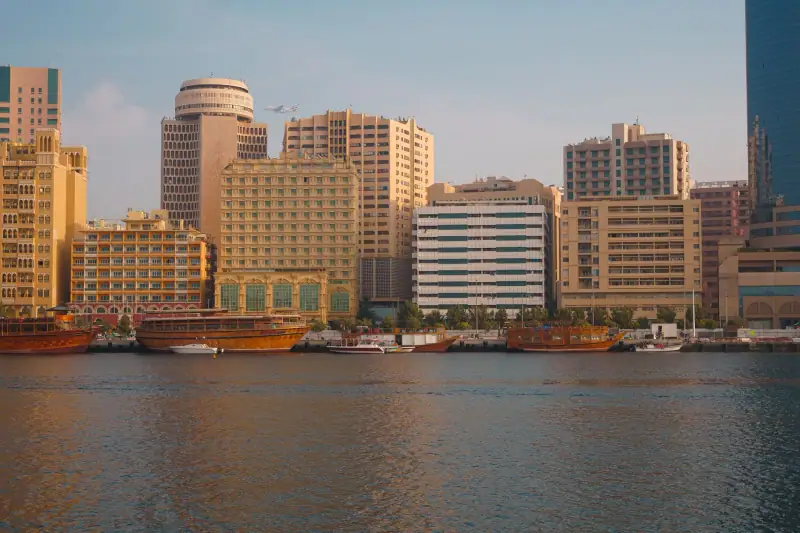
Deira has a strategic position. The district is linked to the rest of the city by the metro, by bridges and tunnels over the Creek, and by abras, the wooden boats that cross the inlet for a nominal fare. The international airport is on this side of the Creek, which makes late arrivals and early departures easier.
The main appeal is the combination of location and price. Lodging there is generally cheaper than in the tower districts, with a wide choice of family restaurants serving very varied cuisines, often at prices well below those of the big hotels. For what to do there during the day, see our article visiting Deira: what to see and do.
The district also has its limits. The atmosphere is that of a working-class city center: older buildings, crowded sidewalks, honking and traffic jams in the late afternoon. There is no beach nearby, and hotel pools replace sea swimming. Those who want a seaside atmosphere or a view of the Burj Khalifa will be better served elsewhere, for example in Dubai Marina.
Al Ras and Baniyas Square: at the foot of the souks
Al Ras is the historic area of Deira, home to the gold and spice souks, the covered lanes and the landing from which abras leave for Bur Dubai. Staying here means waking up in the district you came to see. In the evening, when the heat drops, the walk to the Creek and the quays is a real pleasure, with no transport needed.
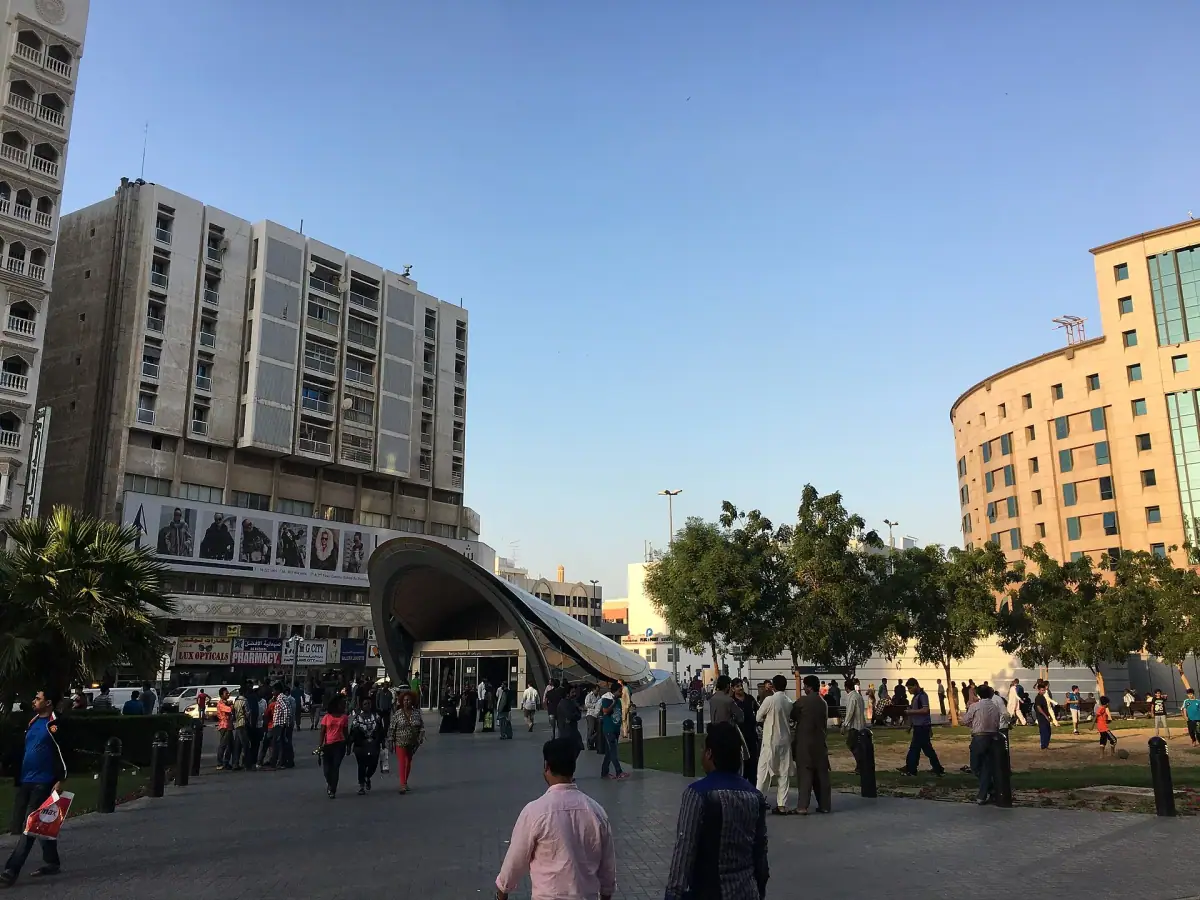
The neighboring Baniyas Square area is one of the district’s transport hubs, with a metro station on the green line. The Palm Deira and Al Ras stations, on the same line, complete the service. There are many small hotels, guesthouses and budget or mid-range properties.
Stay near the Deira souks
Hotels near the Creek and the souks: compare offers for your dates and budget.
There are some practical points of caution. Streets are lively late, so noise can be an issue: ask for a room on a high floor or on the courtyard side. Buildings are often older, and the condition of rooms varies markedly from one property to another. Read the reviews from recent months, look at travelers’ photos and check that the air conditioning is described as effective, an essential criterion from spring on.
To make the most of being close to the souks, also note the customs to respect in traditional districts: our article on rules and customs in Dubai covers appropriate dress and behavior.
Naif: working-class, lively and very inexpensive
North of the gold souk, Naif is a district of markets, shops and modest housing. The atmosphere is that of a city within a city: tight stalls, dense crowds in the evening, simple restaurants open late. It is probably the part of Deira where you see the most everyday life, and one of those where rates are lowest.
It suits travelers who put price and local life first, and who accept a no-frills setting. It suits less those looking for calm, a high-end hotel or a postcard atmosphere. If you choose this area, pay particular attention to recent reviews on cleanliness and on the exact street where the property stands: from one street to the next, the experience can change noticeably.
A few practical habits in Naif:
- keep your belongings in front of you in the crowd, as in any busy market;
- on arrival, note the way to the nearest metro and the shadiest path;
- choose restaurants frequented by locals, where turnover is quick;
- bring small change for taxis and abras.
Al Rigga and Al Muraqqabat: the good compromise
Al Rigga is one of the busiest residential and shopping streets in Deira. It is lined with mid-rise buildings, with shops and restaurants at street level, and has a metro station of the same name on the red line. This line also serves several neighboring stations and reaches the airport terminals, which makes Al Rigga a very practical base.
The neighboring Al Muraqqabat area is similar: a dense district with plenty of shops and many mid-range hotels. For many travelers, it is Deira’s best compromise: you are within walking distance of the metro, you can reach the souks in a few minutes, and you can easily find somewhere to eat without taking a car or taxi.
This type of area particularly suits stays of four to seven nights, travelers who like walking in real city streets, and those who want to reach Downtown or the Marina by public transport. Compare the walking distance to the station: in midsummer, 500 meters (1,640 ft) in the sun is a real consideration, while in winter it is a pleasant little walk. To understand the lines and transport cards, see our guide to getting around Dubai.
Port Saeed and Garhoud: business, airport and layovers
Port Saeed runs along the Creek and mixes offices, hotels and residential towers. The area also has a large shopping center, City Centre Deira, also served by a red-line metro station. The focus is more on business than tourism, but lodging there is often of a good standard, with modern rooms and full services.
Garhoud, further south, is near the airport and the bridge spanning the Creek. The atmosphere there is more open than in the historic center, with wide avenues and hotels often designed for business or transit travelers. It is a good option for a short stopover, a long layover or a very early departure.
Hotels near Dubai airport
Layover, late arrival or early flight: compare hotels in Garhoud and around the airport.
The main drawback is the lack of charm: you take a taxi or the metro for everything, and there are few pleasant walks. In return, service quality is often consistent and logistics are simple. Also keep in mind that these areas are not the airport itself: check on the map the exact distance between the hotel and the terminal, as well as any shuttles.
Types of lodging in Deira
The district covers almost the whole range, except big seaside resorts. Here are the main categories.
Budget hotels and guesthouses
These are the cheapest places to stay, concentrated around Naif, Baniyas Square and Al Muraqqabat. Rooms are simple, sometimes small, with a private bathroom and air conditioning. They suit short stays and travelers who spend their days out. Read recent reviews carefully, because quality varies a lot.
Mid-range hotels
This is the core of the offer: three- or four-star hotels, sometimes with a pool, breakfast and a restaurant. They are found in Al Rigga, in Port Saeed and on the main roads. They offer the best value for most travelers, especially couples and small families.
High-end hotels on the Creek
Several higher-category properties line the Creek, with water-view rooms and hotel restaurants. They appeal to those who want the charm of old Dubai without giving up comfort. Creek-view rooms generally cost more: compare with a standard room if the view is not a priority.
Apartments and serviced residences
For a week or more, or for a family, an apartment with a kitchen gives you space and independence. Our comparison lodging for a family of 4 in Dubai explains when an apartment is the better choice. In Dubai, check that the property is properly registered with the tourism authorities and read the conditions: deposit, cleaning fees, arrival times.
Hotels and apartments in Deira
From tight budgets to a hotel with a Creek view: compare Deira lodging and filter by budget.
Deira Islands: an area under construction
The name Deira also refers to a large offshore development project, Deira Islands, which plans artificial islands with hotels, residences and shops. Work is progressing in phases. Travelers should be careful: check the state of progress, accessibility and the real distance to the metro before booking lodging in this area.
Also do not confuse the project with the Palm Deira metro station, which is in historic Deira, between Baniyas Square and Al Ras. The similar names sometimes lead to booking in the wrong place: always look at the property’s map and not only its name.
How to choose by profile
- First visit focused on culture and souks: Al Ras or Baniyas Square, to be in the middle of old Dubai.
- Tight budget: Naif or Al Muraqqabat, reading the reviews carefully.
- Couple or small family looking for a compromise: Al Rigga, for the metro and restaurants.
- Layover or early departure: Garhoud or the airport surroundings.
- Business trip: Port Saeed, with a good hotel and quick access to the main roads.
- Trip of more than a week: an apartment, or splitting the nights between Deira and a seaside district.
If you are torn between several areas, a common solution is to split the trip: a few nights in Deira for old Dubai and a controlled budget, then a few nights near the sea for beach days. Public transport makes the change simple. To estimate your total spending, see our article on the budget for a trip to Dubai.
Getting around from Deira
The metro is the district’s major asset. The green line serves Baniyas Square, Palm Deira, Al Ras and other stations, while the red line goes through Al Rigga, City Centre Deira and the airport terminals. Union station lets you switch from one line to the other. Once on the network, you can reach Downtown, the Dubai Mall or the Marina without a car, with travel times that vary depending on the connection.
Taxis and ride-hailing are affordable, but traffic in central Deira can be very dense in the late afternoon: allow extra time if you have a flight, a reservation or an excursion. To cross the Creek, the abra remains the most picturesque and cheapest way, with a nominal fare of about one dirham per person.
For connectivity, a local SIM card or an eSIM means you do not have to rely on hotel Wi-Fi for maps and ride-hailing. Our article on SIM cards and eSIMs in Dubai compares the options. Saily offers plans in more than 150 countries: check the offer for Dubai before you leave.
What to do from Deira
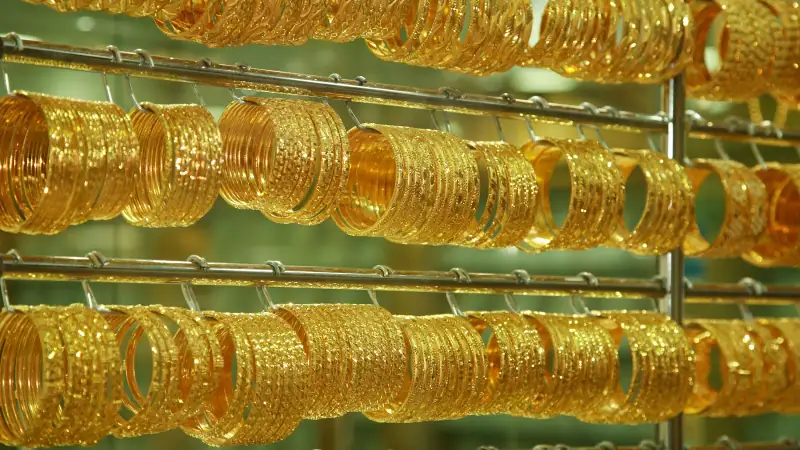
Staying in Deira puts you close to several classic experiences: the souks, the Creek, the dhow wharves, and the rest of the Bur Dubai bank, reachable by abra. To go deeper into old Dubai, read our article the Creek, Al Fahidi and the souks.
In the evening, a dhow cruise on the Creek is a pleasant way to see the district from the water, with the city lights as a backdrop. Formats range from a simple ride to dinner on board: read the description, departure time and cancellation terms.
Dhow cruise on the Creek
See Deira from the water at sunset: compare cruises, their times and cancellation terms.
For meals, the district is one of the most interesting in the city: Indian, Pakistani, Iranian, Lebanese or Emirati cuisine, often at very low prices. Our guide what to eat in Dubai gives pointers on dishes to try.
Mistakes to avoid
- booking without looking at the map: Deira is large, and a hotel “in Deira” can be several kilometers from the souks;
- forgetting the distance to the metro: a few hundred meters in the sun make a big difference from April to October;
- not reading recent reviews: in an older district, room condition and noise change;
- confusing Deira Islands and Palm Deira: the first is an offshore project, the second a metro station in the historic district;
- underestimating traffic jams: allow extra time to reach the airport by car or taxi in the late afternoon;
- forgetting extra fees: tourist tax, deposit, parking and breakfast are not always included.
Also consider travel insurance: compare policies before you leave. Entry rules depend on your passport; check the official travel advice of your government before you book: travel.state.gov (US), GOV.UK (UK), travel.gc.ca (Canada), Smartraveller (Australia) (checked November 2026). Our article on entry requirements for Dubai has more detail.
Booking at the right time
High season in Dubai broadly runs from fall to spring, when temperatures are pleasant. Weekends, school holidays and the end of the year are the busiest periods: book several weeks ahead. Summer is much cheaper, but the heat limits outdoor visits, so a hotel with good air conditioning and a pool matters even more. To choose your dates, see our guide when to go to Dubai.
Always compare several options on the same dates and read the cancellation terms: a freely cancelable booking gives you flexibility if your plans change.
Our recommendation
For most travelers, the best compromise in Deira lies between Al Ras and Al Rigga: close to the souks and the Creek, with a metro station at a reasonable distance. Choose a mid-range hotel for a short stay, an apartment for a week or more, and Garhoud or Port Saeed if the airport or work are your priorities. If the beach is essential, compare with the Marina or Jumeirah in our general guide where to stay in Dubai, and choose the area before comparing hotels.
Frequently asked questions
Is Deira a good area to stay in Dubai?
Yes, if you want lodging cheaper than in the tower districts, close to the souks, the metro and the airport. In return, the atmosphere is dense and urban, traffic is heavy and there is no beach nearby.
Which area of Deira should you choose for a first visit?
The Al Ras area, around the souks and the Creek, is the most atmospheric for those who want to feel old Dubai. Al Rigga and Baniyas Square are good compromises for metro access and restaurant choice. Port Saeed and Garhoud are better suited to business trips or layovers.
Is Deira safe, especially in the evening?
Dubai is generally considered a very safe city, and Deira is no exception. Shopping streets stay lively late. As anywhere, keep your belongings in front of you in market crowds and read recent reviews about the exact street of your hotel.
Can you reach the beach from Deira?
Not on foot. The big public beaches are several kilometers away, toward Jumeirah and the Marina. Plan on a trip by taxi, ride-hailing or public transport. If swimming is your priority, lodging by the sea will be more practical.
Is it practical to stay in Deira before an early flight?
It is one of the district's biggest strengths: Dubai International Airport is on this side of the Creek, and the metro's red line links several Deira stations to the terminals. Check the metro's service hours if your flight leaves very early; otherwise take a taxi.
Do you need to rent a car if you stay in Deira?
It is not necessary for sightseeing: the metro, taxis and abras are enough. Traffic and parking are complicated in central Deira. A car only makes sense for independent excursions, for example to Hatta.
Are Deira hotels really cheaper?
Generally yes, especially in the budget and mid-range categories, compared with Downtown, the Marina or Palm Jumeirah. Prices vary a lot by season, weekends and events: always compare on your exact dates.
More Dubai guides
Keep reading
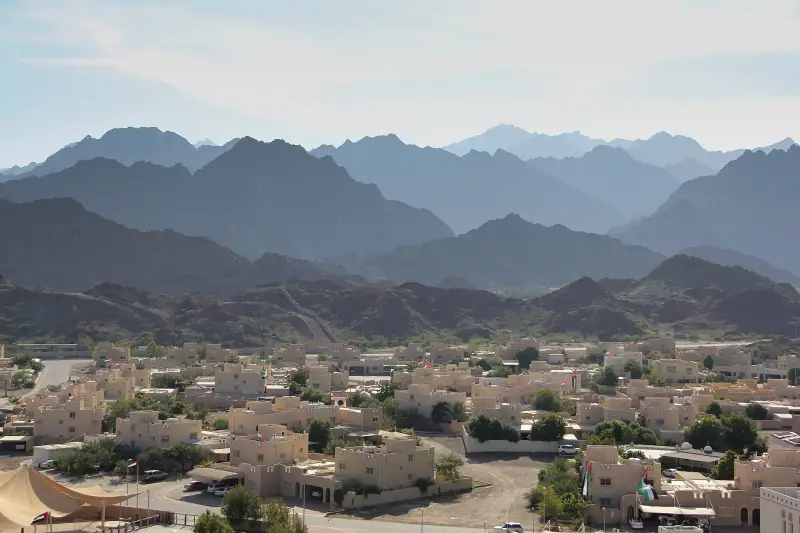
Where to stay in Hatta: areas and types of lodging
Hotel, lodge, dome, caravan or villa: compare Hatta's areas and lodging types to choose where to stay in the Hajar Mountains.
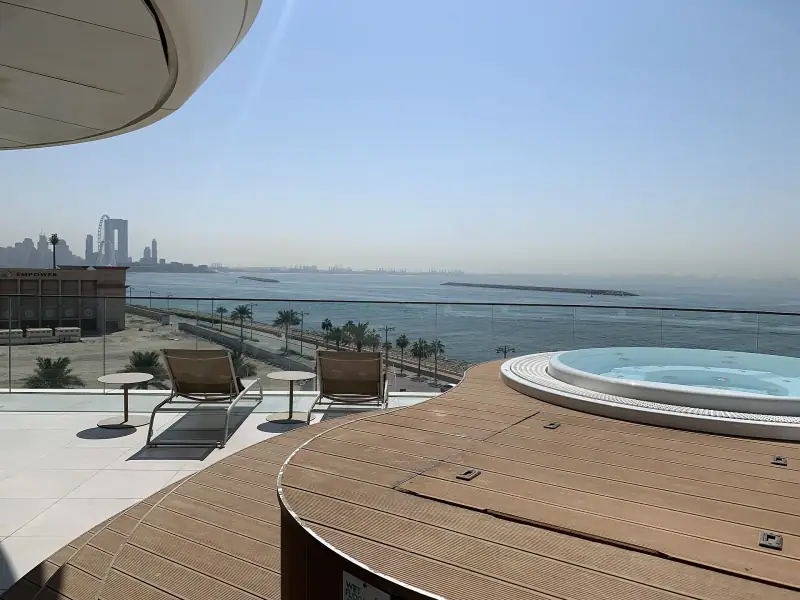
Where to stay in Jumeirah: areas and types of lodging
Jumeirah 1, Umm Suqeim, Madinat Jumeirah or Palm Jumeirah: compare areas and lodging types to choose where to stay in Jumeirah, Dubai.
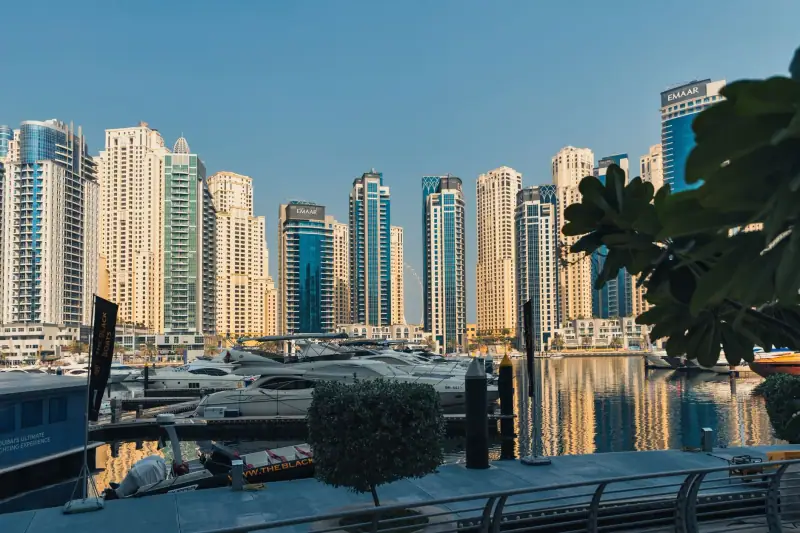
Where to stay in Dubai Marina: areas and types of lodging
Marina Walk, JBR, JLT, Bluewaters or Al Sufouh: compare areas and lodging types to choose where to stay in Dubai Marina for your trip.
Ready-made
Dubai itineraries
5 days
Dubai in 5 days with kids: stops, travel times and a realistic pace
Dubai in 5 days with children: a plan by area, distances and travel times, hotel breaks and ways to cope with the heat.
7 days
One week in Dubai: a day-by-day itinerary, from the modern center to the desert
Seven days in Dubai: Downtown, old Dubai, the coast, the desert, day trips to Abu Dhabi and Sharjah or Hatta. A day-by-day plan with transport and tips.
4 days
4 days in Dubai: a day-by-day itinerary for a first stay
A 4-day Dubai plan: Downtown and Burj Khalifa, old Dubai and the souks, Marina and Palm Jumeirah, and the desert. Transport, pacing and tips.