Where to stay
Where to Stay in Domme: Neighborhoods and Lodging Types to Choose From
We may earn a commission when you book through links on this page, at no extra cost to you. We don't visit or try the places we cover: we summarize published sources. How we work
In short
- For a first visit, the heart of the bastide around the Place de la Halle is the most pleasant: everything, including the Barre viewpoint, is on foot.
- Domme is a village of a little over 1,000 inhabitants: lodging is limited and fills fast in summer; Sarlat offers a far wider choice.
- Parking is the sensitive point in the perched bastide; hamlets and countryside around Domme offer space, calm and often a pool, but require a car.
- Book several weeks, even months, ahead for July-August; Domme is excellent for one or two nights, a bigger base or cottage for five to seven.
Domme is one of those bastides that make you dream from the very first photo: a 13th-century fortified town set on a promontory, with the Dordogne valley unfolding below. But this fortress setting has a very practical consequence. The village is small, its lanes narrow, traffic restricted and lodging supply necessarily limited. Choosing well where to sleep, in the bastide or around it, makes a big difference to the stay: a night in the village means having the village to yourself once the day’s groups have left.
This guide deliberately recommends no particular establishment: prices, closures and reviews change fast. It gives you the criteria to choose the right area and the right type of lodging, then sends you to comparison sites to check availability for your dates. To plan your days there, our guide to visiting Domme covers the Porte des Tours, the cave, the Place de la Halle and the Barre viewpoint.
Understanding Domme’s geography before booking
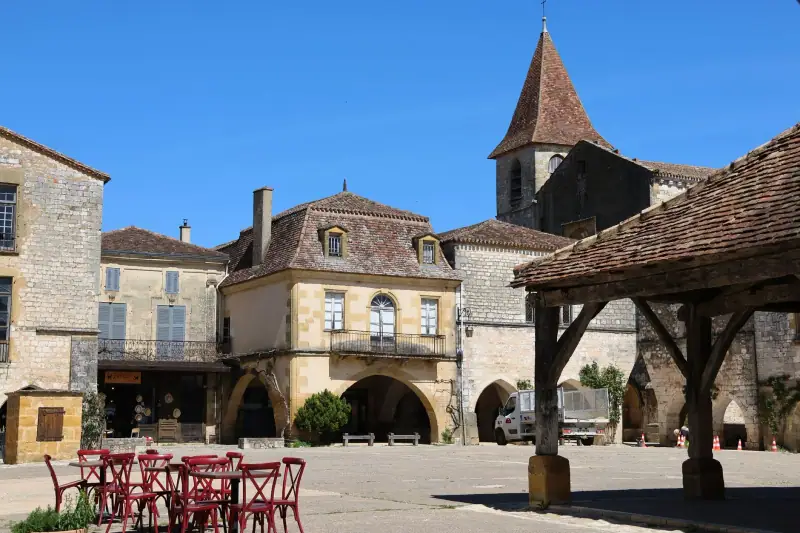
Domme occupies a rocky spur that overlooks the Dordogne valley. The bastide, on a regular plan like many medieval bastides, is enclosed within its ramparts. The center is easy to walk, but keep this in mind before booking: the bastide is perched, so every access from the valley is by the road that climbs, and parking in the center is limited.
This layout has very concrete consequences for the traveler:
- Everything is close, but not always flat. Distances are short, but some streets slope.
- Parking is the sensitive point. Many lodgings in the center have no private parking, and space is short in summer.
- The mood changes between day and evening. The bastide is very busy during the day, then regains great calm at nightfall.
The options can be summed up in four sectors: the heart of the bastide, the surroundings of the ramparts and viewpoint, the hamlets and neighboring countryside, then more distant bases like La Roque-Gageac or Sarlat. The choice depends on three criteria: how you travel, the length of your stay and the mood you want. To place Domme in the Black Périgord, our complete Dordogne guide gives the geographic landmarks.
The heart of the bastide: sleeping at the foot of the covered market
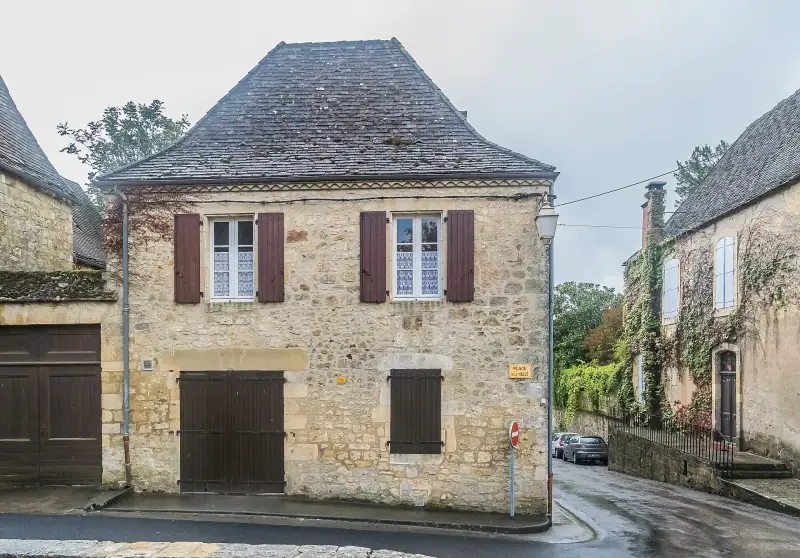
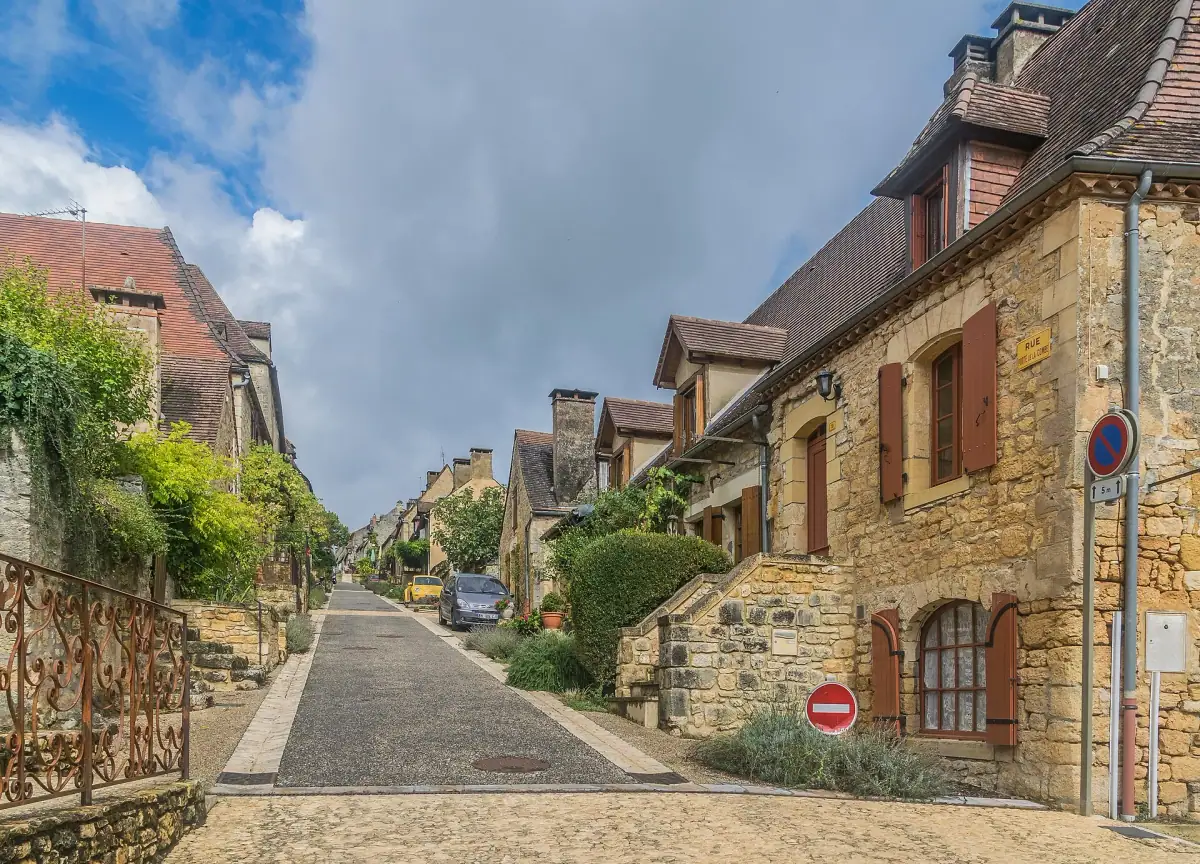
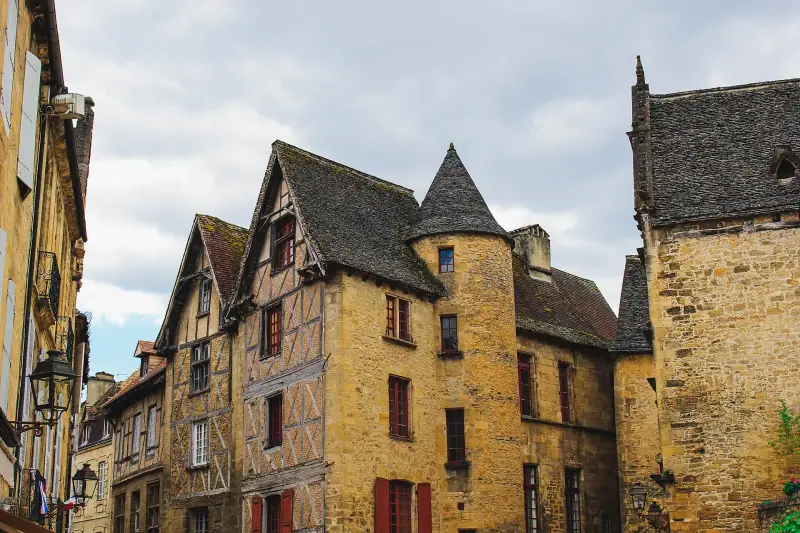
This is the most immersive choice, and the one to consider for a weekend or a first visit. Lodgings in the lanes around the Place de la Halle are often golden-stone houses, sometimes former homes with thick walls, converted into a boutique hotel or B&B. Waking up here means enjoying empty lanes early in the morning, before the first visitors arrive.
Strengths:
- The covered market, shops, restaurants and viewpoint are all on foot.
- A remarkable mood in the evening, when the bastide empties and the stone takes its golden hues.
- Buildings full of character, sometimes with a courtyard, terraced garden or valley view.
Limits:
- Parking is limited: ask the host for the recommended solution before booking.
- Car access in the lanes can be narrow and regulated; follow the lodging’s directions.
- Rates are generally higher than in the countryside, especially in summer and on fine-weather weekends.
- Supply is limited: the best addresses fill very quickly.
Who it suits: Couples, short stays, fans of good photos, and those who want to leave the car parked for the length of their stay.
Lodging in Domme
Compare hotels, B&Bs and rentals of the bastide and its surroundings, with availability for your dates.
Around the ramparts and viewpoint: the view first
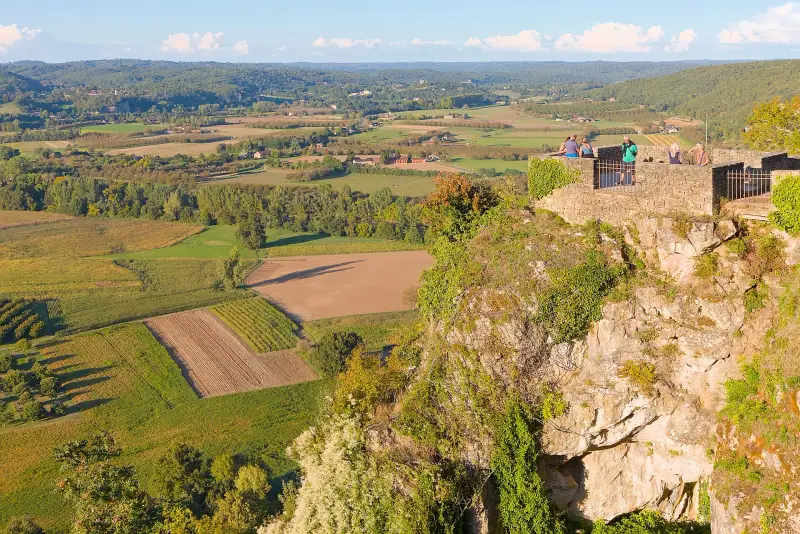
Approaching the edge of the spur, you reach the Barre viewpoint sector, where the view plunges onto the meanders of the Dordogne, the walnut fields and the neighboring cliffs. Lodgings on this side of the bastide often rely on the panorama: terrace, overhanging garden, room facing the valley.
Strengths:
- Spectacular views, especially at sunrise and sunset.
- A deeper calm than in the center, away from the bustle of the covered market.
- Breakfast or an aperitif facing the valley, which is often the charm of the stay.
Limits:
- There are fewer addresses than in the center: book early.
- Restaurants and shops remain a few minutes’ walk away, which is acceptable, but worth keeping in mind after a long day.
- The slope and steps can be tiring with heavy bags, a stroller or reduced mobility.
Who it suits: Travelers for whom the view matters more than immediate proximity to shops, and those who like contemplative stays.
Hamlets and neighboring countryside: space and quiet
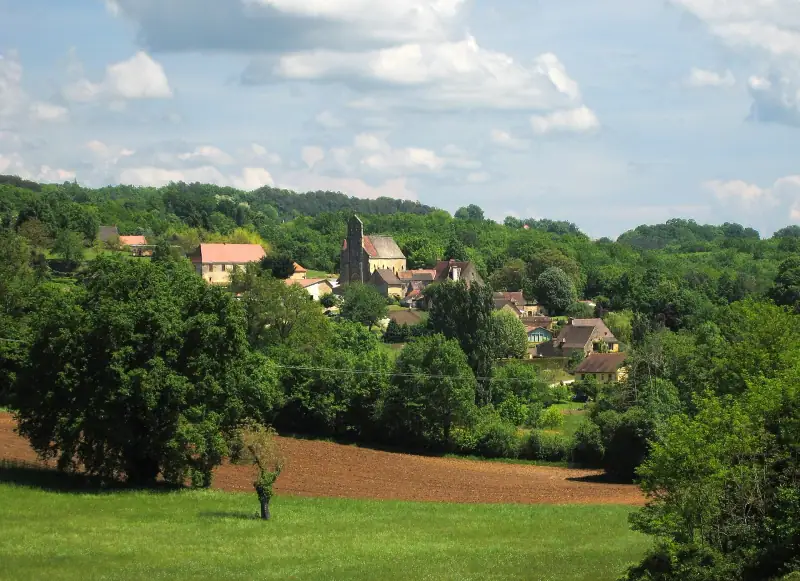
If you travel by car, widening the search to a few kilometers around the bastide gains you space, calm and often budget. The plateaus and the neighboring valley are full of stone houses, B&Bs and cottages, often with a garden, pool or view of the countryside and walnut trees.
Strengths:
- Easy parking, a garden, sometimes a pool.
- Complete silence at night, away from the ramparts and the day’s groups.
- Rates generally gentler than in the bastide, especially for week-long stays.
- A central position for exploring the Black Périgord.
Limits:
- A car is essential, including for dinner.
- Some country roads are narrow and winding, and poorly lit at night.
- In summer, you must arrive early in Domme to find a parking space.
Who it suits: Families, groups of friends, week-long stays and those who want a restful home base. Our guide to renting a car in the Dordogne helps you choose the right option.
Which type of lodging to choose?
The valley offers a full palette, but in proportions different from those of a big city: B&Bs, cottages and campsites weigh more than large hotels.
The hotel: for simplicity and service
A hotel suits short stays and those who want classic service: reception, breakfast, daily cleaning. In the bastide, establishments are modest in size, often in old buildings with a careful setting, which also means rooms of very varied sizes.
Check: whether there is parking, an elevator in old buildings, air conditioning in midsummer (hot nights are frequent in the Black Périgord), reception hours and annual closure periods.
The B&B: for charm and good advice
It is one of the Périgord’s great strengths. B&Bs often occupy stone houses, townhouses or former farms. The host knows the terrain: markets, producers, walks, visit hours. Their advice is often worth more than a guidebook’s.
Good to know:
- Breakfast is generally included and often homemade.
- Capacity is limited: book early for weekends and summer.
- Agree on arrival time with the host, especially if you arrive late.
- Some places close in winter.
The apartment and furnished rental: for freedom
For two to three nights or more, a furnished rental or small house offers a kitchen and more space. You can bring back market products and cook for yourself, a real pleasure in such a food-loving region. Our guide to Périgord food specialties will help you plan your meals.
Check: how you arrive (key handover, key box), cleaning fees, whether linens are provided and parking.
The cottage: for longer family stays
For a week or more, with family or friends, a cottage in the Black Périgord countryside is often more comfortable and cheaper: garden, possible pool, several bedrooms. You need a car, since these lodgings are rarely served by public transport.
Check: the changeover day (often Saturday in summer), the actual distance to the bastide and the condition of the access road.
The campsite: a Dordogne tradition
The Dordogne valley is camping country: simple family sites, campsites with a pool, equipped accommodations (mobile homes, equipped tents, cabins), some by the water. For families and tight budgets, it is often the cheapest option, and it goes well with canoeing, covered in our guide to canoeing the Dordogne.
Good to know: the best-located pitches and accommodations go early in July-August. Book several months ahead if you go in this period, and check the distance to the bastide, which is perched above the valley.
Cottages, houses and rentals in the Black Périgord
For a stay with family or friends, compare holiday houses and apartments in the Dordogne valley.
Domme, La Roque-Gageac, Beynac or Sarlat: which base to choose?
Several places in the valley can serve as a home base, and each has its character.
Domme is ideal for one or two nights of contemplation: the bastide, the viewpoint, the evening calm. The downside is that supply is small and you often need to take the car again to visit elsewhere or to find more choice at the table.
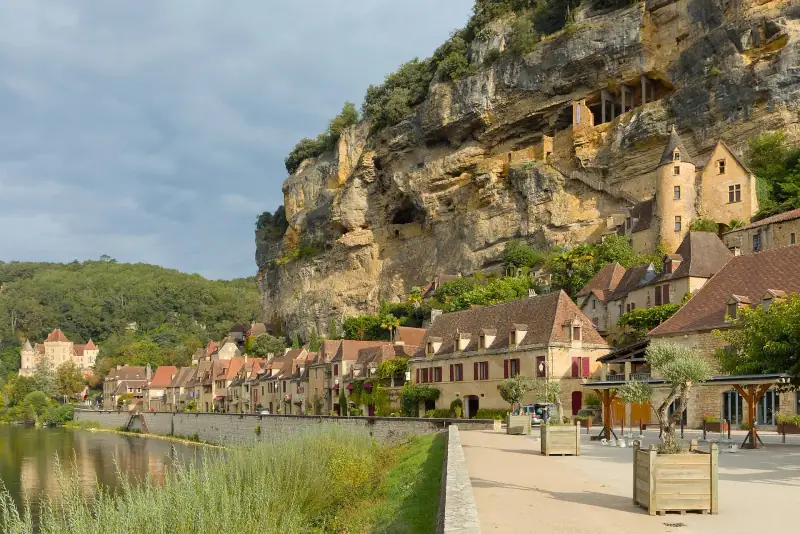
La Roque-Gageac, beside the river and at the foot of the cliff, offers another kind of stay, closer to the water and the gabarres. Our guide to sleeping in La Roque-Gageac will help you compare the two neighboring villages.
Sarlat is the obvious choice for those who want a proper town, restaurants, markets and a wider choice of lodging, with the valley a short drive away. It also concentrates visitors and prices in season. Our guide to sleeping in Sarlat-la-Canéda covers this option.
The deciding criterion is often duration. For a romantic night or a stopover, Domme is an excellent choice. For five to seven nights, a bigger base or a cottage in the neighboring countryside is more practical. Our 3-day Dordogne itinerary shows how to distribute your nights.
Guided visits and activities in the Black Périgord
Discover the valley differently: guided visits, walks and food experiences in the Sarlat region.
When to book and when to go
The calendar affects prices, availability and mood.
- July-August: high season. The bastide is very busy during the day, the lanes crowded and the best addresses fill several weeks ahead. Plan for air conditioning or at least a cool room.
- April to June and September-October: an excellent period. Temperatures are mild, crowds more moderate and choice wider. Fall light over the valley is superb from the viewpoint. Our article on when to go to the Dordogne covers each season.
- November to March: the bastide is calm, days short, and several seasonal businesses close. It is an interesting period for a quiet getaway, provided you check openings before booking.
For long weekends, long weekends around public holidays and school-holiday periods, plan further ahead. Favor a free-cancellation rate if your program is not entirely fixed.
Tips for choosing well
- Decide how you will get around first. Without a car, stay in the bastide. With a car, the countryside becomes accessible.
- Check parking. It is the criterion most often neglected in a fortified bastide. Contact the lodging if the information is unclear.
- Ask about the slope and steps. Lanes and old houses often have stairs: tell the host about your constraints.
- Look at the room’s orientation. On the valley side, the view is lovely; on the lane or garden side, it is often calmer.
- Read recent reviews. Focus on the last months and on comments mentioning noise, bedding and welcome.
- Compare the total price. Tourist tax, cleaning fees, breakfast and parking: not everything is always in the displayed price.
- Check opening dates. In the valley, many businesses are seasonal.
What budget to plan
Rates vary a lot with the season, lodging type and area. In general:
- Camping remains the cheapest solution, especially for families.
- B&Bs and hotels on the outskirts sit in a middle range.
- Addresses in the heart of the bastide and houses with a valley view are the priciest, with large gaps depending on season.
- Cottages and apartments become advantageous once there are several of you or you stay several nights.
No precise prices are given here, since they fluctuate from year to year and week to week. Use comparison sites with your exact dates and compare several options before booking. For an overall view of the cost of a stay, see our Dordogne budget guide.
In short
- For a charming night or a romantic weekend: the heart of the bastide or the viewpoint surroundings, to book early.
- For calm and the view: the rampart sector, if you can handle steps.
- To combine a car, space and budget: lodging in a hamlet or the neighboring countryside.
- For families and long stays: a cottage or campsite in the valley, with a car.
- For more choice: Sarlat, a short drive away, remains the most flexible base.
Whatever your choice, book early if you go in summer, check parking and stay a little flexible: Domme is best savored at the end of the day, when the groups have left, the stone turns golden and the valley glows from the viewpoint.
Frequently asked questions
What is the best neighborhood to stay in Domme?
For a first visit, the heart of the bastide, around the Place de la Halle and the stone lanes, is the most pleasant: everything is done on foot, including the Barre viewpoint. If you travel by car and look for calm, space or a pool, the hamlets and countryside around Domme are a very good alternative.
Is there a lot of lodging in Domme?
Domme is a village of a little over 1,000 inhabitants: supply is limited and fills quickly in summer. It widens clearly once you search in the neighboring communes of the Dordogne valley, or in Sarlat, which offers a much wider choice.
Do you need a car to stay in Domme?
To enjoy the bastide you get around on foot, and traffic in the center is restricted. To explore the Black Périgord, a car is the most practical solution, since public transport is rare in this part of the valley. Sleeping in a hamlet or in the countryside makes it essential.
Is Domme a good base for visiting the Dordogne?
Yes for the Black Périgord: La Roque-Gageac, Beynac, Castelnaud, Marqueyssac and Sarlat are a short drive away. For the Vézère Valley and Lascaux, or for the Green Périgord, allow longer drives and consider splitting your stay into two stops.
When should you book lodging in Domme?
In July-August, during school-holiday periods and long weekends, it is better to book several weeks, even several months, ahead. Out of season, choice is better, but some seasonal businesses close: check their opening dates and favor a flexible-cancellation rate.
Can you camp around Domme?
Yes, the Dordogne valley has many campsites, some by the water, with a pool or equipped accommodations. The best-located pitches go early in summer. Check the actual distance to the bastide and reception conditions directly with the managers.
Is it better to sleep in Domme or Sarlat?
Sarlat offers a proper town, restaurants, shops and a wider, often more affordable choice of lodging. Domme offers a perched setting, a view over the valley and great calm in the evening. Many travelers choose one or the other according to their pace, or combine both.
More Dordogne guides
Keep reading
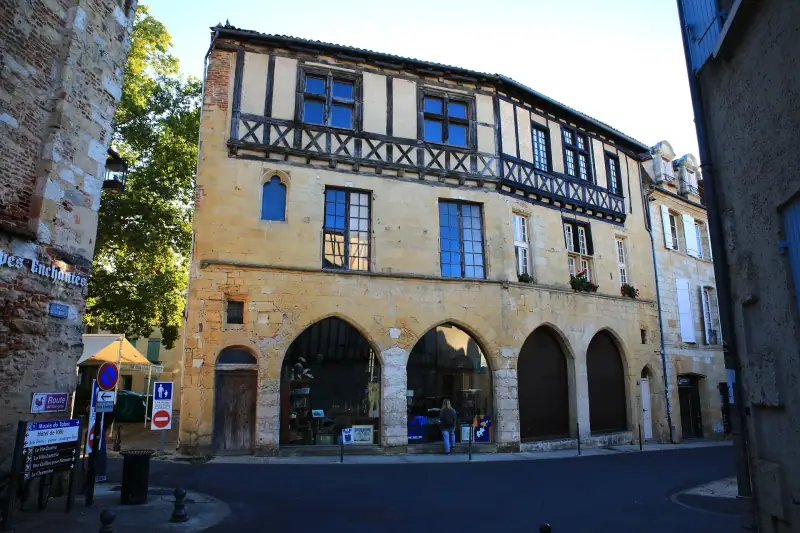
Where to Stay in Bergerac: Neighborhoods and Lodging Types to Choose From
Where to stay in Bergerac? Old town, Dordogne quays, station, left bank or vineyards: neighborhoods, hotels, B&Bs and cottages to pick your base.
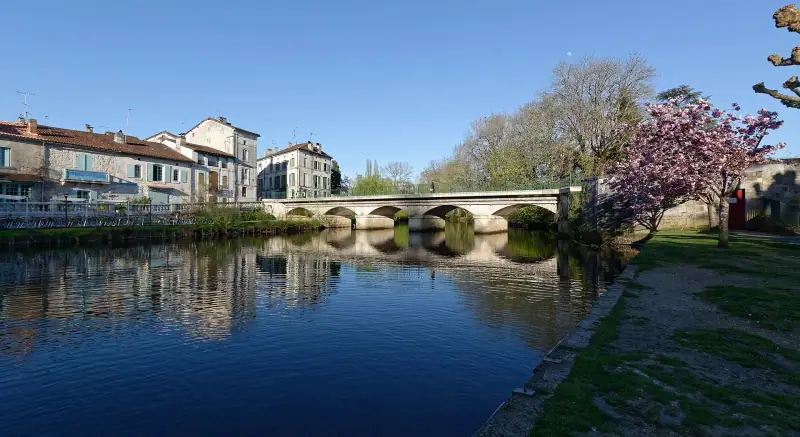
Where to Stay in Brantôme: Neighborhoods and Lodging Types to Choose From
Where to stay in Brantôme? Island center, abbey surroundings, Dronne banks or Green Périgord countryside: neighborhoods, hotels, B&Bs, cottages, campsites.
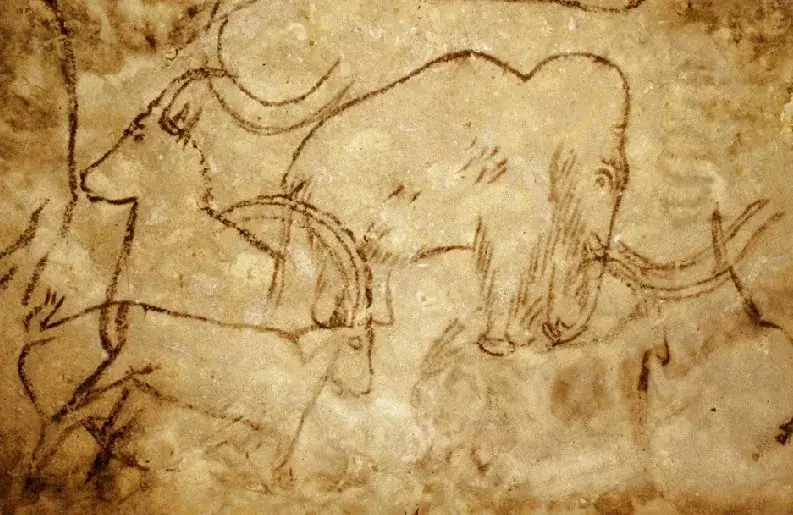
Rouffignac Cave: Train Visit, Prices, Booking and Opening Dates
Rouffignac Cave: prices, hours, booking (5 weeks ahead), length of the electric train ride and closure until March 28, 2027. Tips for families.
Ready-made
Dordogne itineraries
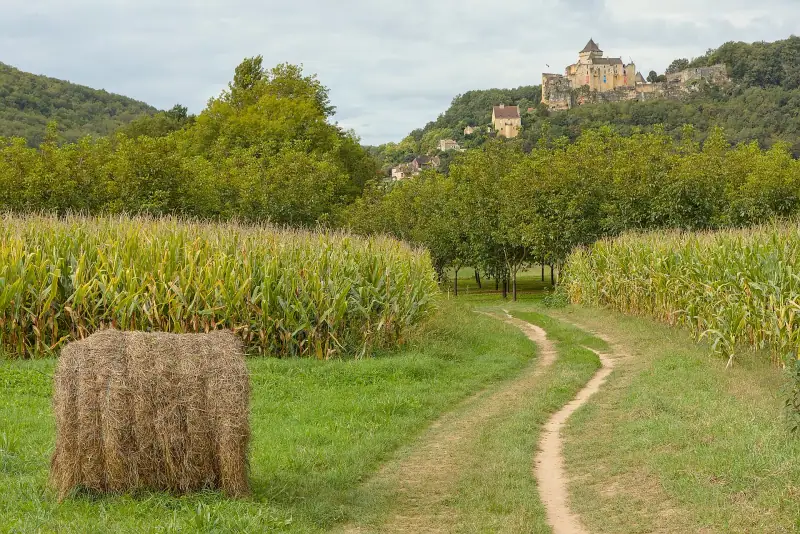
7 days
One Week in the Dordogne: A Day-by-Day Itinerary
Sarlat-la-CanédaBrantômeBergerac
5 days
Dordogne in 5 Days with Kids: Stops, Kilometers and a Realistic Pace
Dordogne in 5 days with kids: an itinerary from Sarlat with distances, drive times, breaks and suitable activities, without overloaded days.
Can be adapted in the planner
3 days
3-Day Dordogne Itinerary: Sarlat, the Vézère and Châteaux
What to do in 3 days in the Dordogne? A day-by-day itinerary around Sarlat: Lascaux, the Vézère Valley, châteaux, villages and practical tips.
Can be adapted in the planner