What to see
Visiting Rovinj: complete guide to the pearl of Istria
We may earn a commission when you book through links on this page, at no extra cost to you. We don't visit or try the places we cover: we summarize published sources. How we work
In short
- Two days are enough for the old town, the beaches and an island trip; three days let you add Poreč, Pula and inland Istria.
- May-June and September-October are the best months. July-August is very crowded.
- The nearest airport is Pula (PUY), 45 km (28 mi) away; Trieste (1 h 30) and Ljubljana (2 h) are other options.
- Rovinj is pricier than the Croatian average: about €80-130 (~$93-150) per person per day at mid-range.
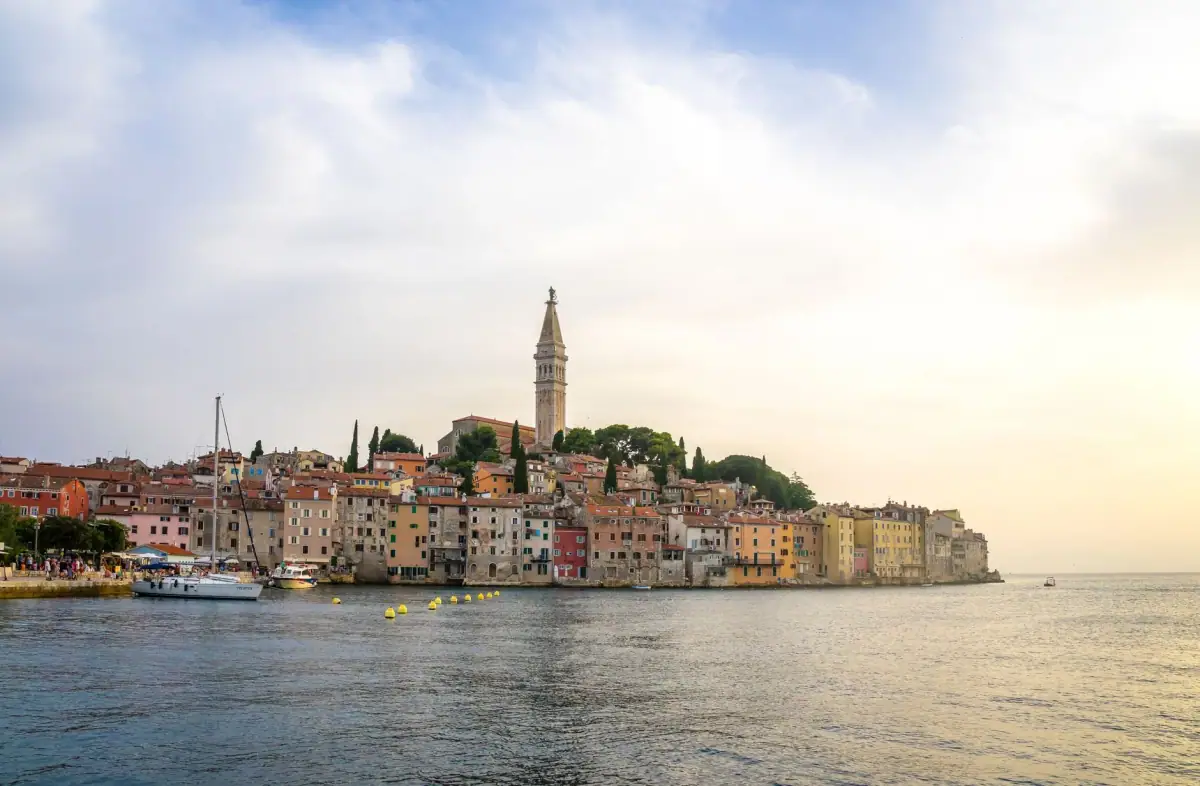
Rovinj is one of those towns that grabs you before you have even put your bags down. Perched on a rocky headland jutting into the Adriatic, its old town of ocher, orange and red houses seems straight out of a Flemish painting: the facades are reflected in translucent water, the sloping lanes climb relentlessly toward the Baroque bell tower of the Church of St. Euphemia, and colorful fishing boats sway gently in the morning harbor.
It was an island until 1763. That year the Venetians, who had ruled Rovinj since 1283, filled in the channel separating it from the mainland to ease the movement of goods. But the island soul remained: the old town keeps that end-of-the-world atmosphere, suspended between land and sea, that only towns once surrounded by water can preserve.
Today Rovinj is one of the most popular destinations on the Croatian coast, and arguably the most photogenic. Here is how to discover it at its best.
The old town: a labyrinth of lanes and colors
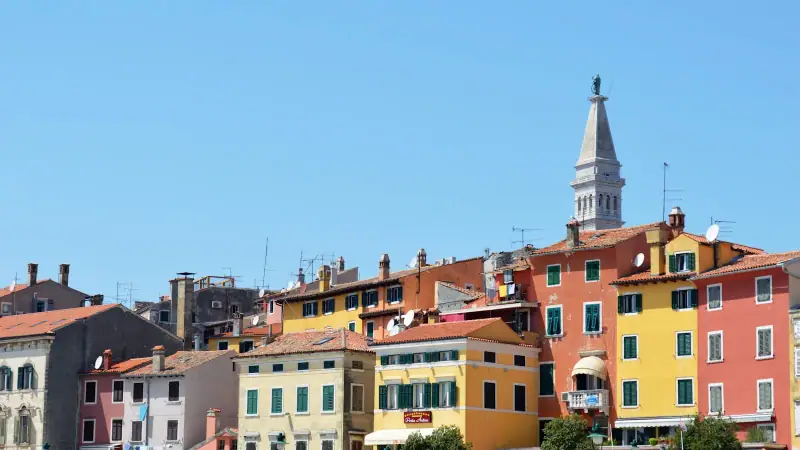
Rovinj’s old town is a maze of cobbled lanes so narrow that two people barely pass each other, climbing from the harbor to the top of the headland. Venetian houses of five or six floors interlock, sometimes linked by covered passages, the sotoportego, inherited from lagoon urban planning.
The Grisia: the street of galleries
The Grisia is the central street of the old town, a cobbled artery that climbs from the harbor to the Church of St. Euphemia. It is lined with art galleries, artists’ studios and craft shops, a tradition dating back to the 1960s, when Rovinj attracted a first wave of Italian and Yugoslav painters drawn by the Adriatic light.
Every year in August, the Grisia turns into an open-air gallery during the big annual exhibition: hundreds of artists hang their canvases on the house walls along the whole length of the street. The event has become an institution.
The Church of St. Euphemia
Rovinj’s silhouette is its bell tower. Rising 63 meters (207 ft) above the town from its rocky outcrop, the Baroque Church of St. Euphemia (Sveta Eufemija) is the city’s emblematic monument. Built between 1725 and 1736, it houses the remains of St. Euphemia, a martyr of Chalcedon whose sarcophagus, according to legend, miraculously drifted from Constantinople to the shores of Rovinj in AD 800.
The bell tower is an almost perfect copy of St. Mark’s in Venice, a tribute to half a millennium of Venetian rule. You can climb it (paid entry, about €3 / ~$3.50) for a stunning panoramic view of the old town, the islands and, on a clear day, the Italian coast.
Where to stay in Rovinj
Hotels and apartments with views of the Adriatic. Book early, Rovinj is often full in July-August.
The beaches and islands of the Rovinj archipelago
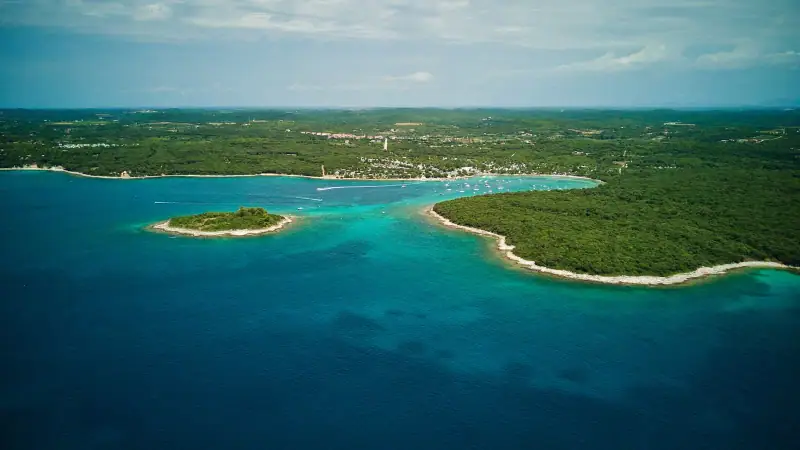
One of Rovinj’s great assets is its archipelago: 22 islands and islets dot the sea in front of the town, most covered in pines and surrounded by crystal-clear coves. The quality of the bathing water is among the best on the Adriatic coast, regularly rated “excellent” by European monitoring.
The old town beaches
Around the headland, several swimming spots cling to the rocks. Škaraba beach, at the foot of the old town on the north side, is the closest and the busiest. These are typical Istrian rocky beaches: no fine sand, but flat rocks to stretch out on, clear water and direct access from the lanes.
St. Catherine’s Island (Otok Sveta Katarina)
Five minutes by water taxi from the harbor, this small island faces the old town and offers a magnificent perspective on Rovinj. With a historic hotel (the Maistra Katarina, open since 1905), restaurants and several small beaches, it is very accessible for a half day of swimming with a view of the town. Water taxis leave every 30 minutes from the main harbor.
Red Island (Crveni Otok)
The largest and wildest of the archipelago’s islands, Red Island is 15 minutes away by boat. Its name comes from the red-orange limestone of its rocks, which takes on particular color at sunset. Covered with a dense forest of pines and cypresses, it has mixed and naturist beaches in its unspoiled coves. A historic vacation village (open since 1888) occupies the main part of the island.
Regular boats leave every 30-45 minutes from Rovinj harbor. Allow €10 to €15 (~$12-17) for the round-trip crossing.
Kayaking and snorkeling in the archipelago
The best way to explore the archipelago is by sea kayak. Several outfitters offer guided half-day or full-day outings, with stops in coves you could not otherwise reach, a snorkeling break over the Posidonia seagrass beds and a picnic on deserted islets. An unforgettable experience, even without prior experience: the sea is generally calm and the distances reasonable.
Excursions and activities in Rovinj
Kayaking, boats to the islands, guided old town tours and Istrian truffle tastings.
Food: the flavors of Istria
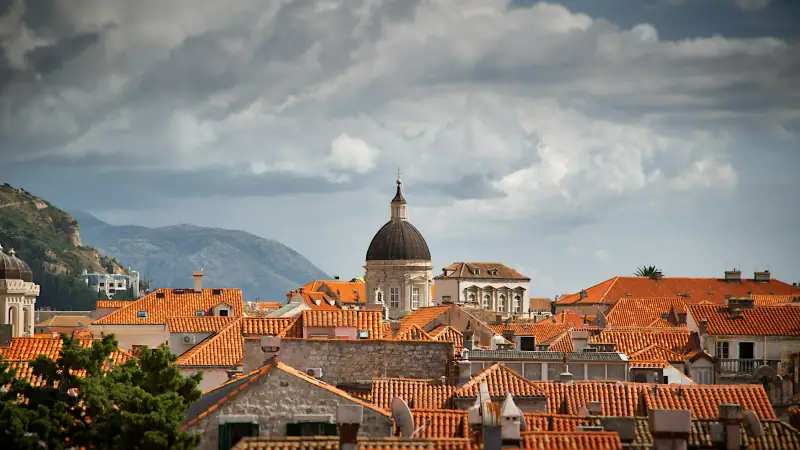
Rovinj is a gateway to one of the richest cuisines in Croatia. Istria is a gastronomic region in its own right, influenced by centuries of Venetian and Italian presence and blessed with an exceptional terroir.
Istrian truffle: an obsession
The Motovun forest, 30 km (19 mi) from Rovinj, is one of the largest truffle deposits in the world. Black truffle (Tuber aestivum) is gathered from May to November; white truffle (Tuber magnatum), rarer and more expensive, from September to January. The world record for the largest white truffle ever found (1.31 kg / 2.9 lb) was set in Istria in 1999.
In Rovinj’s restaurants, truffle turns up everywhere: fresh pasta (fuži, pljukanci), risotto, scrambled eggs, pizza, cured meats. A truffle pasta dish costs between €15 and €40 (~$17-46) depending on the season and the restaurant. For a complete experience, several farms in the area offer truffle hunts with trained dogs.
Seafood and fish
Despite tourism, Rovinj remains a fishing town. The fish market (Riblja Tržnica), open every morning on the harbor quay, is the best place to watch fishermen sell the night’s catch: sea bream, red mullet, sea bass, squid and octopus laid on ice. Some restaurants have direct access to this market and will serve you in the evening what was caught in the morning.
Specialties to order: grilled octopus with garlic and parsley, baked scallops, fish soup (brujet), a rockfish stew to dip bread in, and shrimp sautéed in local olive oil.
Malvazija and Teran: the wines of Istria
Istria produces wines increasingly recognized on the international scene. Malvazija istarska (Istrian Malvasia) is the region’s emblematic white grape: dry, mineral, with notes of fresh almond and citrus. It pairs perfectly with seafood. Teran, a red grape with pronounced tannins and a dark color, is more rustic but develops nice complexity with age.
Many konobe offer their own house wine by the carafe (vino na točionicu). Bottled Istrian wines (estates Degrassi, Matošević, Coronica) are available in local delicatessens at very reasonable prices (€8 to €20 / ~$9-23 a bottle).
Where to eat in Rovinj
A few pointers to avoid the tourist traps:
In the old town: the seafront restaurants (Riva) are the most expensive and not necessarily the best. Prefer the inner lanes, the Grisia and its parallels, for more authentic places.
Outside the center: the Valdibora district, north of the harbor, has konobe frequented by locals, with set daily menus at €10-15 (~$12-17). The Valdibora covered market is also the ideal place to put together a picnic (Istrian cheeses, cured meats, olives, fresh bread).
To avoid: fixed-price menus displayed in several languages with laminated photos, a sure sign of poor value.
Excursions from Rovinj
Rovinj is an excellent starting point for exploring Istria, one of the most diverse regions of Croatia.
Poreč and the Euphrasian Basilica (35 km / 22 mi)
35 km (22 mi) north of Rovinj, Poreč is a seaside town with an exceptional heritage. The Euphrasian Basilica (6th century) is a UNESCO World Heritage Site: its gold and mother-of-pearl mosaics are among the finest preserved from the Byzantine era in Western Europe. Poreč’s old town is also pleasant, less picturesque than Rovinj but livelier, with its many bars and restaurants.
Pula and the Roman amphitheater (38 km / 24 mi)
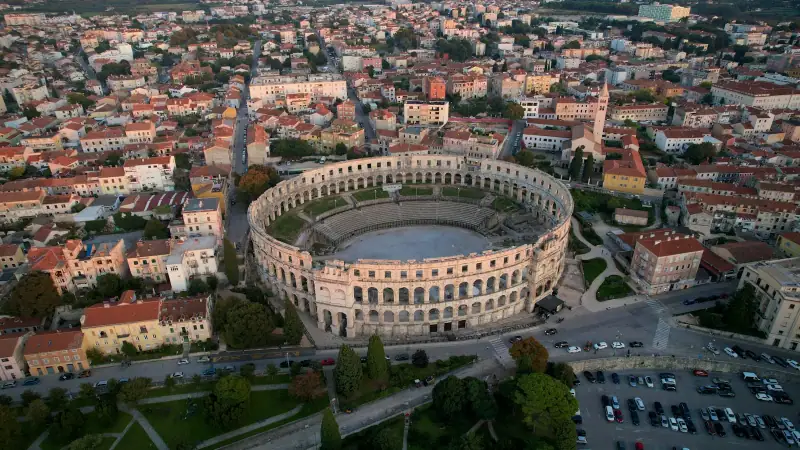
38 km (24 mi) to the south, Pula is Istria’s main city and home to one of the most impressive sights in Croatia: a Roman amphitheater (1st century AD) with 23,000 seats, one of the six best preserved in the world. Still used for concerts and festivals in summer (Pula Film Festival, rock concerts), it remains one of the most striking monuments in the country. Pula also has a Roman triumphal arch, ancient gates and a well-preserved Temple of Augustus.
The inland villages: Motovun, Grožnjan, Oprtalj
The interior of Istria is a world apart: hills covered with vines and olive trees, dotted with medieval villages perched on rocky spurs. Motovun (50 km / 31 mi from Rovinj) is the best known; its medieval ramparts overlook a valley of the Mirna and offer a panoramic view over the truffle hills. Grožnjan is an artists’ village turned into a residence for international artists. Oprtalj is the wildest and best preserved, almost deserted outside summer.
A one-day loop road trip from Rovinj can cover these three villages, with a tasting stop at a winery on the way.
Car rental in Rovinj
Explore Istria at your own pace: hilltop villages, vineyards, the Pula amphitheater.
Where to stay in Rovinj
Rovinj has a very wide range of accommodation, from campsites to 5-star resorts.
In the old town
Sleeping in the old town is the most memorable experience: waking up in a silent cobbled lane before the cruise passengers land, having breakfast with a view of the harbor boats. Rental apartments (via Airbnb or local agencies) are plentiful in the Venetian houses. Expect €100 to €200 (~$115-230) a night for a charming apartment with a view in high season.
Note: the old town is entirely pedestrian. Cars are banned; luggage is carried on foot from the outlying parking lots. In July-August the lanes can be noisy late into the evening.
The seafront to the north (Mulini, Monte Mulini)
The hotel district north of the old town (Maistra Lone, Monte Mulini, Island Hotel Istra) groups the 4- and 5-star hotels with direct sea access, spas and gourmet restaurants. High-season prices often exceed €300 (~$350) a night for a double room.
Campsites and outlying apartments
Rovinj has several large seaside campsites (Polari, Amarin, Veštar) that have welcomed families and motorhomes since the 1970s. The infrastructure is often impressive: restaurants, supermarkets, pools, water activities. High-season prices run between €30 and €60 (~$35-70) a night for a pitch.
For tighter budgets, rental apartments in the residential suburbs (Valdibora, Šokovci) are 30 to 50% cheaper than in the center, 10 minutes on foot from the harbor.
Practical information
Airport: Pula airport (PUY) is 45 km (28 mi) from Rovinj. Shuttles and taxis provide the link (about €40-50 / ~$46-58 by shared taxi). In high season, direct buses are chartered by some hotels and tour operators.
Public transport: Flixbus and local buses link Rovinj to Poreč (1 h), Pula (50 min) and Zagreb (4-5 h, with a connection). The bus station is 1 km (0.6 mi) from the center.
Parking: Very limited and expensive in high season (up to €3 / ~$3.50 an hour in the town center). The large Lonke and Valdibora parking lots are 5-10 minutes on foot from the old town. The Istria Y motorway (toll) links Trieste to Pula quickly, passing Rovinj.
Currency: The euro has been the official currency since January 2023. Cards are accepted everywhere in hotels and restaurants; keep cash for markets and kayak rentals.
Season: High season runs from mid-June to mid-September. In July-August, Rovinj is very busy (cruise ships, tour buses). For a calmer experience, favor May-June or September.
Before you leave, see our complete Croatia guide and our article on the best time to visit Croatia.
Final advice
Rovinj reveals itself at dawn, when the streets are still empty and the low light makes the ocher facades of the old town glow. Get up early, climb to the Church of St. Euphemia before the souvenir shops open, and watch the fishermen unload their nets at the harbor.
Then take a water taxi to Red Island, swim in a deserted cove, and have grilled octopus for lunch on the way back. In the evening, lose yourself in the lanes of the Grisia, step into a gallery, and have a glass of Malvazija at an outdoor table by the harbor.
Rovinj is one of the most beautiful towns in Croatia. It knows it. But if you arrive at the right time and step off the beaten track, it will still make you feel you discovered it for yourself alone.
Frequently asked questions
How many days do you need to visit Rovinj?
Two days are enough to explore the old town, swim at the beaches and take a trip to the neighboring islands. Three days let you branch out to Poreč, Pula and the villages of inland Istria at a more relaxed pace.
When is the best time to visit Rovinj?
May-June and September-October are the best periods: warm sea, guaranteed sun, crowds far thinner than in July-August. Summer is very busy (Rovinj is one of the most popular destinations on the Croatian coast). In winter, the town returns to its fishing-village feel: authentic, but little is open.
How do you get to Rovinj?
The nearest airport is Pula (45 minutes by road). Trieste airport (Italy, 1 h 30) and Ljubljana airport (Slovenia, 2 h) are also options. Check current flight schedules with the airports and airlines.
Is Rovinj expensive?
Rovinj is pricier than the Croatian average, especially in high season (July-August). Expect €80 to €130 (~$93-150) per person per day on a mid-range budget. Restaurants in the old town are costly (€25 to €50 / ~$29-58 per person); konobe outside the center are much more reasonable (€15 to €25 / ~$17-29).
Can you visit Rovinj without a car?
Yes, the old town is entirely pedestrian and everything is reachable on foot. Water taxis serve the neighboring islands from the harbor. Buses link Rovinj to Poreč, Pula and Zagreb. A car is nevertheless recommended to explore inland Istria and the wine villages, as the intercity bus network is limited.
Are the islands around Rovinj worth the trip?
Absolutely. The Rovinj archipelago has 22 islands and islets, most of them uninhabited. St. Catherine's Island (5 minutes by water taxi) is the most accessible. Crveni Otok (Red Island), with its pine park and naturist beach, is the largest and most beautiful: allow a 15-minute crossing. Kayak excursions let you explore coves that boats cannot reach.
What specialties should you try in Rovinj?
Istrian truffle (fall and winter) is the star of local cuisine: black or white truffle pasta, risotto, bruschetta. Seafood is everywhere: scallops, grilled octopus, garlic shrimp. Istrian prosciutto, sheep's cheese (paški sir) and local wines (white Malvazija, red Teran) complete this remarkable food scene.
More Croatia guides
Keep reading
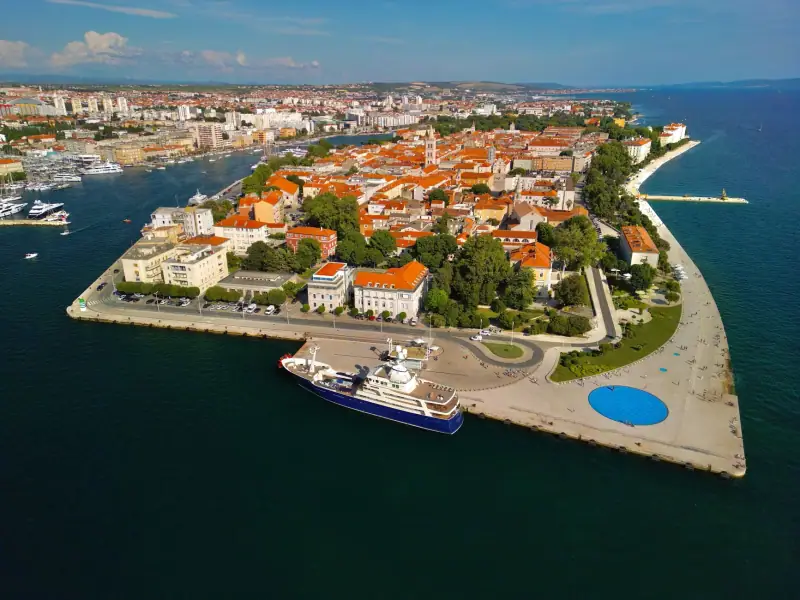
Visiting Zadar: complete guide to the Dalmatian city
Complete guide to visiting Zadar: Sea Organ, Roman old town, beaches, Kornati and Paklenica excursions. Everything for a successful stay in Dalmatia.
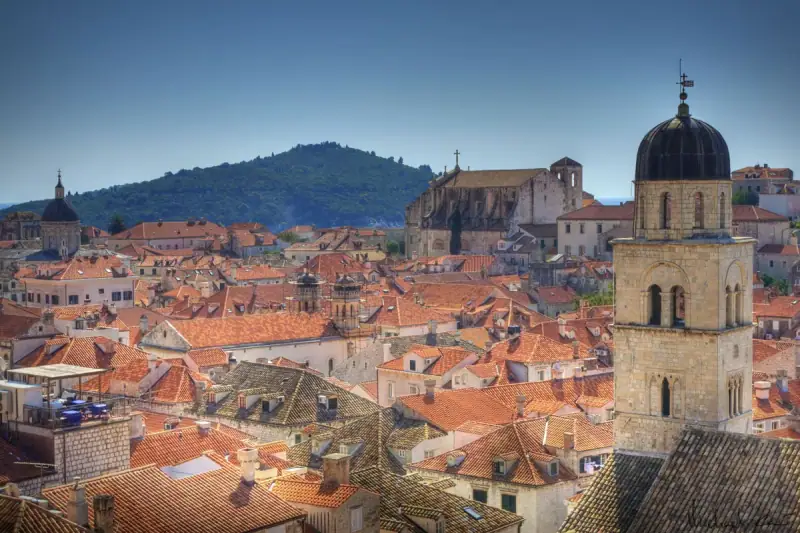
Dubrovnik: the 10 must-see sights
The 10 top sights of Dubrovnik: city walls, Stradun, Sponza Palace, cable car, Lokrum island. Practical guide to visiting Dubrovnik in 1 or 2 days.
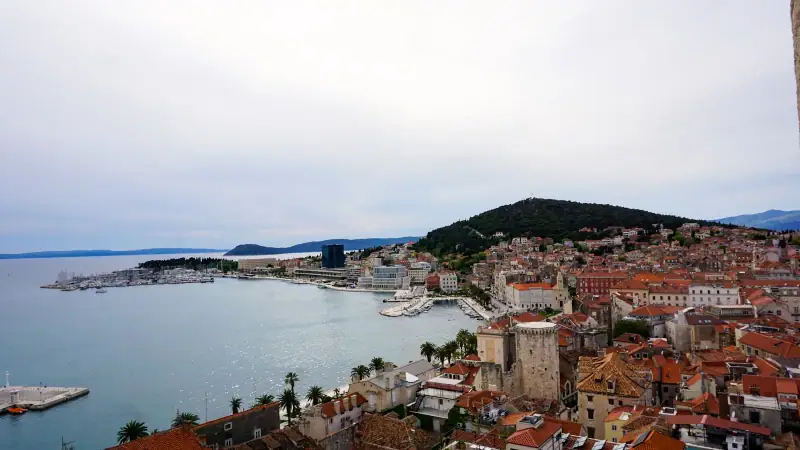
Visiting Split: complete guide to the Dalmatian capital
Complete guide to visiting Split: Diocletian's Palace, Marjan hill, beaches and islands. Everything you need for a successful stay in Dalmatia.
Ready-made
Croatia itineraries
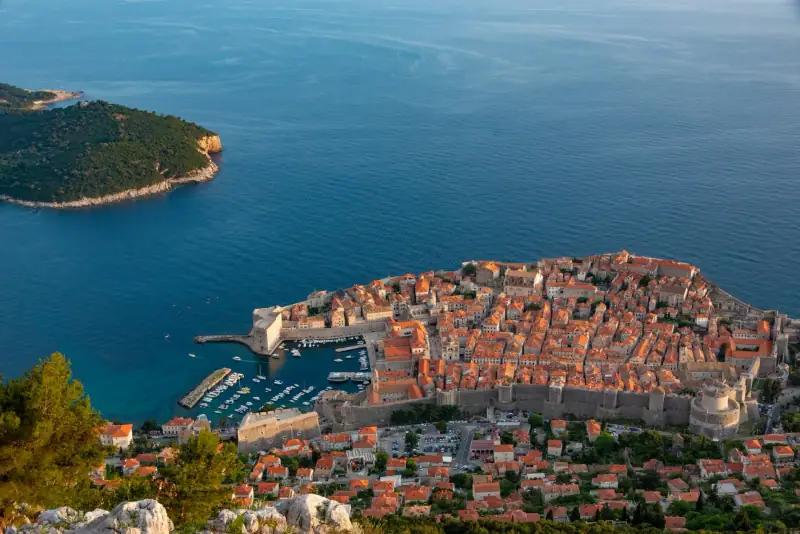
Croatia road trip: the coastal route from Zagreb to Dubrovnik
The ultimate Croatian coastal road trip from Zagreb to Dubrovnik via Split, Zadar and the national parks. 10-14 day route with stops and tips.
7 days
Croatia in 7 days: the perfect one-week itinerary
Detailed itinerary to visit Croatia in 7 days: Split, the Dalmatian islands, Dubrovnik and Plitvice. Day-by-day plan with practical tips.
10 days
Croatia in 10 days without a car: a realistic bus and ferry itinerary
ZagrebZadarSplitHvar TownDubrovnik