What to see
Visiting Zadar: complete guide to the Dalmatian city
We may earn a commission when you book through links on this page, at no extra cost to you. We don't visit or try the places we cover: we summarize published sources. How we work
In short
- Two days cover the old town, the Sea Organ, the main museums and nearby beaches; three days let you add the Kornati Islands or Paklenica National Park.
- The Sea Organ is open 24/7; arrive an hour before sunset and stay for the Greeting to the Sun lights at dusk.
- A day boat trip to the Kornati costs about €60-80 (~$70-93) per person; Plitvice Lakes are about 1 h 30 away by road.
- Zadar is clearly cheaper than Dubrovnik or Split: old-town lodging at €60-100 (~$70-115) a night, a full traditional meal at €15-25 (~$17-29).
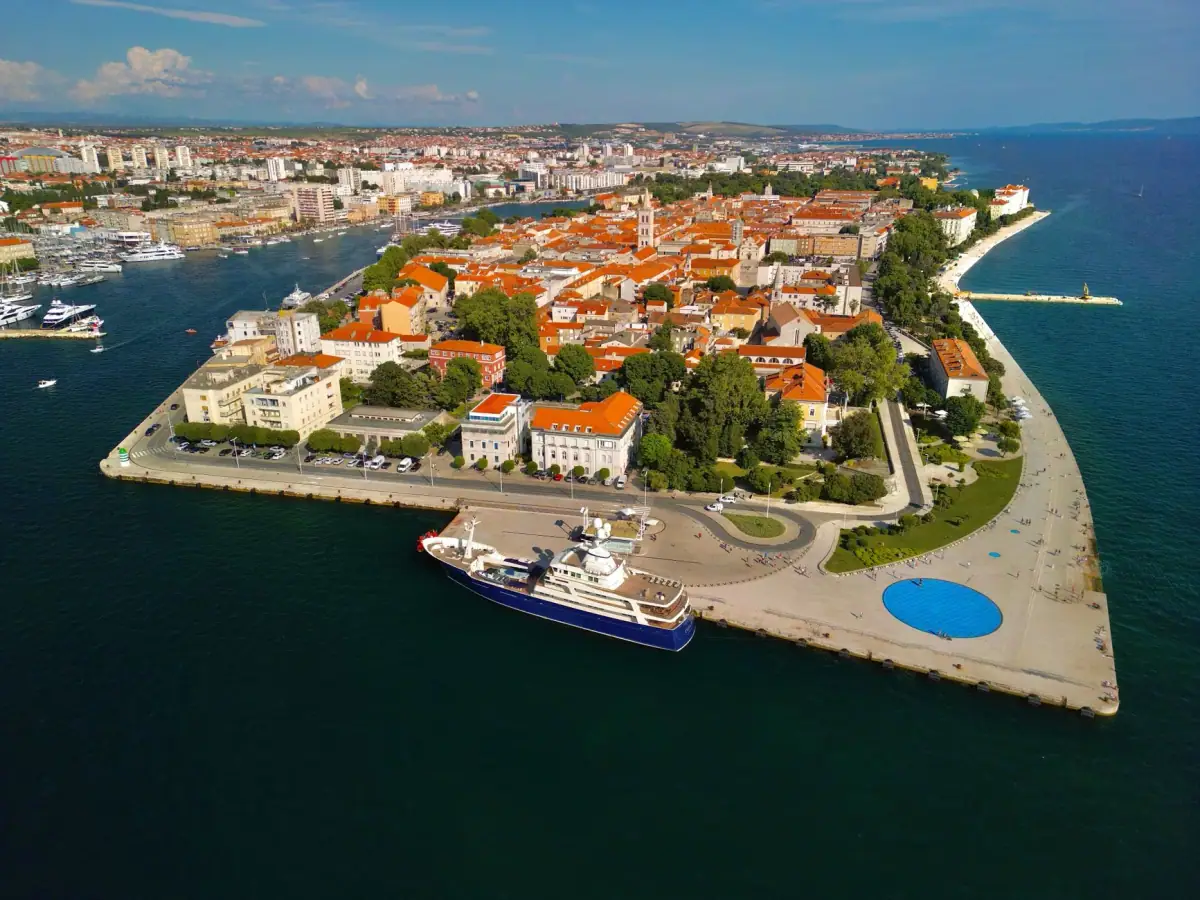
Zadar is one of the great surprises of Dalmatia. Less famous than Dubrovnik, less crowded than Split, this city of 75,000 inhabitants set on a narrow peninsula washed by the Adriatic nevertheless has all the ingredients of an exceptional stay: a thousand-year-old historic center crossed by a Roman forum still standing, two one-of-a-kind art installations shaped by sound and light, pebble beaches steps from the center and an archipelago of 140 bare islands within easy reach by boat. Alfred Hitchcock is said to have described it as the city with the most beautiful sunsets in the world. Hard to prove him wrong.
Capital of the northern Dalmatia region, Zadar was founded by the Illyrians and deeply marked by about 388 years of Venetian rule (1409-1797), which explains the bell tower, the palazzi and the market stalls that give it an air of Venice without the tourists. The city also suffered the bombings of World War II and of the Croatian War of Independence (1991-1993), but rebuilt itself stubbornly, preserving its historic fabric while inventing an original modernity.
The Sea Organ: music born of the Adriatic
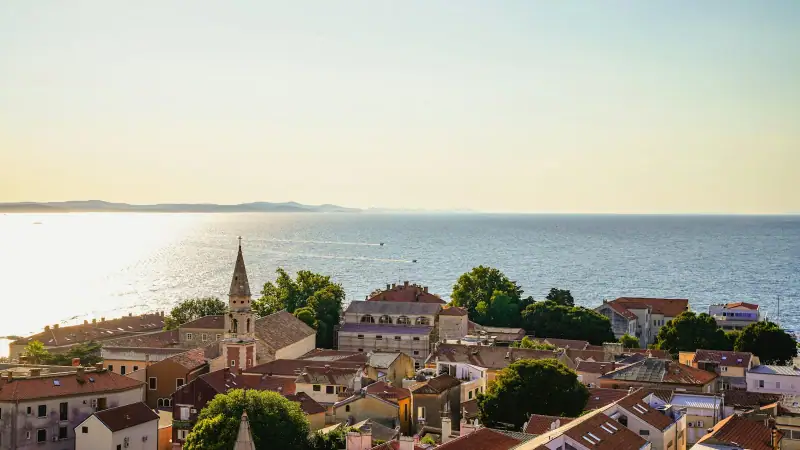
The Sea Organ (Morske orgulje) is the installation that put Zadar on the world map of contemporary tourism. Opened in 2005 on the old town’s quays, this work by the architect Nikola Bašić is as simple as it is brilliant: 35 organ pipes are set under the white marble steps that descend to the sea. The movement of the waves, compressing the air in the pipes, produces constantly improvised music, a random harmony of low and high sounds that varies with the tides, the wind and the state of the sea.
You sit on the steps, feet in the water or legs dangling over the blue surface, and listen. Sometimes the sound is almost imperceptible, an aquatic murmur. In rough seas it swells into a cathedral chord. No concert is like another. The organ plays 24 hours a day, never repeating the same melody.
The steps are permanently occupied: families, couples, backpackers, fishermen coming home. It is one of the few places in the Mediterranean where a tourist attraction is also a place of daily life for the residents.
Where to stay in Zadar
Hotels and apartments in the old town. Book with free cancellation.
The Greeting to the Sun: light and energy
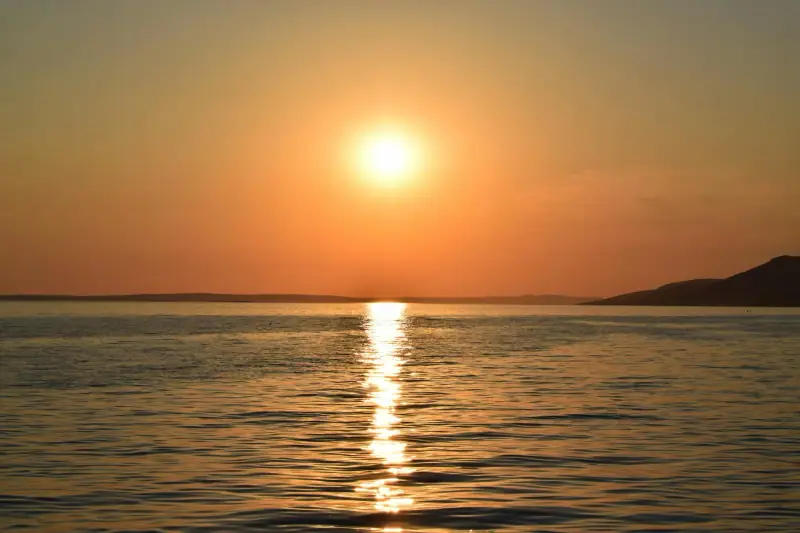
A few meters from the Sea Organ, the Pozdrav suncu (Greeting to the Sun) is Nikola Bašić’s second great art installation. A circle 22 meters (72 ft) in diameter made of 300 solar panels set into the ground collects the sun’s energy throughout the day. At nightfall, these panels give back that energy as a breathtaking light show: complex light patterns, spirals, pulses, colored waves, turn and transform silently across the surface of the circle.
The best moment for the full experience? Arrive at the Sea Organ an hour before sunset, listen to the music of the waves while watching the sun go down over the Adriatic, then stay to see the Greeting to the Sun light up gradually at dusk. This evening ritual has become a true local institution that many visitors cite as the strongest memory of their whole trip to Croatia.
St. Donatus Church and the Roman Forum
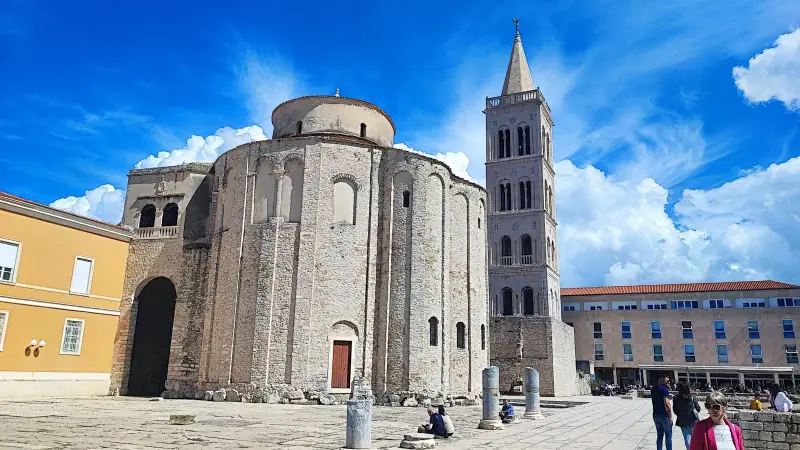
Zadar’s most emblematic monument is probably St. Donatus Church (Crkva sv. Donata), a circular pre-Romanesque building of the 9th century standing directly on the ruins of the Roman forum. The church was built with stones from the old forum (some Latin inscriptions are still visible in the walls), and its massive cylindrical silhouette dominates the old town’s skyline.
Deconsecrated in the 19th century, the church is no longer used for worship but as an exhibition space and above all as a concert hall. The acoustics of its circular nave are reputed to be among the best in Europe for medieval and Baroque music: every summer, the Musical Evenings in St. Donatus festival draws musicians and audiences from all over Europe.
The Roman Forum
Around the church, the remains of the Roman forum of the 1st century BC are freely accessible. A marble column still standing, paving slabs, fragments of stylobates: these open-air ruins are the most visible testimony to the long history of Iader, the Roman name of the city. The forum was once surrounded by temples, porticoes and civic basilicas; today its stones blend into the urban fabric, lined with lively outdoor cafés.
Close by, St. Anastasia Cathedral (Katedrala sv. Stošije), built in the 12th-13th centuries in a pure Romanesque style, is the largest Romanesque cathedral in Croatia. Its bell tower can be climbed for a panoramic view over the old town’s rooftops and the Adriatic.
Guided tours and excursions in Zadar
Boat tours to the Kornati, guided old town tours, sea kayaking.
The beaches around Zadar
Unlike Dubrovnik, which is very limited in accessible beaches, Zadar is surrounded by beautiful swimming areas a few minutes from the center.
Kolovare beach
The closest to the town center (10 minutes on foot), Kolovare is a well-equipped pebble beach with changing cabins, showers, bars and sun lounger rental. The sea is clean and the bottom descends gradually, making it a good choice for families. In high season it is crowded on weekends but quieter on weekdays.
Borik and the beaches to the north
The Borik district, 3 km (1.9 mi) north of the old town (reachable by bus), groups several developed beaches around the large hotels. The pebble beaches are wider than at Kolovare, surrounded by pine woods that offer shade, and the sea is shallow over a long distance. Perfect for young children.
Ugljan Island (15 minutes by ferry)
For wilder beaches, a fast ferry links Zadar to Ugljan in 15-20 minutes. The island’s beaches are less crowded, often hidden in rocky coves, and the sea is remarkably clear. Combine the crossing with a bike ride along Ugljan’s coast; rentals are available on the island.
Excursions from Zadar
The Kornati Islands: the moonlike archipelago
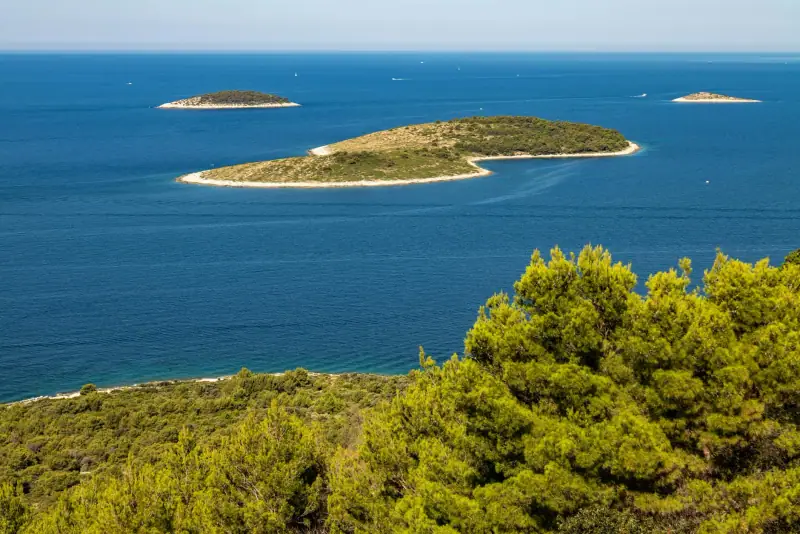
Kornati National Park is the flagship excursion from Zadar. The archipelago groups 89 islands, islets and reefs over an area of 320 km² (124 sq mi), forming one of the most dramatic island landscapes in the Mediterranean. The Kornati are dry, bare islands with karst cliffs plunging vertically into a deep blue sea. George Bernard Shaw wrote: “On the last day of the Creation, God desired to crown his work and thus created the Kornati islands out of tears, stars and breath.”
From Zadar, day boat trips let you visit several islands, swim in crystal-clear coves and often have lunch on board or in a fishermen’s restaurant on one of the islands. Expect €60-80 (~$70-93) per person all inclusive. Agencies also offer multi-day sailing trips to explore the archipelago in more depth.
Paklenica National Park: hiking in the gorges
40 km (25 mi) north of Zadar, Paklenica National Park is northern Dalmatia’s main adventure playground. The two main gorges, Velika Paklenica and Mala Paklenica, carved into the limestone Velebit massif, run several kilometers between walls up to 400 meters (1,312 ft) high. It is a paradise for hiking, climbing (more than 400 equipped routes) and canyoning.
The main hike, which goes up Velika Paklenica to the mountain huts, takes 4 to 6 hours round trip. For a quieter half day, the first stretch to the restored mill is more than enough and lets you admire the gorge walls without excessive effort.
Lake Vrana: the bird reserve
30 minutes south of Zadar, Lake Vrana (Vransko jezero) is the largest natural lake in Croatia. Its bird reserve shelters more than 250 species, including tens of thousands of wintering ducks and colonies of gray herons. Observation posts let you photograph exceptional wildlife in a wild setting little known to tourists.
For Plitvice Lakes, allow 1 h 30 by road from Zadar, a full day that is easy to organize from the city.
Car rental in Zadar
Explore northern Dalmatia at your own pace: Paklenica, Kornati, Plitvice.
Eating and drinking in Zadar
Local specialties
Zadar’s cuisine is typically Dalmatian, with a strong maritime identity but also continental influences from the hinterland.
Pašticada: the Dalmatian dish par excellence. A beef stew braised in red wine, vinegar and prunes, served with homemade gnocchi (njoki). Preparation takes several hours; the best versions are found in traditional konobe away from the tourist quays.
Brodetto di Zadar: a Dalmatian fish soup different from those of the central Adriatic, spicier, with currants and capers that recall Venetian influences. Each konobar has their own jealously guarded version.
Maraschino: Zadar’s liqueur. This marasca cherry spirit, with notes of bitter almond, has been produced in Zadar since the 16th century. The Luxardo house, founded in Zadar by an Italian family, has been based in Italy since World War II, but the Maraska house, founded in December 1946 through the merger of three former distilleries, carries on the tradition. You cannot leave without a bottle.
Pag cheese: paški sir, the sheep’s cheese of the island of Pag, is one of the great Dalmatian culinary specialties. The sheep graze on grass scented with sea spray and wild sage, from the salty bura (north wind) that permeates the grass, as local cheesemakers say. The result is a firm, slightly sharp cheese with a very distinctive scrubland taste.
Where to eat in Zadar
The market (Tržnica) held every morning in the center of the old town is the best place to buy local produce: Pag cheese, dried figs, olive oil from the neighboring islands, vegetables from Velebit. The stallholders readily chat with visitors.
For restaurants, avoid those directly on the waterfront (inflated prices, variable quality) and look in the parallel lanes. Varoška street and its surroundings group several authentic konobe where a full lunch (soup, grilled fish, dessert, a carafe of wine) comes to €20-30 (~$23-35) per person.
Where to stay in Zadar
In the old town: staying inside the walls is the most pleasant experience. Charming Dalmatian stone apartments, often carefully restored, rent for €60 to €120 (~$70-140) a night. Many owners are welcoming and give local advice. The downside: some lanes are noisy in the evening in season.
In Borik: the large hotel complexes in the Borik district offer more competitive rates than the old town, with pools and direct beach access. Expect €50-90 (~$58-105) for a double with half board. Reachable in 10-15 minutes on foot or by bus from the center.
On the nearby islands (Ugljan, Pašman): for travelers with a vehicle, renting an apartment on a neighboring island and taking the ferry to Zadar for the day is an attractive and often cheaper option. The atmosphere is calmer and the beaches less crowded.
To compare options and find the best current offers, our guide to cheap hotels in Croatia can help you refine your budget.
Practical info
Airport: Zadar airport (ZAD) is about 10 km (6 mi) from the center. The Liburnija bus shuttle links the airport to the old town, the bus station and the port in about 20 minutes, for about €5 (~$6) one way (luggage included). Taxis and Bolt are another option: check the fare before the ride.
From Split or Dubrovnik: The coastal road (the magistrala) is spectacular but slow. The A1 motorway is faster (2 h 30 from Split, about 5 h from Dubrovnik). Flixbus and local companies link the major Dalmatian cities several times a day.
Ferry: Jadrolinija runs regular services from Zadar to Ugljan, Pašman, Dugi Otok and other islands of the archipelago. The ferry port is a short walk from the old town.
Currency: Croatia adopted the euro in January 2023. Bank cards are accepted everywhere in the old town; bring a few euros in cash for the market and small vendors.
Safety: Zadar is a very safe city. The old town is pedestrian, well lit in the evening and lively until midnight in high season. Basic caution against pickpockets around the harbor in July-August.
Before you leave, see our complete Croatia guide and our road trip along the Dalmatian coast to fit Zadar into a wider circuit.
Final advice
Zadar deserves at least two nights in your Dalmatian itinerary, and ideally three. Do not miss the sunset from the steps of the Sea Organ; it is one of the most poetic moments Croatia can offer, and it costs nothing. Add a day for the Kornati or Paklenica depending on your tastes, and you will leave with a deeper and more varied picture of Dalmatia than the postcards of Dubrovnik.
Insiders’ Croatia goes through Zadar: it is one of the country’s best-kept secrets.
Frequently asked questions
How many days do you need to visit Zadar?
Two days are enough to explore the old town, the Sea Organ, the main museums and a few nearby beaches. Three days let you add an excursion to the Kornati Islands or Paklenica National Park without rushing.
How do you get to Zadar?
Zadar airport (ZAD) is about 10 km (6 mi) from the center, linked by the Liburnija bus shuttle (about €5 / ~$6) or by taxi (check the fare before the ride). Check current flight schedules with the airport and airlines.
What is the best time to visit Zadar?
May-June and September-October are ideal: the sea is swimmable, crowds are thinner than in July-August, and prices are more reasonable. Summer is very busy (Zadar is a popular base for yachts and cruises), but the atmosphere is festive. Winter is calm and mild for walking around the old town.
Is the Sea Organ visible at any hour?
The Sea Organ is accessible 24/7. It is not lit at night, but you can hear it and sit on the steps at any time. Sunset, from the steps of the organ to the Greeting to the Sun, is a particularly magical moment; Alfred Hitchcock himself is said to have called Zadar the city with the most beautiful sunsets in the world.
Can you visit the Kornati Islands as a day trip from Zadar?
Yes, several operators offer day boat trips to the Kornati archipelago from Zadar harbor. Expect €60-80 (~$70-93) per person including the trip, a walk in the national park, a swim stop and often a fish lunch on board. It is one of the best ways to discover this moonlike archipelago.
Is Zadar cheaper than Dubrovnik or Split?
Yes, clearly. Zadar stayed relatively out of mass tourism until the 2010s and its prices are still lower than those of Dubrovnik or Split. Comfortable old-town lodging costs €60-100 (~$70-115) a night, a full meal in a traditional restaurant €15-25 (~$17-29) per person. One of the most affordable destinations in Dalmatia.
More Croatia guides
Keep reading
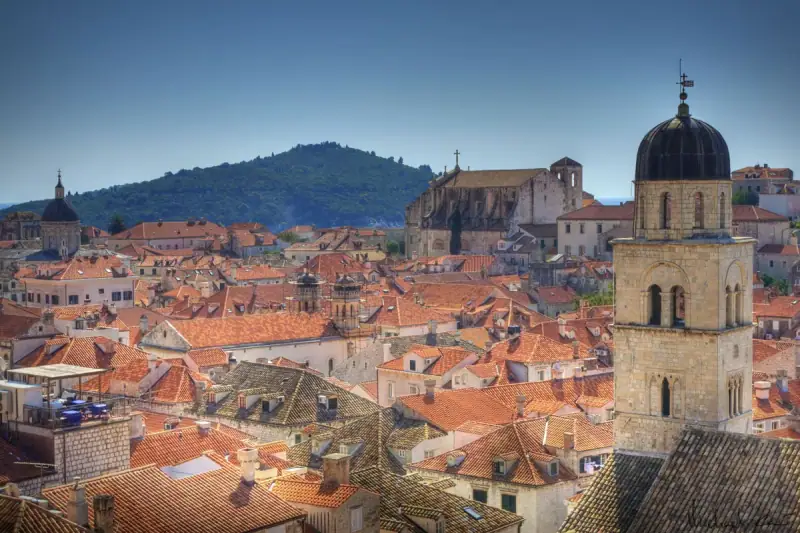
Dubrovnik: the 10 must-see sights
The 10 top sights of Dubrovnik: city walls, Stradun, Sponza Palace, cable car, Lokrum island. Practical guide to visiting Dubrovnik in 1 or 2 days.
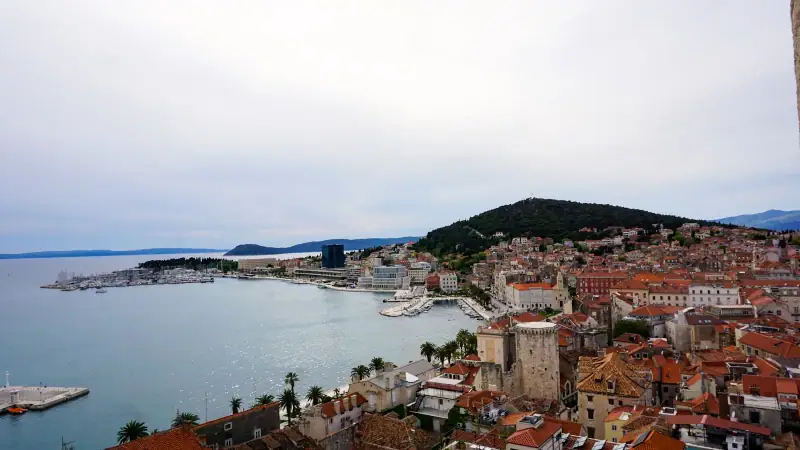
Visiting Split: complete guide to the Dalmatian capital
Complete guide to visiting Split: Diocletian's Palace, Marjan hill, beaches and islands. Everything you need for a successful stay in Dalmatia.
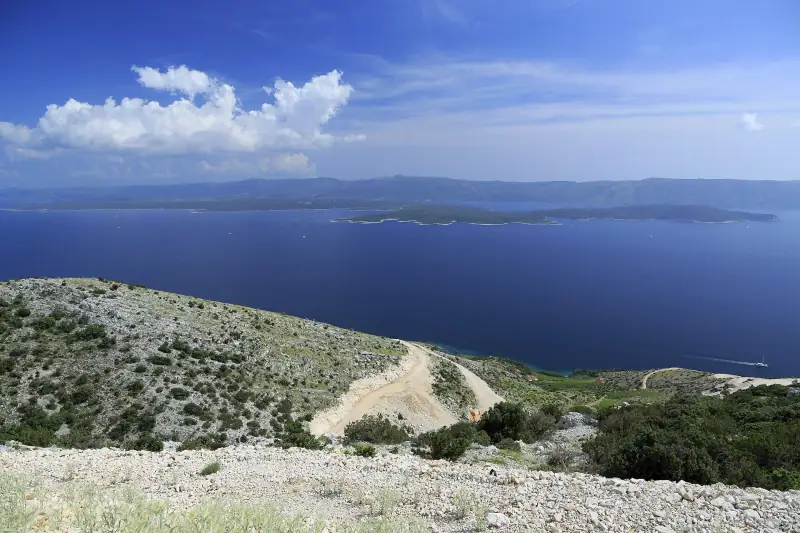
Visiting Hvar: complete guide to the Dalmatian island
Complete guide to visiting Hvar: Hvar Town, Pakleni Islands, Stari Grad, lavender, beaches, wines and the ferry from Split.
Ready-made
Croatia itineraries
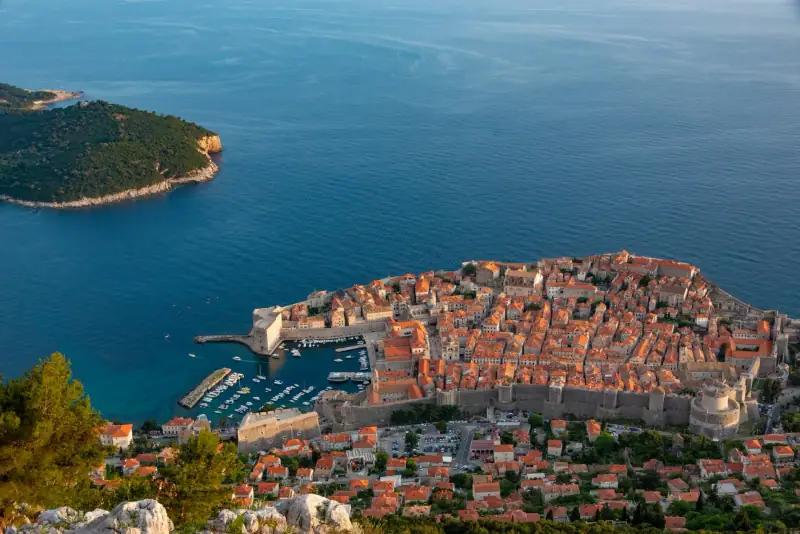
Croatia road trip: the coastal route from Zagreb to Dubrovnik
The ultimate Croatian coastal road trip from Zagreb to Dubrovnik via Split, Zadar and the national parks. 10-14 day route with stops and tips.
7 days
Croatia in 7 days: the perfect one-week itinerary
Detailed itinerary to visit Croatia in 7 days: Split, the Dalmatian islands, Dubrovnik and Plitvice. Day-by-day plan with practical tips.
10 days
Croatia in 10 days without a car: a realistic bus and ferry itinerary
ZagrebZadarSplitHvar TownDubrovnik