Itineraries
Croatia in 10 days without a car: a realistic bus and ferry itinerary
We may earn a commission when you book through links on this page, at no extra cost to you. We don't visit or try the places we cover: we summarize published sources. How we work
Day by day
- Days 1-2Zagreb on foot: Upper Town, cathedral, Dolac market, Lower Town
- Day 3Bus Zagreb to Plitvice lakes, then bus to Zadar
- Day 4Zadar: Sea Organ, Greeting to the Sun, waterfront
- Day 5Bus Zadar to Split, optional stop in Šibenik
- Day 6Catamaran from Split to Hvar Town
- Day 7Hvar
- Day 8Catamaran to Split, then bus to Dubrovnik
- Days 9-10Dubrovnik: old town, city walls, Mount Srđ cable car
Where to sleep
- Zagreb2 nights
- Zadar2 nights
- Split1 night
- Hvar Town2 nights
- Dubrovnik2 nights
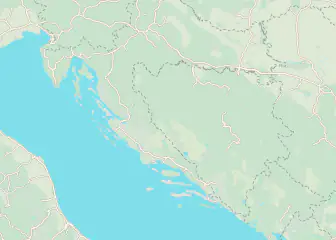
Weather through the year on this route
| Jan | Feb | Mar | Apr | May | Jun | Jul | Aug | Sep | Oct | Nov | Dec | |
|---|---|---|---|---|---|---|---|---|---|---|---|---|
| High °F (°C) | 468 | 489 | 5412 | 6116 | 6920 | 7625 | 8228 | 8328 | 7423 | 6518 | 5613 | 489 |
| Low °F (°C) | 373 | 383 | 426 | 489 | 5613 | 6317 | 6820 | 6920 | 6116 | 5412 | 478 | 394 |
Normals 1991–2020 at Zagreb, Split and Dubrovnik: averages over 30 years, not a forecast. Source: NASA POWER (MERRA-2), grid of about 50 km. Figures computed by us in November 2026. Rain is shown only where a weather station confirms the figures.
In short
- Ten days link Zagreb (2 days), Plitvice and Zadar, Split, Hvar and Dubrovnik (2 days) by bus and ferry, with each city change done in the morning.
- Day 3 is the key leg: a Zagreb-Zadar bus stops at the Plitvice entrance, so you can store luggage, visit the lakes and continue to Zadar.
- Buses and ferries for the whole route cost roughly €120-200 (~$140-230) per person, excluding lodging; check fares before booking.
- In July-August, book buses 2 to 5 days ahead for Plitvice, Dubrovnik and Split, and book Plitvice park tickets, which are limited in summer.
Many travelers think you absolutely must rent a car to see Croatia. That is wrong: the country’s geography, a coast stretched along a single axis, suits the bus very well, and the islands are reached by ferry. Here is a 10-day itinerary, with distances, times and pitfalls to avoid. Times are indicative and vary with the season and traffic.
The plan at a glance
| Day | Stop | Transport | Approx. distance | Approx. time |
|---|---|---|---|---|
| 1-2 | Zagreb | Arrival | - | - |
| 3 | Zagreb → Plitvice → Zadar | Bus | 135 km (84 mi) then 130 km (81 mi) | 2 h 15 then 2 h |
| 4 | Zadar | - | - | - |
| 5 | Zadar → Split | Bus | 160 km (99 mi) | 3 h |
| 6 | Split → Hvar | Catamaran | 30 nautical miles (about 35 mi) | 1 h - 1 h 15 |
| 7 | Hvar | - | - | - |
| 8 | Hvar → Split → Dubrovnik | Ferry then bus | 230 km (143 mi) by bus | 4 h 30 - 5 h |
| 9-10 | Dubrovnik | - | - | - |
This pace avoids days spent entirely in transit: every change of city is done in the morning, and the afternoon stays free.
Days 1-2: Zagreb, a capital done on foot
You do not need a car in Zagreb. The Upper Town, the cathedral, Dolac market and the Lower Town are covered on foot, with the funicular and the tram for the hills. For details, see our guide to visiting Zagreb.
From the airport, a shuttle reaches the central bus station in about thirty minutes; this is also where all your later buses leave from.
Staying near Zagreb's bus station
For an early bus on day 3, choose a hotel within 15 minutes on foot of the station.
Day 3: Zagreb → Plitvice → Zadar, the key leg
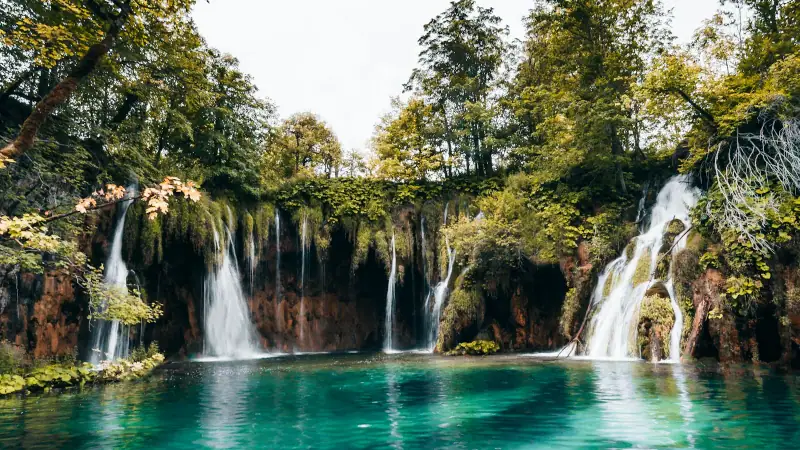
This is the leg that travelers without a car dread, and yet it is simple: a Zagreb-Zadar bus stops at the entrance to the national park. You get off, leave your luggage in storage, visit the lakes, then take a bus to Zadar in the late afternoon.
- Zagreb → Plitvice: about 135 km (84 mi), about 2 h 15.
- Plitvice → Zadar: about 130 km (81 mi), about 2 h.
- To book: both tickets, in particular the end-of-day bus (fewer departures), and the park entrance ticket, whose numbers are limited in summer.
Allow 4 to 5 hours there for a decent route. Our guide to Plitvice Lakes details the routes.
Plitvice excursion without driving
If the bus times do not fit, excursions with transport exist from Zagreb, Zadar and Split.
Days 4-5: Zadar then Split
Zadar can be visited in one day: the Sea Organ, the Greeting to the Sun, a walk along the waterfront and a famous sunset. Details in visiting Zadar.
The next day, bus Zadar → Split (about 160 km / 99 mi, 3 h). There are many departures, often hourly in summer. If you want to add Šibenik and St. James Cathedral, most buses stop there, so you can split the trip in two.
In Split, the bus station and the port sit side by side, at the foot of Diocletian’s Palace, a big plus when traveling without a car. See visiting Split and where to stay in Split.
Days 6-7: Hvar by catamaran
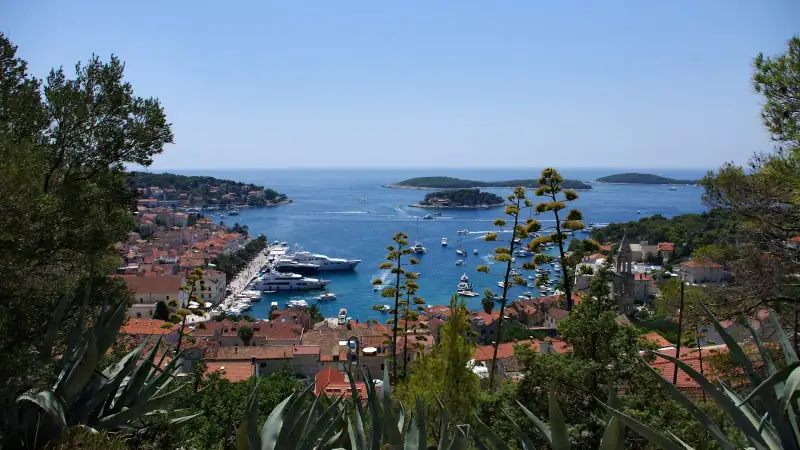
From Split, a fast catamaran reaches Hvar Town in about 1 h to 1 h 15. The classic car ferries reach Stari Grad (about 2 h), then a bus links to Hvar Town: prefer the catamaran, more practical on foot.
Book the return ahead in summer: the last evening departures fill up. All indicative times and prices are detailed in our article on booking ferries in Croatia, and the island itself in visiting Hvar.
Staying in Hvar Town
Stay near the harbor to reach the catamaran on foot, no taxi needed.
Day 8: Hvar → Split → Dubrovnik
This is the longest day: morning catamaran to Split, then bus to Dubrovnik (about 230 km / 143 mi, 4 h 30 to 5 h). The trip can be lengthened by the border crossing with Bosnia and Herzegovina at Neum: keep your passport within reach. It is covered in our article on crossing Neum.
Tip: take a bus leaving Split in late morning, after checking the connection with the catamaran, and keep a margin, because a boat delay will not be made up by the bus.
Days 9-10: Dubrovnik
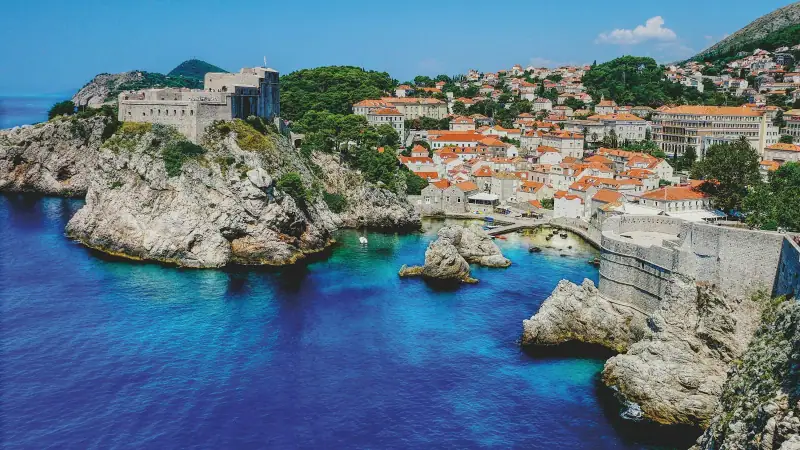
The old town, the city walls and the Mount Srđ cable car are all done on foot. The Gruž bus station is about 4 km (2.5 mi) from the center: take the city bus. See visiting Dubrovnik and where to stay in Dubrovnik.
Elaphiti Islands or Cavtat from Dubrovnik
A boat excursion adds a nature day with no transport constraints at all.
Budget and booking transport
For this itinerary, the total for buses and ferries is roughly between €120 and €200 (~$140-230) per person, excluding lodging. Fares change from one season to the next: check them on the companies’ sites or on bus booking platforms. For the rest of the budget, see budget in Croatia.
Limits of traveling without a car
- Small isolated beaches and the Istrian or Dalmatian hinterland are hard to reach.
- On Sundays and off season, bus frequency drops.
- Bulky luggage complicates tight connections: travel light, a bag of 10 to 15 kg (22 to 33 lb) is enough for 10 days and slips easily into the bus hold.
- Delays happen, especially in July-August on the coast: never book a return flight on the same day as a bus trip from Dubrovnik or Split without a margin of several hours.
- A car itinerary remains more flexible: compare with our coastal road trip.
Frequently asked questions
Can you visit Croatia without a car?
Yes. The intercity bus network links all the towns of the coast and the interior, and ferries serve the large islands. Only isolated villages and some wild beaches require a vehicle or an organized excursion.
Do you need to book buses ahead in Croatia?
In July-August, book 2 to 5 days before trips to Plitvice, Dubrovnik and Split. Off season, buying your ticket at the bus station or on the bus is generally enough.
How much does transport cost for 10 days without a car?
Expect about €120 to €200 (~$140-230) per person for all the buses and ferries of this itinerary, depending on the season and the fast connections you choose. Fares vary: check them before booking.
How do you get to Plitvice Lakes by bus?
Buses link Zagreb, Zadar and Split to the park entrance (about 2 h 15 from Zagreb, 2 h from Zadar). The park has luggage storage near the entrances, which lets you do the stop on the way.
What is the best time to travel without a car in Croatia?
May-June and September offer full bus and ferry frequencies, fewer people and lower prices. In midsummer, connections are more frequent but tickets go fast.
Are bus stations close to town centers?
Generally yes: in Split, Zadar and Zagreb the bus station is 10-20 minutes on foot from the center. In Dubrovnik, it is in Gruž, about 4 km (2.5 mi) from the old town (city bus 1A or 1B).
More Croatia guides
Keep reading

Hiking in Croatia: the best trails from Velebit to Dubrovnik
Hiking in Croatia: Velebit, Paklenica, Biokovo and the island of Hvar. Marked trails, difficulty, best season and practical tips for planning.
Kayaking in Croatia: the best tours and routes
Guide to kayaking in Croatia: tours from Dubrovnik, Hvar, Split and Rovinj. Sea caves, wild islands and coves reachable only by kayak.
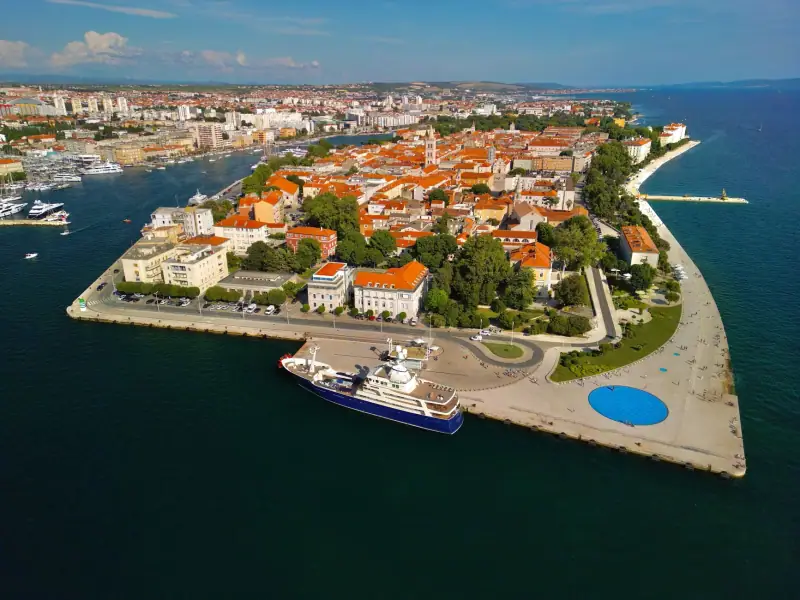
Visiting Zadar: complete guide to the Dalmatian city
Complete guide to visiting Zadar: Sea Organ, Roman old town, beaches, Kornati and Paklenica excursions. Everything for a successful stay in Dalmatia.
Ready-made
Croatia itineraries
Croatia road trip: the coastal route from Zagreb to Dubrovnik
The ultimate Croatian coastal road trip from Zagreb to Dubrovnik via Split, Zadar and the national parks. 10-14 day route with stops and tips.
7 days
Croatia in 7 days: the perfect one-week itinerary
Detailed itinerary to visit Croatia in 7 days: Split, the Dalmatian islands, Dubrovnik and Plitvice. Day-by-day plan with practical tips.