What to see
Visiting Heraklion: A Complete Guide to Crete's Capital
We may earn a commission when you book through links on this page, at no extra cost to you. We don't visit or try the places we cover: we summarize published sources. How we work
In short
- Two days cover the essentials: the old town, the harbor, the archaeological museum and half a day at Knossos, 5 km (3 mi) from the center.
- See the museum first (about €12 / ~$14, allow 2 h 30 to 3 h), then Knossos; go in the morning in July-August, when it often passes 35 °C (95 °F).
- From the airport (5 km / 3 mi east), bus line 1 takes 15-20 minutes for under €2 (~$2); a taxi costs about €10-15 (~$12-17).
- KTEL buses reach Rethymno in about 1 h 30 (~€8 / ~$9) and Chania in 2 h 30 to 3 h (~€14 / ~$16).
Heraklion (Ηράκλειο in Greek) is the capital of Crete and the fourth-largest city in Greece by population. Often overlooked by travelers who head straight to Chania or the beaches of the east, it nevertheless offers an incomparable experience: the world’s richest archaeological museum on Minoan civilization, the Knossos palace a few kilometers away, a Venetian waterfront dominated by an imposing fortress, and the life of an authentic Mediterranean city far from tourist clichés. Here is the complete guide to visiting Heraklion and getting the most out of it.
The Koules fortress and the Venetian harbor
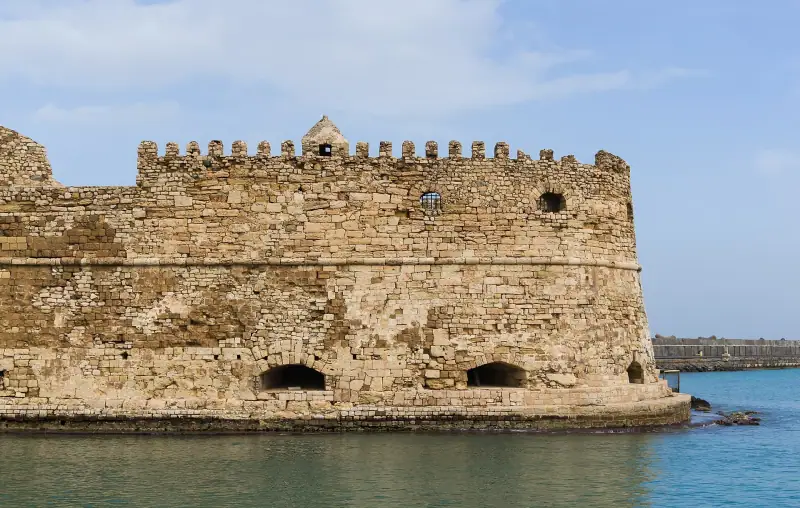
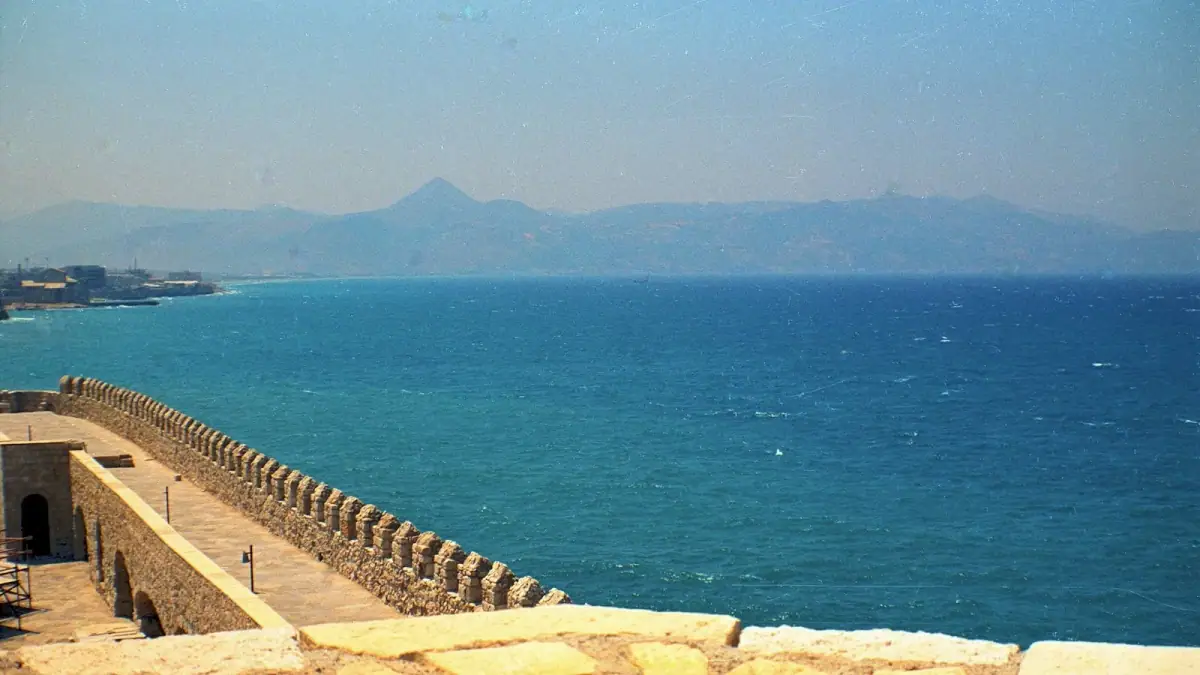
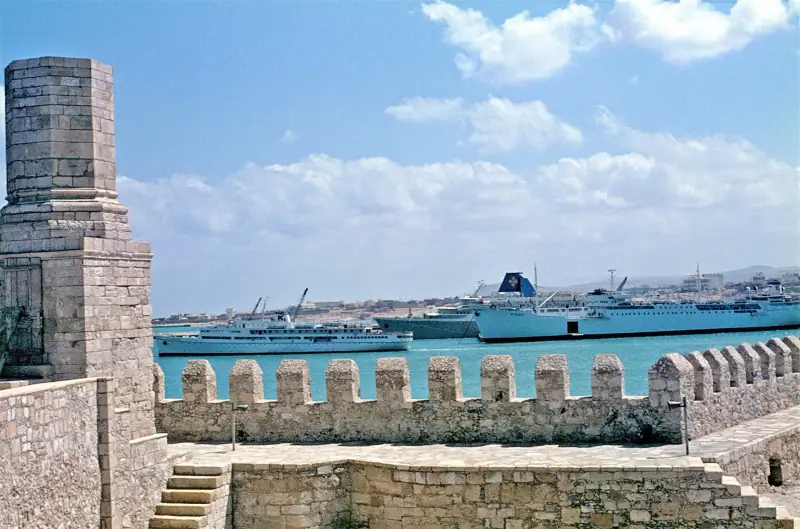
The symbol of Heraklion is without doubt the Koules fortress (also called Rocca al Mare), which has stood guard at the entrance to the old harbor since the 16th century. Built by the Venetians between 1523 and 1540, it held out for twenty-one years against the Ottoman siege before the city fell in 1669, one of the longest sieges in European military history.
A visit to the fortress takes about 45 minutes to an hour. Inside, vaulted rooms hold exhibitions on the city’s history, the Venetian period and the Ottoman occupation. But the view is most striking from the outer ramparts: in front of you, the marina and the ferry basin; behind you, the city of Heraklion and, on a clear day, the snow-capped peaks of Psiloritis in the background.
The harbor itself is pleasant to stroll in the evening. The Venetian arsenals, the former 16th-century shipyards, line the basin to the west and have been partly restored. Opposite, the facades of the waterfront buildings reflect a golden light at sunset.
Guided tours of Heraklion
Discover the Venetian and Minoan secrets of Heraklion with a passionate local guide.
The archaeological museum: the best of the Minoan world
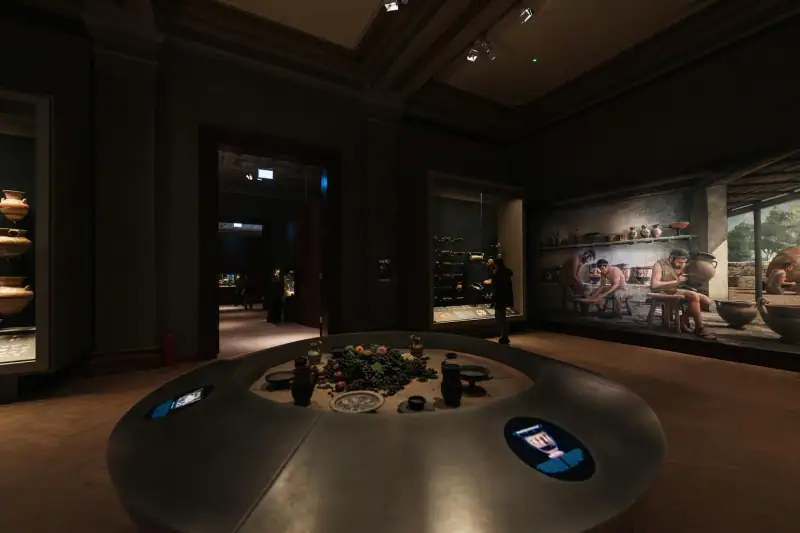
The Heraklion Archaeological Museum is one of the main reasons to come to the Cretan capital. It holds the largest and most important collection of Minoan art in the world, covering 5,500 years of history, from the Neolithic to the Roman period, through more than 5,000 objects on display.
What not to miss
The frescoes from the Knossos palace are the highlight of the visit. These reconstructed wall paintings (the Prince of the Lilies, the Parisienne, the Dolphins, the Rhyton Bearers) convey the vitality of a civilization that flourished more than 3,500 years ago. Their colors, sense of movement and sophistication surprise you on every visit.
The Phaistos Disc is the museum’s most mysterious object: a clay disc 16 cm (6 in) in diameter, covered in spiral signs engraved or stamped around 1700 BC. Its writing remains undeciphered to this day. Hypotheses about its nature (calendar, religious hymn, inventory?) continue to fuel debate among archaeologists.
The gold jewelry from Malia is among the finest examples of Bronze Age Mediterranean jewelry. The pendant of two bees facing each other and holding a drop of honey is the most famous: so fine and elegant it defies the centuries, it has become one of the symbols of Crete.
The stone rhytons (libation vessels shaped like a bull’s head or horn) illustrate the central role of the bull in Minoan religion and symbolism. Some are carved from rock crystal with a precision that leaves you wondering about the tools of the time.
Practical info: The museum is open daily (hours vary by season, generally 8 am to 8 pm in summer). Admission is around €12 (~$14); the combined ticket with Knossos reportedly no longer exists in 2026, so check the museum’s official website. Allow 2 h 30 to 3 h for an in-depth visit. An audio guide is strongly recommended to put the collections in context.
The Knossos palace: Minoan civilization at full scale
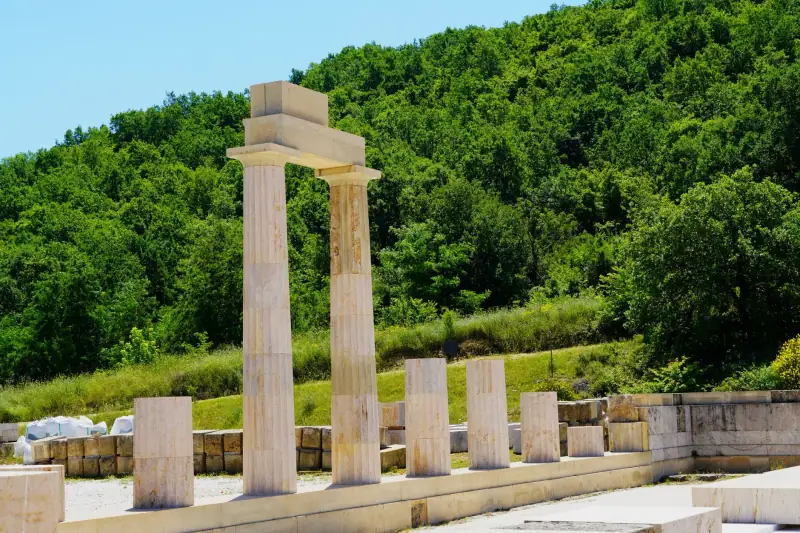
Just 5 km (3 mi) southeast of central Heraklion, the Knossos palace is the largest and best-preserved of the Minoan palaces in Crete. Seat of a civilization that dominated the eastern Mediterranean between 2000 and 1400 BC, Knossos is associated with the legend of the Minotaur and the Labyrinth, a myth that originates in the very complexity of the palace’s corridors.
The site was uncovered and partly reconstructed by the British archaeologist Arthur Evans in the early 20th century. These reinforced-concrete reconstructions, hotly debated by modern archaeologists, nevertheless let you picture what the palace looked like in its splendor: several floors, hundreds of rooms, running water and drainage systems remarkable for the time, and audience halls decorated with polychrome frescoes.
To go deeper, our complete guide to the Knossos palace details the site’s history, Evans’s reconstructions and practical tips.
Knossos + Archaeological Museum excursion
Combine Heraklion's two major sites in one day with an expert guide included.
The old town: between Venice and the East
Although Heraklion cannot compete with Chania’s compact beauty for its old town, it does have a rich and lively historic center that many visitors cross without really exploring.
Eleftherias Square and its surroundings
Eleftherias Square (Freedom Square) is the modern heart of Heraklion. A large pedestrian space shaded by palm trees, it is lined with cafes, brasseries and administrative buildings. The city’s social life beats here, especially in the evening, when residents gather for the stroll (volta).
The Morosini Fountain and Lion Square
A few streets toward the old harbor, the Morosini Fountain sits at the center of Venizelou Square, nicknamed Lion Square for the four marble lions that have decorated its basin since 1628. Built in 1628 under the Venetian governor of the time (a member of the Morosini family), this fountain is one of the best-preserved monuments of Heraklion’s Venetian period.
Around the square, St. Mark’s Basilica (13th century, built in 1239, now an exhibition hall) and the Venetian Loggia (17th century, now the city hall) show the architectural ambition of the Venetians for their main Cretan city.
The Venetian walls
Heraklion is surrounded by a ring of Venetian walls that is practically intact, one of the best preserved in Europe. Built between the 15th and 17th centuries, these walls stretch for nearly 4 km (2.5 mi) and are punctuated by seven bastions. The walk along the top of the walls, between the Kainourgio Gate and the Candia Gate, offers unexpected views over the city and its districts. The Martinengo Bastion, to the south, holds the tomb of Nikos Kazantzakis, author of Zorba the Greek, born in Heraklion in 1883.
1866 Street and the central market
1866 Street is Heraklion’s central market, a covered shopping street packed with fruit and vegetable stalls, Cretan delicatessens, butchers and fishmongers. Residents of the city have shopped here for generations. You will find the best local products: extra virgin Cretan olive oil, thyme honey from the Lasithi plateau, aged graviera cheese, herb-marinated olives and dried aromatic herbs.
Food: eating in Heraklion
Heraklion is a city of food lovers. Unlike Chania, whose touristy waterfront has sometimes disappointed, Heraklion keeps an authentic food scene in its inner lanes, away from the beaten track.
Where to eat
The neighborhoods around Kornarou Square and the streets parallel to 1866 Street hold many tavernas frequented by locals. The mood is no-frills (Formica tables, handwritten chalkboards, generous portions) and the food is often better than at the waterfront.
For mezze and local wines, the streets near the central market have several places specializing in traditional Cretan cooking served with tsikoudia (Cretan brandy) or wines from Crete’s cellars.
Dishes to try
In Heraklion, look for:
- Dakos: Cretan barley rusk soaked in water, topped with crushed tomatoes, mizithra cheese and olive oil. Simple and perfect.
- Antikristo: lamb slowly roasted around a central fire, a specialty for big occasions.
- Cretan salad: the local variation on Greek salad, with graviera cheese in addition to the feta, capers and dittany.
- Kalitsounia: small pastry turnovers filled with sweet mizithra and honey, to eat as dessert or a snack.
To learn all about the island’s cooking, see our guide to Cretan cuisine.
Hotels in Heraklion
From the historic center to residential districts, find the right place to stay in Heraklion.
Where to stay in Heraklion
Heraklion offers a wide range of lodging, from boutique hotels in renovated buildings in the historic center to international hotels near the harbor.
The historic center (around Venizelou Square and 25 Avgoustou Street) is the most convenient location for seeing the city on foot. Boutique hotels in renovated Venetian mansions are rare there but exist, combining modern comfort with historic atmosphere.
The harbor district offers hotels with views of the sea and the Koules fortress, a few minutes on foot from the old harbor and the ferries.
Residential districts (Nea Alikarnassos, Portou) have hotels at lower prices, 15-20 minutes on foot or by bus from the center.
Our complete guide to where to stay in Heraklion details the best options by neighborhood and budget.
Excursions from Heraklion
Heraklion’s central position on Crete’s north coast makes it an ideal base for exploring the whole island.
West: Rethymno and Chania
The E75 highway runs along the coast and links Heraklion to Rethymno in about 1 h 15 (80 km / 50 mi) and to Chania in 1 h 45 to 2 h (145 km / 90 mi). Each of these two cities deserves a night or two; see our guide to Rethymno for the essentials.
East: Agios Nikolaos and the Lasithi region
The east coast from Heraklion to Agios Nikolaos (65 km / 40 mi, about 1 hour) unrolls a spectacular coastal landscape with coves reachable from the road. Agios Nikolaos is a pretty resort town built beside an inland lake linked to the sea. Nearby, Elounda is known for its luxury hotels and peaceful setting facing the island of Spinalonga; to learn more, read our guide to Spinalonga.
South: the Libyan Sea coast
The mountain road south crosses sweeping landscapes to reach the Libyan Sea coast. Matala, about 70 km (43 mi) southwest of Heraklion, is famous for its cliffs riddled with caves where hippies lived in the 1960s and 70s, and for its turquoise water. Our guide to Matala tells you everything about this unique village.
The Lasithi Plateau and the Psychro Cave
The Lasithi Plateau, about 70 km (43 mi) east/northeast of Heraklion, is a vast agricultural plateau tucked into the mountains at 820 m (2,690 ft) altitude, dotted with windmills. The Psychro Cave (or Cave of Zeus), on the heights of the plateau, is associated in Greek mythology with the birth of the god Zeus.
Practical information
How to get to Heraklion
By air: Nikos Kazantzakis International Airport (HER) is Crete’s main airport, about 5 km (3 mi) east of the city center. It receives direct flights from many European cities in the summer season, and many charter flights also operate from major European metropolitan areas. Check routes with the airlines.
By ferry: Heraklion’s port is one of the busiest ferry ports in Greece. Several companies run overnight service from Piraeus (about 8-9 hours). Ferries also link Heraklion to Santorini, Mykonos and Rhodes in season.
From Chania: Very frequent KTEL buses from Chania’s intercity bus station, 2 h 30 to 3 h for about €14 (~$16). By car, 145 km (90 mi) on the E75, allow 1 h 45.
Getting around Heraklion and Crete
On foot: The historic center (harbor, old town, archaeological museum) can be explored entirely on foot. From Eleftherias Square to the Venetian harbor, allow 10-15 minutes.
By city bus: The local bus network serves the city’s districts and the airport. Line 1 links the airport to the center in 15-20 minutes.
By KTEL bus: Two intercity bus stations: station A (near the harbor) for Chania and Rethymno; station B (east of the harbor) for Agios Nikolaos, Lasithi and the south.
By rental car: Essential for excursions to the southern beaches, the Lasithi Plateau and sites off the main roads. Many agencies are at the airport and in the city center.
Car rental in Heraklion
Explore central Crete and the south of the island from Heraklion with a rental car.
Sample budget
| Item | Tight budget | Mid-range | Comfort |
|---|---|---|---|
| Lodging | €40-65/night (~$46-75) | €80-130/night (~$93-151) | €160-300/night (~$186-348) |
| Meals | €15-25/day (~$17-29) | €35-55/day (~$41-64) | €60-100/day (~$70-116) |
| Museums + activities | €10-20/day (~$12-23) | €25-50/day (~$29-58) | €60-100/day (~$70-116) |
| Transport | €5-15/day by bus (~$6-17) | €30-50/day by car (~$35-58) | €50-80/day (~$58-93) |
To plan your overall budget in Crete, see our guide to the Crete budget.
Heraklion vs. Chania: which to choose?
This debate comes up often among travelers who can only spend one night in a big city. The answer depends on your priorities:
Choose Heraklion if: you want to see the archaeological museum and Knossos, you arrive through HER airport, you want a lively city with a more local than purely touristy atmosphere, or you are heading east (Lasithi, Agios Nikolaos).
Choose Chania if: the beauty of the Venetian old town is your priority, you want to be close to Samaria Gorge and the beaches of Elafonissi and Balos, or you prefer a more romantic atmosphere.
Our detailed comparison Chania vs. Heraklion will help you decide based on your traveler profile.
Tips for getting the most out of Heraklion
Start with the museum. Many people visit Knossos before the museum, but the ideal order is the reverse: after seeing the frescoes and objects in their museum context, the Knossos site takes on a whole other dimension. Book the museum for your first morning, Knossos for the afternoon or the next morning.
The harbor light in late afternoon. Between 5 and 7 pm, the Koules fortress and the Venetian arsenals are bathed in a golden light ideal for photos. It is also the best time for a walk along the jetty.
Avoid sites at midday in summer. Knossos and the archaeological museum are open-air or poorly air-conditioned. In July-August, prefer a morning visit (opening at 8 am) for both. The afternoon heat (often 35-38 °C / 95-100 °F) is hard to handle on the archaeological site.
Explore the market in the morning. 1866 Street and the central market are at their best between 7 am and noon, when the stalls are full and the bustle is at its peak. After 2 pm, many shopkeepers close for a siesta.
Extend into a road trip. Heraklion is the natural starting point for a road trip in Crete. Starting from Heraklion and heading up to Chania, or the other way around, you cross the whole diversity of the island in a week. The hikes in Crete starting from the central region round out a culture-focused stay nicely.
Heraklion is not a city for postcard lovers; it lacks the immediate, flattering beauty of Chania. But it offers something rarer: direct access to one of the most fascinating civilizations of antiquity, an authentically Greek urban atmosphere, and an ideal position for exploring an island whose richness can never be reduced to a single face. Those who take the time to discover it often leave feeling they have seen the real Crete.
Frequently asked questions
How many days do you need to visit Heraklion?
Two days cover the essentials: the old town, the harbor, the archaeological museum and half a day at the Knossos palace. With three days, you can add excursions to villages in the region and take time to explore the lanes at your own pace. Heraklion also works as a base for trips to Rethymno in the west or Agios Nikolaos in the east.
How do you get from the airport to central Heraklion?
Nikos Kazantzakis Airport (HER) is about 5 km (3 mi) east of the city center. The city bus (line 1) links the airport to Eleftherias Square in 15-20 minutes for under €2 (~$2); check the line on site. A taxi costs about €10-15 (~$12-17). In high season, some hotels offer a shuttle service.
Is the Heraklion Archaeological Museum worth the trip?
Absolutely. It is one of the most important museums in the Mediterranean and holds the largest collection of Minoan art in the world. A visit takes 2 to 3 hours depending on your interest in Minoan civilization. Be sure to see the frescoes from the Knossos palace, the Phaistos Disc and the gold jewelry from Malia.
Can you visit Knossos without a guide?
Yes, the site can be visited on your own with the information panels at the site. However, a guide or audio guide enriches the visit considerably, because without context the concrete structures and the reconstructions from the Evans era can be confusing. Guided tours leave regularly from Heraklion and include transport.
What is the best time to visit Heraklion?
May-June and September-October are ideal: pleasant temperatures (22-28 °C / 72-82 °F), swimmable sea from May, and reasonable crowds. In July-August, temperatures often exceed 35 °C (95 °F) in the city center and archaeological sites can be packed. March-April suits culture and hiking fans. Winter stays mild, but some museums close early.
Is Heraklion more beautiful than Chania?
The two cities have very different strengths. Chania charms with its more compact Venetian old town and its iconic harbor. Heraklion is bigger and livelier, with a more authentic local life and immediate proximity to the biggest archaeological sites in Crete. Many travelers prefer Chania for the charm, but Heraklion for culture and practicality.
How do you get from Heraklion to Rethymno and Chania?
Very frequent KTEL buses link Heraklion to Rethymno (about 1 h 30, ~€8 / ~$9) and to Chania (about 2 h 30 to 3 h, ~€14 / ~$16) from intercity bus station A (by the city's harbor). Departures are every 30-60 minutes in season. By car, the E75 highway runs along the island's north coast.
More Crete guides
Keep reading
The Best Beaches in Crete, by Region
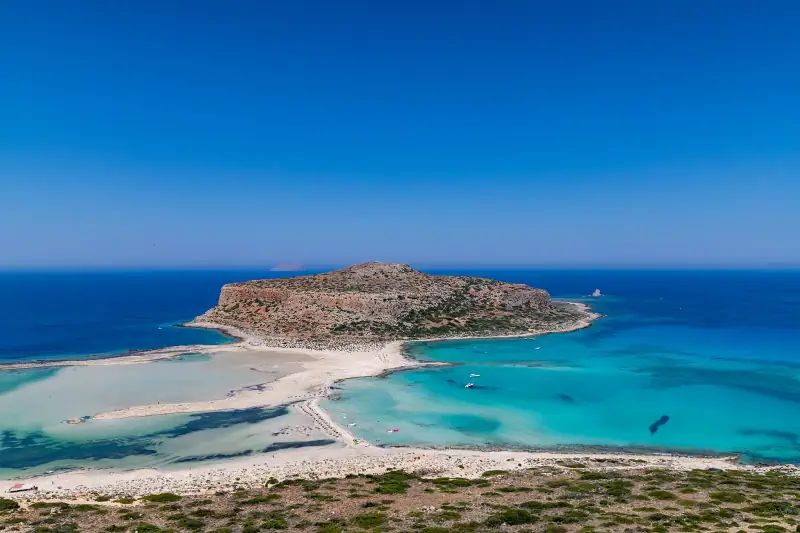
The best beaches in Crete: Elafonissi, Balos, Falassarna, Vai, Matala... a full selection with access, parking and practical tips.
Heraklion: The Top Sights of Crete's Capital
Heraklion's top sights: Knossos palace, archaeological museum, Koules fortress, market and old town. A complete guide for 1 to 3 days.
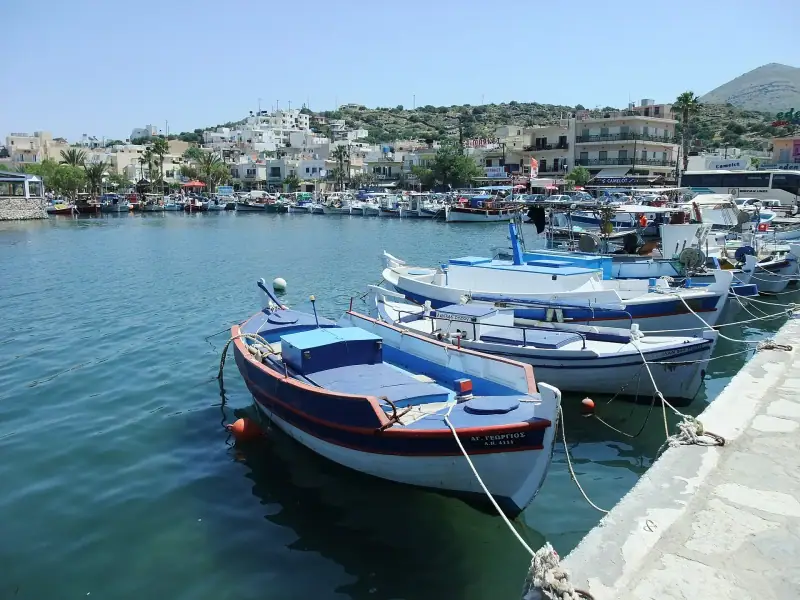
Visiting Elounda: A Complete Guide to the Luxury Resort on the Gulf of Mirabello
Complete guide to Elounda, Crete: clear-water beaches, the trip to Spinalonga, luxury hotels and good places to eat. Practical tips for 2026.
Ready-made
Crete itineraries
3 days
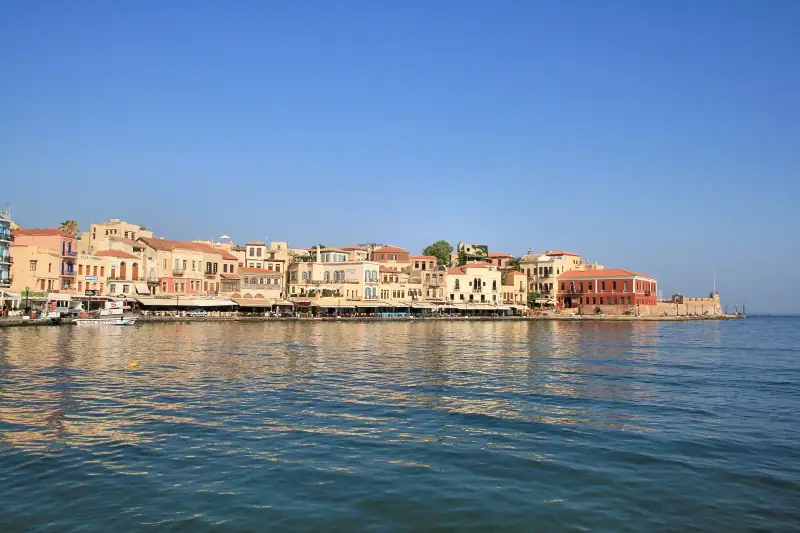
3 Days in Chania: A Complete Itinerary
3 days in Chania, Crete: Venetian old town, Samaria Gorge, Balos and Elafonissi beaches. Detailed plan and practical tips.
Can be adapted in the planner

10 days
10 Days in Crete: A Complete Itinerary to Discover the Island
HeraklionRethymnoChaniaAgios Nikolaos or Elounda
14 days
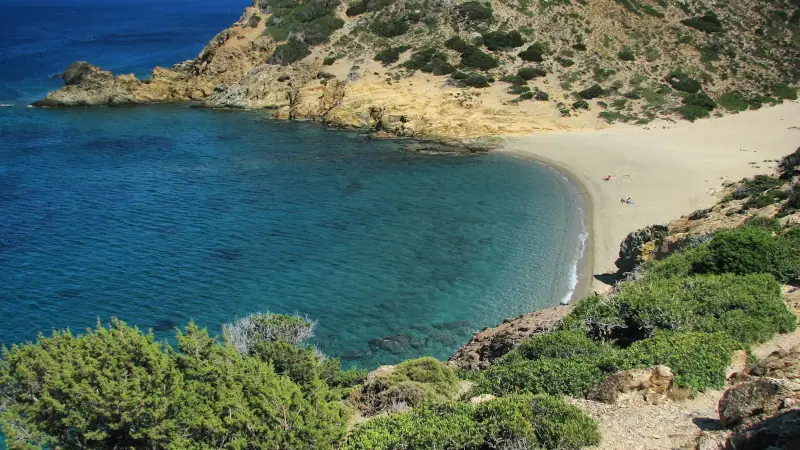
Crete Road Trip: The Complete Driving Itinerary
Plan your Crete road trip from end to end: a 10 to 14 day itinerary, scenic roads, lesser-known villages and secluded beaches to reach by car.