Itineraries
10 Days in Crete: A Complete Itinerary to Discover the Island

We may earn a commission when you book through links on this page, at no extra cost to you. We don't visit or try the places we cover: we summarize published sources. How we work
Day by day
- Day 1Arrival in Heraklion, Venetian walls, port, first taverna
- Day 2Knossos, Heraklion Archaeological Museum
- Day 3Matala caves and beach, drive to Rethymno
- Day 4Rethymno old town, Fortezza, Preveli beach
- Day 5Drive to Chania via Georgioupoli, Venetian harbor
- Day 6Chania old town, maritime museum, Agia Marina beach
- Day 7Samaria Gorge hike, or Elafonissi beach
- Day 8Drive east via Lasithi Plateau, Psychro cave, Agios Nikolaos
- Day 9Spinalonga island, Mirabello Bay beaches
- Day 10Ierapetra or Vai, then Heraklion airport
Where to sleep
- Heraklion2 nights
- Rethymno2 nights
- Chania3 nights
- Agios Nikolaos or Elounda2 nights
Weather through the year on this route
| Jan | Feb | Mar | Apr | May | Jun | Jul | Aug | Sep | Oct | Nov | Dec | |
|---|---|---|---|---|---|---|---|---|---|---|---|---|
| High °F (°C) | 5614 | 5614 | 6016 | 6418 | 7222 | 7926 | 8329 | 8329 | 7926 | 7323 | 6519 | 6016 |
| Low °F (°C) | 5111 | 5111 | 5312 | 5614 | 6317 | 6921 | 7424 | 7424 | 7122 | 6519 | 6016 | 5513 |
| Rain in (mm) | 3.9100 | 3.285 | 2.255 | 1.130 | 0.615 | 0.25 | 0.15 | 0.25 | 0.720 | 2.155 | 3.180 | 4.1105 |
Normals 1991–2020 at Heraklion and Chania: averages over 30 years, not a forecast. Source: NASA POWER (MERRA-2), grid of about 50 km. Figures computed by us in November 2026.
In short
- Suggested bases for 10 days: Heraklion (2 nights), Rethymno (2), Chania (3), Agios Nikolaos or Elounda (2). A rental car is essential.
- Best seasons: May, June and September. Samaria Gorge is generally open from May to October, depending on the weather.
- Budget about €100-150 (about $115-175) per person per day, all costs included, flights excluded.
- Highlights: Knossos, Matala, Rethymno's old town, Samaria Gorge (about 16 km / 10 mi), the Lasithi Plateau and Spinalonga.
Ten days in Crete is the ideal length to get to know the island in depth without feeling rushed. Greece’s largest island stretches 260 km (162 mi) and unrolls a succession of landscapes that seem to belong to different destinations: dizzying gorges, 4,000-year-old Minoan palaces, Venetian harbors with colorful facades, turquoise beaches, villages perched on mountainsides. This 10-day itinerary takes you from east to west, or the reverse, with a rental car, comfortable bases and a pace that leaves room for the unexpected.
Before you start: the basics
A rental car is essential for this itinerary. Book ahead, especially in summer: rates can double between an early booking and one made at the last minute. Choose full-coverage insurance, because some mountain roads are narrow and gravelly, and small scrapes on the underside are common. Gas stations are found in all the main towns, but fill up before heading to remote areas.
Recommended lodging bases for 10 days: Heraklion (2 nights), Rethymno (2 nights), Chania (3 nights), Agios Nikolaos or Elounda (2 nights). This setup spares you from changing rooms every night and gives you a stable base to radiate out into each region.
The best season for this active itinerary: May, June or September. Samaria Gorge is open (it is generally open from May to October, depending on the weather), the sea is pleasant for swimming, temperatures stay bearable and the sites aren’t yet as overloaded as in July and August.
Car rental in Crete
Compare offers from your arrival airport. Book ahead for the best rates.
Day 1: Arrival in Heraklion
Arrive at Heraklion Airport (HER), about 5 km (3 mi) from the city center. Pick up the rental car, check in at the hotel, drop off your bags. The afternoon goes to a first walk in the Cretan capital: the massive Venetian walls that still encircle the city center, Lions Square with its 17th-century Morosini Fountain, and the harbor overlooked by the Koules fortress. In the evening, have your first taverna meal and your first glass of tsikoudia (Cretan pomace brandy) to celebrate arriving.
Practical tip: The areas near the port and the covered market (1866 Street) are the best places to stay in Heraklion: lively without being as touristy as Chania.
Day 2: Knossos and the Heraklion Archaeological Museum
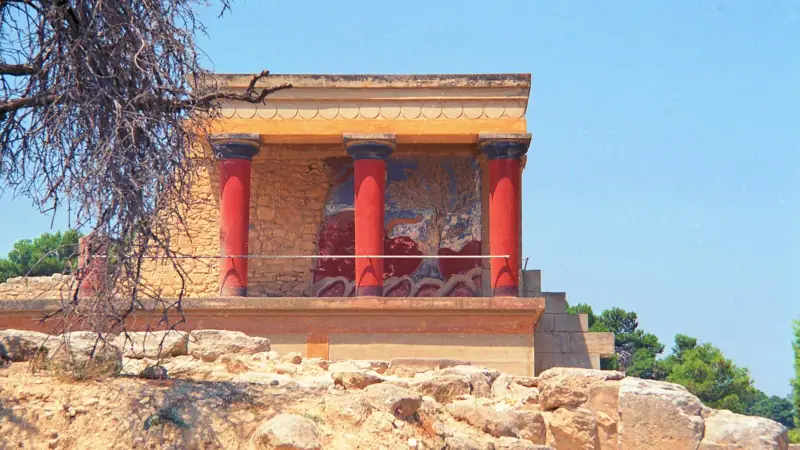
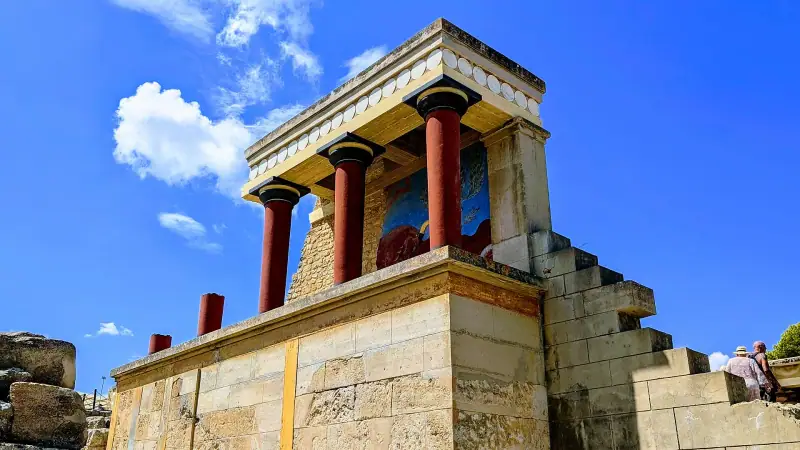
This is the most history-packed day of the whole itinerary. Leave early (opening at 8 am) for the Palace of Knossos, about 5 km (3 mi) south of Heraklion. This 4,000-year-old Minoan site remains the largest Bronze Age palace in the Mediterranean: mazes of corridors, reconstructed frescoes in bright colors, rooms with the characteristic columns painted dark red. A guided visit is strongly recommended to decipher the layout of these complex ruins. Allow 2 hours there.
In the afternoon, return to Heraklion for the Archaeological Museum, considered one of the most important in Greece. It gathers the Minoan treasures found on the island: the Prince of the Lilies fresco, the Snake Goddess, the Phaistos Disc. Half a day is enough to see the essentials.
Night: Heraklion (2nd night)
Day 3: Drive to Rethymno via Matala
A transition day with a nice surprise: Matala, the beach village south of Heraklion famous for its cave dwellings carved into the cliff. In the 2nd century, these caves served as Roman tombs; in the 1970s, hippies from around the world settled in them, including Joni Mitchell. Today, the beach is beautiful and the caves are classified as an archaeological site.
From Heraklion, plan on about 75 km (47 mi) south to reach Matala by the inland road. Swim, have a light lunch, explore the caves, then drive to Rethymno via Timbaki and the north national road (about 80 km / 50 mi, 1 h 15). Arrive in the evening in Rethymno.
Night: Rethymno (1st night)
Day 4: Rethymno, the Venetian Renaissance
Rethymno is often described as the most elegant town in Crete. Its old town, preserved within a compact pedestrian area, is a gem of Venetian and Ottoman architecture: the Fortezza fortress overlooks the town from atop a cliff, the 16th-century Venetian Loggia sits in the town center, Ottoman minarets pierce the rooftops of the lanes. The fishing-boat harbor is the most photogenic in Crete after Chania’s.
In the afternoon, head to the beaches. Rethymno’s long urban beach, northeast of town, is convenient but busy. For something wilder, Preveli beach, about 35 km (22 mi) to the south, is one of the most spectacular in Crete: a river flows into the sea in the middle of a dense grove of endemic palms (Phoenix theophrasti), in a lagoon-like setting. Access requires a short walk or a scramble down the rocks.
Night: Rethymno (2nd night)
Lodging in Rethymno
Old-town hotels, Venetian houses and apartments. Book early in high season.
Day 5: Drive to Chania, stop at Georgioupoli
Rethymno is about 60 km (37 mi) east of Chania on the E75 highway (50 minutes). But the slower coastal national road offers striking views over the Sea of Crete. Halfway, Georgioupoli is a quiet town at the mouth of the Almyros River, with a lovely golden-sand beach off the main tourist circuits.
Arrive in Chania early in the afternoon. First contact with the old town: the Venetian harbor with its ochre facades and white lighthouse is one of the most emblematic images of all Greece. Check in at the hotel, wander the maze of lanes, have a drink on a terrace facing the harbor as the sun goes down.
Tip: Stay in the old town or right next to it to enjoy the old harbor’s night atmosphere, much livelier than during the day.
Night: Chania (1st night)
Day 6: Chania in depth
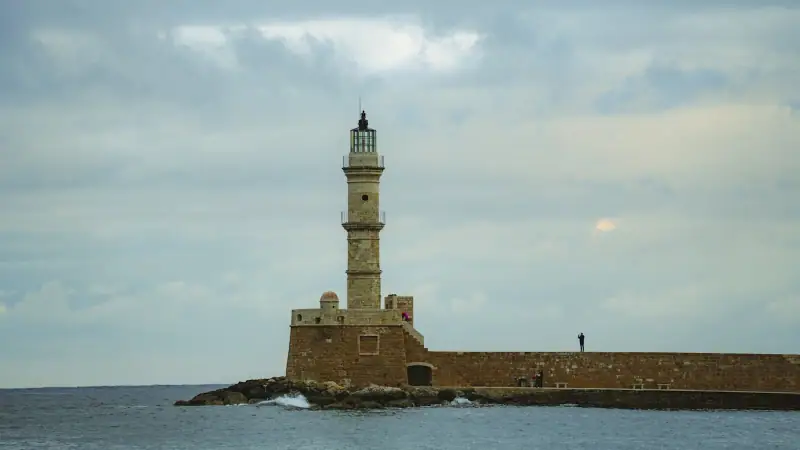
A full day to explore Chania at leisure. The old town is best seen on foot: the 17th-century Mosque of the Janissaries at the edge of the harbor, the Etz Hayyim synagogue in the lanes behind, the Splantzia district with its lively square and its kafeneia where locals play tavli, Skridlof Street known for its traditional leather workers. The Maritime Museum of Crete, set in a former Venetian arsenal, traces the island’s maritime history from antiquity.
In the afternoon, a beach option: Agia Marina beach, about 9 km (6 mi) to the west, is one of the most pleasant near Chania, with calm water and golden sand. Farther on, Platanias has the feel of a big beach resort.
Night: Chania (2nd night)
Day 7: Samaria Gorge (or the Elafonissi alternative)
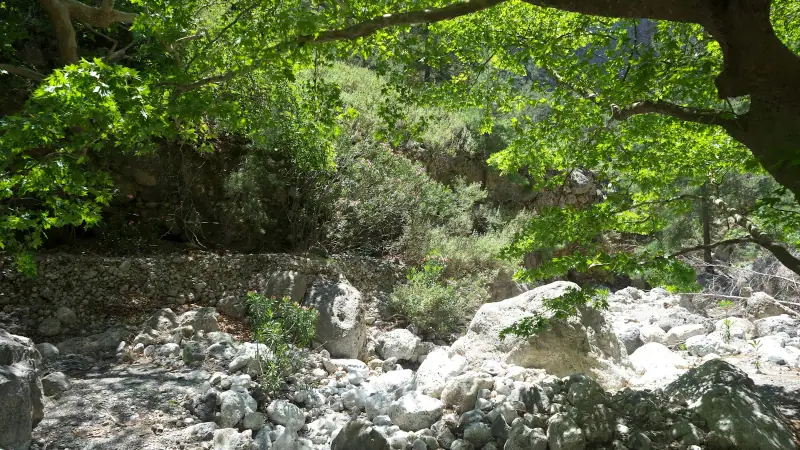
The signature day of the itinerary for hiking fans. Samaria Gorge is among the longest gorges in Europe (about 16 km / 10 mi of trail), and is a national park. The start is at Xyloskalo, about 42 km (26 mi) south of Chania on a spectacular mountain road. Shuttles leave early in the morning from central Chania.
The descent takes between 4 and 7 hours depending on your pace. It ends at Agia Roumeli beach, which cannot be reached by road, where a ferry takes you to the port of Hora Sfakion. From there, a bus brings you back to Chania along the south coast. Plan on a full day.
Alternative if you skip the hike: Elafonissi beach, about 75 km (47 mi) southwest of Chania (1.5-2 hours by road), is often ranked among the most beautiful in the Mediterranean. Its shallow waters with pink reflections (from crushed coral mixed into the white sand) and its lagoon you can walk to make it a highlight.
Night: Chania (3rd night)
Samaria Gorge excursion
Outbound shuttle from Chania, guided descent and return ferry included. Book ahead in season.
Day 8: Drive to Agios Nikolaos via the Lasithi Plateau
Crossing Crete from west to east through the interior is one of the highlights of this itinerary. From Chania, the road heads east via Heraklion (about 150 km / 93 mi, 2 hours on the E75), then turns southeast toward the Lasithi Plateau.
This high agricultural plateau, at about 850 m (2,790 ft) in elevation, is surrounded by mountain peaks. It is known for its white windmills (now mostly still) and for the Psychro Cave, also called the Dikteon Cave, said in Greek mythology to be the birthplace of Zeus. The visit to the cave, with its stalactites and stalagmites, is impressive and reachable on foot.
Head back down north to Agios Nikolaos, the capital of Lasithi, about 69 km (43 mi) east of Heraklion. The town is built around an inland lake, Lake Voulismeni, linked to the sea by a canal, which gives it a very distinctive look. The lakeside quays are lined with lively terraces.
Night: Agios Nikolaos or Elounda (1st night)
Day 9: Elounda and the island of Spinalonga
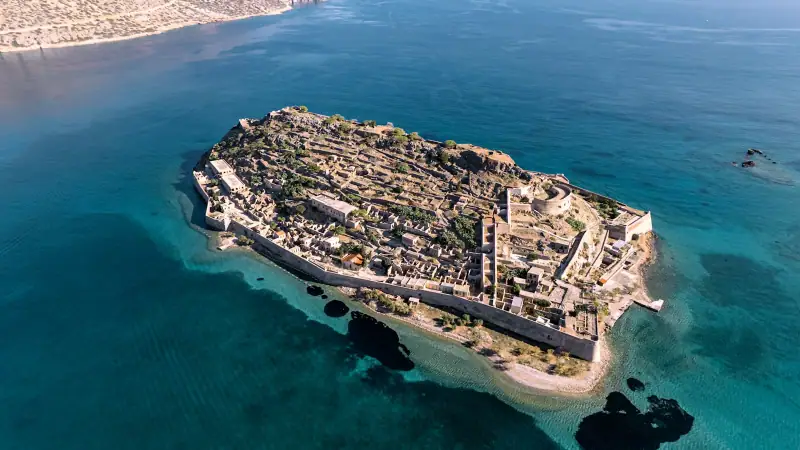
The Spinalonga day is one of the most moving of the trip. The fortress island of Spinalonga, a few hundred meters from Elounda across the water, was the last active leper colony in Europe (closed in 1957). Its massive Venetian ramparts overlook a gulf of crystal-clear, deep blue water. The boat crossing from Elounda or Plaka takes a few minutes.
Visiting the island takes 1.5 to 2 hours: the ghost village of the lepers, the 16th-century Venetian fortification (construction began in 1579), and the breathtaking views over the Gulf of Mirabello. Victoria Hislop’s novel The Island made Spinalonga known worldwide.
In the afternoon, explore the beaches of the Gulf of Mirabello, known for their turquoise water in a semi-arid landscape very different from the north of the island. The surroundings of Elounda and Agios Nikolaos are full of small coves reachable by car or on foot.
Night: Agios Nikolaos or Elounda (2nd night)
Day 10: Eastern Crete and the return
The last day depends on your departure airport. If you fly out of Heraklion (about 1 hour from Agios Nikolaos), you have the morning to explore eastern Crete:
Ierapetra option: About 36 km (22 mi) south of Agios Nikolaos, Ierapetra is the southernmost town in Europe. It sits on the Libyan Sea, at the narrowest point of Crete, and enjoys an exceptional microclimate (more than 300 days of sun a year). The town center is pleasant, the Venetian fort well preserved, and the urban beach extensive.
Vai option: About 95 km (59 mi) east of Agios Nikolaos, Vai is home to the largest natural palm grove in Europe (about 5,000 date palms), a protected nature reserve. The beach among the palms is surreal but very busy in summer.
Drive back to Heraklion Airport for your flight home.
Summary of legs and distances
| Leg | Distance | Time |
|---|---|---|
| Heraklion → Knossos | ~5 km (3 mi) | ~15 min |
| Heraklion → Matala | ~75 km (47 mi) | ~1 h 15 |
| Matala → Rethymno | ~80 km (50 mi) | ~1 h 15 |
| Rethymno → Chania | ~60 km (37 mi) | ~55 min |
| Chania → Xyloskalo (Samaria) | ~42 km (26 mi) | ~1 h |
| Chania → Heraklion | ~150 km (93 mi) | ~1 h 45 |
| Heraklion → Agios Nikolaos | ~69 km (43 mi) | ~1 h |
| Agios Nikolaos → Ierapetra | ~36 km (22 mi) | ~40 min |
Variations and options to adapt the itinerary
If you like hiking: Add Imbros Gorge (in the Chania region, shorter and less crowded than Samaria), the Katharo Plateau or the climb up Mount Psiloritis (the highest point in Crete at 2,456 m / 8,058 ft).
If you prefer beaches: Extend your stops at Elafonissi, Balos (reachable by boat from Chania or by 4x4 from Kastelli) or the Lasithi beaches (Istro, Sitia).
If you are traveling with kids: Cut back the long hikes and replace Samaria Gorge with Elafonissi or Balos, which are more accessible. The Limnoupolis water park, near Chania, is an option in intense heat.
If you have 12 to 14 days: Add a day in Heraklion (market, Museum of Cretan Ethnology), a night in Sitia (a very authentic town in the east) and an excursion to the mountain plateaus of Lasithi. Or extend your stay in Chania for an extra day toward Balos and Gramvousa.
Practical tips for making the itinerary work
Reservations: In July and August, book lodging and the rental car several months ahead. Old-town hotels in Chania and places in Elounda (a luxury destination) go very fast.
Daily budget: Plan on about €100-150 (about $115-175) per person per day, all costs included. Lunch in a local taverna costs €10-15 (~$12-17) per person, a full dinner €20-30 (~$23-35). Admission to the Palace of Knossos is around €20 (~$23), to Spinalonga around €20 (~$23).
Driving in Crete: Signs are often in Greek and Latin letters. Mountain roads can be winding and without guardrails. Avoid driving at night in mountainous areas. Right of way from the right is not always respected in villages.
Language and habits: A word of Greek (“efcharisto” = thank you, “kalimera” = good morning) is always well received. Cretans are known for their hospitality. Local tavernas often offer a free dessert or digestif on the house at the end of a meal.
This 10-day Crete itinerary is designed to alternate cultural discoveries, hikes, beaches and moments of strolling. It is not set in stone: Crete is easy to improvise once you are there, and the best discoveries are often the ones you don’t plan.
To prepare each leg in detail, see our guides by town and region: visit Heraklion, visit Chania, visit Rethymno, visit Agios Nikolaos and visit Lasithi.
Sources
- Visit Crete (Region of Crete): prices checked November 2026
Frequently asked questions
Is 10 days enough to see all of Crete?
Ten days covers the four main regions of Crete: Heraklion with Knossos, Rethymno, Chania with Samaria Gorge, and Lasithi with Agios Nikolaos and Spinalonga. You won't see every corner of the island (the Lasithi Plateau, Imbros Gorge or the most remote beaches in the east would call for a second trip), but you'll come home with a complete, balanced picture of Crete.
Do you need a car for this 10-day itinerary?
Yes, a car is essential. The KTEL bus network links the main towns, but isolated beaches, mountain villages, Samaria Gorge and most archaeological sites require a vehicle. Book ahead, especially in July and August. An economy car is enough, but choose full insurance because mountain roads can be narrow.
What is the best season for this itinerary?
May, June, September and early October are ideal: sunny weather, pleasant sea (22-26 °C / 72-79 °F), reasonable crowds and Samaria Gorge open (generally May to October, depending on the weather). In July and August, heat can top 38 °C (100 °F) inland and tourist sites are packed. Early fall is excellent for hiking and uncrowded beaches.
Where should you start: Heraklion or Chania?
Start in Heraklion if you land at Heraklion Airport (HER). If you land at Chania Airport (CHQ), start in Chania and reverse the itinerary. The logic is to finish on the side opposite your arrival airport to avoid backtracking.
How much should you budget for 10 days in Crete?
Average all-in budget: €100-150 (about $115-175) per person per day, flights excluded. That includes car rental (~€35-50/day, ~$41-58), a double room (~€60-120/night, ~$70-140 depending on category), meals (~€25-40/day, ~$29-46) and site admissions (~€10-20/day, ~$12-23). By staying in simple lodging and cooking sometimes, you can drop to €70-80 (~$81-93) per person per day.
How do you handle transfers between towns?
With a rental car, you manage transfers freely. If you don't want to drive, KTEL buses (infrequent) link Heraklion, Rethymno, Chania and Agios Nikolaos. Fast ferries exist between ports for some coastal trips. In high season, many tour operators offer excursions that spare you the mountain roads.
Can you combine Samaria Gorge and a beach day?
Yes, it is the classic plan. The gorge descent ends at Agia Roumeli beach, which cannot be reached by road. You can spend 1 to 2 hours at the beach before taking the ferry to Hora Sfakion. Many hikers swim in the Libyan Sea after the effort, a well-earned pleasure after 16 km (10 mi) of walking.
More Crete guides
Keep reading
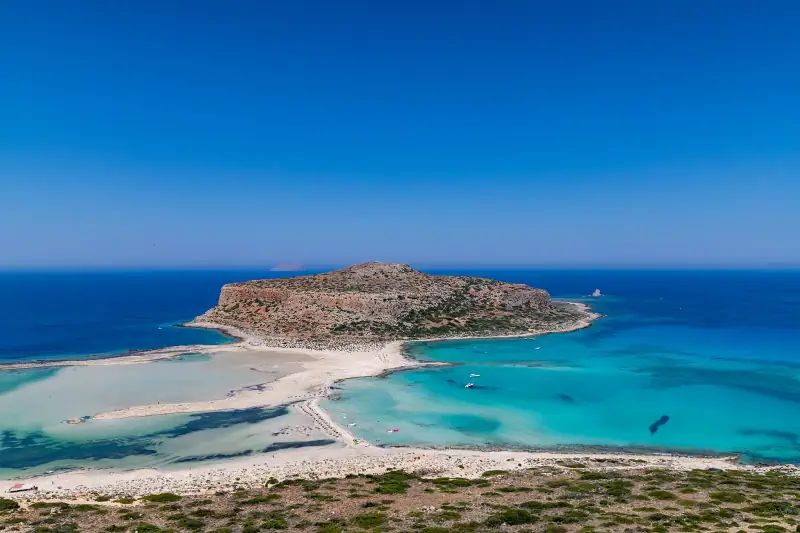
The Best Beaches in Crete, by Region
The best beaches in Crete: Elafonissi, Balos, Falassarna, Vai, Matala... a full selection with access, parking and practical tips.
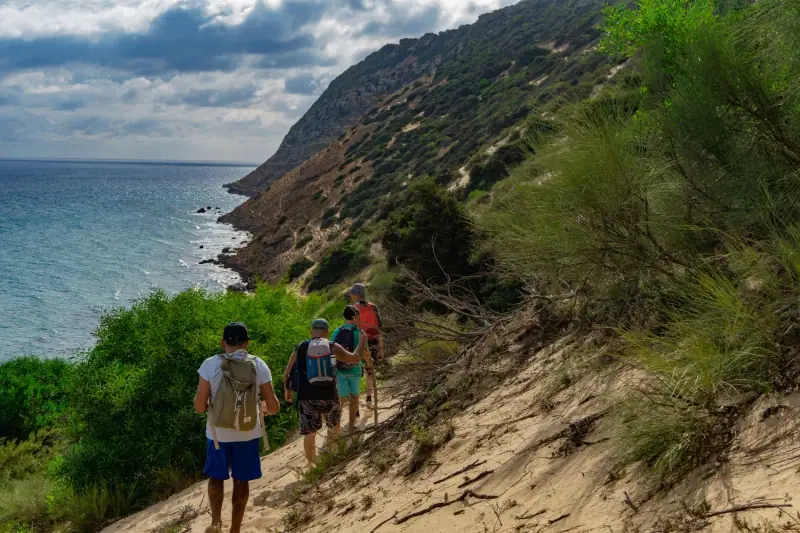
Hiking in Crete: Best Trails and Routes
The best hikes in Crete: Samaria Gorge, the E4 trail, plateaus and coastal paths. A complete guide for all levels with maps and tips.
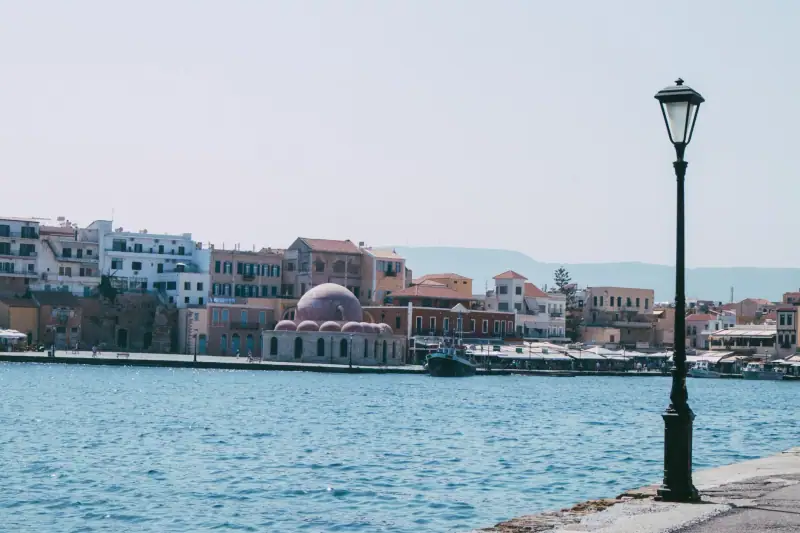
Where to Stay in Chania: The Best Neighborhoods and Hotels
Where to stay in Chania, Crete? old harbor, old town, nearby beaches: a complete guide to the best neighborhoods and hotels for every budget.
Ready-made
Crete itineraries
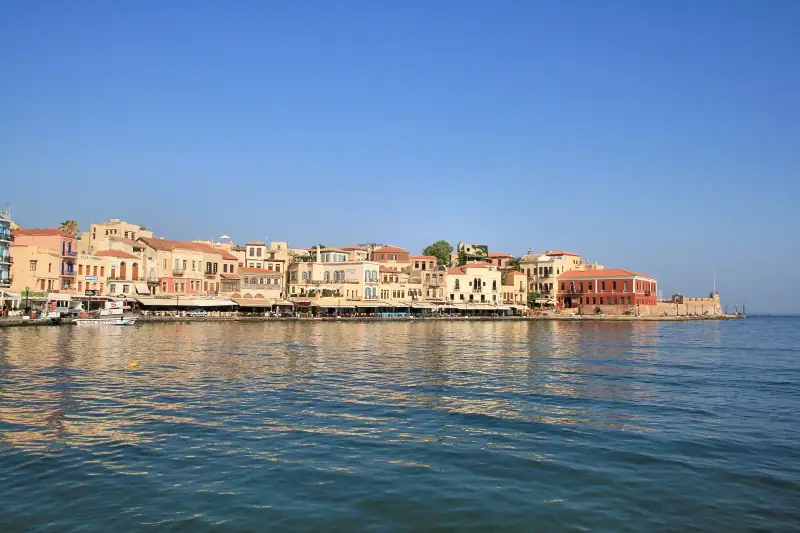
3 days
3 Days in Chania: A Complete Itinerary
3 days in Chania, Crete: Venetian old town, Samaria Gorge, Balos and Elafonissi beaches. Detailed plan and practical tips.
Can be adapted in the planner
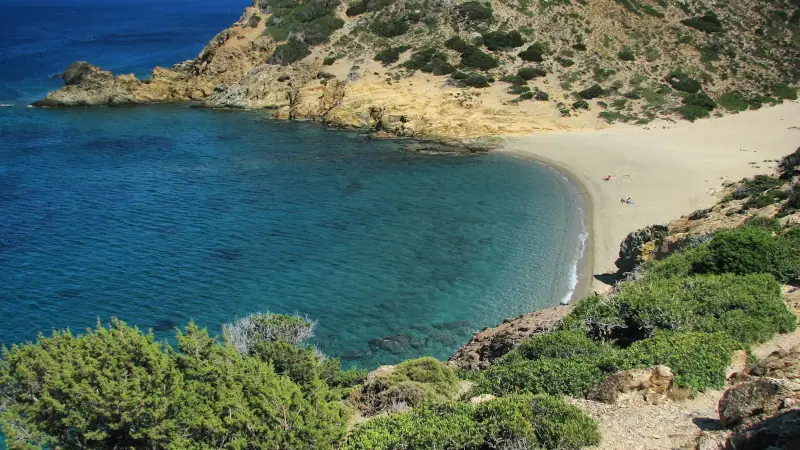
14 days
Crete Road Trip: The Complete Driving Itinerary
Plan your Crete road trip from end to end: a 10 to 14 day itinerary, scenic roads, lesser-known villages and secluded beaches to reach by car.
7 days