What to see
The Best Beaches in Crete, by Region
We may earn a commission when you book through links on this page, at no extra cost to you. We don't visit or try the places we cover: we summarize published sources. How we work
In short
- Elafonissi (pink-tinted sand, shallow lagoon) and Balos (turquoise lagoon) are the most famous; both are crowded in July and August, so arrive before 9 am.
- Balos is best reached by boat from Kissamos (about 1 h, around €25 to 30 / $29 to 35 round trip); the dirt track is rough and often barred by rental contracts.
- Falassarna is the biggest wild sand beach on the island but gets strong meltemi wind; Vai has Europe's only wild palm forest.
- Budget about €3 to 5 ($3 to 6) for parking and €10 to 15 ($12 to 17) a day for two loungers and an umbrella.
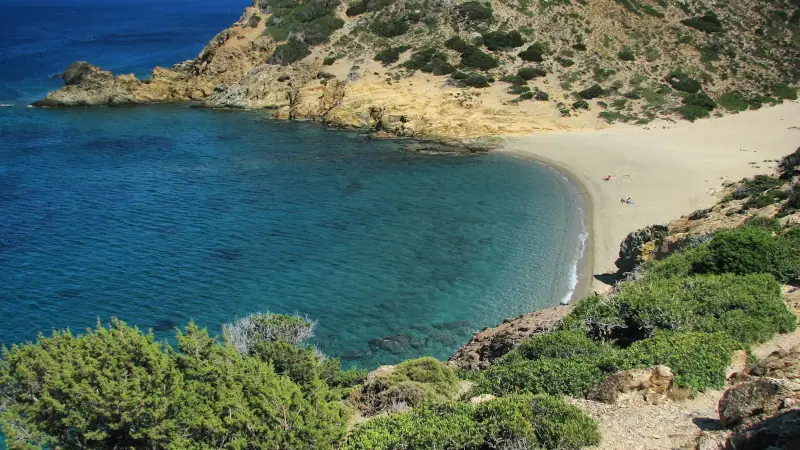
Crete has some of the most spectacular beaches in the Mediterranean. Turquoise lagoons, pinkish white sand, secret coves, pebble beaches with crystal-clear water, palm forests unique in Europe… The island offers extraordinary variety along its 650 km (404 mi) of coastline. Here are the essentials.
The iconic beaches
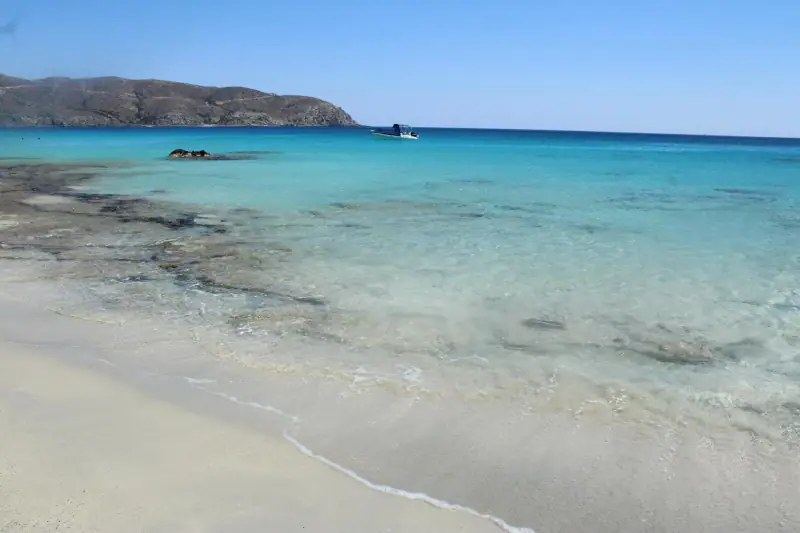
Elafonissi ★★★★★
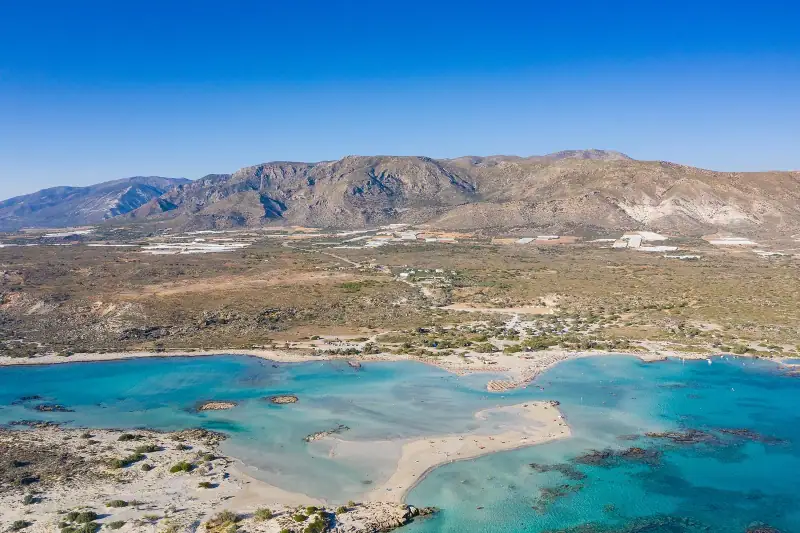
Elafonissi beach is the absolute icon of Crete’s beaches. What makes it unique: the sand mixed with crushed shells takes on pink tints in some light, and the shallow lagoon lets you walk to the islet of Elafonissi, rich in vegetation and birds.
The water is shallow (50 cm to 1 m, or 20 in to 3 ft, over a large area) and an almost unreal turquoise. Ideal for families with young children.
Location: Southwest tip of Crete, 77 km (48 mi) from Chania Access: Paved road to the parking lot (sometimes paid in summer, €3 to 5, or $3 to 6). Bus from Chania in summer: check times and fares with Chania’s KTEL. Tip: Arrive before 8:30 am in high season to find a parking space.
Balos ★★★★★
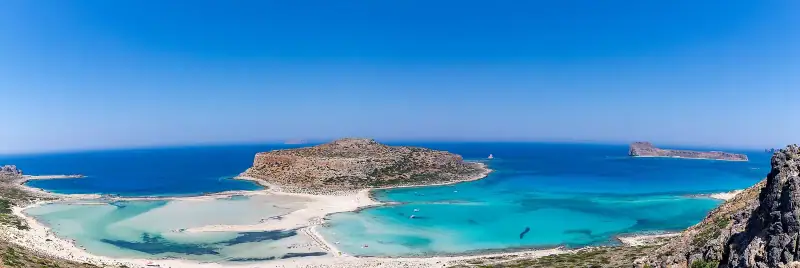
Boat from Kissamos, or dirt track and a walk? The guide “Balos in Crete: boat or car” compares the two options.
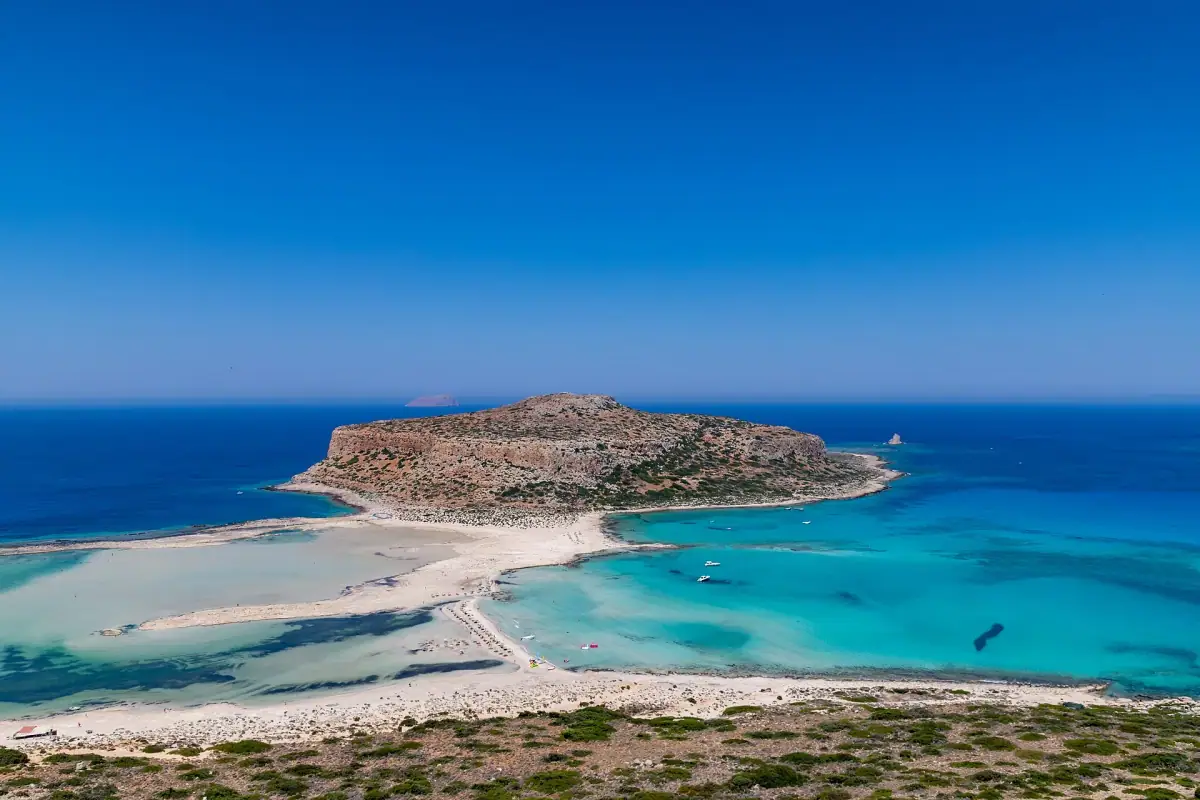
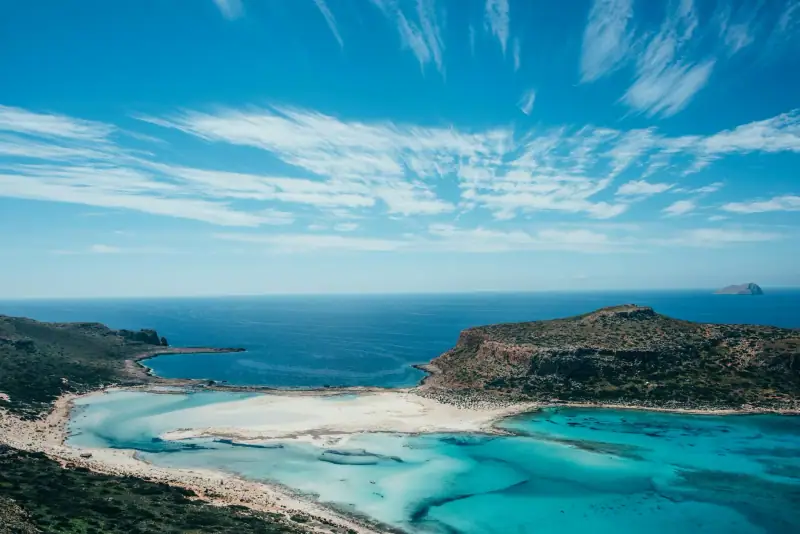
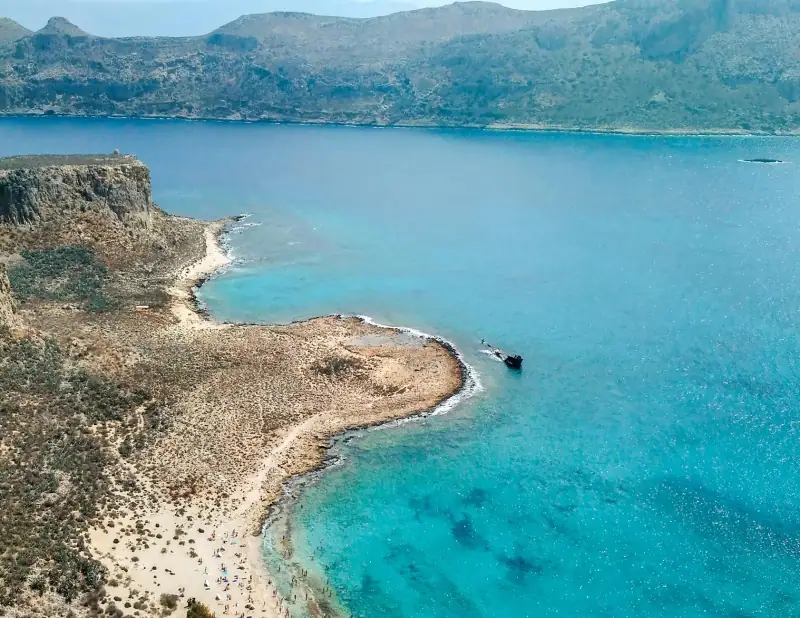
Balos beach is the legendary lagoon of Crete. Reachable only by track or by boat, this remote beach at the northwest tip of the island offers a breathtaking panorama: a shallow lagoon with white and turquoise water, a tongue of sand, and the islet of Gramvousa in the background.
Location: Gramvousa Peninsula, 60 km (37 mi) northwest of Chania Access: Track from Kaliviani (4x4 or a 1 h 30 walk) or boat from Kissamos (recommended, 1 h, about €25 to 30 / $29 to 35 round trip depending on the company; check current prices) Tip: The meltemi in August can make the sea rough and cancel boats. May-June or September are safer.
Falassarna ★★★★★
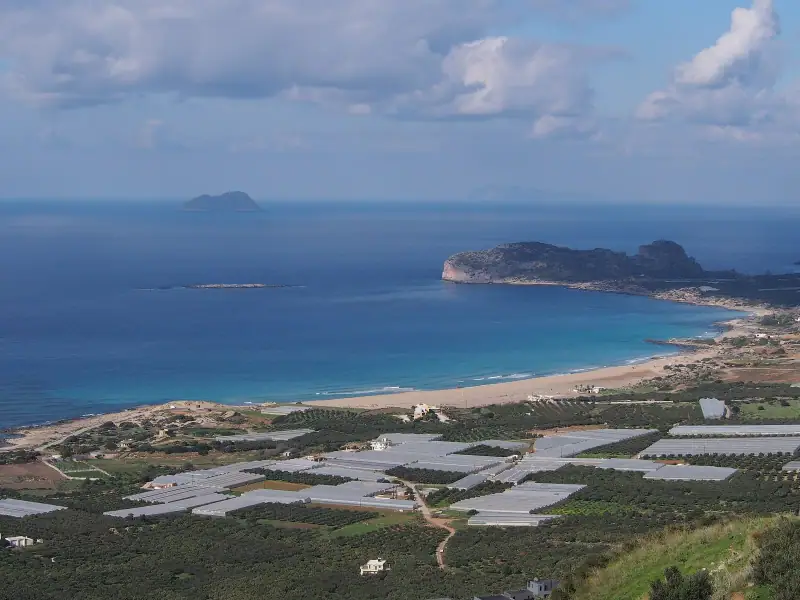
Falassarna is the wild, windy sand beach of western Crete. About 700 m (2,300 ft) long, it has fine golden sand, turquoise water and an unspoiled setting with the ruins of an ancient city on the headland.
Location: Northwest coast, 52 km (32 mi) from Chania Access: Paved road, parking sometimes paid (about €3, check there) Tip: The meltemi blows hard on this north-facing beach. Ideal for windsurfing, less so for quiet swimming.
Beach boat excursions from Chania
Balos, Gramvousa, Elafonissi... on an organized excursion.
The best beaches by region
Chania region (west)
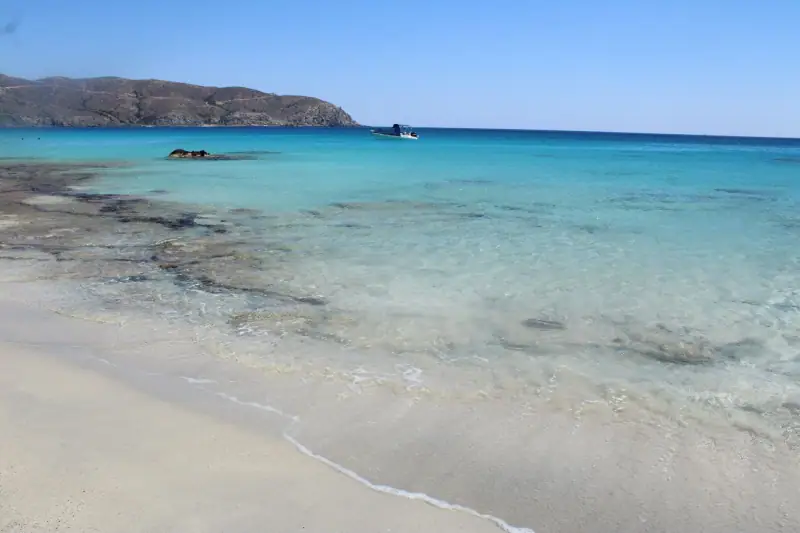
Stavros: The beach from the final scene of “Zorba the Greek”. An enclosed, sheltered bay with calm water and a quiet village. 15 km (9 mi) north of Chania.
Platanias/Agia Marina: Long 5 km (3 mi) sand beach, plenty of facilities, ideal for families.
Kissamos: Large pebble beach with clear water. Departure point for boats to Balos.
Seitan Limania: A small, spectacular cove between blue cliffs, reached by a footpath. Unreal blue water.
Rethymno region
Preveli: One of the most distinctive beaches in Crete. A river flows into the sea, forming an arm of lagoon surrounded by a forest of wild palm trees. 35 km (22 mi) south of Rethymno.
Plakias: Long pebble beach with mountain views, a quiet atmosphere and few tourists.
Damnoni: A small bay of blond sand next to Plakias, calm and little visited.
Bali: Three small sand beaches in a beautiful bay, reachable only on foot or by boat.
Heraklion region
Matala: The legendary cave beach of the 1970s. Surrounded by cliffs pierced with prehistoric caves, with a lingering bohemian atmosphere.
Agia Triada / Kommos: A long sand beach beside the Kommos archaeological site, little known and little visited.
Malia: Large resort with a long sand beach and a young, lively atmosphere.
Lasithi region (east)
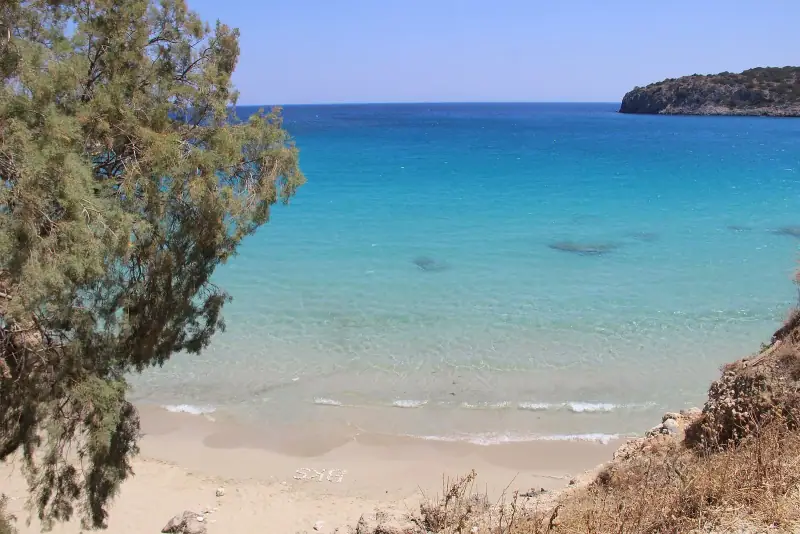
Vai ★★★★: Europe’s only wild palm forest borders this sand beach. Legend says the palms grew from date pits spat out by Phoenician sailors. The place is unique but busy.
Spinalonga Bay (Elounda): Calm waters of the Gulf of Mirabello, shallow beaches, ideal for families.
Makrigialos: Fishing village with a nice sand beach on the south coast, not very touristy.
Xerokampos: Untouched beaches at the southeast end of the island, reached by a dirt track. An end-of-the-world feel.
The best beaches for snorkeling
The best beaches for snorkeling have clear water, rocky bottoms and good underwater biodiversity:
- Almirida (Chania region): Posidonia seagrass beds, cuttlefish and groupers
- Bali: crystal-clear water in sheltered coves
- Agia Pelagia: excellent visibility, a wide variety of fish
- Agios Nikolaos / Elounda: varied seabed, sea turtles possible
The lesser-known beaches
For travelers who want solitude, here are a few off-the-beaten-path gems:
Sweetwater Beach (Glyka Nera): Reachable only on foot from Loutro (1 h walk) or by boat. Freshwater springs seep out on the beach itself (hence the name). Spectacular and little visited.
Loutro: A village reachable only by boat or on foot. One of the most peaceful coves in Crete (see the guide to getting to Loutro by boat).
Frangokastello: Wild sand beach at the foot of a 14th-century Venetian castle. On May and June mornings, mirages of Cretan warriors (the “Drosoulites”) are sometimes reported.
Kato Zakros: Pebble beach at the eastern end of Crete, beside a Minoan archaeological site. It feels like the end of the world.
Tips for enjoying Crete’s beaches
Parking: Parking lots at popular beaches (Elafonissi, Balos) fill up in high season. Arrive before 9 am or after 4 pm. Budget €3 to 5 ($3 to 6) for parking most of the time.
Umbrellas and loungers: Organized beaches offer umbrellas and loungers (€10 to 15, or $12 to 17, per day for two people). On unorganized beaches, bring your own.
Drinking water: Always bring water. Kiosks at popular beaches sell bottles at up to triple the usual price.
Jellyfish: Present in summer, especially in strong meltemi years. If stung: rinse with salt water (never fresh), apply vinegar or lemon juice. Pharmacies sell anti-sting sprays.
Beachfront hotels in Crete
Wake up with your feet in the sand.
Crete’s beaches are so varied that you always come back with the feeling there are more to discover. And it is true: behind every headland on the south coast, a new cove is waiting. That is the Cretan magic.
Frequently asked questions
What is the most beautiful beach in Crete?
It is hard to choose, but Elafonissi (a lagoon with pink-tinted water) and Balos (a turquoise lagoon with an islet) are regularly cited among the most beautiful beaches in the Mediterranean. Falassarna is the island's largest wild sand beach.
Are Crete's beaches crowded in summer?
Famous beaches such as Elafonissi, Balos and Vai are very busy in July and August. Arrive before 9 am to get a good spot. In May-June and September-October these beaches are nearly empty and even more beautiful.
Are there nude beaches in Crete?
Full nudity is not legal in Greece but is tolerated on some secluded beaches. Matala beach and some coves on the south coast are known for their traditional tolerance.
How do you get to Balos beach in Crete?
Balos can be reached by a rough 4x4 track from the village of Kaliviani (a municipal entry fee of about €1 per person, sometimes paid parking, then a downhill walk; rental contracts often forbid this track, so check yours). The most recommended option is the boat from the port of Kissamos (a 1 h crossing, about €25 to 30, or $29 to 35, round trip depending on the company; check current prices). Big waves can cancel boats.
Does Crete have many sand beaches?
Crete has a mix of sand and pebble beaches. The best-known sand beaches are Elafonissi, Falassarna, Vai, Plakias and the long beaches of the north coast (Malia, Hersonissos, Platanias). The south coast tends to have more pebbles and secluded coves.
More Crete guides
Keep reading
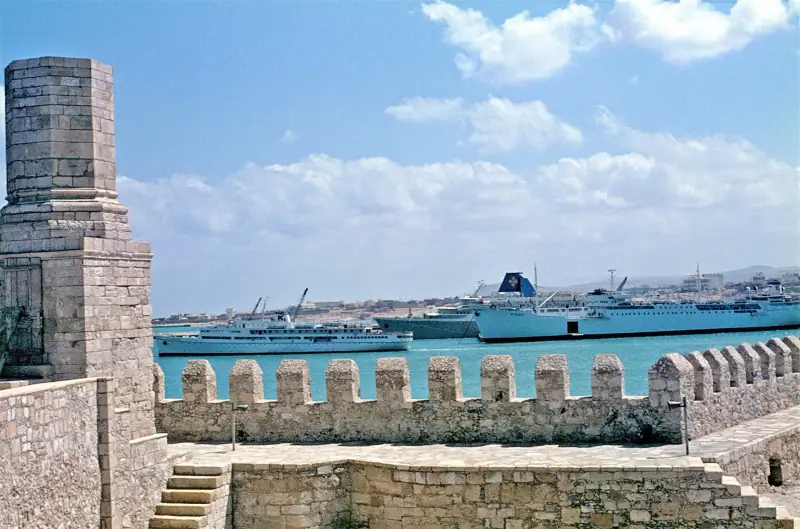
Heraklion: The Top Sights of Crete's Capital
Heraklion's top sights: Knossos palace, archaeological museum, Koules fortress, market and old town. A complete guide for 1 to 3 days.
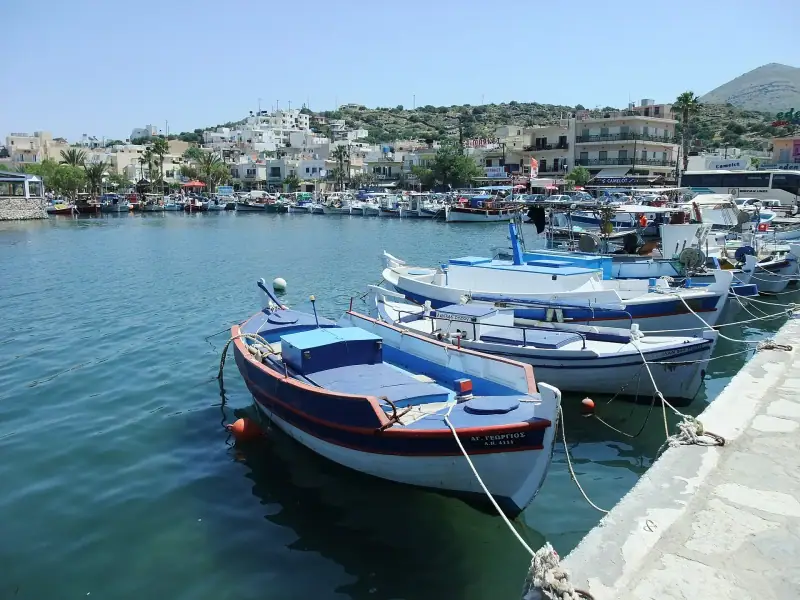
Visiting Elounda: A Complete Guide to the Luxury Resort on the Gulf of Mirabello
Complete guide to Elounda, Crete: clear-water beaches, the trip to Spinalonga, luxury hotels and good places to eat. Practical tips for 2026.
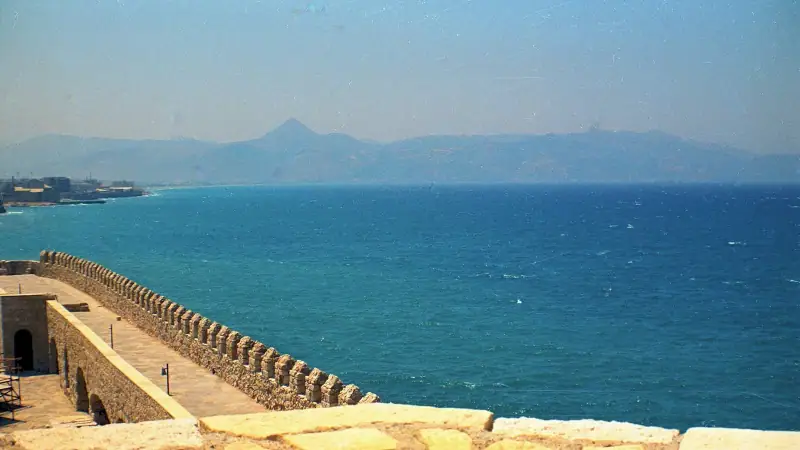
Visiting Heraklion: A Complete Guide to Crete's Capital
Complete guide to Heraklion: Koules fortress, Minoan archaeological museum, Knossos palace, the Venetian old town and practical tips.
Ready-made
Crete itineraries
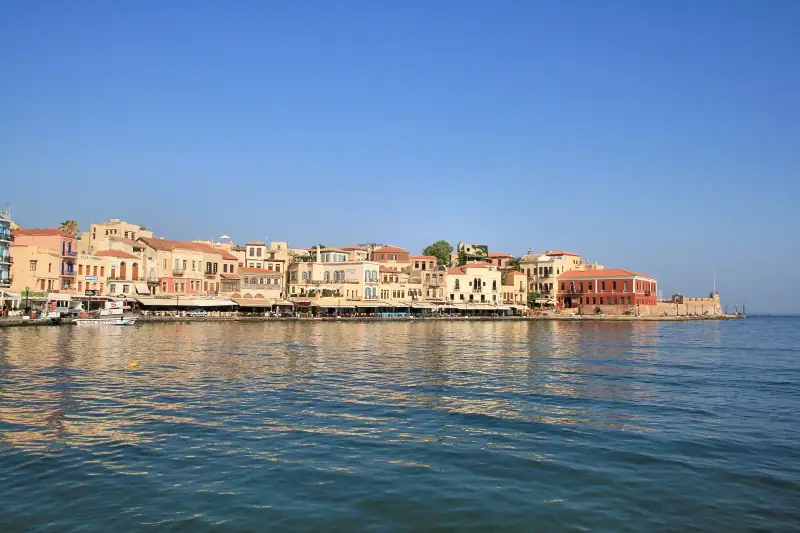
3 days
3 Days in Chania: A Complete Itinerary
3 days in Chania, Crete: Venetian old town, Samaria Gorge, Balos and Elafonissi beaches. Detailed plan and practical tips.
Can be adapted in the planner

10 days
10 Days in Crete: A Complete Itinerary to Discover the Island
HeraklionRethymnoChaniaAgios Nikolaos or Elounda
14 days
Crete Road Trip: The Complete Driving Itinerary
Plan your Crete road trip from end to end: a 10 to 14 day itinerary, scenic roads, lesser-known villages and secluded beaches to reach by car.