Itineraries
3 Days in Chania: A Complete Itinerary
We may earn a commission when you book through links on this page, at no extra cost to you. We don't visit or try the places we cover: we summarize published sources. How we work
Day by day
- Day 1Old harbor, Janissaries' Mosque, Agora, Topanas, ramparts
- Day 2Samaria Gorge hike, Agia Roumeli, ferry to Hora Sfakion
- Day 3Balos lagoon or Elafonissi beach, back to Chania
Where to sleep
- Chania3 nights
Opens the trip planner with these stops and nights already filled in. Add a stop, drop one or change the nights.
Weather through the year on this route
| Jan | Feb | Mar | Apr | May | Jun | Jul | Aug | Sep | Oct | Nov | Dec | |
|---|---|---|---|---|---|---|---|---|---|---|---|---|
| High °F (°C) | 5513 | 5513 | 5915 | 6418 | 7222 | 7926 | 8429 | 8429 | 7926 | 7323 | 6418 | 5915 |
| Low °F (°C) | 5010 | 5010 | 5211 | 5513 | 6116 | 6820 | 7323 | 7323 | 7021 | 6418 | 5915 | 5412 |
| Rain in (mm) | 4.1105 | 3.590 | 2.460 | 1.230 | 0.615 | 0.25 | 0.25 | 0.25 | 0.820 | 2.460 | 3.590 | 4.5115 |
Normals 1991–2020 at Chania: averages over 30 years, not a forecast. Source: NASA POWER (MERRA-2), grid of about 50 km. Figures computed by us in November 2026.
In short
- Three days cover the essentials: the old town on day 1, Samaria Gorge (about 16 km / 10 mi of walking) on day 2, and Balos or Elafonissi on day 3.
- The old town is walkable. For Samaria, Balos or Elafonissi you need a car for 1 or 2 days, or an organized excursion.
- May, June and September are ideal. July-August is very hot (35-40 °C / 95-104 °F) and crowded.
- Estimated budget for 3 days: €350-595 (~$405-690) per person, including lodging, meals, transport, excursions and 1-2 days of car rental.
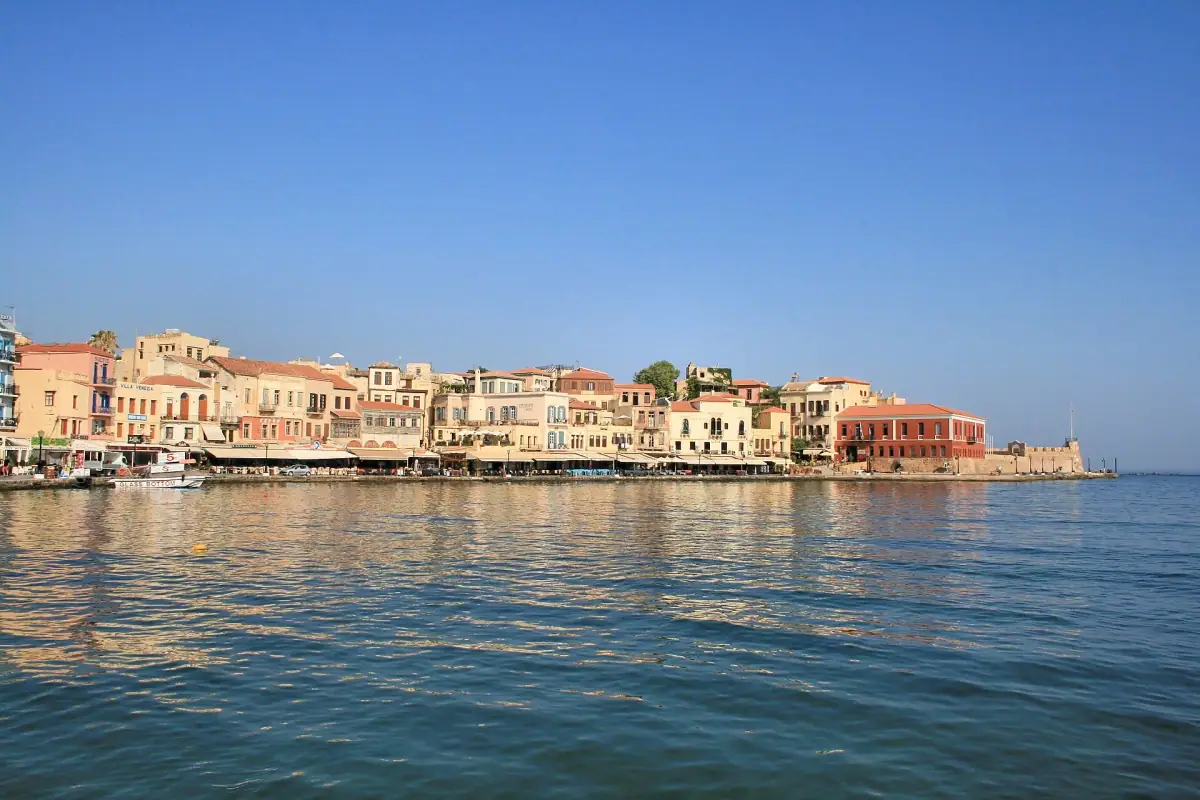
Chania is often called the most beautiful city in Crete. With its Venetian harbor lit up at night, its medieval lanes mixing Ottoman and Byzantine influences, and its ideal position for day trips to Samaria Gorge or the spectacular beaches of the west, it fully deserves a stay of 3 full days. Here is the best plan to miss nothing.
Before you go: practical tips
Getting there: Chania International Airport (CHQ) is about 14 km (9 mi) east of the city. Check which airlines serve it from your departure city, since seasonal routes (late April to October) and connections via Athens vary.
Getting around: Chania’s historic center is entirely pedestrian, so you cannot drive into it. A taxi from the airport costs about €20-25 (about $23-29). For excursions (Samaria, Balos, Elafonissi), rent a car for 1 or 2 days or book an organized excursion from the town center.
Lodging: Choose the old town for the atmosphere. Rooms in the restored Venetian houses of the Topanas district or around Splantzia square are especially pleasant. Be sure to book ahead in July-August.
Daily budget: Allow about €80-120 (about $93-140) per person per day for mid-range lodging, meals in tavernas and site entry fees. Add €30-40 (about $35-46) for excursions (gorge, ferries).
Places to stay in Chania
Venetian palaces, Cretan riads or modern hotels: find your lodging in Chania's old town.
How long do you need in Chania?
In two sentences: Chania’s old town can be seen in one well-filled day, but you need 3 days to add a big excursion (Samaria Gorge or Balos) without rushing. With Elafonissi and the Akrotiri peninsula, allow 4 to 5 days.
| Length | Who it suits | What you will see |
|---|---|---|
| A few hours | Stopover or cruise | Venetian harbor, lighthouse, Janissaries’ Mosque, covered market |
| 1 day | Stop on a road trip | The whole old town: harbor, Agora, Topanas, Splantzia, ramparts |
| 2 days | Short weekend | Day 1 in town + a nearby beach (Stavros) or Balos |
| 3 days | First trip | Town, Samaria Gorge, Balos or Elafonissi (the plan below) |
| 4 to 5 days | Curious travelers and walkers | The same stops, plus Akrotiri, Rethymno or a rest day |
1 day: the old town essentials
One day is enough for the must-sees on foot: the old harbor in the morning, the Agora at midday, then the Topanas and Splantzia districts and the ramparts in the late afternoon. You will not have time to swim or leave the city, and you will spend the evening at the harbor. For details on the sights, see our guide to visiting Chania.
2 days: add a beach or an excursion
With two days, keep one full day for the city and use the other for an outing. Samaria Gorge takes a full day (about 16 km / 10 mi of walking, return by ferry then bus): it does not combine well with a visit to the city on the same day. If you would rather take it easy, half a day at Stavros beach, about 15 km (9 mi) away, is enough.
3 days and more: the right pace
Three days let you link city, Samaria and beach without rushing, with a natural recovery day after the hike. This is the format detailed on this page. If you are torn between Chania and the island’s capital, our Chania vs. Heraklion comparison will help you choose where to base yourself, and for meals, see the restaurants in Chania.
Day 1: The old town and the Venetian harbor
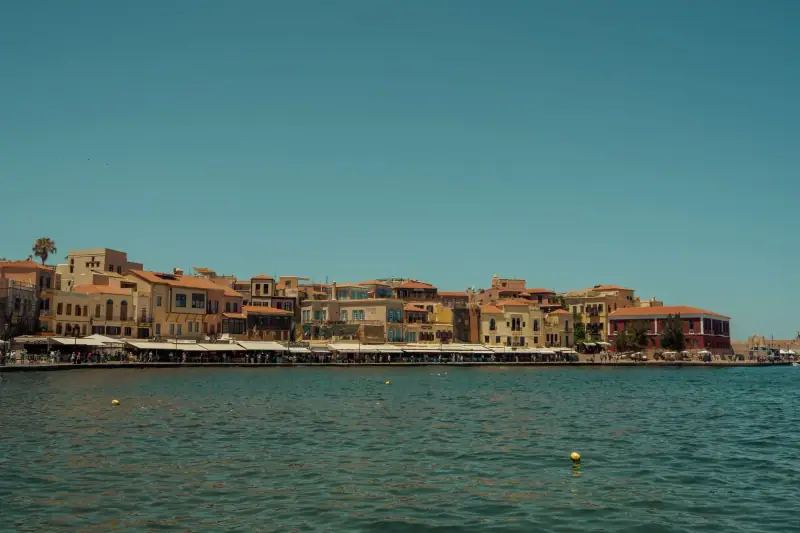
The first day is devoted to Chania itself. The old town is explored on foot and reveals new details at every corner.
Morning (9 am-12:30 pm): The harbor and the Janissaries’ Mosque
Start with the old harbor of Chania, the historic heart of the city. A walk along the golden beige stone quays is already a show. At the end of the jetty stands the famous Venetian lighthouse, the symbol of Chania, built by the Venetians in the 16th century, then rebuilt in 1864 under the Egyptian administration of Ottoman Crete.
At the harbor entrance, the Janissaries’ Mosque (Tzami ton Giannitsaron) is the best-preserved Ottoman building in Crete. Built in 1645 after the Ottoman conquest of Chania, it now serves as an exhibition space. Entry is free and the size of the central dome is still impressive.
Then head up to the Venetian arsenal (Neoria), a series of round-arched vaults at the water’s edge where galleys were once repaired. Some host cultural exhibitions in season.
Mid-morning: The covered market (Agora)
The Chania covered market (Agora), built between 1909 and 1913 and inaugurated in 1913 in the shape of a cross, is one of the most beautiful in Greece. The stalls overflow with local olive oil, honey from Mount Ida, graviera and mizithra cheeses, wild herbs and rakí (Cretan brandy). It is a great place to buy authentic products to take home or simply soak up the local atmosphere. Prices are slightly lower than in the tourist shops at the harbor.
Lunch (12:30 pm-2 pm): In a taverna in the lanes behind the Agora. Try the Cretan mezze: dakos (barley rusk with tomato and feta), Cretan salad with olive oil, kalitsounia (small cheese pastries), bonitho (local tuna).
Afternoon (2:30 pm-6:30 pm): The historic districts
Dive into the maze of the old town. The Topanas district (northwest of the harbor) is the most Venetian area, with its tall arcaded houses and pebbled lanes. The Evraiki district (the former Jewish quarter) keeps a few remains of a synagogue.
Splantzia square is one of the most authentic in Chania: a small tree-lined square surrounded by cafés and houses with wooden balconies, still little visited by tourists. This is where Chania’s residents come for their morning coffee.
Climb up to the Venetian ramparts that encircle part of the old town for a plunging view over the rooftops. The section between the Sabbionara gate and the Piatta bastion offers the best perspectives.
Evening: Chania’s harbor lit up at night is magical. Have an aperitif with a view of the lighthouse, then dinner in one of the tavernas on Sifaka lane or in the inner lanes. The restaurants right on the harbor are often more touristy and more expensive.
Guided tours of Chania
Discover the secrets of the old town with a local guide: Venetian, Ottoman and Byzantine history told at the sites themselves.
Day 2: Samaria Gorge
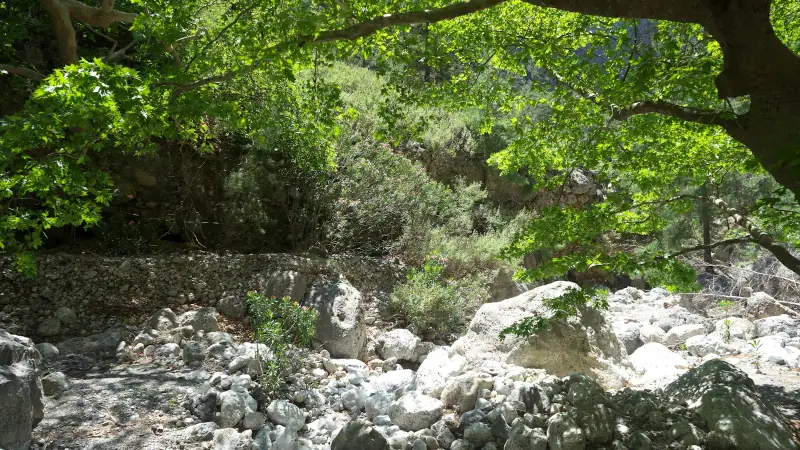
The second day is the most physical and probably the most memorable of the trip. Samaria Gorge is among the longest gorges in Europe (about 16 km / 10 mi of walking) and has been a national park since 1962.
5:30 am-6 am: Early start
Time to get up. The gorge is hiked in one direction only (north to south), so the return is necessarily by boat and bus. The earlier you leave, the cooler it is in the gorge and the fewer people you meet.
Option A (public bus): Chania’s KTEL bus station (Platia 1866) runs direct buses to Xyloskalo from about 6:15 am in high season. Duration: about 1 h to 1 h 10.
Option B (car): Leave Chania heading south via Fournes, Lakki and then the Omalos plateau (about 44 km / 27 mi, 1 h of driving), without taking the E75 east. The mountain road from Lakki to Xyloskalo (1,230 m / 4,035 ft elevation) is winding but spectacular. Park at Xyloskalo and solve the problem of getting back to your car with an organized excursion (they handle the logistics) or a taxi.
Option C (organized excursion): Agencies in Chania offer all-inclusive packages with round-trip bus and ferry included. Simpler but less freedom with timing.
7:30 am-3 pm: Hiking down the gorge
The park entrance is at Xyloskalo. The entry fee is about €10 (about $12) per person. The 16 km (10 mi) descent follows the stream bed between limestone walls that sometimes rise to 300 m (985 ft). The highlights:
- The Iron Gates (Agios Nikolaos gate, Sideroportes): about 12 km (7.5 mi) from the entrance, the cliffs close in to only 3 to 4 m (10-13 ft) wide. Spectacular.
- The abandoned village of Samaria: in the middle of the gorge, the ruins of the village evacuated when the national park was created in 1962.
- Wildlife: the kri-kri, the wild Cretan ibex, lives in the White Mountains, of which Samaria is the main refuge, as well as on several islets off Crete. You sometimes spot them on the rocky heights.
Allow 5 to 7 hours depending on your pace. Bring at least 2 liters (about 2 quarts) of water, a snack, thick-soled shoes (the terrain is very rocky) and sunscreen.
3 pm-4 pm: Agia Roumeli and the Libyan Sea
The descent ends at the village of Agia Roumeli, on Crete’s south coast, on the edge of the Libyan Sea. This sea is exceptionally clear and often warmer than on the north coast. A swim after 16 km (10 mi) of walking is absolute bliss. The village has tavernas for something to eat.
5 pm-7:30 pm: Return by ferry
A ferry links Agia Roumeli to Hora Sfakion (about 60 to 75 minutes, several departures in the afternoon). From Hora Sfakion, a KTEL bus goes to Chania (1 h 30). If you left your car at Xyloskalo, buses take you back there, or take a taxi.
Tip: If you get back exhausted, order dinner at a taverna near your hotel. Your legs will thank you.
Samaria Gorge excursion from Chania
Round-trip transport, park entry and ferry included. The most practical way to enjoy the hike without logistics stress.
Day 3: Balos or Elafonissi (depending on the season and your mood)
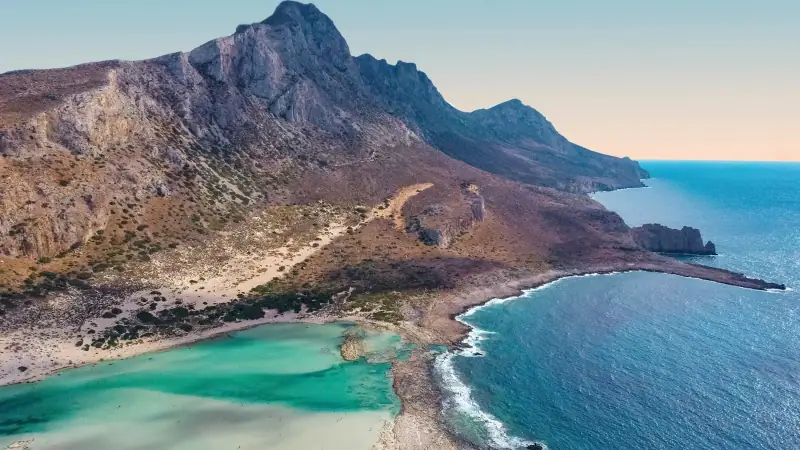
After the effort of the gorge, a day of beach and spectacular scenery is in order. Two options, two radically different moods.
Option A: Balos Lagoon (recommended May-September)
Balos Lagoon is one of the most photographed natural sites in Greece. The water shifts from intense turquoise to milky white depending on depth, and flamingos sometimes stop here in spring during their migration.
How to get there: The port of Kissamos (formerly Kastelli, about 38 km / 24 mi west of Chania, 40 min) is the departure point for the sea shuttles to Balos. The boat ride takes about 45 minutes and the view of the coastal cliffs is superb. Shuttles generally leave at 10 am and 11:30 am in high season (returns around 5 pm and 6:30 pm). Allow about €18-25 (about $21-29) per person round trip depending on the company.
Access by land is possible via a 7 km (4 mi) track from Kissamos, but it is long, rutted and not recommended for ordinary cars. Even in a 4x4, tire wear is real. Go by boat.
At the lagoon: Balos is a strip of white sand between a shallow lagoon (30 to 80 cm / 12 to 31 in of water) and the open sea. The water, warmed by the shallows, can exceed 28 °C (82 °F) in summer. The islet of Gramvousa, visible from the beach, is a former Venetian fort reachable by boat.
Option B: Elafonissi’s pink beach (all season)
Elafonissi is about 77 km (48 mi) southwest of Chania (1 h 30 to 2 h of driving depending on traffic). The beach owes its slight pink tint to fragments of shells and coral mixed with the white sand. The islet of Elafonissi can be reached on foot (the water barely reaches the ankle at low tide).
The water is very shallow over a wide area, which makes it the ideal option for families with children. Less wild than Balos (parking, tavernas, restrooms), Elafonissi is nonetheless one of the most beautiful beaches in the Mediterranean.
In July-August, both beaches are packed. Arrive before 10 am or go in the late afternoon.
Lunch: In a taverna in Kissamos (for Balos) or the tavernas at Elafonissi. Menus generally feature grilled fresh fish, Cretan salads and seafood.
Late afternoon: Back to Chania and a farewell evening
Return to Chania in the early evening. One last walk along the harbor at sunset. Closing dinner in the old town: this is the time to treat yourself to a good meal of fresh fish or grilled shrimp in a slightly more refined restaurant.
Itinerary recap in a table
| Day | Program | Highlights |
|---|---|---|
| Day 1 | Chania old town | Venetian harbor, Agora, Splantzia |
| Day 2 | Samaria Gorge | 16 km (10 mi) hike, swim at Agia Roumeli |
| Day 3 | Balos or Elafonissi | Spectacular beach, lagoon, relaxing |
Variations and adjustments
If you are more into culture than nature: Replace day 2 with an excursion to Rethymno (1 h to the east) and its Fortezza fortress, or to the ancient site of Aptera and the Akrotiri peninsula. For the gorge, plan a 4th day.
If you are traveling with young children: Samaria Gorge is not recommended for children under 6-8. Replace it with half a day at Stavros beach (northeast of Chania, 15 km / 9 mi, calm and shallow water) and a visit to the Aptera castle (ancient ruins reachable by car, entry: €4, about $5, free under 25).
If you are a history buff: Add a visit to the Maritime Museum of Crete in Chania’s old harbor (the history of Cretan seafarers from antiquity to World War II) and to the Agia Triada monastery on the Akrotiri peninsula (vineyard, olive oil, Byzantine cross-shaped architecture with three domes, magnificent).
In bad weather (rare but possible off-season): Chania’s old town is pleasant even in the rain. The covered market, the cafés on Splantzia square, the Archaeological Museum of Chania (Minoan and Greco-Roman collection) and the craft shops easily fill a day.
Getting around Chania: practical tips
On foot: The old town is perfectly suited to walking. Most hotels are 5-10 minutes on foot from the harbor.
Taxi: Available 24 hours a day in front of the Market square (Platia 1866) or by app. Airport to city fare: €20-25 (about $23-29). There is no fixed meter, so negotiate the price beforehand.
KTEL bus: Chania’s bus station is on Platia 1866. Regular buses to Heraklion (2 h 30), Rethymno (1 h 15), and seasonal links to the gorges and beaches.
Rental car: Many agencies at the airport and in town. Allow €40-80 (about $46-93) per day depending on season and category. Book ahead in July-August.
Car rental in Chania
Essential for exploring Balos, Elafonissi and the region at your own pace. Compare agencies and book ahead.
What to eat in Chania
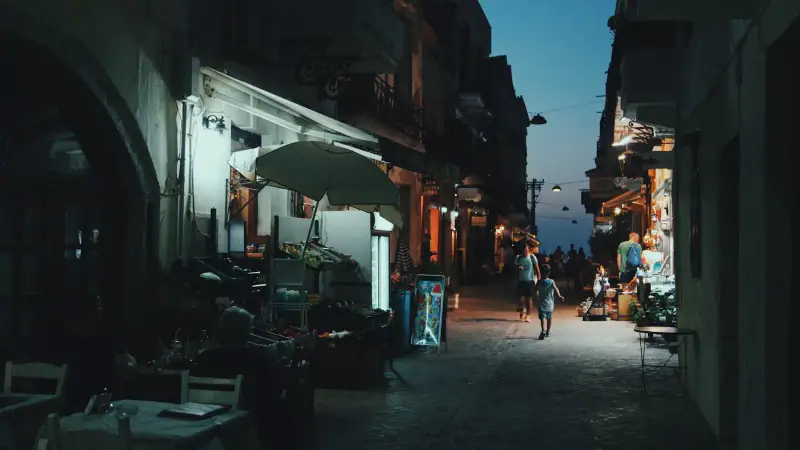
Cretan cuisine is recognized as one of the healthiest and most flavorful in the Mediterranean. A few dishes to try during your stay:
- Dakos: a slice of dry barley bread (paximadi) topped with fresh tomato, mizithra cheese and olive oil. Simple and delicious.
- Graviera: a hard cheese produced in Crete, with a slightly sweet, nutty flavor. Cretan graviera (PDO since 1996) is among the best in Greece.
- Stifado: a meat stew (rabbit or beef) with onions, cinnamon and cloves. A winter dish but often available.
- Kalitsounia: small fried or baked pastries filled with soft cheese (mizithra) or wild greens.
- Gamopilafo: rice cooked in meat broth, a traditional festive dish at Cretan weddings.
- Rakí: grape pomace brandy, offered at the end of the meal in most Cretan tavernas. Served chilled, often with mezze.
The inner lanes of the old town (Splantzia district, Sifaka lane, Portou lane) hold the best tavernas at reasonable prices. Avoid restaurants directly on the harbor quay, because the location shows up on the bill.
To learn more about Cretan food, see our article on food in Crete.
Estimated budget for 3 days in Chania
| Item | Estimate per person |
|---|---|
| Lodging (3-star hotel in the old town) | €60-100/night, or €180-300 (~$70-115/night, ~$210-350) |
| Meals (3 meals/day, local tavernas) | €25-40/day, or €75-120 (~$29-46/day, ~$87-140) |
| Transport (bus + taxi + Samaria ferry) | €30-50 (~$35-58) |
| Entry fees and excursions | €25-45 (~$29-52) (gorge: €10, ferry ~€15, Balos boat ~€20) |
| Car rental (1-2 days) | €40-80 (~$46-93) |
| Estimated total | €350-595 (~$405-690) per person |
These estimates vary with the season (July-August: +30% on lodging), the excursions you choose and your travel style.
Useful links to plan your trip
To go deeper into the Chania area, we have gathered the most useful resources from our site. These companion guides will help you plan each step of your trip, from choosing lodging to preparing your excursions.
- Our complete guide to visiting Chania with all the sights, the districts to explore and tips for finding your way around
- Our article on where to stay in Chania with a comparison of districts, types of lodging and recommendations by budget
- Our guide to Samaria Gorge with all the hiking tips, schedules, recommended gear and information on the ferry back
- Also see our road trip in Crete if you want to extend your stay beyond Chania and discover the east of the island
Sources
Frequently asked questions
Are 3 days in Chania enough?
3 days cover the essentials: the old town, one big excursion (Samaria Gorge or Balos beach) and the nearby beaches. To also see Elafonissi and the Akrotiri peninsula, plan on 4 to 5 days.
Do you need a car to visit Chania in 3 days?
The old town is visited on foot. But for Samaria Gorge, Balos or Elafonissi, you need a car (or an organized excursion from the town center). Renting a car for 1 or 2 of the 3 days is ideal.
What is the best time for 3 days in Chania?
May, June and September are ideal: pleasant weather, reasonable crowds, Samaria Gorge open. July-August is very hot (35-40 °C / 95-104 °F) and packed. April and October suit the old town, but the gorge may be closed.
Can you do Samaria Gorge from Chania without a car?
Yes. KTEL buses leave every morning from Chania's bus station (Platia 1866) for Xyloskalo. The return is by ferry from Agia Roumeli to Hora Sfakion, then a bus to Chania. Allow about €7-8 (about $8-9) for the outbound bus, €15 (about $17) for the ferry and about €10 (about $12) park entry (check prices before you leave).
How do you get from Chania to Balos?
Two options: the boat from the port of Kissamos (about 38 km / 24 mi west of Chania, a sea shuttle, 45 min crossing, about €20-25 round trip / $23-29, check the price with the company) or the 4x4 track from Kissamos (7 km / 4 mi of rough track). The boat is strongly recommended, for the experience and for the wear on vehicles.
Where should you stay in Chania?
The old town (Topanas, Splantzia, the harbor front) is ideal for atmosphere and proximity to restaurants. The Halepa district is quieter and residential. Hotels in restored old Venetian houses are particularly charming and recommended.
How long does it take to visit Chania?
One day is enough to see the old town on foot (harbor, covered market, Venetian districts). To add Samaria Gorge and a beach like Balos or Elafonissi, allow 3 days; 4 to 5 days if you also want the Akrotiri peninsula.
Is one day in Chania enough?
Yes, for the old town only. You will see the harbor, the Agora and the ramparts, but no excursion: Samaria Gorge alone takes a whole day.
More Crete guides
Keep reading
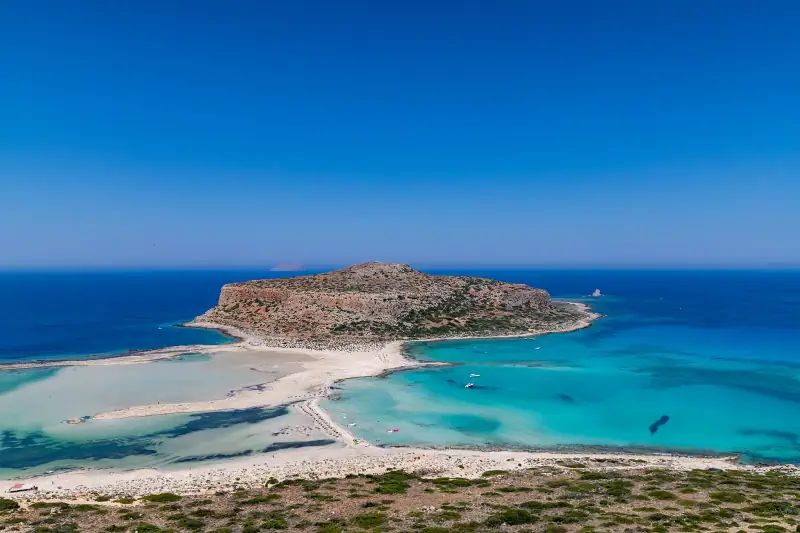
The Best Beaches in Crete, by Region
The best beaches in Crete: Elafonissi, Balos, Falassarna, Vai, Matala... a full selection with access, parking and practical tips.
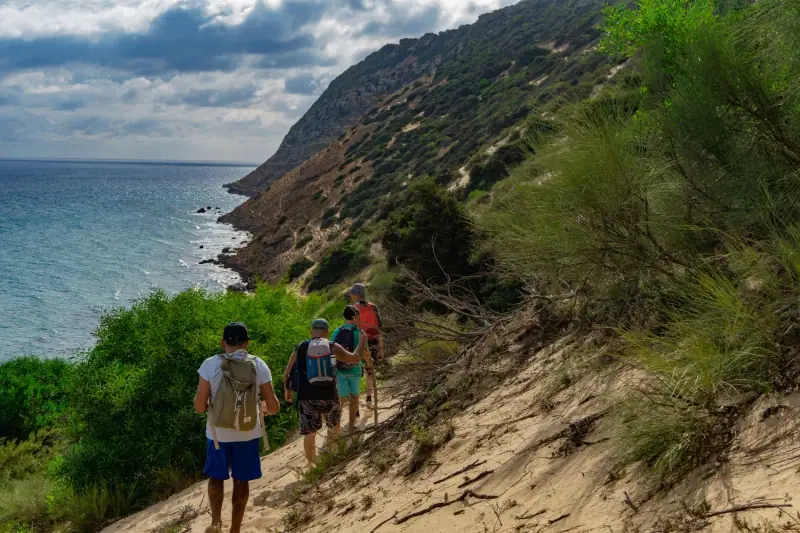
Hiking in Crete: Best Trails and Routes
The best hikes in Crete: Samaria Gorge, the E4 trail, plateaus and coastal paths. A complete guide for all levels with maps and tips.
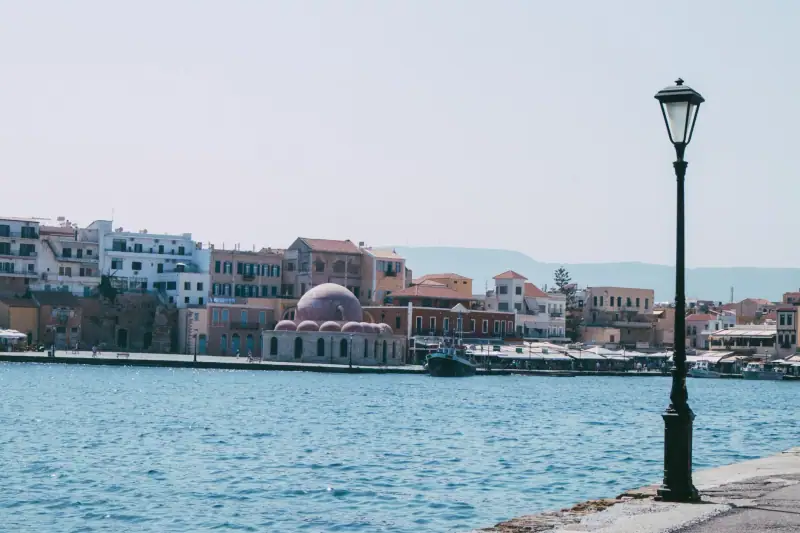
Where to Stay in Chania: The Best Neighborhoods and Hotels
Where to stay in Chania, Crete? old harbor, old town, nearby beaches: a complete guide to the best neighborhoods and hotels for every budget.
Ready-made
Crete itineraries

10 days
10 Days in Crete: A Complete Itinerary to Discover the Island
HeraklionRethymnoChaniaAgios Nikolaos or Elounda
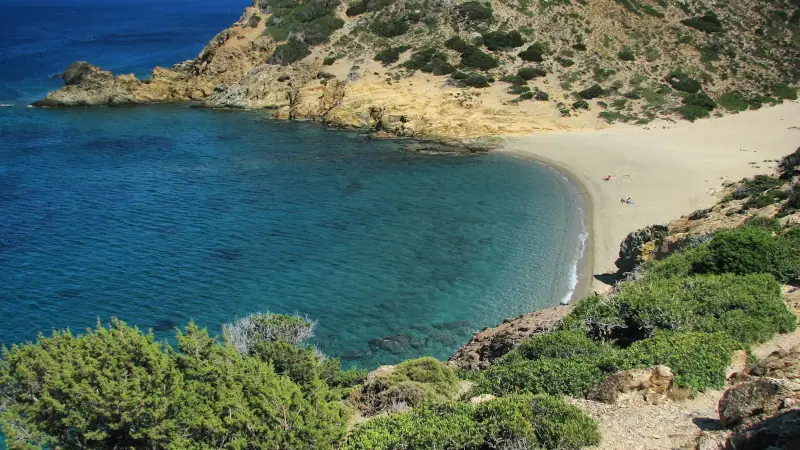
14 days
Crete Road Trip: The Complete Driving Itinerary
Plan your Crete road trip from end to end: a 10 to 14 day itinerary, scenic roads, lesser-known villages and secluded beaches to reach by car.
7 days