What to see
Visiting Chania: A Complete Guide to Crete's Most Beautiful City
We may earn a commission when you book through links on this page, at no extra cost to you. We don't visit or try the places we cover: we summarize published sources. How we work
In short
- Plan 2 days minimum for the old town, harbor and museums; 4 to 5 days lets you add Samaria Gorge, Elafonissi and Balos.
- May to June and September to October give the best balance of weather and crowds; July and August reach 35-38 °C (95-100 °F).
- Heraklion to Chania by KTEL bus takes 2 h 30 to 3 h for about €14 (~$16); by car it is 150 km (93 mi) on the E75.
- Skip the first row of restaurants on the Venetian harbor; eat in Splantzia and the streets behind the Agora.
Chania (Χανιά in Greek) is widely considered the most beautiful city in Crete. The island’s second-largest urban area owes its reputation to one of the best-preserved Venetian harbors in the Mediterranean, an old town where every lane is a trip back in time, and a location that makes it the ideal gateway to the wonders of western Crete. Whether you have two days or a week, here is everything you need to know to visit Chania.
The old town: three civilizations in one labyrinth
Chania’s old town is the beating heart of the city. Surrounded by Venetian walls that are still standing, it holds several centuries of successive rule in one place: Byzantine, Venetian (1204-1645), Ottoman (1645-1898) and modern Greek. The result is a fascinating architectural palimpsest where Venetian houses with bay windows stand next to minarets, synagogues and Ottoman fountains.
The Splantzia district
Splantzia is the most authentic part of the old town, the one locals still use themselves. Less touristy than the harbor, its narrow, irregular lanes keep a village atmosphere in the middle of the city. Splantzia Square (Plateia 1821) is dominated by the former Agios Nikolaos mosque, now an Orthodox church. Its intact minaret is the only one in Chania to have kept its original shape.
On summer evenings, the tables of the kafeneion spill onto the square and locals play cards or tavli late into the night. It is here, more than at the harbor, that Chania’s real heart beats.
Kondylaki Street and its artisan workshops
Kondylaki Street is known throughout Crete for its traditional leather workers. For decades, Greek craftsmen have made leather sandals, bags and belts by hand here. You can watch them work and order custom pieces. The most authentic shops are the ones where you can still see the tools and pieces of raw leather on the workbench.
The Janissaries’ Mosque and the Etz Hayyim Synagogue
At the entrance to the Venetian harbor, the Janissaries’ Mosque (1645) is the oldest Ottoman building in Crete and one of the best preserved in all of Greece. Converted into an exhibition hall, it is open to visitors. Its central dome and white facades make it an unmissable landmark on the waterfront.
A few steps away, in the lanes behind the harbor, the Etz Hayyim Synagogue (15th century) is one of the oldest synagogues in Greece still in use. It houses a medieval Jewish cemetery and a memorial to the Cretan victims of the Holocaust. Visiting is free and open to all, in a rare atmosphere of reflection.
Guided tour of Chania
Discover the Venetian, Ottoman and Byzantine secrets of the city with an expert local guide.
The Venetian harbor and lighthouse: Chania’s signature view
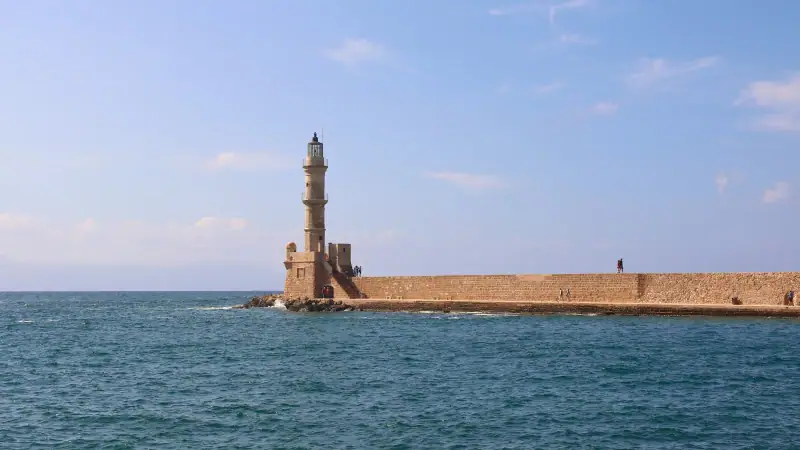
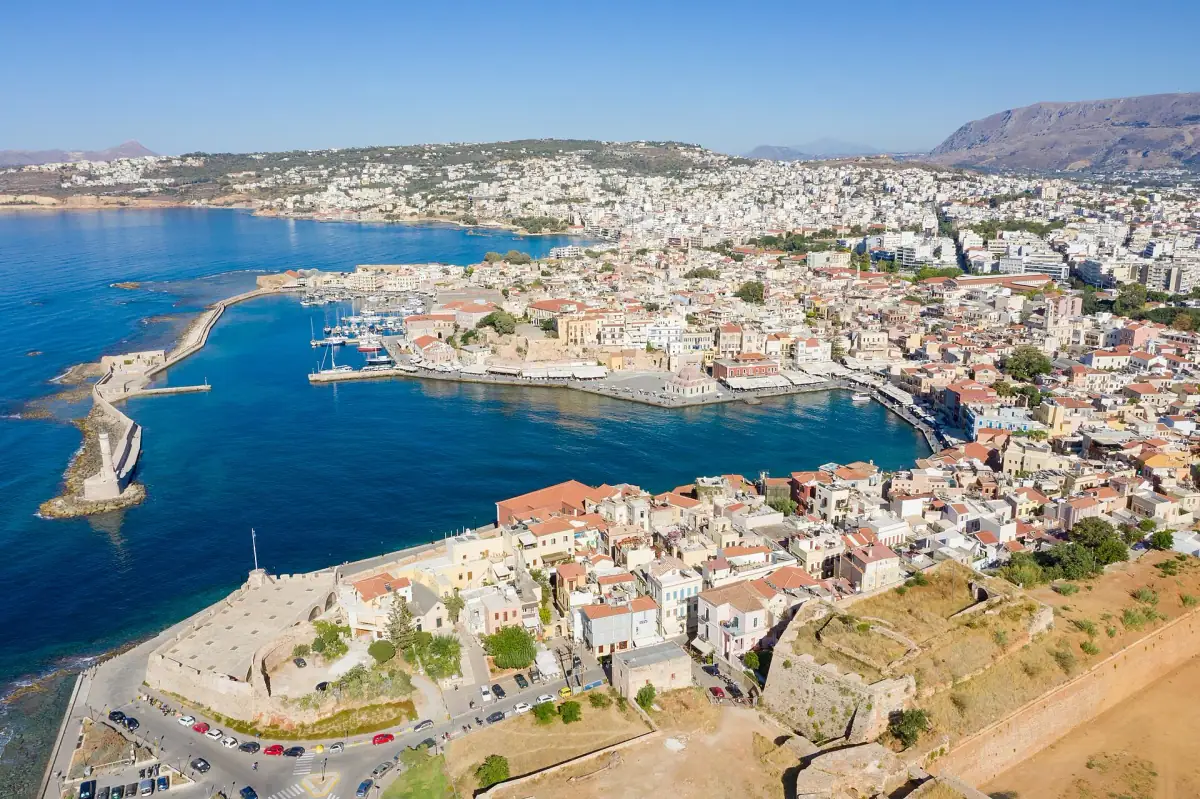
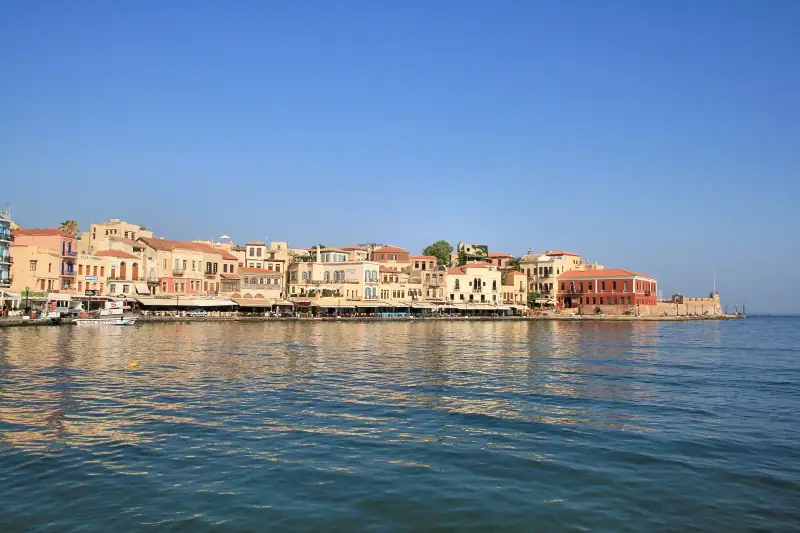
Chania’s Venetian harbor is one of the most photographed views in Greece. Protected by two curved jetties, it shelters a flotilla of fishing boats and small caïques. The whole scene is surrounded by restored Venetian facades in warm colors (ocher, terracotta, pale yellow) that reflect in the water in late afternoon.
The lighthouse: Crete’s postcard
At the end of the west jetty stands the Venetian lighthouse of Chania, built in the 16th century and restored during the Egyptian period (19th century). Its slender, white, octagonal profile has become the tourist symbol of the city, and of all of Crete. The walk along the breakwater to the lighthouse takes 20 minutes and offers magnificent views of the city, the walls and the White Mountains in the background.
The best time to photograph the lighthouse is at sunrise (low light on the harbor facades) or at sunset (golden reflections on the water).
The Venetian shipyards (Neoria)
Behind the harbor, the Neoria are the former 16th-century Venetian shipyards: a series of colossal round-arched vaults built to shelter and repair the Venetian war fleet. They are among the best-preserved examples of Venetian civil engineering in the eastern Mediterranean. Most of the Neoria are now open to the public as part of the Maritime Museum of Crete.
Hotels with a view of Chania harbor
Book a stay in the Venetian old town with a harbor view.
The museums worth your time
The Archaeological Museum of Chania
Since April 2022, the Archaeological Museum of Chania has been housed in a modern 6,500 m² (70,000 sq ft) building in the Halepa district (Chatzidakis camp), facing the sea. The museum covers 5,000 years of western Cretan history, from the Neolithic and Minoan periods to the Venetian era. The Minoan collections are especially remarkable: gold jewelry, ceramic rhytons, frescoes and seals in semi-precious stone.
Practical info: Closed on Tuesdays; open 8 am to 8 pm from April to October, shorter hours in winter (check the museum’s website before you go). Admission: about €15 (~$17) full price. Audio guide available.
The Maritime Museum of Crete
Housed in Firka Fortress, at the entrance to the Venetian harbor, the Maritime Museum traces Crete’s naval history from antiquity to World War II. The centerpiece is a full-size reconstruction of a Minoan warship. The Firka terrace offers one of the best views of the harbor.
The Agora (Municipal Market)
Chania’s Agora is a covered market built in 1913, with a cross-shaped plan inspired by the market halls of Marseille. It is a great place to discover authentic Cretan products: cheeses (graviera, anthotyros, xinomizithra), first-press olive oil, thyme honey, medicinal herbs (dittany, sage, oregano), brined olives and traditional cured meats.
The Agora is also the locals’ market. Arrive early in the morning (before 10 am) for the most authentic atmosphere and the best selection. You can also read about the secrets of Cretan olive oil to know what to look for.
Beaches around Chania
The Chania region has some of the most beautiful beaches in the Mediterranean. None is in the city itself, but all can be reached on a day trip.
Elafonissi: the pink-sand beach (75 km / 47 mi)
Elafonissi is regularly ranked among the ten most beautiful beaches in Europe. Its sand tilts toward pink because of the concentration of crushed shells, and its shallow turquoise waters make it feel almost surreal. At low tide, a sandbar connects the beach to a small islet, which you cross on foot through 30 cm (12 in) of water.
In July-August, Elafonissi is very crowded. Arrive before 9 am to find a spot and enjoy the morning light on the water. Out of season (May-June, September-October), the beach is nearly empty.
Allow 1 h 30 to 2 h of driving from Chania (via Kissamos or via Paleochora).
Balos: the lagoon at the end of the world (50 km / 31 mi)
Balos lagoon is perhaps the most spectacular view in all of Crete. Reachable on foot (45 minutes from the parking area on the dirt track) or by boat from Kissamos, this lagoon of turquoise and white water is wedged between three peninsulas and surrounded by limestone cliffs. The sand is almost white.
Getting there: By car plus a walk (the track is passable for 4x4s and standard cars, paid parking), or on a boat excursion from Kissamos (morning departures, afternoon return, about €25 / ~$29). The boat is the most comfortable option, but the track gives you complete freedom with your schedule.
Falassarna beaches (60 km / 37 mi)
Falassarna is a long beach of golden sand on the west coast, traditionally ranked among the ten best beaches in Greece and often sharing first place with Elafonissi. Less crowded than Elafonissi, it offers a spectacular sunset over the sea and crystal-clear water. Several coves follow one another over 3 km (1.9 mi), so you can find your own corner even in high season.
Beaches close to Chania (10-20 km / 6-12 mi)
For a swim without a car, the beaches of Kalyves (12 km / 7 mi east), Almyrida (23 km / 14 mi east) and Platanias (10 km / 6 mi west) are reachable by local bus from Chania. Less spectacular than Elafonissi, they strike a good balance between convenience and quality.
Car rental in Chania
Essential for reaching Elafonissi, Balos and Samaria Gorge from Chania.
Samaria Gorge: the legendary hike
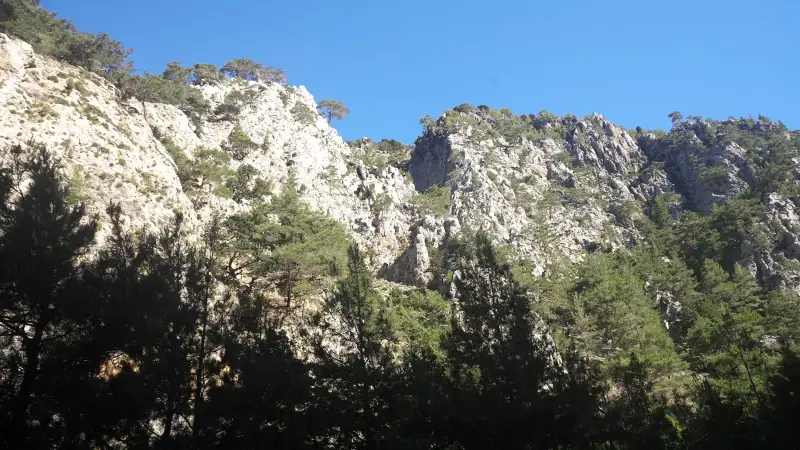
Samaria Gorge is the must-do excursion from Chania. Located in White Mountains (Lefka Ori) National Park, 42 km (26 mi) south of the city, it is the most famous hike in Greece and one of the most beautiful in Europe.
The 16 km (10 mi) route descends from the Xyloskalo plateau (1,230 m / 4,035 ft) to the sea at Agia Roumeli, through breathtaking scenery: cedar and pine forests, vertical limestone walls up to 600 m (1,970 ft) high, and the famous Sideroportes (the Iron Gates), where the canyon narrows to just 3 meters (10 ft) wide.
Duration: 4 to 7 hours depending on your pace (suitable for any walker in good physical shape). Season: May to October (closed in winter because of flood risk). Price: park admission is charged, roughly €5 to €10 (~$6 to $12) depending on the source (check the current rate before you go).
Logistics from Chania: A direct KTEL bus leaves Chania’s bus station (6:15 am and 7:30 am) for the start of the gorge. At the bottom, a boat links Agia Roumeli to Hora Sfakion, where a bus returns to Chania. The full round trip can be done in a day without a car.
For everything about this legendary hike, see our complete guide to Samaria Gorge.
Where to eat in Chania
Chania has one of the best food scenes in Crete. The key is to move away from the old harbor waterfront (too touristy and often disappointing) and venture into the inner lanes.
The best neighborhoods for eating
Splantzia: This is where Chania’s residents eat. The family tavernas around the square of the same name serve generous Cretan food at honest prices. Look for handwritten menus and owners who work the dining room themselves.
The area behind the Agora: The streets running parallel to the Agora hold several good places, especially for mezze and the day’s fish, negotiated directly with the harbor fishermen.
Avoid: The front row of the Venetian harbor. The restaurants there cater almost entirely to passing tourists, with laminated menus in six languages and touts at the door. Value for money is poor.
Typical dishes to try
In Chania, be sure to try:
- Boureki: a specialty of the Chania region, a layered pastry bake of zucchini, potatoes and mizithra cheese.
- Staka: thickened, cooked cream made from sheep’s butter, served on bread or with eggs. A traditional Cretan breakfast.
- Gamopilafo: the Cretan wedding rice, cooked for a long time in lamb broth until fully absorbed. Served in the region’s larger tavernas.
- Kalitsounia: small baked or fried pastries filled with sweet mizithra cheese and honey, perfect for dessert.
Explore the whole of Cretan cuisine to get the most out of your stay.
Where to stay in Chania
The old town offers lodging in Venetian and Ottoman mansions converted into boutique hotels, some of them among the most beautiful in Greece. It is the most atmospheric option, and the most expensive.
For tighter budgets, the residential neighborhoods around the old town (Halepa, Koum Kapi) have good family guesthouses at reasonable prices, 10 to 15 minutes on foot from the harbor.
See our detailed guide to where to stay in Chania for the best places by neighborhood and budget.
Practical information
How to get to Chania
By air: Chania International Airport (CHQ, Ioannis Daskalogiannis) is 15 km (9 mi) east of the city, at Souda. In summer, direct flights operate from several European cities; check routes with the airlines. A KTEL bus links the airport to Chania’s bus station (about 30 minutes, €2.50 / ~$3).
By ferry: An overnight Piraeus-Chania ferry runs year-round (9-11 hours, from about €50 / ~$58 depending on cabin and season). The ferry terminal is at Souda, 8 km (5 mi) east of the center.
By bus from Heraklion: Very frequent KTEL buses (every 30 minutes in season), 2 h 30 to 3 h, about €14 (~$16) one way. Chania’s bus station is a 5-minute walk from the Venetian harbor.
Getting around Chania
On foot: The old town can be visited entirely on foot. From the Venetian harbor to the Splantzia district via the Agora, everything is within a 15-minute walk.
By rental car: Essential for excursions (Elafonissi, Balos, Samaria Gorge). Chania has many rental agencies, notably at the airport and in the streets around the old town.
By local bus: The urban bus network (KTEL) serves nearby beaches (Platanias, Kalyves) and surrounding villages from the central bus station.
Sample budget
| Item | Low budget | Mid-range | Comfort |
|---|---|---|---|
| Lodging | €45-75/night (~$52-87) | €90-150/night (~$105-175) | €180-350/night (~$210-405) |
| Meals | €15-25/day (~$17-29) | €35-55/day (~$41-64) | €60-100/day (~$70-116) |
| Sights + activities | €10-20/day (~$12-23) | €30-60/day (~$35-70) | €70-120/day (~$81-139) |
| Transport | €10-20/day by bus (~$12-23) | €35-55/day by car (~$41-64) | €50-80/day (~$58-93) |
For a full Crete budget, see our Crete budget guide.
Chania vs. Heraklion: which city to choose?
Chania is often preferred for its architectural beauty, its Mediterranean atmosphere and its proximity to western sights (Samaria Gorge, Elafonissi, Balos). Heraklion is more practical for archaeological sites (Knossos, the Heraklion museum) and for transport (bigger airport, more international flights). If you can only pick one city, Chania generally wins travelers’ votes for its charm.
Our article Chania vs. Heraklion details the pros and cons of each option.
Tips for getting the most out of Chania
Get up early. The old town and harbor are transformed between 6:30 and 8:30 am, when the morning light grazes the golden facades and the only people at the harbor are fishermen coming in and the first cafe owners. It is the ideal time for photos and for feeling the city’s real rhythm.
Wander without GPS. Chania’s old town is small enough that you can never really get lost. Put your phone away for a few hours and let the lanes guide you. The best discoveries (a hidden courtyard, a forgotten Ottoman fountain, a small taverna with no sign) always happen off the marked routes.
Plan excursions ahead. In July-August, excursions to Elafonissi and Balos fill up quickly. If you travel in high season, book your boat tickets or seats on excursion buses the evening before at the latest.
Combine Chania with a road trip. Chania’s position in the west of the island makes it the ideal starting point for a road trip in Crete that continues to Rethymno, Heraklion and the east. This layout lets you see the full variety of Crete in a week.
The Saturday morning market. Chania’s weekly market takes place on Saturday morning on Minoos Street, a 10-minute walk from the harbor. It is one of the largest and liveliest in Crete, with local producers from the villages of the White Mountains. Cheeses, honey, heirloom vegetables, medicinal herbs: a taste of rural Crete in the middle of the city.
Chania is one of those rare cities where beauty is everywhere and within reach, not only in the protected landmarks but in every cobbled lane, every Venetian facade, every fisherman’s table at dawn. It is both the most touristy and the most authentic of Crete’s major cities: the most photographed, and yet the one that manages to keep a soul. For anyone who has never been, discovering it is one of the finest experiences the Mediterranean has to offer.
Frequently asked questions
How many days do you need to visit Chania?
Plan 2 days minimum to explore the old town, the harbor and the museums. With 4 to 5 days, you can combine the city with Samaria Gorge, Elafonissi beach and Balos lagoon. Chania is also an excellent base for discovering western Crete over a full week.
How do you get from Heraklion to Chania?
By KTEL bus: departures every 30 minutes from Heraklion's bus station, 2 h 30 to 3 h, about €14 (~$16). By car: 150 km (93 mi) on the E75 highway, 1 h 45 to 2 h. Chania Airport (CHQ) also receives direct flights from several European cities in summer, which is often more convenient than flying into Heraklion.
What is the best time to visit Chania?
May-June and September-October offer the best balance of weather and crowds: sunny days, a pleasant sea (22-25 °C / 72-77 °F) and fewer people than in July-August. In July-August the old town is packed and temperatures reach 35-38 °C (95-100 °F). From November to March the city is very quiet and prices drop, but some restaurants and hotels close.
Can you hike Samaria Gorge from Chania?
Yes, it is the classic starting point. Chania is about 42 km (26 mi) from Xyloskalo, the gorge entrance. Shuttles and organized excursions leave the city every morning. The 16 km (10 mi) hike takes 4 to 7 hours. A boat takes you from Agia Roumeli beach to the port of Hora Sfakion, where a bus brings you back to Chania.
Is Elafonissi beach accessible from Chania?
Yes. Elafonissi is about 75 km (47 mi) southwest of Chania, 1 h 30 to 2 h by car on a spectacular coastal and mountain road. KTEL buses also leave from Chania's bus station in season. Plan a full day: the road is long but beautiful, and the beach deserves several hours.
Where do you park in Chania?
The old town is largely pedestrian. The main municipal parking lot is east of the old town, on Skalidi street. Paid lots are also scattered around the harbor area. Outside the lots, some residential streets allow free parking 10 to 15 minutes on foot from the center. In high summer, plan to arrive before 9 am or use the local bus from the outlying parking areas.
Is Chania expensive compared with other Cretan cities?
Chania is the most touristy Cretan city, and prices are slightly higher than in Rethymno or Heraklion. The waterfront of the old harbor is very touristy and therefore costly. Up in the old town's lanes or in residential areas like Splantzia, you find local places at fair prices. Lodging in the old town is among the most expensive in Crete.
More Crete guides
Keep reading
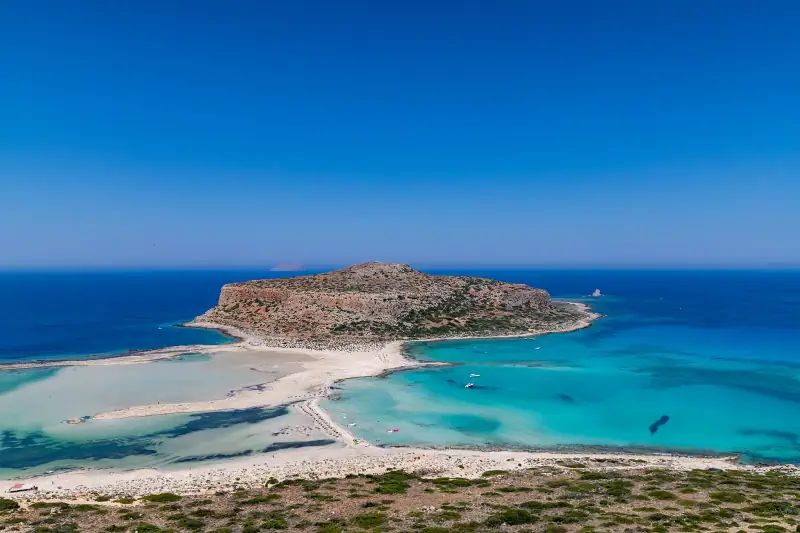
The Best Beaches in Crete, by Region
The best beaches in Crete: Elafonissi, Balos, Falassarna, Vai, Matala... a full selection with access, parking and practical tips.
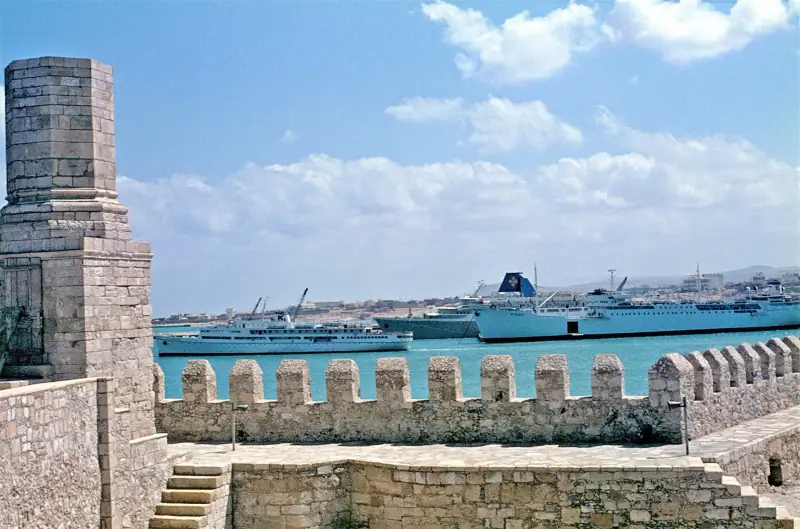
Heraklion: The Top Sights of Crete's Capital
Heraklion's top sights: Knossos palace, archaeological museum, Koules fortress, market and old town. A complete guide for 1 to 3 days.
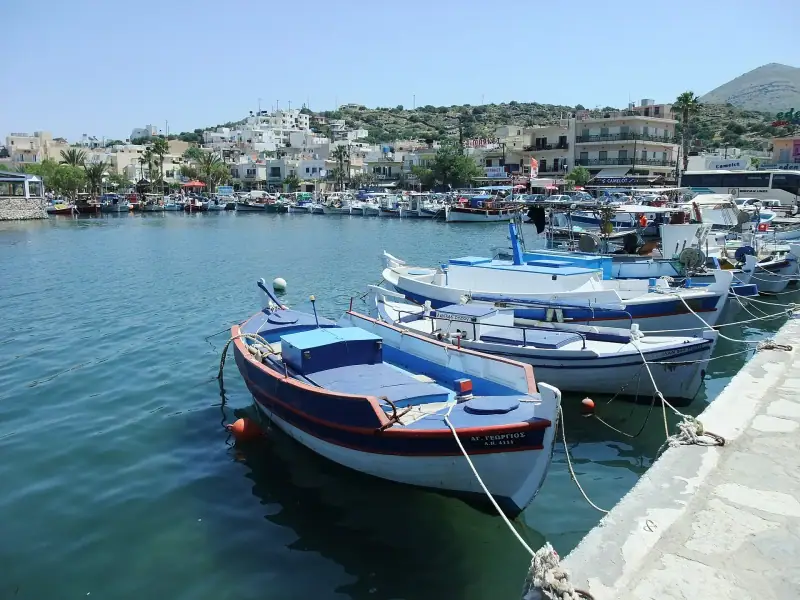
Visiting Elounda: A Complete Guide to the Luxury Resort on the Gulf of Mirabello
Complete guide to Elounda, Crete: clear-water beaches, the trip to Spinalonga, luxury hotels and good places to eat. Practical tips for 2026.
Ready-made
Crete itineraries
3 days
3 Days in Chania: A Complete Itinerary
3 days in Chania, Crete: Venetian old town, Samaria Gorge, Balos and Elafonissi beaches. Detailed plan and practical tips.
Can be adapted in the planner

10 days
10 Days in Crete: A Complete Itinerary to Discover the Island
HeraklionRethymnoChaniaAgios Nikolaos or Elounda
14 days
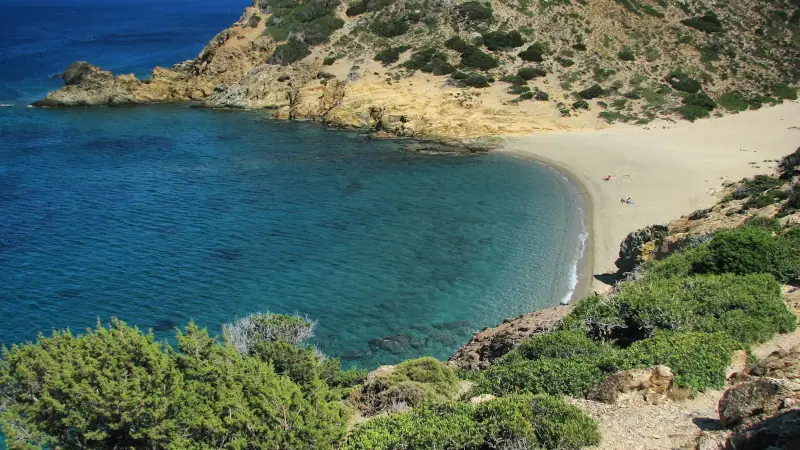
Crete Road Trip: The Complete Driving Itinerary
Plan your Crete road trip from end to end: a 10 to 14 day itinerary, scenic roads, lesser-known villages and secluded beaches to reach by car.