Things to do
GR20 Corsica: a complete guide to the legendary trail
We may earn a commission when you book through links on this page, at no extra cost to you. We don't visit or try the places we cover: we summarize published sources. How we work
In short
- The GR20 is 179 km (111 mi) in 16 stages from Calenzana to Conca, about two and a half weeks of demanding walking.
- All park-hut nights, bivouac included, must be booked online: about €20 (~$23) per bunk, €12 (~$14) per bivouac in 2026. Huts are staffed May 16 to October 4.
- The best conditions run from mid-June to mid-September; the north half (Calenzana-Vizzavona) is the hardest and most spectacular.
- Start early, check the weather and fire risk every day, and do not double stages.
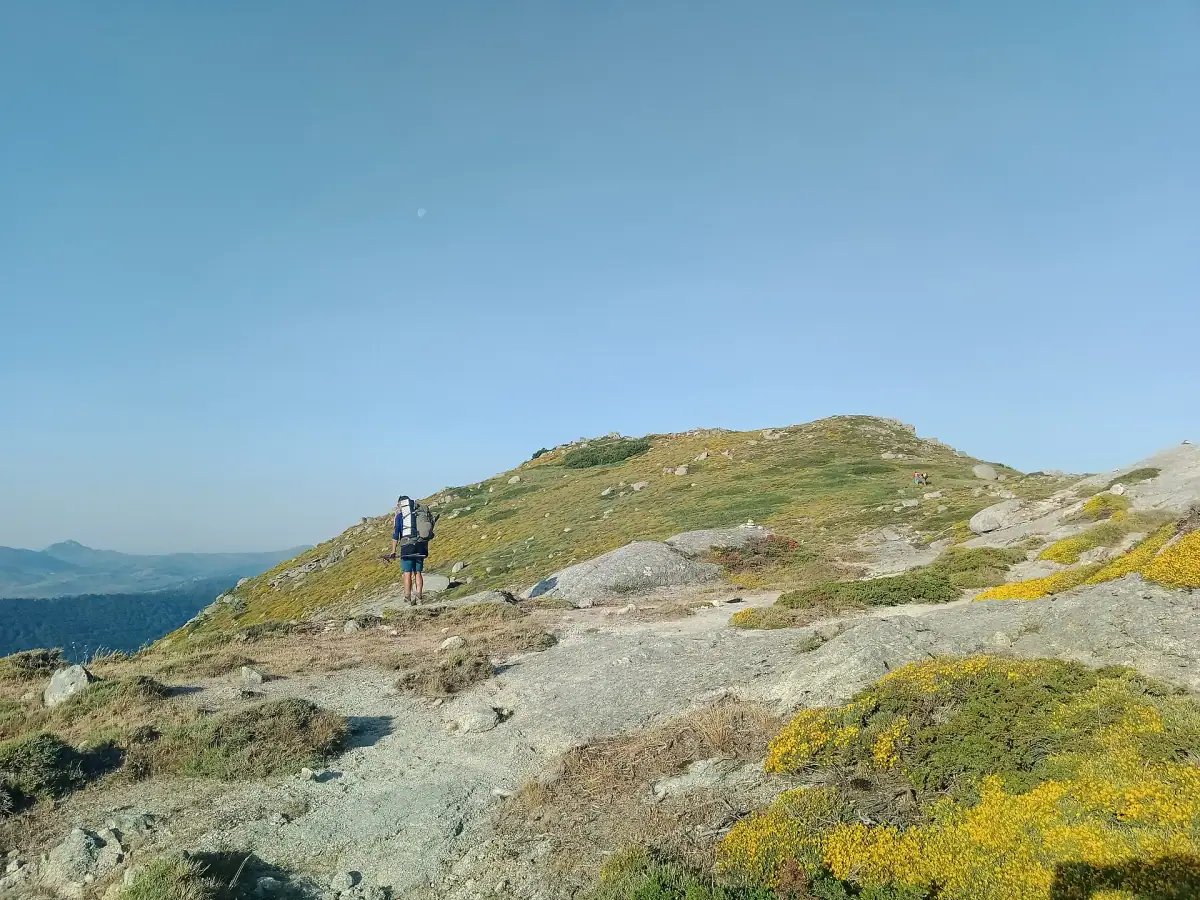
The GR20 is France’s most legendary high-mountain hike. This 179 km (111 mi) trail crosses Corsica from north to south following the main ridge line as closely as possible, with many passes above 2,000 meters (6,560 ft). Known for its difficulty, its grand landscapes and the spiritual experience it gives, it attracts thousands of hikers from around the world every year. Here is the complete guide to prepare yourself.
In short: the GR20 is walked in 16 stages from Calenzana to Conca, in about two and a half weeks of demanding walking. All nights in the Corsica Regional Natural Park huts, bivouac included, must be booked online (about €20 / ~$23 per bunk, €12 / ~$14 for bivouac in 2026), and the huts are staffed from May 16 to October 4, 2026. Go with solid mountain experience, and a light pack, and check the weather and fire risk every day.
GR20 key figures
- Total distance: about 180 km / 112 mi (179 km according to the most cited measurements)
- Cumulative elevation: around +12,000 m / -12,000 m (+39,400 ft / -39,400 ft)
- Stages: 16 according to the official split of the Corsica Regional Natural Park
- Start: Calenzana (Haute-Corse, near Calvi)
- End: Conca (Corse-du-Sud, near Porto-Vecchio)
- Altitude: several passes above 2,000 m (6,560 ft) (Bocca di Pisciaghja, 2,020 m / 6,627 ft, on stage 2). Monte Cinto (2,706 m / 8,878 ft), the highest point in Corsica, is not on the route: it is an optional climb
- Season: huts staffed from May 16 to October 4, 2026; most favorable conditions from mid-June to mid-September
- Difficulty: Very difficult (experienced level required)
The GR20 stages
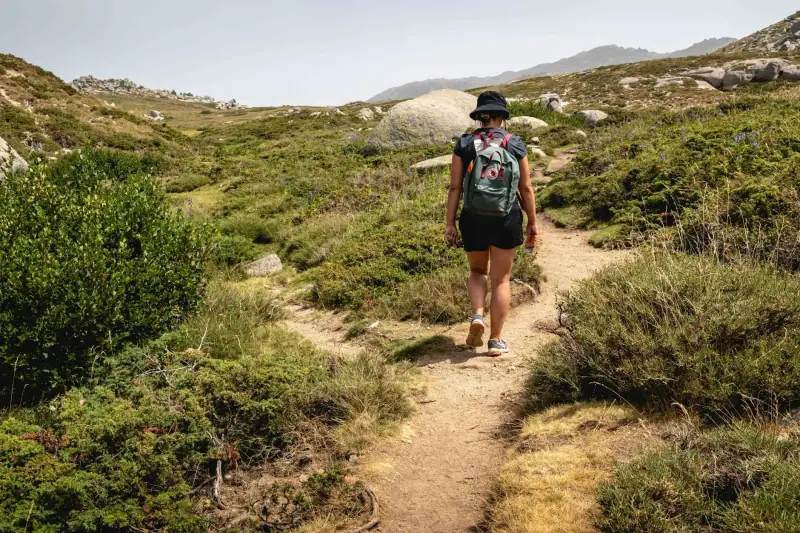
The GR20 is traditionally split into two parts:
The north part: Calenzana - Vizzavona (9 stages)
The north part is the hardest and most spectacular. It crosses the wild granite massifs of the north of the island.
Main stages:
Stage 1: Calenzana → Ortu di u Piobbu hut Distance: 12.5 km (7.8 mi). Elevation gain: +1,550 m (5,085 ft). Time: 6-8 h The first stage sets the tone: a gradual but long climb in the maquis. Arrival at the first hut at 1,520 m (4,987 ft) of altitude.
Stage 2: Ortu di u Piobbu → Carrozzu hut Distance: 8 km (5 mi). Elevation: +775 m (2,543 ft), -977 m (3,205 ft). Time: 5-6 h A difficult passage, sometimes requiring use of the hands on granite slabs. Extraordinary view over Haute-Corse.
Stage 3: Carrozzu → Asco Stagnu (Haut-Asco) Distance: 4.8 km (3 mi). Time: 4-5 h Passage over the Bocca di Stagnu (2,010 m / 6,594 ft), the high point of the stage. Descent to the Haut-Asco resort, where you can resupply.
Stage 4: Haut-Asco → Tighjettu hut The former Cirque de la Solitude passage was removed from the waymarking after the deadly rockfall of June 10, 2015; its access is banned by prefectural and municipal orders. According to the PNRC, the bypass that replaces it is now the official route: about 1,200 m (3,940 ft) of climbing, with a few sections equipped with chains. Monte Cinto (2,706 m / 8,878 ft), the highest point in Corsica, remains an optional climb off the GR20.
Stages 5 to 8: Huts of Ciottulu di i Mori, Manganu, Petra Piana then L’Onda. High-mountain landscapes, mountain lakes (swimming forbidden), possible snowfields early in the season. On stage 8, a ridge variant, waymarked in yellow, should be taken only in good weather.
Stage 9: arrival at Vizzavona A village and station of the Chemins de Fer de la Corse (Bastia - Ajaccio line). No PNRC hut here, but private hotels and gîtes, a restaurant and supplies. The classic stopping point for those doing only the north part.
The south part: Vizzavona - Conca (7 stages)
The south part is less technical and more accessible, but remains demanding. The landscapes are different: more vegetation, pine forests and the passage through the Bavella area.
The stages according to the PNRC split: E Capanelle (private gîte U Fugone), Prati (bivouac area), Usciolu hut, Cuscionu plateau (private sheepfolds), Asinao hut, Paliri hut, then arrival at Conca (shuttle on request).
Highlights of the south part:
- E Capanelle: laricio pine forest, mountain atmosphere
- Monte Renoso area
- Cuscionu plateau and its pozzines (fragile wet meadows not to be trampled; trekking poles forbidden on the plateau)
- Bavella Needles: a spectacular passage beneath the red granite towers, with a more technical alpine variant on stage 15
- Descent to Conca and Corse-du-Sud
Lodging on the GR20
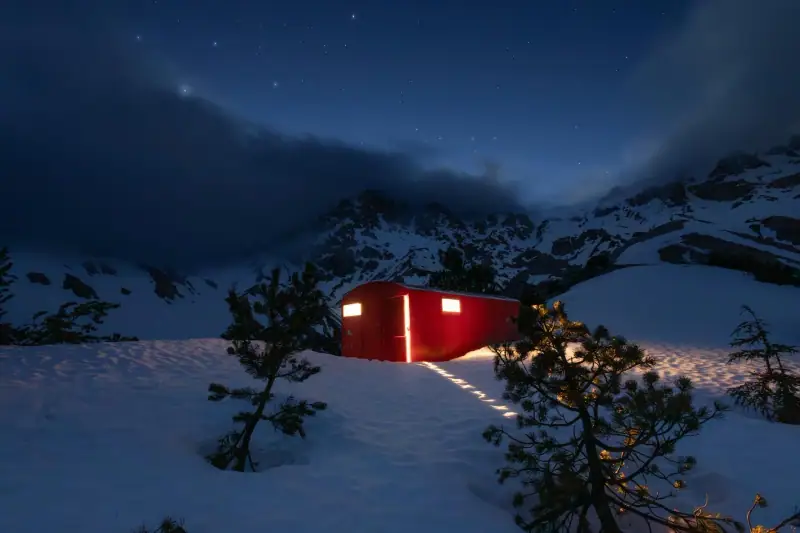
The PNRC huts
The Corsica Regional Natural Park huts are the official GR20 lodgings (about 30 places on average, staffed from May 16 to October 4 in 2026). Indicative prices given by the PNRC for 2026:
- Dormitory bunk: about €20 (~$23) a night
- Bivouac (with your tent): about €12 (~$14)
- Tent rental at the huts: about €27 (~$31) (1 person) or €39 (~$45) (2 people)
- Meals (breakfast, packed lunch, dinner): ordered only at the huts, plan about €50 (~$58) a day; order dinner before 6 pm
- Mandatory reservation for all nights, bivouac included, at pnr-resa.corsica (card payment)
The Ortu di u Piobbu and Asinao huts offer no bunks, only bivouac and rental tents. Reserved places are guaranteed until 7 pm, and your confirmation email must be shown to the warden. Changes must be made at least 48 hours ahead; a reservation is tied to one hut and one date, and a skipped stage cannot be carried over. According to FFRandonnée, Ortu di u Piobbu, Carrozzu and Usciolu are the huts that show full earliest. Also plan for cash: our article on cash on the GR20 covers it.
Private gîtes
On stages without a PNRC hut, private lodging takes over, and the Park’s website now gives their contact details:
- Vizzavona: hotels and gîtes in the village
- E Capanelle: U Fugone gîte
- Cuscionu plateau: private sheepfolds (Bassetta, Matalza, I Croci)
- Castel di Verghju: private lodging that lets you split stage 6 in two
These addresses are booked directly with each establishment, with their own rates and conditions. They are often a bit more comfortable (rooms, meals available), but also in great demand in season.
Bivouac
According to the Corsica Regional Natural Park, wild camping is banned along the GR20 by municipal orders: bivouac is allowed only near the huts or in the designated areas (such as Prati), and it must be booked and paid like a night in a hut. From June 15 to September 30, making fires and smoking are forbidden in forests, maquis and massifs. For the rules outside the GR20, see our article on wild camping in Corsica. In summer, also check for possible massif closures linked to wildfire risk in Corsica.
Essential gear
The backpack
Ideal pack weight (with water and a day’s food): 10-12 kg (22-26 lb) maximum. Beyond that, you will suffer needlessly on stages of 8-10 hours.
Minimum contents:
- High, waterproof hiking boots (no trail runners!)
- Trekking poles (very useful on descents, but forbidden at Lake Ninu and on the Cuscionu plateau according to the PNRC)
- Light sleeping bag (sleeping bags are not provided in GR20 huts)
- Waterproof rain clothing
- Warm layer (fleece or light down jacket; it can freeze at altitude even in July)
- Sun protection (SPF 50+), category 4 sunglasses
- First-aid kit (ask your doctor or a pharmacist what it should contain)
- Detailed IGN maps or downloaded offline tracks
Resupply
Resupply options are limited on the GR20. Plan to carry your day’s meals from the last resupply point.
Main resupply points: Haut-Asco (stage 3), Vizzavona (middle of the route), Capannelle sheepfolds, Col de Verde, Conca (end).
To pack: energy bars, dried fruit, nuts, packaged cheese, hiking bread.
Precautions and safety
Weather: Mountain weather in Corsica can change abruptly. Violent storms can occur in the afternoon even in midsummer. Check the forecasts every morning (meteo-corse.net or the Météo France app) and leave early to reach the hut before storms.
Required level: The GR20 is not a stroll. You need prior mountain hiking experience, to be able to read a map, and to be able to walk 8 to 10 hours a day on technical terrain.
In an emergency: dial 112 (the European emergency number), which triggers the mountain rescue provided by the PGHM (Peloton de Gendarmerie de Haute Montagne) of Corsica.
Fire risk: according to the PNRC, some massifs can be closed at any time in case of severe fire risk; the risk map is updated every day at 6 pm for the next day. Check it the evening before each stage.
Insurance: Take out repatriation insurance that covers mountain activities.
Lodging before and after the GR20
Calenzana and Conca to start and finish your trek.
Tips from experienced hikers
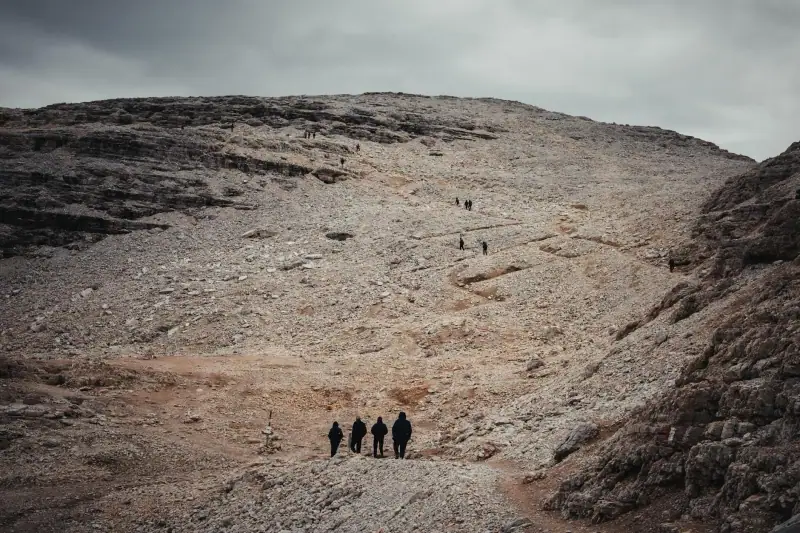
Start early every morning. Leave at 6-7 am to avoid the hottest hours (11 am-3 pm) and to reach the hut before the afternoon rain and before the others.
Use the variants. Many variants let you bypass the most technical passages without sacrificing the scenery. The low variant at Haut-Asco, for example, is less spectacular but much less dangerous in bad weather.
Tell someone your plan. Leave your stage plan with a relative, and check in at every hut. The mobile network is patchy at altitude: our article on the mobile network on the GR20 tells you what to expect.
Do not chain two stages. The PNRC advises against doubling stages because of their difficulty, and an unused reservation cannot be moved to another day.
Stay hydrated. Drink at least 2 to 3 liters of water a day while walking. Spring water at altitude is generally drinkable, but filtering is still recommended.
The GR20 is one of the most intense experiences the Island of Beauty can offer. Those who finish it all say the same thing: the effort is immense, but the reward, those grand landscapes seen in their rawest beauty, is incomparable. For other mountain activities, see our guides to canyoning and the via ferrata.
Sources
Frequently asked questions
Is the GR20 really hard?
Yes, the GR20 is considered one of the hardest long-distance trails in Europe. The north stages (between Calenzana and Vizzavona) are more technical, with rocky passages and big elevation changes. The south stage is less demanding. Good physical condition and mountain hiking experience are necessary.
How long does it take to do the whole GR20?
The Corsica Regional Natural Park splits the GR20 into 16 stages, and advises against doubling them because of the difficulty. Plan about 16 days, more with a rest day. Many people do the north half (Calenzana-Vizzavona, 9 stages) or the south half (Vizzavona-Conca, 7 stages).
What is the best time to do the GR20?
From mid-June to mid-September. Earlier, snow can block high passages. In July-August the huts are packed, so reservation is essential. June and September offer the best balance between weather conditions and crowds.
Do you need to book the GR20 huts?
Yes, and not only in summer: according to the Corsica Regional Natural Park (PNRC), reservation is mandatory for all nights in its huts, bivouac included, all season. It is done online at pnr-resa.corsica, with card payment. In 2026, the huts are staffed from May 16 to October 4.
How much does the GR20 cost?
According to the PNRC, plan about €20 per hut bunk, €12 per bivouac, €27 to €39 for tent rental and about €50 a day for meals ordered at the huts (about $23, $14, $31 to $45 and $58). For 16 stages, plan at least €1,000 per person (about $1,160) in huts with meals, excluding transport and gear (less if you carry your own food and bivouac).
More Corsica guides
Keep reading
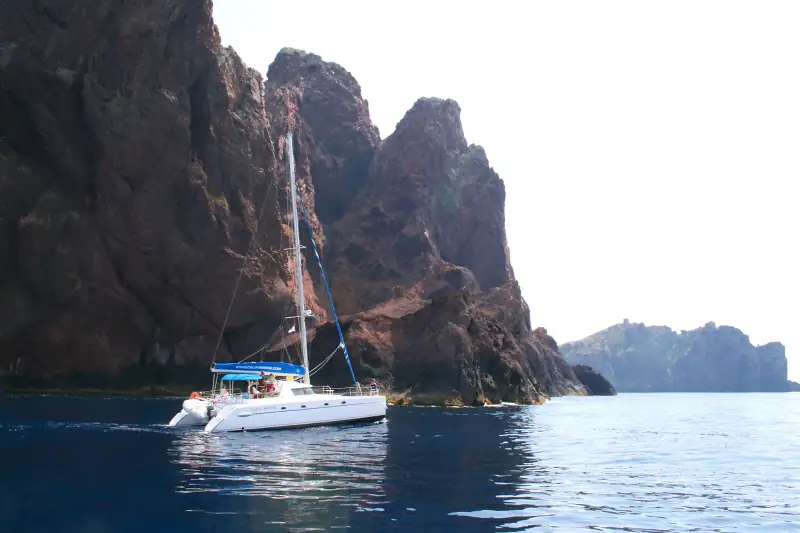
Boat trip to Scandola and Girolata: book ahead or on the spot?
Scandola and Girolata by boat: book ahead or on the spot? Departure ports, prices, duration, seasickness and best season.
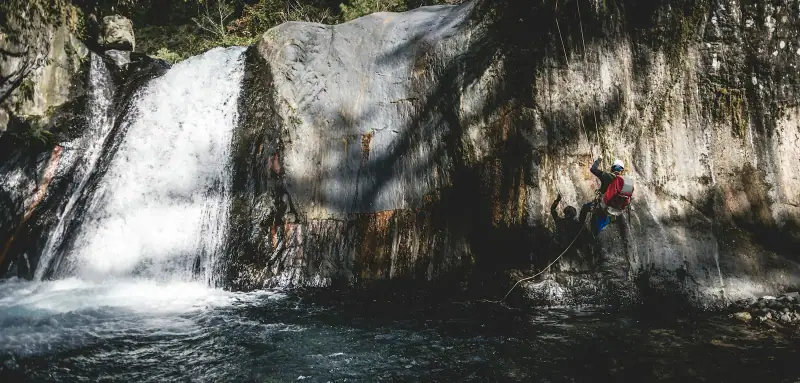
Canyoning in Corsica: the best canyons to descend
Guide to canyoning in Corsica: Zoicu, Tavignano, Vacca, Richiusa. The best canyons, levels, prices and tips for a memorable experience.
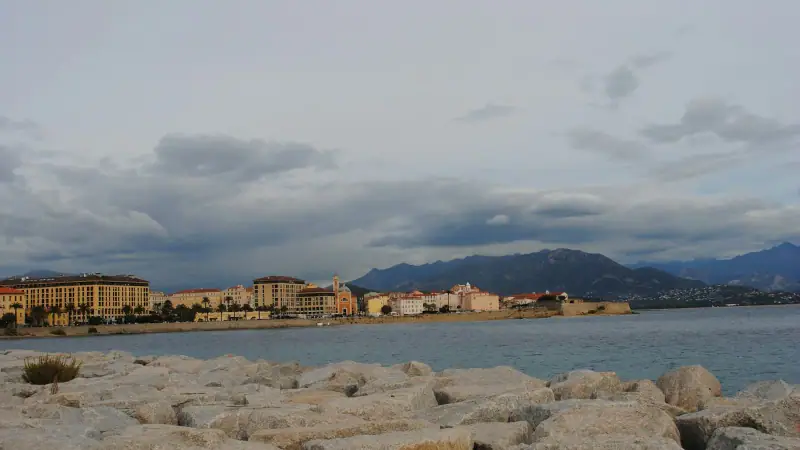
Bastia or Ajaccio: where to stay in Corsica without a car
Bastia or Ajaccio as a car-free base in Corsica? Train access, walkable areas and possible excursions: a full comparison to help you choose.
Ready-made
Corsica itineraries
5 days
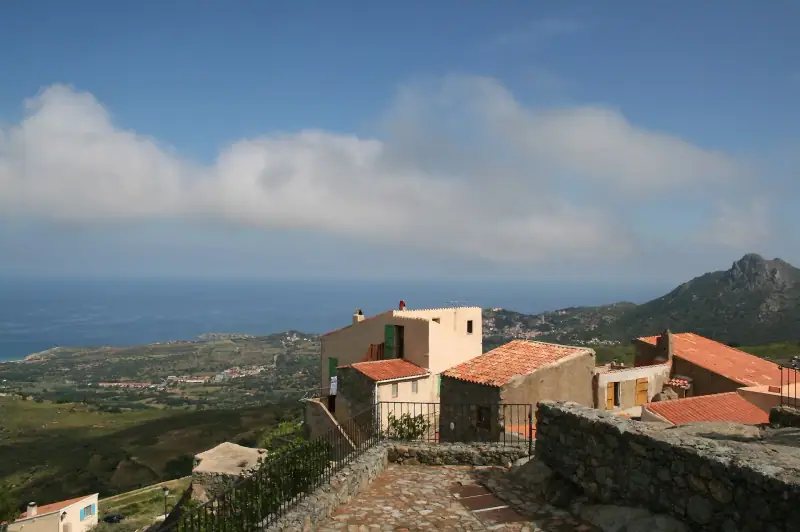
5 days in Balagne: Calvi, L'Île-Rousse and the perched villages
5-day Balagne itinerary: Calvi, L'Île-Rousse, Sant'Antonino, Pigna. Perched villages, beaches, olive oil and the beach train. A complete guide.
10 days
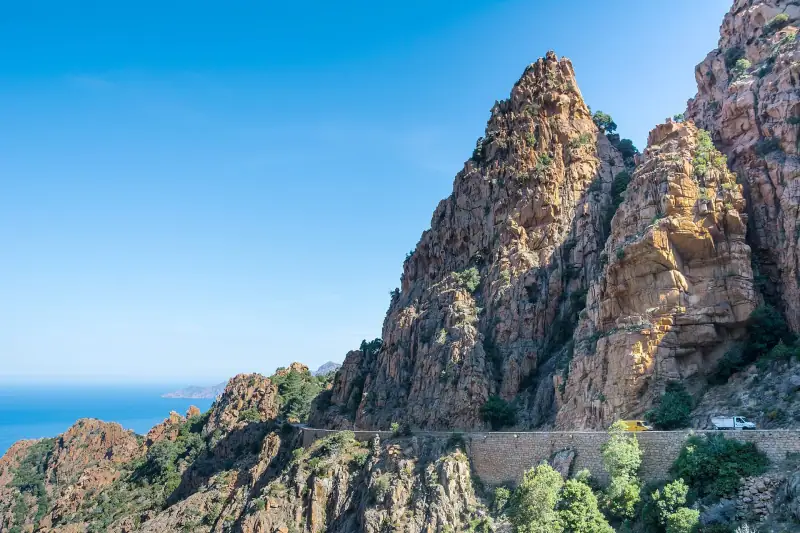
Corsica in 10 days: a complete itinerary around the Island of Beauty
A 10-day Corsica itinerary around the whole island: Bastia, Cap Corse, Balagne, Ajaccio, Bonifacio, Porto-Vecchio and the mountains.
14 days
Corsica road trip: a 10 to 14 day itinerary to see it all
The ultimate Corsica road trip in 10 to 14 days: the best route through the island's beaches, villages, mountains and food.