Itineraries
Corfu with Kids: A 7-Day Family Itinerary
We may earn a commission when you book through links on this page, at no extra cost to you. We don't visit or try the places we cover: we summarize published sources. How we work
Day by day: 7-day family itinerary
- Day 1Arrival, gentle first walk in Corfu Town old town
- Day 2Beach day in the south, Korission lagoon
- Day 3Boat trip around Paleokastritsa
- Day 4Quiet day: inland village, Pelekas sunset
- Day 5Corfu Town fortress, Achilleion, Pontikonisi and Kanoni
- Day 6Sidari, Canal d'Amour, Kassiopi
- Day 7Last swim, souvenirs, departure
Weather through the year on this route
| Jan | Feb | Mar | Apr | May | Jun | Jul | Aug | Sep | Oct | Nov | Dec | |
|---|---|---|---|---|---|---|---|---|---|---|---|---|
| High °F (°C) | 5513 | 5513 | 5915 | 6418 | 7222 | 7926 | 8429 | 8630 | 7926 | 7222 | 6418 | 5714 |
| Low °F (°C) | 489 | 489 | 5211 | 5513 | 6317 | 7021 | 7323 | 7524 | 7021 | 6418 | 5714 | 5211 |
| Rain in (mm) | 4.5115 | 4.1105 | 3.795 | 2.460 | 1.845 | 1.025 | 0.820 | 1.230 | 3.180 | 4.5115 | 6.3160 | 6.3160 |
Normals 1991–2020 at Corfu Town: averages over 30 years, not a forecast. Source: NASA POWER (MERRA-2), grid of about 50 km. Figures computed by us in November 2026.
In short
- Plan around three pillars: carefully chosen sandy beaches, short drives and one main activity per day.
- The week runs from Corfu Town (day 1) to the south (day 2), a boat trip from Paleokastritsa (day 3), a quiet inland day (day 4), the fortress and Achilleion (day 5), the north (day 6) and a flexible last day.
- A rental car is recommended; reserve child seats and boosters with the car and check them at pick-up.
- June and September are good compromises; in July and August, keep activities for early morning or late afternoon.
Traveling to Corfu with children calls for a different rhythm than a stay among adults. Beaches come before museums, car trips must stay short, and each day is better with some water time, some rest time and just one “big” activity. The good news: the island lends itself very well to it. It is small enough that distances stay reasonable, with sandy beaches, a Venetian town that makes children dream of fortresses and lanes, boat trips and quiet countryside villages.
Here is a seven-day itinerary designed for families: few kilometers, active mornings, afternoons at the beach and light evenings. It follows the island’s geography, from the center to the west, the north and then the south, and complements more general suggestions such as the 5-day itinerary and the 3-day road trip.
Preparing a family stay in Corfu
Before detailing the days, a few organizational choices change everything.
Choosing a base. With children, a single base avoids packing and unpacking. Corfu Town is practical for culture and restaurants, but its beaches are less suitable. The coast, in the north or south, lets you walk down to the sea. The guide on where to stay in Corfu compares the areas; if you are unsure, pick a lodging with a pool or a few minutes from a sandy beach, with parking, and reliable air conditioning for summer naps.
Renting a car. Drives in Corfu are short in kilometers but slow: winding roads, villages crossed, dense traffic around town in summer. A small car is enough for a family with little luggage, but think of child seats and boosters, to book at the same time as the vehicle. The tips for renting a car in Corfu detail insurance, the excess and fuel.
Protecting from the sun. Summer is hot and dry. High-SPF sunscreen, hats, UV-protective swim shirts, plenty of water in the car: those are the basics. Avoid visits in full sun between late morning and mid-afternoon.
Adapting schedules. In many places in Greece, the rhythm is shifted: people dine late, which suits children who nap in the afternoon. Tavernas generally welcome families at any hour and often offer simple dishes for the little ones (grills, pasta, fries, salads).
Choosing the right dates. To choose your dates, the article when to go to Corfu details the seasons. June and September are good compromises for families not tied to school holidays.
Family-friendly lodging in Corfu
Compare apartments and hotels with a pool, a kitchen or family rooms.
Day 1: arrival and a first walk in Corfu Town
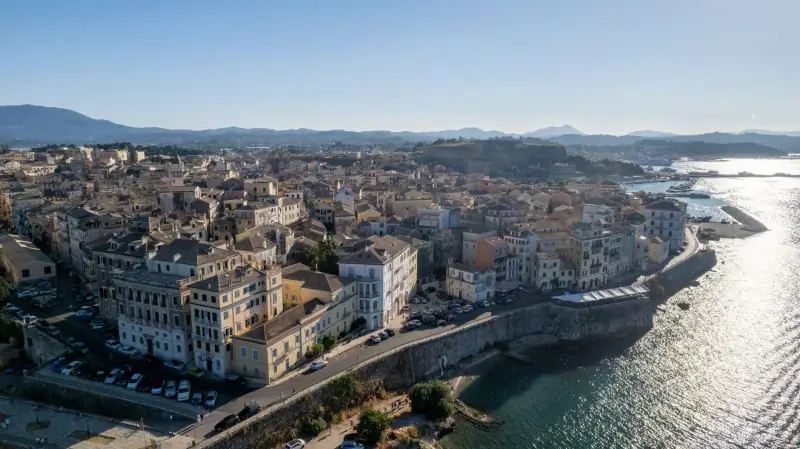
The first day should stay light. After the flight, the transfer and settling in, it is better not to overload the program. If you arrive in the middle of the day, drop the bags, eat something simple, then give the children a first walk in the old town of Corfu, a UNESCO World Heritage site.
Children enjoy the narrow lanes, arcades, little squares and market atmosphere. The port and the Venetian fortress immediately give them the feeling of a castle setting. Walk without a precise goal, buy an ice cream, watch the boats and settle on a terrace in the early evening. If you want to prepare the in-depth visit for the following days, the guide to the old town of Corfu offers a ranking of the visits.
For dinner, keep it simple: a plate of grilled meat or pasta, a little salad, fruit. The island’s specialties, like pastitsada or sofrito, can be tasted once the family has found its rhythm; the article on what to eat in Corfu helps you spot dishes suited to children.
Day 2: a full beach day in the south
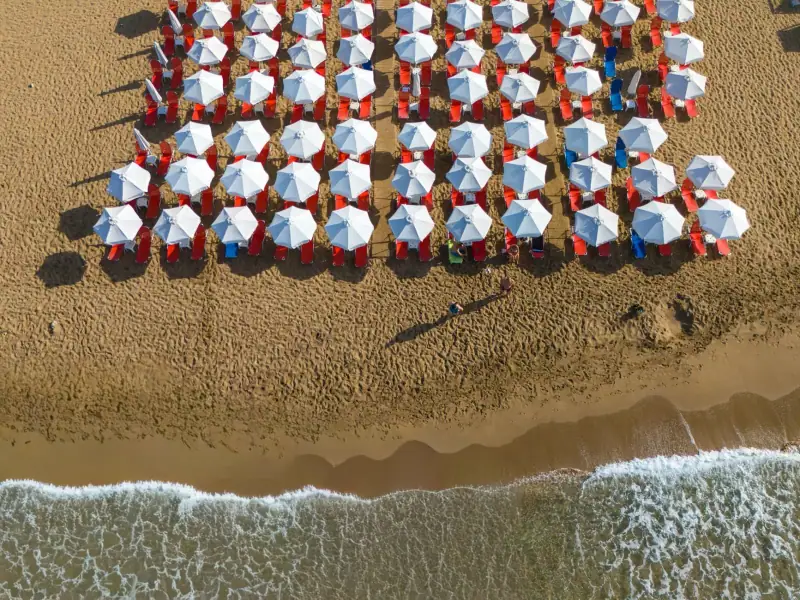
The second day is devoted to rest and water. The south of the island is flatter, more rural and less visited than the north, with long sandy beaches and bottoms that slope gently, which suits children who are not strong swimmers. The area around the Korission lagoon, separated from the sea by a strip of dunes, is also a good place to watch birds without effort.
Plan a day in three parts: swimming in the morning, lunch in a beach taverna, nap or sand games in the afternoon. Bring something to make shade: a light umbrella, a cloth or a small beach tent. In the south, beaches are generally larger and less crowded than on the west coast, which makes setting up easier.
To compare other options, the selection of the most beautiful beaches in Corfu shows the character of each area (sand, pebbles, coves). Always check sea conditions on the day: wind can make some beaches less pleasant for children.
Day 3: a boat trip around Paleokastritsa
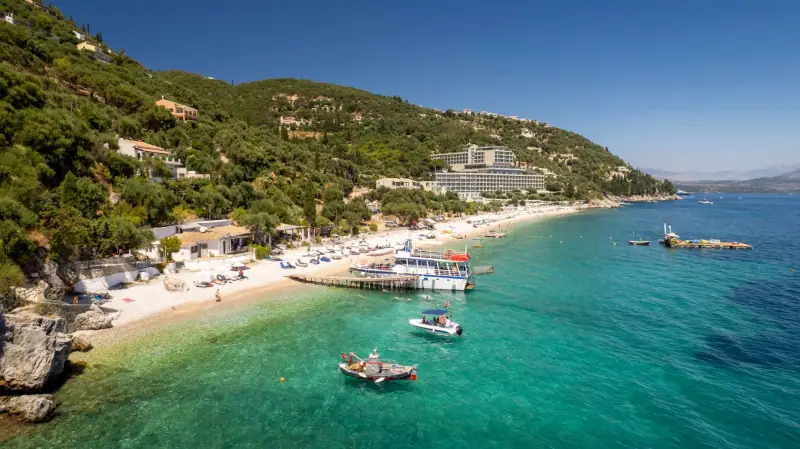
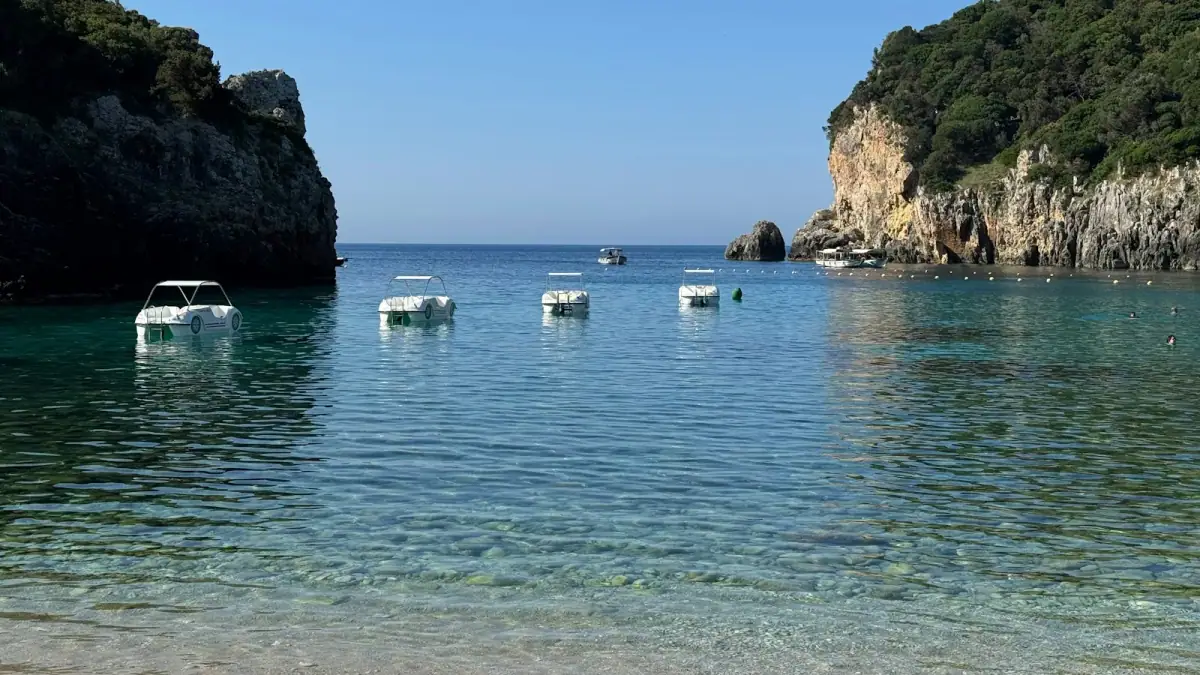
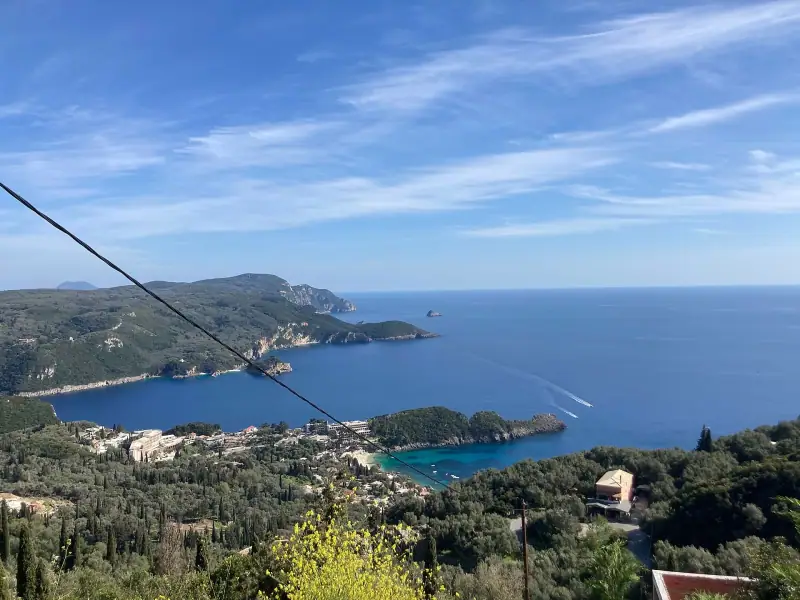
Paleokastritsa, on the west coast, is one of the most photographed sites on the island: coves separated by wooded headlands, intensely blue water and sea caves visited by boat. For children, it is a real adventure: passing under the cliffs, swimming in a cove, looking at the bottom with a mask and snorkel.
Several options exist: renting a small boat, a group excursion with swimming stops, a water taxi to coves. With young children, favor a short, supervised trip, with life jackets of the right size and shelter from the sun. Children are generally more comfortable on a stable boat than on a small craft.
In season, arrive early: the access road and parking fill up around midday. The guide to Paleokastritsa details the possible activities, including the visit to the monastery overlooking the bay, better suited to older children.
Boat trips in Paleokastritsa
Sea outings, caves and swims: compare formulas and durations before booking.
Day 4: a quiet day, an inland village and sunset
After an active day at sea, the fourth day can be lived in slow motion. Corfu is an island of olive trees, stone villages and little white chapels. Take the chance to leave the tourist roads: a walk in an inland village, lunch in a family taverna, a visit to an olive press or a producer depending on the season.
Children often like markets, where you taste fruit, honey, figs and local biscuits. The article on Corfu’s markets and local products details what you can find. If the family wants to round off the day with a small easy activity, a walk on a short shaded trail or on a quiet road suits well.
Late in the afternoon, head to a viewpoint on the west coast for the sunset. The village of Pelekas, on the heights, is known for its panoramic view: plan a snack, a light sweater for the evening and a return before dark, because mountain roads are poorly lit.
Day 5: Corfu Town, the fortress and the Achilleion
Older children will enjoy visiting the Venetian fortress, which overlooks the port: ramparts, vaulted passages, views of the sea and the town. For the youngest, a walk in the lanes, the port and around the Liston esplanade is enough, with an ice cream break. Start early, before the heat, and bring good shoes: the cobblestones are slippery and the climbs sometimes steep.
In the afternoon, head to the Achilleion, the neoclassical palace built in the late 19th century for Empress Elisabeth of Austria, known as Sissi, in the village of Gastouri, about ten kilometers (6 mi) from town. The gardens, statues and view over the coast please many children, especially when you tell them the story of the princess who dreamed of a Greek house. Check hours and prices before you go: they vary by season.
On the way back, the little island of Pontikonisi, with its chapel set on an islet, and the Kanoni area, near the airport, offer a pretty panorama and a fun moment for children watching planes take off over the water. To sleep without stress, avoid overloading the evening.
Day 6: the north, Sidari and Kassiopi
For the sixth day, take the road to the north, greener and hillier. Sidari, on the northwest coast, is known for its sandstone formations sculpted by erosion, the “Canal d’Amour”, where children love to walk and swim in small coves. The village is more touristy than the rest of the coast, with many shops and restaurants, which is practical for families.
Continue to Kassiopi, a former fishing port on the northeast coast, facing Albania, which you can make out in clear weather. The small harbor, the fortress remains and the neighboring coves make a good end-of-day rhythm: stroll, swim, ice cream, then dinner facing the sea. If you feel like crossing the strait for a day in Saranda, remember that entry rules depend on your passport; with young children, the day is long and border formalities take patience.
For older, sporty children, a stop on the slopes of Pantokrator lets you discover the abandoned village of Old Perithia; the article on hiking Pantokrator specifies the routes. For a family with small children, the panoramic road is quite enough.
Family activities and excursions in Corfu
Cruises, guided visits and activities for the whole family, with free cancellation on most offers.
Day 7: a last swim, souvenirs and departure
The last day should stay flexible, especially if your flight is late in the day. Treat yourself to a beach morning, an unhurried lunch, then devote the afternoon to last purchases: olive oil, honey, soaps, kumquat (kumquat liqueur is a specialty of the island, for adults only), small souvenirs for the children. The article wines and drinks of Corfu helps you choose what to bring home.
Remember to prepare your rental car: full tank, removing belongings, checking its condition. Allow a comfortable margin before the airport, because traffic around town can be dense in summer.
If you have one more day, the trip to Paxos and Antipaxos is the finest excursion in the region; see the guide to the Paxos and Antipaxos excursion from Corfu to judge whether the day suits your family.
Adapting the itinerary to the children’s ages
With children under 4. Focus on a single base with access to a sandy beach. Limit drives to 30 or 40 minutes, plan naps in the car and leave out the fortress and Pantokrator. An umbrella-type stroller is handy but useless in the cobbled lanes of the old town: a baby carrier is often simpler.
Between 5 and 10 years. This is the ideal age for boat trips, mask and snorkel, ice creams and walks in the Venetian lanes. Alternate a “beach” day and a “discovery” day and always keep a plan B for windy days.
Teenagers. Offer them somewhat more physical activities: water sports, hiking, kayaking, introductory diving. The article on water sports in Corfu details the possibilities; always check the minimum age required by providers.
Tight budget. An apartment with a kitchen, supermarket shopping and simple beach lunches help control spending. To split your costs between lodging, car, meals and activities, see the guide to the budget in Corfu.
Practical tips for traveling as a family
Health. Ask your doctor or a travel clinic what to pack for your children, and see the official travel health pages (CDC in the US, TravelHealthPro in the UK). Bring after-sun lotion and mosquito repellent for the evenings. Keep any prescriptions and useful health records in your carry-on bag.
Travel insurance. Health and repatriation cover brings real peace of mind with children. Check what your existing policy includes before you go.
Documents. Each child must have their own valid ID. Entry rules depend on your passport, including for minors. Check the official travel advice of your government before you book: travel.state.gov (US), GOV.UK (UK), travel.gc.ca (Canada), Smartraveller (Australia) (checked November 2026).
Accessories that save the trip. Water shoes for pebbles, light beach toys, sunglasses, water bottles, a small cooler bag: the selection of accessories for Corfu helps you forget nothing.
Driving. Drive without rushing, avoid driving at night in the mountains, stop when the children get tired. Narrow roads, bends and drivers in a hurry call for vigilance, especially with family.
Meals. Tavernas are used to families. Ask for portions to share, simple dishes without spices for the little ones, and bottled water. Fresh fruit, yogurt with honey and grills are safe bets.
Key takeaways
A week in Corfu with children is built around three pillars: carefully chosen sandy beaches, short drives and one big activity a day. Start with the old town, follow with the south and a boat trip at Paleokastritsa, keep a quiet day in the countryside, then discover the north before a flexible last day. With a good base, a small car and a pace adapted to the youngest, Corfu becomes a family destination as easy as it is pleasant.
Frequently asked questions
Is Corfu suitable for toddlers?
Yes, as long as you choose the right beaches. The west coast is windier and the bottom sometimes drops off quickly; the south and some sandy beaches in the north offer calmer, shallow water. Choose lodging close to the sea to limit car trips.
How long do you need to visit Corfu with kids?
A week is a good format: it leaves time for the beach, two or three short cultural outings and a day on a boat. Below five days, you have to give up part of the island or accept a lot of driving.
Do you need to rent a car with kids?
It is recommended: the beaches, villages and sites are spread out, and buses do not serve every area. Plan child seats suited to your children's ages when you book, and check them when you pick up the vehicle.
Where should you stay in Corfu with kids?
An apartment or hotel with a kitchen or a generous breakfast, a pool and easy access to a sandy beach makes daily life easier. A single base avoids repacking; two bases (center and south, or center and north) limit the drives.
What is the best time to go with children?
June and September offer a good compromise: pleasant sea, bearable heat and fewer people than in midsummer. In July and August, it is very hot in the middle of the day: favor activities early in the morning or late in the afternoon.
Is the Paxos and Antipaxos excursion suitable for children?
It suits children who are comfortable on boats, but the day is long. Check the length of the crossing and the swimming breaks before booking, and keep a rest margin the next day.
Can you visit Albania with the family from Corfu?
It is possible as a day trip to Saranda, but the day is heavy for young children. Entry rules depend on your passport, including for minors: check the official travel advice of your government before you book.
More Corfu guides
Keep reading
Budget for a Stay in Corfu: Real Costs and 3 Costed Profiles
What budget for Corfu? Real costs by item (lodging, transport, meals, activities), three costed profiles and tips for spending less.
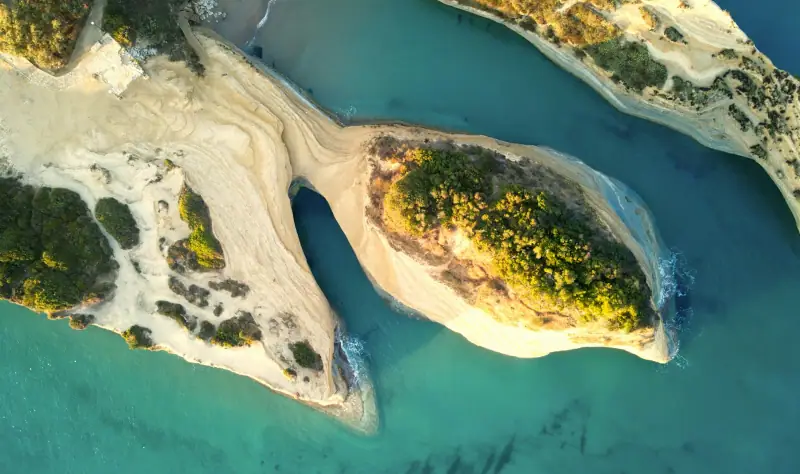
Complete Guide to Visiting Corfu: Regions, Highlights, Budget and Tips
Visiting Corfu: regions, highlights, when to go, how to get there and around, where to stay and budget. The pillar guide to prepare your trip.
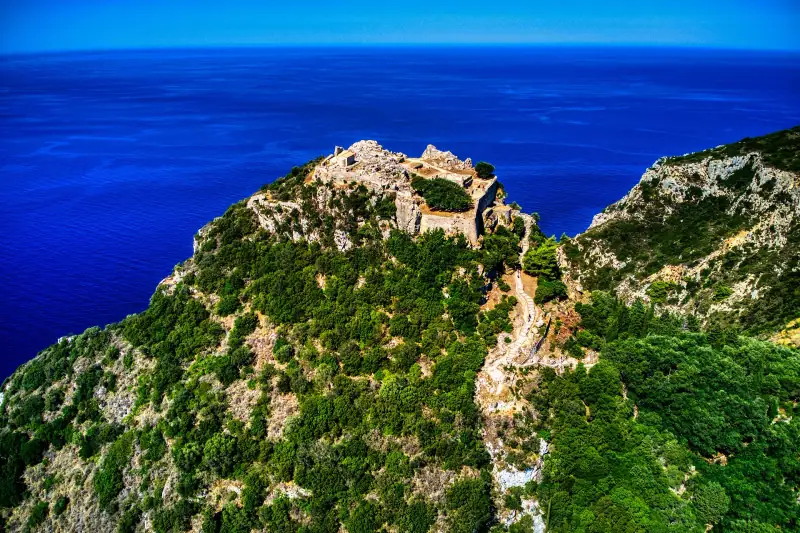
Angelokastro, Corfu: Hours, Entry Price, Access and the Climb
Angelokastro, Corfu's Byzantine fortress: opening days, winter closure, price, the road from Corfu Town, length of the climb and tips for getting there.
Ready-made
Corfu itineraries
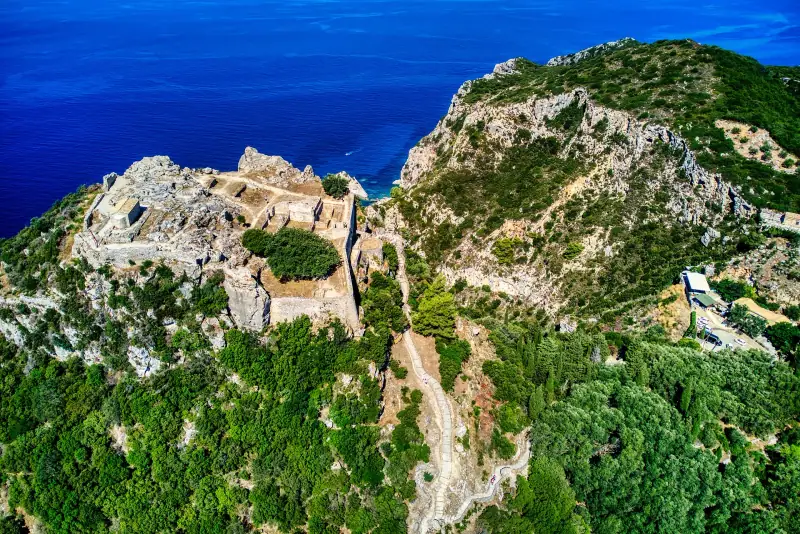
2 days
Corfu in 2 Days: A Realistic Weekend Itinerary, With or Without a Car
Corfu in 2 days: old town, Achilleion and Paleokastritsa with drives in km and minutes, bus or car options, and what to sacrifice to avoid rushing.
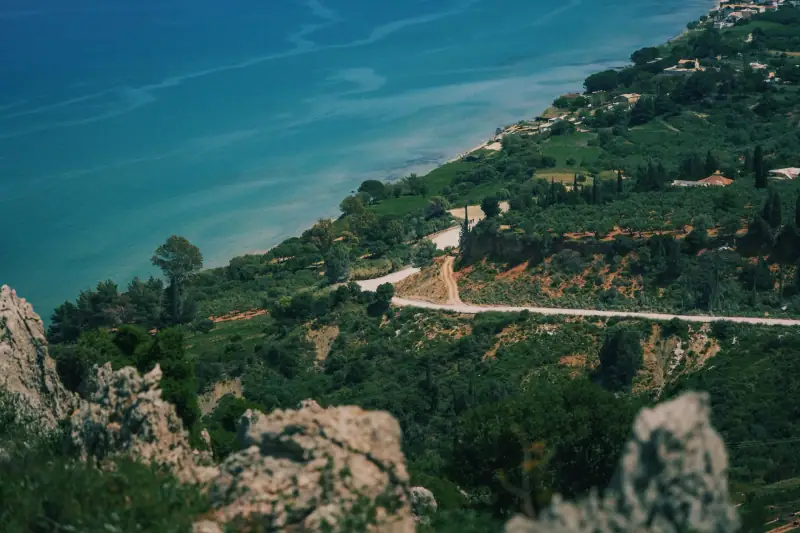
3 days
Corfu Road Trip in 3 Days: Around the Island by Car
A 3-day road trip in Corfu: old town and Achilleion, west coast and Paleokastritsa, the north with Kassiopi and Pantokrator. Stops, drives and tips.
5 days
Corfu in 5 Days: A Day-by-Day Itinerary to See It All
What to do in Corfu in 5 days? Old town, Achilleion, Paleokastritsa, Pantokrator, beaches and a boat trip: a realistic day-by-day itinerary.