Things to do
Hiking in Corfu: Pantokrator, Old Perithia and the Corfu Trail
We may earn a commission when you book through links on this page, at no extra cost to you. We don't visit or try the places we cover: we summarize published sources. How we work
In short
- Mount Pantokrator, the island's highest point at about 900 m (2,950 ft), can be reached by road or on foot from villages such as Old Perithia.
- The Corfu Trail crosses the island from south to north over a little more than 200 km (125 mi), usually in about ten days; you can walk just a stage or two.
- April to June and September to October are the best months; in July and August, start at dawn and bring plenty of water.
- Waymarking is uneven: download your route in advance and do not count on mobile coverage in isolated areas.
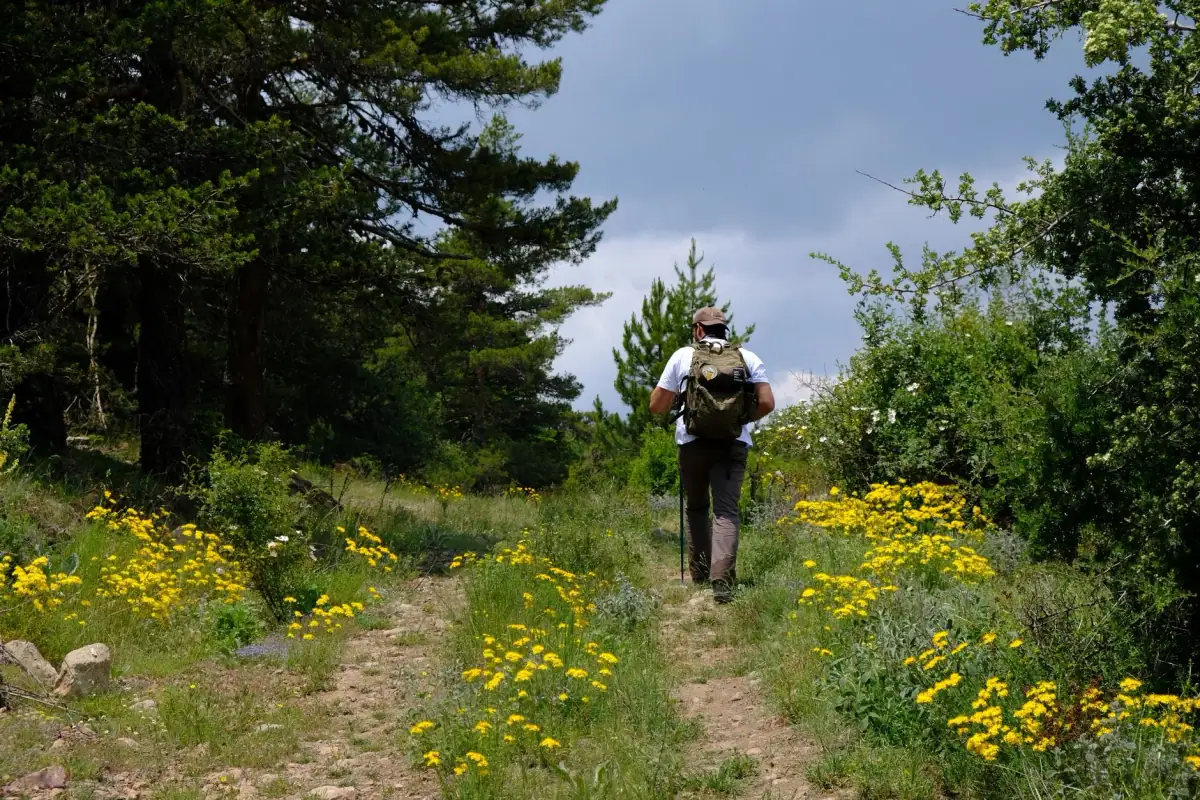
Corfu is known for its beaches and its Venetian old town, but the island can also be discovered on foot. Under centuries-old olive trees, between cypresses, fragrant scrub and stone villages, a network of mule paths, coastal trails and tracks lets you step off the usual circuits. You walk through a surprisingly green countryside, with the Ionian Sea and the mountains of Albania as a backdrop. This guide presents the most interesting hikes, the best season for walking, the gear to bring and how to organize your days without wearing yourself out.
Hiking in Corfu: what to expect
Corfu is not a high-mountain destination. The terrain is modest, elevation gains stay reasonable and most walks suit occasional hikers. What makes the island charming is the variety of landscapes over short distances: a trail can cross an olive grove in the morning, follow a cliff at noon and drop to a cove in the afternoon.
A few things to know before you go:
- The climate is mild, but summer is hot. Between June and September, the middle hours of the day are punishing, especially on trails with no shade.
- Waymarking is uneven. Some stretches are well signposted, others demand vigilance. A GPS track downloaded in advance is valuable.
- Paths are sometimes overgrown, especially in spring and after the autumn rains. Lightweight pants protect your legs from brambles.
- Distances are short, but roads are winding. A two-hour hike may require an hour’s drive from your lodging.
Most walkers choose one or two standout hikes during their stay, rather than a daily walking program. It is an excellent way to vary beach days, and a good way to understand why the interior of the island deserves the detour.
Mount Pantokrator, the island’s summit
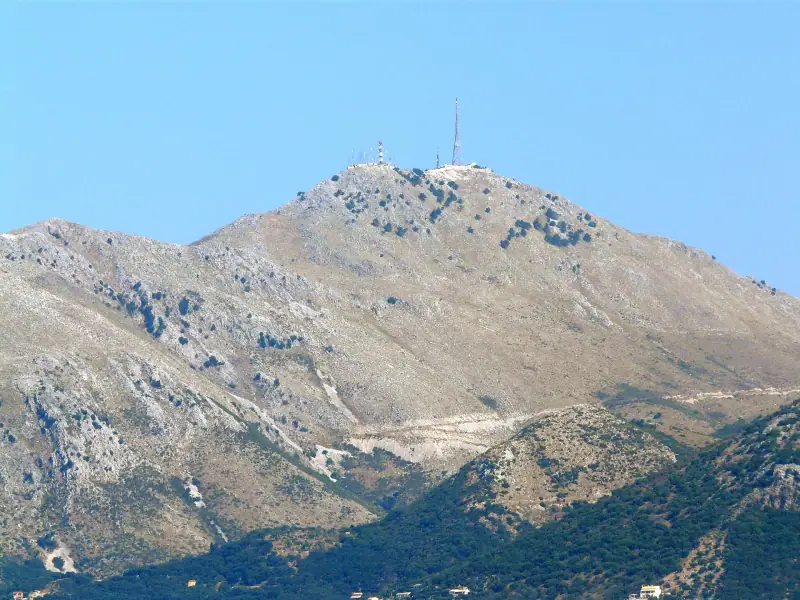
Pantokrator towers over northeast Corfu and is its highest point, at an elevation of about 900 meters (2,950 ft). In clear weather, the view extends over the whole island, the Albanian coast and sometimes much farther out to sea. At the top there is a small monastery and telecommunications installations: the place is not a wild peak, but the panorama alone justifies the climb.
There are two ways to approach it. The first is to drive up the road, then finish with a few steps: it is the simplest option for a quick visit, ideal with family. The second, more rewarding, is to reach the summit on foot by the trails that start from the mountain villages. You then gain altitude gradually, through scrub and rocky slopes, and gauge the scale of the terrain.
A few tips for a successful ascent:
- Set out early: in the morning, the air is cooler and visibility often better, before the afternoon heat haze.
- Bring an extra layer: the wind can be noticeable at altitude, even in summer.
- Check the weather: with low clouds, the panorama disappears and the trails become less pleasant.
- Bring plenty of water: there is no reliable supply point on the trails.
To fit this climb into a complete stay, see the 5-day Corfu itinerary, which devotes a day to the north of the island.
Sleeping near the north of the island
Compare lodging in Corfu to limit drives before a day of walking.
Old Perithia, the stone village at the foot of Pantokrator
Old Perithia is one of the most unusual places on the island. This mountain village, nestled at the foot of Pantokrator, was largely abandoned over the course of the 20th century. Its stone houses, narrow lanes and churches now form an almost intact setting, where nature is slowly reclaiming its place. A few tavernas have reopened in season, which makes it a pleasant stop for a break.
It is also a popular starting point for hikers. From the village, several paths head to the mountain slopes or drop toward the north coast. You can make it a simple one-hour stroll around the hamlet, or include it in a longer loop to the summit of Pantokrator depending on your fitness.
What you will find there:
- a very calm atmosphere, especially in the morning and outside high season;
- houses in ruins or under restoration, to be observed without entering private property;
- an ideal setting for photography, with stone walls and fruit trees;
- a few open tables depending on the season, but variable hours: check before counting on a meal.
Old Perithia is easy to link to the northeast coast. After the walk, you can head to Kassiopi or a pebble beach for a swim: the guide to the most beautiful beaches in Corfu details this area.
Angelokastro and the trails of the west coast
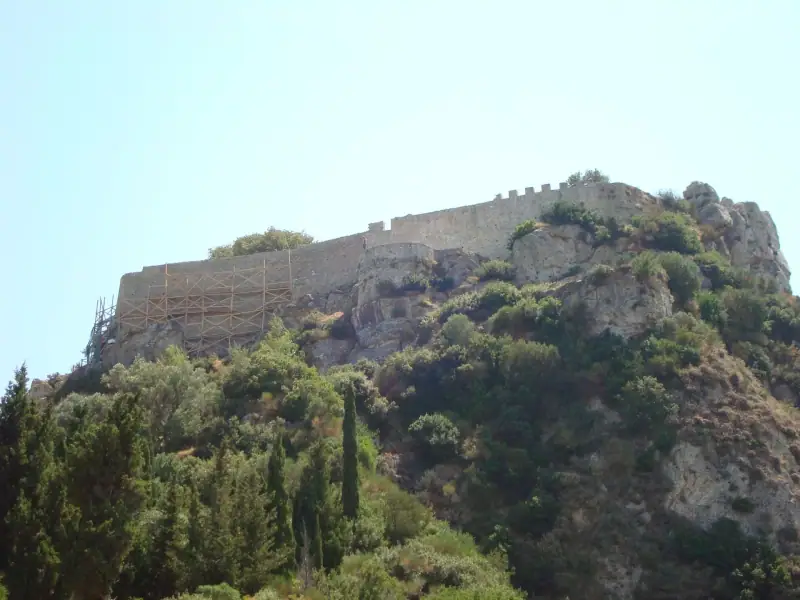
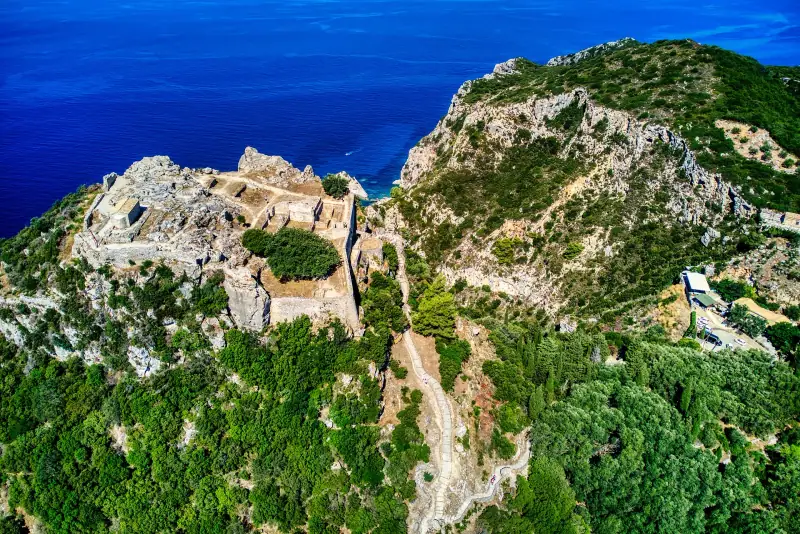
On the west coast, above Paleokastritsa, the Byzantine fortress of Angelokastro occupies a rocky peak that drops sheer into the sea. Built in the medieval period, it long protected the island and served as a refuge for people from neighboring villages in case of attack. Today, it is one of the finest viewpoints in Corfu.
Access is by a short but steep path, with uneven steps. It is not long, but it requires good shoes and a bit of breath, especially in hot weather. From the ramparts and terraces, the view over the rugged coast, the turquoise coves and the surrounding hills is exceptional. Sunrise or sunset is especially popular, as long as you plan your return before dark.
The surroundings of Paleokastritsa offer other accessible walks:
- short trails linking viewpoints above the coves;
- paths between the perched villages of the hinterland, lined with olive trees and stone walls;
- walking access to small beaches, to combine with a swim.
For hours, entry price and access, see the dedicated page on Angelokastro. For a day program that is both cultural and active, combine Angelokastro with swimming at Paleokastritsa. You will find this area in the 5-day itinerary, and the question of lodging in the guide on where to stay in Corfu.
The Corfu Trail, crossing the island on foot
The Corfu Trail is the island’s long trail. It links the south to the north over a little more than 200 kilometers (125 mi), using a mix of mule paths, tracks, coastal trails and small roads. It is classically walked in about ten days, in stages of varying length, with nights in or near the villages.
For a traveler on a typical stay, the full trail is not necessary. You can quite well walk one or two stages, choosing those that pass through the finest landscapes. The interest of the Corfu Trail is crossing areas that roads avoid: cultivated hills, olive forests, villages that stayed away from tourism, stretches of preserved coastline.
A few points to anticipate if you take it on:
- Logistics: stages sometimes end in small villages where lodging is limited. Book ahead in high season.
- Supplies: bring water and provisions for the day, because shops are rare between stages.
- Navigation: waymarking is no substitute for a map or GPS track. Check your position regularly.
- Getting back: if you walk isolated stretches, plan a taxi or transfer to return to your starting point.
If you want to get off the beaten track without organizing every detail yourself, a guided outing is a good option: the guide knows the paths, the water points and the history of the places.
Guided hikes and walks in Corfu
Compare walking outings, visits to mountain villages and nature excursions.
Coastal trails and easy walks
If you are not looking for a real hike, Corfu also offers many easy walks of one to two hours, suited to families and occasional walkers. They often follow the shoreline and end with a swim, which makes them an excellent compromise.
Among the types of walks to favor:
- trails linking two neighboring coves on the west coast, with views of the cliffs;
- paths going down to isolated beaches, sometimes steep on the way back;
- walks around the inland villages, between olive groves and stone walls, ideal in the late afternoon;
- urban walks in Corfu Town, such as the tour of the ramparts and the old town neighborhoods, described in the guide on what to see in Corfu Town.
These walks need no special gear, but a minimum of precautions still applies: closed shoes, water, hat. Avoid sandals on stony trails, which slip easily.
When to hike in Corfu
The best period for walking runs from April to June, then from September to October. In spring, the vegetation is green, wildflowers abound and temperatures stay pleasant. In fall, the light is soft, the sea is still warm for a swim after the walk and crowds thin out.
Summer is possible if you adapt your hours: start at dawn, break during the hot hours, resume late in the day. In July and August, favor high-altitude or shaded routes, and avoid long exposed stages. Winter is wetter: trails can be muddy and some days are rainy, but the countryside is especially green and little visited.
To compare the seasons in detail, the article when to go to Corfu details the climate, crowds and sea temperatures month by month.
Gear and safety
A successful hike depends largely on preparation. Here is what to plan:
- Shoes: hiking shoes or sneakers with a lugged sole. Limestone rocks are slippery, especially when wet.
- Water: bring at least one to two liters per person, more in summer. Water points are rare.
- Sun protection: hat, sunglasses, sunscreen. Shade is intermittent.
- Navigation: paper map or offline app. Do not count on the mobile network everywhere.
- Small kit: plasters and something to deal with a blister or a small cut.
- Clothing: a light windbreaker at altitude, thin pants for trails overgrown with vegetation.
- Snacks: dried fruit, bars, fresh fruit. Shops are not always open.
For safety, tell someone your route, do not set out late in the afternoon and turn back if the weather worsens. The European emergency number, 112, works in Greece. In strong heat, slow down, drink regularly and look for shade without waiting for the first signs of fatigue.
Finally, respect the places: close pasture gates, leave no litter, avoid picking plants and do not enter private property. Olive groves are often worked, and owners appreciate discreet walkers.
How to reach the trailheads
Trailheads are often in villages far from the main roads. A car is therefore by far the most practical way: it lets you choose your schedule, stop at viewpoints and reach trails that buses do not serve. The guide to renting a car in Corfu helps you pick the right option and drive calmly on the winding roads of the north and the west coast.
If you do not drive, you have three options:
- public buses, which serve some villages but with limited frequencies, especially off-season;
- taxis, useful for a one-way trip to a remote starting point;
- guided outings, which generally include transport.
In every case, plan a comfortable return before dark, because mountain roads are poorly lit.
Choosing a base to explore the island
Hotels, apartments and guesthouses in Corfu: compare by your walking area.
Sample program for three days of walking
To give you an idea, here is a simple outline to adapt to your level and your area of stay.
Day 1: the north and Pantokrator. Early start toward Old Perithia, a stroll in the village, then the climb to the summit on foot or by car depending on your fitness. Light lunch there, then a swim on the northeast coast late in the day.
Day 2: the west coast. Morning at Angelokastro, before the heat rises. Descent to Paleokastritsa for a swim and a lunch facing the sea. Late in the afternoon, a short walk between the coves or in the perched villages nearby.
Day 3: a Corfu Trail stage or an inland loop. Choose a stretch of a few hours, favoring olive-grove and village areas. Plan a return by taxi or a loop, and keep the end of the day to rest.
This pace leaves time for the beach, food and the old town, without turning the stay into a marathon. If you have a week, alternate a walking day with a rest day: your legs will thank you.
And beyond Corfu?
If you feel like discovering other landscapes, day trips to Saranda, in Albania, leave from Corfu: the Albanian coast can in fact be made out from the heights of Pantokrator. Entry rules depend on your passport. Check the official travel advice of your government before you book: travel.state.gov (US), GOV.UK (UK), travel.gc.ca (Canada), Smartraveller (Australia) (checked November 2026). Bring valid identification.
Key takeaways
Hiking in Corfu means seeing the island differently: calmer, greener, more authentic. Pantokrator offers the big panorama, Old Perithia the change of scene, Angelokastro the view over the west coast and the Corfu Trail the long crossing. Set out early, bring plenty of water, pick the right season and combine your walks with a swim: you will enjoy the best of the island, without needless fatigue. And if you are unsure about the length of your stay, the 5-day Corfu itinerary shows how to fit these hikes into a balanced program.
Frequently asked questions
Can you hike in Corfu in summer?
It is possible, but not advised in the hot hours. In July and August, it is better to start very early in the morning, bring plenty of water and favor shaded or high-altitude routes. Spring and early fall are far more comfortable.
What is the highest point of Corfu?
Mount Pantokrator, in the northeast of the island, peaks at about 900 meters (2,950 ft). A road reaches the summit by car, but several trails also lead up on foot, notably from the village of Old Perithia.
What is the Corfu Trail?
It is a long-distance trail that crosses the island along its whole length, from south to north, over a little more than 200 kilometers (125 mi). It is usually walked in about ten days, but you can easily walk just a few stages.
Do you need a guide to hike in Corfu?
Not for short, well-marked walks. A local guide is useful, however, for the long stages of the Corfu Trail or if you want to understand the flora, the history of the villages and the mule paths. Also bring a map or an offline app.
What gear should you bring for walking in Corfu?
Good shoes with a grippy sole, a hat, sunscreen, at least one to two liters of water per person and a snack. Add a light windbreaker if you head up Pantokrator, where the weather can change fast.
Are the trails well marked?
Waymarking is uneven. Some paths, such as those of the Corfu Trail, are signposted; others vanish into vegetation or are cut by tracks. Download your route in advance and do not count on the mobile network in isolated areas.
Can you hike in Corfu without a car?
Yes for walks starting from Corfu Town or from some villages served by buses, but a car makes access to trailheads in the north and on the west coast much easier. Bus schedules are limited, especially off-season.
More Corfu guides
Keep reading
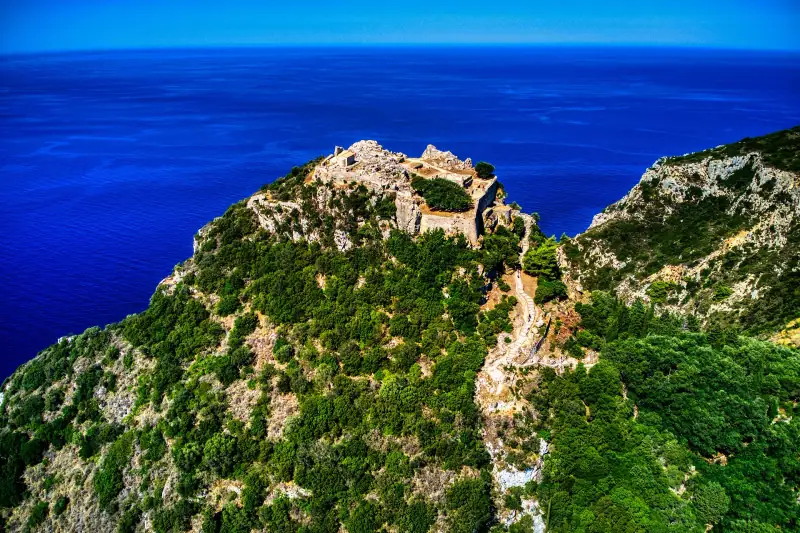
Angelokastro, Corfu: Hours, Entry Price, Access and the Climb
Angelokastro, Corfu's Byzantine fortress: opening days, winter closure, price, the road from Corfu Town, length of the climb and tips for getting there.
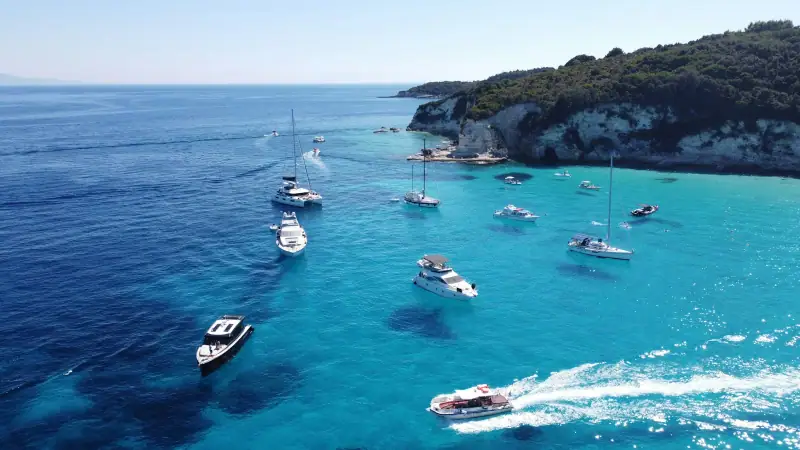
Paxos and Antipaxos Day Trip from Corfu: Boat, Beaches and Tips
Paxos and Antipaxos from Corfu: types of boat trips, beaches not to miss, duration, best season and tips for organizing your day at sea.
Budget for a Stay in Corfu: Real Costs and 3 Costed Profiles
What budget for Corfu? Real costs by item (lodging, transport, meals, activities), three costed profiles and tips for spending less.
Ready-made
Corfu itineraries
2 days
Corfu in 2 Days: A Realistic Weekend Itinerary, With or Without a Car
Corfu in 2 days: old town, Achilleion and Paleokastritsa with drives in km and minutes, bus or car options, and what to sacrifice to avoid rushing.
3 days
Corfu Road Trip in 3 Days: Around the Island by Car
A 3-day road trip in Corfu: old town and Achilleion, west coast and Paleokastritsa, the north with Kassiopi and Pantokrator. Stops, drives and tips.
7 days
Corfu with Kids: A 7-Day Family Itinerary
A 7-day stay in Corfu with children: sandy beaches, boat trips, the old town, the north and south of the island. Pace, drives and practical tips.