What to see
Complete Guide to Visiting Corfu: Regions, Highlights, Budget and Tips
We may earn a commission when you book through links on this page, at no extra cost to you. We don't visit or try the places we cover: we summarize published sources. How we work
In short
- Corfu is about 60 km (37 mi) long; roads are winding, so a drive of a few dozen kilometers can easily take an hour.
- Five to seven days cover the essentials: the old town, the west coast, the north and a boat day. May, June, September and early October are the best months.
- A rental car is recommended outside Corfu Town; the airport is only a few kilometers from the center.
- For a first stay of five to seven days, two bases work well, for example three nights in Corfu Town, then three on the west coast or in the north.
Corfu is one of the greenest islands in Greece. Located in the Ionian Sea, very close to the Albanian coast, it owes its landscape of olive trees, cypresses and hills to winters wetter than in the Cyclades. Its history, marked by several centuries of Venetian presence and then by French and British influences, can be read in the architecture of its UNESCO-listed old town. This complete guide helps you prepare your trip: an introduction to the island, regions, highlights, seasons, transport, lodging and budget. At each step, it points to detailed articles to go further.
Corfu in brief: what to know before you go
Corfu is an island about sixty kilometers (37 mi) long, stretched from north to south. It is wider in its northern part and tapers toward the south. This shape explains why travel times are sometimes longer than you would imagine: roads are often winding, and a drive of a few dozen kilometers can easily take an hour.
The island belongs to the Ionian Islands archipelago, on the west side of Greece. Unlike many arid Greek islands, it enjoys generous vegetation. Olive groves cover a large part of the interior, and some trees are very old. Olive growing has deeply shaped the landscapes, and it partly explains the place of olive oil in local cooking.
The currency is the euro. Entry rules depend on your passport. Check the official travel advice of your government before you book: travel.state.gov (US), GOV.UK (UK), travel.gc.ca (Canada), Smartraveller (Australia) (checked November 2026). For phone use abroad, check your carrier’s international plan or use a travel eSIM.
Corfu appeals to very different profiles: couples looking for romance, families after easy beaches, history lovers, hikers and travelers who like village tavernas. This diversity is its strength, but it obliges you to choose a base that fits your style of stay. The following sections help you do so.
The main regions of Corfu
To organize your stay, it helps to divide the island into five main areas. Each has its character, its beaches and its atmosphere.
Corfu Town and the nearby coast. The island’s capital concentrates urban life, museums, fortresses and most of the restaurants. The airport is very close to the center. South of town, the east coast leads toward Benitses, a former fishing village turned beach resort.
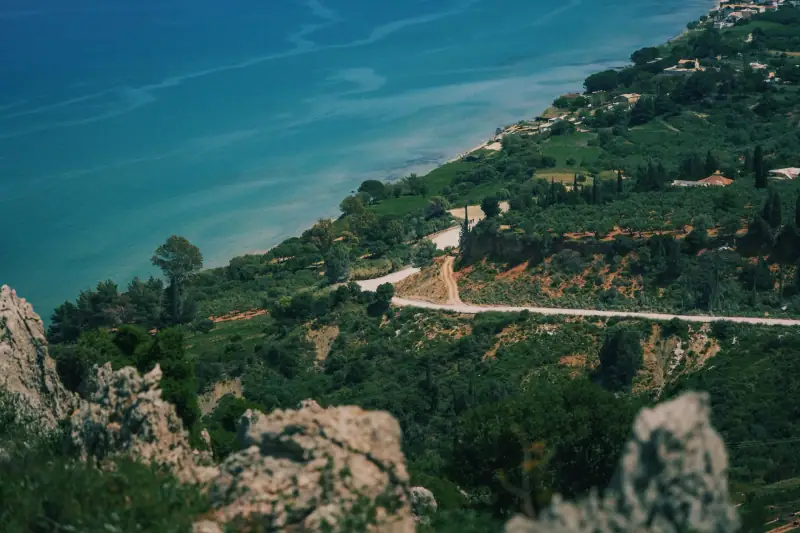
The west coast. This is the most spectacular side: cliffs, coves, olive-covered hills and sunsets. Paleokastritsa and Agios Gordios are its two best-known landmarks. This coast is ideal for scenery, but it often requires driving.
The northeast. Around Kassiopi and Mount Pantokrator, you find pebble coves, perched villages and views of the Albanian mountains, very close across the strait. It is a region suited to hiking.
The south. Quieter and less urbanized, the south of the island is known for its long sandy beaches, its natural lagoon and villages like Lefkimmi. It suits travelers looking for tranquility.
Paxos and Antipaxos. These two small islands, south of Corfu, are mainly visited as day boat excursions. A full article is devoted to them, presented below.
A general tip: rather than changing hotels every two days, choose one or two bases and make excursions from them. Corfu is not big enough to justify many moves, but its roads are slow enough to discourage overly long round trips.
Corfu Town: the UNESCO-listed old town
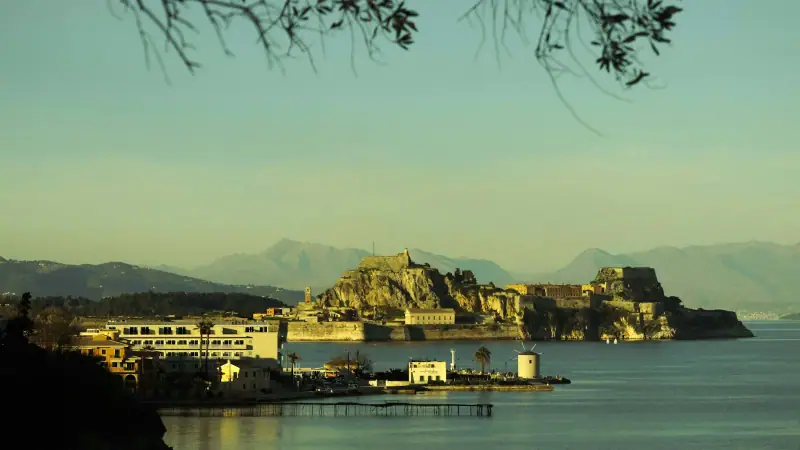
The old town of Corfu has been on the UNESCO World Heritage list since 2007. It charms with its narrow lanes, tall colorful facades, squares, churches and covered passages where laundry sometimes dries above passersby. The Venetian influence is very strong, but you can also sense French and British traces.
The symbolic heart of the old town is the esplanade, a vast lawn lined by the Liston, a row of arcades whose style recalls certain Parisian streets. You have coffee there watching life go by. On either side, two fortresses overlook the town: the Old Fortress, on a rocky headland, and the New Fortress, closer to the central districts. They offer fine views over the town and the sea.
Allow at least a day for a first approach, and ideally two to visit without rushing: museums, churches, fortresses, market and long breaks on terraces. The article what to see in Corfu Town offers a detailed route, with tips for avoiding the busiest hours.
Sleeping in the center gains you comfort and atmosphere, at the price of some noise in the evening in summer. Travelers without a car do well there: everything is done on foot, and the airport is a few minutes away by taxi.
Hotels in Corfu Town
Compare charming hotels and apartments in the historic center.
Paleokastritsa and the west coast
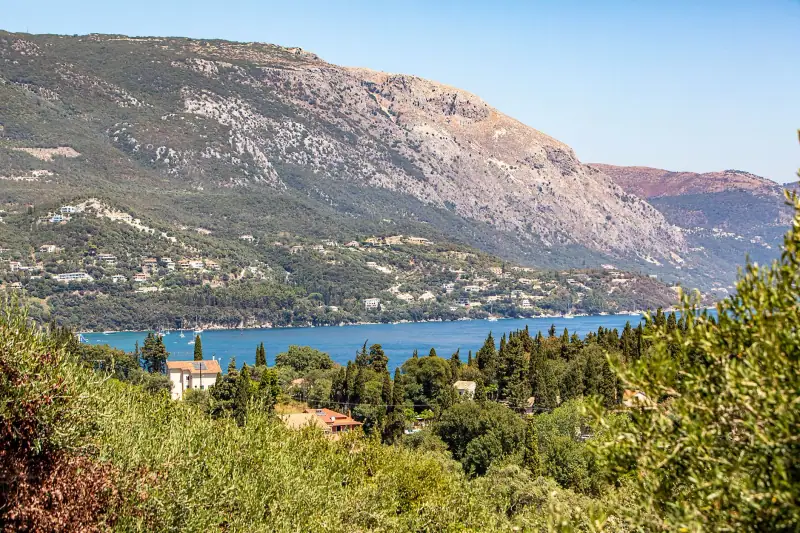
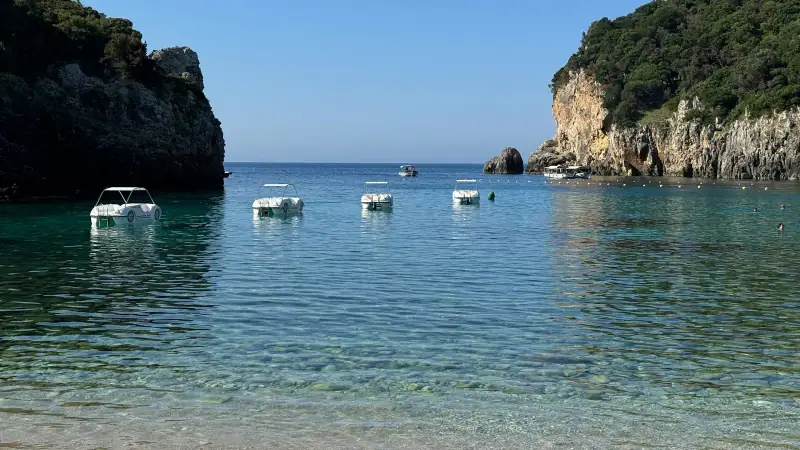
Paleokastritsa is often considered Corfu’s postcard. The site is made up of several small bays with clear water, surrounded by hills covered in olive and cypress trees, and overlooked by a monastery perched on a headland. You can swim, rent a small boat, take a sea trip to discover the caves or simply enjoy the viewpoints on the heights.
From Corfu Town, allow about 40 minutes by road, more in high season when traffic is dense. Come early in the morning or late in the afternoon to avoid the crowds: at midday, parking lots fill quickly and the beaches are packed. The article Paleokastritsa: what to do, where to swim and what to see details the different bays and the possible activities.
Farther south on the same coast, Agios Gordios is known for its big sandy beach overlooked by a hill. The atmosphere is more beach-resort and more family-oriented. It is a good choice if you want a beach base on the west coast, with restaurants within walking distance.
The main asset of the west coast is the sunset: facing the Ionian Sea, many tavernas and viewpoints let you see it without effort. Keep in mind that some roads are narrow and that night driving calls for caution.
The northeast: Kassiopi and Mount Pantokrator
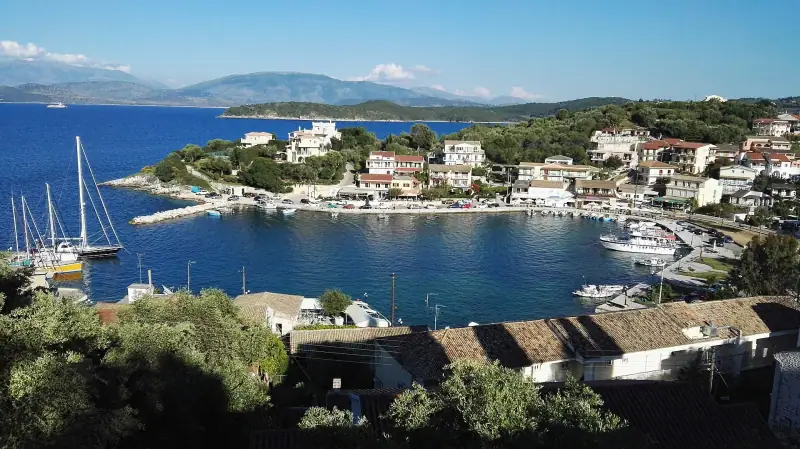
In the northeast of the island, Kassiopi is a picturesque little port, overlooked by the ruins of a fortress and surrounded by coves reachable on foot or by car. The bay is lively in summer, with its tavernas and shops, but keeps a real charm outside peak season. From the coast, the view of the Albanian mountains is striking in clear weather.
Mount Pantokrator is the island’s highest point, at about 900 meters (2,950 ft) of altitude. You can drive up close to the summit, or climb it on foot by trails. The view takes in a large part of the island and, in fine weather, the neighboring coast. On the slopes, old villages like Old Perithia, now almost deserted, offer a timeless atmosphere. Walkers will find all the details in the article hiking in Corfu: Pantokrator, Old Perithia and the Corfu Trail.
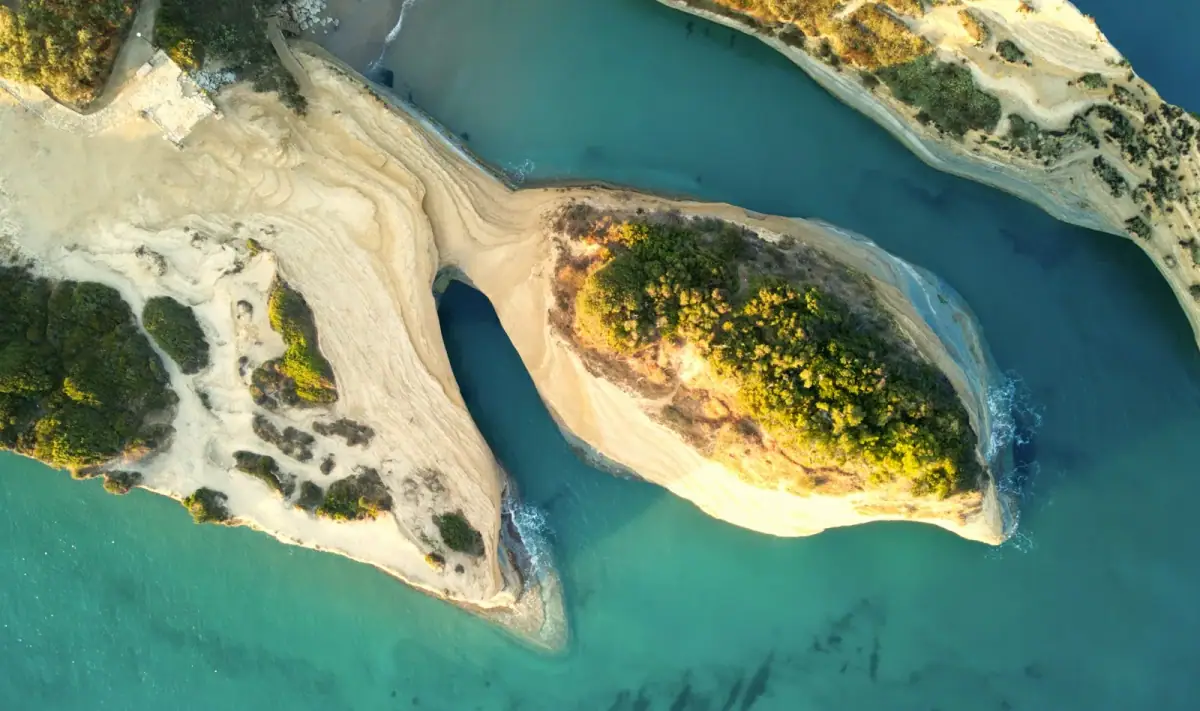
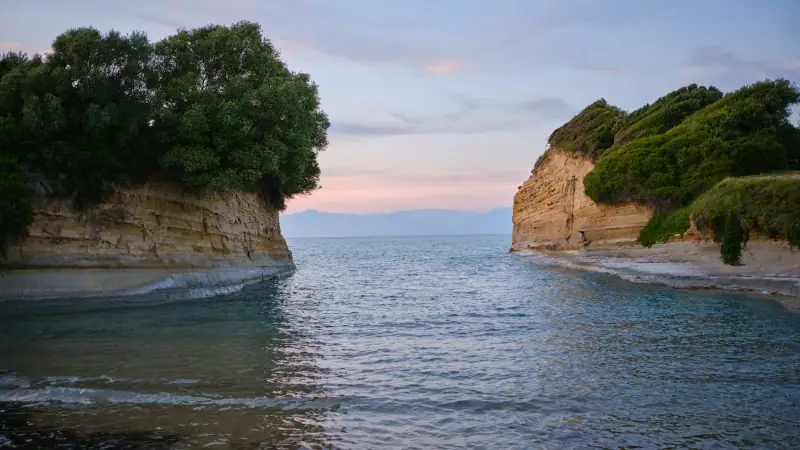
In the northwest, the Sidari area is known for its rock formations eroded by the sea and for the “Canal d’Amour”, a much-photographed site. The atmosphere is more beach-resort and livelier, with many shops and lodgings. This area appeals to travelers who like to have everything at hand.
The south: Lefkimmi, sandy beaches and lagoon
The south of Corfu is the quietest face of the island. Far from the mass tourism of some resorts, you find long sandy beaches, dunes, a natural lagoon called Korission, and villages where life follows a slower rhythm. Lefkimmi, in the southeast, is a small town crossed by a river, with colorful houses and an authentic atmosphere.
This part of the island is ideal for a drive, alternating beach and lunch in a village. It is also popular with travelers who like to watch birds, notably around the lagoon. Distances there are longer, and services less concentrated than in the center: fill up with fuel and bring water and sunscreen before setting out.
If you stay in the north, the south can be visited very well in one full day. Just plan an early start and an unhurried return: the island’s roads are slower than the distances suggest.
The highlights of Corfu
Here are the visits and experiences most travelers put at the top of their list. This selection does not replace your curiosity, but it gives a solid base for a first stay.
The old town of Corfu. It deserves at least a full day: esplanade, Liston, fortresses, lanes and museums. See the guide to what to see in Corfu Town.
The beaches. From Paleokastritsa to the south via the north coast, the island offers a wide variety of beaches: pebbles, sand, coves reachable on foot or by boat. The article best beaches in Corfu ranks them by coast to help you choose according to your base.
The Achilleion palace. Built in the late 19th century for Empress Elisabeth of Austria, known as Sissi, this neoclassical palace overlooks the countryside south of town. Its gardens and statues make it a charming visit, for half a day.
Vlacherna and Mouse Island. South of town, near the airport, the small monastery of Vlacherna, linked to land by a walkway, is one of the most photographed sights on the island. It can be visited in a few minutes, ideally early or late in the day.
Mount Pantokrator. A panoramic viewpoint and the starting point for hikes, it offers a natural breather away from the beaches.
Paxos and Antipaxos. These two nearby small islands are visited by boat, with water of a very intense blue. The details are in the article Paxos and Antipaxos excursion from Corfu.
Corfiot cuisine. Local cooking, influenced by Italy, is a reason to travel in itself. See the selection in what to eat in Corfu: 10 specialties.
Boat excursions around Corfu
Sea outings, caves, Paxos and Antipaxos: compare the available excursions.
When to go to Corfu
Corfu’s climate is Mediterranean: hot, dry summers and mild, wetter winters. That winter moisture is precisely what gives the island its generous vegetation. The best period depends on what you are looking for.
May and June. The countryside is still green, days are long, the heat is bearable and sites are less crowded. The sea is sometimes still a bit cool in May. It is an excellent time to combine hiking, visits and first swims.
July and August. This is high season: strong heat, lively beaches, high prices and bookings essential in advance. If you travel then, get up early for visits and keep the afternoon for the beach.
September and early October. Many travelers consider this the most pleasant period: the sea has stored the summer’s warmth, crowds thin out and prices drop. Storms are possible from fall.
The rest of the year. The cool months suit hiking and cultural visits well, but some seasonal businesses close, and the beaches are no longer suited to swimming.
The article when to go to Corfu details conditions month by month to help you set your dates.
How to get to Corfu
The simplest way to reach the island is by plane. Corfu’s international airport, only a few kilometers from the town center, receives many direct flights from Europe in season, as well as flights with a connection off-season. Its closeness to town is an advantage: the taxi transfer is short, which eases late arrivals.
Compare schedules, durations and prices from several departure airports, and book early enough for high season. Direct flights are often seasonal: outside summer, plan for a connection. If you have flexibility, trying several dates can noticeably lower the bill.
It is also possible to arrive by sea. Ferries link the island to Igoumenitsa, on mainland Greece, for a crossing of under two hours, as well as to Italian ports: Grimaldi Lines, for example, links Corfu to Ancona and Brindisi. This option mainly interests travelers arriving by car from Europe, or combining Corfu with a tour of the mainland. Always check schedules and companies with the operators before planning, because the offer varies from one season to the next.
Getting around Corfu
The choice of transport depends on your base and your wish to explore. Staying in Corfu Town, you can do everything on foot and complete with taxis. As soon as you want to discover isolated beaches, inland villages or the west coast, a car becomes much more practical.
The rental car. It offers real freedom, notably for leaving crowded beaches in search of quieter coves. The roads are sometimes narrow, winding and poorly lit, with tight bends in the interior: drive carefully, favor a small vehicle that is easy to park and avoid driving at night if you are not comfortable. The article renting a car in Corfu details the pitfalls to avoid: insurance, excess, fuel and the vehicle’s condition.
Buses. A bus network links the town to the main localities, but frequencies are limited, especially on weekends and off-season. They suit simple trips, less so for linking several sites in the same day.
Taxis. Practical for short trips and airport transfers, they become expensive over long distances. Ask the price before you leave.
Organized excursions. For sites like Paxos and Antipaxos, you have to take a boat anyway. Group excursions are also a solution for those who do not want to drive.
Tours and activities in Corfu
Guided visits, excursions and local experiences to book in advance.
Where to stay in Corfu
The choice of lodging is probably the decision that most influences your stay. Here is a quick summary of each area; the detail is in the article where to stay in Corfu.
Corfu Town. Ideal for culture lovers and those who do not want a car. Urban atmosphere, restaurants in abundance, a little noise in the evening.
The east coast (Benitses, Dassia, Ipsos). Practical and family-friendly, with many hotels, shops and beaches. The atmosphere is that of a beach resort.
The west coast (Paleokastritsa, Agios Gordios). Spectacular scenery and sunsets. It is better to have a car, especially if you stay on the heights.
The north (Kassiopi, Sidari). A mix of local charm and summer activity, with a good base for hiking and coves.
The south (Lefkimmi, sandy beaches). Ideal for tranquility, but farther from the busiest sites.
For a first stay of five to seven days, two bases are a good compromise: for example three nights in Corfu Town, then three nights on the west coast or in the north. Book early for July and August, and prefer cancelable rates to keep flexibility.
Budget: how much to plan for Corfu
Corfu is neither the cheapest nor the most expensive island in Greece. The budget varies mainly with the season, the type of lodging and car use. The main items are air travel, lodging, car rental, meals and activities.
Lodging is generally the heaviest item, with big variations between summer and the shoulder season. Booking early and traveling outside July-August lowers the bill noticeably.
Meals remain reasonable in traditional tavernas, especially if you eat like the locals: shared dishes, local products, house wine. Seafront and old-town restaurants are pricier than village tavernas.
Local transport depends on your choice: a car costs more but gives access to many more places; buses and taxis are cheaper for urban stays.
Activities such as boat trips or guided visits should be budgeted in advance, notably day excursions.
The article budget for a stay in Corfu presents three costed profiles (tight budget, mid-range and comfort) to help you estimate the cost of your stay precisely. Also consider suitable travel insurance.
Eating in Corfu: a cuisine influenced by Italy
The cooking of Corfu stands apart from the rest of Greece through its Venetian influences. Among the emblematic dishes, people often cite pastitsada, a slow-cooked meat dish with pasta and a spicy sauce, and sofrito, meat in a white wine and garlic sauce. Seafood, olive oil, cheeses and seasonal vegetables complete the picture. The kumquat, a small citrus fruit introduced to the island, is made into liqueur and jam.
Village tavernas often offer more authentic and more affordable cooking than very touristy places. To choose well, look at where the locals eat, and prefer short menus with dishes of the day. The article what to eat in Corfu: 10 specialties to taste details what not to miss and how to order it.
How long to stay and how to organize your trip
The right rhythm depends on your travel style. For a long three-day weekend, focus on Corfu Town, a nearby beach and possibly the Achilleion. For a week, you can add the west coast, the north and a boat trip. Beyond seven days, you will have time to discover the south, hike and slow down.
An example split over a week: two days in town, two days on the west coast, one day in the north with the mountain, one day by boat and a free day for the beach or the south. The article Corfu in 5 days: a day-by-day itinerary offers a detailed sequence, with realistic travel times between each stop.
A few organizational tips to remember:
- Set out early in the morning for popular sites, and keep the afternoon for the beach.
- Do not overload your days: the roads are slower than the map suggests.
- Book boat excursions and lodging ahead in high season.
- Keep a little cash for small tavernas and parking lots.
- Bring sunscreen, a hat and water shoes for the pebble beaches.
All the articles to prepare your trip
To go deeper on each theme, here is the complete list of guides on Corfu:
See
- What to see in Corfu Town: visiting the old town in 1 or 2 days
- Paleokastritsa, Corfu: what to do, where to swim and what to see
- Best beaches in Corfu: a selection by coast
Itineraries
Plan
- When to go to Corfu? Best time, weather and season month by month
- Budget for a stay in Corfu: real costs and 3 costed profiles
- Renting a car in Corfu: tips, roads and pitfalls to avoid
Stay
Do
- Paxos and Antipaxos day trip from Corfu: boat, beaches and tips
- Hiking in Corfu: Pantokrator, Old Perithia and the Corfu Trail
Eat
- What to eat in Corfu: 10 specialties to taste on the island
Tips for a successful trip to Corfu
Here are the key points to remember. Choose a period outside July-August if your calendar allows: you will gain in comfort, price and tranquility. Define one or two lodging bases rather than multiplying moves. Rent a car if you want to explore beyond the town, but keep time for the drives, because the roads are slow. Book your flights, lodging and boat trips ahead for high season.
Finally, leave room for improvisation: a lunch in a village, a swim in a cove found by chance, a stroll in the lanes of the old town. That is often where Corfu reveals its most lasting charm. Enjoy your trip!
Frequently asked questions
How many days do you need to visit Corfu?
Allow five to seven days to discover the essentials: the old town, the west coast, the north and a day by boat. A long three-day weekend lets you see Corfu Town and a few beaches, but you will have to make choices. The five-day itinerary details a realistic sequence.
What is the best time to go to Corfu?
May, June, September and early October offer the best compromise between pleasant weather, a sea that is already or still warm, and reasonable crowds. July and August are the hottest, most expensive and busiest months.
Do you need to rent a car in Corfu?
It is recommended if you stay outside Corfu Town or want to explore the beaches and inland villages. The roads are sometimes narrow and winding. If you mostly stay in town, taxis and buses can be enough for a few days.
Do you need a visa to go to Corfu?
Entry rules depend on your passport. Check the official travel advice of your government before you book: travel.state.gov (US), GOV.UK (UK), travel.gc.ca (Canada), Smartraveller (Australia) (checked November 2026).
What currency is used in Corfu?
The euro. Bank cards are accepted in most hotels and restaurants, but keep a little cash for small tavernas, parking lots and isolated villages.
Is Corfu suitable for families?
Yes. The island offers many sheltered beaches, lodgings with pools and easy visits. Families often choose the east coast or the south for calmer beaches, and keep the west coast for day excursions.
Can you swim in Corfu outside summer?
The sea is most pleasant from June to September. In May and October, swimming remains possible for those who do not mind cooler water. The rest of the year suits hiking and cultural visits better.
More Corfu guides
Keep reading
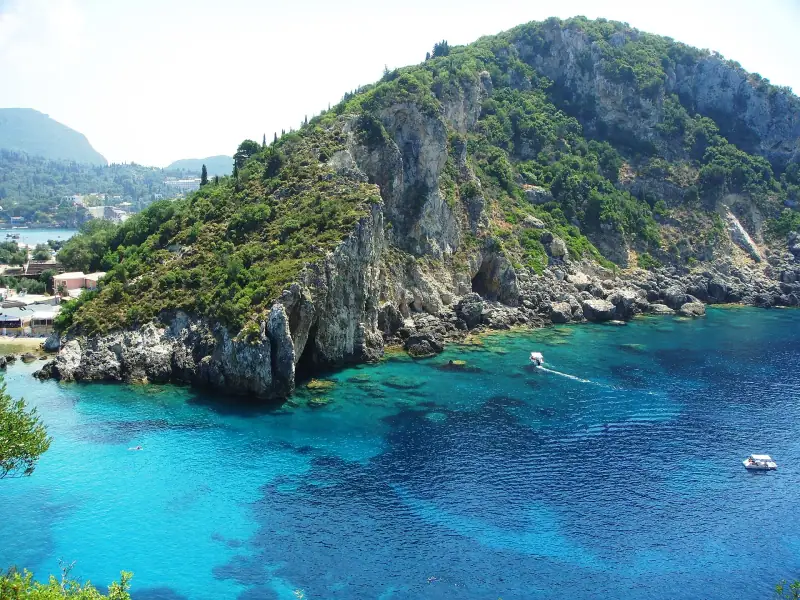
Paleokastritsa, Corfu: What to Do, Where to Swim and What to See
Coves, boat trips, the monastery and the Byzantine fortress of Angelokastro: everything to plan your day in Paleokastritsa, Corfu's west-coast jewel.
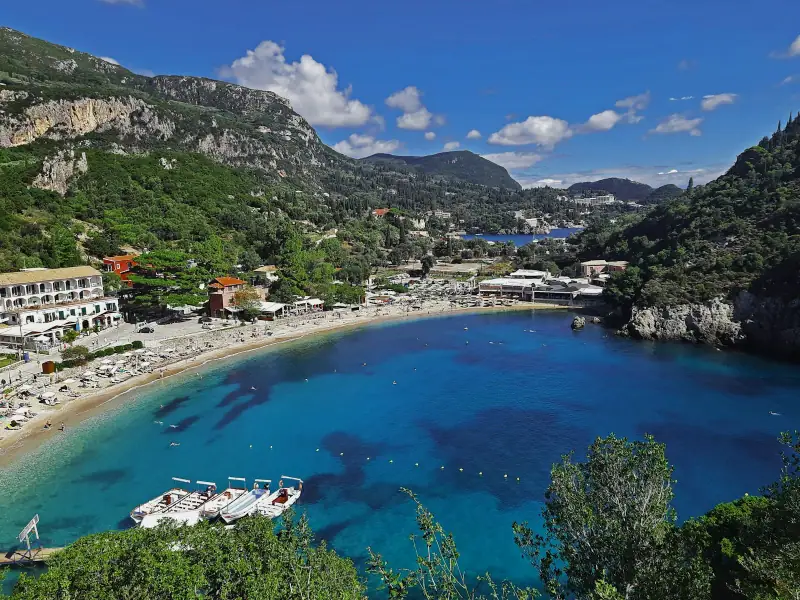
Best Beaches in Corfu: A Selection by Coast
The best beaches in Corfu: west, north, east and south coasts. Atmosphere, access, facilities and tips for choosing the cove that suits you.
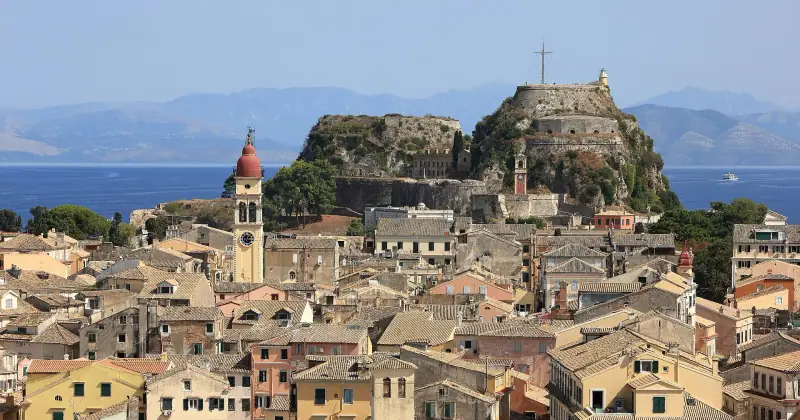
What to See in Corfu Town: Visiting the Old Town in 1 or 2 Days
UNESCO old town, Venetian fortresses, the Liston, Spianada and Achilleion: visit Corfu Town on foot with a simple route and practical tips.
Ready-made
Corfu itineraries
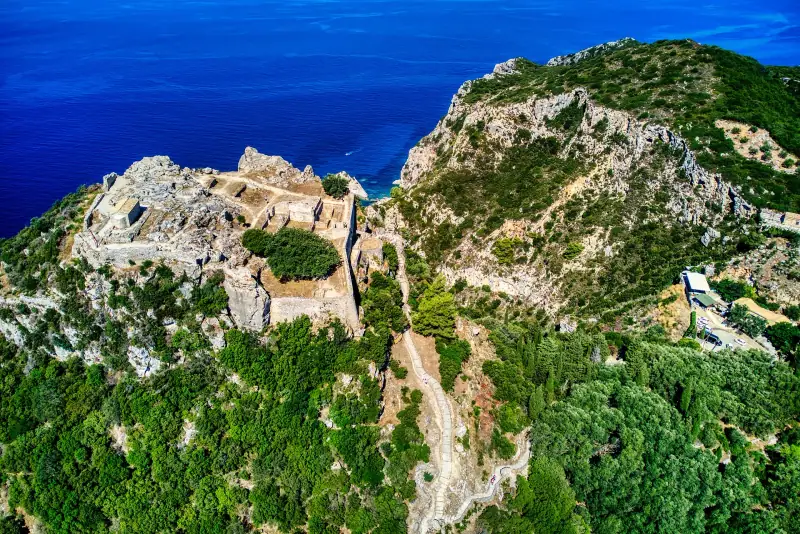
2 days
Corfu in 2 Days: A Realistic Weekend Itinerary, With or Without a Car
Corfu in 2 days: old town, Achilleion and Paleokastritsa with drives in km and minutes, bus or car options, and what to sacrifice to avoid rushing.
3 days
Corfu Road Trip in 3 Days: Around the Island by Car
A 3-day road trip in Corfu: old town and Achilleion, west coast and Paleokastritsa, the north with Kassiopi and Pantokrator. Stops, drives and tips.
7 days
Corfu with Kids: A 7-Day Family Itinerary
A 7-day stay in Corfu with children: sandy beaches, boat trips, the old town, the north and south of the island. Pace, drives and practical tips.