What to see
Best Beaches in Corfu: A Selection by Coast
We may earn a commission when you book through links on this page, at no extra cost to you. We don't visit or try the places we cover: we summarize published sources. How we work
In short
- Paleokastritsa has clear-water coves, Agios Gordios and Glyfada the big sandy beaches of the west, and the northeast quiet pebble beaches facing Albania.
- The south (Korission lagoon, Halikounas) is wilder and less built up; a car is almost essential.
- The swimming season generally runs from June to September; June and September balance pleasant sea and fewer crowds.
- Water shoes are useful almost everywhere; the sea can get rough on the west coast when the wind rises.
With its rugged coastline, olive-covered cliffs and Ionian Sea in shades of turquoise, Corfu is among the most pleasant Greek islands for swimming. Each side of the island has its own character: spectacular coves in the west, peaceful pebbles in the northeast, long sandy beaches in the south. This guide helps you choose according to your style of stay, your wish for calm or activity, and how you get around.
Paleokastritsa: the coves of the west coast
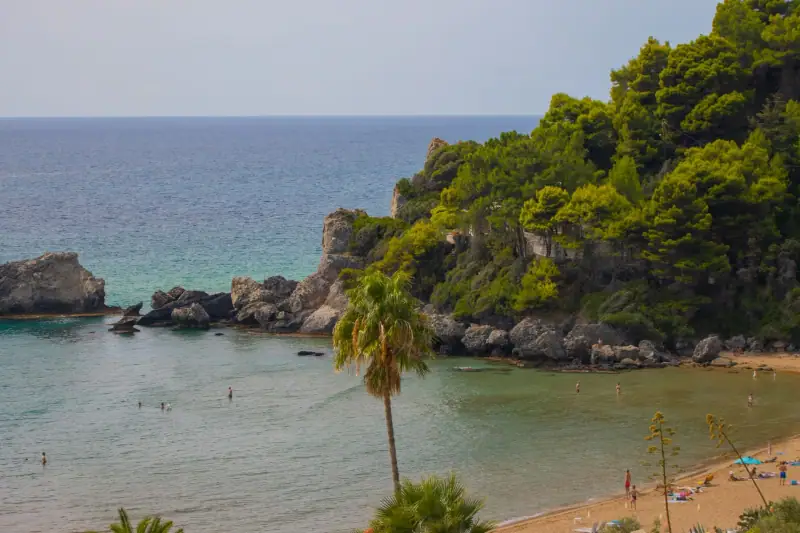
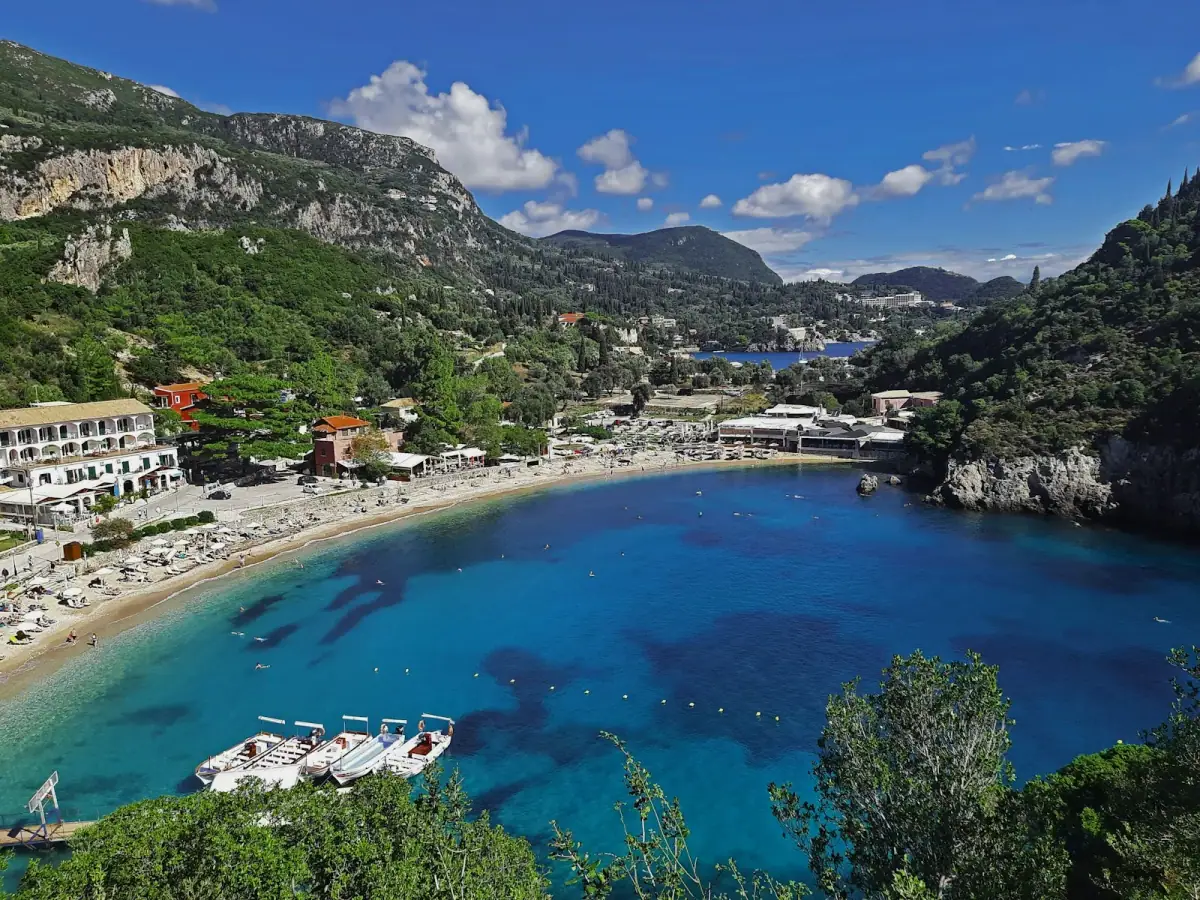
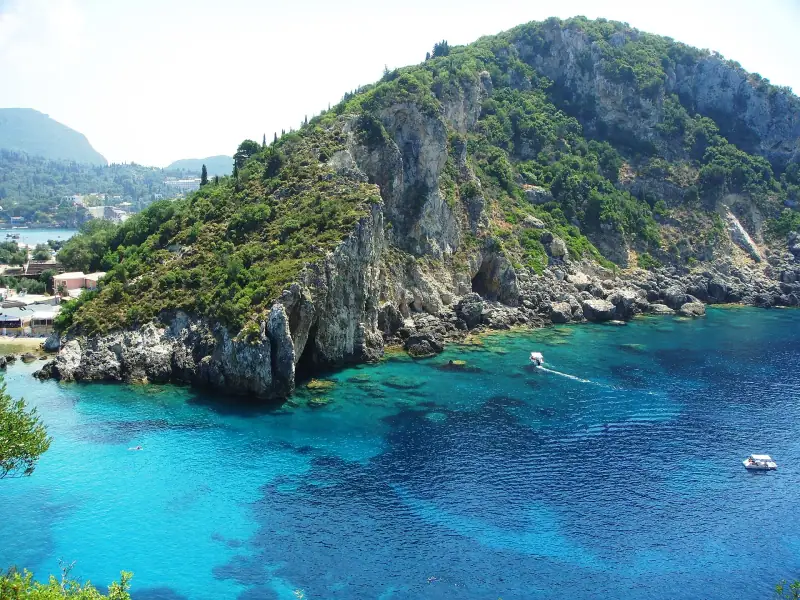
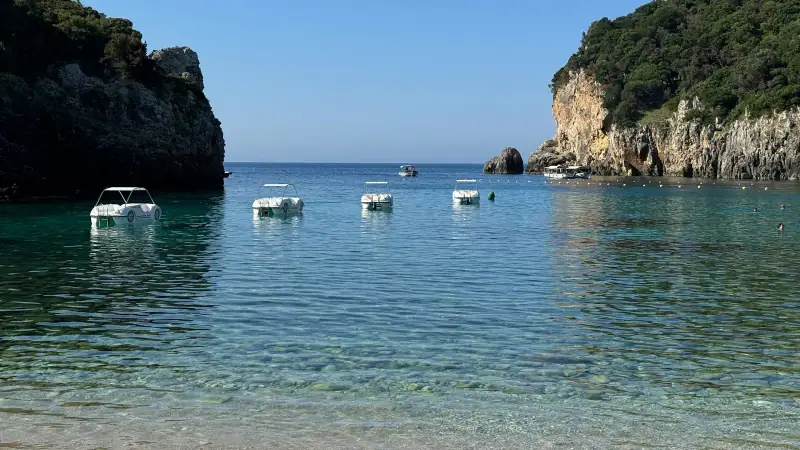
Paleokastritsa is arguably the best-known resort on the island. About twenty kilometers (12 mi) west of Corfu Town, the village is built around several rocky bays separated by wooded headlands. The water is known to be very clear, which makes it an excellent spot for snorkeling and for kayak or boat outings.
The beaches themselves are fairly small, sometimes pebble, sometimes coarse sand, and fill up fast in high season. Arrive early in the morning or late in the afternoon to enjoy the beaches in better conditions. Tavernas line several bays, so you can have lunch without leaving the water’s edge.
Best for: couples, snorkeling fans, photographers Atmosphere: picturesque, very busy in summer Good to know: parking is limited in high season; small boat trips let you discover caves and coves reachable only by sea.
To organize your days in the area, the 5-day itinerary includes a stop on this coast.
Agios Gordios and Glyfada: the big sandy beaches of the west
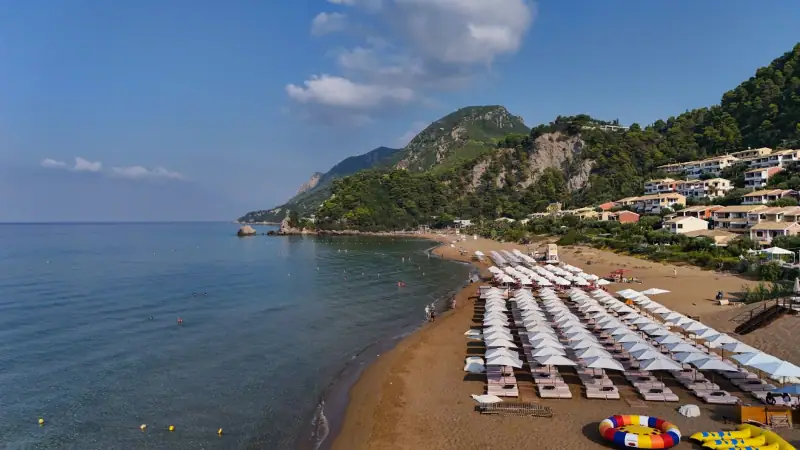
Farther south on the same coast, Agios Gordios unrolls a long sandy beach overlooked by green hills and a rock that dominates the bay. The place is popular with families, because the slope is generally gentle and services are plentiful: loungers, umbrellas, tavernas and small shops. The atmosphere is more relaxed than in the big resorts of the north.
Glyfada, a little farther north, offers a large stretch of golden sand and remains one of the liveliest beaches of the west. Water sports, beach bars and facilities are plentiful. In return, it is also busier in July and August, and you have to accept a bit of music and crowds.
All along this coast, the sea can get rough when the wind rises. Watch the flags and the lifeguards’ advice where there are lifeguards, and keep an eye on the children.
Best for: families, travelers who like equipped beaches Atmosphere: beach resort, lively, accessible Good to know: the sunset over the Ionian Sea is often very beautiful here.
Sidari and the Canal d’Amour: the cliffs of the north
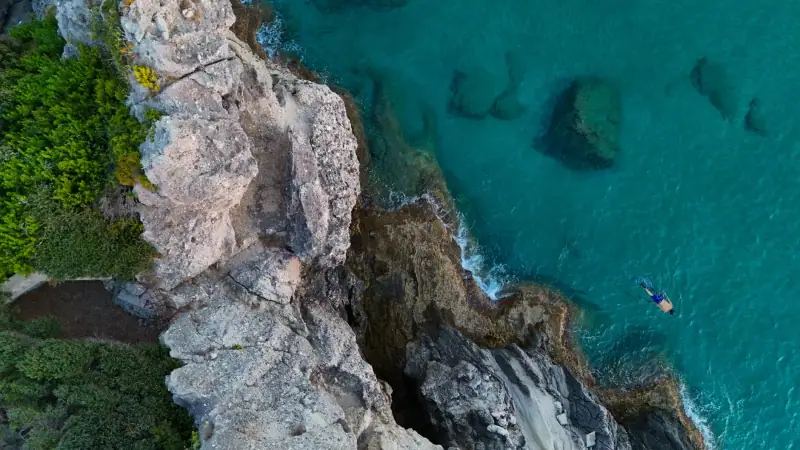
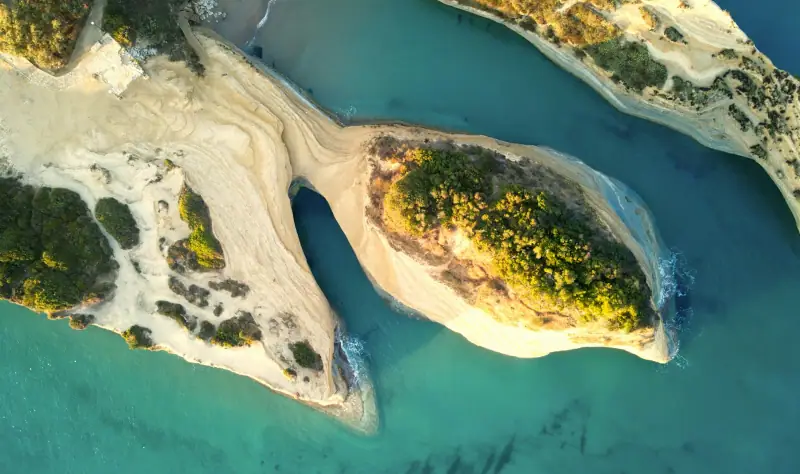
In the northwest, Sidari is known for its sandstone formations sculpted by erosion, called the Canal d’Amour. These cliffs carve small channels and coves where you can swim, in a very photogenic atmosphere. A local legend says that couples who swim there together will stay united.
The resort of Sidari is lively, with many tavernas and a well-developed tourist offer. If you want a wild, quiet setting, you will probably find better a few kilometers away, but for an unusual landscape and a fun swim, the detour is worth it.
Best for: landscape-curious travelers, couples, small groups of friends Atmosphere: lively, picturesque Good to know: the rocks are sometimes slippery; water shoes are recommended.
The northeast: Kassiopi, Barbati and the pebbles facing Albania
The northeast coast is one of the most beautiful on the island, with its winding roads, olive groves and views of the mountains of Albania. Kassiopi, a former fishing village, has a small lively harbor and several coves around it, often pebble with very clear water. Further south, Barbati offers a big pebble beach at the foot of wooded hills.
It is an ideal area if you like calm waters and a green setting. The beaches there are generally quieter than on the west coast, and the tavernas remain simple. A pair of water shoes will make swimming more comfortable on the pebbles.
From this coast, you can consider a day trip to Saranda, in Albania. Entry rules depend on your passport. Check the official travel advice of your government before you book: travel.state.gov (US), GOV.UK (UK), travel.gc.ca (Canada), Smartraveller (Australia) (checked November 2026).
Lodging in Kassiopi
Compare villas, apartments and hotels near the northeast coves.
The south: Halikounas and the Korission lagoon
The south of the island is flatter, wilder and much less built up. The Korission lagoon, separated from the sea by a strip of dunes, shelters birdlife and a landscape of reeds very different from the rest of Corfu. Along this strip of sand, Halikounas offers a long, open beach, appreciated by those who like wide open spaces.
The wind is often present, which attracts fans of board sports, but can bother swimmers looking for absolute calm. It is a good choice to escape the crowds, provided you bring water, sun protection and shade, because facilities are rarer than elsewhere.
Best for: travelers seeking tranquility, nature lovers Atmosphere: wild, open, little developed Good to know: the south is far from the main centers; a car is almost essential.
Beaches reached by boat: Paxos and Antipaxos
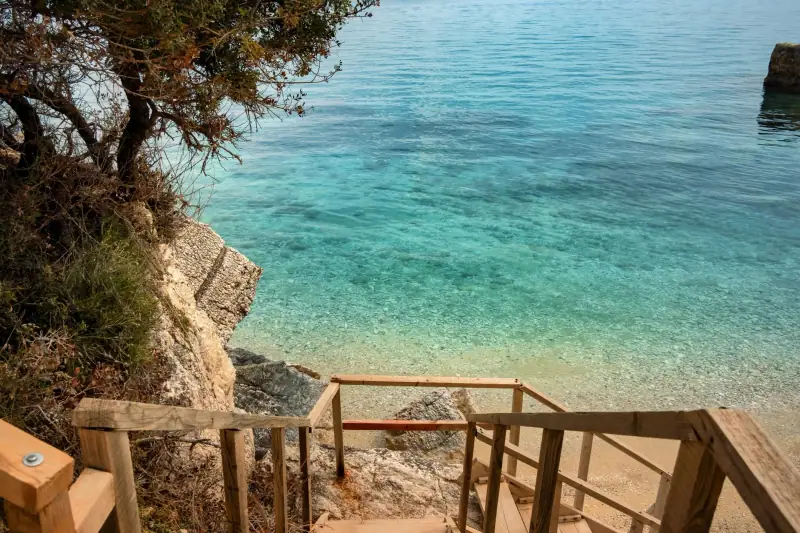
For vivid blue water, the small islands of Paxos and Antipaxos, south of Corfu, are known for their fine sand and white pebble beaches. They are visited as a day trip by boat from the island. The trip takes time and the sea can be rough, but the experience remains one of the highlights of a stay.
The organization of this outing is detailed in the guide to the Paxos and Antipaxos excursion from Corfu, with the points to check before booking.
Practical tips for enjoying the beaches
A few habits simplify your beach days. Set out early to find a parking space and a corner of shade. Bring water, because shops can be far away at isolated coves. A pair of water shoes is valuable on pebbles and rocks. Finally, adapt your choices to the wind: west side when the sea is calm, east side when the wind blows from the west.
For choosing your base by coast, the guide on where to stay in Corfu compares the main areas. You will also find pointers there to decide whether a car will be useful.
Water activities in Corfu
Kayaking, snorkeling, cruises: find an outing that suits your stay.
Frequently asked questions
What is the most beautiful beach in Corfu?
It depends on what you are looking for. Paleokastritsa charms with its deep coves and clear water, Agios Gordios with its long stretch of sand, and the northeast coast with its quiet pebble beaches facing the mountains of Albania. None is "the best" for everyone.
Are Corfu's beaches sand or pebbles?
Both. The east coast has many pebble beaches, while the west and south alternate sand and rocky coves. Water shoes are useful almost everywhere.
Do you need a car to visit Corfu's beaches?
It is the simplest way to reach the secluded beaches, because buses do not serve every coast. If you stay in a beach resort, you can make do with the neighboring beaches on foot.
When can you swim in Corfu?
The swimming season generally runs from June to September. July and August are the busiest months; June and September often offer a better compromise between pleasant sea and crowds.
Are Corfu's beaches suitable for children?
Many are, especially sandy beaches with a gentle slope and resorts equipped with tavernas and umbrellas. Check the depth and whether there are waves before letting children swim, especially on the west coast.
More Corfu guides
Keep reading
Complete Guide to Visiting Corfu: Regions, Highlights, Budget and Tips
Visiting Corfu: regions, highlights, when to go, how to get there and around, where to stay and budget. The pillar guide to prepare your trip.
Paleokastritsa, Corfu: What to Do, Where to Swim and What to See
Coves, boat trips, the monastery and the Byzantine fortress of Angelokastro: everything to plan your day in Paleokastritsa, Corfu's west-coast jewel.
What to See in Corfu Town: Visiting the Old Town in 1 or 2 Days
UNESCO old town, Venetian fortresses, the Liston, Spianada and Achilleion: visit Corfu Town on foot with a simple route and practical tips.
Ready-made
Corfu itineraries
2 days
Corfu in 2 Days: A Realistic Weekend Itinerary, With or Without a Car
Corfu in 2 days: old town, Achilleion and Paleokastritsa with drives in km and minutes, bus or car options, and what to sacrifice to avoid rushing.
3 days
Corfu Road Trip in 3 Days: Around the Island by Car
A 3-day road trip in Corfu: old town and Achilleion, west coast and Paleokastritsa, the north with Kassiopi and Pantokrator. Stops, drives and tips.
7 days
Corfu with Kids: A 7-Day Family Itinerary
A 7-day stay in Corfu with children: sandy beaches, boat trips, the old town, the north and south of the island. Pace, drives and practical tips.