Plan your trip
Renting a Car in Corfu: Tips, Roads and Pitfalls to Avoid
We may earn a commission when you book through links on this page, at no extra cost to you. We don't visit or try the places we cover: we summarize published sources. How we work
In short
- You do not need a car if you stay in the old town; you need one to explore the west coast, the north and inland villages.
- Choose a small or compact car: village streets and secondary roads are narrow and winding.
- From Corfu Town, Paleokastritsa is about 25 km (16 mi), roughly 40 minutes; Kassiopi about 35 to 40 km (22 to 25 mi), 45 minutes to 1 hour.
- Check the excess, the deposit, ferry exclusions and photograph the car before leaving; parking is the main headache in July and August.
Corfu is barely more than sixty kilometers (37 mi) long, but its finest places are spread out: coves on the west coast, perched villages, summits in the north, beaches in the south. Without a vehicle, you depend on bus schedules and taxis; with a car, you organize your days as you wish. This guide helps you decide whether renting is worth it, choose the right formula and drive calmly on the island.
Do you really need to rent a car in Corfu?
The answer depends on how you build your stay. If you sleep in the old town and do not plan to see anything else, you do not need one: the cobbled streets, the Spianada, the fortresses and the Liston are all explored on foot, and the airport is very close to the center. The guide to what to see in Corfu Town details what can be visited without a vehicle.
However, a car becomes almost essential as soon as you want to:
- branch out from lodging on the west coast or in the north, where shops are sometimes several kilometers away;
- enjoy the beaches at your own pace, without depending on a bus schedule;
- combine several sites in the same day, such as Paleokastritsa, Angelokastro and the inland villages;
- travel as a family with children and beach gear.
A middle solution is to rent the car only for a few days, for exploring days, and stay without a vehicle the rest of the time. It is often the best comfort-to-budget ratio for a week-long stay.
Where and how to pick up your car
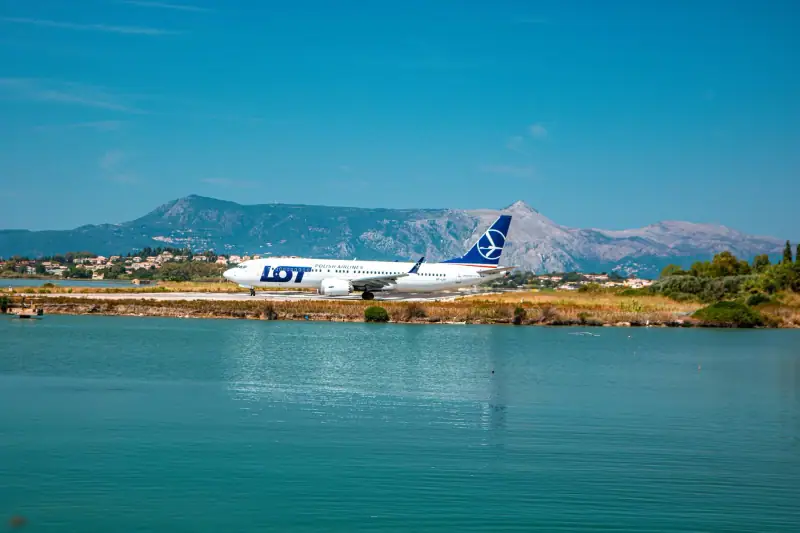
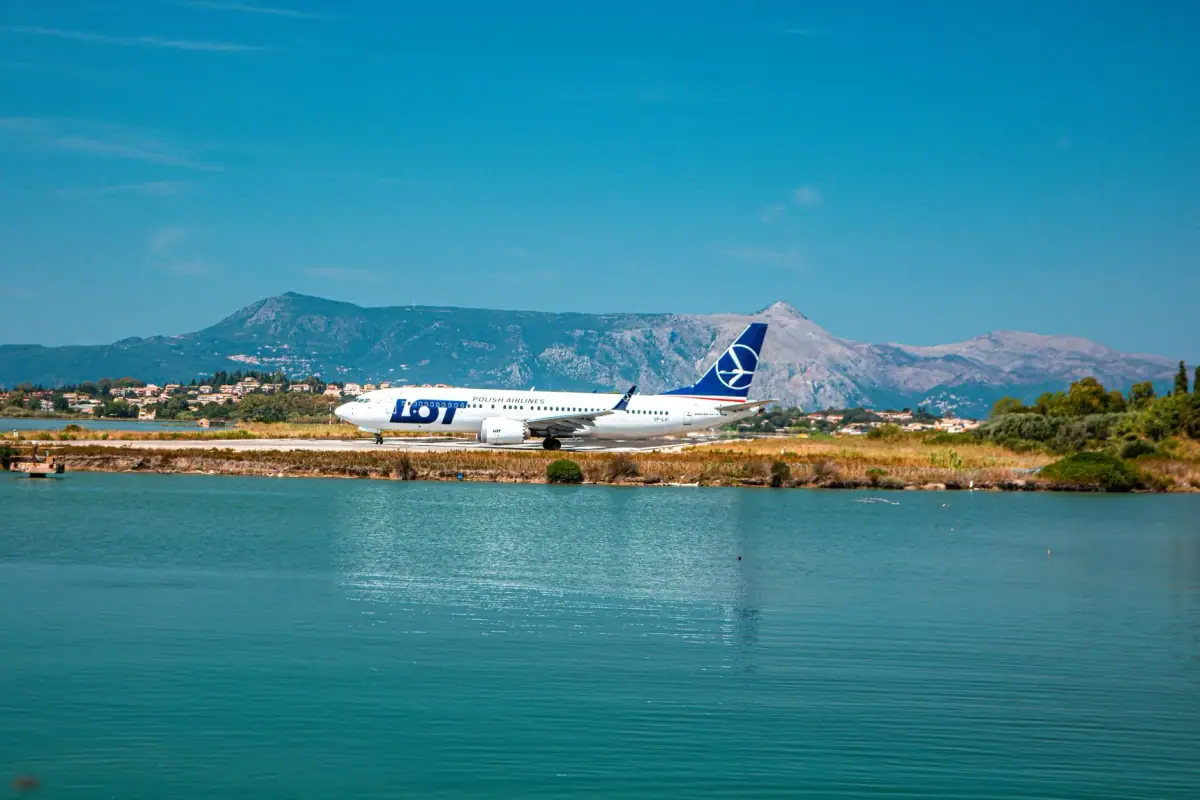
Most travelers take their vehicle directly at Corfu airport (Ioannis Kapodistrias), a few kilometers from the center of Corfu Town. It is practical: you arrive, sign, and leave. Some rental companies also offer delivery to the hotel or an office in town, useful if you start with a few days in the old town.
A few points to check before booking:
- The pick-up and return location: returning to a different office can mean fees;
- Office hours: if your flight arrives late, check that the counter will be open;
- Fuel: favor the “full to full” formula, the most transparent;
- Mileage: on such a small island, it is almost always unlimited, but confirm it.
A car rental comparison lets you check offers from established rental companies. Always compare the conditions, not just the displayed price.
Hotels and apartments in Corfu
Choose lodging with parking: a decisive criterion when you rent a car.
Which car to choose for the island’s roads
On the main roads, between Corfu Town, the north and the south, driving is simple. It is on secondary roads that the island becomes more technical: tight bends, narrow roadway, tricky passing in villages, sometimes poor lighting at night.
The wisest choice is therefore a small car or a compact. It parks easily, goes anywhere and uses less fuel. Book a larger model only if four of you are traveling with luggage.
For the rest, a few practical criteria:
- Manual or automatic gearbox: the manual is the most common and often cheaper; if you prefer an automatic, book early, especially in summer;
- Air conditioning: essential from June to September;
- Seats and trunk: count the suitcases, but keep in mind that village parking lots are cramped;
- Car or quad: quads and scooters are tempting, but they are more exposed on sometimes slippery roads; for a first stay, a car is safer.
Driving in Corfu: roads, distances and local habits

You drive on the right (the opposite of the UK and Australia). The main surprise is the local driving style, more spontaneous than you may be used to: overtaking on straight stretches, polite honking on blind bends, scooters weaving through. Keep your distance and let those in a hurry pass.
To get your bearings, here are orders of magnitude from Corfu Town, to check on your GPS depending on traffic:
- Paleokastritsa: about 25 km (16 mi), roughly 40 minutes by road;
- Kassiopi, in the northeast: about 35 to 40 km (22 to 25 mi), allow between 45 minutes and 1 hour;
- Sidari, in the northwest: about 35 km (22 mi), with a somewhat longer trip in summer;
- Agios Gordios, on the west coast: about 15 to 20 km (9 to 12 mi);
- Lefkimmi, in the south: more than 30 km (19 mi), on a faster road than in the north.
These figures show that no sightseeing day exceeds, in practice, about a hundred kilometers (60 mi) round trip. The real limiting factor is not distance, but the slowness of mountain and village roads. Always allow a margin, especially if you have to return the car or catch a ferry the same day.
A few driving tips:
- Avoid driving at night on the small inland roads;
- Watch for animals: goats and dogs can appear on the road;
- Download the offline map: the mobile network is patchy in some valleys;
- Fill up before setting out on an excursion in the north or west, where gas stations are rarer;
- Respect speed limits: checks exist and fines are the renter’s responsibility.
To turn these drives into coherent days, the 5-day Corfu itinerary groups sites by geographic area, to limit needless kilometers.
Parking: where to leave the car
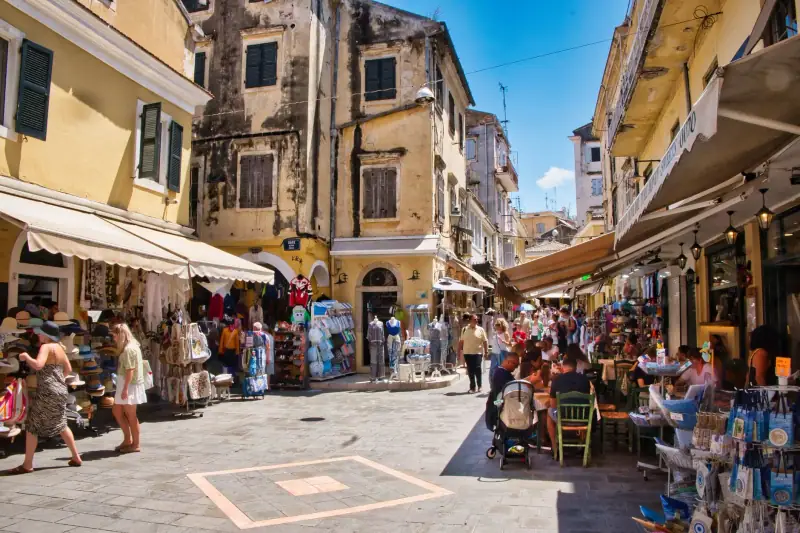
Parking is the main headache, especially in July and August. In the historic center of Corfu Town, streets are narrow, often one-way, and spaces rare. Ideally, leave the car at your lodging or in a lot on the outskirts, then visit on foot.
On the coast, small parking lots near beaches fill up early in the day. Arriving in the morning, or late in the afternoon, avoids circling for a long time. Never park on a through lane or in front of an entrance: excursion coaches and emergency services must be able to pass.
When choosing where to sleep, check whether parking is included or possible nearby. It is a criterion often neglected that saves a lot of time. The guide on where to stay in Corfu indicates which areas suit best depending on whether or not you have a vehicle. And to choose which beaches to aim for according to your area, see the guide to the best beaches in Corfu.
Day excursions from Corfu
If you do not want to drive every day, compare organized outings.
Insurance, deposit and pitfalls to avoid
This is the point where unpleasant surprises are most frequent. Before signing, read the conditions carefully and ask the right questions.
The excess. Most contracts include basic insurance with an excess (deductible), that is, the sum left to your charge in case of damage. Check its amount and what exactly it covers: bodywork, windshield, tires, underbody, theft.
Supplementary insurance. The rental company often offers to reduce or remove the excess for an extra charge. It is sometimes useful on narrow roads, but compare the cost with any coverage already included in your credit card or your travel insurance. Check the exclusions before counting on it.
The deposit. It is generally blocked on a bank card in the name of the main driver. Plan a card with a sufficient limit.
The condition report. Photograph the car from every angle, interior included, before leaving, and have each scratch noted on the contract. Do it again on return.
Extra fees. Additional driver, child seat, young driver, out-of-hours return: ask for the complete list, so the final price does not surprise you.
Ferries and unpaved roads. Many contracts exclude boat crossings and dirt tracks. If you plan an excursion to another island, for example Paxos and Antipaxos, the simplest is generally to book an organized boat trip.
Travel insurance with health and assistance cover is worth considering for any trip abroad; check what your existing policy includes before you go.
When to rent and how to book at the best moment
In high season, available cars decrease and prices climb, notably for automatic gearboxes and family vehicles. Booking several weeks ahead, with free cancellation when offered, is the most prudent solution. In low season, the offer is wider and conditions more flexible. To choose your dates, see the guide to when to go to Corfu.
If you travel with several people, the rental is easily shared and often remains cheaper than several taxis. If you are alone or mostly stay in Corfu Town, calculate the real cost before booking: between rental, fuel, parking and any excess, the budget can exceed that of a few organized excursions.
Transfers from Corfu airport
An alternative to the car if you stay in the old town.
Alternatives to the car: bus, taxi, excursions
Corfu has a public bus network that links Corfu Town to the main villages and resorts. It suits simple trips, but frequencies vary by season and connections to some beaches are limited. Taxis are practical for short trips, as long as you agree on the fare in advance when there is no meter.
Organized excursions are the third option: they avoid driving, parking and planning. They are particularly suited to travelers who want to drive neither on mountain roads nor at night.
For a full visit of the island, a mixed formula works well: a few days without a car in Corfu Town, then two or three days of rental for the west coast and the north.
Checklist before you leave
Before hitting the road, check these points:
- valid driver’s license, ID and bank card in the driver’s name;
- booking confirmation and insurance conditions printed or saved;
- photos of the vehicle’s condition before departure;
- offline map downloaded in your navigation app;
- tank filled before excursions to the north or west;
- water and sun protection in the car, especially in summer.
With these precautions, renting a car in Corfu remains a pleasant experience, giving access to the island’s most remarkable landscapes.
Frequently asked questions
Do you absolutely need to rent a car in Corfu?
Not if you stay in the old town, which is visited on foot. Yes if you want to explore the west coast, the north and the inland villages: buses exist, but they serve coves and isolated sites poorly, with limited frequencies.
Can you drive in Corfu with a foreign license?
Requirements depend on your license and on the rental company. Ask the company before you book which license (and whether an international driving permit) it accepts, and check the official travel advice of your government. Bring your license with ID and the rental contract.
Which side of the road do they drive on in Corfu?
On the right, the opposite of the UK and Australia. Signs are in Greek and in Latin characters on most signposts, which makes village names easier to read.
What size of car should you choose?
A small car or a compact model is enough for two to three people. Village streets and secondary roads are narrow: a big vehicle complicates driving and parking.
Can you take the rental car on a ferry?
It is often forbidden or subject to the rental company's approval, since insurance does not always cover crossings. Ask for permission in writing before planning a crossing to the mainland or another island.
Is it hard to park in Corfu Town?
Parking is more complicated in the historic center in high season. The simplest is to leave the car at your lodging or in a lot on the outskirts, then visit the old town on foot.
More Corfu guides
Keep reading
Budget for a Stay in Corfu: Real Costs and 3 Costed Profiles
What budget for Corfu? Real costs by item (lodging, transport, meals, activities), three costed profiles and tips for spending less.

When to Go to Corfu: Best Time, Weather and Season Month by Month
When to go to Corfu: weather, sea temperature, crowds and prices month by month, to choose between beach, sightseeing and Easter for your stay.

Complete Guide to Visiting Corfu: Regions, Highlights, Budget and Tips
Visiting Corfu: regions, highlights, when to go, how to get there and around, where to stay and budget. The pillar guide to prepare your trip.
Ready-made
Corfu itineraries
2 days
Corfu in 2 Days: A Realistic Weekend Itinerary, With or Without a Car
Corfu in 2 days: old town, Achilleion and Paleokastritsa with drives in km and minutes, bus or car options, and what to sacrifice to avoid rushing.
3 days
Corfu Road Trip in 3 Days: Around the Island by Car
A 3-day road trip in Corfu: old town and Achilleion, west coast and Paleokastritsa, the north with Kassiopi and Pantokrator. Stops, drives and tips.
7 days
Corfu with Kids: A 7-Day Family Itinerary
A 7-day stay in Corfu with children: sandy beaches, boat trips, the old town, the north and south of the island. Pace, drives and practical tips.