What to see
Visiting Salento: a complete guide to the jewel of coffee country
We may earn a commission when you book through links on this page, at no extra cost to you. We don't visit or try the places we cover: we summarize published sources. How we work
In short
- Two to three days are enough for the village and the Valle de Cocora; 3 to 4 days if you add a coffee finca visit and other hikes.
- The standard Cocora loop is about 10-12 km (6-7.5 mi), 4-5 h, moderate; start before 8 am and bring rain gear.
- There is no direct bus from the big cities: go through Armenia or Pereira, then a jeep or bus to Salento (45 min to 1 h 15).
- Salento has few ATMs (one reliable one on the Plaza Bolívar), so bring cash from Armenia or Pereira.
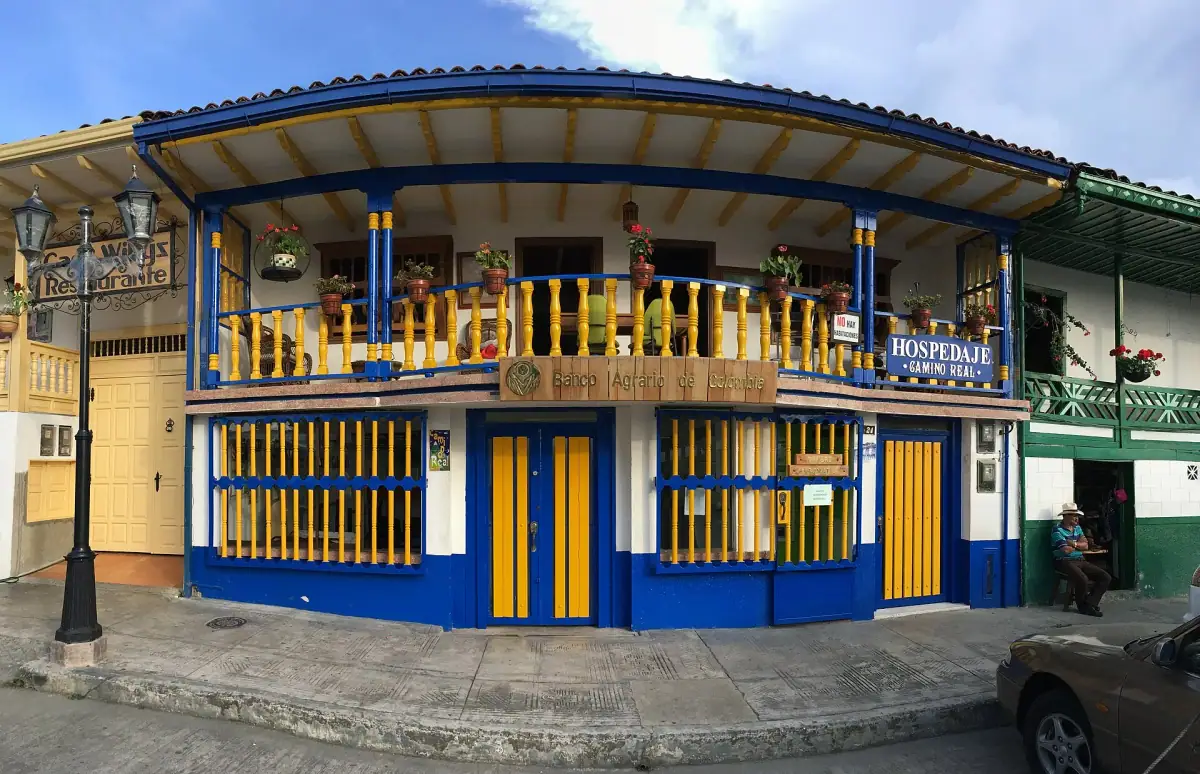
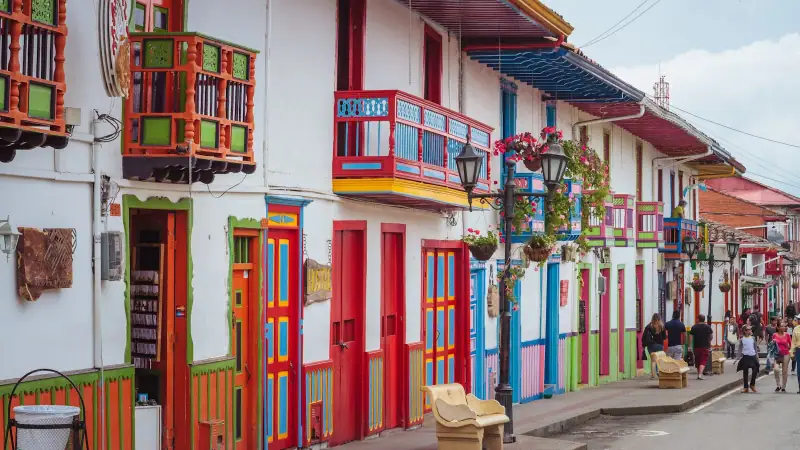
Salento is one of those Colombian destinations that stay lastingly in travelers’ memory. A small colonial town of about 9,750 inhabitants nestled in the Andes at 1,895 meters (6,215 ft) of altitude, it is the beating heart of the Eje Cafetero, Colombia’s coffee country, a UNESCO World Heritage site since 2011. Its houses with brightly painted facades, cobbled streets, carved wooden balconies and panoramic views over the Quindío valley make it one of the most beautiful towns in Colombia.
But Salento is not just a postcard. It is also the gateway to the Valle de Cocora, a mysterious valley haunted by giant wax palms, the tallest palms in the world and a national symbol of Colombia. This is where one of the world’s best arabica coffees is grown and harvested, in family fincas where it is worth stopping to see how coffee goes from bean to cup. And this is, finally, where you best feel the deep soul of the Colombian Andes.
Salento at a glance
- Region: Quindío department, Eje Cafetero (Andes)
- Altitude: 1,895 m (6,215 ft)
- Climate: cool and humid, 18-25 °C (64-77 °F) by day, 10-14 °C (50-57 °F) at night
- Population: about 10,000 (2024)
- Language: Spanish; a few words of English in tourist areas
- Currency: Colombian peso (COP), €1 ≈ 3,700 COP (November 2026, the rate varies)
Salento is about 24 km (15 mi) from Armenia (capital of Quindío) and 25 km (16 mi) from Pereira (capital of Risaralda). Main access is by Willys jeeps from Armenia or directly from Pereira.
Salento’s historic center
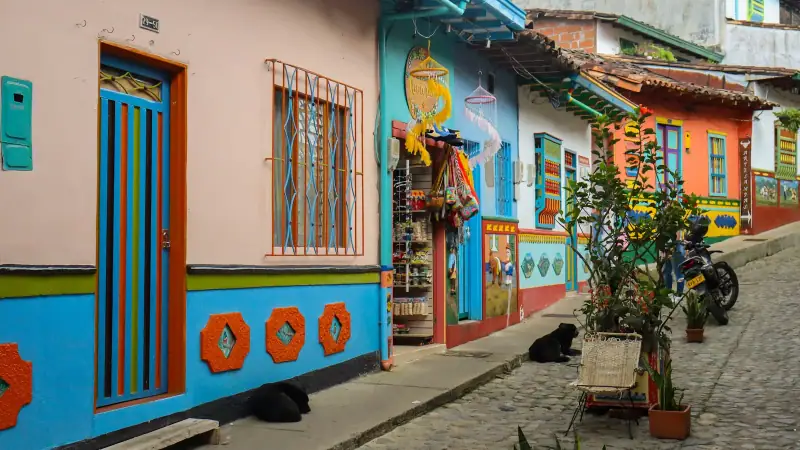
Much of Salento’s charm comes from its bahareque architecture, a traditional Andean building technique using guadua cane (giant bamboo), mud and wood, declared World Heritage as part of the Coffee Cultural Landscape.
The Plaza Bolívar
The heart of Salento is its Plaza Bolívar, framed by the parish church with its pretty white facades and rows of colonial houses whose facades compete in saffron yellow, royal blue, carmine red and forest green. The square is constantly lively with tejo players (a traditional Colombian game), street musicians and fresh coffee sellers.
In the evening, the café-bars around the square fill with a mix of travelers and locals. The atmosphere is warm, festive and unpretentious, everything you love in small Colombian mountain towns.
The Calle Real
The Calle Real (Carrera 6) is Salento’s main street and its main tourist artery. Fully paved, lined with craft shops, specialty cafés and restaurants, it climbs from the square toward the hills. There are weavers’ workshops, travel bookshops, specialty coffee sellers and shops selling wax palm baskets and hats.
At the top of the Calle Real, a series of stairs leads to the Mirador de Alto de la Cruz, a panoramic viewpoint over the surroundings. The sunset there is spectacular: the Quindío valley blazes gold and the silhouettes of the wax palms stand out against the sky.
Hotels and fincas in Salento
From a colonial boutique hotel to a coffee finca with a pool, compare the best places.
Valle de Cocora: the essential site
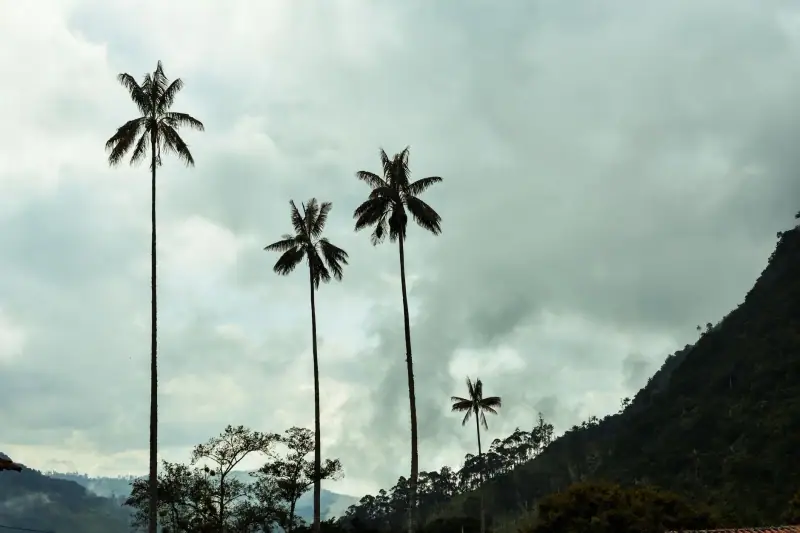
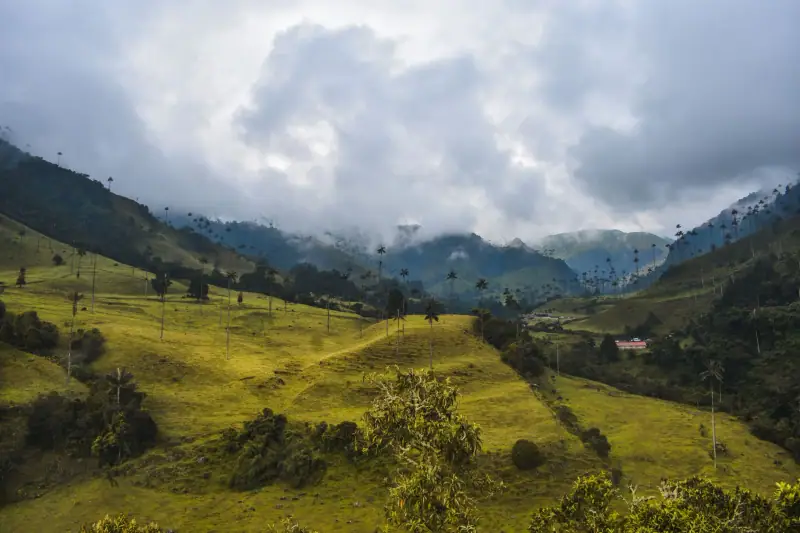
The Valle de Cocora is arguably the most iconic landscape in all of Colombia. This narrow valley, 11 km (7 mi) from Salento, is home to the wax palms (Ceroxylon quindiuense), Colombia’s national plant, which generally reach between 50 and 60 meters (164-197 ft) in height and can exceptionally reach 65 to 70 meters (213-230 ft), a striking sight when they emerge from the clouds clinging to the mountainsides.
The hiking loop
The main trail is a 10 to 12 km (6 to 7.5 mi) loop (4-5 hours, moderate level) that crosses two totally different landscapes:
-
The lower part: after the parking area (valley entrance), follow the flat trail along the Cocora River through meadows dotted with giant palms. This is where the classic photos are taken, the palms rising to the sky in a postcard setting.
-
The climb through cloud forest: the trail then climbs into the fog forest (bosque de niebla), a humid, mysterious ecosystem covered in mosses, wild orchids and bromeliads. This zone is home notably to the sparkling violetear (Colibri coruscans) and the booted racket-tail (Ocreatus underwoodii).
-
The hummingbird station (Acaime): at mid-route, a small wooden house serves hot chocolate and welcomes dozens of hummingbirds fluttering a few centimeters from visitors. Entry: 20,000 COP. A magical moment.
-
The return: you come down the other slope through meadows and palms to reach the starting point.
Practical info for the Valle de Cocora
- Access: Willys jeep from Salento’s Plaza Bolívar (departing every hour in the morning, 10,000 COP one way), or on foot in 2-3 h if you are brave
- Hours: open from 6 am, better to leave before 8 am to avoid thick clouds and midday crowds
- Gear: a raincoat is essential (it can rain at any time), rubber boots available to rent there (10,000-15,000 COP)
- Food: stalls selling caldo de costilla (beef soup) and grilled trout are set up at the valley entrance
Cocora Valley and Eje Cafetero tours
Guided hike, finca visit, full coffee circuit: book your activities.
Coffee fincas: at the heart of Colombian coffee
It is hard to pass through Salento without visiting a coffee finca. The Quindío region produces some of the world’s best arabica, grown at altitude on the flanks of the Andes, in the shade of fruit trees and banana plants, with methods passed down through generations.
How a finca tour works
Guided visits (2-3 hours) generally follow this route:
- The plantation: discovering the coffee plant, the different varieties (Castillo, Bourbon, Geisha, Colombia), the harvest calendar and hand-picking techniques
- Post-harvest: pulping the coffee cherry, fermentation, washing and drying on raised beds. You understand why washed Colombian coffee is so clean and fruity
- Artisanal roasting: a demonstration of manual roasting in a wooden drum
- Tasting: comparing different aroma profiles, learning cupping (professional tasting) and, of course, the first cup
Recommended fincas around Salento:
- Finca El Ocaso: 4-5 km (2.5-3 mi) from the village (about 1 hour on foot or 10-15 min by jeep), one of the most accessible and educational. Tours every hour, 25,000-35,000 COP
- Finca El Paraíso: organic certification, panoramic view of the Valle de Cocora, specialty coffee sold directly at the farm
Most fincas sell their coffee directly. Consider leaving with a few bags of freshly roasted coffee (30,000-60,000 COP/250 g). It is one of the best souvenirs to bring back.
Nature and activities around Salento
Hikes in the Andes
Beyond the Valle de Cocora, Salento offers several hiking trails in the Andes. The Camino Real is a paved colonial path linking Salento to neighboring villages through mountain landscapes. Allow half a day for the section to Boquía (10.4 km / 6.5 mi, moderate elevation), a quiet hamlet with a small church and magnificent views.
The Cascada Santa Rita (Santa Rita nature reserve), 4.8 km (3 mi) away, is reachable in 2-3 hours on foot from Boquía (including crossing the suspension bridge and the tunnel), or in 2-3 hours from Salento. The waterfall pours into a natural pool suitable for swimming (the water is very cold, about 14 °C / 57 °F, but refreshing on a sunny day).
Birdwatching
The Eje Cafetero is one of the richest regions in the world for bird biodiversity. The cloud forest of the Valle de Cocora shelters remarkable species, notably:
- The Andean cock-of-the-rock (Rupicola peruvianus), a male with flamboyant orange plumage (a species present in Colombia but not endemic: its range extends from Venezuela to Bolivia)
Many specialist local guides offer birdwatching outings from dawn (4-7 am), when birds are most active.
Adventure sports
Salento’s adventure agencies offer several activities:
- Mountain biking on rural trails (20,000-40,000 COP for half a day)
- Canyoning in the region’s gorges (from 50,000 COP)
- Horseback riding in the Valle de Cocora or around the finca (30,000-60,000 COP/h)
- Paragliding from the hills above Salento, with spectacular views of the valley
Car rental from Armenia
Explore the Eje Cafetero at your own pace: Salento, Cocora, Filandia, Quimbaya.
Food in Salento
Salento’s cooking reflects Colombian Andean tradition, with a few specialties of the coffee region.
Dishes not to miss:
- Trucha de la montaña: fresh locally raised trout, grilled or pan-seared, served with patacones and rice. Salento’s star dish, offered everywhere and always delicious (18,000-30,000 COP)
- Bandeja paisa: a hearty platter from the Antioquia region, with red beans, rice, chicharrón, chorizo, egg and fried plantain, often offered in Salento as a nod to travelers
- Arepas de choclo con queso: sweet corn cakes filled with melted cheese, ideal for breakfast
- Caldo de costilla: beef rib broth with potato and fresh herbs, pure comfort on a cold mountain morning
- Finca coffee: brewed in a filter pot or French press from beans roasted that morning, this coffee has nothing to do with industrial instant coffee
Recommended places:
- Donde el Ñato (Calle Real): exceptional trout, rustic setting, generous dishes from 20,000 COP
- Brunch Salento (on the Plaza): specialty coffee, toasts, porridges, ideal in the morning before the Valle de Cocora
- El Punto: a local canteen for bandeja and sancocho, frequented by locals, very affordable prices (12,000-18,000 COP)
Where to stay in Salento
Salento offers a varied range of lodging for every budget, with a strong concentration of charming options in the historic center.
Hostels (30,000 – 70,000 COP/night)
The village has many hostels with character in renovated colonial houses with courtyards, hammocks and campfires in the evening. The atmosphere is friendly and international.
Boutique hotels (100,000 – 250,000 COP/night)
Several family guesthouses offer tastefully decorated rooms, breakfast included and a terrace overlooking the valley. A good compromise between comfort and authenticity.
Finca hotels (150,000 – 400,000 COP/night)
The most recommended option: spend a night or two in a coffee finca that is also a hotel. You live to the plantation’s rhythm, watch the farm wake up at dawn and enjoy breakfast with freshly harvested coffee. Several fincas around Salento offer this type of lodging (Finca El Ocaso, Finca El Paraíso, Finca Mariposa).
How to get to Salento
From Bogotá
The most common route: a bus from Bogotá’s Terminal de Transportes del Sur to Armenia (8-9 hours, 60,000-90,000 COP depending on comfort level). From Armenia, take a Willys jeep or local bus to Salento (45 min, 8,000 COP). Several companies run this route: Expreso Bolivariano, Flota Occidental.
From Medellín
Bus from Medellín to Pereira (5-6 hours, 45,000-70,000 COP), then a bus or jeep to Salento (1 h 15, 12,000 COP). Alternative: a direct Medellín-Armenia bus (5-6 h), then a jeep to Salento.
From Cali
Bus from Cali to Armenia (3 h 40-4 h, 30,000-50,000 COP), then a jeep to Salento. This is the fastest option from southern Colombia.
By air
El Edén Airport in Armenia receives flights from Bogotá (1 h, Avianca, LatAm). From the airport, take a taxi or bus to central Armenia, then a jeep to Salento.
Practical tips for visiting Salento
Weather: The Eje Cafetero gets rain all year. Even in the dry season, showers can fall in the afternoon. Always carry a raincoat and closed shoes with non-slip soles.
Altitude: At 1,895 meters (6,215 ft), Salento is not at high altitude. Ask your doctor or a travel clinic, and see the official travel health pages (CDC in the US, TravelHealthPro in the UK).
Money: Salento has few ATMs (only one reliable ATM on the Plaza Bolívar). Bring enough cash from Armenia or Pereira. Fincas, markets and small restaurants often work in cash only.
Clothing: Nights can be cool (10-14 °C / 50-57 °F). Pack a sweater or light jacket for evenings and mornings in the Valle de Cocora.
Wi-Fi and connectivity: Decent mobile coverage in the village (Claro, Tigo). The network disappears in the cloud forest and in remote parts of the Valle de Cocora.
Weekends and holidays: Salento is very busy on weekends with Colombian tourists coming from Armenia and Medellín. If you visit on a weekday, you will enjoy the village in a much calmer atmosphere. In high season (Christmas, Holy Week), book your lodging several weeks ahead.
Fitting Salento into a circuit: Salento fits naturally into a road trip in Colombia or an Eje Cafetero circuit. Combined with Filandia (30 min by jeep, a pretty viewpoint village) and Armenia, it forms a perfect triangle for 4-5 days in the coffee Andes. See the article on the best time to visit Colombia to optimize your calendar.
Suggested itinerary: 3 days in Salento
Day 1: arrival and discovering the village Settle into your finca or hotel. Free afternoon in the historic center: stroll the Calle Real, climb to the Mirador de Alto de la Cruz for sunset, dinner of fresh trout in a restaurant on the plaza.
Day 2: Valle de Cocora (full day) Leave at 7 am by jeep for Cocora. Full loop (10-12 km / 6-7.5 mi, 4-5 h): wax palm meadows → cloud forest → Acaime hummingbird station → return. Lunch there (caldo and trout). Back to the village mid-afternoon, quiet evening.
Day 3: coffee finca and departure Morning: guided visit of a coffee finca (2-3 h, book the day before). Tasting, buying coffee to take home. Lunch on the plaza, then transfer to Armenia or Pereira for the rest of your trip.
Salento is one of the rare destinations that keeps all its promises. One of the most beautiful colonial villages in Colombia, gateway to the Valle de Cocora and center of coffee culture, it combines visual escape, cultural richness and adventure in the middle of Andean nature. Whether you are a hiking fan, a coffee enthusiast or simply a traveler in search of authenticity, Salento will leave you wanting to return. To plan your trip across the whole region, discover the guide to coffee and the coffee region in Colombia and all the practical tips for traveling in Colombia.
Frequently asked questions
How many days should you plan to visit Salento?
Two to three days are enough to enjoy the village and do the Valle de Cocora. If you want to visit a coffee finca in depth and explore the surroundings (Cocora plus hikes), plan 3 to 4 days. Salento is often part of a week-long Eje Cafetero circuit with Armenia and Filandia.
How do you get to Salento from Medellín or Bogotá?
From Bogotá, take a bus to Armenia (8-9 hours, about 60,000 COP) then a jeep or bus to Salento (45 min, 8,000 COP). From Medellín, the bus trip takes about 5-6 hours to Armenia or Pereira, then a connection to Salento. There is no direct big city to Salento bus; going through Armenia or Pereira is required.
What is the best time to visit Salento?
The driest months are December-January and June-July. The Eje Cafetero gets rain all year, though, and the region is beautiful even under a light drizzle. For the Valle de Cocora, avoid the heavy rainy season (March-June and September-November) when trails become very muddy.
Is the Valle de Cocora hard to hike?
The standard Valle de Cocora loop (about 10-12 km / 6-7.5 mi, 4-5 h) is rated moderate. You climb about 500 m (1,640 ft) of elevation on sometimes slippery, wet terrain. Rubber boots can be rented at the park entrance (10,000-15,000 COP). Wear waterproof clothing and start early to avoid afternoon rain.
Can you visit a coffee finca from Salento?
Yes, it is one of Salento's flagship activities. Many fincas run guided tours (2-3 h) including a visit of the coffee trees, hand picking, the drying and roasting process, and tasting. Price: 25,000-50,000 COP. Among the best known: Finca El Ocaso (15-20 min from Salento), Finca La Victoria and Finca El Paraíso.
Is Salento safe for tourists?
Yes, Salento is considered one of the safest towns in Colombia for tourists. Economic dependence on tourism has made the population very welcoming and attentive to visitors' safety. Stay vigilant at night as anywhere, but overall you can move around the village and its nearby surroundings calmly.
More Colombia guides
Keep reading
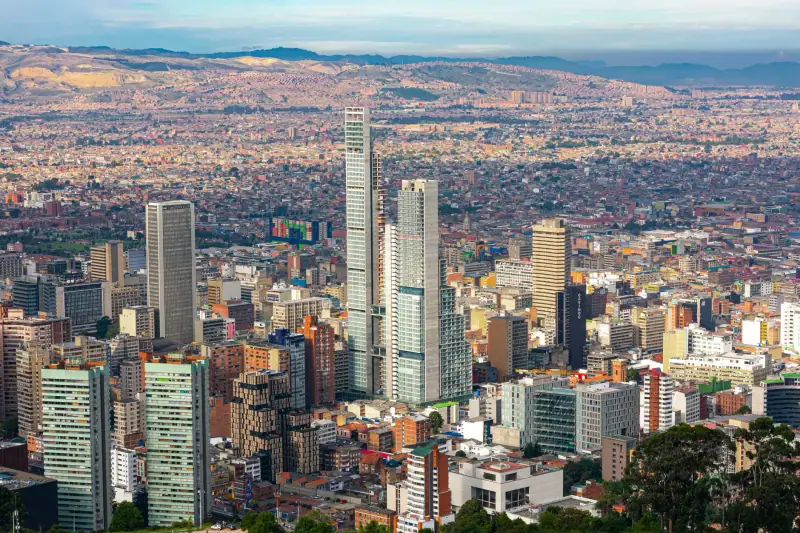
Visiting Bogotá: a complete guide to Colombia's capital
Everything you need to visit Bogotá: La Candelaria, Museo del Oro, Monserrate, Usaquén, budget, transport and practical tips for 2026.
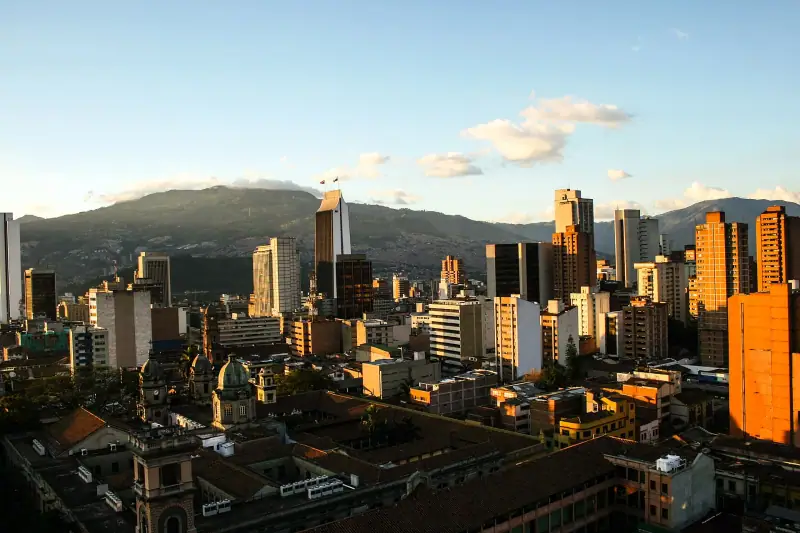
Visiting Medellín: a complete guide to the city of eternal spring
Everything you need to visit Medellín: El Poblado, Plaza Botero, Comuna 13, Guatapé, lodging, budget and practical tips for 2026.
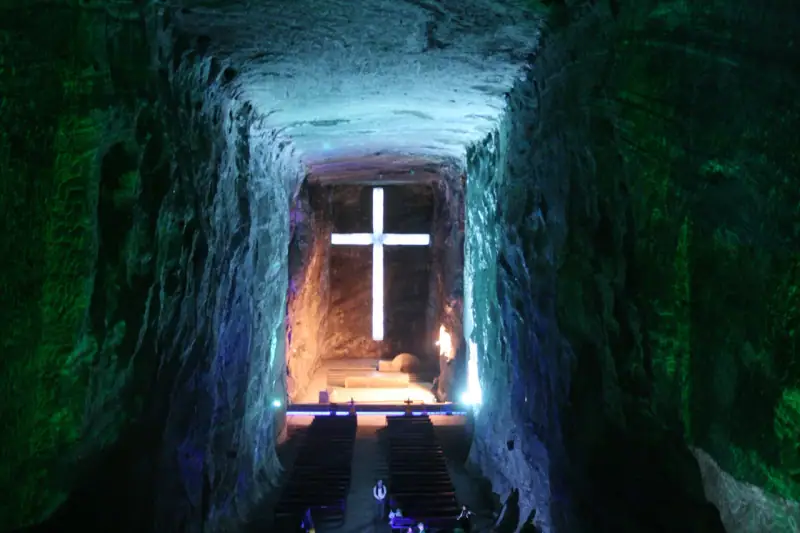
Zipaquirá Salt Cathedral from Bogotá: bus, train, times and prices
Visit the Zipaquirá Salt Cathedral from Bogotá: bus or train, hours 9 am-4:40 pm, ticket prices, visit length and mistakes to avoid.
Ready-made
Colombia itineraries
20 days
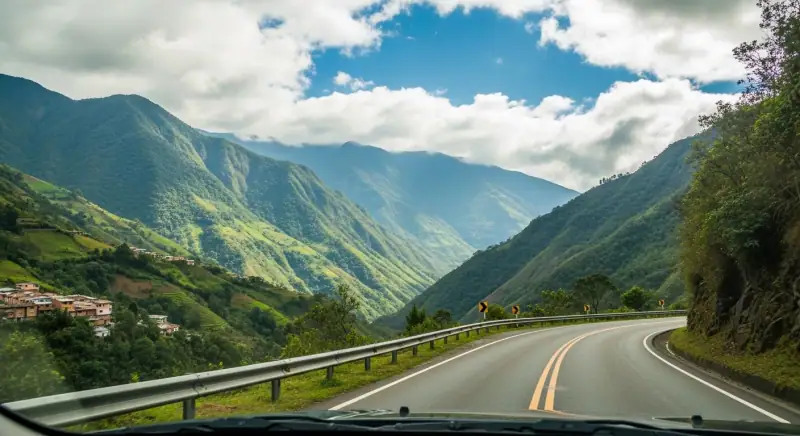
Colombia road trip: a 3-week itinerary by car
A 3-week Colombia road trip from Bogotá to Cartagena via the Andes, the coffee region and the Caribbean coast. Routes, stops and practical tips.
11 days
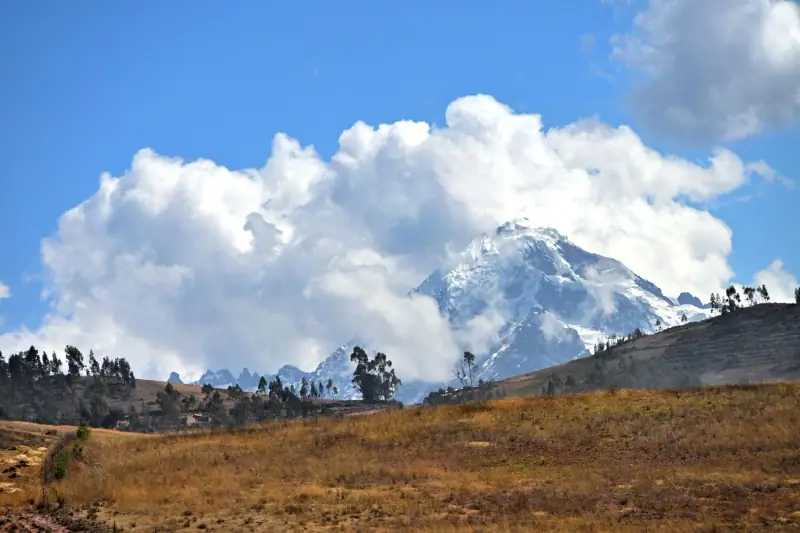
Colombian Andes road trip: mountain ranges, colonial towns and coffee country
The Colombian Andes in 10 to 12 days: Villa de Leyva, Barichara, Medellín and Salento. Stage-by-stage route, practical tips and where to stay.
10 days
Colombia in 10 days without a car: a realistic itinerary by plane and bus
Colombia in 10 days without renting a car: Bogotá, Medellín, Salento, Cartagena. Stops, distances, travel times, flights and buses, transport budget.